
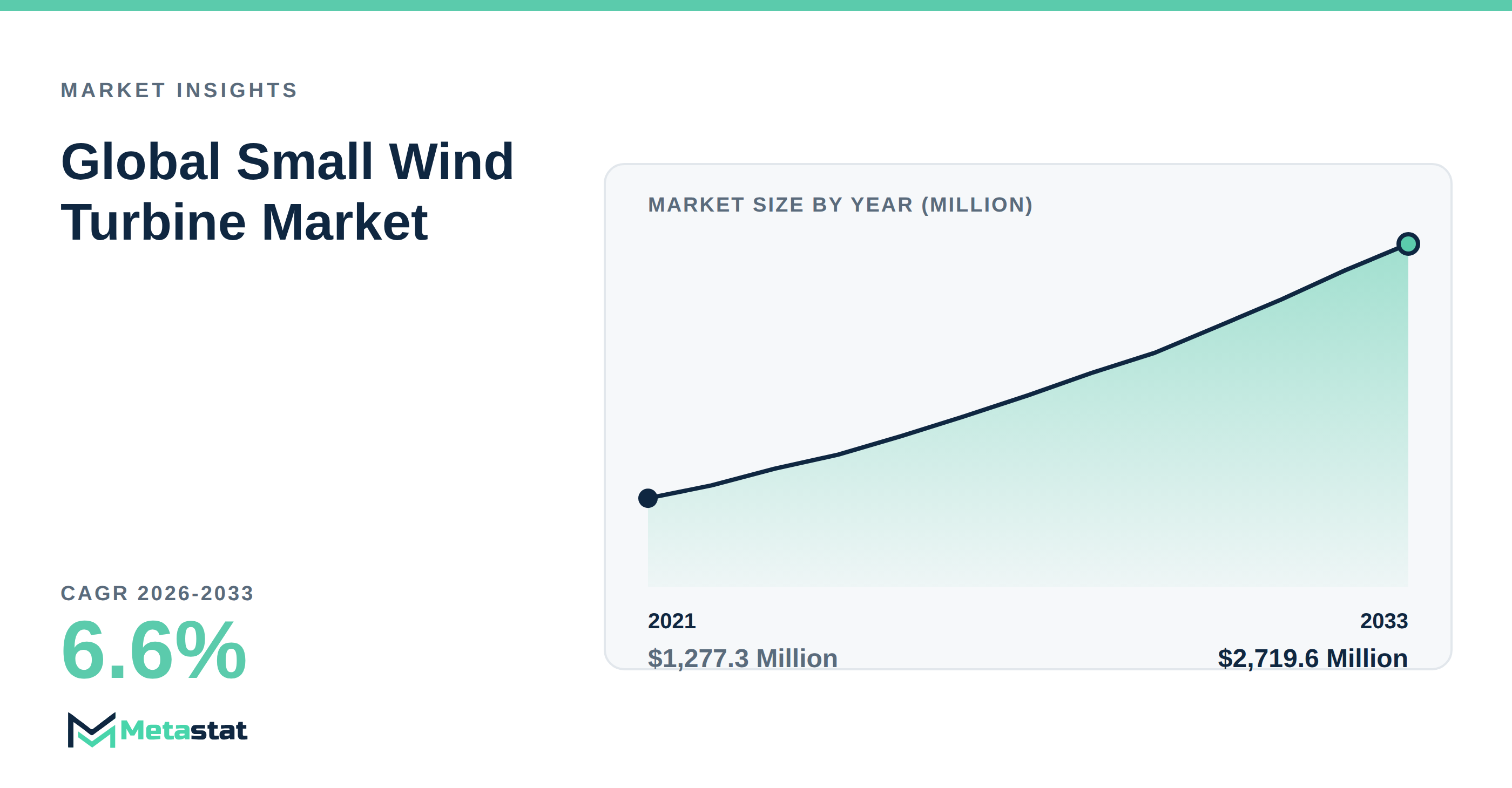
The Small Wind Turbine market is projected to reach USD 2,719.6 million by 2033, driven by a focus on energy independence and technological advancements.
The Small Wind Turbine market is entering a significant growth phase, expected to achieve a valuation of USD 2,719.6 million by 2033. This anticipated increase reflects a compound annual growth rate (CAGR) of 6.6% from 2026 to 2033. A combination of factors is influencing this growth, particularly the demand for renewable energy solutions driven by rising energy prices and the desire for greater energy independence.
One pivotal factor propelling this market expansion is the increasing emphasis on energy independence, especially in remote areas. While global initiatives shift toward distributed energy solutions, small wind turbines emerge because a feasible alternative to traditional grid power. The increasing adoption of these systems indicates a shift towards decentralized energy production, with both residential and commercial sectors actively investing in small wind technologies.
What is driving the growth of the small wind turbine market?
Several key factors are contributing to the projected growth of the Small Wind Turbine market. Escalating energy costs motivate homeowners and businesses to consider sustainable energy solutions. Small wind turbines offer benefits including reduced operational costs and environmental sustainability. The agriculture sector is increasingly adopting these systems to power operations, improving energy efficiency while promoting eco-friendly practices.
The growing integration of hybrid wind-solar systems enhances the applicability of small wind turbines. By combining wind and solar energy, users secure a more reliable energy supply, fostering further investment in these technologies. This trend is particularly noticeable in regions where traditional energy sources are limited or unstable, making small wind energy systems an appealing choice.
What technological advancements are shaping the market?
Technological innovations play a vital role in the transformation of the Small Wind Turbine market. Developments in turbine design, including more efficient blades and improved generator technologies, lead to enhanced energy capture and reduced maintenance needs. Manufacturers increasingly invest in research and development to create advanced solutions aimed at optimizing performance, which supports the market's growth.
The integration of battery storage systems into small wind turbine technology has revolutionized energy management. Users now store excess energy for later use, maximizing the advantages of wind-generated power. Smart monitoring systems facilitate real-time data analysis, allowing users to adjust operations to optimize energy production and minimize downtime.
Which market segments show the most promise?
Market segmentation indicates that both horizontal-axis wind turbines (HAWT) and vertical-axis wind turbines (VAWT) are poised for growth. The HAWT segment is projected to reach USD 2,100.6 million by 2033, maintaining its dominance due to efficiency and established technology. On the other hand, the VAWT segment is expected to grow considerably, with a forecasted valuation of USD 619 million by 2033, primarily driven by urban deployments where space constraints are a significant consideration.
Demand across various end-use sectors, including residential, commercial, industrial, and agriculture, illustrates the versatility of small wind turbines. The residential segment, for example, anticipates growth at a CAGR of 5.2%, highlighting the increasing recognition of the long-term benefits associated with shifting to renewable energy sources.
What external factors influence market dynamics?
Regulatory compliance and government incentives significantly impact the Small Wind Turbine market. Global governments are implementing policies intended to promote renewable energy adoption, creating an environment conducive to investment in small wind technologies. Financial incentives, including tax credits and net metering policies, enhance market attractiveness, prompting new and existing players to invest.
Nevertheless, challenges arise. Regulatory compliance presents significant hurdles, because navigating complex environmental regulations and local permitting processes often leads to project delays. Fluctuations in material prices and supply chain disruptions impact production costs, which influence overall market dynamics and investment decisions.
Despite these challenges, the outlook for the Small Wind Turbine market remains positive, with substantial opportunities on the horizon. While global attention increasingly focuses on sustainable energy solutions, stakeholders across various sectors are likely to increase their investments in small wind systems. For a more detailed analysis, please refer to the Global Small Wind Turbine Market report.
Tags
About the Authors

LEAD ANALYST
Utkarsh Khirodkar is a Lead Market Research Analyst at MetaStat Insight, specializing in market intelligence, technology sector assessments, and competitive strategy.

PRINCIPAL CONSULTANT - ENTERPRISE AI & EMERGING TECHNOLOGIES
Banking & Finance · Electronics and Semiconductor · Energy and Power · Healthcare IT · Information & Technology · Professional Services
Vijay Gunti is a Principal Consultant at MetaStat Insight, bringing over two decades of experience across enterprise digital transformation, technology strategy, and intelligent systems.

ENERGY & INFRASTRUCTURE INDUSTRY CONSULTANT
Automotive and Transportation · Electronics and Semiconductor · Energy and Power · Machinery & Equipment
Saurabh Vasant Ganvir consults for Energy & Infrastructure Industry at MetaStat Insight, specializing in renewable energy, solar EPC, and electric vehicle (EV) infrastructure markets.