
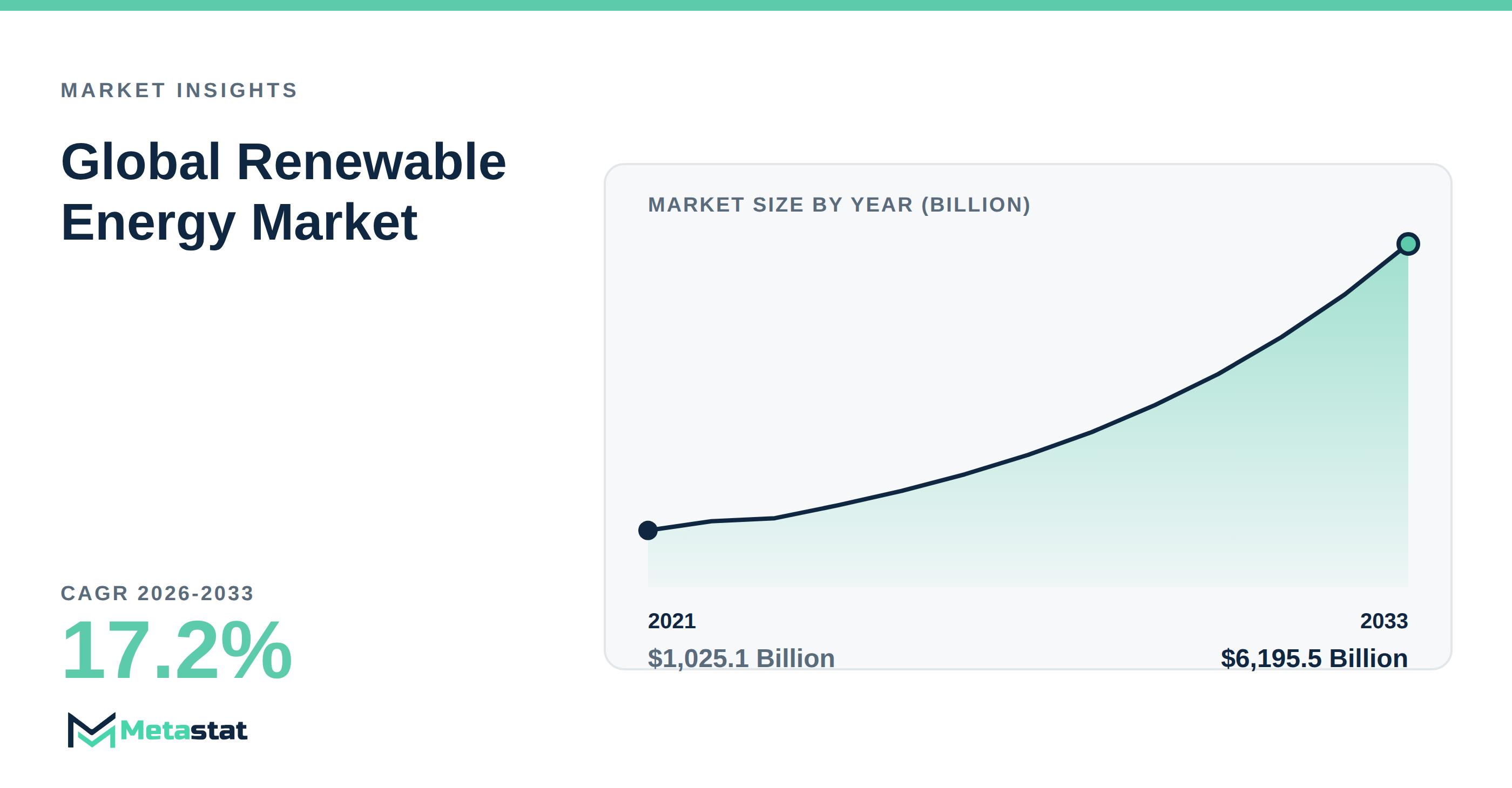
Explore the changes shaping the Renewable Energy sector by 2033, focusing on adoption drivers, technological advancements, and investment opportunities.
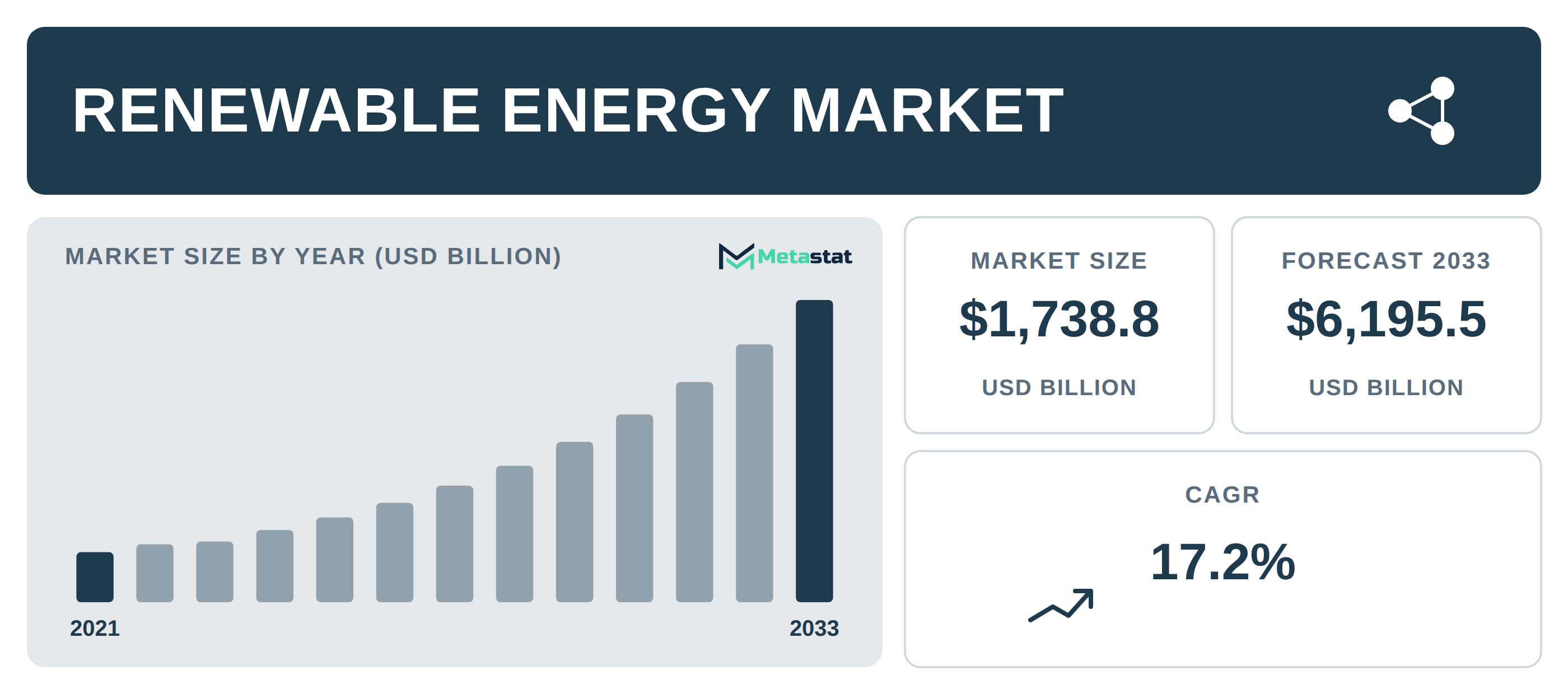
The outlook for Renewable Energy between 2025 and 2033 indicates significant changes influenced by regulatory mandates, technological advancements, and shifting consumer behaviors. While the focus intensifies on sustainable energy solutions, the landscape will evolve considerably, presenting opportunities and challenges for businesses and investors alike. For detailed insights, refer to the Renewable Energy market size and forecast report.
What drives the adoption of Renewable Energy solutions?
Decarbonization mandates play an essential role in propelling the adoption of Renewable Energy solutions. Governments worldwide implement aggressive goals aimed at reducing carbon emissions, prompting industries to transition towards cleaner energy sources. As regulatory frameworks strengthen, organizations increasingly invest in Renewable Energy technologies, aligning with heightened consumer demand for sustainable practices. This regulatory push fosters investments that enhance brand reputation and build customer loyalty.
How will technological advancements shape the Renewable Energy landscape?
Technological innovations will significantly impact the Renewable Energy sector, particularly in solar and wind segments. A notable trend involves the ongoing decline in the levelized cost of energy (LCOE), which is crucial in boosting the competitiveness of renewable solutions. With technological maturity, production expenses decrease, enabling organizations to implement these systems with greater confidence. For instance, solar energy capacity is projected to grow to USD 2,401.5 billion by 2033, highlighting the substantial potential for increased adoption driven by technological progress.
What impact do Corporate Power Purchase Agreements have?
Corporate Power Purchase Agreements (PPAs) increasingly influence the procurement strategies for utility-scale solar and offshore wind projects. By entering into long-term contracts at fixed costs, corporations stabilize their expenses while securing renewable energy sources. This method encourages investments in large-scale renewable infrastructure, facilitating broader adoption across various industries. Enhanced reliance on PPAs promotes competitiveness among renewable energy suppliers, driving them to innovate and improve operational efficiencies.
What challenges are emerging in the Renewable Energy supply chain?
Significant challenges persist concerning critical mineral supply chains, essential for manufacturing batteries and renewable energy systems. Rising demand for minerals including lithium and cobalt complicates procurement strategies, especially as countries enact domestic manufacturing requirements. These policies aim to reduce dependence on foreign sources and enhance national security. As North America and other regions emphasize local production capacities, businesses navigate these complexities to ensure sustainable sourcing and maintain competitive positioning.
What trends should investors and companies monitor?
Investors and companies should closely monitor trends indicating rapid growth in residential solar solutions, driven by rising energy costs and increased environmental consciousness. This shift signifies a greater demand for clean energy solutions, resulting in the residential sector's projected value rising from USD 393.9 billion in 2026 to USD 1,149 billion by 2033. Understanding such trends equips stakeholders to capitalize on the transition toward renewable technologies.
While the Renewable Energy outlook evolves, it remains crucial for businesses to stay agile and informed. Continuous monitoring of regulatory changes, technological advancements, and consumer preferences will be vital for successful navigation of this dynamic sector.
Tags
About the Authors

LEAD ANALYST
Utkarsh Khirodkar is a Lead Market Research Analyst at MetaStat Insight, specializing in market intelligence, technology sector assessments, and competitive strategy.

PRINCIPAL CONSULTANT - ENTERPRISE AI & EMERGING TECHNOLOGIES
Banking & Finance · Electronics and Semiconductor · Energy and Power · Healthcare IT · Information & Technology · Professional Services
Vijay Gunti is a Principal Consultant at MetaStat Insight, bringing over two decades of experience across enterprise digital transformation, technology strategy, and intelligent systems.

ENERGY & INFRASTRUCTURE INDUSTRY CONSULTANT
Automotive and Transportation · Electronics and Semiconductor · Energy and Power · Machinery & Equipment
Saurabh Vasant Ganvir consults for Energy & Infrastructure Industry at MetaStat Insight, specializing in renewable energy, solar EPC, and electric vehicle (EV) infrastructure markets.