
Explore the evolving 5G Radio Unit landscape from 2025 to 2033, highlighting key trends, challenges, and opportunities for stakeholders.
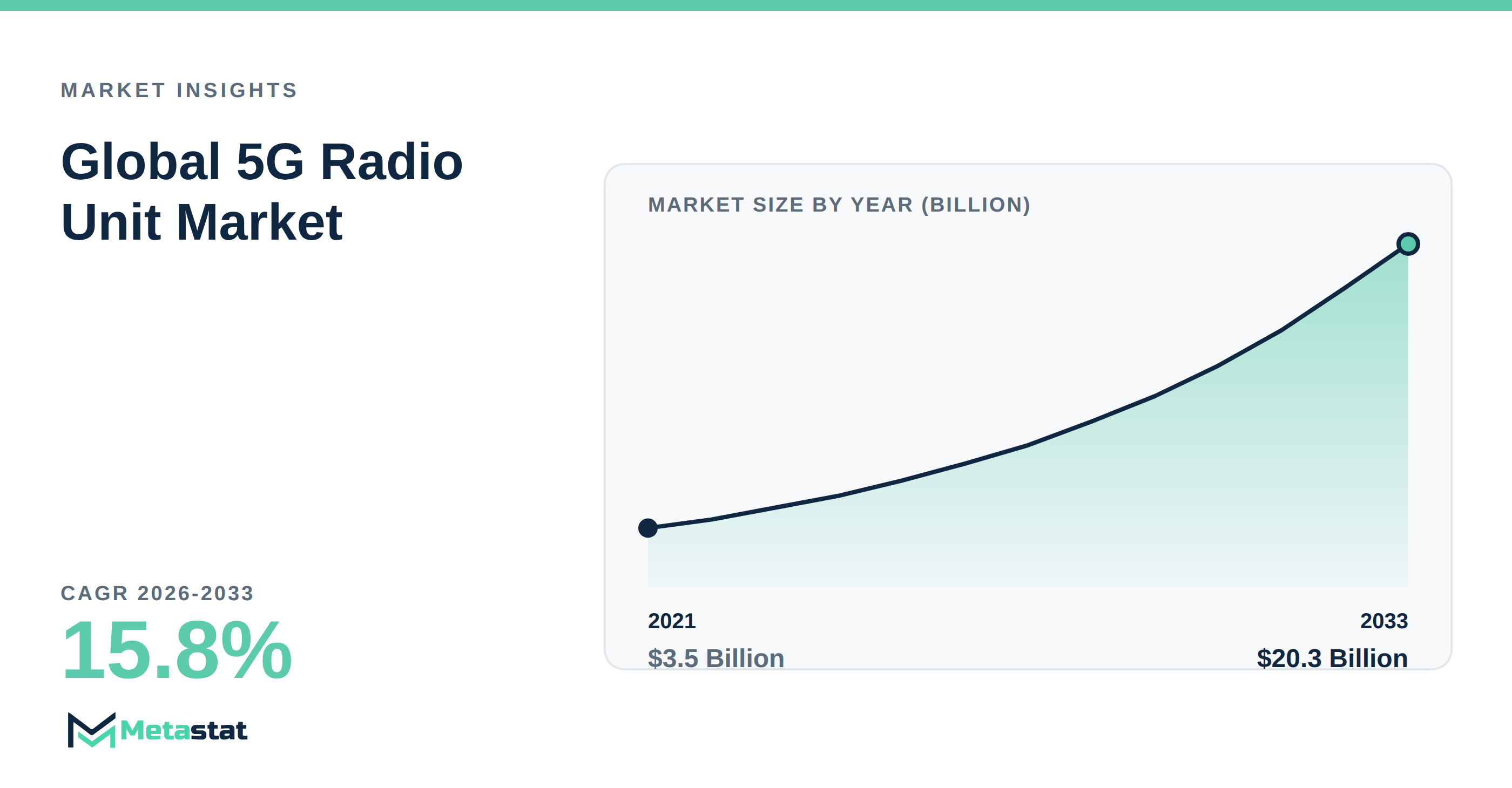
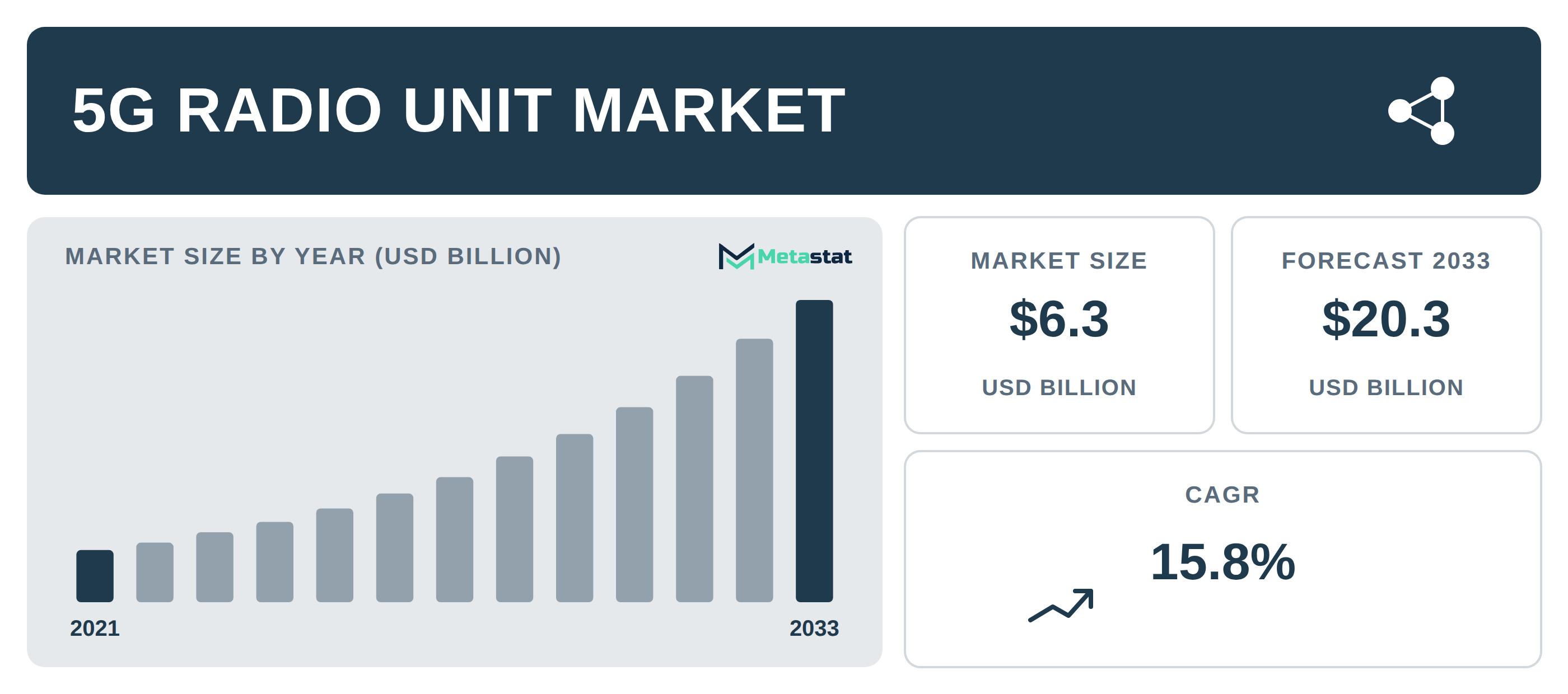
Shifts in the 5G Radio Unit landscape between 2025 and 2033 create significant trends and opportunities for stakeholders. Buyers focus on the evolving challenges and advancements that will shape the competitive environment during this period. The increasing demands on network infrastructure trigger a continuous drive for enhancements in connectivity solutions. The full figures are in our 5G Radio Unit market size and forecast report.
What factors drive the demand for 5G Radio Units?
The escalating need for enhanced connectivity solutions stems from telecom operators striving to upgrade existing systems. The rapid rise in connected devices and the demand for high-speed data services compel operators to invest in advanced communication technologies. This growing trend fosters a competitive atmosphere where companies enhance their service offerings to retain their customer base. Therefore, the appetite for efficient radio configurations and frequency bands is expected to accelerate, pushing the adoption of solutions that ensure optimal performance.
How does technology evolution impact the market?
Advancements in radio configurations substantially influence the future trajectory of the market for 5G Radio Unit. Innovations in systems, including Massive MIMO technology, provide operators with improved capacity and efficiency. Such advancements empower telecom operators to handle greater traffic loads effectively, resulting in enhanced service quality. The emergence of configurations like 16T16R and 64T64R reflects broader adoption patterns, as operators aim to optimize their infrastructure to meet the demands of new applications.
What role does the indoor radio segment play in future growth?
Indoor radio solutions contribute significantly to the 5G Radio Unit outlook, driven by enterprises' needs for reliable connectivity in confined spaces. The focus on digital transformation across various sectors shapes the expectations of organizations seeking specialized solutions, particularly in high-density environments. With enterprises increasingly investing in private 5G networks, the demand for tailored indoor radios is likely to surge, demonstrating a shift toward focused applications. This segment's anticipated growth highlights the importance of addressing specific operational efficiency requirements.
What challenges do players face in this evolving market?
Despite the promising outlook, price sensitivity among telecom operators and enterprises presents challenges to adoption rates. Initial investment costs associated with 5G Radio Units often deter smaller players from entering this competitive landscape. Operators justify their return on investment, while competition from alternative technologies complicates decision-making processes. Consequently, vendors are prioritizing cost-effectiveness while ensuring performance to cater to these budget-conscious customers. Raising awareness about the long-term benefits of 5G technology remains vital for improving uptake in a financially constrained market.
How will supply chain dynamics affect the future?
Increasing costs for essential components impact suppliers in the market for 5G Radio Unit. Rising prices and component shortages elevate production expenses and squeeze profit margins. Suppliers are transitioning to alternative sourcing strategies while investing in technology upgrades to improve manufacturing efficiency. Collaborating with component manufacturers has emerged as a pivotal strategy to mitigate these risks and maintain competitiveness. This focus on operational effectiveness is crucial for navigating the complexities of a market that demands innovation and adaptability.
What should stakeholders watch for in the 5G Radio Unit outlook?
While the outlook for 5G Radio Unit evolves from 2025 to 2033, stakeholders should remain vigilant to technological advancements, changes in buyer expectations, and shifting market dynamics. The transition to advanced configurations, including mid-band frequencies and Massive MIMO, will enhance network capabilities and service quality. Monitoring these developments will help businesses adapt and seize opportunities while addressing the challenges posed by regulatory environments and financial constraints. Overall, the 5G Radio Unit outlook indicates a landscape rich with potential, where proactive engagement is essential for success.
Tags
About the Authors

LEAD ANALYST
Utkarsh Khirodkar is a Lead Market Research Analyst at MetaStat Insight, specializing in market intelligence, technology sector assessments, and competitive strategy.

PRINCIPAL CONSULTANT - ENTERPRISE AI & EMERGING TECHNOLOGIES
Banking & Finance · Electronics and Semiconductor · Energy and Power · Healthcare IT · Information & Technology · Professional Services
Vijay Gunti is a Principal Consultant at MetaStat Insight, bringing over two decades of experience across enterprise digital transformation, technology strategy, and intelligent systems.

LEAD CONSULTANT - COMMUNICATION, TELECOM, AND IT
Electronics and Semiconductor · Information & Technology · Machinery & Equipment · Professional Services
Ravindra Sathe Consultants for Communication, Telecom, and IT at MetaStat Insight. He leads the firm's industry research initiatives across telecommunications infrastructure, digital connectivity, enterprise networking, and emerging information technology domains.