
LEAD ANALYST
Utkarsh Khirodkar is a Lead Market Research Analyst at MetaStat Insight, specializing in market intelligence, technology sector assessments, and competitive strategy.

Global 5G Radio Unit Market Size, Share, By Radio Configuration (2T2R and Below, 4T4R, 8T8R, 16T16R, 32T32R, 64T64R and Others (Asymmetric and Higher-Order Radios)), By Frequency Band (Low Band (below 1 GHz), Mid Band (1-7.125 GHz) and mmWave (FR2)), By Deployment Environment (Outdoor and Indoor), By End User (Telecom Operators, Enterprises, Neutral-Host Providers, Government and Public-Sector Organizations and Others (Research Institutions and Testbed Operators)), Industry Analysis, Growth, Trends, and Forecast, 2026-2033
Report ID
MSI-2448
Published
November, 2026
Pages
254 Pages
Format
Historical
Base year
Forecast
Forecast period
Report Details
Market Valuation: Valued at $6.3 Billion in 2025, projected to reach $20.3 Billion by 2033 at a 15.8% CAGR.
Dominant Segment: The Mid Band (1-7.125 GHz) segment leads the market, driven by its optimal balance of coverage and capacity, essential for meeting increasing data demands.
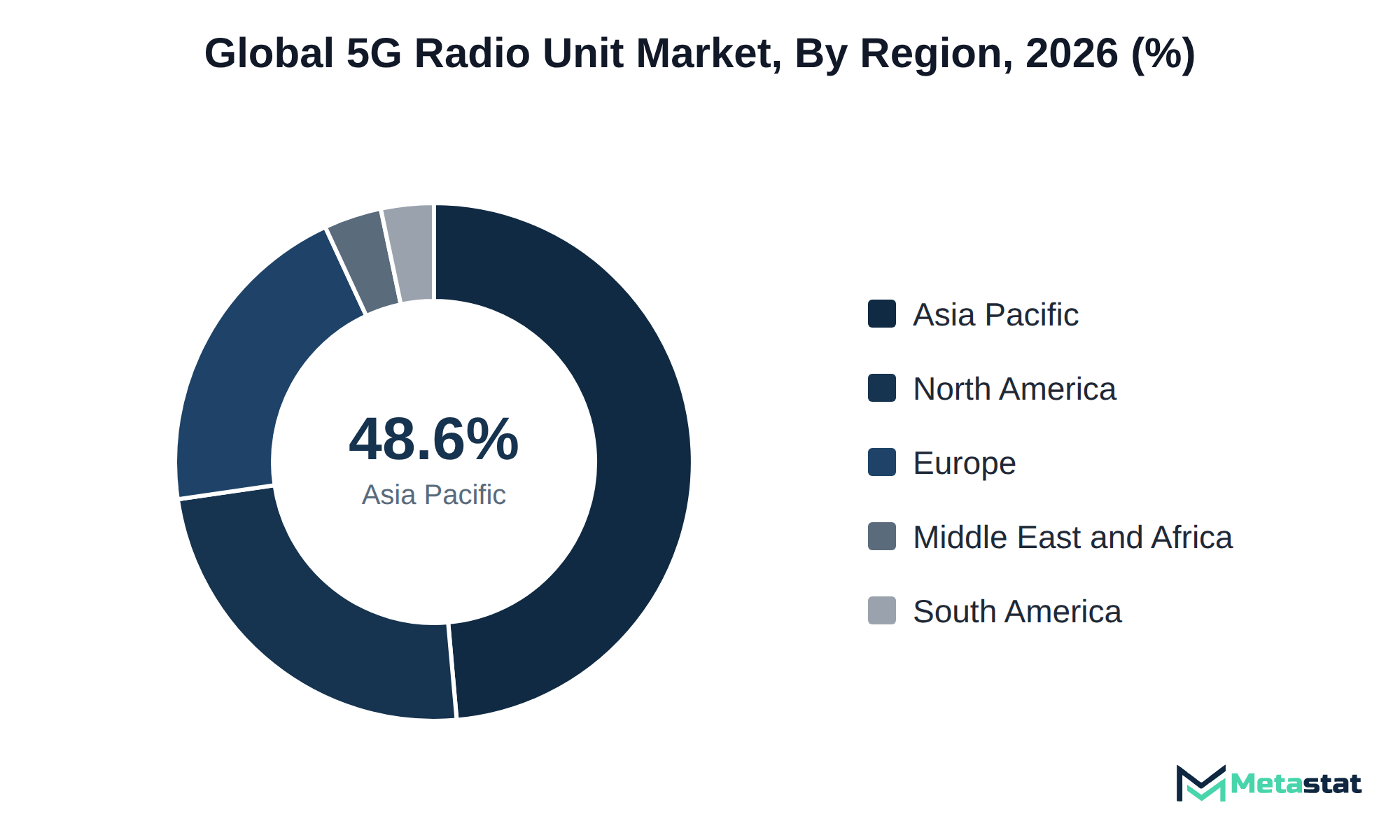
Geographic Lead: Asia Pacific dominates the market with 48.6% share, fueled by extensive investments in telecommunications infrastructure and rapid 5G adoption.
What's Inside: The report provides a comprehensive analysis of market dynamics, competitive landscape, and detailed forecasts from 2026 to 2033, covering various configurations, frequency bands, and deployment environments.
Emerging Trends: The indoor deployment segment is projected to grow at a CAGR of 20.3%, reflecting the rising demand for secure and high-performance connectivity solutions in enterprise environments.
Technological Advancements: Massive MIMO technology is gaining traction, with the 16T16R configuration expected to grow significantly, enhancing data throughput and operational efficiency for telecom operators.
Choose Your License
Global 5G Radio Unit Market
The global 5G Radio Unit market was valued at USD 6.3 billion in 2025 and is projected to reach USD 20.3 billion by 2033, growing at a CAGR of 15.8% over the forecast period.
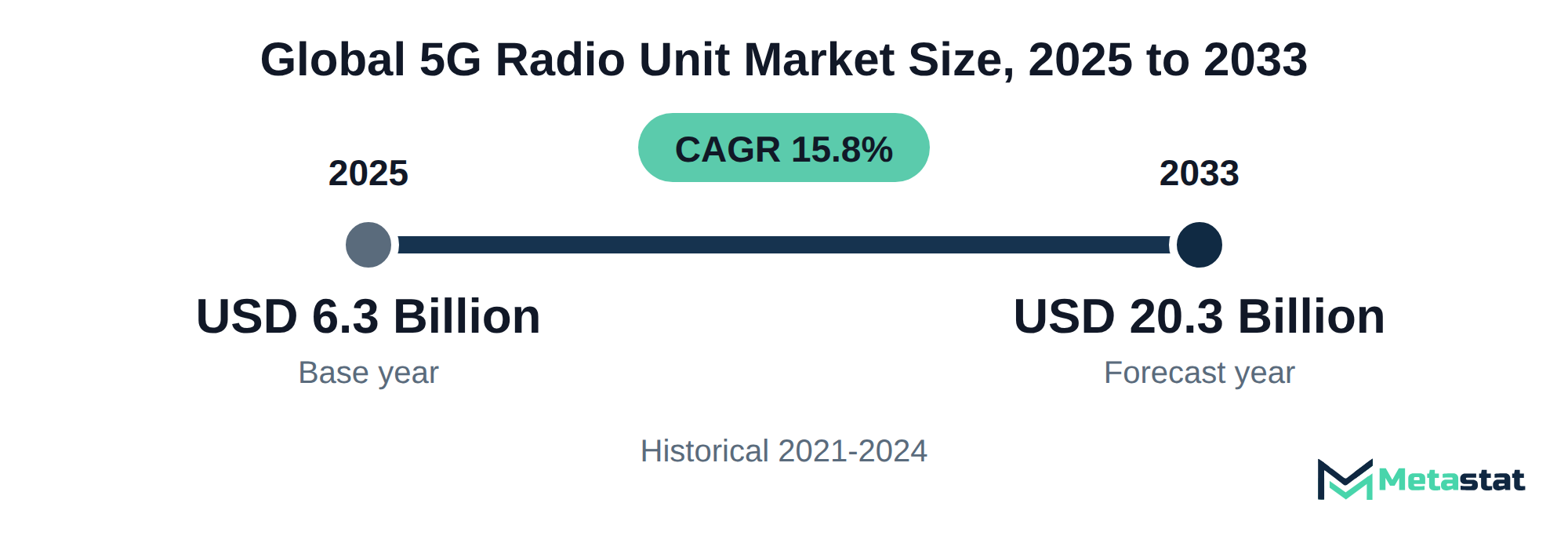
The 5G Radio Unit market encompasses various technologies and configurations that facilitate the deployment of high-speed wireless communications. Buyers invest in this market primarily to enhance network capacity and improve service quality. Key buyer groups include telecom operators, enterprises, and government organizations, driven by support for increasing data demands and improving connectivity. The market's growth reflects a significant shift towards advanced communication technologies, enabling faster and more reliable services.
Strong growth in the market results from the rapid adoption of 5G technology across different sectors. The segment featuring the highest value is the Mid Band (1-7.125 GHz), which is crucial for achieving an optimal balance between coverage and capacity. In terms of regional performance, Asia Pacific dominates with 48.6% of the market share, highlighting the region's extensive investment in telecommunications infrastructure. North America holds 24.1% of the market in 2025, with the US leading in 2026.
Investment in outdoor deployment environments significantly drives expansion within the market. This deployment type is essential for extending coverage and delivering high-speed services in urban and suburban areas. Organizations prioritize enhanced connectivity to support a growing number of connected devices and applications, which drives demand for advanced radio units.
The 5G Radio Unit market addresses the demand for advanced communication infrastructure, particularly from telecom operators and enterprises seeking enhanced connectivity solutions. Investments in this market stem from the need for reliable, high-speed networks capable of supporting various applications, including 5G IoT and smart city initiatives. Buyers prioritize these units to ensure competitiveness and operational efficiency in an increasingly digital landscape.
Growth in the market is primarily driven by the transition to 5G technology, which enables faster data transfer and improved network efficiency. Among the segments, the Mid Band (1-7.125 GHz) configuration stands out as the most valuable, reflecting broad adoption across diverse applications. The Asia Pacific region captures the largest share overall, while North America holds 24.1% of the market in 2025 and the US leads in 2026.
Investment in 5G Radio Units is expected to rise significantly, with a projected CAGR of 15.8% during the forecast period. The market's expansion aligns with increasing user demand for enhanced mobile broadband services and the growing reliance on wireless technologies. This creates opportunities for manufacturers and suppliers to innovate and capture new market segments.
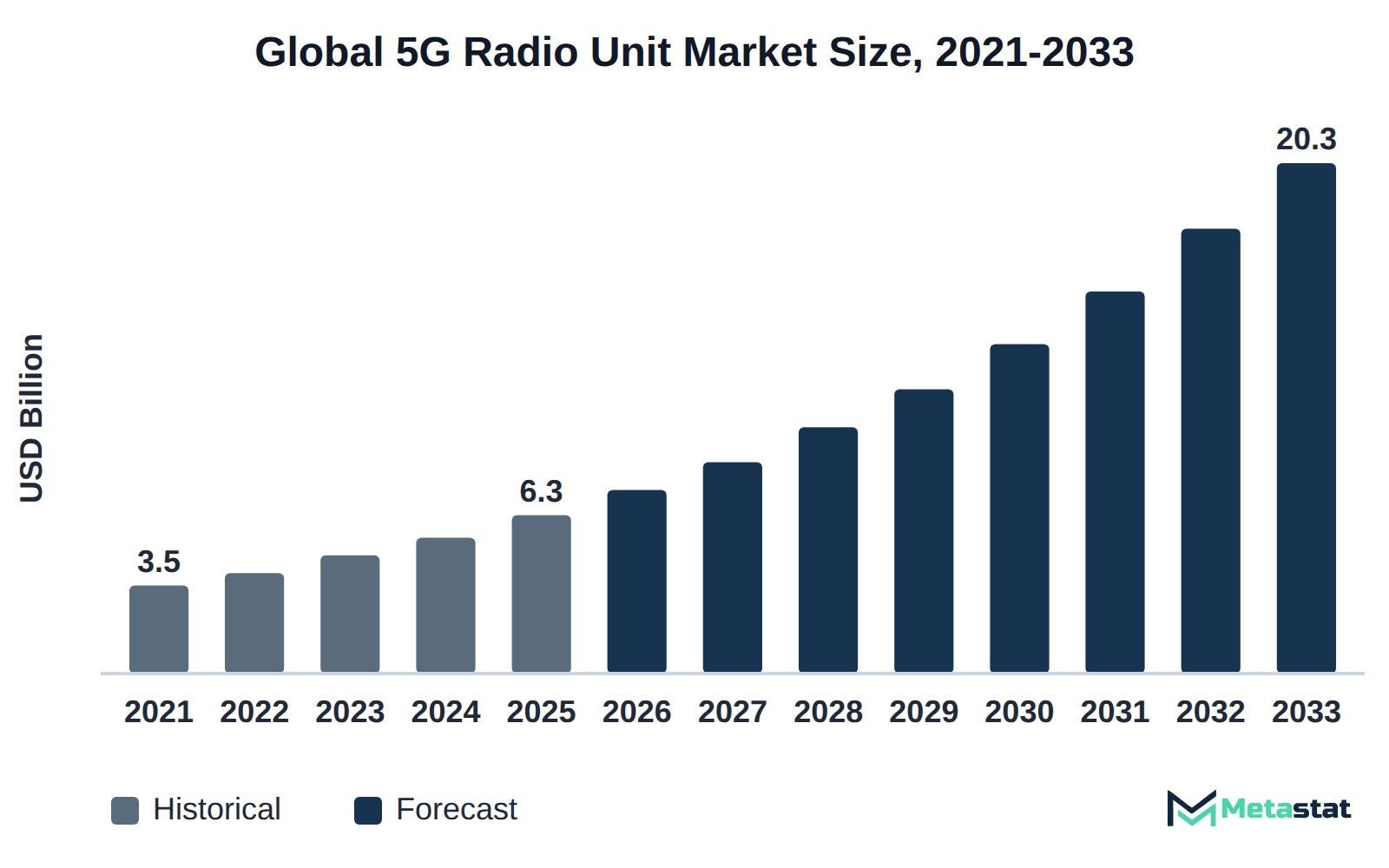
Massive MIMO technology enhances radio efficiency in the 5G Radio Unit market, supporting significant improvements in data throughput and capacity. This technology employs multiple antennas at both the transmitter and receiver ends, enabling simultaneous connections for numerous users. The segment for 16T16R configurations is projected to experience a compound annual growth rate (CAGR) of 13.7% through 2033, reflecting a strong shift toward advanced antenna systems. This transition allows telecom operators to manage tower loads more effectively, reducing operational costs associated with energy consumption and infrastructure investment.
The economic implications of adopting Massive MIMO technology extend beyond operational efficiency. Enhanced spectral efficiency leads to increased revenue opportunities for telecom operators, aligning with their objective to maximize return on investment. In addition, the adoption of 8T8R configurations, projected to reach significant market penetration, facilitates the delivery of high-quality services to diverse customer bases. The 5G Radio Unit market supports an ecosystem that improves user experiences while optimizing resource use in the telecommunications industry.
Organizations increasingly prioritize open fronthaul interoperability and multi-vendor procurement strategies in the evolving 5G Radio Unit market. This shift enables telecom operators to source equipment from various manufacturers, promoting competitive pricing and innovation. The forecast for the segment featuring telecom operators indicates growth from USD 6.1 billion in 2026 to USD 15.3 billion by 2033, reflecting a compound annual growth rate of 14.1%. This substantial increase highlights the demand for flexible procurement options that support diverse network architectures.
The adoption of multi-vendor strategies facilitates cost-effective solutions by allowing buyers to select the best technologies tailored to their specific needs. Interoperability standards play a critical role in this transition, ensuring effective integration of radio access network equipment from different vendors. Consequently, telecom operators reduce dependency on single suppliers, enhancing their negotiating power. This trend toward multi-vendor environments drives down costs for buyers and encourages innovation among suppliers, contributing to overall market growth.
The growing adoption of private 5G networks highlights the distinct requirements of enterprises seeking indoor radios. These organizations prioritize secure, reliable, and high-performance connectivity within their facilities, demanding solutions that cater specifically to indoor environments. In the 5G Radio Unit market, the indoor deployment environment segment is projected to reach USD 4.2 billion by 2033, reflecting a compound annual growth rate (CAGR) of 20.3%. This significant growth illustrates the increasing need for tailored solutions that support high data throughput and low latency in indoor settings.
Indoor radio solutions enhance communication capabilities and facilitate advanced applications including IoT connectivity, automation, and real-time data processing. Organizations across various sectors, including manufacturing, healthcare, and education, actively invest in these solutions to improve operational efficiency and enhance user experiences. The emphasis on indoor requirements highlights the necessity for vendors to innovate and provide adaptable systems that meet the unique challenges present in indoor environments. Providers that successfully address these specific needs capture a larger share of the expanding market.
Mid-band and mmWave radios play a significant role in shaping 5G deployment costs. The mid-band frequency range (1-7.125 GHz) is projected to reach USD 15.4 billion by 2033, reflecting a compound annual growth rate (CAGR) of 15.9%. This segment's growing adoption results from its balance of coverage and capacity, making it an attractive choice for telecom operators seeking efficient deployment solutions. On the other hand, mmWave radios, while offering high capacity, involve higher infrastructure costs due to their limited range and greater sensitivity to obstacles.
The deployment costs associated with mmWave technology affect overall project budgets. The necessity for dense infrastructure, including more base stations to ensure coverage, leads to increased capital expenditures. In contrast, mid-band radios, with their broader coverage capabilities, allow for cost-effective deployment strategies that facilitate quicker service rollout. These dynamics influence financial planning for enterprises and telecom operators engaging in 5G Radio Unit market investments.
Telecom operators drive significant demand for 5G Radio Units due to the expanding need for enhanced connectivity solutions. The shift towards higher data consumption, propelled by the proliferation of connected devices and applications, accelerates the upgrade cycles of existing infrastructure. This transition enables operators to improve overall network performance and efficiency while meeting customer expectations for faster data speeds. The emphasis on advanced technologies, including Massive MIMO, positions telecom operators to optimize their service offerings, creating a competitive advantage in an increasingly digital environment.
Growth in enterprise adoption influences the market, with organizations increasingly pursuing private 5G networks. This trend further emphasizes the importance of high-performance radio configurations and advanced frequency bands for reliable connectivity across diverse environments. Together, telecom operators and enterprises sustain overall market growth.
Technological advancements in radio configurations significantly influence the 5G Radio Unit market. Innovations including 64T64R and higher-order radios provide enhanced capacity and spectral efficiency, allowing operators to manage higher traffic loads effectively. The introduction of these advanced configurations supports high performance, appealing to telecom operators focused on meeting increasing data demands. In addition, the evolution of frequency bands, especially mid-band and mmWave technologies, facilitates greater coverage and improved data rates, further driving market expansion. The ongoing enhancement of deployment environments for outdoor and indoor installations allows for a wider range of applications, catering to the diverse needs of end users. Consequently, the acceleration of these technological developments strengthens competitive positioning and stimulates investment in the market. Suppliers that effectively integrate these technologies into their offerings position themselves favorably in a changing environment.
Price sensitivity among telecom operators and enterprises significantly influences adoption rates within the market. High initial capital expenditures associated with the installation and upgrade of 5G Radio Units create barriers for smaller operators and enterprises. These buyers often face challenges in justifying the return on investment, leading to delayed decisions on equipment procurement. Competitive pricing pressures from alternative technologies deter investment in 5G infrastructure. Hesitance to commit to substantial financial outlays results in slower uptake and smaller orders for 5G Radio Units, hindering the overall growth trajectory of the market. Buyers often seek cost-effective solutions, impacting the demand for advanced radio configurations and frequency bands required for optimal 5G performance.
Continued emphasis on cost-effectiveness among enterprises and telecom operators shapes procurement strategies. Insufficient budget allocation for 5G-related projects restricts the expansion and upgrade of existing communication infrastructure, resulting in a fragmented market landscape. Enhanced awareness and education about the long-term benefits of investing in 5G technology could drive improved uptake, but current financial constraints present a significant hurdle for many potential buyers in the market.
Escalating costs for essential components challenge suppliers within the market. Increases in raw material prices and component scarcity drive up production expenses, creating pressure on profit margins. Suppliers experience difficulties maintaining competitive pricing while ensuring product quality, prompting many to seek alternative sourcing strategies and cost-reduction initiatives. Several suppliers invest in technology upgrades to enhance manufacturing efficiency, reducing reliance on costly materials. This strategic shift enables better adaptability to fluctuating market conditions.
Firms navigating these challenges find collaboration with component manufacturers a critical strategy. Joint ventures and strategic partnerships allow access to advanced materials and innovative production techniques, supporting cost control efforts. By optimizing supply chains through strategic collaborations, suppliers enhance operational efficiency and mitigate the impact of cost increases. These actions help suppliers stay competitive in the 5G Radio Unit market.
Indoor radio growth stems from surging demand for reliable connectivity solutions in commercial buildings, airports, and other high-density venues. Enterprises increasingly seek specialized indoor radio configurations to enhance user experience and operational efficiency. Organizations prioritize connectivity, and the market addresses their requirements by providing advanced indoor radio solutions. The significant growth anticipated in this segment contributes to the overall expansion of the market, highlighting the crucial role played by indoor radio units in meeting evolving connectivity demands.
The Global 5G Radio Unit market is segmented based on Radio Configuration, Frequency Band, Deployment Environment, and End User.
2T2R and Below segment is valued at USD 0.3 billion in 2026 and is projected to reach USD 0.8 billion by 2033, at a CAGR of 14.5% during the forecast period. This configuration is typically applied in various outdoor and indoor applications, allowing telecommunications operators to enhance connectivity in urban environments. A significant demand driver stems from the need for cost-effective solutions that support basic 5G deployment, appealing to smaller telecom operators and enterprises. This segment exhibits slower growth compared to other configurations, including 4T4R, which has a CAGR of 14.3%. The configuration's relatively lower cost suits budget-conscious buyers, differentiating it from higher-order systems that demand larger investments and cater to different market segments. The anticipated growth reflects an increasing focus on expanding 5G coverage while managing expenses effectively.
4T4R segment is estimated to reach USD 2.9 billion by 2033, at a CAGR of 14.3% during the forecast period. This configuration is primarily used by telecom operators to enhance network capacity and performance, supporting higher data rates and improved user experiences. The increasing demand for faster and more reliable communication services drives growth in this segment. Telecom operators pursue advanced technologies to address growing user expectations, leading to heightened interest in 4T4R solutions. Compared to other configurations, including 2T2R and Below, which show a CAGR of 14.5%, the 4T4R segment demonstrates a slightly lower growth rate. However, its ability to facilitate robust connectivity in both urban and suburban environments ensures its significance in the evolving 5G Radio Unit market.
8T8R segment is expected to reach USD 2.7 billion by 2033. This configuration is applied in high-capacity scenarios where data throughput and efficiency are critical. Telecom operators predominantly employ this segment to enhance network performance and meet increasing data traffic demands. The growth of this segment is primarily driven by the rising adoption of advanced technologies, leading to improved data rates and service reliability. Growth rates for the 8T8R segment, at a CAGR of 14.3%, reflect its robust demand compared to other configurations. Differentiation emerges with 8T8R offering higher efficiency and capacity compared to lower configurations, including 2T2R and 4T4R, which have lower growth rates and targeted applications. The market benefits significantly from ongoing innovation in radio technologies that enhance performance and scalability in varied deployment environments.
The 16T16R configuration is designed for advanced telecommunications, particularly in high-capacity environments requiring efficient data handling. Telecom operators use 16T16R technology to enhance network performance, improve coverage, and support higher data rates. The segment attracts significant interest due to its ability to support MIMO applications, which deliver enhanced spectral efficiency. Compared to other configurations, including 4T4R and 8T8R, the 16T16R segment experiences steady growth, driven by increasing demands for robust wireless connectivity. Anticipated growth reflects the continuous evolution of mobile communication standards and the need for efficient network infrastructure, making it vital for the telecommunications sector. The market sees rising investments in this segment as operators prioritize technology upgrades to meet expanding consumer demands.
32T32R configurations represent an advanced radio setup within the wireless ecosystem. This segment targets telecom operators who require high capacity and efficiency for dense urban environments. Increased network traffic drives demand for enhanced radio configurations, positioning 32T32R as a strategic choice among providers aiming to optimize performance. Compared to segments like 4T4R and 8T8R, the 32T32R configuration offers potential for greater data throughput, appealing to operators focused on superior service delivery. Growth in this segment is influenced by the escalating need for more capable infrastructure, reflecting broader trends in the 5G Radio Unit market. Adoption trends in advanced configurations indicate a shift toward premium pricing strategies, catering to operators prepared to invest in high-performance solutions.
64T64R technology features a configuration conducive to improving capacity and efficiency for 5G applications. This segment caters primarily to telecom operators, who leverage advanced capabilities to enhance service quality and meet increasing user demand for high-speed connectivity. Demand for this configuration is driven by the necessity for higher data throughput in densely populated urban areas and specialized industries requiring robust network performance. Compared to other configurations, the 64T64R segment stands out due to its potential scalability and operational effectiveness, providing a high-performance solution for emerging use cases. This segment differentiates itself from others like 4T4R and 8T8R by offering a more complex architecture designed to handle significant traffic loads, aiding telecom operators in optimizing their infrastructure for future applications. The market is expected to continue evolving, reflecting shifts in user expectations and technological advancements.
Asymmetric and higher-order radios serve specific functions within complex wireless networks, addressing the increasing demand for high-capacity data transmission. Telecom operators and enterprises apply these radios to enhance connectivity in challenging environments, supporting applications that require robust performance. This segment experiences unique demand drivers, including the push for advanced network solutions that enable faster data rates and lower latency. Regulatory advancements, particularly those encouraging technological innovation, fuel growth in this segment. Compared to other configurations, asymmetric and higher-order radios typically command higher prices due to their advanced capabilities. This results in a distinct market position, appealing to buyers seeking advanced solutions over standard options. Overall, the segment's emphasis on performance and advanced technology distinguishes it from lower-order configurations in the market.
Low Band (below 1 GHz) segment is valued at USD 1.2 billion in 2026 and is projected to reach USD 3 billion by 2033, at a CAGR of 13.7% during the forecast period. This frequency band is primarily used for wide-area network coverage, providing reliable connectivity in rural and suburban regions. Telecom operators and enterprises adopt this band due to its effective penetration capabilities through obstacles, including buildings. The growing demand for internet connectivity in underserved areas drives expansion in this segment. Compared to other frequency bands, Low Band shows slower growth, attributed to the slower pace of technology advancements. Mid Band and mmWave segments exhibit faster growth rates, driven by their capacity to deliver higher data rates. The distinct characteristics of Low Band position it differently in the competitive landscape, appealing primarily to telecom operators focused on broad coverage rather than high capacity.
The mid-band frequency range (1-7.125 GHz) serves data-intensive applications and supports enhanced connectivity for diverse users, including telecom operators and enterprises. Growing demand for higher data speeds and reduced latency drives this segment, distinguishing it from other frequency bands. The mid-band segment exhibits faster growth compared to low-band alternatives, which appeal to cost-sensitive customers. Factors including the increasing rollout of 5G infrastructure and advancements in technology facilitate broader adoption of mid-band radios, enhancing overall network efficiency and performance. This segment's growth significantly contributes to the 5G Radio Unit market, highlighting its importance in meeting evolving connectivity demands across various sectors.
mmWave (FR2) segment is projected to reach USD 1.9 billion by 2033. This segment plays a significant role in enabling ultra-high-speed data transmission for applications including autonomous vehicles and smart cities. Telecom operators and enterprises adopt mmWave technology due to its ability to deliver high-capacity and low-latency connectivity. Increasing demand for enhanced wireless communication and advancements in related technologies drive growth in this segment, which features a CAGR of 15.9%. Compared to other frequency bands, mmWave exhibits distinct characteristics, including higher pricing and specific use cases that attract a different buyer profile focused on advanced applications. The market continues to expand rapidly, highlighting the strategic importance of mmWave technologies in shaping future connectivity solutions.
Outdoor deployment environments are valued at USD 6.1 billion in 2026 and are projected to reach USD 16.1 billion by 2033, at a CAGR of 14.8% during the forecast period. These environments facilitate widespread connectivity solutions for various sectors, including telecom operators, enterprises, and government entities. Strong demand arises from increasing outdoor data traffic and the growing need for robust mobile connectivity. This segment differs from the indoor segment, which is anticipated to experience a higher growth rate of 20.3%, reflecting different use cases and deployment strategies. Outdoor environments primarily support extensive coverage and user mobility, while indoor solutions emphasize capacity and localized service. The contrasting growth patterns highlight the strategic focus on enhancing outdoor network capabilities to accommodate the substantial rise in user demand for reliable connectivity.
The indoor segment primarily serves enterprises and government organizations that require reliable connectivity in confined spaces, including offices, shopping malls, and public buildings. The rapid adoption of smart technologies and IoT applications drives demand for enhanced indoor coverage and capacity. Compared to outdoor environments, the indoor segment exhibits a higher growth rate, driven by increasing investments in infrastructure to support digital transformation initiatives. Competitive pricing strategies from suppliers in this segment contribute to a favorable environment for end users seeking affordable solutions. The market for 5G Radio Units expands significantly as enterprises seek to optimize operational efficiency through improved connectivity solutions.
Telecom operators employ 5G radio units to enhance network capacity and improve service quality, catering primarily to mobile users and enterprises seeking higher data speeds. A driving force for this segment includes the increasing demand for high-speed mobile internet services, which pushes operators to invest in advanced radio technologies. This segment exhibits a different growth trajectory compared to Neutral-Host Providers and Enterprises, with a slower CAGR than the latter's projected 23% growth. Telecom Operators face unique challenges, including regulatory hurdles and the need for substantial capital investments in infrastructure, impacting overall market dynamics. The focus on enhancing user experience through robust network performance significantly influences spending patterns and technology adoption in the market.
The Enterprises segment is estimated to reach USD 2.5 billion by 2033, at a CAGR of 23% during the forecast period. This segment encompasses organizations that apply advanced technologies for efficient operations and enhanced connectivity. Enterprises use 5G Radio Units to support applications including smart manufacturing, remote collaboration, and enhanced operational efficiency. The rapid digital transformation across industries drives investment in this segment. High demand for improved network performance differentiates it from other segments, with a notable growth rate compared to Telecom Operators, which grow at a CAGR of 14.1%. Cost factors related to infrastructure and deployment strategies influence the adoption pace, while the rising need for reliable and high-speed connectivity encourages further investments. Overall, the Enterprises segment represents a dynamic area of growth within the 5G Radio Unit market.
The Neutral-Host Providers segment is expected to reach USD 1.2 billion by 2033. This segment plays a critical role in delivering enhanced connectivity solutions by allowing multiple operators to share the same infrastructure. Telecom operators and enterprises use these services to optimize their network reach and manage costs. Growing demand for efficient spectrum use drives investment in this area. The segment exhibits a faster growth rate compared to traditional operators, reflected in its anticipated CAGR of 21.7%. Neutral-Host Providers face unique challenges, including regulatory hurdles and the need for effective integration across various network environments, which influence adoption rates. Addressing these challenges presents significant potential for expanding market share within the 5G Radio Unit market.
Government and Public-Sector Organizations segment is projected to grow at a CAGR of 21.7% during the forecast period. This segment primarily serves various governmental bodies and public institutions, facilitating enhanced communication and operational efficiency. Increased investment in digital infrastructure and smart city initiatives drives demand, enabling these organizations to deploy advanced technologies for improved service delivery. Compared to other segments, this category experiences faster growth due to rising emphasis on digital transformation and modernization in public services. The focus on connectivity and data-driven decision-making sets this segment apart, with unique requirements that differ from Telecom Operators and Enterprises. Investment in 5G technology provides opportunities for better connectivity, resulting in significant operational improvements for government agencies and public-sector organizations. This growth reflects a broader trend within the 5G Radio Unit market, as public-sector entities seek to leverage advanced networking solutions.
This sub-segment includes Research Institutions and Testbed Operators, focusing on the development and evaluation of new technologies and applications for 5G. These entities play a critical role in advancing the capabilities and performance of 5G technology, serving both academic and practical purposes. Demand increases due to heightened investment in research and development, which drives innovation and accelerates the rollout of new solutions. Compared to other segments, this area experiences slower growth due to its specialized nature and reliance on project-based funding. Research Institutions often work on pilot programs and collaborations, distinguishing their needs and operations from commercial telecommunications entities. The unique focus on experimentation and validation within this sub-segment creates a distinct relationship with technology providers and influences procurement strategies, aligning them with broader trends in the 5G Radio Unit market.
Based on geography, the Global 5G Radio Unit market is divided into North America, Europe, Asia-Pacific, South America, Middle East, and Africa.
Rapid expansion of mobile networks in North America drives interest in the 5G Radio Unit market. The United States, Canada, and Mexico represent key players in adoption, with substantial investments focused on enhancing network infrastructure. The market benefits from initiatives aimed at promoting next-generation wireless technology, facilitating improved connectivity solutions across various sectors. By 2033, the region is projected to reach USD 4.6 billion. In 2025, North America captures a share of the global market, reflecting strong demand from telecom operators and enterprises. Investment in advanced radio configurations and frequency bands will continue to shape the competitive dynamics within the region.
Demand for the 5G Radio Unit market in Europe reflects significant growth driven by the need for improved connectivity and enhanced mobile broadband experiences. Key countries including Germany, France, and the UK prioritize investments in telecom infrastructure to support advanced 5G applications. The rising demand for high-capacity networks among telecom operators and enterprises fuels market expansion. Regulations emphasizing the transition to digital services increase the urgency for 5G deployment. With a market share of 20.4% in 2025, Europe remains a vital region in the global market, with solid growth prospects as industries use new technologies to improve productivity and efficiency.
Asia Pacific plays a significant role in the growth of the 5G Radio Unit market, driven by substantial investments in telecommunications infrastructure and the increasing demand for high-speed connectivity. Countries including China, Japan, and India lead the way in 5G adoption due to robust government support and initiatives aimed at enhancing digital infrastructure. The region captures 48.6% of the global market share in 2025, reflecting strong demand from telecom operators and enterprises striving to upgrade their networks. Outdoor deployment environments are particularly emphasized, with a projected value of USD 16.1 billion by 2033. The presence of multiple telecom giants and technology providers creates a competitive landscape, facilitating innovations in radio configurations and frequency bands. Investment in low-band, mid-band, and mmWave technologies significantly contributes to the region's growth trajectory.
Demand for the 5G Radio Unit market in South America is driven by increasing mobile network coverage and advancements in telecommunications technology. Brazil and Argentina represent the primary markets, where telecom operators focus on expanding their infrastructure to support growing consumer demand for high-speed connectivity. Investment in 5G technology aligns with national digital transformation goals, enhancing overall economic efficiency. The region's share of the global market was 3.3% in 2025, reflecting ongoing efforts to modernize communication networks. Challenges include high deployment costs, which impact the pace of adoption. However, ongoing developments promise an increase in economic activity and connectivity in the coming years. The market is expected to benefit from continued efforts to enhance infrastructure and service availability.
Growth in the 5G Radio Unit market within the Middle East and Africa is driven by increasing investments in telecommunications infrastructure and rising demand for enhanced connectivity services. Countries including Saudi Arabia and the UAE lead efforts to expand network capabilities, with significant government backing for technology advancements in the telecommunications sector. South Africa presents a unique opportunity due to its diverse market needs and the push for improved rural connectivity. The region's share of the global market is projected at 3.6% in 2025, reflecting a focused approach to modernizing communication networks. Strong demand from telecom operators and government initiatives to facilitate digital transformation are expected to accelerate the market's growth in this region.
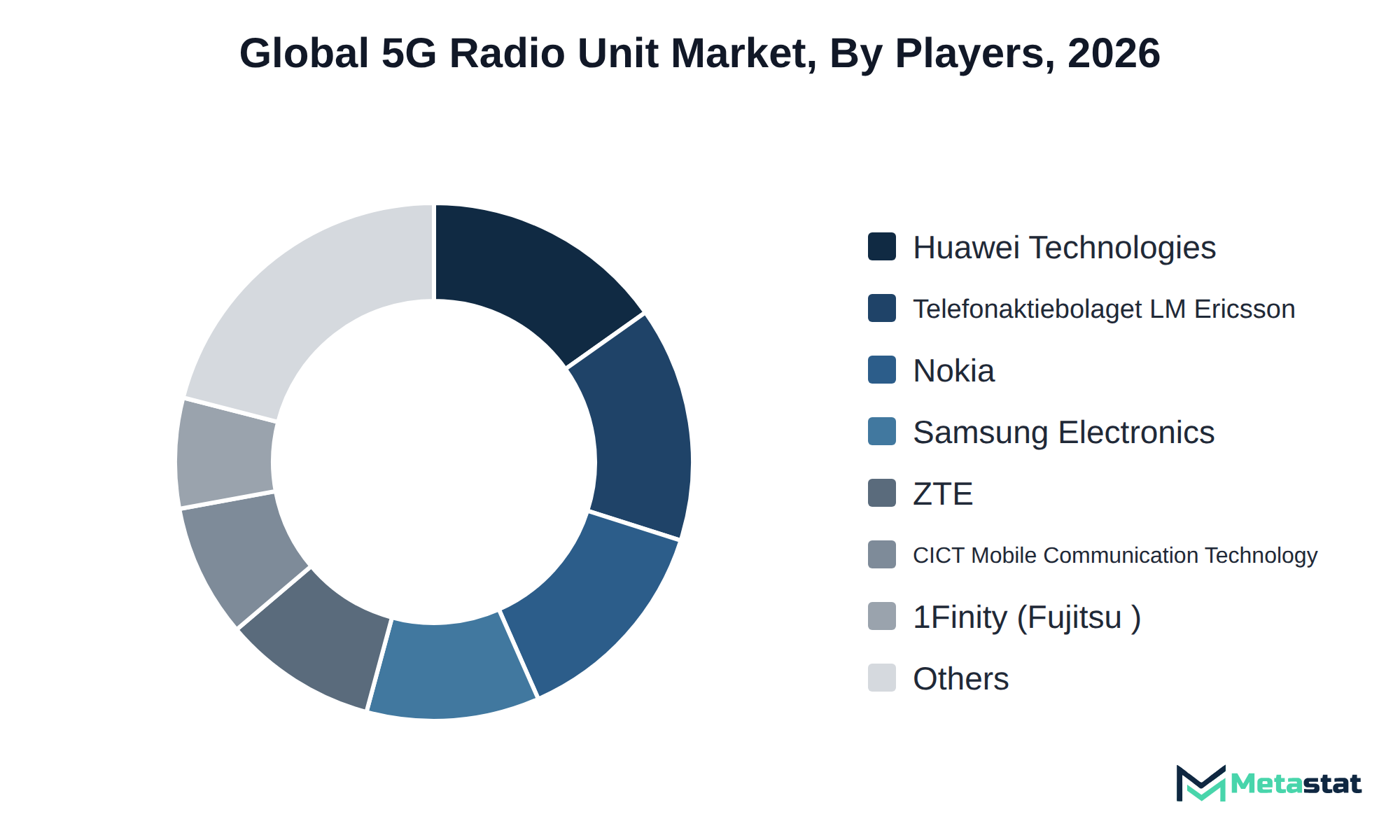
The 5G Radio Unit market features strong competition driven by diverse strategies among key players. Companies differentiate through various approaches, including technology innovation, pricing strategies, and service customization. Telecom operators prioritize advanced technology and price competitiveness when selecting 5G network equipment vendors, leading to competitive pricing models among suppliers.
Telefonaktiebolaget LM Ericsson and Huawei Technologies Co., Ltd. focus on technology leadership and ecosystem partnerships, positioning themselves to respond effectively to customer demands. ZTE Corporation and Nokia Corporation emphasize service quality and reliability, aiming to attract buyers through proven track records in deployment success. Samsung Electronics Co., Ltd. emphasizes customization, catering to specific needs of clients, which enhances their competitive edge in targeted markets.
Companies leverage their expertise in various segments, including radio configuration and deployment environments, to strengthen their market positions. For instance, NEC Corporation and Airspan Networks Holdings LLC concentrate on outdoor deployment solutions, aiming to capture growing demand for robust outdoor network infrastructure. In contrast, enterprises like CICT Mobile Communication Technology Co., Ltd. invest in indoor solutions to address specific customer requirements in urban environments.
The 5G Radio Unit market's competitive environment continues to evolve, driven by technological advancements and shifting buyer preferences. While companies adjust their strategies, the market landscape becomes increasingly dynamic, encouraging innovation and collaboration among key players.
This growth relies on key developments within the 5G Radio Unit market. First, widespread adoption of mid-band frequency bands, projected to reach USD 15.4 billion by 2033, is essential for expanding network capabilities and enhancing service quality. Second, a significant increase in outdoor deployment environments, estimated to rise from USD 6.1 billion in 2026 to USD 16.1 billion by 2033, will support the growing demand for mobile connectivity in urban and suburban areas. Finally, the rise of enterprises investing in 5G technology, with a forecasted market value of USD 2.5 billion by 2033, will drive innovation and create new applications. However, risks including regulatory challenges and supply chain disruptions hinder growth and delay market expansion. Addressing these obstacles will be essential for achieving the projected market value and sustaining competitiveness in the sector. Continuous investments and technological advancements will ensure that the 5G Radio Unit market meets evolving user demands and maintains momentum toward its forecasted growth.
By Radio Configuration: 2T2R and Below, 4T4R, 8T8R, 16T16R, 32T32R, 64T64R, Others (Asymmetric and Higher-Order Radios)
By Deployment Environment: Outdoor, Indoor
By End User: Telecom Operators, Enterprises, Neutral-Host Providers, Government and Public-Sector Organizations, Others (Research Institutions and Testbed Operators)
The report strategically identifies and profiles the key market players and analyses their core competencies in each sub-segment of the 5G Radio Unit market.
|
Report Attributes |
Details |
|
Study Period |
2021-2033 |
|
Base Year |
2025 |
|
Estimated Year |
2026 |
|
Forecast Period |
2026-2033 |
|
Historical Period |
2021-2025 |
|
Growth Rate |
CAGR 15.8% from 2026 to 2033 |
|
Revenue Unit |
USD billion |
|
Segmentation |
By Radio Configuration, Frequency Band, Deployment Environment, End User, and Region |
|
By Region |
North America (By Radio Configuration, Frequency Band, Deployment Environment, End User, and Country)
|
|
Europe (By Radio Configuration, Frequency Band, Deployment Environment, End User, and Country)
|
|
|
Asia Pacific (By Radio Configuration, Frequency Band, Deployment Environment, End User, and Country)
|
|
|
South America (By Radio Configuration, Frequency Band, Deployment Environment, End User, and Country)
|
|
|
Middle East and Africa (By Radio Configuration, Frequency Band, Deployment Environment, End User, and Country)
|
Find answers to common questions about this report
The 5G Radio Unit market size was valued at USD 6.3 billion in 2025.
The market is projected to grow at a CAGR of 15.8% during the forecast period from 2026 to 2033.
The North America 5G Radio Unit market size is estimated to reach USD 4.6 billion by 2033.
The leading segment in the 5G Radio Unit market is the Mid Band (1-7.125 GHz), projected to reach USD 15.4 billion by 2033. This segment surpasses others in terms of revenue potential within the forecast period.
Key drivers for the 5G Radio Unit market include significant demand from telecom operators due to the need for enhanced connectivity solutions and growth in enterprise adoption, with organizations pursuing private 5G networks. These factors contribute to the market's projected growth to USD 20.3 billion by 2033.
Asia Pacific holds the dominant share of the 5G Radio Unit market, accounting for 48.6 percent. This figure reflects the region's significant lead over others, including North America at 24.1 percent and Europe at 20.4 percent.
Price sensitivity among telecom operators and enterprises significantly influences adoption rates within the market. High initial capital expenditures associated with the installation and upgrade of 5G Radio Units create barriers for smaller operators and enterprises, leading to delayed decisions on equipment procurement.
Several factors favor adoption in the 5G Radio Unit market. The increasing demand for enhanced connectivity solutions drives telecom operators and enterprises to upgrade existing infrastructure. advancements in radio configurations and frequency bands support improved network performance, attracting investment and facilitating market growth.
The 5G Radio Unit market is estimated to reach a valuation of USD 20.3 billion by 2033.
Key players operating in the 5G Radio Unit market include Telefonaktiebolaget LM Ericsson, Huawei Technologies Co., Ltd., Nokia Corporation, ZTE Corporation, Samsung Electronics Co., Ltd., and NEC Corporation.
The analysts below cover Information & Technology research at Metastat Insights.
LEAD ANALYST
Utkarsh Khirodkar is a Lead Market Research Analyst at MetaStat Insight, specializing in market intelligence, technology sector assessments, and competitive strategy.

PRINCIPAL CONSULTANT - ENTERPRISE AI & EMERGING TECHNOLOGIES
Banking & Finance · Electronics and Semiconductor · Energy and Power · Healthcare IT · Information & Technology · Professional Services
Vijay Gunti is a Principal Consultant at MetaStat Insight, bringing over two decades of experience across enterprise digital transformation, technology strategy, and intelligent systems.

LEAD CONSULTANT - COMMUNICATION, TELECOM, AND IT
Electronics and Semiconductor · Information & Technology · Machinery & Equipment · Professional Services
Ravindra Sathe Consultants for Communication, Telecom, and IT at MetaStat Insight. He leads the firm's industry research initiatives across telecommunications infrastructure, digital connectivity, enterprise networking, and emerging information technology domains.
Most industry reports on warehouse automation bundle autonomous mobile robots and fixed conveyor installations into the same top-level numbers, which complicates advisory work. This study split the market cleanly by payload tiers, navigation technology, and fleet management software layers. The regional forecast for Western Europe gave our team defensible adoption benchmarks when evaluating capital allocation for logistics clients, saving us days of secondary data scrubbing.
Standard industry briefs frequently blur the operational distinctions between isobaric pressure exchangers and centrifugal turbines. In this study, MetaStat Insight categorized mega-scale desalination tenders across the GCC and Mediterranean basins by membrane replacement frequencies and salinity tolerances. Their primary research helped us evaluate local content requirements in Saudi Arabia and the UAE without relying on marketing literature. We found the segment-level equipment replacement estimates grounded and well-reasoned throughout.
The technical breakdown of ISO 20022 migration readiness across correspondent banking corridors was remarkably thorough. Rather than treating cross-border corporate payments as a single block, the report drew a useful distinction between multilateral netting platforms and domestic instant payment rails across ASEAN economies. MetaStat Insight highlighted regulatory constraints on foreign exchange liquidity management that many publications gloss over. The research material offered practical clarity for our platform development roadmap.
Explore related market intelligence reports worth reading alongside this one.
Starting from
$2950