
Explore the competitive strategies shaping the English Proficiency Test market, highlighting key players and their strategic positions to enhance market influence.
The English Proficiency Test market is evolving rapidly, driven by technological advancements and shifting educational needs. Major players are adapting their strategies to meet increasing demand and capitalize on emerging opportunities. This post details five competitive strategies that define the current landscape of the market.
1. IELTS leads with robust international recognition
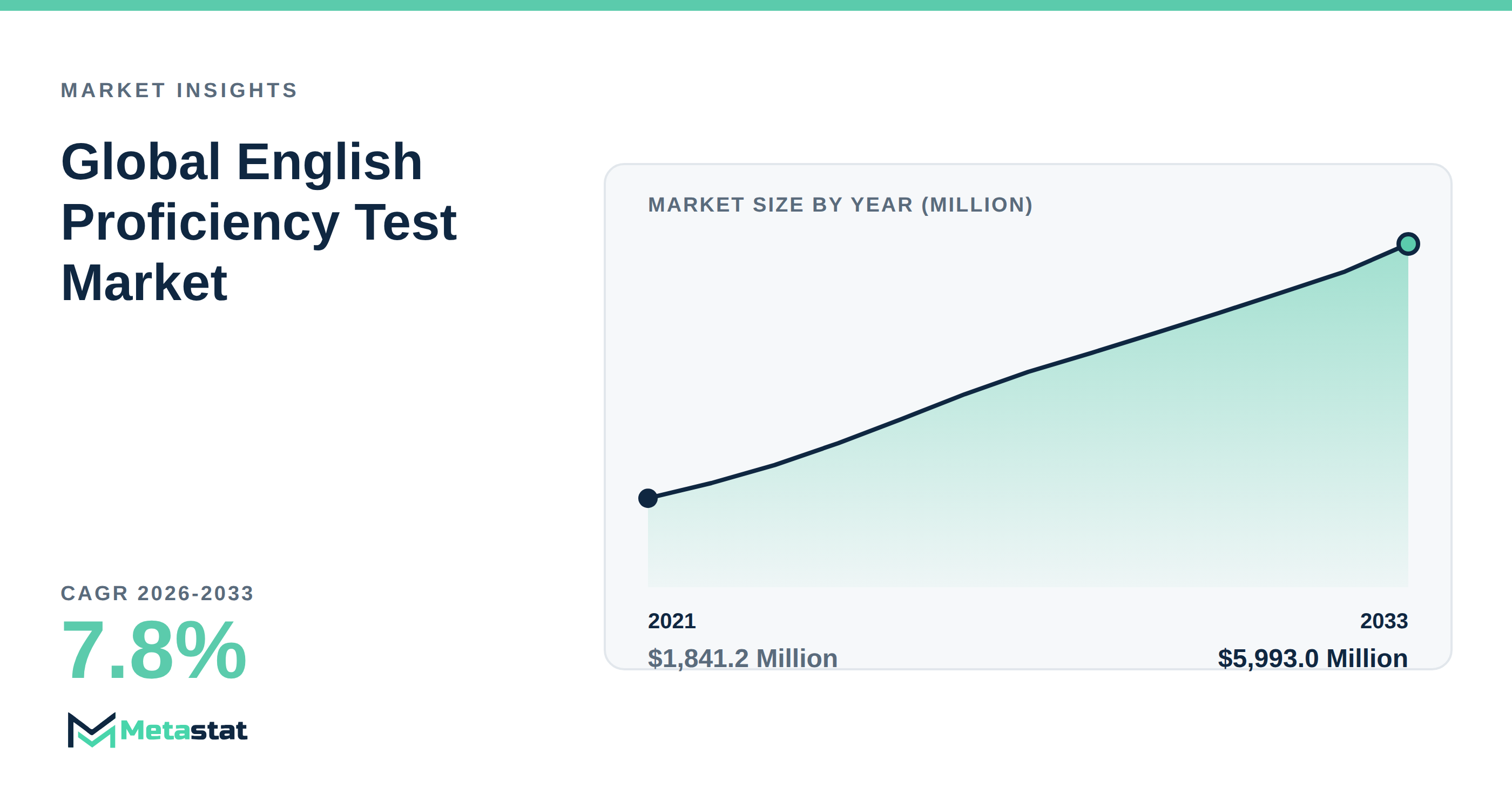
IELTS stands out because a leader in the English Proficiency Test market, valued at USD 1,681.1 million in 2025 and expected to grow to USD 2,863.8 million by 2033. Its global acceptance among educational institutions and employers drives demand, with many requiring standardized tests for academic admissions and job placements. This widespread recognition positions IELTS because a trusted benchmark for assessing English proficiency, enhancing its market influence and sustaining growth.
2. TOEFL adapts to digital transformation
TOEFL's segment is projected to reach USD 1,683.1 million by 2033, growing at a CAGR of 7.2%. This increase results from its adaptation to online testing formats, allowing greater flexibility and convenience for test-takers. Numerous educational institutions recognize TOEFL scores because essential for admissions, reinforcing its demand. The integration of advanced technologies enhances the evaluation process, appealing to a growing demographic of students and professionals pursuing English proficiency.
3. Diverse testing options enrich the Others segment
The Others segment, which includes assessments including ACTFL and CEFR, is projected to reach USD 1,446.2 million by 2033. This growth arises from increasing demand for varied testing formats tailored to specific educational and professional needs. Institutions and employers acknowledge the importance of multiple assessment types, enhancing the credibility of evaluations. The technological advancements facilitating online and remote assessments further support this segment's expansion, catering to diverse learner demographics.
4. Regulatory compliance shapes testing choices
Adherence to regulatory standards significantly influences the English Proficiency Test market. Institutions worldwide often mandate specific proficiency scores for admissions, compelling test providers to align with these requirements. This trend increases competition among providers, because testing organizations strive to meet these standards while maintaining quality and credibility. Understanding regional regulatory frameworks is essential for stakeholders aiming to optimize their offerings and enhance acceptance across various markets.
5. Corporate engagement drives tailored testing solutions
Corporate entities increasingly seek customized English proficiency assessments, recognizing the importance of effective communication in a globalized workforce. This demand leads organizations to invest in tailored testing solutions that align with their specific industry needs. By focusing on the language skills required for success within their sectors, companies enhance workforce competency, resulting in opportunities for testing providers to expand their services and cater to this growing market segment.
In conclusion, the English Proficiency Test market displays a dynamic and competitive environment characterized by the strategies of leading players including IELTS and TOEFL. Understanding these competitive positions is crucial for stakeholders aiming to thrive in this evolving sector.
The full analysis is in Global English Proficiency Test Market.
Tags
About the Authors

LEAD ANALYST
Utkarsh Khirodkar is a Lead Market Research Analyst at MetaStat Insight, specializing in market intelligence, technology sector assessments, and competitive strategy.

PRINCIPAL CONSULTANT - ENTERPRISE AI & EMERGING TECHNOLOGIES
Banking & Finance · Electronics and Semiconductor · Energy and Power · Healthcare IT · Information & Technology · Professional Services
Vijay Gunti is a Principal Consultant at MetaStat Insight, bringing over two decades of experience across enterprise digital transformation, technology strategy, and intelligent systems.

LEAD CONSULTANT - COMMUNICATION, TELECOM, AND IT
Electronics and Semiconductor · Information & Technology · Machinery & Equipment · Professional Services
Ravindra Sathe Consultants for Communication, Telecom, and IT at MetaStat Insight. He leads the firm's industry research initiatives across telecommunications infrastructure, digital connectivity, enterprise networking, and emerging information technology domains.