
LEAD ANALYST
Utkarsh Khirodkar is a Lead Market Research Analyst at MetaStat Insight, specializing in market intelligence, technology sector assessments, and competitive strategy.

Global English Proficiency Test Market Size, Share, By Testing System (IELTS, TOEFL, and Others (ACTFL, CEFR, PTE, Aptis, ISE, CAEL, iTEP)), By Mode of Test (Online and Offline), By Application (Graduates/Undergraduates, Employers, and Others), Industry Analysis, Growth, Trends, and Forecast, 2026-2033
Report ID
MSI-5096
Published
August, 2026
Pages
277 Pages
Format
Historical
Base year
Forecast
Forecast period
Report Details
Choose Your License
Global English Proficiency Test Market
The global English Proficiency Test market was valued at USD 3,134.7 million in 2025 and is projected to reach USD 5,993 million by 2033, growing at a CAGR of 7.8% over the forecast period.
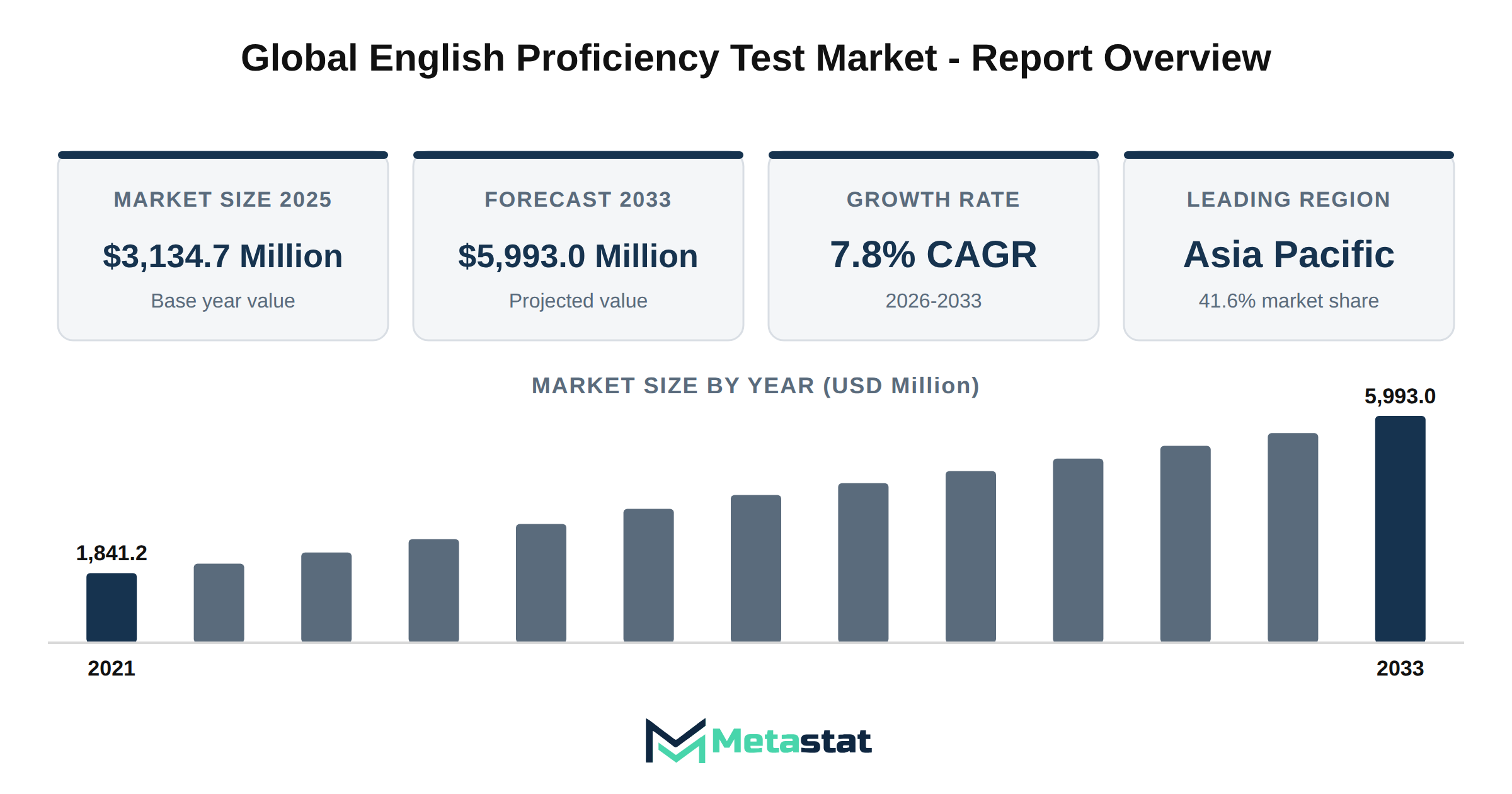
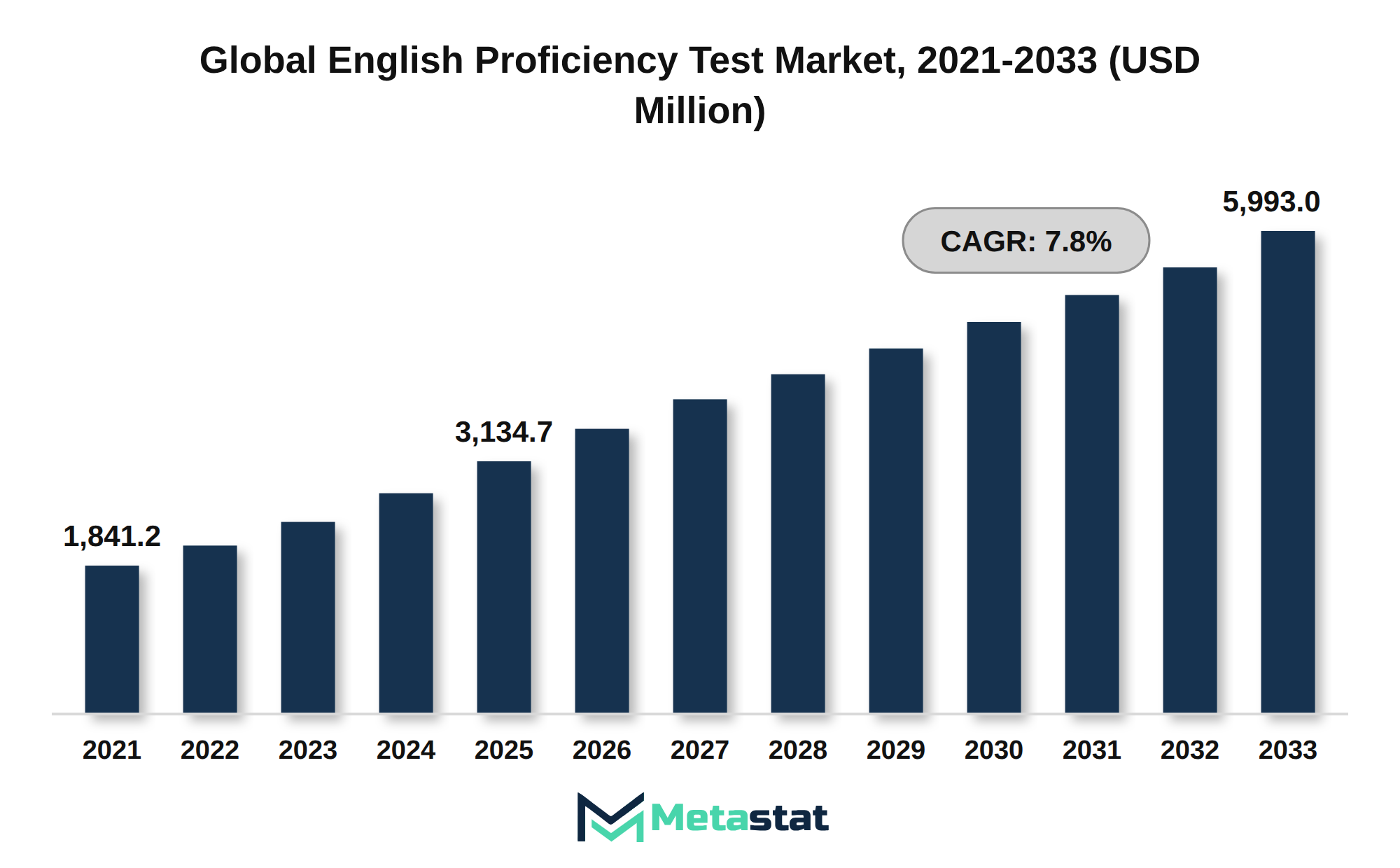
The English Proficiency Test market reached a valuation of USD 3,134.7 million in 2025, with a significant growth trajectory expected through 2033, culminating in an estimated value of USD 5,993 million. The market is projected to expand at a compound annual growth rate (CAGR) of 7.8% during this forecast period. Historical data indicates that the market grew from USD 1,841.2 million in 2021 to USD 2,383.2 million in 2023, demonstrating strong demand for English proficiency assessment solutions.
Digital transformation continues to reshape the English proficiency testing market. The integration of advanced technologies including artificial intelligence and machine learning enhances the accuracy and efficiency of proficiency assessments. Educational institutions and corporate entities increasingly adopt these technologies to streamline evaluation processes and improve user experiences.
Remote proctoring technology has gained traction, driven by the necessity for secure and accessible testing environments. This innovation addresses the growing demand for remote assessments, particularly in light of shifting educational paradigms and global events that necessitate flexible testing solutions. Institutions leveraging remote proctoring capabilities expand their reach and cater to a wider demographic of test-takers.
Immigration policies significantly influence the demand for English proficiency tests. Stricter regulations and increased scrutiny surrounding immigration applications heighten the necessity for standardized language assessments. Individuals seeking to relocate for work or study require demonstrable proficiency, which increases demand for various testing formats across different regions.
Corporate English assessment solutions are gaining prominence among employers seeking to evaluate language skills within their workforce. Organizations recognize the importance of effective communication in a globalized economy, prompting investment in tailored assessment tools to ensure employee proficiency aligns with business objectives.
University admission requirements vary significantly by region, impacting the demand for specific English proficiency tests. Institutions in North America, Europe, and Asia Pacific typically mandate standardized assessments, influencing test selection and preparation strategies among prospective students. Understanding these regional nuances is crucial for stakeholders in the English proficiency test market.
Pricing analysis across major test providers reveals strategic pricing models that cater to diverse learner demographics. Factors including regional economic conditions, competitive landscape, and technological advancements play significant roles in shaping pricing strategies. Providers offering flexible pricing structures enhance market penetration and attract a broader audience.
The English Proficiency Test market undergoes a significant transformation driven by digital advancements. The integration of digital platforms enhances accessibility and convenience for test-takers, broadening the reach of proficiency assessments globally. This shift streamlines the testing process and aligns with the growing preference for online solutions across various educational and professional landscapes.
AI and machine learning technologies increasingly influence proficiency assessments by automating grading processes and personalizing learning experiences. These innovations improve accuracy and efficiency in evaluating candidates' language skills while providing tailored feedback to enhance learning outcomes. This technological integration supports market growth by attracting institutions seeking advanced assessment methods.
Remote proctoring technology trends reshape the examination landscape, enabling secure and flexible testing environments. This technology accommodates candidates who face geographical or logistical barriers, enhancing participation rates. Institutions and organizations adopting remote proctoring solutions experience improved test integrity and a broader candidate pool, contributing positively to market expansion.
Shifts in immigration policies significantly impact demand for proficiency tests. Stringent language requirements for visa applications and residency facilitate increased test-taking among prospective immigrants. Countries with robust immigration frameworks experience heightened engagement with English proficiency assessments, directly influencing market dynamics and growth trajectories.
Corporate entities increasingly prioritize English proficiency assessments to evaluate employee capabilities. Customized assessment solutions tailored to specific industry needs enhance workforce competency. Companies leveraging these assessments strengthen their competitive edge in global markets, driving demand within the English Proficiency Test market.
Admission requirements for universities vary significantly across regions, with many institutions mandating proficiency tests for non-native speakers. This requirement presents substantial opportunities for the market, particularly in regions experiencing surges in international student enrollment. Educational institutions implementing these standards contribute to sustained growth in test registrations.
Pricing strategies among major test providers reflect varying market dynamics and competitive pressures. Providers including IELTS and TOEFL adopt tiered pricing models to cater to diverse customer segments. This pricing approach enables providers to maintain market share while addressing the needs of both individual test-takers and institutional clients.
Growth in the English Proficiency Test market stems from various macro-economic factors, including increased GDP growth and enhanced public-private spending power. Several countries prioritize education and skill acquisition, contributing to a rising demand for English proficiency assessments. This trend is particularly evident in emerging economies, where educational investment aligns with globalization and workforce competitiveness, strengthening long-term demand for testing services.
Capital investment environments significantly influence the market. Low interest rates facilitate funding for educational institutions and private organizations, promoting the development and delivery of English proficiency tests. Advancements in technology streamline the testing process, reducing operational costs and enhancing accessibility for prospective test-takers, thereby expanding the addressable base.
Shifting demographic patterns impact the market. An increasing global population, particularly in urban areas, results in growing competition for jobs, where English proficiency often becomes a critical requirement. Consumers prioritize language skills for academic and professional opportunities, driving demand for English proficiency testing services and reinforcing the segment's position.
In addition, digital transformation significantly influences the market's evolution. The adoption of online testing platforms provides flexibility and convenience for test-takers, appealing to a broader audience. Educational institutions and employers increasingly use digital tools to assess language skills, further driving market growth and enhancing user experience.
The English Proficiency Test market experiences notable growth driven by the integration of advanced technologies in assessment methodologies. Automation and artificial intelligence streamline testing processes, allowing for faster result generation and improved scoring accuracy. Software adoption facilitates online test delivery, accommodating a growing preference for remote testing among examinees. This shift in testing mode reflects broader digital transformation trends, which align with educational institutions and employers seeking efficient solutions for evaluating language proficiency.
Investment in technological infrastructure drives operational productivity and enhances the user experience. Educational institutions and testing organizations optimize their resources through digitization, reducing overhead costs associated with traditional testing venues. This operational efficiency supports market expansion, resulting from institutions offering more accessible and affordable testing options. The English Proficiency Test market benefits from these technological advancements, reinforcing demand across various segments.
The evolution of consumer behaviors, including the increasing reliance on technology for learning and assessment, influences the market's trajectory. Potential participants seek flexible and user-friendly platforms, prompting testing organizations to innovate their offerings. The emphasis on technological integration reflects changing expectations within the education sector, contributing to sustained growth in the English Proficiency Test market.
The English Proficiency Test market encounters several regulatory challenges that contribute to constraints on growth. Increasing legal mandates around language proficiency verification in various sectors complicate compliance for educational institutions and employers. This complexity results in additional operational costs and administrative burdens for organizations, affecting their ability to implement testing programs effectively.
Macroeconomic headwinds, including inflationary pressures and capital stagnation, hinder market expansion. Rising costs associated with test development, administration, and technology upgrades challenge providers to maintain competitive pricing while ensuring quality. Market players face pressures that impact profitability and investment in innovation.
Supply chain disruptions and geopolitical instability create further obstacles for the market. Interruptions to the flow of resources or technologies necessary for test development and delivery limit the capacity of organizations to meet assessment demands. These disruptions delay deployment and increase the risk of market fragmentation, resulting from players struggling to adapt to rapidly changing conditions.
Infrastructure gaps and connectivity deficits in certain regions contribute to uneven market access. Areas lacking reliable internet and testing facilities experience slower adoption rates, affecting the overall market growth trajectory. The English Proficiency Test market overcomes these challenges to realize its full potential and meet the growing demand for language proficiency assessments.
The English Proficiency Test market faces significant challenges due to geopolitical fragmentation, which influences global trade dynamics and impacts educational institutions and testing organizations. Trade deficits and tariff friction disrupt operational efficiency, complicating cross-border cooperation necessary for standardizing testing practices. This instability results in fluctuating demand across regions, particularly affecting North America and Europe, which depend heavily on international candidate flows.
Technological disruptions further complicate the market landscape. Rapid advancements in digital testing methods create interoperability friction among various testing platforms, leading to inconsistencies in scoring and reporting. This fragmentation affects stakeholders, including educators, employers, and students, who rely on unified assessment standards for evaluating language proficiency. The English Proficiency Test market addresses these technological challenges to maintain trust and credibility in its certifications.
Rising input costs and pricing compression exert pressure on profit margins for testing providers. Increased competition drives companies to lower prices, which undermine the quality of services offered. Coupled with workforce skill gaps, these factors create challenges for organizations striving to meet evolving demands in the market. The ongoing investment in employee training and retention becomes essential to maintain service quality and respond effectively to market pressures.
Lastly, stringent global regulatory standards and compliance overhead create additional challenges for market players. Evolving legal liabilities necessitate ongoing adjustments to practices, impacting operational costs and resource allocation. Navigating these complex regulatory environments remains a critical concern for testing organizations, because failure to comply leads to significant financial penalties and reputational damage.
The English Proficiency Test market presents substantial opportunities fueled by emerging regional demands. Growth in Asia Pacific, particularly in nations like China and India, contributes significantly to this expansion, driven by increasing English language requirements in education and business sectors. The rising number of international students and professionals seeking to enhance their employability generates high demand for proficiency assessments.
Infrastructure modernization plays a significant role in this market's growth. Educational institutions and corporate environments increasingly prioritize advanced testing facilities and online platforms that streamline the assessment process. Investments in digital transformation facilitate faster and more efficient testing methodologies, attracting a broader audience and enhancing user experience.
Geographical expansion further enhances market prospects. Providers focus on underserved regions, tailoring products to meet specific local needs, thereby capturing diverse consumer segments. This strategic focus allows for increased penetration in new markets, resulting in heightened competition among testing organizations.
Technological disruptions, including artificial intelligence and data analytics, reshape the testing landscape. These innovations enable personalized learning experiences and adaptive testing models that cater to individual proficiency levels. Consequently, the market benefits from enhanced engagement and improved outcomes for test-takers.
Digital procurement shifts influence purchasing behaviors, prompting educational institutions and employers to seek flexible, scalable testing solutions. The transition to online testing platforms aligns with contemporary expectations for convenience and efficiency, driving adoption rates upward.
Finally, strategic consolidation and cross-industry collaborations emerge, driven by key trends shaping the market. Partnerships between educational institutions and testing organizations facilitate resource sharing and innovation, enhancing the overall value proposition for users. The English Proficiency Test market stands poised for significant growth, driven by these multiple avenues of opportunity.
The Global English Proficiency Test market is segmented based on Testing System, Mode of Test, and Application.
Valued at USD 1,681.1 million in 2026, the IELTS segment is projected to reach USD 2,863.8 million by 2033, at a CAGR of 7.9% during the forecast period. Demand for IELTS testing stems from the increasing importance of English proficiency for academic and professional opportunities globally. Educational institutions and employers increasingly require standardized tests to assess candidates' language skills, driving demand in various regions.
Technological maturation in testing methods contributes to segment growth. Online and offline testing options cater to diverse learning preferences and logistical needs, enhancing accessibility for test-takers. Innovations in test preparation resources and techniques further assist candidates in achieving desirable scores, establishing a competitive edge in the market.
Adoption rates of IELTS testing reflect evolving consumer preferences. Graduates and undergraduates pursuing higher education abroad represent a significant portion of test-takers, while employers seeking to evaluate job candidates increasingly recognize the value of standardized language assessments. This trend aligns with globalization and the need for effective communication in diverse workplaces.
Regulatory compliance standards across various educational systems and industries reinforce the relevance of IELTS. Institutions often mandate specific proficiency scores for admission or hiring, ensuring a consistent benchmark for evaluating candidates. This regulatory framework supports sustained growth within the English Proficiency Test market.
In terms of cost structure, IELTS tests typically require significant investment in preparation and registration fees. Variations in pricing across regions influence test-taker participation. Nonetheless, the perceived value of obtaining recognized certification drives candidates to invest in their language proficiency, further supporting segment expansion.
Strategic opportunity windows emerge due to educational and corporate sectors prioritizing language proficiency. Institutions and employers increasingly partner with testing organizations to streamline evaluation processes. Such collaborations enhance credibility and encourage wider acceptance of standardized testing, creating a robust ecosystem around IELTS.
Strong demand for the TOEFL segment stems from increasing global interest in English language proficiency among students and professionals. Educational institutions and employers require standardized assessments to gauge language skills for academic and professional opportunities. This rising demand drives increased test participation, particularly in regions with high population densities and significant international student enrollments.
Technological advancements enhance the TOEFL testing experience, allowing for online administration and flexible scheduling. These innovations attract a broader audience, including individuals balancing study and work commitments. The shift toward online testing formats aligns with broader trends in education, enabling greater accessibility and convenience for test-takers.
The TOEFL segment is projected to reach USD 1,683.1 million by 2033, at a CAGR of 7.2% during the forecast period. This growth reflects a consistent increase in educational initiatives and policies promoting English proficiency across diverse sectors. Regulatory compliance standards for international education further increase the need for standardized testing, leading to stable demand and investment in test preparation resources.
Evolving end-user dynamics play a vital role in shaping the TOEFL segment. Employers increasingly recognize the importance of English proficiency in a globalized workforce, leading to heightened demand for reliable assessment tools. This trend encourages educational institutions to incorporate TOEFL preparation into their curricula, thereby expanding the test's reach and reinforcing its significance in the English Proficiency Test market.
Significant growth is anticipated in the Others (ACTFL, CEFR, PTE, Aptis, ISE, CAEL, iTEP) segment of the English Proficiency Test market, reaching USD 1,446.2 million by 2033. This growth stems from increasing demand for diverse testing options that cater to various educational and professional requirements. Institutions and employers recognize the importance of multiple assessment types, enhancing the overall credibility of candidate evaluations.
The expansion of this segment is driven by technological advancements that facilitate online testing and remote assessments. Educational institutions leverage these technologies to provide flexible and accessible testing environments, appealing to a broader demographic of learners. This trend aligns with shifts in consumer preferences toward more convenient testing solutions, further propelling segment growth.
Regulatory compliance standards and certifications related to language proficiency assessments gain importance. Educational entities emphasize the necessity of recognized certifications, influencing learners' choices in preparation for academic or professional opportunities. Such dynamics indicate a robust pipeline of candidates pursuing the Others segment, reinforcing its position within the market.
Investment in product evolution and next-generation upgrades remains critical. Providers enhance existing offerings through improved testing methodologies and delivery platforms. The ongoing assessment of performance metrics shapes future developments within the segment, ensuring it meets the evolving needs of educational institutions and employers alike.
The Others segment benefits from a diverse range of applications, catering to undergraduates, graduates, and employers. This versatility in usage leads to enhanced market penetration and revenue generation, further supporting the overall growth trajectory of the English Proficiency Test market.
Growing adoption of online testing reflects a significant shift in the English Proficiency Test market, driven primarily by advancements in technology and increased accessibility. Educational institutions and employers increasingly prefer online formats due to the convenience and flexibility they offer. The ability to administer tests remotely reduces logistical challenges associated with traditional in-person testing, allowing a broader range of candidates to participate. This shift aligns with global trends towards digitalization, making it easier for stakeholders to implement testing solutions that cater to diverse needs.
Factors influencing the expansion of online testing include a heightened focus on user experience and a demand for real-time data analytics. Educational institutions leverage data from online tests to enhance learning outcomes and monitor student performance more effectively. The market experiences a growing emphasis on creating intuitive interfaces and adaptive testing methods that cater to individual learning styles, further driving adoption. Regulatory compliance standards have evolved to incorporate online testing, ensuring that assessments maintain integrity while adapting to modern educational landscapes.
End-use dynamics indicate a rising preference for online testing among graduates and undergraduates, driven by these demographics seeking efficient pathways to demonstrate language proficiency. Employers recognize the value of streamlined processes, which improve hiring timelines and candidate experience. The market benefits from these trends, because the integration of online testing solutions supports both educational and employment objectives.
The transition to online testing presents strategic opportunity windows for technology providers and educational institutions. Investment in innovative testing platforms enhances competition among stakeholders, while minimizing costs associated with physical testing locations. This evolution positions the market for sustained growth and adaptation in response to shifting educational paradigms.
The shift towards online testing in the English Proficiency Test market reflects changing educational trends and technology adoption across various sectors. Increased accessibility and convenience of online testing appeal to students and professionals pursuing language proficiency. Educational institutions and employers recognize the efficiency of online assessments, contributing to a growing acceptance of digital methods. Technological advancements enhance the robustness of online platforms, ensuring secure and reliable testing environments.
Consumer behavior shifts towards more flexible learning and assessment options, aligning with the preferences of a digitally savvy population. This transition supports the expansion of the online testing segment, allowing for broader participation in language testing across diverse demographics. The integration of adaptive learning technologies personalizes student experiences, driving demand for online assessments.
Regulatory compliance in the online environment necessitates adherence to standards set by language testing authorities, ensuring reliability and credibility of results. Certification processes for online tests align with global educational practices, enhancing acceptance among employers and academic institutions. Investments in cybersecurity and data privacy measures reinforce trust in online testing solutions.
Competition among providers drives innovation, leading to the development of next-generation online testing tools. Enhanced user interfaces, real-time feedback mechanisms, and integration with learning management systems reflect ongoing product evolution. Strategic opportunities in this sub-segment arise from the growing need for remote evaluation methods, particularly in response to global events that restrict traditional assessment logistics.
The Offline testing mode in the English Proficiency Test market sees significant engagement among test-takers who prefer traditional assessment environments. Factors influencing this preference include the familiarity of in-person interaction with instructors, the structured test environment, and the perception of credibility associated with offline testing formats.
Increasing demand for standardized assessments fuels adoption across educational institutions and employers prioritizing language proficiency. A growing number of universities and employers require proof of English proficiency for admissions and employment, leading to higher enrollment in offline testing sessions. These institutions emphasize the importance of personal oversight during examinations to ensure integrity and reliability of results.
Technological advancements play a crucial role in the evolution of offline testing strategies. Integration of digital tools in traditional test formats enhances score reporting and feedback processes, creating a more efficient experience for both test-takers and institutions. Offline testing adapts to various end-user dynamics, addressing the needs of graduates, undergraduates, and employers seeking standardized measures of English proficiency.
Shifts in consumption patterns indicate a balanced approach to testing, where the market sees a blend of online and offline methodologies. While test-takers lean towards online convenience, others value the structured and controlled environment of offline assessments, making it critical for educational institutions to support both modalities. This flexibility contributes to expanded reach and increased market participation.
Regulatory compliance standards provide a framework for organizations implementing offline testing, ensuring adherence to established guidelines and best practices. Institutions conducting these assessments benefit from clarity on certification and validation processes, enhancing the value of the qualifications earned by test-takers. Consequently, this compliance framework strengthens market trust and credibility among stakeholders.
Overall, the offline segment aligns with broader trends in education and employment, reinforcing the importance of language proficiency while adapting to evolving expectations and technological developments. Strategic opportunities emerge through investments in offline testing capabilities, driving growth in the English Proficiency Test market.
The application of English proficiency tests among graduates and undergraduates reflects a strong trend in the education sector. Increasing globalization and the need for English language skills in higher education drive demand for these assessments. Educational institutions emphasize proficiency tests within their admission criteria, ensuring that students possess the necessary language skills to succeed in academic settings. This trend aligns with the wider recognition of English because a crucial medium for international education and career advancement.
Technological advancements contribute significantly to the evolution of English proficiency assessments. Online testing options enhance accessibility and convenience for students, enabling a broader range of candidates to participate. Educational institutions leverage these technological innovations to streamline the testing process and improve the overall user experience, ultimately attracting more students to pursue their studies in English-speaking environments.
Adoption of English proficiency tests within the graduate and undergraduate segments drives a shift in educational dynamics. Institutions increasingly offer preparatory courses and resources to help students succeed in these examinations, which further stimulates market growth. This strategic focus on student readiness creates a competitive environment among educational providers, driving them to enhance their curricula and support services.
Regulatory compliance standards play a vital role in shaping the requirements for English proficiency tests in educational settings. Institutions align their admission processes with established benchmarks to maintain accreditation and ensure that their graduates meet industry expectations. This alignment influences the testing landscape, because institutions strive to implement assessments that reflect the needs of employers and the workforce.
Cost structures associated with English proficiency tests impact both institutional budgets and student affordability. Institutions evaluate various testing options based on their pricing models, which influences their selection of assessments. Consequently, students benefit from increased competition among testing providers, leading to potential cost reductions and enhanced access to important credentials in the market.
The graduates and undergraduates segment within the English Proficiency Test market experiences substantial growth driven by technological advancements, regulatory standards, and institutional strategies. While educational institutions adapt to changing demands, the market continues to evolve, offering strategic opportunities for stakeholders involved in language testing and education.
Employers increasingly prioritize English proficiency due to its critical role in hiring decisions. This shift stems from globalization that necessitates effective communication across diverse markets and cultures. The demand for employees adept in English enhances operational efficiency and collaboration, particularly within multinational organizations.
Adoption of standardized English proficiency tests arises from the need for objective evaluation of candidates' language skills. Companies rely on assessments to ensure that potential hires meet the linguistic requirements for success in their roles. This reliance drives growth in the English Proficiency Test market, because businesses recognize the value of verified language competencies.
Expansion of this segment benefits from advancements in technology that streamline the testing process. Online testing platforms provide flexibility and accessibility, catering to the diverse needs of employers and candidates. The integration of innovative technologies enhances the overall testing experience, driving further adoption.
Regulatory compliance and certification standards play significant roles in shaping employer preferences for specific tests. Organizations seek certifications that align with industry standards, impacting their choice of testing systems. This trend compels testing providers to adapt and evolve their offerings to meet the expectations of employers and maintain relevance in the market.
Cost structures and pricing volatility directly influence employers' testing choices. Companies evaluate the return on investment associated with different testing options, balancing quality and affordability. This scrutiny affects market dynamics, prompting providers to optimize their pricing strategies to attract more clients.
Strategic opportunity windows emerge because employers seek to enhance their recruitment strategies through reliable language assessments. The market's evolution toward more nuanced and comprehensive testing solutions creates avenues for innovation and growth. Engagement with current and potential employers, along with continuous improvement of testing methodologies, remains essential to sustaining momentum in the English Proficiency Test market.
Adoption of the Others segment within the English Proficiency Test market reflects growing interest from diverse stakeholders seeking tailored solutions. Factors contributing to this demand include the rising need for language proficiency among specific professional groups, educational institutions, and non-traditional learners. This segment caters to various applications, including graduates and undergraduates preparing for specific job roles, language certifications, and other educational pursuits.
Technological advancements play a vital role in segment expansion, with continuous improvements in testing methodologies and platforms. The evolution of assessment tools enhances accessibility and user experience, encouraging broader participation in proficiency testing. End-use dynamics indicate a shift toward personalized learning paths, with many institutions integrating customized assessments into their curricula.
Regulatory compliance standards increasingly influence the segment, driven by various educational and professional bodies mandating proficiency certifications. Adapting to these standards enhances market credibility and builds trust among stakeholders. The overall outlook for the Others segment remains positive, with strategic opportunity windows for providers focusing on innovative solutions and tailored offerings in the English Proficiency Test market.
Based on geography, the Global English Proficiency Test market is divided into North America, Europe, Asia-Pacific, South America, Middle East, and Africa.
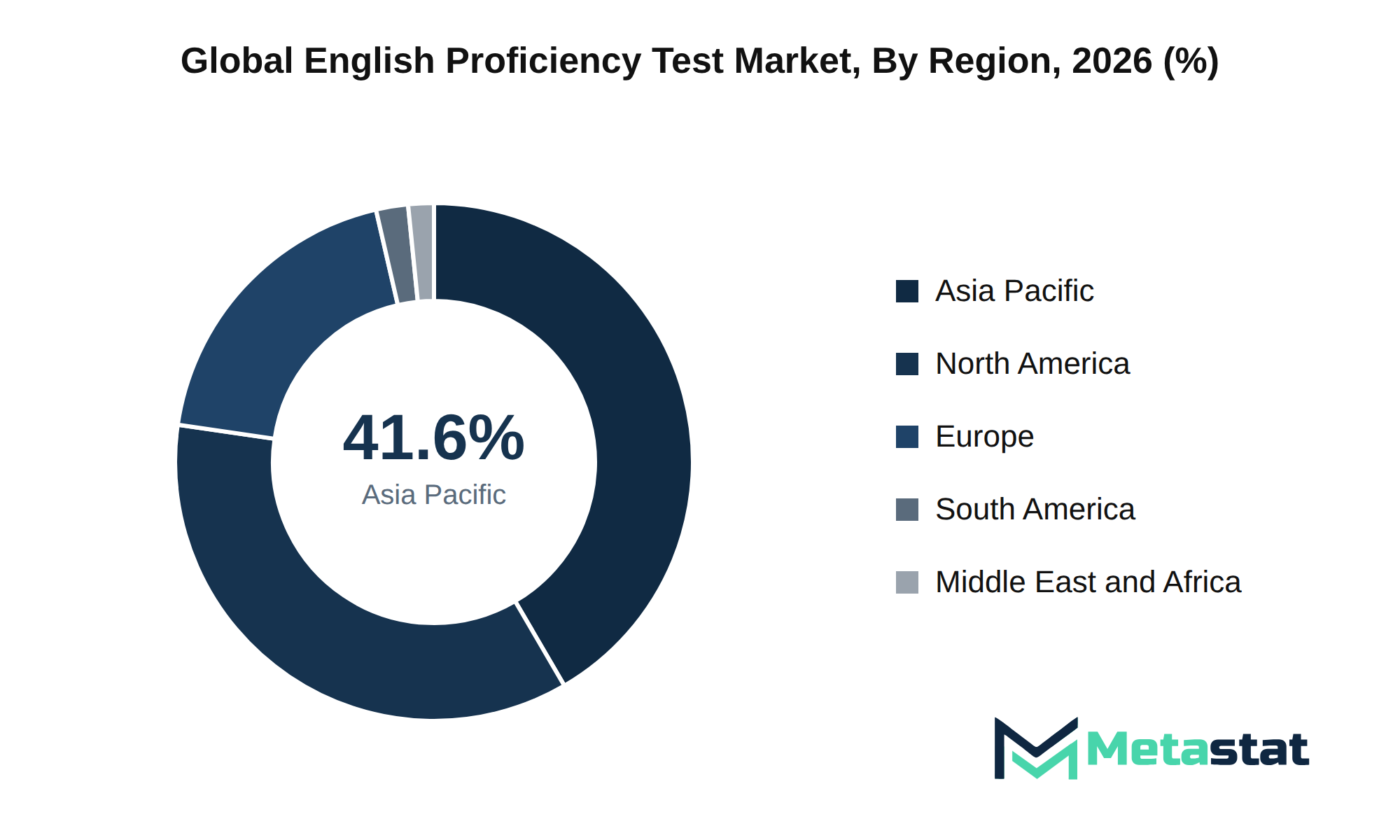
North America holds a crucial position in the English Proficiency Test market, contributing 35.7% to the global share in 2025. The region demonstrates strong demand, driven by various factors including the increasing number of international students and the expansion of multinational companies requiring proficient English speakers. Educational institutions in the United States, Canada, and Mexico adopt English proficiency tests to enhance their curriculum and prepare students for a global workforce.
The market is set to expand at a CAGR of 7.8% within the forecast period, reaching a market size (TAM) of USD 2,234.6 million by the end of 2033. High-value replacement cycles emerge because institutions update their testing methodologies to meet the demands of modern educational standards. The competitive landscape in North America features several prominent players, including Educational Testing Service (ETS), British Council, and Pearson PTE, who continuously innovate to maintain market relevance.
Local compliance mandates influence the adoption of English proficiency tests in North America. Regulatory frameworks in educational systems necessitate that institutions adhere to standardized testing protocols. This environment supports the sustained growth of the market, because stakeholders recognize the importance of English proficiency in academic and professional settings.
Regional resource availability shapes market dynamics. North America benefits from established infrastructures that facilitate easy access to testing centers and online platforms. This readiness enhances the overall testing experience and encourages higher participation rates among prospective test-takers.
The English Proficiency Test market in Europe displays unique characteristics influenced by cultural, economic, and educational factors. Significant demand for English proficiency stems from multinational corporations operating within key markets including Germany, France, the UK, Italy, Spain, and Russia. These nations prioritize English skills in their workforce, driving the adoption of various testing systems including IELTS and TOEFL.
Regional dynamics play a crucial role in shaping the English Proficiency Test market. Germany and the UK emerge because front-runners, demonstrating robust demand for English language qualifications linked to employment opportunities and academic pursuits. France, Italy, and Spain contribute to market expansion, with increasing recognition of English proficiency because a vital asset in education and professional development.
The market reflects incremental growth fueled by ongoing modernization of educational infrastructure across Europe. Investments in digital platforms enhance accessibility to testing, particularly online testing modes. This transformation aligns with shifting preferences among students and professionals aiming for convenient and flexible assessment options.
Dominance in the market is characterized by several key players, including organizations including the British Council and Educational Testing Service (ETS). These entities leverage their expertise to meet the evolving needs of diverse stakeholders, contributing to the competitive landscape. Vendor consolidation trends further shape market dynamics, creating opportunities for collaboration and innovation.
Geographic regulatory frameworks influence the market's trajectory. Local compliance mandates ensure that testing standards align with educational policies, building trust among stakeholders. The relationship between regional competitive landscapes and localized procurement dynamics encourages tailored approaches to addressing specific market needs, enhancing the overall effectiveness of English proficiency assessments in Europe.
Growth within the Asia-Pacific region of the English Proficiency Test market is attributed to rising demand for language proficiency in professional and academic settings. China, Japan, India, and South Korea drive this demand, supported by a strong emphasis on English education across educational institutions and workplaces. The increasing number of international students pursuing education in English-speaking countries increases the need for standardized testing, particularly for the IELTS and TOEFL segments.
Regional adoption rates for English proficiency tests remain robust, fueled by infrastructure modernization initiatives and enhanced accessibility to testing centers. Countries including Australia and India are investing in educational advancements that facilitate English language acquisition. Southeast Asia experiences a growing interest in English proficiency driven by economic expansion and globalization, creating opportunities for test providers.
Localized cultural dynamics influence procurement decisions related to testing services. In many Asia-Pacific markets, organizations prioritize English proficiency because a critical skill for job candidates, enhancing the relevance of the market. Domestic market leaders including British Council and Educational Testing Service (ETS) leverage their established recognition to capture market share effectively.
The English Proficiency Test market is characterized by competitive environments where vendor consolidation trends emerge. Collaborations among local educational institutions and testing organizations streamline test delivery processes. This strategic regionalization supports tailored approaches that connect with specific demographic segments within each country. Overall, the Asia-Pacific market reflects a unique blend of emerging opportunities and established dynamics that drive growth and engagement in the English proficiency testing sector.
In South America, the English Proficiency Test market captures a share of 2.00% of the global market in 2025. Significant factors influencing demand in this region include the growing emphasis on English proficiency among employers and educational institutions, particularly in Brazil and Argentina. Increasing participation in global trade and investment prompts local businesses and students to pursue English proficiency tests to enhance their competitiveness.
Both Brazil and Argentina show a steady progression towards adopting English proficiency tests, driven by a rising middle class that prioritizes education. The need for local compliance with international standards further increases the demand for these assessments, because companies seek to meet the expectations of foreign partners and clients.
The market experiences ongoing segment expansion, particularly in the IELTS and TOEFL categories. Educational institutions in these countries enhance their offerings by integrating English proficiency tests into their curricula, thereby attracting more students who recognize the importance of language skills in a globalized economy. Nevertheless, localized procurement dynamics and cultural nuances shape the market's competitive landscape, requiring vendors to adapt their strategies to align with regional buyer behaviors.
The Middle East and Africa region exhibits significant growth potential within the English Proficiency Test market, driven primarily by an increasing emphasis on English language skills in both educational and professional sectors. Countries including Saudi Arabia and the UAE invest heavily in education reform, aligning with a global shift towards English proficiency. The emphasis on English is significant owing to its role because a critical communication tool in global business and education, enhancing the demand for proficiency tests.
Regional infrastructure modernization supports the adoption of these tests, with new educational facilities integrating English language training programs. South Africa's educational institutions are adapting curricula to meet evolving market needs, further contributing to demand. The market faces opportunities for expansion, particularly in underpenetrated territories, where English proficiency remains limited.
Competitive dynamics in the region highlight local leaders who adapt to cultural nuances and regional B2B buying behaviors. Domestic vendors, including those in Saudi Arabia, are strengthening their positions through tailored offerings that align with local needs. This localized approach drives growth, creating a strong ecosystem for the English Proficiency Test market.
Investment trends reflect strong foreign direct investment (FDI) flows into educational technology and language services, indicating a positive outlook for future development. Regional resource availability, coupled with localized procurement dynamics, enables firms to respond effectively to demand fluctuations, driving incremental growth in the market.
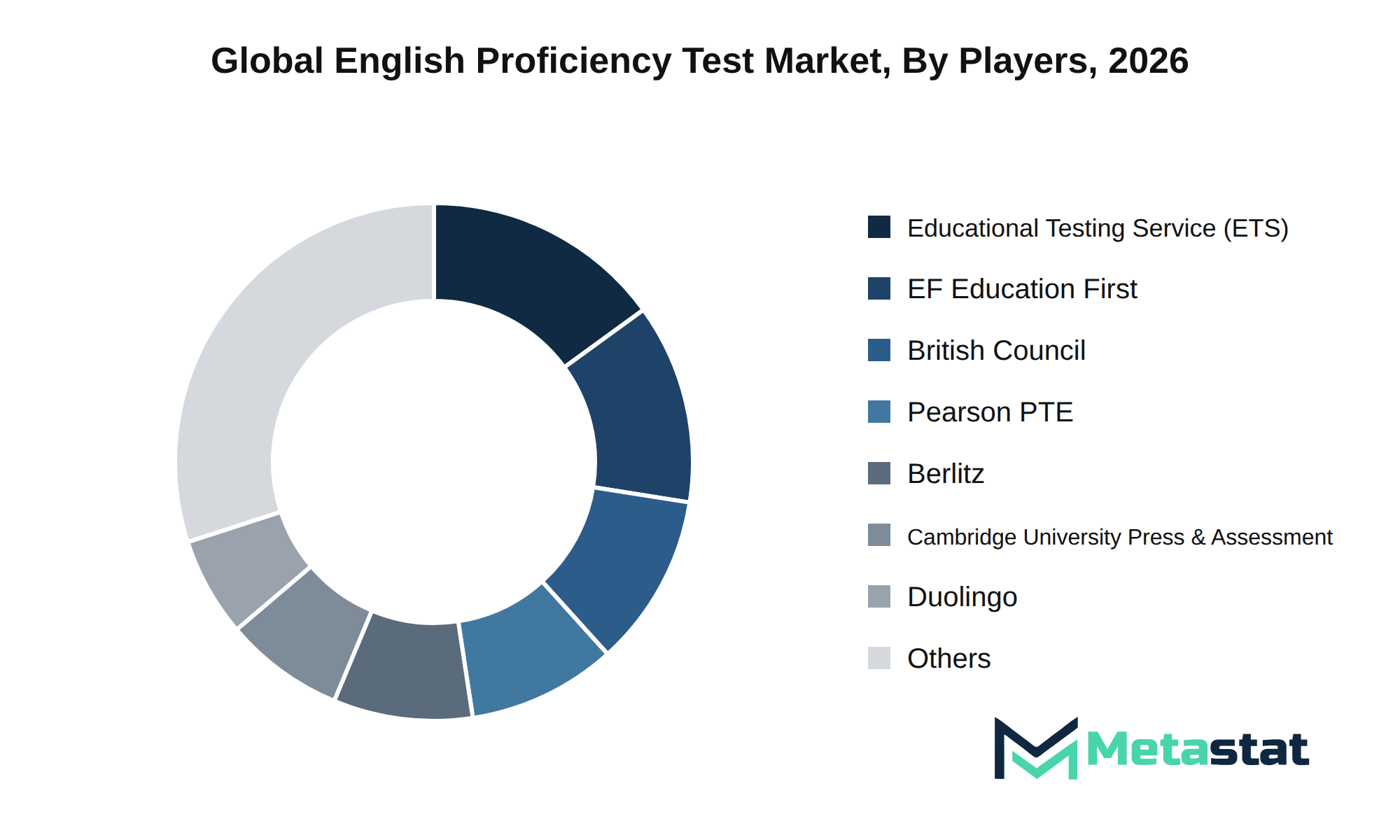
The English Proficiency Test market features diverse players implementing various strategies to enhance their market positions. Companies including Berlitz Corporation and EF Education First focus on product differentiation through unique offerings and robust customer engagement initiatives. Educational Testing Service (ETS) and British Council emphasize extensive research and development, aiming to introduce innovative testing solutions that cater to a broad demographic.
Strategic alliances and partnerships play a critical role in the competitive dynamics within the market. Firms like Cambridge University Press & Assessment and Duolingo, Inc. leverage cross-industry collaborations to expand their reach and enhance product offerings. Inlingua International Ltd. and PSI Services LLC focus on value chain integration, ensuring streamlined services that improve customer satisfaction and retention.
The competitive outlook for the English Proficiency Test market indicates a growing emphasis on technological advancements and proprietary technology moats. Companies including Pearson PTE and IDP Education invest in innovative testing platforms to create a competitive edge. This environment leads to heightened barriers to entry for new entrants, maintaining the dominance of established players.
Overall, the competitive landscape in the English Proficiency Test market continues to evolve, driven by strategic growth vectors and an emphasis on enhancing customer experience. This evolution presents opportunities for companies to strengthen brand equity and address increasing demand for proficiency testing solutions.
Market size is forecast to rise from USD 3,134.7 million in 2025 to over USD 5,993 million by 2033. The base case indicates growth from USD 3,134.7 million in 2025 to USD 5,993 million by 2033 at a 7.8% CAGR. This expansion reflects evolving trends across various domains impacting the English Proficiency Test market.
Macroeconomic factors, including global economic growth, influence downstream demand for English proficiency testing. Shifts in employment patterns and educational requirements drive increased demand from graduates and employers seeking evidence of language skills. The ongoing maturation of core industries, including education and human resources, results in a more structured approach toward language testing, promoting standardized assessments.
Technological advancements play a significant role in reshaping the market landscape. Integration of next-generation technology in testing methods enhances accessibility and efficiency, aligning with evolving consumer expectations. Research and development timelines for innovative testing solutions influence product life cycles, ensuring offerings remain relevant in a competitive environment.
Regulatory evolutions and compliance milestones add complexity to the market. Regulatory bodies worldwide establish requirements for language assessments, necessitating continual adaptation from testing organizations. Geopolitical factors, including trade relations and global supply chain shifts, affect the availability and acceptance of proficiency tests across different regions, impacting market dynamics.
Strategic capital allocation directives, alongside infrastructure commitments, play a role in determining investments within the market. Organizations are likely to focus on high-growth pockets where demand for English proficiency tests remains unmet. This strategic focus aligns with executive-level imperatives to enhance market presence and respond to emerging needs.
Overall, the growth and outlook of the English Proficiency Test market hinge on these multifaceted factors, positioning stakeholders to navigate the evolving landscape effectively.
The report strategically identifies and profiles the key market players and analyses their core competencies in each sub-segment of the English Proficiency Test market.
|
Report Attributes |
Details |
|
Study Period |
2021-2033 |
|
Base Year |
2025 |
|
Estimated Year |
2026 |
|
Forecast Period |
2026-2033 |
|
Historical Period |
2021-2025 |
|
Growth Rate |
CAGR 7.8% from 2026 to 2033 |
|
Revenue Unit |
USD million |
|
Segmentation |
By Testing System, Mode of Test, Application, and Region |
|
By Region |
North America (By Testing System, Mode of Test, Application, and Country)
|
|
Europe (By Testing System, Mode of Test, Application, and Country)
|
|
|
Asia Pacific (By Testing System, Mode of Test, Application, and Country)
|
|
|
South America (By Testing System, Mode of Test, Application, and Country)
|
|
|
Middle East and Africa (By Testing System, Mode of Test, Application, and Country)
|
Find answers to common questions about this report
COVID-19 has accelerated the shift towards online testing platforms for English proficiency assessments. This transition enhances flexibility and convenience for test-takers, reflecting a growing preference for remote testing methods among examinees.
North America, particularly the United States, exhibits the highest demand for English proficiency testing, accounting for 35.7 percent of the market share. Asia Pacific follows closely, representing 41.6 percent of the demand.
Advancements in artificial intelligence streamline English proficiency testing processes by enabling faster result generation and improved scoring accuracy. AI integration enhances the overall testing experience, allowing organizations to deliver assessments more efficiently and effectively to a broader audience.
The English Proficiency Test market size was valued at USD 3,134.7 million in 2025.
The English Proficiency Test market is projected to grow at a CAGR of 7.8% during the forecast period from 2026 to 2033.
The North America English Proficiency Test market size is estimated to reach USD 2,234.6 million by 2033.
The IELTS segment leads the English Proficiency Test market with a projected value of USD 2,863.8 million by 2033, surpassing other testing systems. This growth reflects a compound annual growth rate of 7.9 percent.
Key drivers for the English Proficiency Test market include increased GDP growth and enhanced public-private spending on education, particularly in emerging economies. Technological advancements streamline testing processes and improve accessibility, while shifting demographic patterns lead to a greater emphasis on language skills for academic and professional opportunities.
Asia Pacific holds the dominant share of the English Proficiency Test market, accounting for 41.6% of the total market in 2025. This region's significant share positions it ahead of North America, which holds 35.7%.
The English Proficiency Test market faces several constraints, including regulatory challenges that complicate compliance for educational institutions and employers, leading to increased operational costs. Macroeconomic headwinds, including inflation and capital stagnation, hinder market expansion by raising costs associated with test development and administration. Geopolitical fragmentation further disrupts operational efficiency and creates inconsistencies in scoring and reporting.
Growth in the English Proficiency Test market is driven by increased GDP, enhanced public-private spending, and a rising demand for English proficiency assessments, particularly in emerging economies. Technological advancements and the adoption of online testing platforms further facilitate accessibility and convenience, appealing to a broader audience.
The English Proficiency Test market is estimated to reach a valuation of USD 5,993 million by 2033.
Key players in the English Proficiency Test market include Berlitz Corporation, EF Education First, Pearson PTE, Educational Testing Service (ETS), British Council, and Duolingo, Inc.
The analysts below cover Information & Technology research at Metastat Insights.
LEAD ANALYST
Utkarsh Khirodkar is a Lead Market Research Analyst at MetaStat Insight, specializing in market intelligence, technology sector assessments, and competitive strategy.

PRINCIPAL CONSULTANT - ENTERPRISE AI & EMERGING TECHNOLOGIES
Banking & Finance · Electronics and Semiconductor · Energy and Power · Healthcare IT · Information & Technology · Professional Services
Vijay Gunti is a Principal Consultant at MetaStat Insight, bringing over two decades of experience across enterprise digital transformation, technology strategy, and intelligent systems.

LEAD CONSULTANT - COMMUNICATION, TELECOM, AND IT
Electronics and Semiconductor · Information & Technology · Machinery & Equipment · Professional Services
Ravindra Sathe Consultants for Communication, Telecom, and IT at MetaStat Insight. He leads the firm's industry research initiatives across telecommunications infrastructure, digital connectivity, enterprise networking, and emerging information technology domains.
Analyzing the transition from natural gas to green hydrogen in iron ore reduction requires realistic infrastructure timelines. Meta stat insight supplied a detailed regional assessment of DRI plant conversion costs and scrap metal availability in North America and Western Europe. Their report carefully examined pellet quality specs and electrical grid access constraints without making oversimplified market assumptions. The research material served as a practical reference during internal technology roadmap discussions.
Integrating zero-trust access controls across legacy electronic health record systems involves complex compliance overhead. Team produced an analysis that clearly separated identity governance and administration tools from privileged access management platforms. Their evaluation of HIPAA and GDPR compliance features across cloud native solutions gave our architecture group clear baseline criteria. The custom data request regarding biometric authentication adoption in hospital networks was returned promptly with clear documentation.
Evaluating calorific value requirements and air permit compliance across municipal waste facilities requires localized data. Metastat Insight structured their analysis around operational throughput capacity and feedstock composition variations in Latin America and Eastern Europe. Their competitive mapping of sorting equipment vendors helped clarify technology differences between optical separators and heavy media systems. The study provided an objective baseline during our capital expenditure reviews.
Explore related market intelligence reports worth reading alongside this one.