
Understand the key elements affecting costs in the Virtual Private Network market and how buyers leverage them for better pricing.
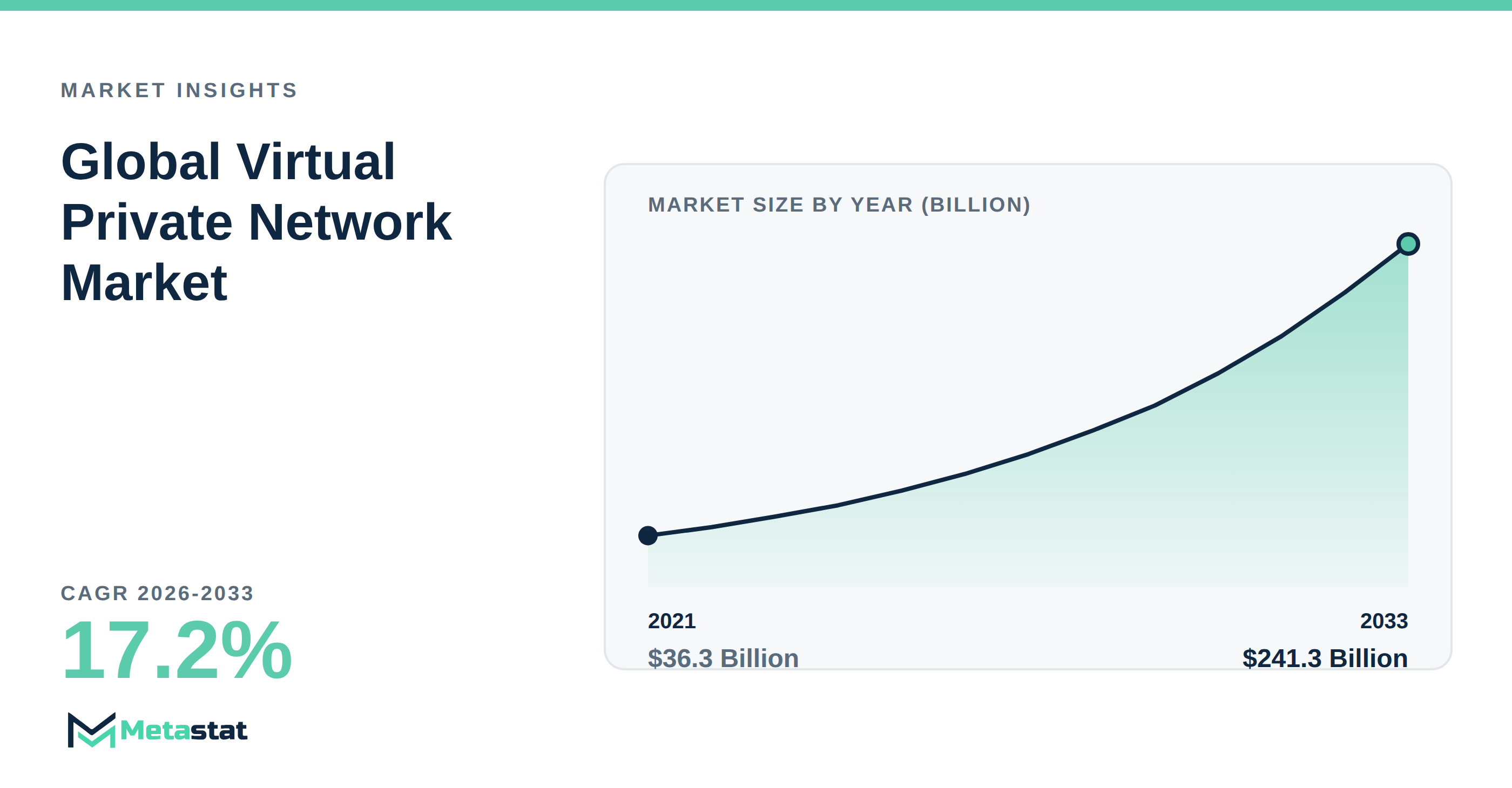
The Virtual Private Network market is projected to reach USD 241.3 billion by 2033. Understanding the key factors influencing pricing becomes crucial for buyers and operators. Below are significant elements that shape the costs involved in the marketplace.
1. Rising Demand for Secure Internet Connections
Increased cybersecurity threats drive a surge in demand for secure internet connections. Organizations invest in Virtual Private Network solutions to protect sensitive information and ensure compliance with various regulations. This heightened demand directly influences pricing, because providers adjust their rates to meet the market's growing needs. Consequently, buyers find opportunities to negotiate based on their specific security requirements and the competitive landscape, enhancing their purchasing power.
2. Technological Advancements Impacting Costs
Investments in next-generation technologies like artificial intelligence and machine learning transform the Virtual Private Network market. These innovations enhance security features and streamline operations, impacting overall service costs. Providers incorporating advanced technologies into their offerings typically charge premium prices. Buyers leverage the increasing number of vendors entering the market to seek cost-effective solutions without compromising quality, thus gaining a competitive advantage.
3. Regulatory Compliance Costs
Stricter data protection regulations impose additional costs on organizations seeking compliance. These regulations compel businesses to implement robust security measures, directly affecting pricing structures for VPN services. While compliance raises costs, organizations strategically invest in compliant VPN solutions to mitigate risks, maintain customer trust, and avoid fines. Buyers should factor compliance requirements into their assessments of overall costs, identifying potential long-term savings through proactive investments.
4. Competition Among Providers
The Virtual Private Network market exhibits significant fragmentation, with numerous providers offering a range of solutions. This competition results in varied pricing strategies because vendors strive to differentiate their offerings. Buyers possess the leverage to negotiate based on features and service levels, making it essential to compare multiple providers before procurement decisions. Understanding the competitive dynamics enables buyers to identify value-driven solutions aligning with their budgetary constraints, enhancing their procurement strategies.
5. Economic Conditions Affecting Investment
Macroeconomic factors including inflation and budget constraints significantly influence organizations' willingness to invest in VPN solutions. Economic pressures lead to reduced spending on cybersecurity initiatives, including VPN services. Buyers should remain cognizant of economic trends and their implications on pricing, particularly in developing regions where budget limitations restrict service availability. Strategic investments during favorable economic periods yield long-term cost benefits for organizations, positioning them for sustained success.
These factors collectively shape pricing in the Virtual Private Network market, including rising demand for secure connections, technological advancements, compliance costs, competition, and economic conditions. By understanding these elements, buyers navigate the market more effectively, making informed decisions that align with their security needs and budgets. For in-depth insights, consult the Global Virtual Private Network Market.
Tags
About the Authors

LEAD ANALYST
Utkarsh Khirodkar is a Lead Market Research Analyst at MetaStat Insight, specializing in market intelligence, technology sector assessments, and competitive strategy.

PRINCIPAL CONSULTANT - ENTERPRISE AI & EMERGING TECHNOLOGIES
Banking & Finance · Electronics and Semiconductor · Energy and Power · Healthcare IT · Information & Technology · Professional Services
Vijay Gunti is a Principal Consultant at MetaStat Insight, bringing over two decades of experience across enterprise digital transformation, technology strategy, and intelligent systems.

LEAD CONSULTANT - COMMUNICATION, TELECOM, AND IT
Electronics and Semiconductor · Information & Technology · Machinery & Equipment · Professional Services
Ravindra Sathe Consultants for Communication, Telecom, and IT at MetaStat Insight. He leads the firm's industry research initiatives across telecommunications infrastructure, digital connectivity, enterprise networking, and emerging information technology domains.