
Explore the competitive dynamics of the Asia-Pacific Semiconductor Logistics market, focusing on key players, market challenges, and growth opportunities.
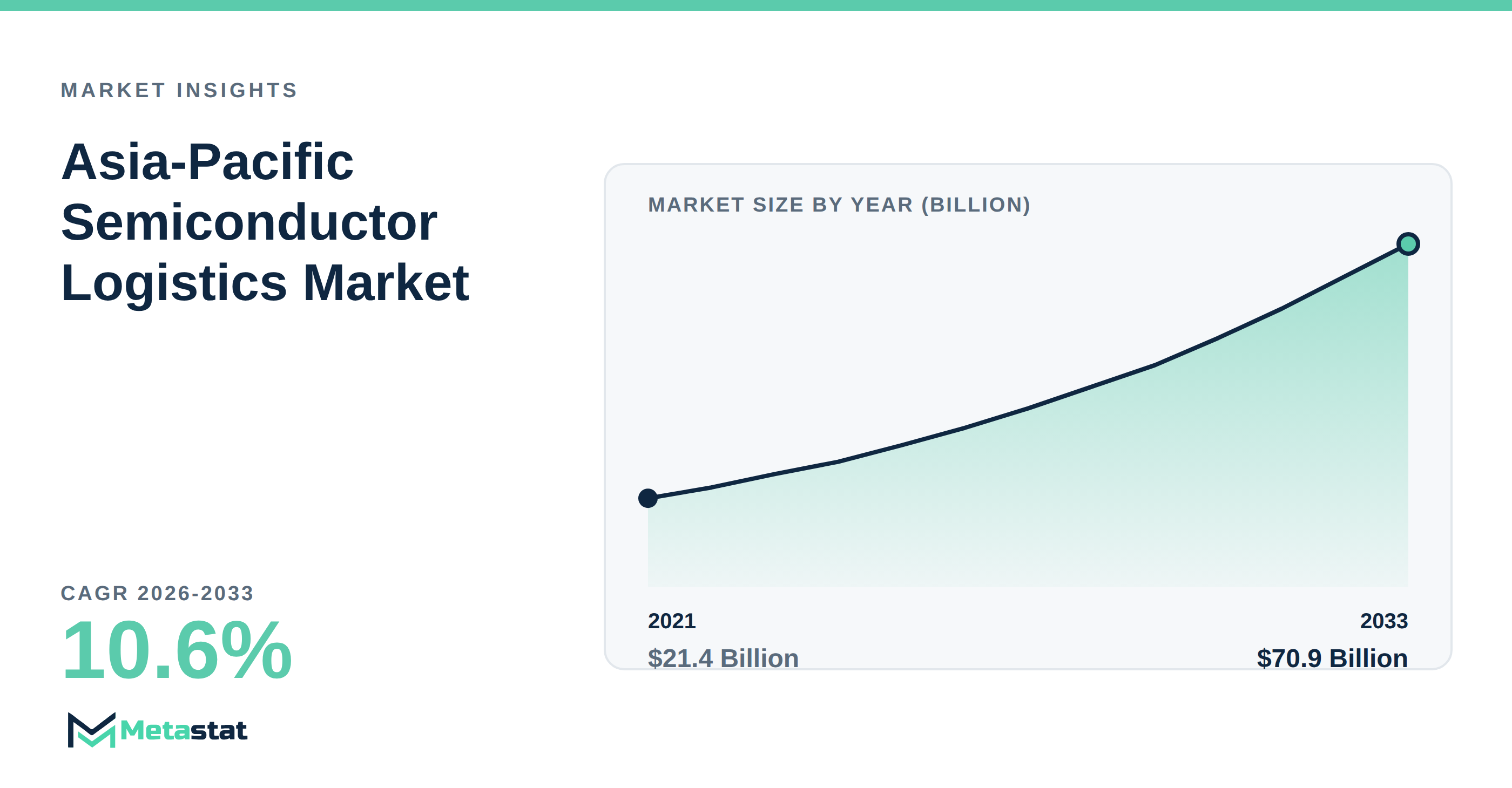
The Asia-Pacific Semiconductor Logistics market is experiencing significant transformations, driven by substantial investments and increasing demand across diverse sectors. Understanding the strategic positions of key players within this market provides valuable insights for stakeholders looking to navigate this evolving landscape. Below are six competitive positions that define the current dynamics in the Asia-Pacific Semiconductor Logistics market.
1. China’s Position in Semiconductor Logistics
China leads the Asia-Pacific Semiconductor Logistics market, with expectations for growth from USD 14.8 billion in 2026 to USD 30.1 billion by 2033. This corresponds to a compound annual growth rate (CAGR) of 10.7%. The increase in logistics demand correlates with substantial investments in wafer fabrication plants and outsourced semiconductor assembly and test (OSAT) facilities. Enhanced logistics solutions are crucial to supporting this manufacturing boom, because they streamline processes and improve supply chain efficiencies.
2. India’s Emergence because a Logistics Hub
India is establishing itself because a formidable player in the semiconductor logistics space, with a projected market valuation reaching USD 6.6 billion by 2033. This represents a robust CAGR of 12.4%. The growth results from the country's commitment to self-reliance in semiconductor production and the burgeoning demand for advanced electronic devices. Enhanced logistics frameworks are essential for ensuring timely deliveries and maintaining product quality in this rapidly developing sector.
3. South Korea's Collaborative Approach
South Korea's semiconductor logistics sector benefits from strategic collaborations that bolster supply chain resilience. The market is expected to grow to USD 10.4 billion by 2033, fueled by increased investments in semiconductor manufacturing. Logistics providers work closely with manufacturers to comply with stringent safety and environmental regulations, thereby enhancing service delivery and operational practices.
4. Value-Added Services Drive Competitive Edge
Value-added services, encompassing packaging, customs brokerage, and specialized handling, are becoming increasingly significant in the Asia-Pacific Semiconductor Logistics market. This segment is anticipated to achieve USD 12.3 billion by 2033, driven by the rising complexities of international supply chains and stringent regulatory pressures. Logistics providers offering tailored solutions significantly improve operational efficiency and address the evolving requirements of semiconductor manufacturers.
5. Growth of Cold-Chain Logistics Segment
The cold-chain logistics segment is projected to expand from USD 6.5 billion in 2026 to USD 14.1 billion by 2033, reflecting a CAGR of 11.8%. This growth stems from the escalating demand for temperature-sensitive semiconductor products, which require meticulous handling. Providers that invest in advanced cold-storage technologies enhance their operational capabilities, ensuring product integrity is maintained throughout the supply chain.
6. Challenges from Geopolitical Fragmentation
Geopolitical fragmentation poses challenges for the Asia-Pacific Semiconductor Logistics market, complicating logistics operations and inflating costs for suppliers. Ongoing tensions among nations generate uncertainties in trade policies, which adversely affect the seamless transportation of semiconductor components. Logistics firms are navigating these complexities while investing in innovative technologies to bolster supply chain resilience and maintain competitive positioning.
The outlined competitive positions underline key areas where logistics providers focus their strategies to adapt to the shifting dynamics of the Asia-Pacific Semiconductor Logistics market. Successfully navigating these challenges will be essential for driving market growth and positioning stakeholders effectively for future opportunities.
The full analysis is in Asia-Pacific Semiconductor Logistics Market.
Tags
About the Authors

LEAD ANALYST
Utkarsh Khirodkar is a Lead Market Research Analyst at MetaStat Insight, specializing in market intelligence, technology sector assessments, and competitive strategy.

PRINCIPAL CONSULTANT - ENTERPRISE AI & EMERGING TECHNOLOGIES
Banking & Finance · Electronics and Semiconductor · Energy and Power · Healthcare IT · Information & Technology · Professional Services
Vijay Gunti is a Principal Consultant at MetaStat Insight, bringing over two decades of experience across enterprise digital transformation, technology strategy, and intelligent systems.

PRINCIPAL CONSULTANT - QUALITY SYSTEMS & COMPLIANCE
Electronics and Semiconductor · Machinery & Equipment · Professional Services
Omkar Phadtare is an Industry Consultant at MetaStat Insight, specializing in quality systems, regulatory compliance, and standards benchmarking to drive data-driven market intelligence and strategic industry research.

ENERGY & INFRASTRUCTURE INDUSTRY CONSULTANT
Automotive and Transportation · Electronics and Semiconductor · Energy and Power · Machinery & Equipment
Saurabh Vasant Ganvir consults for Energy & Infrastructure Industry at MetaStat Insight, specializing in renewable energy, solar EPC, and electric vehicle (EV) infrastructure markets.

LEAD CONSULTANT - COMMUNICATION, TELECOM, AND IT
Electronics and Semiconductor · Information & Technology · Machinery & Equipment · Professional Services
Ravindra Sathe Consultants for Communication, Telecom, and IT at MetaStat Insight. He leads the firm's industry research initiatives across telecommunications infrastructure, digital connectivity, enterprise networking, and emerging information technology domains.