
LEAD ANALYST
Utkarsh Khirodkar is a Lead Market Research Analyst at MetaStat Insight, specializing in market intelligence, technology sector assessments, and competitive strategy.

Asia-Pacific Semiconductor Logistics Market Size, Share, By Function (Transportation, Warehousing and Distribution and Value-Added Services), By Mode of Operation (Cold-Chain Logistics and Non-Cold-Chain Logistics), By Product Type (Raw Materials and Chemicals, Wafers, Packaging Materials, Finished Semiconductor Products and Others), By Region (China, India, South Korea, Japan and Rest of Asia Pacific), Industry Analysis, Growth, Trends, and Forecast, 2026-2033
Report ID
MSI-5257
Published
September, 2026
Pages
273 Pages
Format
Historical
Base year
Forecast
Forecast period
Report Details
Market Valuation: Valued at $31.7 Billion in 2025, projected to reach $70.9 Billion by 2033 at a 10.6% CAGR.
Dominant Segment: The Transportation segment leads the Asia-Pacific Semiconductor Logistics market, projected to grow from USD 19.1 billion in 2026 to USD 36.9 billion by 2033, driven by strong adoption of semiconductor technology across various industries.
Geographic Lead: China is the fastest-growing region, with logistics demand expected to rise from USD 14.8 billion in 2026 to USD 30.1 billion by 2033, fueled by substantial investments in semiconductor fabrication and assembly facilities.
What's Inside: The report provides a comprehensive analysis of market dynamics, competitive landscape, and forecasts from 2026 to 2033, covering key segments such as transportation, warehousing, and value-added services.
Emerging Demands: The market is expanding due to increasing demands for semiconductor logistics across sectors like automotive and consumer electronics, prompting logistics providers to diversify their service offerings.
Cold-Chain Logistics Growth: Cold-chain logistics is projected to grow at a CAGR of 11.8%, increasing from USD 6.5 billion in 2026 to USD 14.1 billion by 2033, driven by the need for temperature-sensitive semiconductor products.
Choose Your License
Asia-Pacific Semiconductor Logistics Market
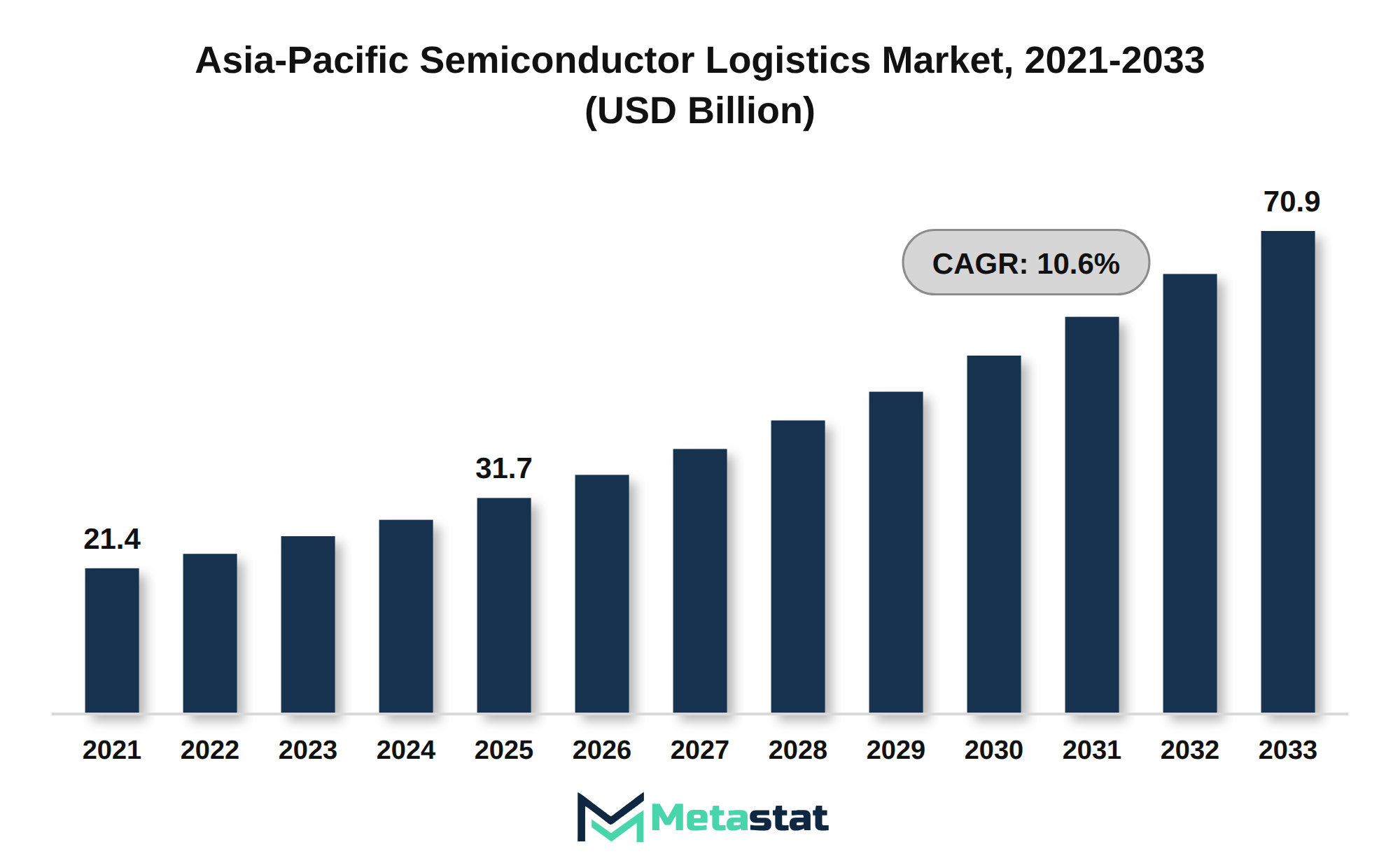
The Asia-Pacific Semiconductor Logistics market was valued at USD 31.7 billion in 2025 and is projected to reach USD 70.9 billion by 2033, growing at a CAGR of 10.6% over the forecast period.
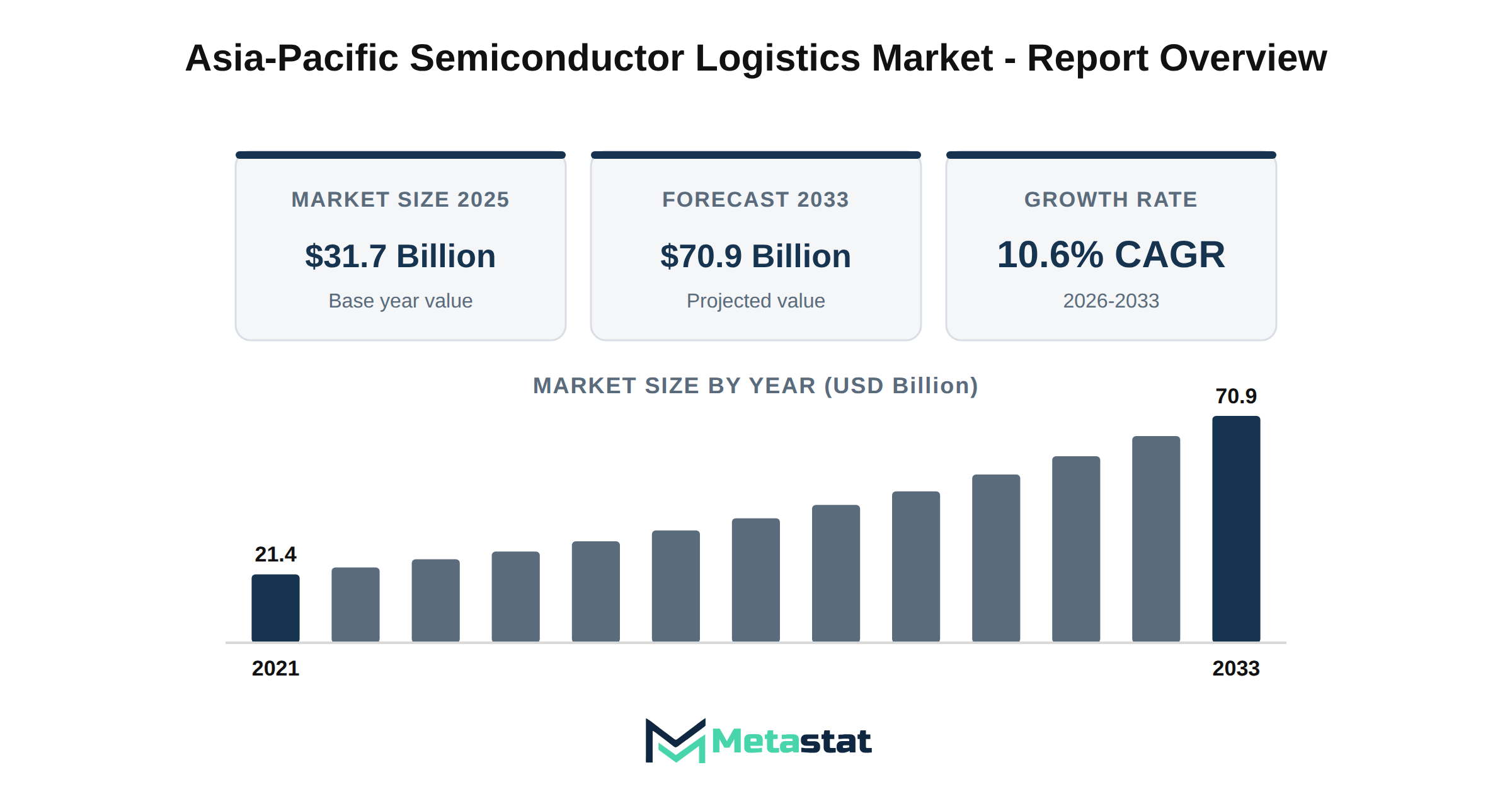
The Asia-Pacific Semiconductor Logistics market reached USD 31.7 billion in 2025, reflecting significant growth from USD 21.4 billion in 2021 and USD 23.5 billion in 2022. Projections indicate an increase to USD 70.9 billion by 2033, achieving a compound annual growth rate (CAGR) of 10.6%. This growth trajectory is driven by rising demand for semiconductor manufacturing and distribution across the region.
China significantly influences the Asia-Pacific Semiconductor Logistics market, with expectations for logistics demand to rise sharply. The market in China is projected to expand from USD 14.8 billion in 2026 to USD 30.1 billion by 2033, indicating a CAGR of 10.7%. This demand surge correlates with increasing investments in semiconductor fabrication and outsourcing services, further driving logistics requirements.
Semiconductor freight pricing and margin dynamics significantly impact the logistics landscape. Fluctuations in freight costs influence operational budgets for logistics providers and semiconductor manufacturers. Transportation costs represent a substantial portion of overall logistics expenditures, necessitating strategies to optimize efficiency and cost-effectiveness.
The reconfiguration of trade lanes between China and ASEAN countries alters logistics operations. This shift enhances regional supply chain resilience while promoting more efficient transportation routes. Companies engaged in cross-border logistics adapt to evolving customs regulations and export controls, resulting in heightened scrutiny of compliance measures.
Investments in semiconductor manufacturing across Asia-Pacific drive logistics demand. The construction of new fabrication facilities and expansion of existing operations necessitate robust logistics networks for transporting raw materials, wafers, and finished products. This investment momentum influences the logistics market, leading to increased demand for specialized transportation services.
Temperature-controlled logistics has gained traction, particularly in the transportation of sensitive semiconductor components. Cold-chain logistics, growing at a CAGR of 11.8%, is expected to expand from USD 6.5 billion in 2026 to USD 14.1 billion by 2033. This segment addresses the need for precise temperature management throughout the supply chain, ensuring product integrity.
The demand for air freight in the semiconductor sector reflects the urgency associated with time-critical shipments. Air transportation provides rapid transit for high-value semiconductor products, ensuring timely delivery to customers. This demand for speed influences logistics strategies and service offerings in the Asia-Pacific region.
The Asia-Pacific Semiconductor Logistics market is projected to experience significant growth through 2033, driven by escalating demand for semiconductor manufacturing and logistics services. Key factors include rising investments in fabrication plants and advanced packaging facilities, particularly in China and India. The anticipated increase in semiconductor production capacity will further enhance logistics demand across the region.
China stands because a key player in the semiconductor logistics landscape, with a projected growth in logistics demand attributed to substantial investments in wafer fabs and outsourced semiconductor assembly and test (OSAT) facilities. The country's strategic emphasis on enhancing semiconductor capabilities will necessitate robust logistics solutions to support manufacturing processes.
Freight pricing and margin dynamics are critical components influencing the market. Fluctuations in global shipping costs, coupled with the demand for expedited freight services, create a complex pricing environment. Providers adjust pricing strategies to maintain operational margins while addressing the heightened need for reliable and timely deliveries.
China's semiconductor logistics sector faces challenges related to export controls and customs regulations. These challenges impact the flow of materials and finished products across borders, necessitating enhanced compliance measures and strategic partnerships to navigate the evolving regulatory landscape.
Value-added services, including packaging, customs brokerage, and specialized handling, gain prominence within the market. These services enhance the efficiency of supply chains, enabling companies to meet the demands of high-value semiconductor products. The integration of these services supports supply chain resilience and operational excellence.
Opportunities for growth within the Asia-Pacific Semiconductor Logistics market remain abundant, particularly in India, South Korea, Japan, and Southeast Asia. The expansion of semiconductor fabs and OSAT facilities in these regions will drive demand for comprehensive logistics solutions, creating a favorable environment for service providers to enhance their offerings and capabilities.
Investment in digital transformation significantly impacts the Asia-Pacific Semiconductor Logistics market. Companies increasingly adopt automation, artificial intelligence, and software solutions to enhance efficiency and streamline operations. This shift facilitates the transition from legacy systems to more integrated digital processes, enabling logistics providers to respond swiftly to market demands.
Enhanced operational productivity results from the adoption of advanced technologies, improving the accuracy and speed of logistics operations. This transformation aligns with the broader trend of increasing consumer expectations for faster delivery times and higher service levels. Businesses operating in the semiconductor supply chain prioritize technological integration to maintain a competitive advantage.
The influx of venture funding and public-private spending further supports digital initiatives. Investments directed toward upgrading infrastructure and modernizing digital capabilities position companies to leverage data analytics and improve decision-making processes. Such advancements contribute to the overall growth trajectory of the market.
The focus on operational efficiency reduces costs associated with outdated practices and enhances profitability. By investing in digital technologies, firms achieve significant cost savings through optimized resource allocation and improved service delivery. This trend creates a favorable environment for growth in the Asia-Pacific Semiconductor Logistics market, attracting more players to engage in digital transformation initiatives.
Significant investment in infrastructure development strengthens the Asia-Pacific Semiconductor Logistics market. Governments and private sector entities prioritize upgrades to physical and digital capacities, enhancing logistics networks and operational efficiencies. This drive towards modernization aligns with escalating demand for semiconductor components across various industries, including consumer electronics and automotive sectors.
Infrastructure improvements facilitate more efficient transportation and warehousing solutions, directly impacting logistics costs and delivery timelines. Enhanced capabilities allow logistics providers to meet the needs of a changing market, characterized by the increasing complexity of supply chains. The anticipated growth in the Asia-Pacific Semiconductor Logistics market is supported by these infrastructure advancements, contributing to improved service delivery and higher customer satisfaction.
Specific investments target cold-chain logistics and value-added services, enabling providers to offer comprehensive solutions tailored to customer requirements. The integration of advanced technologies within infrastructure projects, including automation and AI, drives operational efficiencies. Consequently, these developments reinforce economic growth in the region, propelling the market forward.
Disruptions within the supply chain hinder the Asia-Pacific Semiconductor Logistics market's growth, creating challenges for logistics providers and manufacturers. These interruptions, driven by geopolitical tensions, natural disasters, and global health crises, result in delays, increased lead times, and higher transportation costs. Manufacturers face difficulties in sourcing raw materials and components on time, affecting production schedules and inventory management.
Higher operational costs arise from implementing alternative sourcing strategies and expediting shipping to meet demand. Such disruptions impact operational efficiency and diminish profit margins, leading to reduced competitiveness in the market. Supply chain vulnerabilities contribute to uncertainties regarding customer demand, forcing companies to adopt reactive rather than proactive strategies. This environment creates barriers to long-term planning and investment in the sector.
Increased pressure on logistics providers to maintain service levels while managing costs complicates the competitive landscape, because firms struggle to balance quality and pricing. The Asia-Pacific Semiconductor Logistics market navigates these challenges to ensure resilience and sustain growth in an unpredictable operating environment.
Geopolitical fragmentation creates challenges for the Asia-Pacific Semiconductor Logistics market, leading to trade deficits and tariff friction among countries. These conditions disrupt the flow of goods and services, complicating logistics operations and increasing costs for suppliers and customers alike. Ongoing tensions among key nations contribute to uncertainties in trade policies, impacting the reliable transportation of semiconductor components.
Technological disruptions exacerbate these challenges, creating a necessity for complex R&D integrations that many companies find difficult to navigate. This situation affects the ability to adapt to market demands while maintaining competitive advantages. Firms invest heavily in innovative technologies, but the risk of interoperability friction increases, potentially hindering productivity and efficiency across the supply chain.
Rising input costs associated with feedstock and component volatility further strain profitability within the market. Companies face margin pressures resulting from escalating expenses, making it challenging to sustain competitive pricing. Workforce skill gaps complicate the implementation of advanced logistics strategies, creating additional hurdles for businesses aiming to meet market demands.
Environmental considerations and decarbonization mandates impose further requirements on logistics operations. Companies invest in sustainable practices to comply with tightening regional regulatory standards, increasing compliance overhead. This situation contributes to a greater burden on resources, affecting operational capacity and overall market performance.
Logistics disruptions related to cybersecurity risks and data vulnerabilities present significant challenges, necessitating heightened investments in technology infrastructure. Addressing these risks consumes resources that could otherwise enhance supply chain resilience. The Asia-Pacific Semiconductor Logistics market continues to navigate these complex challenges, which impact growth and competitiveness in a changing environment.
Strong regional demands for semiconductor logistics drive growth within the Asia-Pacific Semiconductor Logistics market. The accelerating need for advanced technological solutions fuels investment in logistics capabilities tailored to specific industries. Increased demand across sectors including automotive, consumer electronics, and telecommunications enhances opportunities for logistics providers to diversify their service offerings and capture market share.
Infrastructure modernization initiatives across various nations contribute to the evolving landscape of the market. Upgrading logistics facilities and transportation networks facilitates improved efficiency and reliability, attracting more stakeholders. Geographical expansion into underserved regions, particularly in developing economies, creates significant prospects for logistics companies to extend their reach and increase revenue generation.
Technological disruptions, including automation and data analytics, significantly enhance operational efficiencies within the market. These advancements optimize processes and improve decision-making, resulting in reduced operational costs and increased profitability. The integration of digital solutions improves collaboration among supply chain players, enabling a more responsive and adaptive logistics environment.
Sustainability imperatives and ESG-driven alignments encourage logistics providers to adopt greener practices. Implementing eco-friendly logistics solutions not only addresses regulatory requirements but appeals to environmentally conscious consumers. While companies prioritize sustainability, investments in green technologies become vital for maintaining competitive advantages within the market.
Strategic consolidation through mergers and acquisitions accelerates market dynamics. This trend enables logistics firms to enhance their capabilities and expand service portfolios, ultimately leading to improved market positioning. Evolving buying behaviors and digital procurement shifts reshape traditional commercial models, prompting logistics providers to adapt their strategies to align with new consumer expectations.
Overall, the Asia-Pacific Semiconductor Logistics market presents substantial opportunities driven by emerging demands, technological advancements, and sustainability initiatives. The combination of these factors creates a strong environment for growth and innovation, positioning the market for significant expansion through 2033.
The Asia-Pacific Semiconductor Logistics market is segmented based on Function, Mode of Operation, Product Type, and Region.
Valued at USD 19.1 billion in 2026, the Transportation segment of the Asia-Pacific Semiconductor Logistics market is projected to reach USD 36.9 billion by 2033, at a CAGR of 9.9% during the forecast period. Strong adoption of semiconductor technology within various industries drives demand for efficient transportation solutions. Increased production of electronic devices and rising consumer expectations for faster delivery times contribute significantly to this growth. Expansion occurs through strategic partnerships among logistics providers, enhancing supply chain capabilities and supporting logistics infrastructure. Investment in advanced transportation technologies, including automated vehicles and real-time tracking systems, boosts operational efficiency and responsiveness to market trends. Regulatory compliance standards focused on sustainability and environmental impact compel logistics providers to adopt greener transportation methods. These dynamics collectively shape the competitive landscape within the market, positioning stakeholders to capitalize on emerging opportunities and meet evolving customer needs.
Demand for efficient warehousing and distribution solutions continues to rise within the Asia-Pacific Semiconductor Logistics market. Increased semiconductor production capacity and heightened global demand for chips drive the need for effective storage and handling of semiconductor products. The ongoing expansion of the technology sector, particularly in consumer electronics and automotive industries, fuels this growth. Emerging economies in the region, including China and India, experience a surge in semiconductor manufacturing, leading to heightened requirements for warehousing and distribution services.
Investment in advanced technologies including automation and artificial intelligence enhances the efficiency of warehousing operations. These technologies facilitate inventory management, reduce turnaround times, and improve overall service levels. Regulatory compliance standards concerning safety and environmental impact influence warehousing strategies, prompting companies to adopt more sustainable practices.
The warehousing and distribution segment is expected to reach USD 21.7 billion by 2033, growing at a CAGR of 11.2% during the forecast period. Continuous investments in infrastructure development will further support the segment's expansion, providing opportunities for logistics service providers. Strategic partnerships and collaborations across the supply chain enhance operational capabilities, ensuring a responsive and flexible logistics network. Overall, these factors contribute to a positive growth outlook for the warehousing and distribution segment within the market.
Growth in the Value-Added Services (Packaging, Customs, Brokerage, Others) segment reflects increasing demand for enhanced logistics capabilities within the Asia-Pacific Semiconductor Logistics market. The segment is projected to reach USD 12.3 billion by 2033, driven by rising complexities in international supply chains and the need for compliance with stringent regulatory standards. Adoption of these services facilitates improved efficiency, ensuring timely delivery of semiconductor products while addressing various customs and brokerage challenges. Technological advancements, including automation and data analytics, support segment expansion by streamlining operations and enhancing visibility throughout the supply chain. These innovations enable logistics providers to offer tailored solutions that meet the evolving needs of semiconductor manufacturers and distributors. Downstream applications, particularly in electronics and automotive sectors, rely on efficient packaging and customs services to maintain competitive advantage. Cost structures within this segment experience pressure due to fluctuating raw material prices and the implementation of advanced technologies. Pricing volatility impacts profit margins, necessitating strategic adjustments from logistics providers. The growing focus on sustainability and eco-friendly packaging solutions presents challenges and opportunities, encouraging investment in innovative practices. This dynamic environment highlights the importance of adaptability in a rapidly changing market landscape.
Valued at USD 6.5 billion in 2026, Cold-Chain Logistics is projected to reach USD 14.1 billion by 2033, at a CAGR of 11.8% during the forecast period. This growth stems from increasing demand for temperature-sensitive semiconductor products that require strict handling protocols to maintain quality. The expansion of this segment is driven by advancements in technology that improve cold-storage facilities and transportation infrastructure, enabling faster and more reliable delivery of products. Regulatory compliance regarding temperature control during transport serves because a significant factor influencing operational strategies, particularly in regions with stringent standards.
The Asia-Pacific Semiconductor Logistics market experiences heightened interest in cold-chain logistics because manufacturers recognize the importance of maintaining product integrity throughout the supply chain. While companies strive for efficiency, the integration of next-gen upgrades in cold-storage technology enhances operational capabilities. Increasing adoption of automation in logistics operations contributes to improved accuracy and reduced temperature deviations during transport, ultimately supporting market growth.
Growing end-use dynamics in industries including pharmaceuticals and electronics further increase the demand for cold-chain logistics solutions. While these sectors expand, the necessity for reliable logistics solutions to handle sensitive materials escalates. With rising consumption shifts toward high-quality semiconductor products, the importance of cold-chain logistics becomes even more pronounced. The market's ability to adapt to these shifts will dictate its resilience and competitiveness.
Rapid growth characterizes the Non-Cold-Chain Logistics segment within the Asia-Pacific Semiconductor Logistics market. This segment is estimated to reach USD 56.8 billion by 2033, reflecting a CAGR of 10.3% during the forecast period. Primary demand drivers include the increasing need for efficient and timely transportation solutions, particularly for raw materials, finished semiconductor products, and packaging materials. Expansion in this segment is driven by technological advancements that enhance operational efficiency and improve supply chain resilience.
Investments in non-cold-chain logistics infrastructure facilitate broader access to transportation networks, which are crucial for semiconductor manufacturers. Next-generation upgrades in logistics technologies, including automation and data analytics, enhance tracking and visibility across the supply chain. Consumption shifts toward just-in-time delivery models necessitate agile logistics solutions, aligning with the evolving needs of semiconductor manufacturers and end-users.
Regulatory compliance standards increasingly influence logistics operations, driving the need for certifications that ensure quality and reliability in service delivery. Cost structures in the Non-Cold-Chain Logistics segment reflect the balance between operational efficiencies and pricing volatility in raw material sourcing. Rising semiconductor demand presents significant growth opportunities in this segment, supported by strategic investments and an emphasis on overcoming logistics vulnerabilities.
Valued at USD 7.8 billion in 2026, the Raw Materials and Chemicals segment is projected to reach USD 16.1 billion by 2033, at a CAGR of 10.9% during the forecast period. Strong demand for semiconductor manufacturing drives growth within this segment, driven by the increasing complexity and miniaturization of semiconductor devices that necessitate high-quality raw materials and chemicals. Industries including electronics and automotive prioritize sourcing reliable suppliers to ensure consistency and quality in production processes.
Technological advancements enable the introduction of innovative materials, enhancing performance and reliability. Compliance with stringent regulatory standards prompts manufacturers to invest in certified raw materials and chemicals, ensuring product safety and environmental responsibility. The expanding applications of semiconductors in various sectors, including artificial intelligence, IoT, and renewable energy, contribute to an upward trajectory in demand.
While market players navigate pricing volatility and margin pressures, effective supply chain management becomes crucial for mitigating risks associated with raw material sourcing. Strategic partnerships and investments in local sourcing capabilities enhance resilience against supply chain disruptions. Opportunities arise from the ability to innovate and adapt to evolving consumer preferences, highlighting the potential for growth in the Asia-Pacific Semiconductor Logistics market.
The Wafers (Bare and Processed) segment is estimated to reach USD 15.3 billion by 2033, at a CAGR of 11.5% during the forecast period. Growth in this segment aligns with increasing demand for high-performance semiconductor materials across various industries, particularly in consumer electronics, automotive, and telecommunications. The ongoing evolution of technology, including advancements in 5G and artificial intelligence, drives substantial investment in semiconductor manufacturing and logistics. Technological maturation supports efficient production processes, enhancing the quality and performance of wafers.
Cost structures play a critical role in shaping the market landscape, with fluctuations in raw material prices directly impacting manufacturing expenses. Companies in this segment face pricing volatility, which influences profit margins. Regulatory compliance standards regarding environmental impacts and semiconductor safety complicate operational strategies. Heightened competition among logistics providers emphasizes the need for innovative and cost-effective solutions to maintain market share.
Strategic opportunity windows arise from the increasing emphasis on sustainable practices within the semiconductor industry. The push towards green technologies drives the development of eco-friendly wafer production methods, aligning with global sustainability goals. Emerging economies in the Asia-Pacific region contribute to consumption shifts, creating new demand dynamics that logistics providers navigate. The Asia-Pacific Semiconductor Logistics market is set for significant transformation, driven by these complex interdependencies and evolving market demands.
Demand for Packaging Materials in the Asia-Pacific Semiconductor Logistics market stems from the rapid evolution of semiconductor technologies and the need for advanced packaging solutions that ensure product integrity during transport. The expansion of end-use applications across consumer electronics, automotive, and telecommunications sectors drives this demand, particularly because devices become increasingly compact and complex.
With a market value reaching USD 9.6 billion by 2033, the segment experiences strong growth due to technological maturation and the introduction of next-gen packaging solutions. These innovations enhance performance while reducing waste, aligning with sustainability trends that are significant in various industries.
Market players face pressures related to pricing volatility and margin challenges, influenced by fluctuations in raw material costs and changing regulatory compliance standards. Strategic opportunity windows exist for suppliers to innovate in eco-friendly and efficient packaging materials, responding to shifts in consumer preferences toward sustainable options.
Investment in research and development will further boost the segment, facilitating the evolution of products that meet the stringent needs of semiconductor manufacturers. This focus on innovation will support the overall growth trajectory of the Asia-Pacific Semiconductor Logistics market, positioning Packaging Materials because a crucial component in the supply chain.
Growth within the Finished Semiconductor Products segment hinges on increasing demand from various end-use applications, particularly consumer electronics, automotive, and industrial sectors. These industries require advanced semiconductor components for improved performance and efficiency, driving the need for robust logistics solutions tailored to the specific characteristics of finished products. The Finished Semiconductor Products segment is projected to grow at a CAGR of 10.1% during the forecast period.
Technological maturation in semiconductor manufacturing enhances product reliability and performance, leading to an uptick in adoption rates across industries. Continuous advancements in design and production methods enable the introduction of next-generation semiconductor products, which necessitate efficient logistics frameworks to manage their distribution effectively. The market experiences heightened demand for logistics services capable of accommodating tailored packaging and handling requirements unique to finished products.
Regulatory compliance and certification standards further shape the logistics landscape, compelling players to adopt best practices in handling and transportation. Challenges related to pricing volatility and margin pressures impact logistics costs, requiring companies to develop agile supply chain strategies to maintain profitability. The Asia-Pacific Semiconductor Logistics market reflects this dynamic, emphasizing supply chain resilience and minimizing vulnerabilities associated with logistics operations.
Capital investment in logistics infrastructure aligned with market trends strengthens operational capabilities, ensuring timely delivery of finished semiconductor products. By addressing these strategic opportunity windows, stakeholders enhance their competitive position within the evolving landscape of the Asia-Pacific Semiconductor Logistics market.
Demand for photo masks and reticles, along with specialty consumables, significantly influences the Asia-Pacific Semiconductor Logistics market. Rapid advancements in semiconductor manufacturing technology drive the need for high-quality materials that meet stringent production requirements. Increased adoption of advanced techniques in semiconductor fabrication contributes to the growing importance of these materials, impacting overall logistics strategies.
Technological maturation in the semiconductor field influences the demand dynamics for various product types, including photo masks and reticles. Manufacturers focus on enhancing production processes, leading to a strategic emphasis on sourcing high-performance consumables. The market experiences significant shifts in consumption patterns, driven by companies seeking to optimize supply chains and ensure compliance with regulatory standards.
Cost structures related to specialty consumables affect pricing strategies, resulting in potential margin pressures for suppliers. Volatility in raw material prices creates challenges in maintaining stable supply chains, necessitating resilience in logistics operations. Companies involved in the logistics of these products increasingly recognize substitution risks, prompting them to secure reliable sourcing channels.
Strategic opportunity windows arise for firms specializing in the logistics of photo masks, reticles, and specialty consumables. Investments in next-generation upgrades and product evolution create pathways for growth. Overall, the segment's performance influences the broader Asia-Pacific Semiconductor Logistics market, shaping competitive strategies and capital investment outlooks.
Valued at USD 14.8 billion in 2026, the segment is projected to reach USD 30.1 billion by 2033, at a CAGR of 10.7% during the forecast period. This growth is driven by increasing demand for advanced semiconductor technologies across various industries, particularly in electronics and automotive sectors. The expansion of production capabilities and the rise of digitalization in numerous sectors enhance demand for integrated logistics solutions tailored to semiconductor needs.
Technological maturation leads to significant advancements in logistics operations and supply chain management, positively impacting the Asia-Pacific Semiconductor Logistics market. Investments in automation and data analytics contribute to improved efficiency and reduced operational costs. These developments enable logistics providers to meet the evolving requirements of the semiconductor industry.
The growing emphasis on regulatory compliance and standards enhances the quality of logistics services offered within the market. Providers increasingly adopt certifications and best practices to align with international standards, thereby improving their competitive position. This trend attracts investments and encourages innovation, allowing logistics companies to deliver higher value-added services.
China's strategic initiatives to boost domestic semiconductor production create substantial opportunities for logistics services. The focus on supply chain resilience and raw material sourcing leads to increased collaboration between manufacturers and logistics providers. This alignment ensures efficient transportation and distribution, supporting overall growth in the semiconductor logistics landscape in the region.
Strong growth in the Indian semiconductor logistics sector stems from rapid advancements in technology and increased domestic manufacturing capabilities. The nation's push towards self-reliance in semiconductor production enhances demand for logistics solutions tailored for this crucial sector. Regulatory frameworks supporting the semiconductor industry further stimulate investments, contributing to an estimated market value of USD 6.6 billion by 2033, at a CAGR of 12.4% during the forecast period. This growth trajectory aligns with the broader trends observed in the Asia-Pacific Semiconductor Logistics market.
Expansion of downstream applications in consumer electronics, automotive, and telecommunications drives significant demand for efficient logistics services. Evolving consumer preferences towards high-quality electronics and smart devices necessitate robust logistics frameworks to ensure timely delivery and product integrity. Coupled with increasing urbanization and a growing middle class, the appetite for semiconductor-based products fuels the market's expansion. Investment in infrastructure, including transportation networks and warehousing capabilities, further supports the logistics ecosystem, equipping it to meet escalating demand in India.
Strategic partnerships between logistics providers and semiconductor manufacturers enhance supply chain resilience, ensuring timely access to raw materials and components. The ongoing emphasis on technological maturation facilitates innovation in logistics processes, streamlining operations and reducing costs. Overall, the dynamic relationship of these factors positions India because a significant player in the Asia-Pacific Semiconductor Logistics market, with promising opportunities ahead.
Demand for semiconductor logistics in South Korea is supported by a rapidly expanding technology sector and increasing investments in semiconductor manufacturing. This growth positions South Korea to reach USD 10.4 billion by 2033, reflecting significant interest from local and international players seeking to enhance their supply chains.
Technological advancements play a critical role in driving efficiency within logistics operations. Companies adopt next-generation logistics solutions to improve reliability and reduce operational costs. The market benefits from strategic partnerships among logistics providers and semiconductor manufacturers, which enable enhanced collaboration and responsiveness to market demands.
Regulatory compliance and industry standards contribute to shaping operational practices. Compliance with safety and environmental regulations remains a priority, influencing logistics strategies across the semiconductor supply chain. This adherence builds trust and reliability, essential traits for companies pursuing long-term growth in the Asia-Pacific Semiconductor Logistics market.
Raw material sourcing strategies evolve alongside shifts in consumption patterns. Local sourcing initiatives gain traction, reducing dependency on international suppliers while enhancing supply chain resilience. These strategies ensure consistent availability of materials necessary for semiconductor manufacturing, further strengthening South Korea's position within the market.
Japan's semiconductor logistics sector reflects significant growth potential, driven by increasing demand for advanced technology and efficient supply chain solutions. Primary demand stems from expanding industries including consumer electronics, automotive, and telecommunications, requiring robust logistics networks to support their operations. The ongoing adoption of automation and digitalization in logistics enhances efficiency, enabling companies to streamline processes and reduce lead times.
Technological maturation within the semiconductor industry fuels the need for sophisticated logistics solutions. Companies in Japan leverage next-gen upgrades to optimize their operations, ensuring timely delivery and precise inventory management. Strategic opportunity windows arise from collaborations between logistics providers and semiconductor manufacturers, enhancing innovation and service offerings.
Cost structures and pricing volatility remain critical factors affecting the logistics landscape. Companies face margin pressures due to fluctuating raw material costs and the need for compliance with stringent regulatory standards. Navigating these challenges requires a resilient supply chain, emphasizing the importance of sourcing reliable materials and maintaining flexibility in logistics operations.
The Japan segment is projected to grow at a CAGR of 9.4% during the forecast period. This growth trajectory reflects a strong commitment to enhancing logistics capabilities, driven by rising consumer demand and evolving market dynamics. Investment in supply chain resilience and technological advancements positions Japan because a key player in the Asia-Pacific Semiconductor Logistics market.
Growth within the Rest of Asia Pacific segment results from a combination of factors, including increasing demand for semiconductor products across various industries. Expanding semiconductor manufacturing processes drive heightened requirements for logistics solutions tailored to this sector. The market experiences significant investments in technology and infrastructure, facilitating improved supply chain efficiency. Rising complexity in semiconductor supply chains fuels demand for enhanced logistics services, further supported by advancements in automation and digitalization.
Technological maturation plays a key role in shaping the segment, with new logistics technologies enhancing operational efficiency while reducing costs. The shift towards next-generation semiconductor products creates a need for agile logistics solutions that adapt to rapidly changing market dynamics. Regulatory compliance standards impact operations within the segment, prompting logistics providers to adopt stringent quality control and certification processes to meet evolving requirements.
Pricing volatility poses challenges for suppliers, affecting overall cost structures. Market participants navigate these dynamics by exploring strategic partnerships and innovative solutions that enhance competitive positioning. Supply chain resilience becomes increasingly critical, prompting stakeholders to assess raw material sourcing strategies and potential vulnerabilities within logistics networks. The segment's future outlook reflects opportunities for growth stemming from strategic investment in logistics capabilities and the ongoing evolution of semiconductor technology.
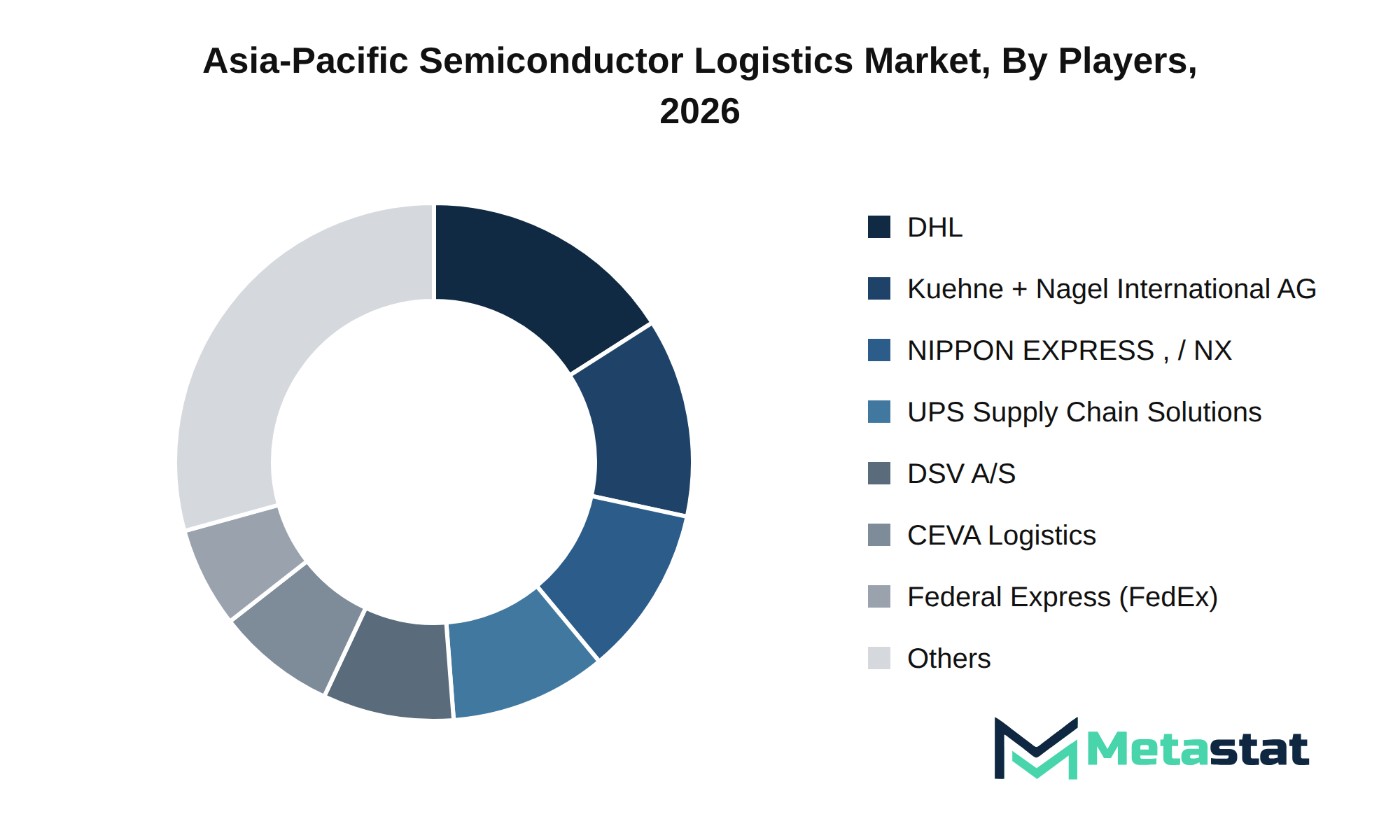
The Asia-Pacific Semiconductor Logistics market experiences significant strategic behavior characterized by mergers, acquisitions, and partnerships among key players. Companies including DHL, Kuehne + Nagel International AG, and UPS Supply Chain Solutions pursue strategic consolidations to enhance service offerings and expand market reach. These actions result in strengthened supply chain dominance and improved procurement leverage.
Product differentiation and technological advancements play crucial roles in shaping the competitive dynamics. Companies including Federal Express Corporation (FedEx) and CEVA Logistics invest in proprietary technology to create unique service propositions that effectively address customer needs. This focus on research and development generates a competitive edge in the market.
Customer retention strategies are vital in this competitive landscape. Companies leverage brand equity dynamics and switching costs to maintain existing clientele while attracting new customers. The competitive outlook indicates a landscape marked by continuous evolution, driven by defensive imperatives and strategic growth vectors.
Market size is projected to rise from USD 31.7 billion in 2025 to over USD 70.9 billion by 2033. This growth results from a combination of macroeconomic factors, evolving trade corridors, and strategic capital allocation directives, all contributing to advancements in the Asia-Pacific Semiconductor Logistics market.
The base case presents a clear trajectory for growth at a 10.6% CAGR, reflecting ongoing investments in infrastructure and operational efficiencies. In a bull scenario, accelerated technological integration and heightened demand for next-generation products could drive even higher growth rates. Conversely, a bear case arises from geopolitical realignments and regulatory challenges, leading to potential disruptions in supply chains and market access.
Downstream demand shifts toward more sophisticated logistics solutions will influence how players in the market adapt to changing consumer needs. Strategic imperatives focused on meeting these demands will play a critical role in shaping future growth recommendations.
Emerging white-space opportunities and unmet enterprise needs present significant areas for exploration within the market. Identifying high-growth pockets will be essential for companies seeking competitive advantages in an increasingly competitive environment.
The report strategically identifies and profiles the key market players and analyses their core competencies in each sub-segment of the Semiconductor Logistics market.
Report Attributes | Details |
Study Period | 2021-2033 |
Base Year | 2025 |
Estimated Year | 2026 |
Forecast Period | 2026-2033 |
Historical Period | 2021-2025 |
Growth Rate | CAGR 10.6% from 2026 to 2033 |
Revenue Unit | USD billion |
Segmentation | By Function, Mode of Operation, Product Type, Region, and Region |
Find answers to common questions about this report
The Semiconductor Logistics market size in the Asia-Pacific region was valued at USD 31.7 billion in 2025.
The Semiconductor Logistics market is projected to grow at a CAGR of 10.6% during the forecast period from 2026 to 2033.
Transportation leads the Asia-Pacific Semiconductor Logistics market, with a projected value of USD 36.9 billion in 2033. This segment represents the largest share based on function within the market.
Key drivers for the Asia-Pacific Semiconductor Logistics market include significant investment in digital transformation, enhancing operational efficiency through automation and AI. Infrastructure development prioritizes upgrades to physical and digital capacities, supporting the growing demand for semiconductor components across various industries. These advancements contribute to improved service delivery and higher customer satisfaction, driving market growth.
Disruptions within the supply chain, driven by geopolitical tensions, natural disasters, and global health crises, hinder growth in the Asia-Pacific Semiconductor Logistics market. These interruptions lead to delays, increased lead times, and higher transportation costs, complicating logistics operations and diminishing profit margins for companies in the sector.
Investment in digital transformation significantly favors product adoption in the Asia-Pacific Semiconductor Logistics market. The integration of advanced technologies, including automation and artificial intelligence, enhances operational efficiency and meets rising consumer expectations for faster delivery times. infrastructure development supports logistics networks, enabling providers to respond effectively to market demands.
The Semiconductor Logistics market is estimated to reach a valuation of USD 70.9 billion by 2033.
Key players in the Asia-Pacific Semiconductor Logistics Market include DHL, Kuehne + Nagel International AG, DSV A/S, CEVA Logistics, NIPPON EXPRESS HOLDINGS, Inc. / NX Group, and Federal Express Corporation (FedEx).
India exhibits the highest growth rate in the Asia-Pacific Semiconductor Logistics market, with a compound annual growth rate of 12.4% projected through 2033.
The Transportation segment is expected to reach USD 36.9 billion by 2033, reflecting a compound annual growth rate of 9.9%.
The analysts below cover Electronics and Semiconductor research at Metastat Insights.
LEAD ANALYST
Utkarsh Khirodkar is a Lead Market Research Analyst at MetaStat Insight, specializing in market intelligence, technology sector assessments, and competitive strategy.

PRINCIPAL CONSULTANT - ENTERPRISE AI & EMERGING TECHNOLOGIES
Banking & Finance · Electronics and Semiconductor · Energy and Power · Healthcare IT · Information & Technology · Professional Services
Vijay Gunti is a Principal Consultant at MetaStat Insight, bringing over two decades of experience across enterprise digital transformation, technology strategy, and intelligent systems.

PRINCIPAL CONSULTANT - QUALITY SYSTEMS & COMPLIANCE
Electronics and Semiconductor · Machinery & Equipment · Professional Services
Omkar Phadtare is an Industry Consultant at MetaStat Insight, specializing in quality systems, regulatory compliance, and standards benchmarking to drive data-driven market intelligence and strategic industry research.

ENERGY & INFRASTRUCTURE INDUSTRY CONSULTANT
Automotive and Transportation · Electronics and Semiconductor · Energy and Power · Machinery & Equipment
Saurabh Vasant Ganvir consults for Energy & Infrastructure Industry at MetaStat Insight, specializing in renewable energy, solar EPC, and electric vehicle (EV) infrastructure markets.

LEAD CONSULTANT - COMMUNICATION, TELECOM, AND IT
Electronics and Semiconductor · Information & Technology · Machinery & Equipment · Professional Services
Ravindra Sathe Consultants for Communication, Telecom, and IT at MetaStat Insight. He leads the firm's industry research initiatives across telecommunications infrastructure, digital connectivity, enterprise networking, and emerging information technology domains.
Enterprise zero-trust network rollouts are often slowed down by multi-cloud transit latency and proprietary hardware retirement schedules. This study provided realistic total cost of ownership models comparing cloud-delivered security edge solutions against traditional hardware refreshes. The analysis of contract renewal lengths and software maintenance fees gave us clear visibility into enterprise replacement cycles over the next three to five years.
Scaling antibody-drug conjugate manufacturing hinges on contract manufacturing availability for high-potency active ingredients. The MetaStat Insight analysis looked closely at global cleanroom slot constraints, bioconjugation batch failure rates, and supply chain redundancies between the US, Europe, and India. The supplier capability matrix proved genuinely useful for our team when mapping secondary source options across our clinical pipeline.
Floating offshore wind feasibility relies heavily on specialized installation vessel availability and port crane limits, which most broad renewable energy forecasts ignore. The report delivered a thorough analysis of dry dock capacity, mooring chain supply constraints, and raw material pricing trends for deepwater anchor installations. It served as a solid independent sanity check for our offshore project capital expenditure assumptions.
Explore related market intelligence reports worth reading alongside this one.
Starting from
$2950
Starting from
$2950