
LEAD ANALYST
Utkarsh Khirodkar is a Lead Market Research Analyst at MetaStat Insight, specializing in market intelligence, technology sector assessments, and competitive strategy.

Explore the positioning of major players in the Supermarket market, highlighting strategies that drive growth and adapt to changing consumer demands.
The Supermarket market is undergoing dynamic changes, influenced by shifting consumer preferences and competitive strategies among major players. Understanding how these companies position themselves is crucial for stakeholders looking to navigate this evolving landscape.
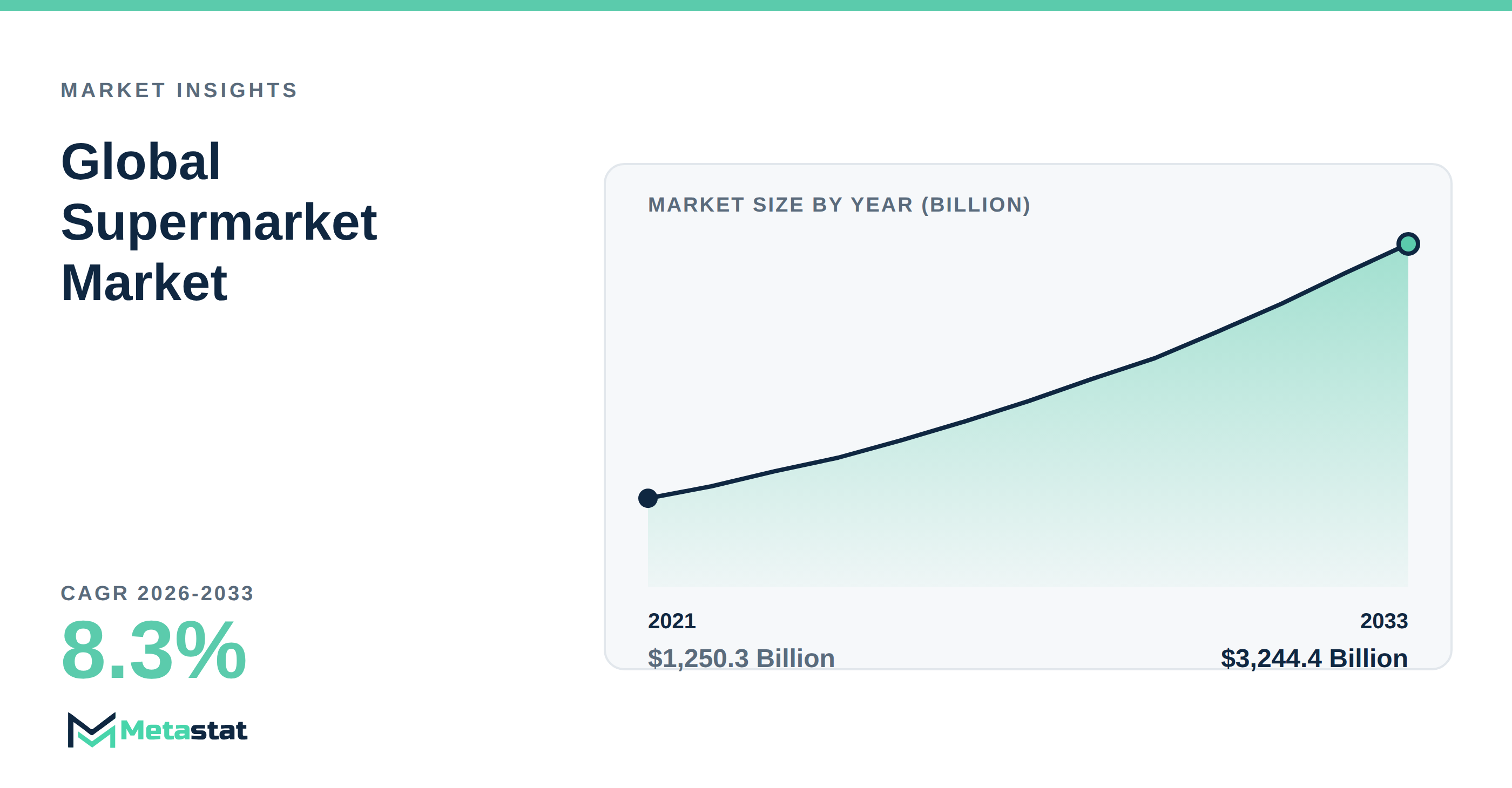
Corporate-owned supermarket chains hold a dominant share in the market, anticipated to expand from USD 990.7 billion by 2026 to USD 1,844.1 billion by 2033, reflecting a growth rate of 9.3%. Their success is driven by significant investments in technology, allowing for improved supply chain management and enhanced customer experience. With the ability to negotiate favorable pricing through their scale, these chains offer a diverse range of products that cater to an expanding consumer base.
The segment of retail cooperatives and member-owned networks is experiencing notable growth, estimated to reach USD 428.6 billion by 2033, with a compound annual growth rate (CAGR) of 7.9%. This growth is fueled by increasing consumer interest in supporting local businesses and sustainable sourcing practices. By focusing on community engagement and offering unique regional products, these cooperatives enhance their market share and attract a loyal customer base.
Franchise and affiliated retail networks are projected to achieve a market size of USD 413 billion by 2033. This growth results from the rising consumer preference for established brands and the convenience associated with franchise models. Retailers within this segment successfully cater to local market preferences, while the credibility inherent in franchise affiliations further strengthens their competitive positioning. Technological advancements, including improved inventory management systems, enhance customer engagement, solidifying their market presence.
Independent supermarkets continue to find relevance by offering personalized shopping experiences that larger chains often cannot replicate. This segment is expected to grow at a CAGR of 5.4% during the forecast period. They leverage their ability to source distinctive, local products while providing tailored customer service. Building strategic partnerships with local suppliers helps enhance their product offerings, attracting consumers who prioritize quality in their shopping experience.
Discount supermarkets are witnessing significant growth, driven by the increasing demand for budget-friendly shopping alternatives. This surge is supported by a rise in new store openings and greater consumer acceptance of discount formats. These retailers typically concentrate on essential goods and employ limited assortment strategies, reducing overheads and enabling them to offer lower prices. This approach significantly appeals to consumers focused on value.
The compact and neighborhood supermarket format is becoming increasingly popular, particularly among urban populations seeking convenience and swift shopping experiences. These smaller stores provide a carefully curated selection of essential items, fostering customer loyalty and encouraging repeat visits. While urbanization continues to rise, the demand for accessible shopping options positions this format because a vital growth sector in the Supermarket market.
The competitive positions within the Supermarket market showcase a landscape rich with opportunities and challenges. Companies adapt to consumer preferences through technology, local sourcing, and operational efficiency. Understanding these dynamics is essential for stakeholders aiming to thrive in this evolving market. For a comprehensive analysis, refer to the Global Supermarket Market.
Tags
LEAD ANALYST
Utkarsh Khirodkar is a Lead Market Research Analyst at MetaStat Insight, specializing in market intelligence, technology sector assessments, and competitive strategy.

LEAD PRINCIPAL ANALYST, PHARMA AND HEALTHCARE
Food and Beverages · Healthcare · Healthcare IT · Medical Devices
Ajay Devgire is the Lead Healthcare Analyst at MetaStat Insight, leading strategic research and market intelligence initiatives across the global healthcare domain.

SENIOR RESEARCH ANALYST
Biotechnology · Food and Beverages · Medical Devices · Packaging
Snehal Pasalkar is a Research Analyst at MetaStat Insight, operating at the intersection of life sciences research, competitive strategy, and market intelligence.