
Explore the key factors driving costs and pricing in the Brake Pad Wear Sensor market, providing insights for buyers on how to navigate this evolving landscape.
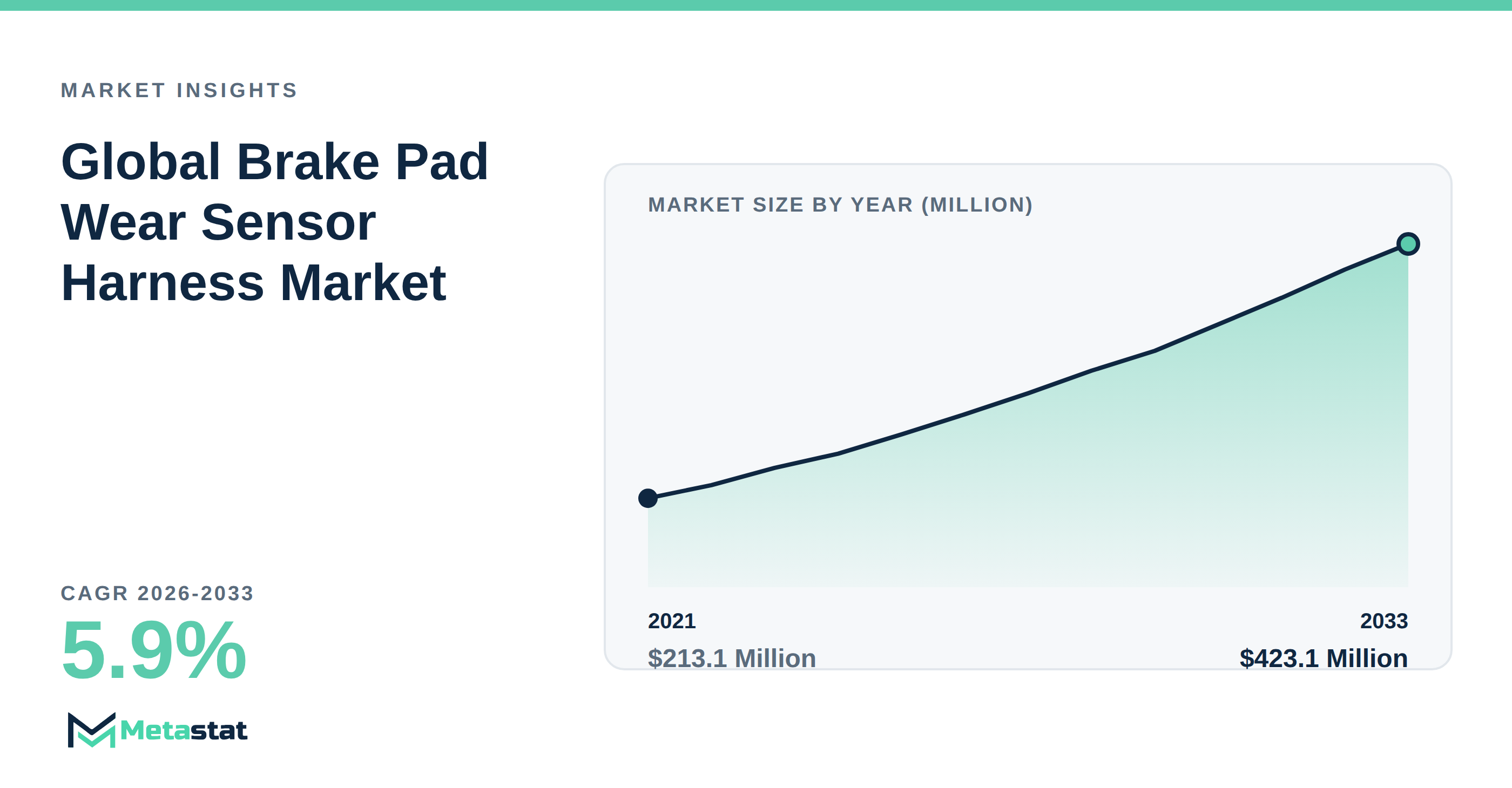
The Brake Pad Wear Sensor market is experiencing notable growth, with a value anticipated to reach USD 423.1 million by 2033. The demand for advanced safety features and innovative technologies propels this expansion. Understanding the factors influencing cost and pricing is crucial for buyers and operators in this developing market.
1. Raw material price volatility impacts production costs
Fluctuations in raw material prices significantly influence the overall production costs for brake pad wear sensors. The market faces challenges with increasing costs for essential components, driven by supply chain disruptions and geopolitical tensions. Manufacturers frequently encounter the dilemma of absorbing these costs or passing them onto consumers, which directly impacts pricing strategies. Buyers looking to leverage their purchasing power should consider bulk orders or long-term contracts to secure prices and mitigate the effects of volatility.
2. Regulatory compliance drives operational expenses
Manufacturers navigate a complex landscape of regulatory compliance regarding safety and performance standards. Stricter regulations necessitate robust testing and certification processes, leading to heightened operational expenses. Smaller companies, in particular, may struggle to meet these costs, which contribute to higher product pricing. Buyers advocate for clear communication with suppliers concerning compliance standards, assessing whether suppliers efficiently incorporate these costs into their pricing.
3. Technological advancements influence pricing structures
Rapid advancements in technology represent both opportunities and challenges for pricing. While innovation enhances the performance and reliability of brake pad wear sensors, significant investment in research and development often inflates product prices. Buyers should stay informed about emerging technologies, because they offer negotiating leverage when discussing potential upgrades or new sensor configurations.
4. Market competition affects pricing strategies
Intense competition among key players in the Brake Pad Wear Sensor market introduces various pricing strategies. While companies strive to differentiate their products, some lower prices to capture market share. This competitive pressure creates opportunities for buyers to negotiate favorable terms or identify suppliers that offer advanced technologies at competitive rates. Monitoring competitor activities provides valuable insights for buyers aiming to make informed purchasing decisions.
5. Supply chain disruptions challenge availability and pricing
Global supply chain disruptions continue to pose challenges in the Brake Pad Wear Sensor market. Such disruptions lead to delays in production and increased costs related to logistics. Buyers experience variability in product availability, compelling them to explore multiple suppliers to ensure ongoing access. Developing flexible sourcing strategies that account for potential disruptions provides buyers greater control over their supply chains and pricing outcomes.
6. Demand dynamics driven by consumer preferences
Shifting consumer preferences toward safety features and advanced technologies drive demand in the Brake Pad Wear Sensor market. While consumers increasingly prioritize safety and performance, manufacturers align their offerings accordingly. This heightened demand leads to price increases, because manufacturers invest in developing more sophisticated products. Buyers should consider market trends and consumer expectations when evaluating potential suppliers, because those aligned with current preferences offer better value.
Understanding the factors influencing pricing and costs in the Brake Pad Wear Sensor market equips buyers to make informed decisions. By navigating raw material volatility, regulatory compliance, technological advancements, market competition, supply chain disruptions, and evolving consumer preferences, stakeholders develop strategic purchasing strategies that optimize costs and enhance operational efficiency.
The full analysis is in Global Brake Pad Wear Sensor Harness Market.
Tags
About the Authors

LEAD ANALYST
Utkarsh Khirodkar is a Lead Market Research Analyst at MetaStat Insight, specializing in market intelligence, technology sector assessments, and competitive strategy.

ENERGY & INFRASTRUCTURE INDUSTRY CONSULTANT
Automotive and Transportation · Electronics and Semiconductor · Energy and Power · Machinery & Equipment
Saurabh Vasant Ganvir consults for Energy & Infrastructure Industry at MetaStat Insight, specializing in renewable energy, solar EPC, and electric vehicle (EV) infrastructure markets.