
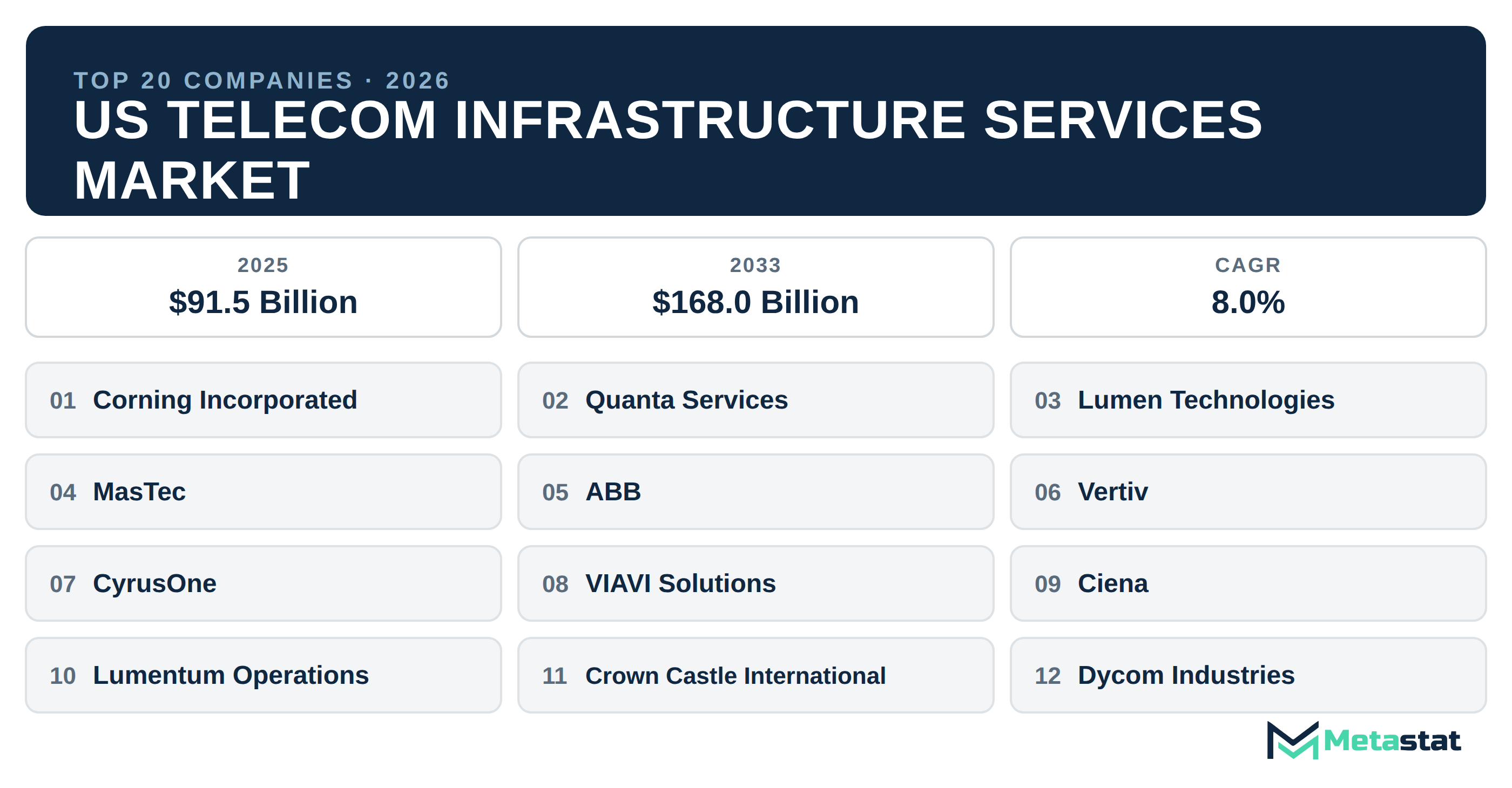
Explore the top 20 companies in the US Telecom Infrastructure Services industry, highlighting their services and roles in shaping connectivity.
The US Telecom Infrastructure Services industry plays a critical role in supporting communication networks, data centers, and fiber networks. Customers include telecommunications providers and enterprises seeking reliable connectivity solutions. Continuous advancements in technology and an increasing demand for high-speed data services are shaping this sector, driving innovation and investment. For more detailed insights, refer to our US Telecom Infrastructure Services market size and forecast report.
Top 10 US Telecom Infrastructure Services Trends
Inline metrology moves onto the production line
Industries are increasingly adopting inline metrology to enhance quality control during production processes. This shift allows for real-time data collection, leading to quicker adjustments and improved efficiency. Buyers benefit from reduced waste and faster time-to-market, aligning with evolving consumer demands and technological advancements.
Expansion of 5G infrastructure
The rollout of 5G technology necessitates substantial investment in infrastructure, prompting companies to develop and enhance their networks. This expansion provides opportunities for telecom providers to offer faster data services, which can attract new customers and improve service levels for existing users.
Increased focus on sustainability
Companies in the telecom infrastructure sector are prioritizing sustainability initiatives, from energy-efficient designs to environmentally friendly materials. This focus not only meets regulatory requirements but also appeals to environmentally conscious consumers, potentially leading to a competitive advantage in the sector.
Adoption of artificial intelligence
Artificial intelligence is being integrated into network management and operational processes. This technology aids in predictive maintenance and optimizing network performance. By leveraging AI, companies can enhance service delivery and reduce operational costs, benefiting both providers and end-users.
Cloud services integration
With the rise of cloud computing, telecom infrastructure services are increasingly integrating with cloud providers to deliver more flexible and scalable solutions. This trend enables businesses to better manage their resources and adapt to changing demands in real time.
Enhanced cybersecurity measures
The surge in data breaches highlights the necessity for robust cybersecurity measures across telecommunications infrastructure. Companies are investing in advanced security technologies to protect sensitive information, which is critical for maintaining customer trust and compliance with regulations.
Increased collaboration across sectors
Collaboration between telecom companies and other sectors, such as technology and energy, is becoming more prevalent. This cooperation encourages innovation and leads to the development of integrated solutions that enhance service delivery and customer satisfaction.
Focus on edge computing
As data processing needs evolve, edge computing is gaining traction. This technology allows data to be processed closer to the source, reducing latency and improving performance. Companies investing in edge computing provide enhanced services that meet the demands of modern applications.
Investment in next-gen infrastructure
Significant investments are being made in next-generation infrastructure to support emerging technologies like IoT and AI. This commitment reflects the industry's recognition of the need for advanced capabilities to cater to future consumer and business demands.
Regulatory changes impacting operations
Changes in regulations are influencing the operational strategies of telecom infrastructure companies. Staying compliant while adapting to new regulations requires agility and innovation, prompting companies to reassess their business practices.
US Telecom Infrastructure Services Companies Profiled
1. Corning Incorporated
Founded: 1851
Corning Incorporated focuses on advanced glass and ceramic products, with a significant emphasis on optical fiber and cable solutions. The company supplies critical components for telecommunications infrastructure, enabling high-speed data transmission. Corning's commitment to innovation and research has established it as a key player in the telecom sector, continually developing new products to meet the evolving demands of connectivity.
2. Quanta Services, Inc.
Founded: 1997
Quanta Services is a provider of specialized infrastructure services, focusing primarily on the electrical, telecommunications, and gas sectors. The company offers comprehensive solutions for network construction and maintenance, ensuring reliable service delivery. Quanta's diverse portfolio and expertise in project management enable it to tackle complex projects while meeting the growing needs of its clients.
3. Lumen Technologies
Founded: 1968
Lumen Technologies specializes in communications infrastructure and services, providing high-speed broadband and data solutions to businesses and consumers. Its extensive fiber network is designed to support a variety of applications, from cloud services to IoT. Lumen aims to enhance connectivity and performance while adapting to the fast-changing landscape of the telecommunications industry.
4. MasTec, Inc.
Founded: 1994
MasTec, Inc. is a diversified infrastructure construction company, engaged in the development and maintenance of telecom and utility networks. The company provides an array of services, including installation, repair, and project management, ensuring efficient operations for service providers. MasTec's robust capabilities position it as a reliable partner in the evolving telecom sector.
5. ABB Group
Founded: 1988
ABB Group is a global leader in electrification and automation technologies, offering solutions critical to telecom infrastructure. The company provides technology and products that enhance network efficiency and reliability. ABB's innovative approach and commitment to sustainability support the industry's drive toward more efficient and resilient infrastructure.
6. Vertiv Group Corp.
Founded: 2016
Vertiv Group Corp. focuses on critical digital infrastructure and continuity solutions for data centers, communication networks, and commercial facilities. The company's offerings include power management, cooling systems, and monitoring solutions. Vertiv's expertise in ensuring uptime and performance aligns well with the evolving needs of the telecom sector.
7. CyrusOne Inc.
Founded: 2001
CyrusOne Inc. specializes in data center solutions, offering highly reliable and scalable facilities for businesses. Its focus on meeting the needs of cloud and enterprise customers makes it a significant player in the telecom infrastructure space. CyrusOne's commitment to operational excellence ensures that clients receive optimal performance from their data center environments.
8. VIAVI Solutions Inc.
Founded: 1923
VIAVI Solutions Inc. provides network testing and monitoring solutions for telecom networks. The company's products enable service providers to optimize network performance and ensure service quality. VIAVI's emphasis on innovation supports the industry's ongoing digital transformation and enhances the overall user experience.
9. Ciena Corporation
Founded: 1992
Ciena Corporation specializes in networking systems, services, and software, driving efficient data transmission across telecom networks. The company's solutions enable providers to enhance their infrastructure and deliver high-capacity services. Ciena's focus on innovation and advanced technologies positions it well in the competitive telecom sector.
10. Lumentum Operations LLC
Founded: 2015
Lumentum Operations LLC focuses on optical networking and laser technology solutions, vital for modern telecom infrastructure. The company's products support high-speed data transmission and enhance network capabilities. Lumentum's commitment to research and development ensures that it remains at the forefront of innovation in the telecom sector.
11. Crown Castle International Corp.
Founded: 1994
Crown Castle International Corp. operates a vast portfolio of telecommunications infrastructure, including towers and fiber networks. The company provides essential services to wireless carriers, enabling them to enhance coverage and capacity. Crown Castle's extensive reach and strategic locations position it as a key player in the telecommunications sector.
12. Dycom Industries Inc.
Founded: 1969
Dycom Industries Inc. specializes in telecommunications infrastructure services, offering construction and engineering solutions to service providers. The company's extensive experience in project execution ensures timely and efficient operations, helping clients expand their network capabilities. Dycom remains committed to delivering quality services tailored to the unique needs of its customers.
13. American Tower Corporation
Founded: 1995
American Tower Corporation owns, operates, and develops communications sites, primarily towers for wireless service providers. Its expansive portfolio supports growth in mobile data traffic and enhances network coverage. American Tower's focus on quality service and strategic partnerships strengthens its position within the telecom infrastructure sector.
14. Eaton Corporation plc
Founded: 1911
Eaton Corporation plc provides energy-efficient solutions and services for the telecommunications sector, focusing on power management and reliability. The company’s products help telecom operators maintain efficient operations while minimizing downtime. Eaton's commitment to technology innovation supports the industry's shift toward more sustainable practices.
15. Nokia Corporation
Founded: 1865
Nokia Corporation is a global leader in networking and telecommunications technology. The company offers solutions that enhance connectivity and support the deployment of advanced services like 5G. Nokia's focus on innovation positions it as a critical partner for telecom operators seeking to modernize their networks.
16. Zayo Group, LLC.
Founded: 2007
Zayo Group, LLC. specializes in providing bandwidth infrastructure and connectivity solutions. Its extensive fiber network supports data centers and telecommunications providers, enabling high-speed data transfer. Zayo's emphasis on scalability and flexibility aligns with the evolving demands of its clients in the telecom sector.
17. Digital Realty Trust, Inc.
Founded: 2004
Digital Realty Trust, Inc. focuses on data center solutions, offering secure and reliable facilities for various industries, including telecommunications. The company's infrastructure supports businesses in managing their digital assets effectively. Digital Realty's commitment to innovation and customer service enhances its position in the telecom infrastructure space.
18. SBA Communications Corporation
Founded: 2000
SBA Communications Corporation specializes in the ownership and operation of telecommunications towers. The company's extensive portfolio supports wireless carriers in expanding their network coverage and capacity. SBA's focus on customer relationships and operational excellence ensures that it meets the needs of the telecommunications industry.
19. Equinix, Inc.
Founded: 1998
Equinix, Inc. is a global data center and interconnection provider, offering critical infrastructure for telecommunications companies. Its facilities enable seamless connectivity and data exchange between networks. Equinix's strategic locations and commitment to innovation make it a vital partner for companies seeking to enhance their digital infrastructure.
20. Schneider Electric SE
Founded: 1836
Schneider Electric SE provides energy management and automation solutions, playing a significant role in telecommunications infrastructure. The company's focus on efficiency and sustainability aligns with the industry's goals of reducing operational costs while improving service delivery. Schneider Electric's innovative technologies support the evolving needs of telecom companies.
Conclusion
The US Telecom Infrastructure Services industry is evolving rapidly, driven by technological advancements and changing consumer demands. The diverse range of companies profiled here demonstrates a commitment to innovation, sustainability, and efficiency. As infrastructure becomes increasingly critical for connectivity, these companies are positioned to lead the charge in shaping the future of telecommunications.
Investing in this sector aligns with the broader trends of digital transformation and infrastructure development. Companies looking to enhance their capabilities should consider the insights from the US Telecom Infrastructure Services market size and forecast report as they navigate this dynamic environment.
Tags
About the Authors

LEAD ANALYST
Utkarsh Khirodkar is a Lead Market Research Analyst at MetaStat Insight, specializing in market intelligence, technology sector assessments, and competitive strategy.

PRINCIPAL CONSULTANT - ENTERPRISE AI & EMERGING TECHNOLOGIES
Banking & Finance · Electronics and Semiconductor · Energy and Power · Healthcare IT · Information & Technology · Professional Services
Vijay Gunti is a Principal Consultant at MetaStat Insight, bringing over two decades of experience across enterprise digital transformation, technology strategy, and intelligent systems.

LEAD CONSULTANT - COMMUNICATION, TELECOM, AND IT
Electronics and Semiconductor · Information & Technology · Machinery & Equipment · Professional Services
Ravindra Sathe Consultants for Communication, Telecom, and IT at MetaStat Insight. He leads the firm's industry research initiatives across telecommunications infrastructure, digital connectivity, enterprise networking, and emerging information technology domains.