
Explore key questions buyers ask saffron suppliers to ensure quality and market relevance as the Saffron Products market grows.
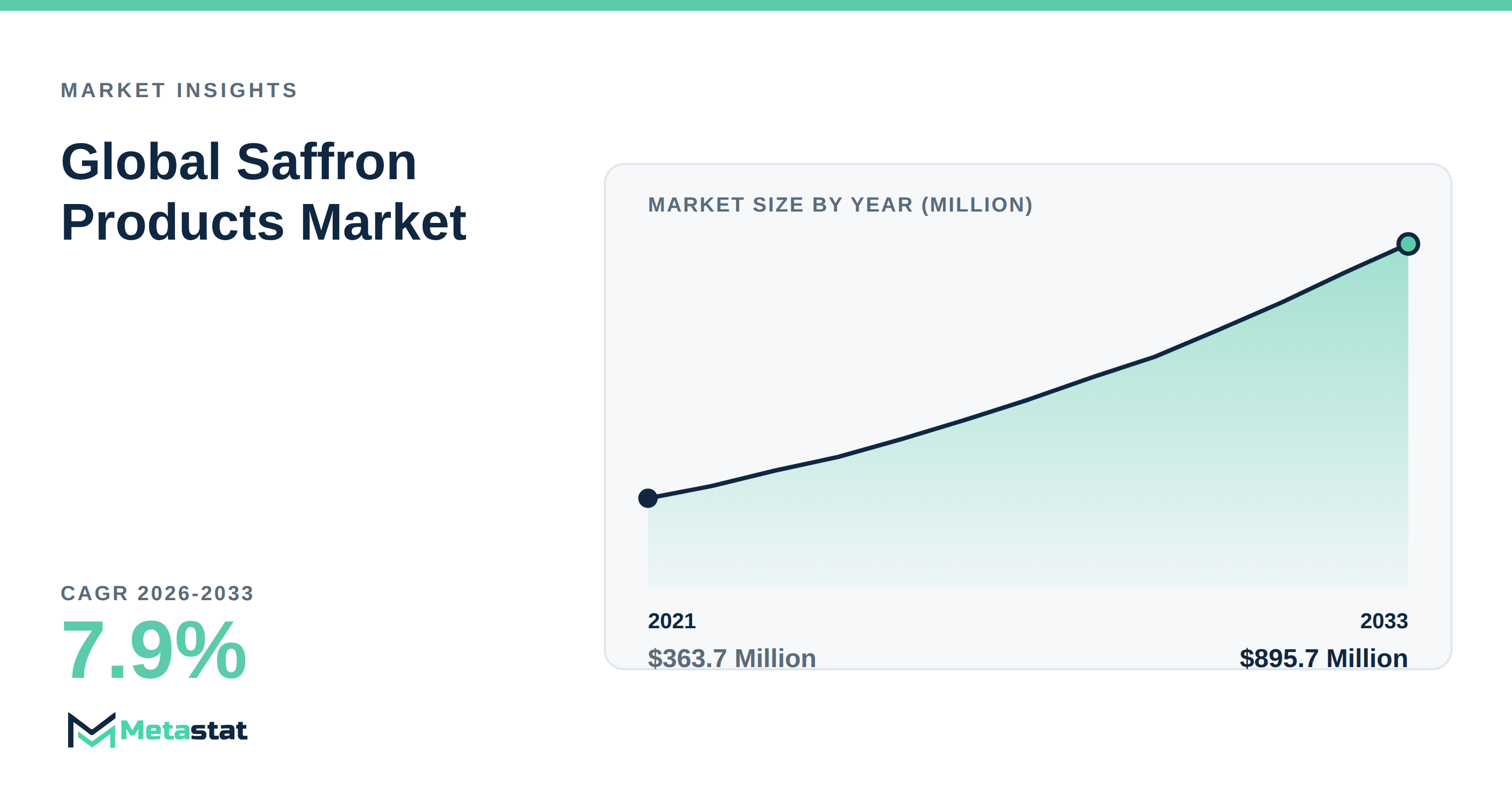
The Saffron Products market is expanding rapidly, with a projected growth from USD 487.4 million in 2025 to USD 895.7 million by 2033, reflecting a compound annual growth rate (CAGR) of 7.9%. While buyers navigate this evolving landscape, asking the right questions of suppliers becomes crucial to ensure product quality, compliance, and market relevance.
1. What certifications do you hold for your saffron products?
Inquire about certifications to ensure quality and authenticity in saffron sourcing. Organic certification and traceability standards are vital for market credibility. The organic saffron segment is set to achieve a value of USD 249.2 million by 2033, indicating a strong consumer preference for sustainably sourced ingredients. Knowing a supplier's certification status helps build trust and aligns with growing market expectations.
2. How do you manage quality control and adulteration risks?
Quality authentication remains essential in the Saffron Products market. Buyers should ask suppliers about their quality control processes to mitigate the risk of adulteration. Implementing stringent measures to guarantee product authenticity fosters consumer confidence and bolsters overall market integrity. This focus on quality aligns with rising consumer demands for transparent and traceable products, thus enhancing market reliability.
3. What innovations do you offer in saffron extracts and formulations?
Innovation in saffron extracts, including capsules and oils, is a key trend shaped by increasing interest in health benefits. Suppliers should demonstrate their commitment to product innovation through advancements in extraction methods and new formulations. This focus on innovation is crucial, because the market for saffron extracts is anticipated to grow significantly, allowing suppliers to tap into emerging health-oriented opportunities.
4. How do you address fluctuations in raw material costs?
Raw material costs directly impact profitability within the Saffron Products market. Buyers should inquire about suppliers' tactics for managing fluctuations in saffron pricing. Understanding how suppliers navigate cost challenges offers insight into their pricing strategies and product availability, instrumental for maintaining competitive pricing within food and beverage applications. Robust strategies ensure stability even during price volatility.
5. What distribution channels do you utilize to reach consumers?
Effective distribution strategies significantly influence market accessibility. Buyers should inquire about the supplier's distribution channels, which include online retail, specialty stores, and direct B2B sales. The rise of e-commerce has enhanced consumer access to saffron products, reflecting a growing trend toward digital purchasing that suppliers leverage to maximize market reach. Understanding these channels inform better purchasing decisions.
6. Can you provide insights on market demand trends for saffron products?
Understanding market demand trends helps inform purchasing decisions. Buyers should seek insights from suppliers regarding shifts in consumer preferences. Rising demand for premium and organic saffron, coupled with increasing interest in health and wellness, shapes purchasing behaviors and influences product offerings. Suppliers attuned to these trends will be better equipped to support buyers in capturing new market opportunities.
7. How do you manage supply chain stability due to geopolitical tensions?
Geopolitical instability in key saffron-producing regions introduces challenges for supply chain stability. Buyers should ask suppliers about their strategies for ensuring consistent saffron supply despite potential disruptions. Suppliers with contingency plans and established relationships in producing areas will be better positioned to maintain product availability and price stability. Buyers benefit from understanding these strategies to mitigate risks associated with sourcing.
Asking these essential questions enables buyers in the Saffron Products market to make informed decisions, ensuring they partner with suppliers who enhance product quality, innovation, and market competitiveness.
The full analysis is in Global Saffron Products Market.
Tags
About the Authors

LEAD ANALYST
Utkarsh Khirodkar is a Lead Market Research Analyst at MetaStat Insight, specializing in market intelligence, technology sector assessments, and competitive strategy.

LEAD PRINCIPAL ANALYST, PHARMA AND HEALTHCARE
Food and Beverages · Healthcare · Healthcare IT · Medical Devices
Ajay Devgire is the Lead Healthcare Analyst at MetaStat Insight, leading strategic research and market intelligence initiatives across the global healthcare domain.

SENIOR RESEARCH ANALYST
Biotechnology · Food and Beverages · Medical Devices · Packaging
Snehal Pasalkar is a Research Analyst at MetaStat Insight, operating at the intersection of life sciences research, competitive strategy, and market intelligence.