
Explore six key forces reshaping the Central Nervous System (CNS) Therapeutics market. Discover trends, challenges, and growth opportunities for stakeholders.
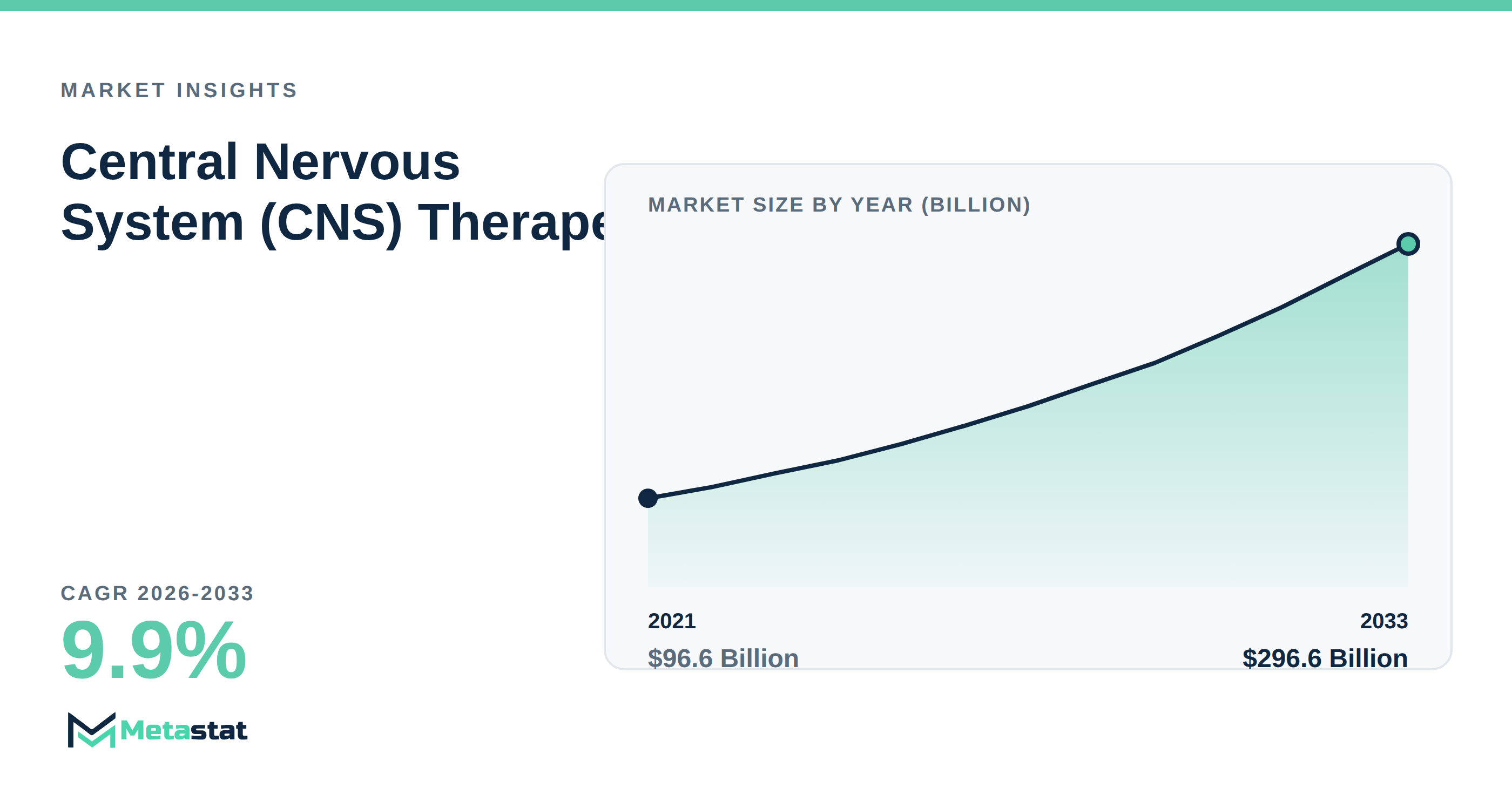
The Central Nervous System (CNS) Therapeutics market is poised for significant growth, with projections indicating an increase in value from approximately USD 139.3 billion in 2025 to around USD 296.6 billion by 2033. Identifying the factors reshaping this sector is crucial for market players, including pharmaceutical companies and healthcare providers.
1. Pipeline innovation spurs market growth
Advancements in drug development pipelines are pivotal in driving growth across the Central Nervous System (CNS) Therapeutics market. Companies are focusing their investments on research and innovation to create therapies that target a range of neurological disorders, including epilepsy, depression, and schizophrenia. This commitment fosters the development of more effective medications with fewer side effects, which enhances demand from healthcare professionals. The focus on next-generation treatments equips firms to capture emerging market opportunities and address changing patient requirements.
2. Technological advancements improve operational performance
Integrating cutting-edge technologies significantly elevates operational performance throughout the CNS therapeutics landscape. Automation tools and sophisticated software streamline research and development activities, allowing companies to respond more quickly to evolving market demands. This technological progress facilitates the timely introduction of new therapies and enhances patient management capabilities, directly influencing positive clinical results. Efficient operations enable companies to set their products apart in a highly competitive environment.
3. Unique opportunities from regional market dynamics
North America leads the market with a share of 42.9%, while Europe holds 26.9% and Asia Pacific accounts for 22.2%. Each region presents distinct challenges and growth opportunities for market participants. In particular, the increasing incidence of CNS disorders and growing healthcare investments in Asia Pacific and Latin America signal substantial expansion potential. Companies tailor their strategies to align with regional demands, thus enhancing market penetration and optimizing the allocation of resources.
4. Regulatory requirements influence development timelines
Regulatory frameworks critically impact the approval processes and commercialization of new therapies in the Central Nervous System (CNS) Therapeutics market. Manufacturers encounter escalated scrutiny and must effectively adhere to evolving regulatory standards, which prolong product launches and inflate operational expenses. Navigating these compliance challenges is essential for companies aiming for successful market entry of new therapeutics.
5. Geopolitical factors create supply chain complexities
Geopolitical tensions disrupt trade relations and introduce uncertainty into the supply chain for CNS therapeutics. Tariffs and trade deficits lead to higher costs for manufacturers, complicating the timelines for product development. Firms are focusing on robust contingency plans to mitigate potential disruptions and uphold operational functionality. Investing in supply chain resilience is vital for ensuring reliable access to raw materials and reducing operational risks.
6. Growing demand for targeted therapeutic approaches in mental health
Heightened awareness and understanding of mental health conditions drive the demand for effective treatment options. Segments including depression and anxiety disorders are experiencing notable growth, with projected values reaching USD 48.9 billion. The increasing emphasis on personalized medicine highlights the investment into next-generation antidepressants and anxiolytics designed to meet diverse patient needs. This focus on innovation reflects the importance of adapting to the evolving preferences within mental healthcare.
Overall, the Central Nervous System (CNS) Therapeutics market is influenced by a multitude of dynamic factors. Stakeholders remain vigilant to navigate the challenges and opportunities that arise. For further insights, refer to the Global Central Nervous System (CNS) Therapeutics Market.
Tags
About the Authors

LEAD ANALYST
Utkarsh Khirodkar is a Lead Market Research Analyst at MetaStat Insight, specializing in market intelligence, technology sector assessments, and competitive strategy.

LEAD PRINCIPAL ANALYST, PHARMA AND HEALTHCARE
Food and Beverages · Healthcare · Healthcare IT · Medical Devices
Ajay Devgire is the Lead Healthcare Analyst at MetaStat Insight, leading strategic research and market intelligence initiatives across the global healthcare domain.