
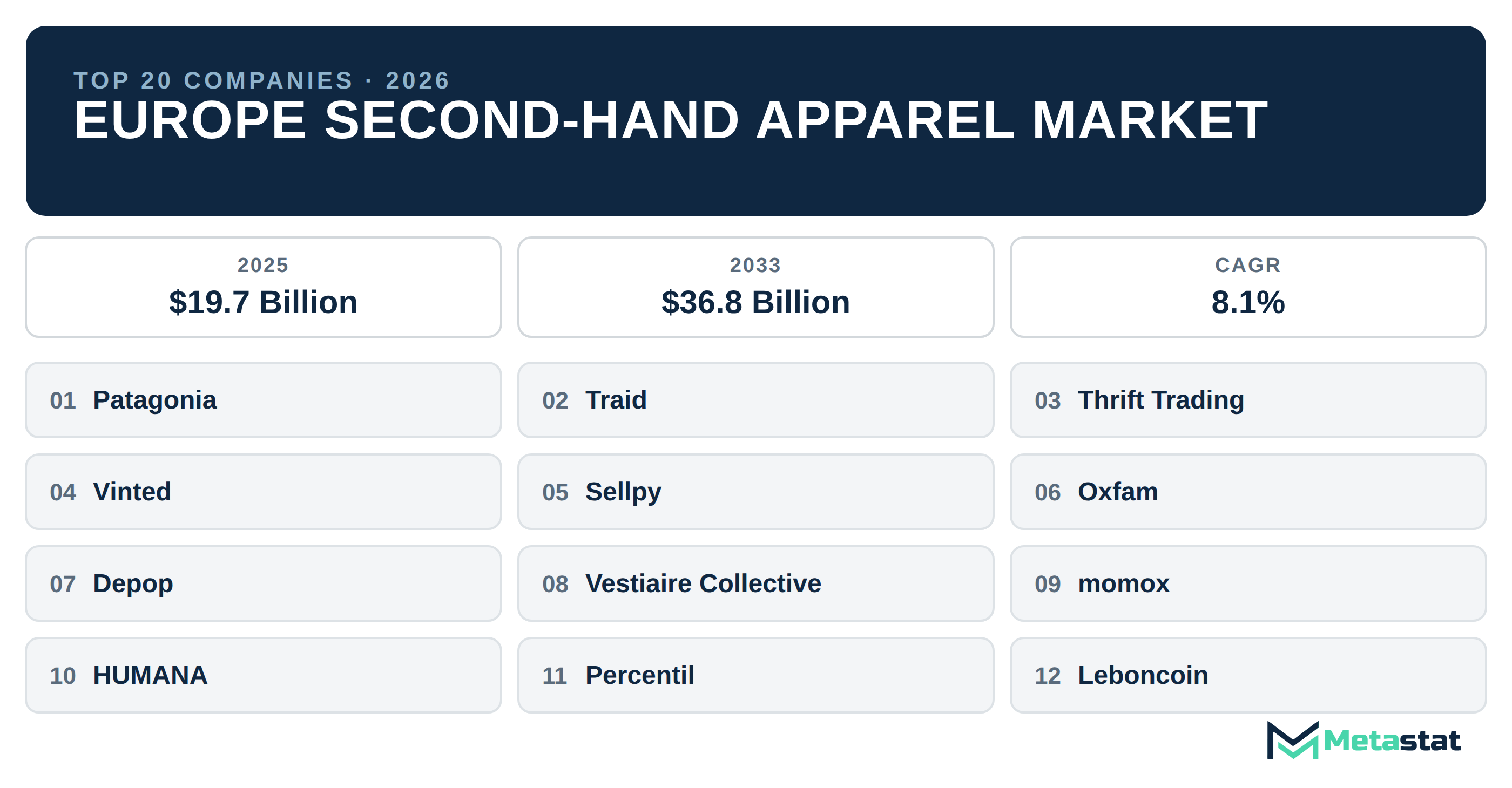
Explore the top 20 companies in the Europe Second-Hand Apparel industry, highlighting their unique contributions and approaches to sustainable fashion.
The Europe Second-Hand Apparel industry is witnessing significant changes as consumers increasingly prioritize sustainability and ethical fashion choices. The rise of digital platforms has made it easier for buyers to access pre-owned clothing, catering to diverse tastes and preferences. This evolving sector emphasizes the importance of quality, unique offerings, and the circular economy in apparel consumption. To learn more about the market dynamics, refer to the Europe Second-Hand Apparel market size and forecast report.
Top 10 Europe Second-Hand Apparel Trends
Growing demand for vintage items
Vintage clothing is becoming a preferred choice among younger consumers who appreciate the unique styles and sustainable practices associated with buying second-hand. This trend reflects a shift towards individuality in personal fashion, as buyers seek distinctive pieces that tell a story.
Increased focus on sustainability
Brands are placing greater emphasis on sustainable practices, ensuring that their supply chains reflect environmentally responsible choices. This focus caters to consumers who are becoming more eco-conscious and prefer brands that align with their values.
Integration of online and offline sales channels
Retailers are combining online platforms with physical stores to enhance customer experience. This omnichannel approach allows consumers to browse online while having the option to inspect items in-store before purchase, bridging convenience and quality assurance.
Collaboration with influencers
Partnering with social media influencers enables brands to reach a wider audience and engage with potential buyers authentically. Influencers highlight unique finds and promote the benefits of second-hand shopping, positively influencing consumer perceptions.
Expansion of rental services
Rental services for high-quality second-hand apparel are gaining traction, allowing consumers to access premium items for special occasions without the commitment of ownership. This trend promotes a more sustainable approach to fashion consumption.
Enhanced return policies
Companies are improving their return policies to build consumer confidence in purchasing second-hand items. Flexible return options encourage buyers to experiment with their fashion choices without the fear of committing to a potentially unsuitable piece.
Technological advancements in resale platforms
Resale platforms are adopting innovative technologies, such as AI-driven recommendations and streamlined payment options, to enhance the shopping experience. These advancements attract tech-savvy consumers seeking convenience and efficiency in their purchases.
Emphasis on quality control
Ensuring high quality in second-hand clothing is vital for maintaining customer satisfaction. Companies are implementing rigorous quality checks to validate the condition of items, thereby enhancing trust and loyalty among consumers.
Community-driven initiatives
Many brands are promoting community engagement by organizing clothing swaps, workshops, and educational campaigns about sustainable fashion. These initiatives strengthen the brand-consumer relationship while encouraging a culture of conscious consumption.
Rise of personalized shopping experiences
Personalization in shopping, through curated selections based on consumer preferences, is becoming a key strategy for companies. Tailoring the shopping experience enhances customer satisfaction and encourages brand loyalty.
Europe Second-Hand Apparel Companies Profiled
1. Patagonia
Founded: 1973
Patagonia is renowned for its commitment to environmental sustainability, offering high-quality outdoor clothing and gear. In the second-hand apparel sector, the company promotes a circular economy through its Worn Wear program, allowing customers to buy, sell, and trade used Patagonia items. This initiative emphasizes durability and encourages responsible consumption among outdoor enthusiasts.
2. Traid
Founded: 1992
Traid is dedicated to tackling textile waste by providing a platform for second-hand clothing. The organization operates charity shops across London, selling donated items while raising awareness about the environmental impact of fast fashion. Their focus on community engagement and education sets them apart in the second-hand apparel landscape.
3. Thrift Trading Ltd
Founded: 2013
Thrift Trading Ltd specializes in sourcing and selling second-hand clothing through its online platform. The company emphasizes affordability and accessibility, allowing consumers to discover unique vintage pieces while supporting sustainable fashion practices. Their curated collections appeal to a wide range of fashion enthusiasts.
4. Vinted
Founded: 2008
Vinted operates a peer-to-peer marketplace that allows users to buy and sell second-hand clothing and accessories. The platform fosters a community of fashion lovers who engage in sustainable shopping practices. Vinted's user-friendly interface and active community encourage repeat transactions, driving growth in the second-hand sector.
5. Sellpy
Founded: 2014
Sellpy offers a comprehensive solution for selling and buying second-hand items, simplifying the process for consumers. The company collects, photographs, and lists items on behalf of sellers, making it easier for individuals to participate in the circular economy. Sellpy's approach attracts eco-conscious shoppers seeking convenience and sustainability.
6. Oxfam
Founded: 1942
Oxfam is a well-known charity organization that operates numerous shops selling donated second-hand clothing and goods. By promoting ethical fashion and raising funds for humanitarian efforts, Oxfam combines social impact with sustainable shopping. Their approach encourages consumers to support charitable causes while finding unique clothing items.
7. Depop
Founded: 2011
Depop is a social shopping platform that connects buyers and sellers of second-hand clothing, emphasizing creativity and individuality. Users can showcase their unique styles, making it a popular choice among younger consumers. Depop's community-driven model fosters engagement and encourages a culture of circular fashion.
8. Vestiaire Collective
Founded: 2009
Vestiaire Collective specializes in the resale of luxury second-hand fashion items. The platform offers a curated selection of high-end clothing and accessories, ensuring authenticity and quality for buyers. Their commitment to luxury resale appeals to consumers seeking sustainable options without sacrificing style.
9. momox
Founded: 2009
Momox is an innovative platform that facilitates the buying and selling of second-hand clothes, books, and electronics. Their streamlined process allows consumers to sell unwanted items quickly and easily, promoting a culture of reuse. Momox's focus on convenience aligns with the growing demand for sustainable consumption.
10. HUMANA
Founded: 1992
HUMANA operates a network of thrift stores across Germany, specializing in second-hand clothing and household items. Committed to social responsibility, the organization supports various charitable initiatives while promoting sustainable fashion. HUMANA's shops provide affordable options for consumers seeking quality second-hand items.
11. Percentil
Founded: 2012
Percentil focuses on pre-owned children's clothing, providing a platform for parents to buy and sell gently used items. Their business model supports sustainability while catering to the specific needs of growing families. Percentil's curated collections emphasize quality and affordability, making them a popular choice among parents.
12. Leboncoin
Founded: 2006
Leboncoin is a comprehensive online marketplace for buying and selling second-hand items, including apparel. The platform connects local buyers and sellers, promoting community engagement and sustainable practices. Users appreciate the diverse listings and the ability to find unique clothing items at competitive prices.
13. Myrorna
Founded: 2000
Myrorna operates a chain of thrift stores across Sweden, focusing on second-hand clothing and home goods. As a social enterprise, Myrorna supports charitable initiatives and promotes sustainable shopping practices. Their stores provide affordable options for consumers while raising awareness about the benefits of reusing items.
14. Wallapop
Founded: 2013
Wallapop is an online platform that facilitates local transactions for second-hand goods, including apparel. Emphasizing the importance of community, Wallapop allows users to buy and sell items quickly and conveniently. This local approach aligns with the growing demand for sustainable consumption and reduces carbon footprints.
15. eBay
Founded: 1995
eBay is a global online marketplace that enables users to buy and sell a wide range of second-hand goods, including clothing. With a long-standing presence in the online resale sector, eBay offers consumers the opportunity to find unique items while promoting sustainability through re-commerce.
16. UFF
Founded: 2001
UFF operates a network of thrift stores in Denmark and Sweden, focusing on second-hand clothing. The organization is committed to environmental sustainability and social responsibility, supporting various charitable projects. UFF's shops provide affordable options for consumers while promoting the benefits of reusing clothing.
17. Farfetch
Founded: 2008
Farfetch is an online luxury fashion platform that includes a second-hand section, allowing consumers to buy pre-owned luxury items. Their curated selection appeals to fashion enthusiasts seeking unique pieces. Farfetch’s commitment to sustainability is reflected in their integration of second-hand options into their offerings.
18. ABOUT YOU SE & Co. KG
Founded: 2014
ABOUT YOU is a fashion e-commerce platform that incorporates second-hand clothing into its offerings. With a focus on personalized shopping experiences, the company engages consumers through curated collections and unique finds. This approach aligns with the increasing consumer interest in sustainable fashion options.
19. Shelter
Founded: 1966
Shelter is a well-known charity organization that operates a network of shops selling second-hand clothing and goods. The organization focuses on raising funds and awareness for homelessness while promoting sustainable fashion. Consumers appreciate the opportunity to shop ethically while supporting a vital cause.
20. Zalando
Founded: 2008
Zalando is a prominent e-commerce platform that has recently expanded into the second-hand apparel space. By offering consumers a range of pre-owned clothing options, Zalando addresses the growing demand for sustainable fashion choices. The company’s extensive reach and diverse offerings position it as a key player in the industry.
Conclusion
The Europe Second-Hand Apparel industry is evolving rapidly, driven by changing consumer preferences and a heightened awareness of sustainability. The companies profiled here reflect a diverse array of approaches, from community-driven initiatives to tech-savvy platforms, all contributing to a more circular economy in fashion.
As the demand for second-hand apparel continues to rise, collaboration among brands and consumers will play an essential role in shaping the industry's future. Engaging with the offerings of these Europe Second-Hand Apparel companies provides valuable options for eco-conscious shoppers looking to make a positive impact.
Tags
About the Author

LEAD ANALYST
Utkarsh Khirodkar is a Lead Market Research Analyst at MetaStat Insight, specializing in market intelligence, technology sector assessments, and competitive strategy.