
Explore the major shifts in the Southern Africa Automotive Lubricants landscape leading up to 2033. Insights on innovations, distribution, and partnerships.
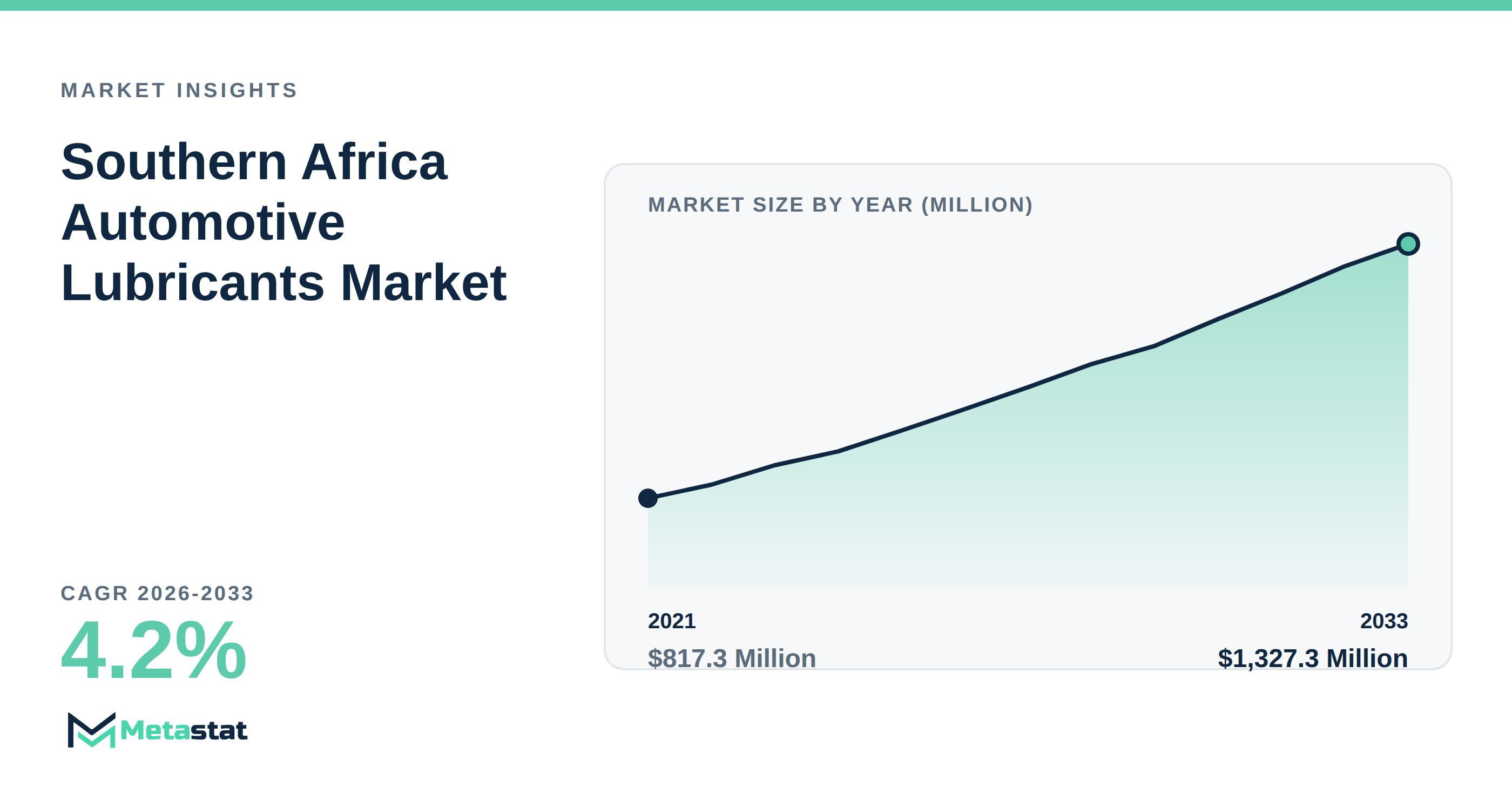
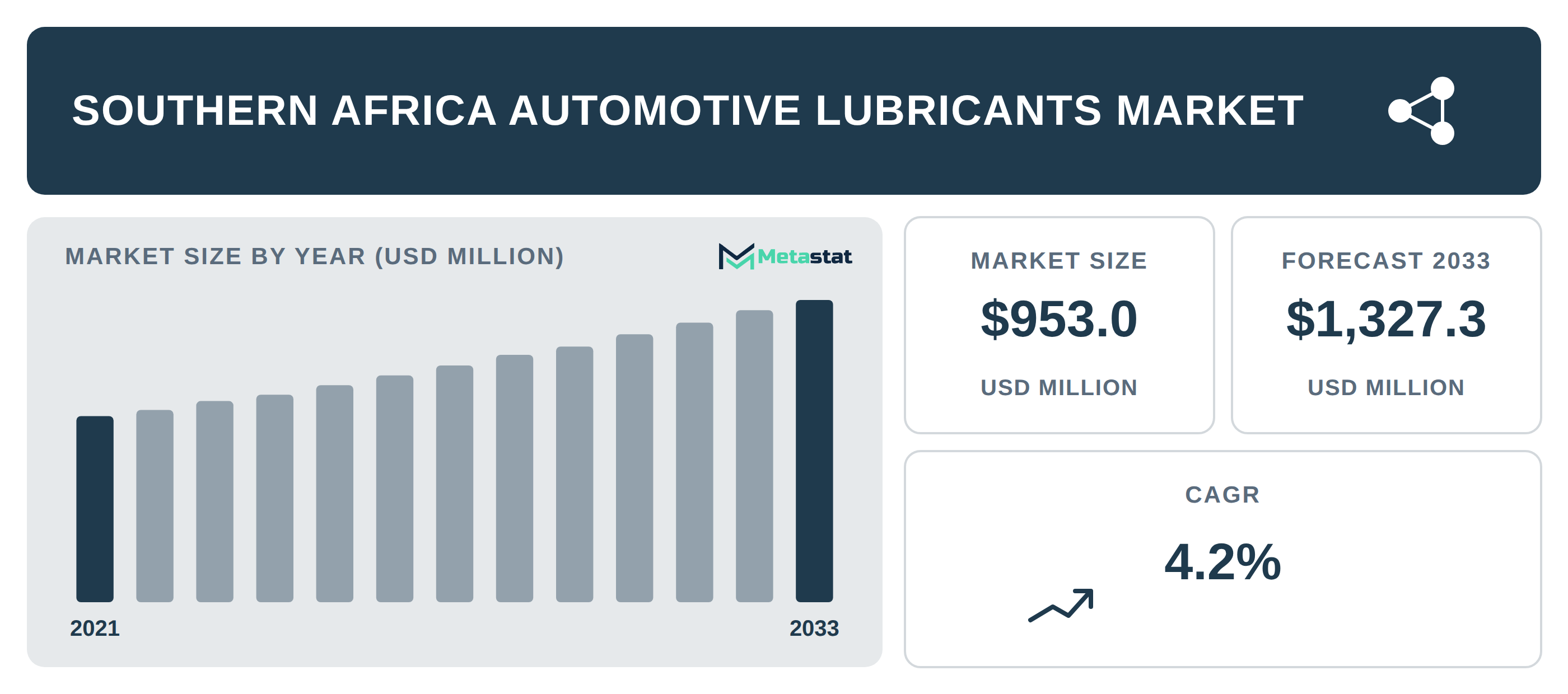
The outlook for Southern Africa Automotive Lubricants indicates significant changes on the horizon, driven by technological advancements and evolving consumer preferences. By 2033, the landscape for automotive lubricants will shift, impacting various segments and distribution channels. The full figures are in our Southern Africa Automotive Lubricants market size and forecast report.
How will vehicle maintenance practices evolve?
As vehicle ownership rises across the region, there will be a corresponding shift in maintenance practices, particularly regarding lubricant quality. More consumers and fleet operators recognize the importance of using high-performance lubricants, acknowledging their role in enhancing engine efficiency and prolonging vehicle life. Fleet operators, in particular, will drive demand for reliable and efficient lubricants that ensure optimal vehicle performance. This growing emphasis on quality lubricants presents a vital opportunity for businesses to adapt their offerings to meet these changing needs.
What innovations are expected in lubricant formulations?
Innovation will be central to the Southern Africa Automotive Lubricants outlook. Companies will focus on developing advanced lubricant formulations that incorporate sustainable materials and improved performance characteristics. The shift towards semi-synthetic and fully synthetic oils illustrates a broader trend favoring high-quality products. These innovations cater to both environmental considerations and heightened consumer expectations for product performance. Businesses that adapt to changing consumer preferences and embrace these advancements will strengthen their market position.
How will distribution channels transform?
The distribution landscape for automotive lubricants is poised for significant transformation as online sales channels gain prominence. The increasing preference for convenience and competitive pricing means that e-commerce platforms will emerge as a critical component of the supply chain. Direct online sales will cater to both individual consumers and fleet operators looking for easy access to a wide selection of lubricants. Distributors will adapt their strategies to incorporate digital sales methods while maintaining strong relationships with traditional wholesalers and retailers, ensuring a comprehensive reach to all customer segments.
What role will private-label lubricants play?
Private-label lubricants are expected to become a significant focus for manufacturers aiming to enhance brand loyalty and recognition. An increasing number of consumers are becoming aware of product performance, prompting businesses to leverage these private-label offerings to build trust among end users. As competition intensifies, companies providing high-quality private-label lubricants stand to capture a more substantial share of the growing demand in the automotive lubricants landscape.
How will regulatory pressures influence product offerings?
Regulatory pressures related to environmental compliance will increasingly shape the Southern Africa Automotive Lubricants outlook. Companies prioritizing the development of eco-friendly products will not only meet regulatory standards but appeal to environmentally conscious consumers. This trend aligns with global sustainability initiatives, compelling suppliers to innovate and refine their product offerings to enhance performance while addressing environmental concerns. Staying ahead of these regulatory changes will be crucial for businesses aiming to maintain compliance and meet consumer expectations.
What should businesses focus on in the coming years?
The Southern Africa Automotive Lubricants outlook emphasizes the importance of adaptability in a changing landscape. Businesses focusing on high-quality formulations, digital distribution strategies, and private-label opportunities are likely to thrive. By paying close attention to evolving consumer preferences and regulatory developments, companies position themselves effectively to capitalize on growth opportunities through 2033 and beyond.
Tags
About the Authors

LEAD ANALYST
Utkarsh Khirodkar is a Lead Market Research Analyst at MetaStat Insight, specializing in market intelligence, technology sector assessments, and competitive strategy.

ENERGY & INFRASTRUCTURE INDUSTRY CONSULTANT
Automotive and Transportation · Electronics and Semiconductor · Energy and Power · Machinery & Equipment
Saurabh Vasant Ganvir consults for Energy & Infrastructure Industry at MetaStat Insight, specializing in renewable energy, solar EPC, and electric vehicle (EV) infrastructure markets.