
Explore the evolving landscape of Contingent Workforce Management and discover key trends, challenges, and opportunities that organizations should watch for through 2033.
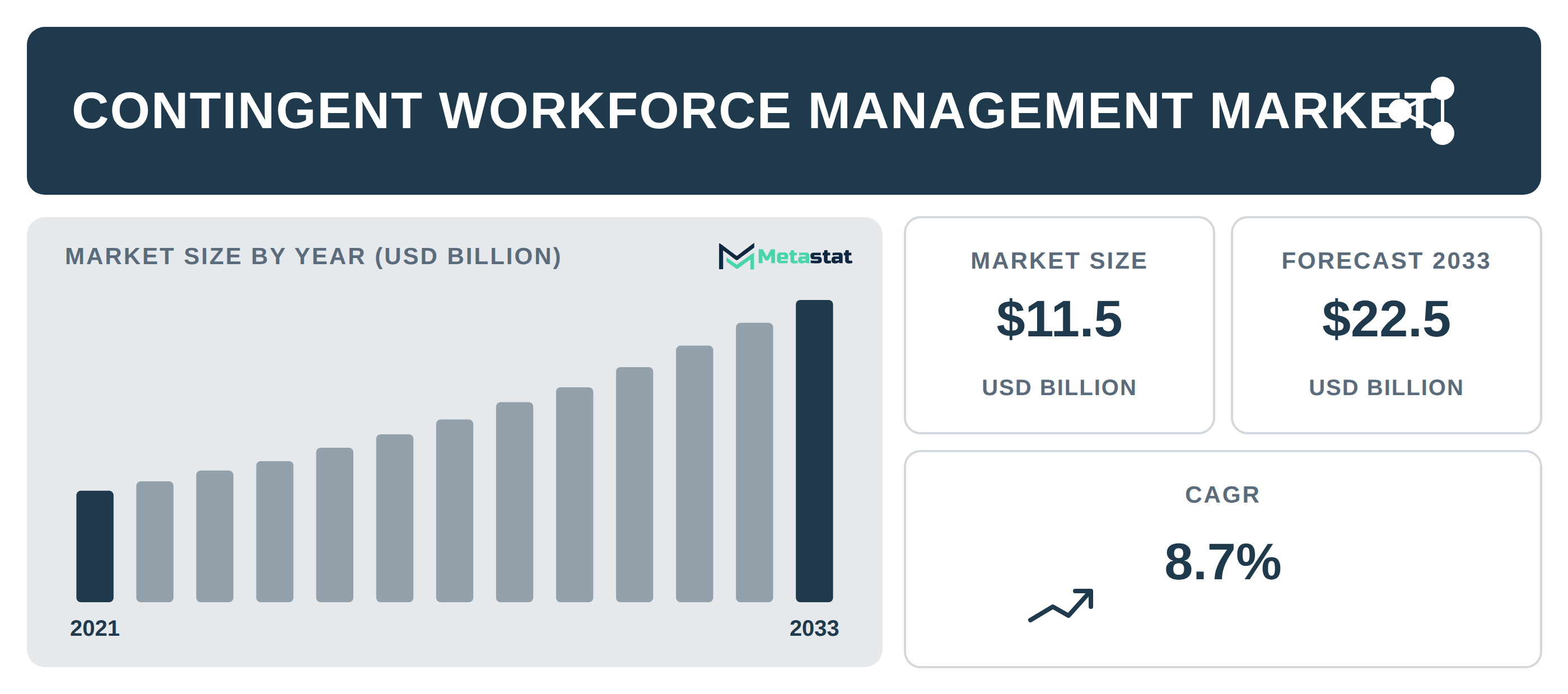
The trajectory of Contingent Workforce Management is set to undergo significant changes between now and 2033. This evolving landscape presents various opportunities and challenges for organizations looking to optimize their workforce strategies. Understanding these shifts will be crucial for decision-makers aiming to maintain a competitive edge. For in-depth insights, refer to the Contingent Workforce Management market size and forecast report.
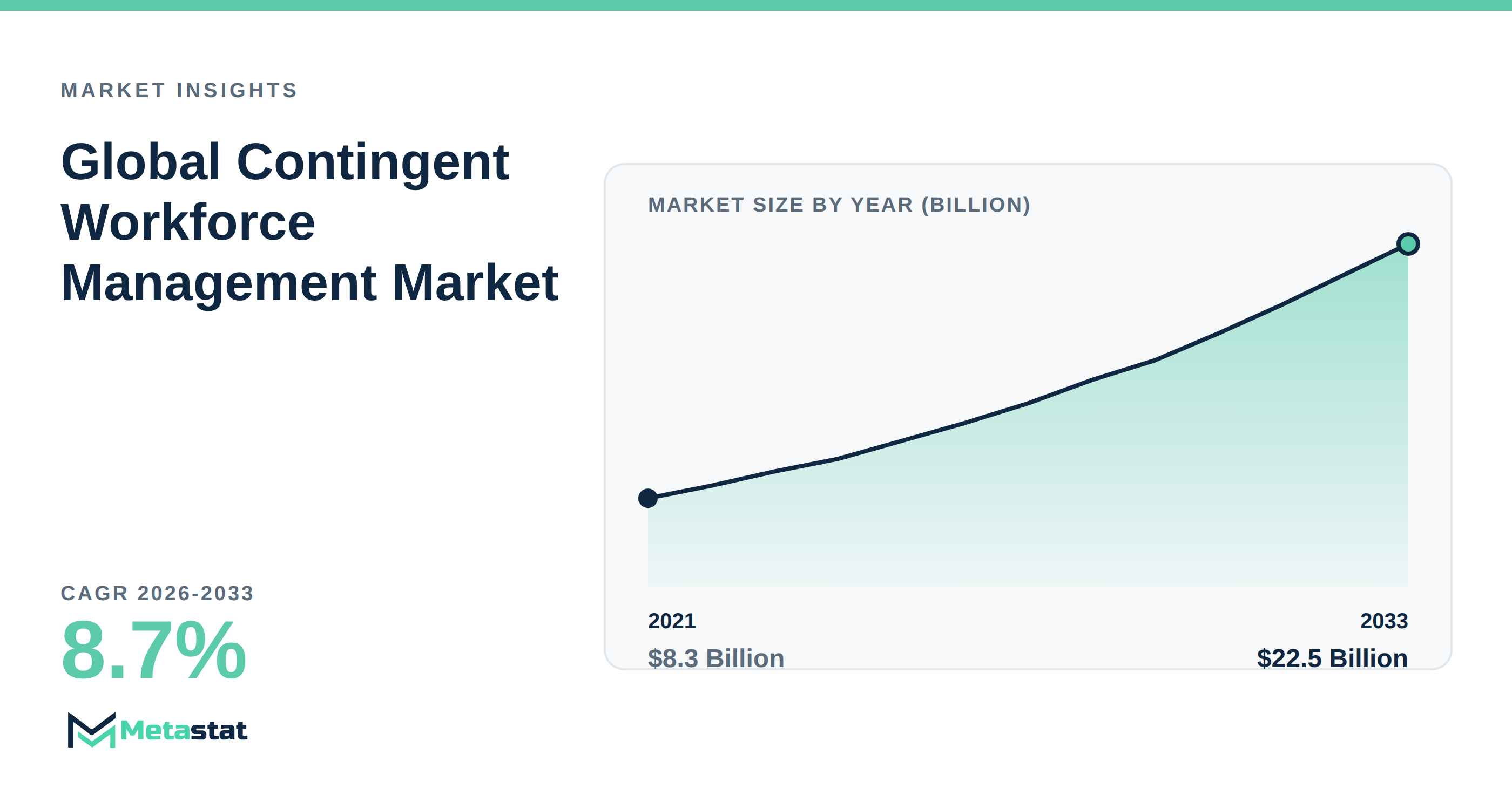
One major development is the increasing preference for flexible staffing solutions. As businesses adapt to rapid shifts in demand and market conditions, the need for a versatile workforce has become essential. Companies in sectors like Information Technology and Healthcare are particularly focused on enhancing their ability to respond quickly to changes. The anticipated growth of flexible staffing solutions indicates that organizations will prioritize agility in their workforce management strategies, optimizing their operations to meet dynamic market demands.
The mindset of small and medium enterprises (SMEs) is shifting toward contingent workforce solutions. In the coming years, SMEs are expected to be a driving force in this sector, with their spending projected to reach USD 9.7 billion by 2033. This aligns with the rising recognition of workforce flexibility among smaller firms, which seek to improve operational efficiency while managing costs effectively. Companies should watch for innovations specifically tailored to SMEs, as technology providers respond to their unique challenges and requirements.
Another consideration is the integration of advanced technologies, notably Agentic AI and spend analytics, into workforce management platforms. These technologies enable organizations to refine their procurement strategies and enhance budget management. With these capabilities, firms identify spending patterns and find opportunities for cost reduction. The ability to forecast labor needs accurately and optimize recruitment practices will transform workforce management, making investments in technology a priority for many organizations.
Compliance is becoming increasingly complex, driven by global worker classification directives. Companies will implement automated compliance workflows to navigate these regulations effectively. This demand creates an opportunity for solutions that streamline classification processes, ensuring timely reporting and mitigating legal risks. Organizations are vigilant in adopting technologies that enhance their compliance capabilities to avoid significant financial repercussions, which could jeopardize their operational viability.
The consolidation of fragmented workforce management systems by enterprise procurement teams is likely to gain momentum. By integrating various systems into cohesive platforms, organizations enhance efficiency and improve supplier relationships. This consolidation trend reduces operational complexity and provides better visibility into data analytics, which are crucial for informed decision-making in real-time. Companies adapting to this trend expects to see significant improvements in overall performance and cost management.
While the landscape continues to evolve, businesses remain agile and proactive. The focus on contingent workforce solutions reflects a broader trend in workforce management, emphasizing the need for strategic planning and responsiveness to changing market demands. By monitoring these developments and adapting accordingly, organizations position themselves to thrive in the evolving Contingent Workforce Management outlook.
Tags
About the Authors

LEAD ANALYST
Utkarsh Khirodkar is a Lead Market Research Analyst at MetaStat Insight, specializing in market intelligence, technology sector assessments, and competitive strategy.

PRINCIPAL CONSULTANT - ENTERPRISE AI & EMERGING TECHNOLOGIES
Banking & Finance · Electronics and Semiconductor · Energy and Power · Healthcare IT · Information & Technology · Professional Services
Vijay Gunti is a Principal Consultant at MetaStat Insight, bringing over two decades of experience across enterprise digital transformation, technology strategy, and intelligent systems.

PRINCIPAL CONSULTANT - QUALITY SYSTEMS & COMPLIANCE
Electronics and Semiconductor · Machinery & Equipment · Professional Services
Omkar Phadtare is an Industry Consultant at MetaStat Insight, specializing in quality systems, regulatory compliance, and standards benchmarking to drive data-driven market intelligence and strategic industry research.

LEAD CONSULTANT - COMMUNICATION, TELECOM, AND IT
Electronics and Semiconductor · Information & Technology · Machinery & Equipment · Professional Services
Ravindra Sathe Consultants for Communication, Telecom, and IT at MetaStat Insight. He leads the firm's industry research initiatives across telecommunications infrastructure, digital connectivity, enterprise networking, and emerging information technology domains.