
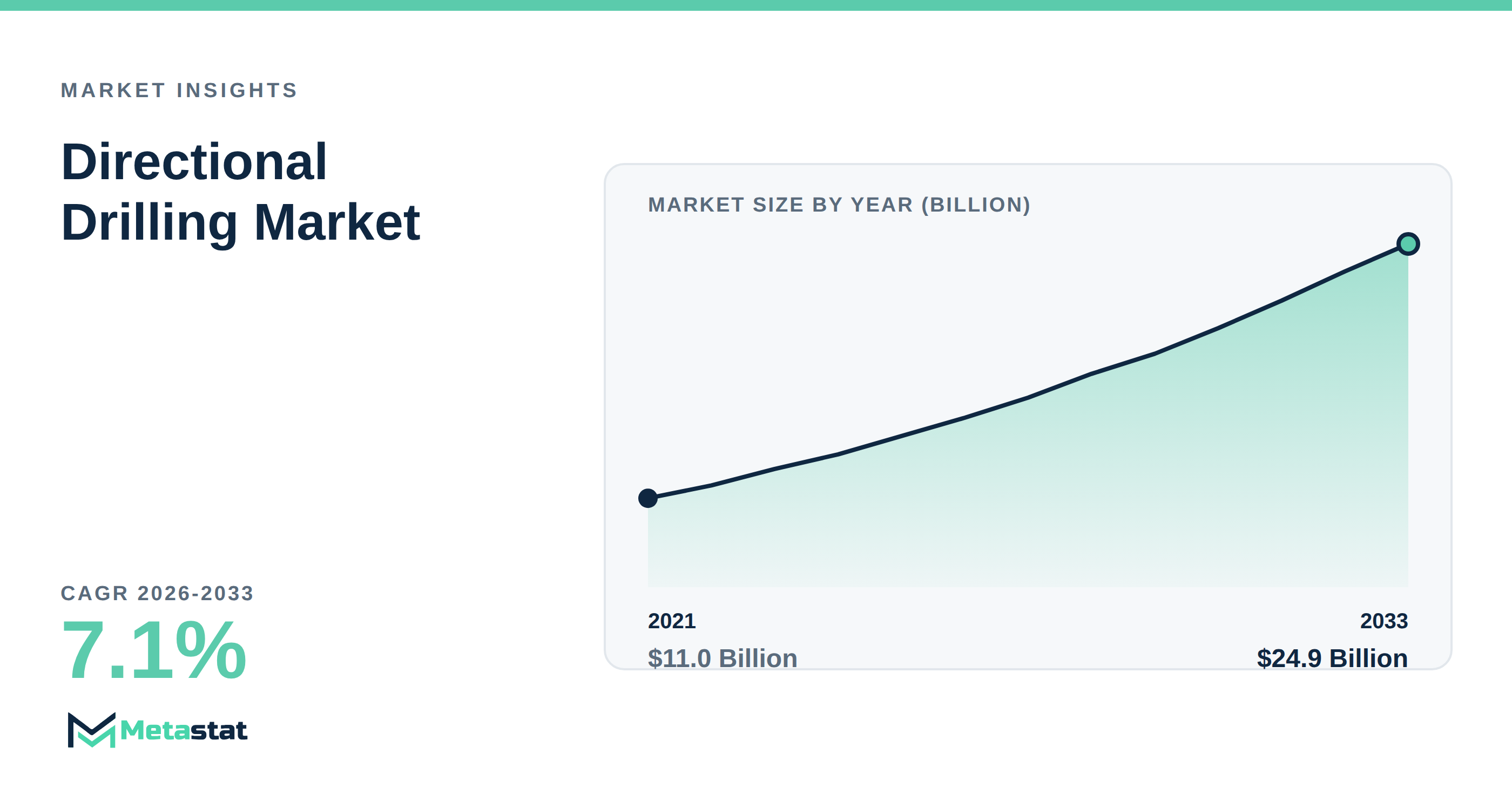
Explore the key forces driving growth in the Directional Drilling market, including North America's leadership, offshore innovations, and regulatory impacts.
The Directional Drilling market is undergoing significant transformations, driven by a combination of technological advancements, evolving regulatory landscapes, and shifting demand dynamics. These forces are reshaping how companies approach drilling operations, impacting everything from capital investments to operational efficiencies. Below are six critical forces to watch in the Directional Drilling market.
1. North America leads with promising growth potential
North America is anticipated to secure the largest share of the Directional Drilling market, projected to produce USD 8.7 billion by 2033. This leadership is primarily due to increased exploration activities and established oil and gas reserves. Enhanced drilling techniques and technologies are essential in this region, allowing operators to optimize productivity and maintain cost efficiencies. The market's expansion in North America reflects a strong investment environment, making it a focal point for companies aiming to leverage directional drilling capabilities.
2. Rising offshore applications drive innovation
The offshore segment of the Directional Drilling market shows robust potential for growth, expected to increase at a CAGR of 8.7% through 2033. This surge results from the rising demand for energy and access to previously untapped offshore reserves. Innovations in drilling technologies cater to the complexities of offshore environments, enabling companies to manage the challenges associated with deeper drilling operations. While firms prioritize efficiency and sustainability, the offshore segment emerges because a critical area for technological advancement and operational excellence.
3. Regulatory compliance shapes technological investments
Stricter regulations, particularly concerning environmental standards and emissions reduction, significantly affect the Directional Drilling market. Companies are compelled to invest in advanced drilling technologies that ensure compliance while enhancing operational efficiency. Such investments not only aid in meeting regulatory requirements but contribute to cost savings by reducing potential fines and operational downtimes. Companies that proactively prioritize compliant technologies enhance their competitive position in the market.
4. Technological integration enhances operational capabilities
Integrating advanced technologies within the Directional Drilling market boosts operational efficiency and productivity. Innovations in automation and artificial intelligence streamline drilling operations, enabling companies to cut labor costs while enhancing accuracy. Firms that focus on software adoption and the modernization of legacy processes achieve improved data analytics and decision-making capabilities. This strategic focus on technological integration positions companies effectively to adapt to market demands while ensuring competitive performance.
5. Economic fluctuations impact supply chain dynamics
Geopolitical tensions and economic fluctuations create challenges for the Directional Drilling market by introducing instability in supply chains. Such disruptions result in higher raw material costs, adversely impacting project budgets and timelines. Companies actively work to mitigate these risks through diversification strategies, ensuring reliable supplier access while maintaining competitive pricing. Grasping the implications of supply chain dynamics proves critical for companies aiming to navigate these challenges effectively.
6. Emerging applications offer new growth opportunities
The Directional Drilling market presents numerous emerging applications across various sectors that drive substantial growth opportunities. Increased investments in energy infrastructure and innovative technologies enhance drilling solutions' efficiency and safety. Companies expanding into regions with growing energy demands, including Asia Pacific and South America, will benefit from favorable regulatory environments and governmental support. This evolution not only enhances market penetration but aligns with long-term sustainability objectives, fostering further sector innovation.
Overall, the Directional Drilling market is witnessing significant changes shaped by regional dynamics, technological advancements, and evolving regulatory frameworks. Companies that recognize and adapt to these forces will be better positioned to seize emerging opportunities and retain their competitive edge in this dynamic marketplace.
The full analysis is in Global Directional Drilling Market.
Tags
About the Authors

LEAD ANALYST
Utkarsh Khirodkar is a Lead Market Research Analyst at MetaStat Insight, specializing in market intelligence, technology sector assessments, and competitive strategy.

PRINCIPAL CONSULTANT - ENTERPRISE AI & EMERGING TECHNOLOGIES
Banking & Finance · Electronics and Semiconductor · Energy and Power · Healthcare IT · Information & Technology · Professional Services
Vijay Gunti is a Principal Consultant at MetaStat Insight, bringing over two decades of experience across enterprise digital transformation, technology strategy, and intelligent systems.

ENERGY & INFRASTRUCTURE INDUSTRY CONSULTANT
Automotive and Transportation · Electronics and Semiconductor · Energy and Power · Machinery & Equipment
Saurabh Vasant Ganvir consults for Energy & Infrastructure Industry at MetaStat Insight, specializing in renewable energy, solar EPC, and electric vehicle (EV) infrastructure markets.