
Explore six transformative forces shaping the Industrial Workplace Matting market, including safety regulations and technological advancements.
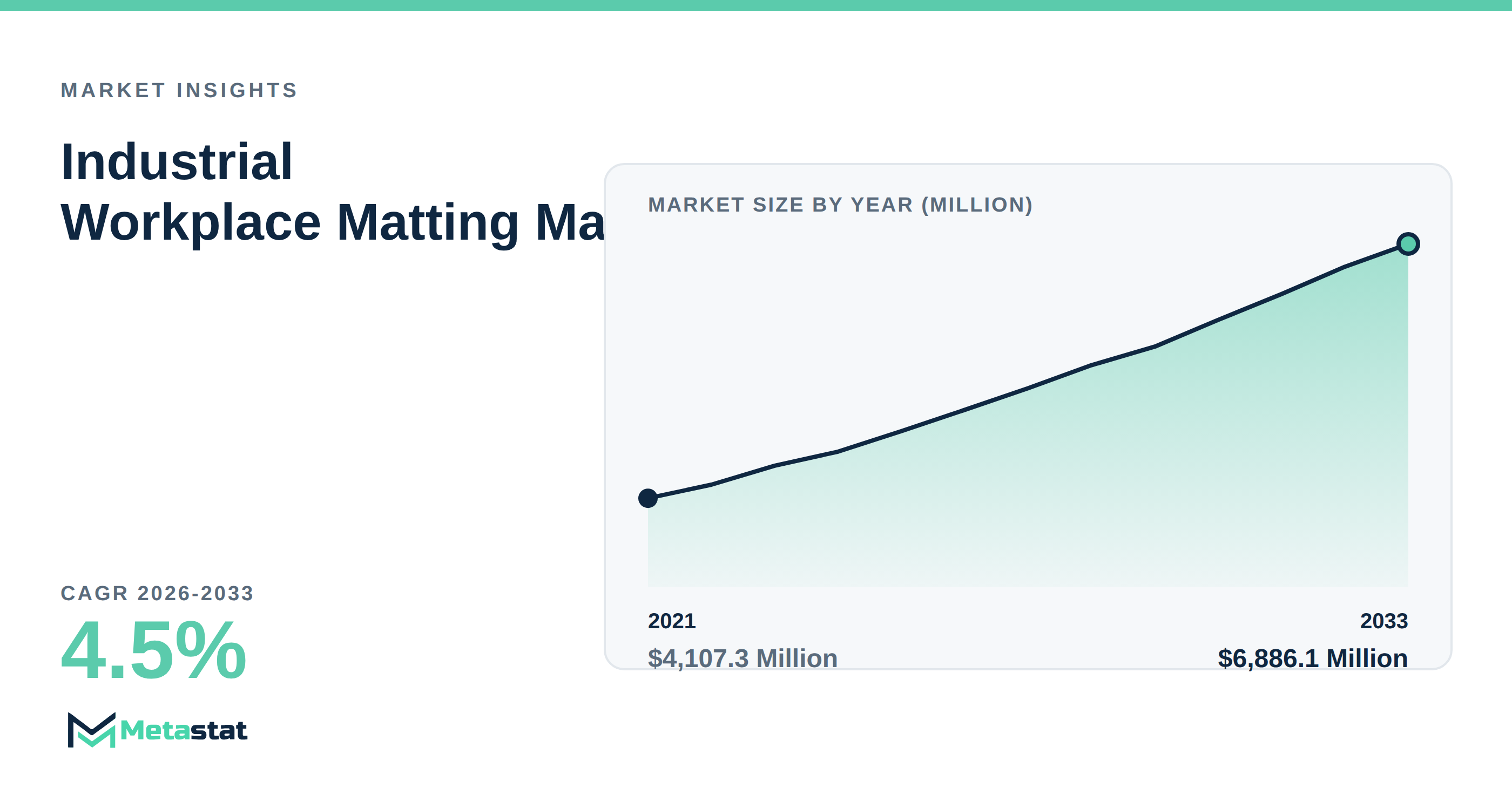
The Industrial Workplace Matting market is undergoing significant transformations driven by various forces that impact its growth trajectory. In this blog, we explore six key factors reshaping the market, from evolving safety regulations to the integration of advanced materials and technologies.
1. Increasing focus on employee safety
The growing emphasis on workplace safety drives the Industrial Workplace Matting market. With regulations tightening across various industries, companies are compelled to invest in durable matting solutions that enhance employee protection. Sectors including manufacturing, healthcare, and logistics prioritize implementing ergonomic and anti-fatigue matting to improve the comfort and safety of their workforce. This trend supports regulatory compliance while boosting productivity, enhancing operational efficiency across organizations.
2. Demand for sustainable matting solutions
In recent years, sustainability has emerged because a key consideration in the Industrial Workplace Matting market. Companies increasingly prioritize eco-friendly materials, including renewable rubber and biocomposite options. This shift aligns with broader environmental, social, and governance (ESG) initiatives that businesses are adopting. Manufacturers focusing on sustainable practices attract environmentally conscious clients and can often command higher prices. The demand for sustainable matting solutions is projected to grow significantly because organizations strive to minimize their environmental impact.
3. Technological advancements in product features
Technological integration within the Industrial Workplace Matting market is progressing rapidly. Innovations, including smart mats equipped with sensors, are becoming more common, allowing for real-time monitoring of safety conditions in workplaces. This advancement enhances the functionality of matting products, transforming them into smart solutions for ensuring workplace safety. Industries like electronics manufacturing and food processing benefit the most from these enhancements due to their stringent adherence to safety protocols and regulations.
4. Market fragmentation challenges
The Industrial Workplace Matting market experiences significant fragmentation, with numerous players vying for market share. This competitive environment encourages innovation but complicates purchasing decisions for buyers. Organizations that effectively communicate their unique value propositions and distinguish their offerings are likely to capture a larger portion of the market. Buyers should evaluate the advantages of established brands against emerging players providing innovative solutions tailored to specific industry needs.
5. Economic factors influencing capital investment
Economic conditions shape the trajectory of the Industrial Workplace Matting market. Favorable GDP growth rates and low-interest financing options enable businesses to invest in new projects that prioritize workplace safety and efficiency. Sectors including logistics and food processing are particularly active in seeking high-quality matting solutions that align with their operational goals. Understanding the economic landscape aids companies in predicting market trends and adjusting procurement strategies accordingly.
6. Regulatory compliance driving product development
Regulatory compliance significantly influences the Industrial Workplace Matting market. Stricter safety and environmental regulations compel manufacturers to innovate and improve their products continually. Compliance with evolving standards requires substantial investment in testing and certification processes. This necessity affects product pricing and can create barriers for smaller entrants in the market. However, it stimulates competition and innovation, leading to the development of advanced matting solutions that meet rigorous safety standards.
The Industrial Workplace Matting market is navigating a pathway shaped by safety, sustainability, and technological advancements. For businesses and operators in this market, understanding these forces is crucial for making informed decisions. Staying aligned with these trends will be essential for success because the market evolves.
For more detailed insights, refer to the Global Industrial Workplace Matting Market.
Tags
About the Authors

LEAD ANALYST
Utkarsh Khirodkar is a Lead Market Research Analyst at MetaStat Insight, specializing in market intelligence, technology sector assessments, and competitive strategy.

INDUSTRY CONSULTANT - CHEMICALS & ADVANCED MATERIALS
Chemicals and Materials · Machinery & Equipment · Packaging
Amit Gadhekar Consultant for Chemicals and Materials at MetaStat Insight, directing sector-specific intelligence, research, and strategic consulting across global chemical and processing markets.

PRINCIPAL CONSULTANT - QUALITY SYSTEMS & COMPLIANCE
Electronics and Semiconductor · Machinery & Equipment · Professional Services
Omkar Phadtare is an Industry Consultant at MetaStat Insight, specializing in quality systems, regulatory compliance, and standards benchmarking to drive data-driven market intelligence and strategic industry research.

ENERGY & INFRASTRUCTURE INDUSTRY CONSULTANT
Automotive and Transportation · Electronics and Semiconductor · Energy and Power · Machinery & Equipment
Saurabh Vasant Ganvir consults for Energy & Infrastructure Industry at MetaStat Insight, specializing in renewable energy, solar EPC, and electric vehicle (EV) infrastructure markets.

LEAD CONSULTANT - COMMUNICATION, TELECOM, AND IT
Electronics and Semiconductor · Information & Technology · Machinery & Equipment · Professional Services
Ravindra Sathe Consultants for Communication, Telecom, and IT at MetaStat Insight. He leads the firm's industry research initiatives across telecommunications infrastructure, digital connectivity, enterprise networking, and emerging information technology domains.