
Discover key forces influencing the Luxury Resort Hotel market, from evolving consumer preferences to technological advancements.
The Luxury Resort Hotel market is experiencing significant transformation driven by various forces. This shift is characterized by changing consumer preferences, economic factors, and technological advancements. Six critical forces are reshaping the market.
1. Increasing consumer preference for unique experiences
Within the Luxury Resort Hotel market, a pronounced shift towards personalized, immersive experiences is evident. Affluent travelers increasingly seek unique offerings that blend luxury with local culture and adventure. This demand influences operators to enhance their services by integrating elements including wellness programs and experiential activities. The market is positioned for continued growth.
2. Strong growth projected in coastal resort segments
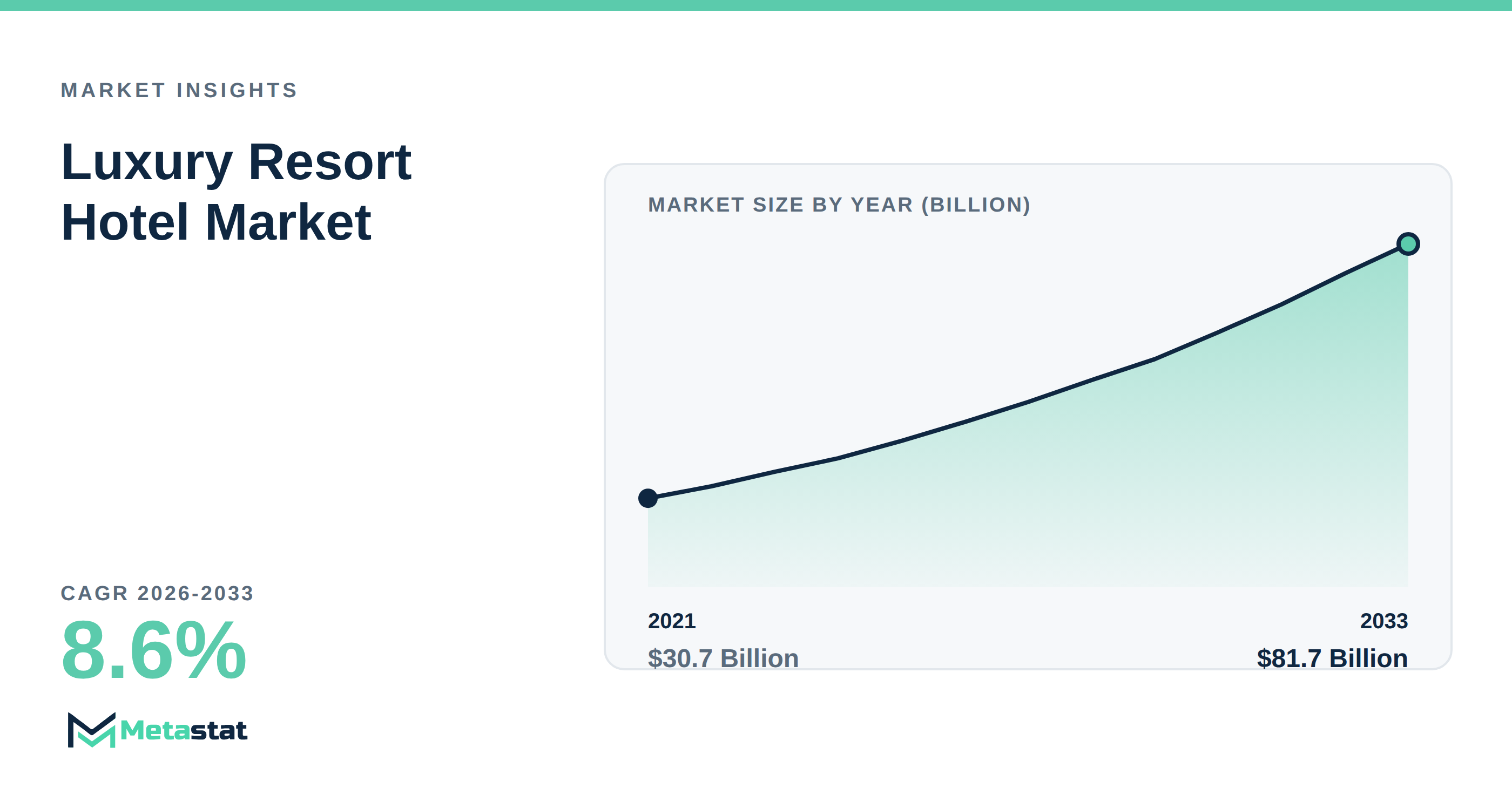
Coastal resorts display robust potential within the Luxury Resort Hotel market. Projections indicate this segment will grow from USD 14.1 billion in 2026 to USD 24.3 billion by 2033, reflecting an 8% compound annual growth rate (CAGR). This growth is driven by increased domestic and international tourism, alongside significant infrastructure investments that facilitate easier access to desirable coastal destinations.
3. Technological advancements enhancing guest experiences
Technological integration plays a significant role in the Luxury Resort Hotel market. The adoption of advanced technologies streamlines operations and enriches guest experiences. From mobile check-ins to smart room features, technology enhances convenience and satisfaction, attracting a diverse range of tech-savvy travelers. This evolution supports market expansion, influenced by establishments leveraging innovation to attract discerning clientele.
4. Influence of macroeconomic factors on investment
Macroeconomic conditions significantly impact investments within the Luxury Resort Hotel market. Rising GDP and favorable interest rates create a conducive financial environment, prompting capital influx into new projects and renovations. The trend of affluent consumers prioritizing travel experiences drives developers to cater to this demographic, enhancing overall market growth.
5. Sustainability initiatives gaining momentum
Sustainability has become central to the strategies adopted in the Luxury Resort Hotel market. A growing number of consumers prioritize eco-friendly practices, prompting resorts to adopt sustainable operations. Investments in renewable energy and green technologies appeal to environmentally conscious travelers and lead to long-term operational cost savings, ultimately reinforcing competitive positions.
6. Demographic shifts influencing luxury demand
Shifts in demographic patterns significantly influence the Luxury Resort Hotel market. This change includes increasing purchasing power among younger generations and a growing number of affluent older adults. Millennials and Gen Z travelers emphasize wellness and sustainability, driving demand for luxury resorts that offer personalized experiences. Meanwhile, older adults seek accessible high-end accommodations, leading operators to expand facilities and services tailored to this demographic.
In conclusion, the Luxury Resort Hotel market is well-positioned for substantial growth driven by evolving consumer preferences, investment in technological advancements, and a strong emphasis on sustainability. Understanding these key forces enables stakeholders to navigate the competitive environment effectively while capitalizing on emerging opportunities. For more detailed insights, refer to the Global Luxury Resort Hotel Market.
Tags
About the Author

LEAD ANALYST
Utkarsh Khirodkar is a Lead Market Research Analyst at MetaStat Insight, specializing in market intelligence, technology sector assessments, and competitive strategy.