
Explore six critical forces driving the Luxury Stem Cell Beauty Product market, influencing consumer behavior and industry dynamics.
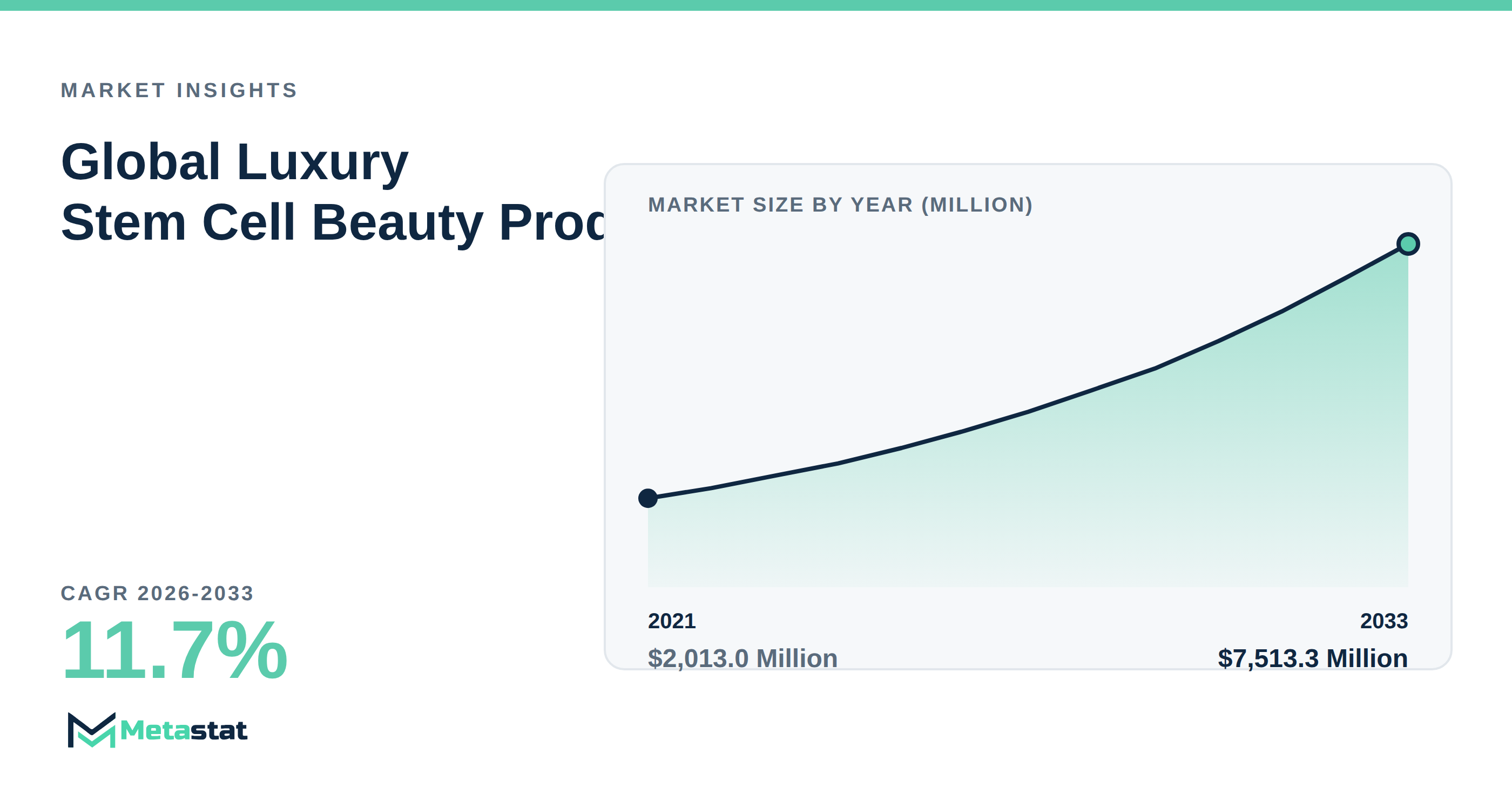
The Luxury Stem Cell Beauty Product market is poised for significant growth, projected to reach USD 7,513.3 million by 2033, expanding from USD 3,099.4 million in 2025. This impressive increase is underpinned by various factors that are reshaping the industry and influencing consumer preferences.
1. Aging populations drive product demand
Increasing numbers of older consumers are significantly impacting the demand for luxury stem cell beauty products. The rising focus on anti-aging solutions and skin rejuvenation reflects broader societal trends toward health and wellness. Brands addressing these needs through innovative formulations are positioned to capture a larger market share, fueled by consumers willing to invest in high-quality skincare that promises visible results.
2. Growing emphasis on sustainability
Sustainability has become a critical factor for consumers when selecting luxury beauty products. A strong preference exists for brands that display commitment to eco-friendly practices and ethical sourcing. By adopting sustainable methods, companies not only attract environmentally conscious consumers but build lasting loyalty, reinforcing their brand values in alignment with consumer expectations.
3. Technological advancements streamline product development
Technological innovations, particularly in automation and artificial intelligence, are significantly enhancing operational efficiencies within the Luxury Stem Cell Beauty Product market. Investment in these technologies leads to reduced costs and improved product quality, allowing brands to respond swiftly to shifting consumer preferences. This technological integration supports ongoing growth by enabling companies to adapt their offerings more effectively.
4. Regulatory compliance challenges smaller players
Stringent regulations governing product safety and marketing practices create substantial operational costs and extended timelines for development. Smaller companies often struggle to comply with these comprehensive requirements, limiting their market entry and competitiveness. Consequently, larger companies dominate the market by absorbing these costs, resulting in a more concentrated industry landscape and increased barriers for new entrants.
5. Digital transformation reshapes consumer engagement
The transition to digital platforms is reshaping how consumers interact with the Luxury Stem Cell Beauty Product market. Enhanced online shopping experiences and targeted digital marketing campaigns enable brands to connect with consumers effectively. Companies leveraging these digital strategies to engage consumers are well-positioned to foster brand loyalty and expand their market presence.
6. Mergers and acquisitions enhance market positioning
Strategic mergers and acquisitions represent a vital route for companies seeking to strengthen their market position and diversify product offerings. This consolidation allows brands to collaborate effectively, sharing resources to innovate and streamline operations. Although competition intensifies, these strategic maneuvers significantly affect market dynamics, considerably enhancing innovation capabilities and product quality within the Luxury Stem Cell Beauty Product sector.
Understanding these forces shaping the Luxury Stem Cell Beauty Product market is essential for stakeholders aiming to navigate its complexities. The ability to adapt to evolving consumer preferences, adhere to regulatory standards, and prioritize innovation will ultimately define success in this rapidly expanding sector.
The full analysis is in Global Luxury Stem Cell Beauty Product Market.
Tags
About the Authors

LEAD ANALYST
Utkarsh Khirodkar is a Lead Market Research Analyst at MetaStat Insight, specializing in market intelligence, technology sector assessments, and competitive strategy.

SENIOR RESEARCH ANALYST
Biotechnology · Food and Beverages · Medical Devices · Packaging
Snehal Pasalkar is a Research Analyst at MetaStat Insight, operating at the intersection of life sciences research, competitive strategy, and market intelligence.