
Discover six critical forces reshaping the Material Informatics market and their implications for buyers. Understand how advancements in AI, regulatory pressures, and sustainability drive this evolving landscape.
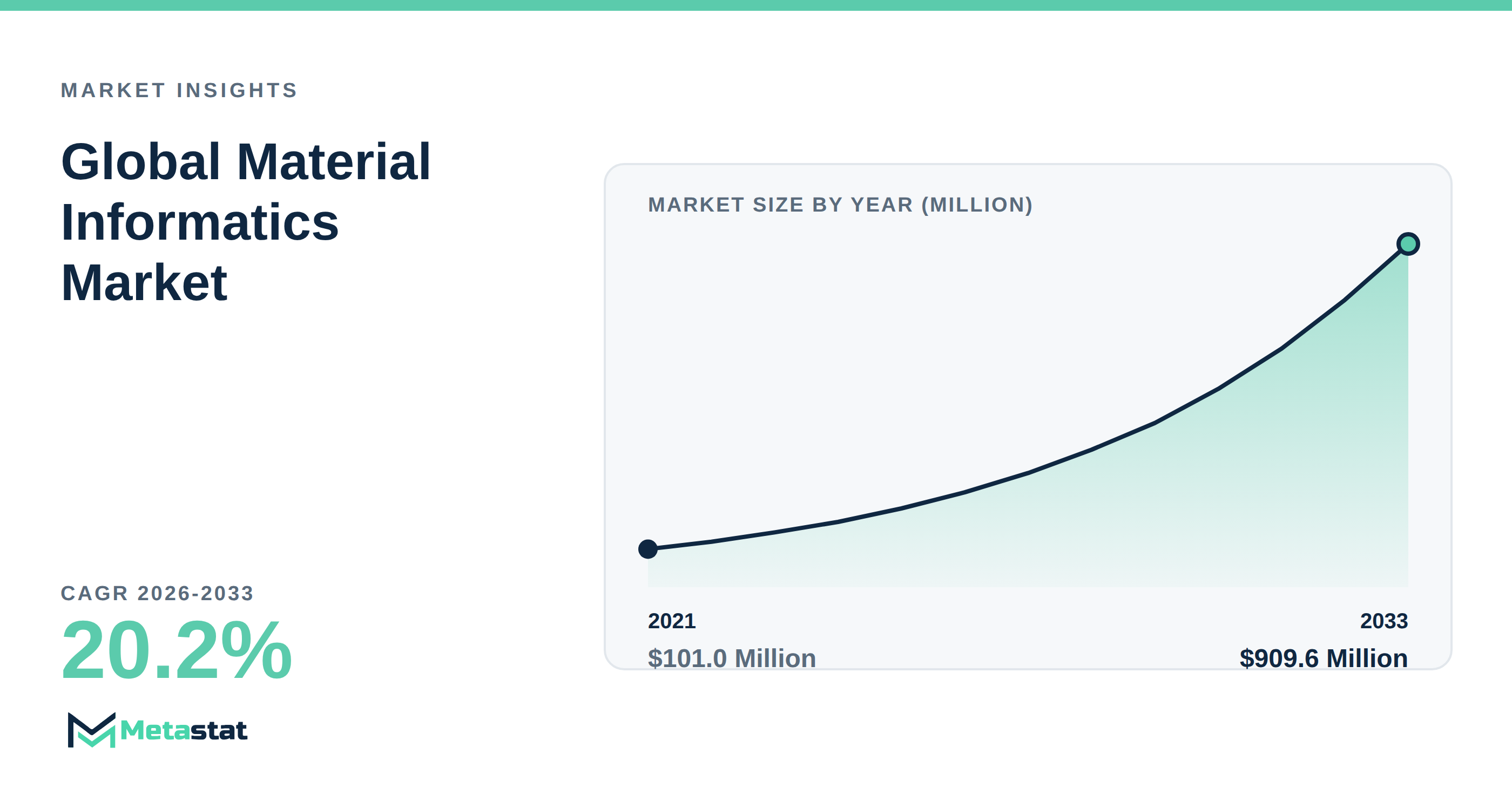
The Material Informatics market, valued at USD 208.7 million in 2025, is set to grow significantly, reaching USD 909.6 million by 2033. This robust growth reflects the evolving demands within various industries and the adoption of new technologies. By examining the key dynamics at play, buyers navigate the market more effectively.
1. Increased Adoption of Artificial Intelligence
Widespread integration of artificial intelligence (AI) significantly enhances the processes involved in materials development. AI contributes to optimizing data analysis, allowing companies to iterate designs more quickly and improve material characteristics. This transformation particularly benefits the automotive and energy sectors, where efficient material solutions are essential. Organizations leveraging AI gain competitive advantages through expedited product development cycles and enhanced operational efficiencies, positioning themselves strongly in the Material Informatics market.
2. Rising Demand for Advanced Modeling Techniques
Advanced physics-based modeling techniques streamline the materials development process, especially within sectors including advanced manufacturing and energy. These methodologies allow businesses to simulate material behaviors under various conditions, thereby reducing the time and expense associated with physical testing. The enhanced predictive capabilities resulting from these models attract investment in informatics solutions, enabling companies to meet specific application requirements while adhering to increasingly stringent regulatory standards.
3. Regulatory Compliance Driving Innovation
Stringent regulatory compliance requirements create an environment that promotes innovation in the Material Informatics market. Companies invest in solutions designed to not only meet compliance standards but enhance operational efficiency. This focus on aligning with regulatory frameworks drives technological advancements, influencing product offerings and creating new opportunities for growth across diverse industries.
4. Supply Chain Resilience and Transformation
The changing nature of supply chains demands reassessment of logistics and sourcing strategies. Companies that adapt to disruptions improve their procurement processes, ultimately enhancing customer experiences. This transformation highlights the critical role of effective materials data management, allowing organizations to remain responsive to shifts in both demand and supply conditions, thereby sharpening their competitive positioning.
5. Sustainability and Circular Economy Dynamics
Transformative initiatives focused on sustainability, including efforts toward decarbonization and the adoption of circular economy principles, have become increasingly vital in the Material Informatics market. Companies are prioritizing eco-friendly practices to align product development with rising consumer expectations for sustainability. This strategic shift not only bolsters brand reputation but fosters innovation, driving growth and competitive differentiation in the market.
6. Macroeconomic Challenges and Their Impacts
Macroeconomic elements, including inflation and currency fluctuations, pose challenges for stakeholders within the Material Informatics market. These dynamics influence capital allocation strategies and operational expenditures, impacting overall pricing and profitability. Organizations that develop robust strategies to navigate these uncertainties are better positioned to maintain their competitive edge during fluctuating market conditions.
These six dynamics provide critical insights into the current trajectory and future potential of the Material Informatics market. Equipped with this knowledge, buyers make informed decisions, ensuring alignment with emerging trends and technological advancements.
The full analysis is in Global Material Informatics Market.
Tags
About the Authors

LEAD ANALYST
Utkarsh Khirodkar is a Lead Market Research Analyst at MetaStat Insight, specializing in market intelligence, technology sector assessments, and competitive strategy.

INDUSTRY CONSULTANT - CHEMICALS & ADVANCED MATERIALS
Chemicals and Materials · Machinery & Equipment · Packaging
Amit Gadhekar Consultant for Chemicals and Materials at MetaStat Insight, directing sector-specific intelligence, research, and strategic consulting across global chemical and processing markets.