
Explore the competitive landscape of the Digital Cross-Border Remittance Services market, highlighting key players like MoneyGram and Western Union.
The Digital Cross-Border Remittance Services market is rapidly expanding, driven by technological advancements and increasing consumer demand. By understanding the competitive positioning of leading firms, stakeholders make informed decisions in this evolving sector.
1. MoneyGram International's extensive network
MoneyGram International, Inc. operates with an extensive infrastructure that supports a wide range of payment solutions, establishing a strong position in the Digital Cross-Border Remittance Services sector. The company effectively leverages its global network and partnerships to facilitate fast and reliable transactions. This operational strength enhances its competitive position and supports effective expansion into new markets. MoneyGram's commitment to user experience, including improved security measures, reinforces its reputation among consumers and contributes to a steady increase in transaction volumes.
2. Western Union's adaptability across markets
The Western Union Company maintains a competitive advantage through its adaptability to various market conditions and consumer preferences. With a strong presence in both emerging and developed markets, the company consistently innovates its service offerings to meet local needs. By embracing new technologies and improving transaction efficiency, Western Union positions itself to capture a larger share of the expanding remittance market. Its commitment to regulatory compliance and consumer protection enhances trust, facilitating customer loyalty and sustainable growth.
3. Wise plc's straightforward pricing approach
Wise plc (formerly TransferWise) differentiates itself with a straightforward pricing model that appeals to a tech-savvy demographic. The company emphasizes low fees and real exchange rates, attracting users looking for cost-effective options for international transfers. Wise's focus on enhancing user experiences through intuitive digital platforms strengthens its competitive edge. This strategy positions Wise because a leader among younger consumers who prioritize efficiency and transparency in their financial transactions, thereby driving notable adoption rates.
4. Remitly Global's focus on speed and accessibility
Remitly Global, Inc. has carved out a distinctive position in the market by prioritizing speed and accessibility. The company’s mobile-centric approach caters to the increasing number of users seeking instantaneous remittance solutions, particularly in areas facing limited access to banking services. By offering a user-friendly interface and rapid transactions, Remitly enhances customer satisfaction, resulting in higher retention. Its targeted marketing strategies resonate with diaspora communities, further broadening its user base and market reach.
5. Zepz leveraging digital transformation
Zepz, which operates through brands like WorldRemit, focuses on the integration of digital transformation to strengthen its competitive positioning. The company's emphasis on mobile applications and web platforms allows it to cater to a global audience, particularly in developing regions. While digital literacy improves, Zepz's solutions become more appealing, driving user adoption and retention. This focus on technology integration streamlines processes and positions Zepz favorably against traditional remittance providers, marking it because a significant player in the digital remittance arena.
6. Euronet Worldwide's strategic collaborations
Euronet Worldwide, Inc. employs strategic partnerships to enhance its service offerings in the Digital Cross-Border Remittance Services market. Collaborations with local financial institutions and technology firms expand its operational capabilities and create synergies that benefit consumers. This strategy facilitates improved pricing structures and enhances transaction efficiency. Euronet’s diverse portfolio of services, including payment processing and ATM services, positions it well for growth because it adapts to changing market dynamics.
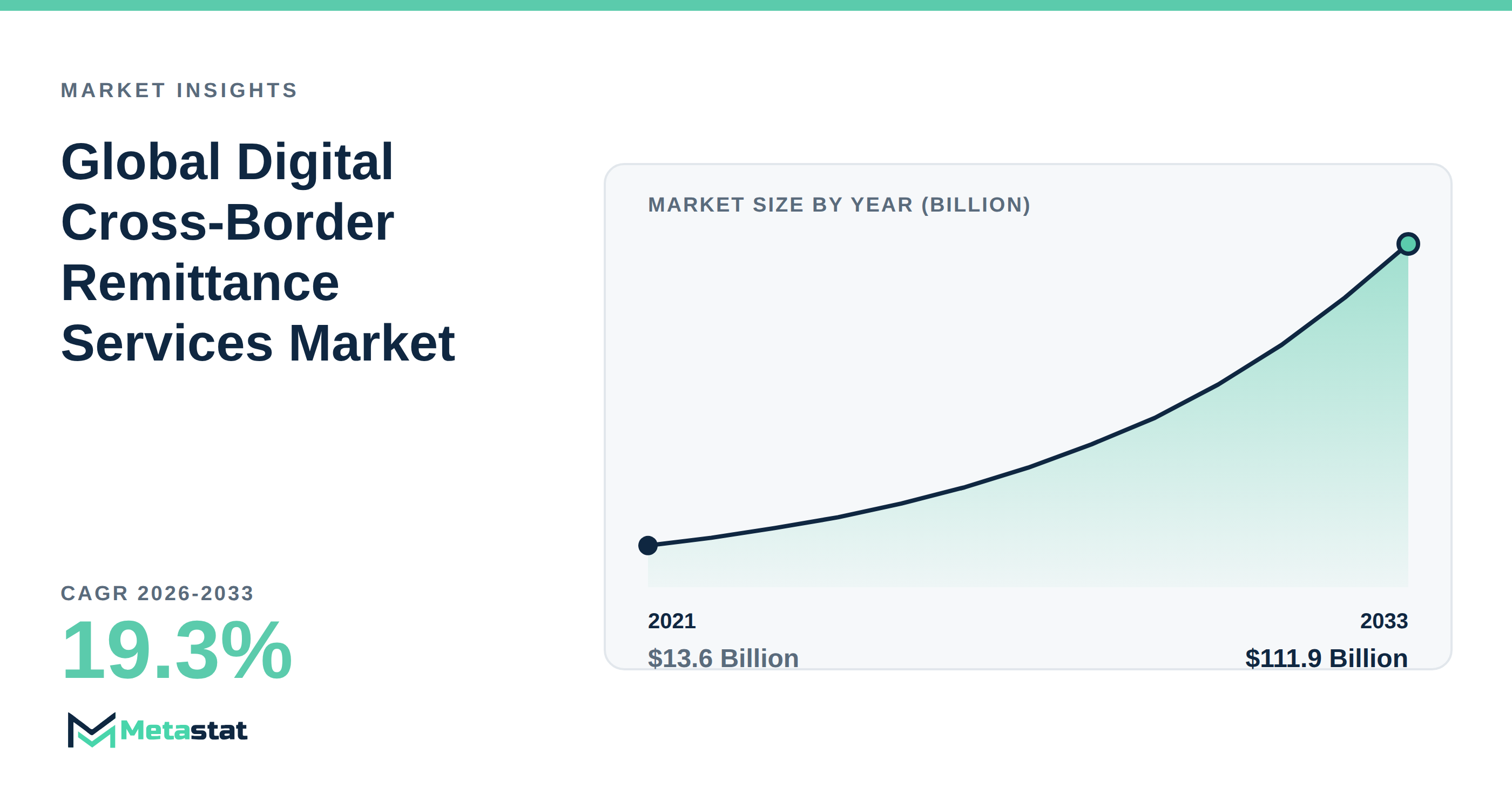
In conclusion, the competitive dynamics within the Digital Cross-Border Remittance Services market illustrate the varied strategies employed by key players. These approaches, influenced by technological innovation, regulatory compliance, and a focus on enhancing user experiences, all contribute to the market's expected growth to USD 111.9 billion by 2033.
The full analysis is in Global Digital Cross-Border Remittance Services Market.
Tags
About the Authors

LEAD ANALYST
Utkarsh Khirodkar is a Lead Market Research Analyst at MetaStat Insight, specializing in market intelligence, technology sector assessments, and competitive strategy.

PRINCIPAL CONSULTANT - ENTERPRISE AI & EMERGING TECHNOLOGIES
Banking & Finance · Electronics and Semiconductor · Energy and Power · Healthcare IT · Information & Technology · Professional Services
Vijay Gunti is a Principal Consultant at MetaStat Insight, bringing over two decades of experience across enterprise digital transformation, technology strategy, and intelligent systems.