
Explore the factors affecting Internet Services pricing and understand buyer leverage in this competitive landscape.
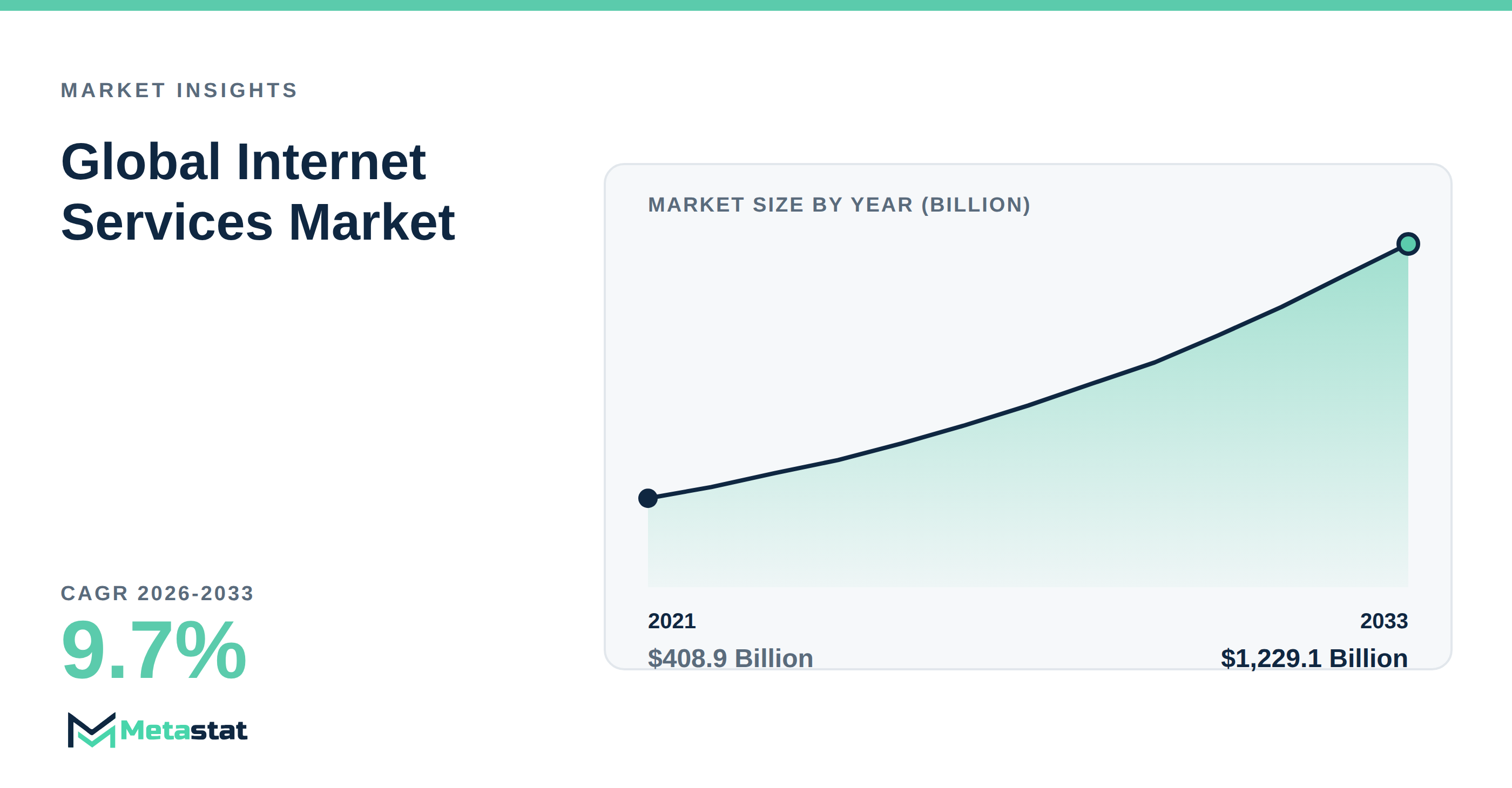
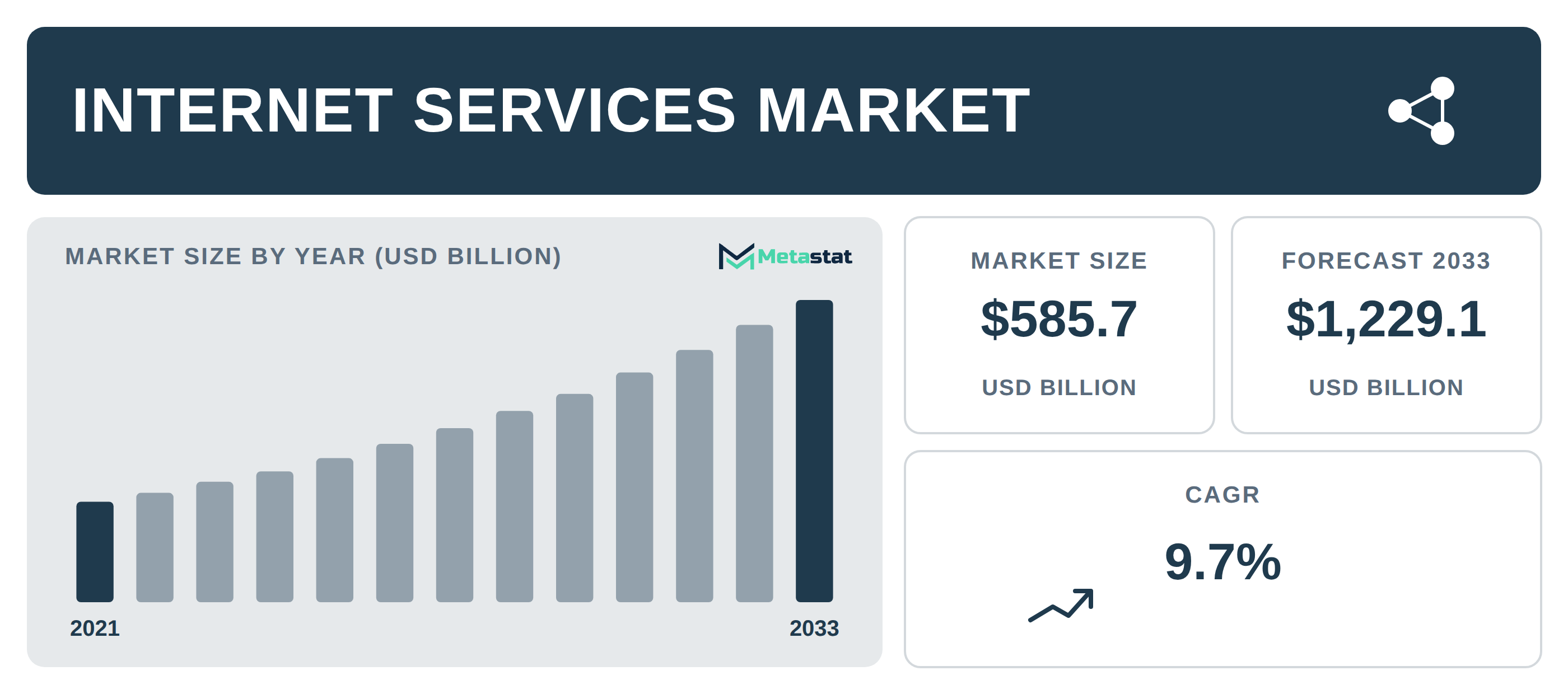
The cost structure for Internet Services is influenced by various factors that impact both buyers and providers. Understanding these elements helps buyers navigate their options effectively while maximizing their pricing strategies. The demand for reliable and high-speed connectivity continues to grow, making it essential for buyers to recognize these key factors that influence pricing in the market for Internet Services. The full figures are in our Internet Services market size and forecast report.
1. The Role of Fiber Optic Technology in Pricing
Fiber optic technology plays a crucial role in determining pricing within the Internet Services sector. Expected to increase from USD 236.9 billion in 2026 to reach USD 462.4 billion by 2033, fiber optic offers unmatched speed and reliability compared to other broadband options. Buyers who prioritize high-performance connectivity are often willing to pay a premium for fiber optic services, which results in elevated pricing for service providers. This trend underscores the growing demand for advanced connectivity solutions and the corresponding costs associated with delivering such services.
2. Managed Security Bundles Enhance Pricing Structures
Managed security bundles create strategic pricing opportunities for Internet Service Providers (ISPs). By integrating internet access with cybersecurity features, these offerings meet the rising demand for online protection, which justifies a higher price point. ISPs frequently utilize tiered pricing models, allowing customers to choose packages aligned with their specific needs. Such strategies not only improve the ISP's competitive positioning but increase the perceived value among consumers, ultimately influencing the overall pricing landscape.
3. The Impact of Guaranteed-Bandwidth Internet Access
Guaranteed-bandwidth internet access significantly affects pricing in the market. Predicted to grow to USD 311.2 billion by 2033, this service is particularly attractive to businesses and governmental institutions requiring consistent connectivity. The enhanced performance associated with guaranteed bandwidth enables ISPs to charge a premium, reflecting the intrinsic value of reliability. Buyers who seek high-quality internet services often view these offerings as worthwhile investments, reinforcing the trend toward higher pricing and specialized service options.
4. Regional Variations Influence Costs
Regional differences contribute to notable variations in Internet Services pricing. For example, North America holds a substantial stake in the overall market, bolstered by extensive infrastructure investments. In contrast, South America and other emerging markets experience different pricing dynamics influenced by their unique infrastructure levels and competitive landscapes. Buyers consider these regional factors when evaluating service costs, including local demand, competition, and available technology, all of which play critical roles in shaping pricing strategies.
5. Talent Acquisition Costs Affect Service Pricing
Challenges related to talent acquisition and retention directly impact the pricing strategies of ISPs. While demand for skilled labor in areas including network management and cybersecurity rises, labor costs become a significant factor. Providers facing increased operational expenses often pass these costs on to consumers, resulting in higher service prices. Buyers looking for competitive pricing should assess ISPs’ approaches to talent management and cost control, as these factors significantly influence overall pricing.
6. Customer Type and Adaptation to Pricing Models
Different customer types, including residential, business, and government users, exhibit distinct purchasing behaviors that significantly affect pricing structures. For example, residential customers prioritize affordability and basic service levels, while businesses often require higher-performance solutions and are willing to invest more. This differentiation leads ISPs to tailor their pricing strategies according to the needs of various customer segments. Understanding these dynamics allows buyers to identify where they have leverage in negotiations, enabling them to optimize their internet service expenditures.
Recognizing these key factors helps buyers make informed decisions in selecting Internet Services. By understanding the elements that shape pricing, buyers explore negotiation opportunities and ultimately achieve better outcomes in their internet service expenditures.
Tags
About the Authors

LEAD ANALYST
Utkarsh Khirodkar is a Lead Market Research Analyst at MetaStat Insight, specializing in market intelligence, technology sector assessments, and competitive strategy.

PRINCIPAL CONSULTANT - ENTERPRISE AI & EMERGING TECHNOLOGIES
Banking & Finance · Electronics and Semiconductor · Energy and Power · Healthcare IT · Information & Technology · Professional Services
Vijay Gunti is a Principal Consultant at MetaStat Insight, bringing over two decades of experience across enterprise digital transformation, technology strategy, and intelligent systems.

LEAD CONSULTANT - COMMUNICATION, TELECOM, AND IT
Electronics and Semiconductor · Information & Technology · Machinery & Equipment · Professional Services
Ravindra Sathe Consultants for Communication, Telecom, and IT at MetaStat Insight. He leads the firm's industry research initiatives across telecommunications infrastructure, digital connectivity, enterprise networking, and emerging information technology domains.