
Explore the key factors influencing the Europe AI Translation market, including technological advancements and market challenges.
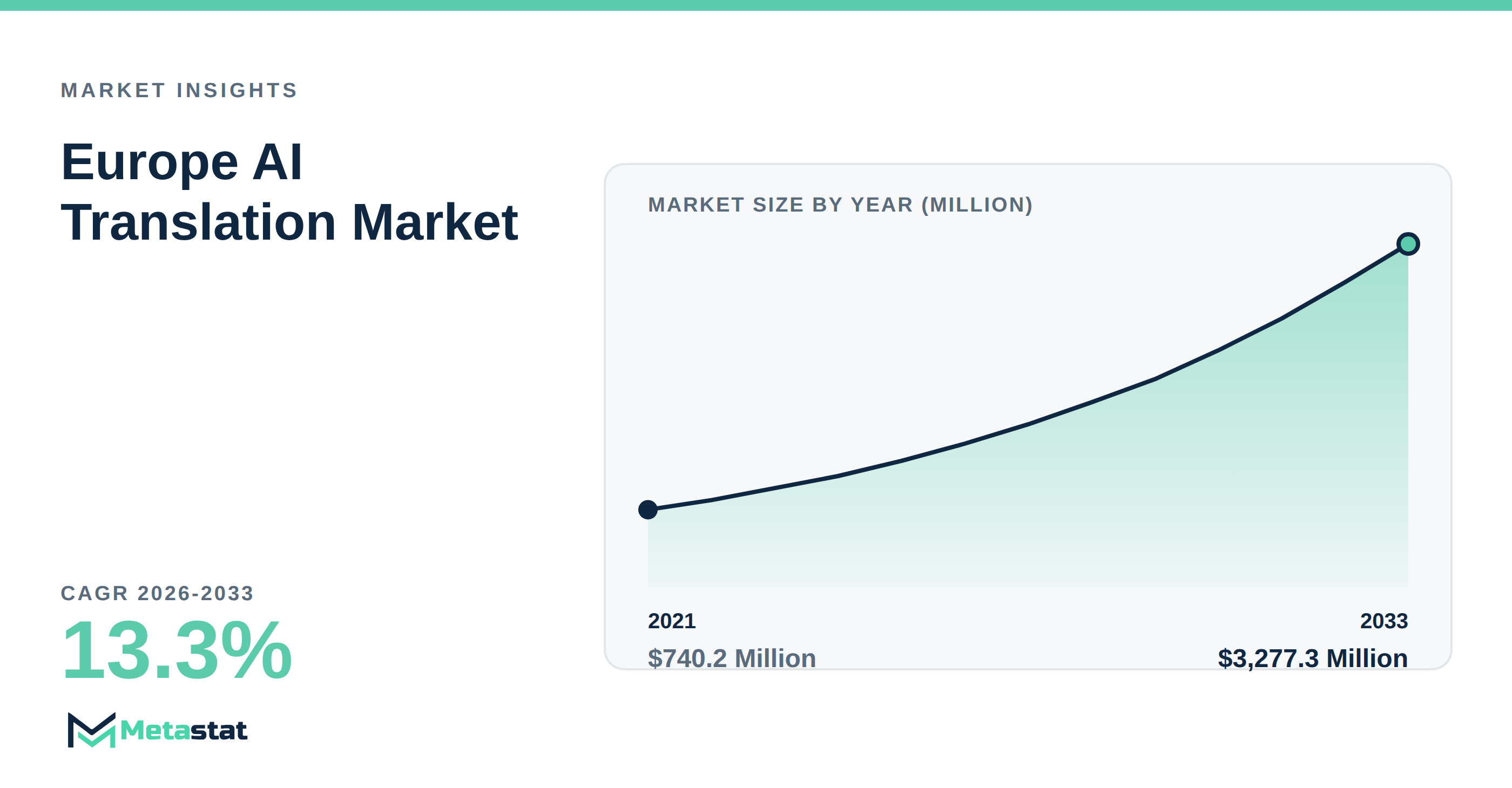
The Europe AI Translation market is undergoing transformative changes, driven by advancing technologies, shifting consumer preferences, and economic conditions. Understanding these dynamics is essential for businesses looking to navigate this evolving landscape. This article highlights six critical factors reshaping the Europe AI Translation market.
1. Growing demand for digital transformation initiatives
Digital transformation initiatives play a pivotal role in propelling the Europe AI Translation market. Organizations increasingly focus on integrating artificial intelligence and machine learning to streamline operations and enhance overall efficiency. This shift is propelled by evolving consumer behaviors that necessitate effective multilingual communication. Businesses that adopt AI translation technologies often experience significant improvements in productivity and cost efficiencies, positively impacting their bottom lines.
2. Expanding neural machine translation technology
Neural Machine Translation (NMT) is projected to continue its dominance in the market. Expected to grow from USD 524 million in 2026 to USD 1,012.7 million by 2033, this segment demonstrates a robust CAGR of 9.9%. The technology's capacity for high accuracy and efficiency in translation tasks drives its adoption across industries including IT, telecommunications, and healthcare. The growing demand for accurate multilingual communication further accelerates the adoption of NMT solutions.
3. Rapid advancement of large language models
The Large Language Model (LLM)-Based Translation segment is anticipated to experience substantial growth, reaching USD 1,128.4 million by 2033 with a remarkable CAGR of 17.4%. Enhanced context understanding and improved translation quality from LLMs attract organizations across diverse sectors. Businesses increasingly appreciate the importance of high-quality translations that significantly impact their global operations, driving up the demand for these advanced solutions.
4. Challenges posed by high capital investment requirements
High capital investment costs present a notable restraint in the Europe AI Translation market. The financial burden associated with deploying advanced AI technologies often deters smaller companies from entering the space, leading to market fragmentation. Rising operating expenses and geopolitical instability add further complexity to the financial landscape, hindering investment flows and creating challenges for existing players.
5. Geopolitical fragmentation's effect on market dynamics
Geopolitical fragmentation across Europe introduces significant operational challenges for AI translation providers. Companies navigate varying regulatory environments that increase operational costs and slow technology integration. Trade deficits and tariff issues add additional hurdles, restricting profitability and complicating capital allocation decisions. Addressing these geopolitical challenges will be crucial for companies aiming to achieve sustained growth and improve their competitive positioning.
6. Opportunities driven by emerging technologies
Emerging technologies present significant opportunities within the Europe AI Translation market, enhancing translation capabilities across various industries. The integration of NMT and LLMs allows for more accurate, context-aware translations, aligning with the needs of businesses seeking effective communication. Ongoing investments in digital infrastructure enable companies to deploy these advanced technologies effectively, facilitating their global reach.
Recognizing and adapting to these six key forces is essential for stakeholders in the Europe AI Translation market. By understanding how these dynamics influence operational efficiencies and market positioning, businesses better meet the growing demand for multilingual communication solutions. For a more detailed analysis, refer to the Europe AI Translation Market report.
Tags
About the Authors

LEAD ANALYST
Utkarsh Khirodkar is a Lead Market Research Analyst at MetaStat Insight, specializing in market intelligence, technology sector assessments, and competitive strategy.

PRINCIPAL CONSULTANT - ENTERPRISE AI & EMERGING TECHNOLOGIES
Banking & Finance · Electronics and Semiconductor · Energy and Power · Healthcare IT · Information & Technology · Professional Services
Vijay Gunti is a Principal Consultant at MetaStat Insight, bringing over two decades of experience across enterprise digital transformation, technology strategy, and intelligent systems.

LEAD CONSULTANT - COMMUNICATION, TELECOM, AND IT
Electronics and Semiconductor · Information & Technology · Machinery & Equipment · Professional Services
Ravindra Sathe Consultants for Communication, Telecom, and IT at MetaStat Insight. He leads the firm's industry research initiatives across telecommunications infrastructure, digital connectivity, enterprise networking, and emerging information technology domains.