
The Malaysia & Singapore Frozen French Fries market is evolving rapidly, driven by changing consumer preferences and market dynamics. Explore these six key forces influencing this growth.
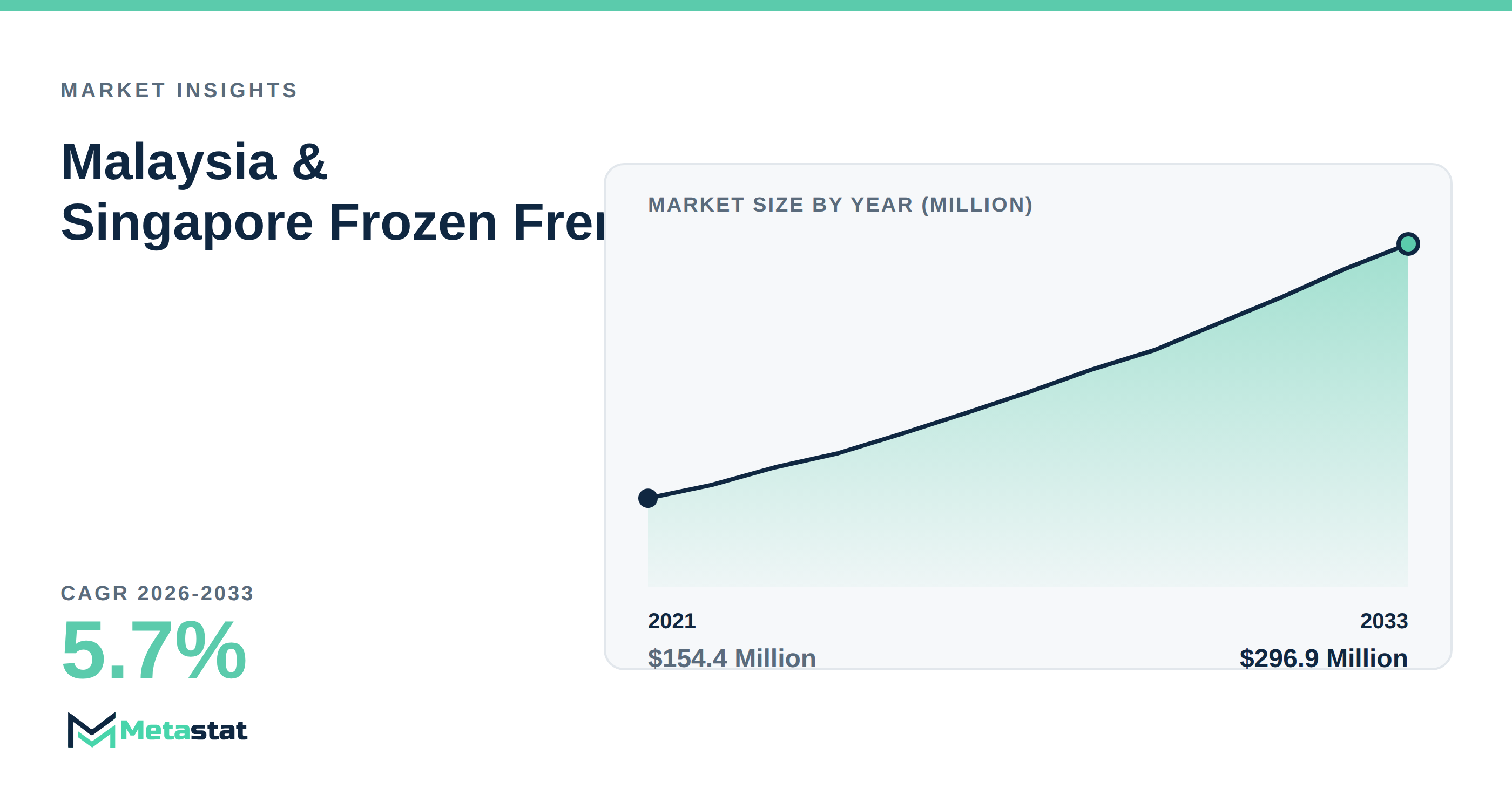
The Malaysia & Singapore Frozen French Fries market is projected to increase significantly, expanding from USD 190.5 million in 2025 to USD 296.9 million by 2033. This growth is attributed to various factors, including evolving consumer preferences and market dynamics that businesses actively navigate.
1. Rising Demand for Convenience Foods
Changing consumer lifestyles lead to an increased appetite for convenient meal choices. Urban living and busy schedules drive customers toward ready-to-eat options, influencing purchasing decisions. Quick-service restaurants are responding by expanding their frozen fry selections, making them a standard offering. The convenience trend particularly appeals to younger demographics, establishing frozen French fries because a staple in numerous dining venues.
2. Significant Growth in Quick-Service Restaurants
The quick-service restaurant segment is anticipated to expand from USD 79.7 million in 2026 to USD 122 million by 2033. The growing demand for quick meal solutions heavily influences the need for frozen French fries within these establishments. In response, restaurants are diversifying their menus to feature various fry options, which attracts a wider customer base. This strategic adjustment enhances operational effectiveness and customer satisfaction, positioning quick-service restaurants for continued market growth.
3. Regulatory Compliance Challenges
Manufacturers in the Malaysia & Singapore Frozen French Fries market face considerable challenges due to evolving regulatory frameworks. Increased vigilance regarding food safety and quality standards requires substantial investments in compliance measures. This situation poses particular difficulties for small and medium-sized enterprises that lack the financial resources to adapt swiftly. Navigating these challenges is essential for ensuring product safety and maintaining a competitive edge.
4. Impact of Geopolitical Factors on Supply Chains
Geopolitical factors significantly affect supply chains in the frozen French fries sector. Trade disputes and tariff complications disrupt ingredient availability and influence cost structures, resulting in uncertainties for producers. These aspects contribute to margin pressures, because companies manage pricing fluctuations. Developing flexible and resilient supply chains is critical to mitigating disruptions and maintaining product availability.
5. Technological Advancements in Food Production
Innovative technologies play a critical role in enhancing the food production process, improving the quality and shelf life of frozen French fries. Advanced food processing techniques enable manufacturers to preserve flavor and texture, appealing to health-conscious consumers. Enhanced freezing methods help companies optimize operations, allowing them to better satisfy market demands. While competition intensifies, embracing technological innovations remains vital for brands looking to enhance their market share.
6. Evolving Consumer Preferences Towards Innovation
Consumers increasingly pursue unique and innovative culinary experiences, thereby driving demand for specialty and gourmet fries. The emergence of fast-casual dining has introduced new fry varieties that cater to changing taste preferences. This landscape encourages manufacturers to explore diverse product offerings, thereby enhancing appeal among millennials and Gen Z. By investing in product diversification and flavor enhancements, brands capture attention among discerning consumers and significantly stimulate market growth.
These dynamics collectively illustrate the forces reshaping the Malaysia & Singapore Frozen French Fries market. Stakeholders remain agile to adapt to these trends and capitalize on the emerging opportunities.
The full analysis is in Malaysia & Singapore Frozen French Fries Market.
Tags