
Discover the trends impacting Residential Proxy Server solutions, including the rise of rotating proxies and evolving buyer demands.
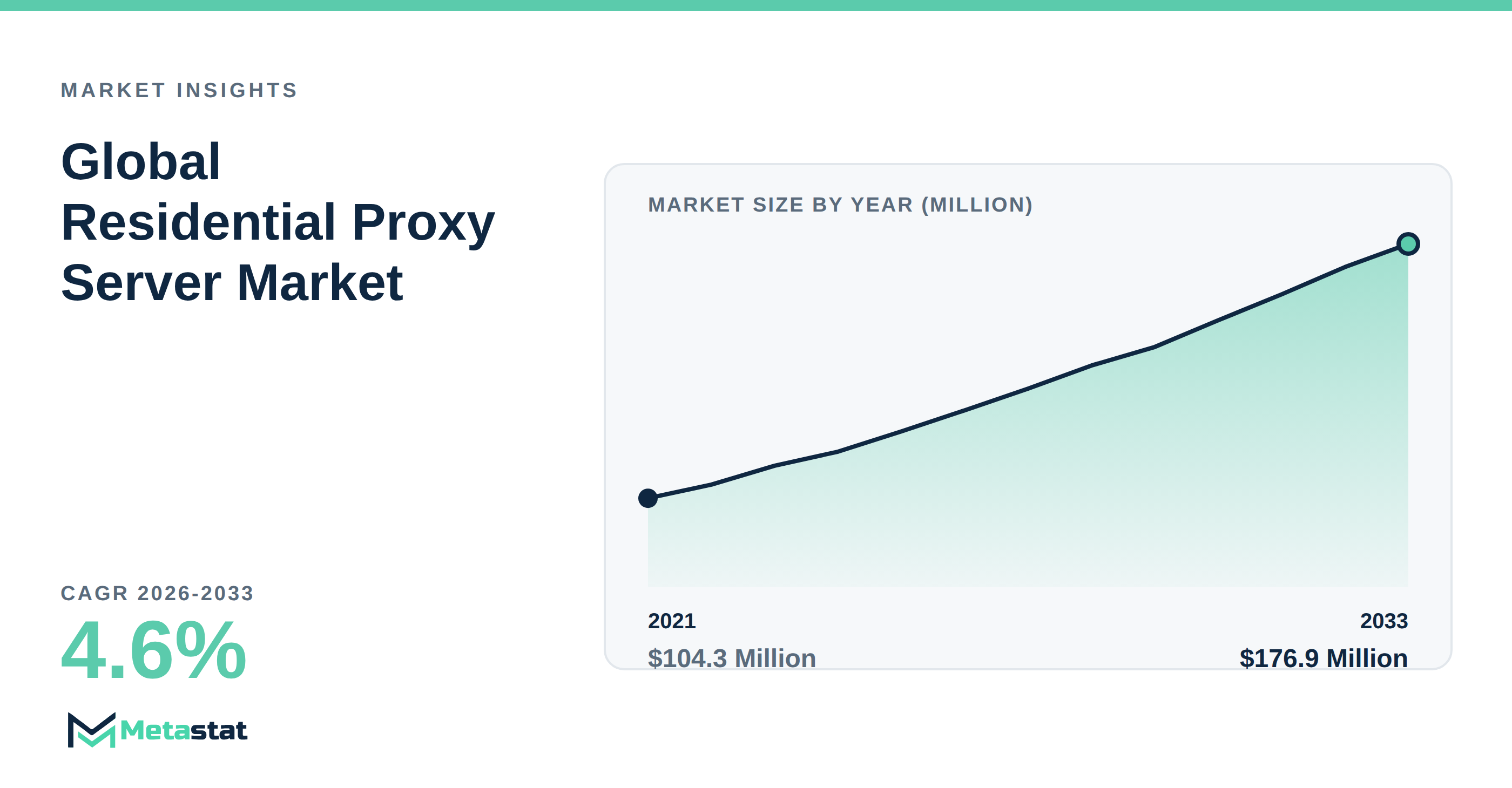
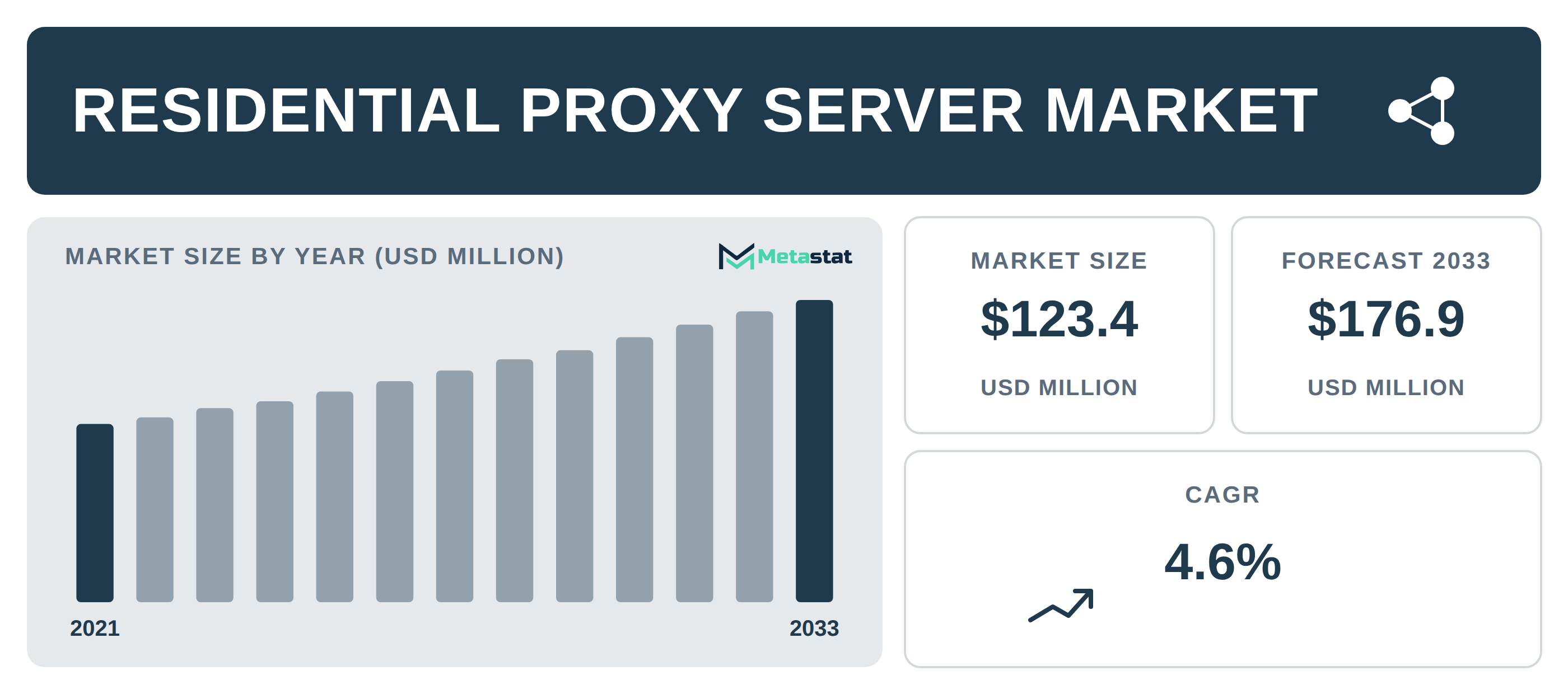
Organizations are rapidly adopting Residential Proxy Servers to enhance their data acquisition strategies. While the demand for sophisticated data collection tools rises, several critical trends are reshaping the landscape. These trends reflect the evolving needs of businesses and the increasing reliance on proxy solutions to gain competitive insights. For an in-depth analysis, consult the Residential Proxy Server market size and forecast report.
1. Rising Demand for Rotating Residential Proxies
Rotating residential proxies have emerged as a preferred choice for enterprises engaged in extensive data collection. Their ability to frequently change IP addresses minimizes detection risks, leading to a more efficient web scraping process. This trend is particularly significant for organizations involved in e-commerce and competitive analysis. With projections indicating growth in this segment from approximately USD 94.7 million in just a few years to about USD 133.9 million by 2033, businesses expect to enhance their data integrity and overall success rates in data gathering.
2. Shift Towards Static ISP Proxies for Compliance
Static ISP proxies are gaining traction among companies focused on compliance-sensitive operations, including account management and fraud detection. These proxies provide stable IP addresses necessary for maintaining reliable sessions and avoiding detection. The anticipated growth of static residential proxies to USD 43.0 million by 2033 highlights a strategic shift among buyers willing to invest in persistence and reliability for sensitive applications, which supports organizations in regulatory compliance efforts.
3. Increased Focus on Price Intelligence and Ad Verification
Digital marketing and e-commerce firms are expanding their use of residential proxies for applications like price intelligence and ad verification. With projections indicating a surge from around USD 41.8 million in 2026 to approximately USD 61.8 million by 2033 for web scraping, buyers are establishing more sophisticated data-gathering practices. This transformation allows retailers to automate pricing strategies effectively and confirm the integrity of digital advertising campaigns across various markets.
4. Enhanced Security Needs Boosting Cybersecurity Applications
Growing threats in cybersecurity are driving organizations to adopt residential proxies for security testing and fraud prevention. By leveraging proxies, businesses simulate real user behavior and bypass anti-bot mechanisms to conduct thorough vulnerability assessments. This shift not only supports risk mitigation efforts but reflects an increasing recognition of the importance of robust cybersecurity measures in today’s digital landscape.
5. Automation Fuels SOCKS5 Proxy Adoption
The rise of automation in data-driven operations is propelling the demand for SOCKS5 proxies. These proxies offer compatibility with various traffic types and applications, making them ideal for IT and software sectors that require flexibility for advanced tasks, including multi-session account management. The projected rise of SOCKS5 proxies to USD 65.3 million by 2033 illustrates a growing preference for solutions that accommodate diverse applications beyond standard web browsing.
6. Bandwidth Costs Impacting Supplier Strategies
Providers of residential proxies are facing challenges due to escalating bandwidth costs, which affect profitability. While demand for high-throughput connections increases, suppliers are reevaluating pricing structures, often implementing tiered plans to stabilize revenues. This adjustment allows suppliers to maintain competitiveness while addressing the needs of enterprises seeking reliable data access without incurring excessive costs.
These trends collectively signify a significant phase for the market for Residential Proxy Server solutions. As businesses adapt to the demands for sophisticated data acquisition methods and enhanced security, understanding these trends is essential for staying competitive in an increasingly complex digital ecosystem.
Tags
About the Authors

LEAD ANALYST
Utkarsh Khirodkar is a Lead Market Research Analyst at MetaStat Insight, specializing in market intelligence, technology sector assessments, and competitive strategy.

PRINCIPAL CONSULTANT - ENTERPRISE AI & EMERGING TECHNOLOGIES
Banking & Finance · Electronics and Semiconductor · Energy and Power · Healthcare IT · Information & Technology · Professional Services
Vijay Gunti is a Principal Consultant at MetaStat Insight, bringing over two decades of experience across enterprise digital transformation, technology strategy, and intelligent systems.

LEAD CONSULTANT - COMMUNICATION, TELECOM, AND IT
Electronics and Semiconductor · Information & Technology · Machinery & Equipment · Professional Services
Ravindra Sathe Consultants for Communication, Telecom, and IT at MetaStat Insight. He leads the firm's industry research initiatives across telecommunications infrastructure, digital connectivity, enterprise networking, and emerging information technology domains.