
LEAD ANALYST
Utkarsh Khirodkar is a Lead Market Research Analyst at MetaStat Insight, specializing in market intelligence, technology sector assessments, and competitive strategy.

Global Residential Proxy Server Market Size, Share, by Proxy Type (Rotating Residential Proxies and Static Residential (ISP) Proxies), by Protocol (HTTP/HTTPS Proxies, SOCKS5 Proxies and UDP/QUIC Proxies), by Application (Web Scraping & Public Data Collection, Price Monitoring & Competitive Intelligence, Ad Verification, SEO & SERP Monitoring, Brand Protection & Intellectual Property Monitoring, Travel Fare & Availability Aggregation, Social Media & Account Management and Others (Cybersecurity Testing, Content Access Verification)), by End-Use Industry (Retail & E-Commerce, Advertising & Digital Marketing, IT, Software & Data Services, Travel & Hospitality, Financial Services, Cybersecurity & Fraud Intelligence, Media & Entertainment, Telecommunications, Market Research & Business Intelligence and Others (Gaming, Real Estate, Academic Research)), Industry Analysis, Growth, Trends, and Forecast, 2026-2033
Report ID
MSI-5441
Published
October, 2026
Pages
262 Pages
Format
Historical
Base year
Forecast
Forecast period
Report Details
Market Valuation: Valued at $123.4 Million in 2025, projected to reach $176.9 Million by 2033 at a 4.6% CAGR.
Dominant Segment: Rotating Residential Proxies lead the market, driven by strong demand for high-frequency, scalable data gathering and dynamic IP rotation that minimizes the risk of bans during web scraping and public data collection.
Geographic Lead: North America holds 35.0% of the market in 2025, with the US leading in 2026, due to high adoption in retail, digital advertising, and software sectors that require robust proxy solutions for data-driven strategies.
Fastest-Growing Protocol: SOCKS5 proxies are projected to reach USD 65.3 million by 2033, supported by a 5.4% CAGR, reflecting rising adoption in automation-driven applications and demand for protocol versatility.
Leading Application: Web Scraping & Public Data Collection is the fastest-growing application segment, projected to increase from USD 41.8 million in 2026 to USD 61.8 million by 2033, as enterprises seek uninterrupted, large-scale data aggregation.
What's Inside: The report provides segmentation by proxy type, protocol, application, and end-use industry, with detailed regional analysis, competitive landscape, and forecasts from 2026 to 2033.
Choose Your License
Global Residential Proxy Server Market
The global Residential Proxy Server market was valued at USD 123.4 million in 2025 and is projected to reach USD 176.9 million by 2033, growing at a CAGR of 4.6% over the forecast period.
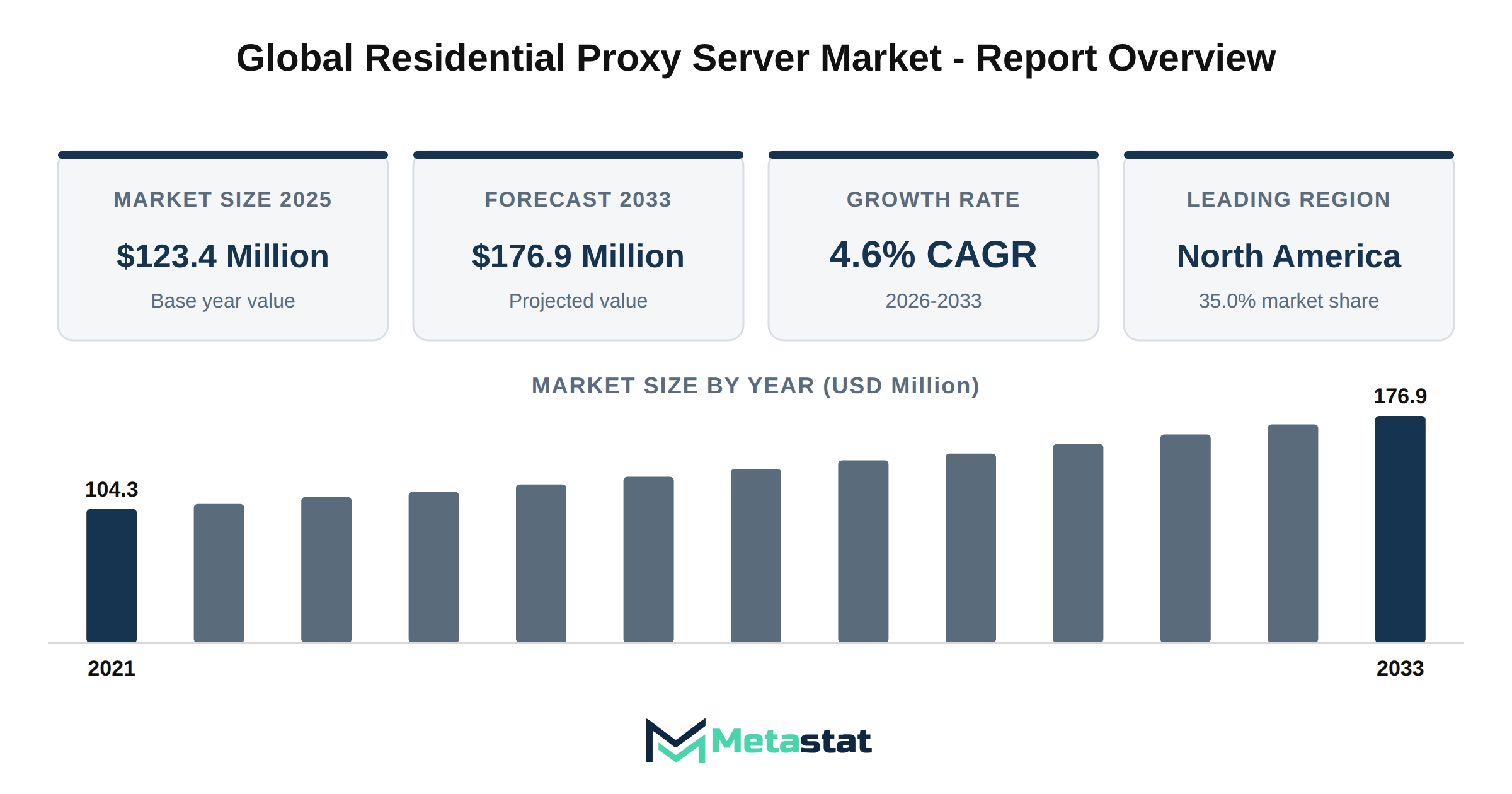
The Residential Proxy Server market covers software and services that enable users to route internet traffic through residential IP addresses, masking true locations and supporting use cases including web scraping, ad verification, and price monitoring. Businesses, particularly in e-commerce, digital marketing, and data analytics, invest in these solutions to access geo-restricted content, prevent detection by sophisticated anti-bot mechanisms, and gather competitive intelligence without triggering security blocks. The ability to appear indistinguishable from regular internet users rather than datacenter bots supports more reliable data collection and campaign validation, which drives buyer spending across these sectors. This infrastructure investment aligns with broader enterprise investments in digital transformation to automate data workflows and customer insights.
Rotating Residential Proxies account for the largest value segment, reflecting their appeal for high-frequency, scalable data gathering and dynamic IP rotation that reduces the risk of bans. In contrast, Static Residential (ISP) Proxies serve scenarios where persistent identity and uninterrupted access are required, though they represent a lower overall share. Buyers prioritize rotating proxies for web scraping and large-scale data projects that depend on uninterrupted, undetectable access to websites and public data sources.
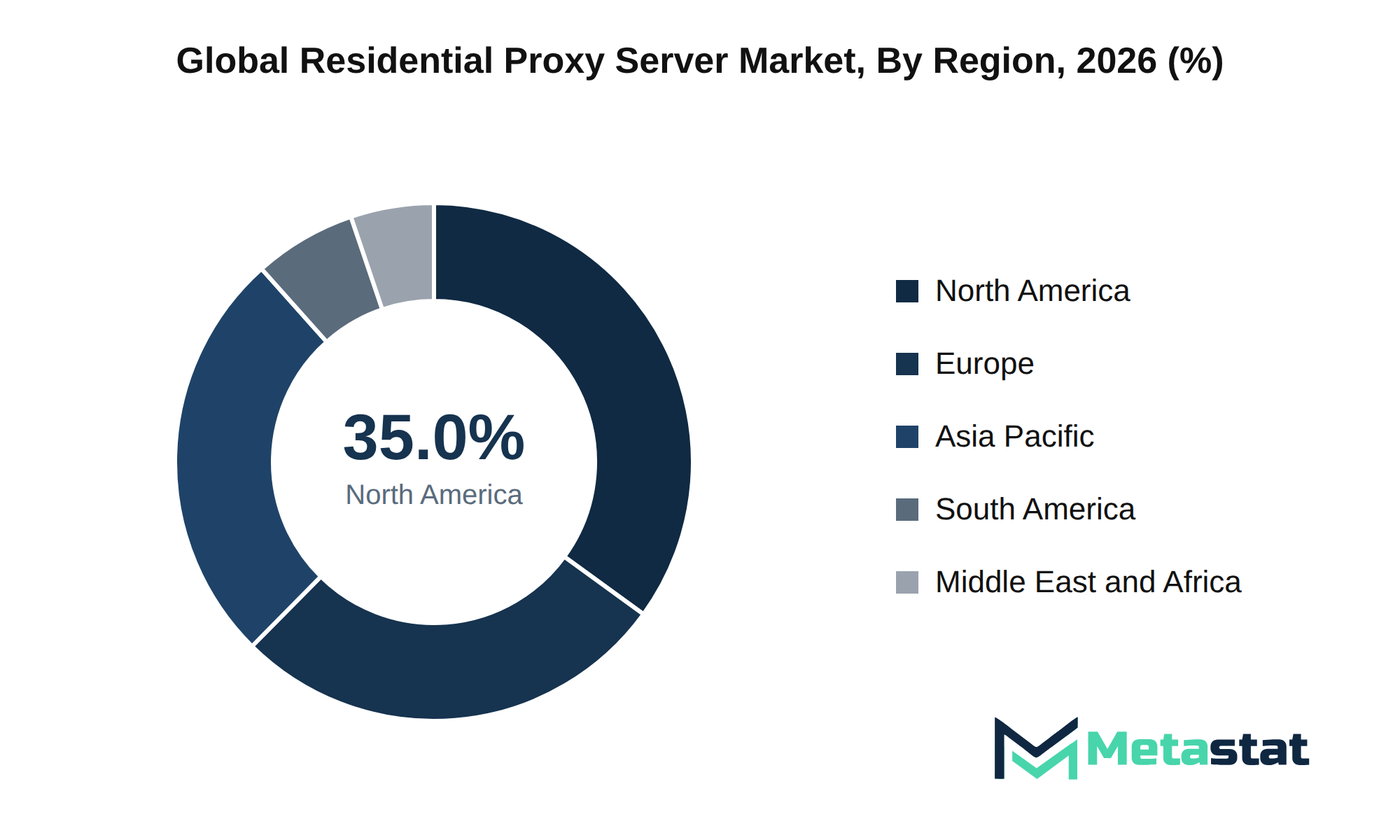
North America holds 35.0% of the market in 2025, with the US leading in 2026. This regional dominance results from high adoption in retail, digital advertising, and software sectors that demand robust proxy solutions to support data-driven strategies. The primary growth driver is the increasing reliance on automated data collection by enterprises seeking real-time big data analytics and market intelligence, which strengthens long-term demand for residential proxy services.
Buyers invest in residential proxy servers to support critical functions including web scraping, public data collection, price monitoring, and ad verification, where anonymity and access to geographically distributed IPs deliver competitive and operational advantages. Enterprises in retail, e-commerce, advertising, and IT services drive much of this demand, seeking to avoid detection and access online resources at scale. These proxies replace traditional datacenter proxies, offering higher success rates and reducing the risk of blocking when gathering market intelligence or monitoring digital assets. Furthermore, organizations managing extensive scraping operations increasingly back their risk exposure with cyber security insurance to mitigate potential data-handling liabilities. The resulting competitive intelligence frequently guides strategic decisions delivered through retail marketing consulting services.
Rotating residential proxies generate the highest value within the Residential Proxy Server market, reflecting the preference for solutions that regularly switch IP addresses to enhance privacy and reliability. This segment is preferred for large-scale, automated tasks that require stable access without triggering anti-bot defenses. Adoption concentrates among companies requiring high-frequency data access. Firms monitoring global pricing or conducting competitive analysis across multiple jurisdictions show the strongest uptake.
In North America, demand is shaped by the concentration of enterprises relying on automated data collection initiatives to inform commercial decisions. The surge in these activities increases the need for scalable, resilient proxy solutions that handle complex data workflows. Demand for these capabilities directly supports volume expansion.
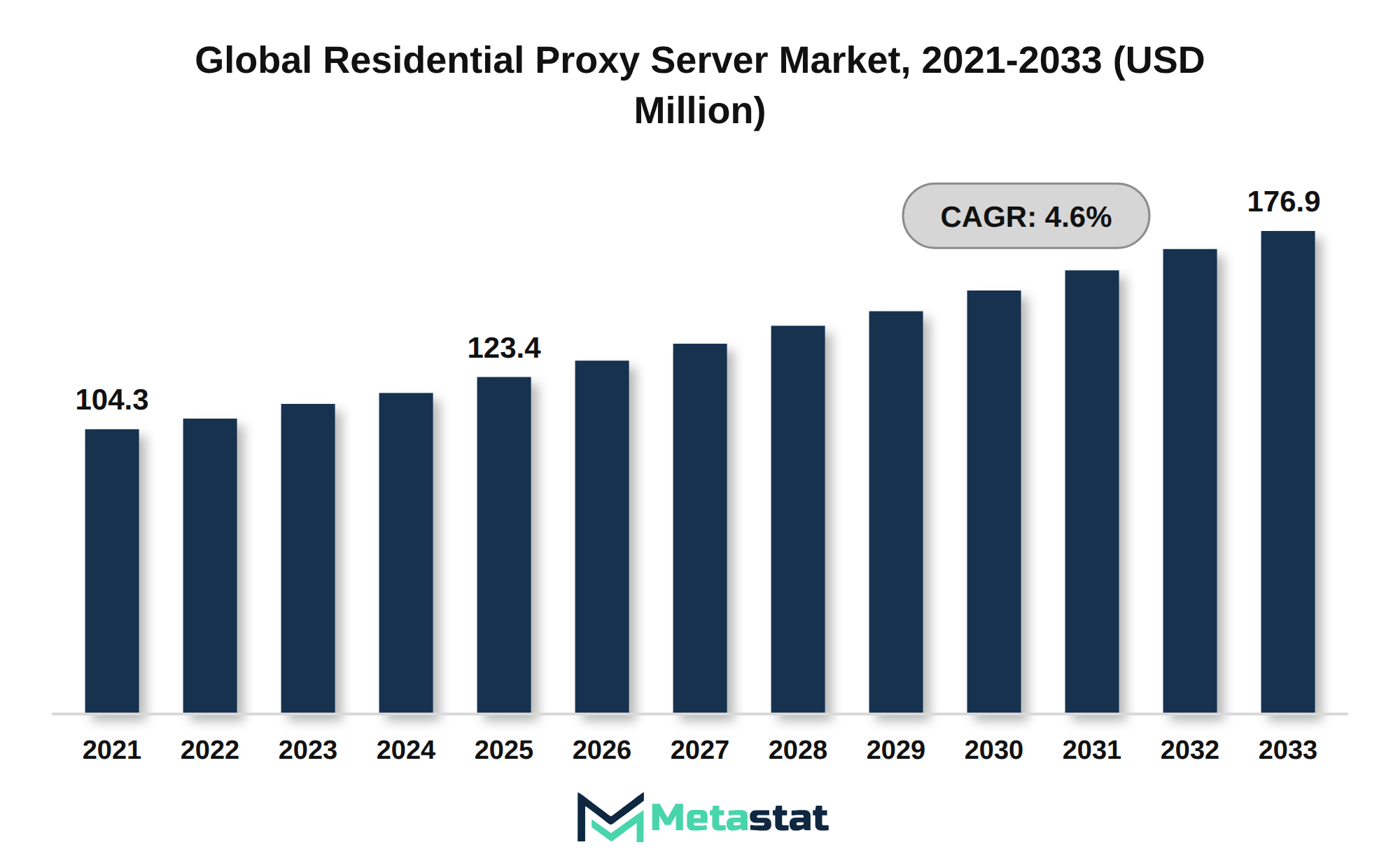
Rotating residential proxies are increasingly adopted for large-scale web data collection, reflecting a clear product shift in the Residential Proxy Server market. Enterprises engaged in data-driven operations now favor rotating residential proxies for their ability to frequently change IP addresses, improving the integrity and completeness of harvested datasets. This transition is particularly pronounced in sectors focused on web scraping and public data collection, where the success rate of automated data gathering relies on the ability to evade detection and bypass rate limits imposed by target websites.
The segment covering rotating residential proxies is projected to increase from USD 94.7 million in 2026 to USD 133.9 million by 2033, supported by a compound annual growth rate of 5.1%. This outpaces growth in static residential (ISP) proxies, which highlights a distinct demand for advanced rotation capabilities rather than consistent IP identification. Buyers in advertising technology, competitive intelligence, and e-commerce monitoring drive this preference, prioritizing access to accurate public data on a global scale without service disruptions or IP bans. This continuous data flow supports agencies delivering performance-driven marketing services across competitive digital channels.
Rising adoption of rotating residential proxies has influenced business models among providers in the market. Suppliers invest in more robust proxy pool management and automation tools, which raises the technical barrier to entry and incentivizes differentiation through network quality and reliability. Managing these distributed networks requires scalable operational infrastructure that integrates with modern cloud ITSM workflows. Buyers secure greater assurance of uninterrupted data flows and broader geographic coverage, enabling more ambitious and complex data collection initiatives.
Procurement patterns for static ISP proxies are shifting, with enterprises handling sensitive account management and fraud detection activities adopting longer-term, volume-based contracts and higher service expectations. Static ISP proxies offer persistent IP addresses sourced from ISPs, making them well suited to scenarios where account integrity, session reliability, and detection avoidance are critical, complementing enterprise fraud detection and prevention systems. Buyers in sectors including retail and e-commerce, advertising, and financial services prioritize suppliers that provide clear pricing tiers and dedicated support, particularly for fraud-sensitive applications where uninterrupted access and low churn rates are imperative.
Across the market, static ISP proxies are projected to reach USD 43.0 million by 2033, reflecting steady demand for these premium, persistent connections. Procurement teams frequently negotiate monthly or annual agreements, often involving custom IP pools and SLAs that guarantee uptime and response times. This approach differs from the more transactional, usage-based purchases common for rotating proxies, illustrating that buyers are investing more strategically for fraud-sensitive use cases. Suppliers respond by offering bundled pricing, account management services, and flexible contract durations that align with operational risk requirements. This shift in contract structure supports supplier differentiation and strengthens client relationships, particularly in sectors where regulatory scrutiny and reputational risk drive procurement decisions. Enterprise risk frameworks often align static IP infrastructure with privileged identity management policies to safeguard access credentials.
Buyers in digital marketing and e-commerce are expanding their use of residential proxies to drive more sophisticated applications in price intelligence, ad verification, and search engine results page (SERP) monitoring. Retailers and online brands pursue a competitive edge by automating the collection of real-time pricing and product data from a range of sources. In this context, residential proxies support uninterrupted web scraping and public data collection, shielding these activities from IP blocking and geolocation restrictions. Demand for Web Scraping & Public Data Collection applications is reflected in a projected segment growth from USD 41.8 million in 2026 to USD 61.8 million by 2033. This segment outpaces others due to the surge in price monitoring and competitive intelligence requirements across the rapidly expanding digital advertising ecosystem.
Ad verification teams rely on residential proxies to ensure campaign integrity, confirming that digital advertisements appear correctly across diverse geographies and are not subject to fraudulent activity. Agencies that track search rankings rely on residential proxies integrated with SEO optimization software to bypass rate limits and access localized SERP data. These specialized needs have driven proxy providers to enhance geographic diversity, protocol compatibility, and reliability within their offerings. The market experiences increased spending from organizations prioritizing digital transparency and competitive positioning. The commercial outcome includes higher recurring revenues for suppliers catering to these advanced buyer requirements and greater integration of proxy services into digital marketing technology stacks.
Enterprises are expanding their use of residential proxy servers to support scalable public web data access, especially for applications that require IP diversity and undetectable data collection methods. Retail and e-commerce businesses, digital marketing agencies, and IT service providers rely on residential proxies to collect competitive pricing intelligence, monitor online reputation, and verify advertisements without triggering anti-bot mechanisms. This approach leverages rotating residential proxies, which are forecast to achieve USD 133.9 million by 2033, outpacing static alternatives due to their ability to distribute requests across large pools of genuine residential IPs. Enterprises benefit from higher success rates, reduced risk of IP bans, and more accurate datasets, which directly influence decision-making in pricing, inventory planning, and marketing strategies.
This shift toward scalable public data access transforms operational agility for buyers in the market. By integrating these proxy infrastructures, organizations access real-time data at scale while maintaining compliance with platform restrictions and privacy standards. The market is increasingly defined by enterprise requirements for flexibility, automation, and reliable access to high-value web resources, which supports commercial growth and sustains competitive differentiation.
Organizations are adapting their data acquisition strategies to counter increasingly advanced anti-bot detection and content access restrictions. This development is prompting buyers to shift toward proxy solutions that blend higher IP diversity and more granular session control, supporting uninterrupted access to critical third-party web sources. In response to these evolving challenges, industries that depend on reliable public data flows for their operational models are increasing investment in residential proxies. Retail, e-commerce, and IT services providers are sourcing residential proxies not just for volume, but for their ability to bypass sophisticated detection and maintain compliance with data aggregation policies. Heightened demand for proxy sophistication has contributed to a CAGR of 4.6% from 2026 to 2033, accelerating revenue expansion and intensifying supplier competition in this segment. This trend is influencing both pricing strategies and service portfolios across the supplier base, with providers focusing on delivering adaptable and technically advanced offerings.
Small and mid-sized enterprises encounter a significant barrier in the Residential Proxy Server market due to premium pricing of advanced proxy solutions. This constraint influences adoption rates among cost-sensitive buyers in sectors including retail, advertising, and business intelligence. Larger organizations with established budgets secure long-term contracts for rotating and static residential proxies, while SMEs often delay procurement or restrict use to smaller-scale, lower-cost deployments. The result is slower volume growth from this segment, despite rising awareness of web scraping and competitive intelligence applications. With leading solutions in the Residential Proxy Server market frequently priced for high-throughput and premium geographic targeting, smaller organizations either postpone investment or remain reliant on basic alternatives, limiting overall demand expansion.
Providers operating in the Residential Proxy Server market contend with rising bandwidth expenses, which directly compress margins and reduce profitability. Residential proxies require high-throughput connections routed through legitimate user devices, driving up operational costs, especially during periods of peak demand or when supporting large-scale data tasks. Suppliers often manage these pressures by negotiating volume agreements with internet service providers and investing in more efficient load-balancing technologies. Surges in data-intensive applications, including web scraping and price monitoring, continue to increase aggregate bandwidth usage. Smaller suppliers in the Residential Proxy Server market face the greatest vulnerability, since they have less bargaining power and limited capital to absorb fluctuating input costs. In response, several providers are shifting toward more granular usage-based billing models and tiered plans in an attempt to stabilize revenue without deterring high-value enterprise buyers.
Rapid expansion in automation-driven applications is creating a distinct opportunity for SOCKS5 proxies within the Residential Proxy Server market. SOCKS5 proxies are projected to reach USD 65.3 million by 2033, supported by a 5.4% CAGR, the highest among protocol segments. This protocol stands out for its compatibility with advanced automation tools and support for diverse traffic types, including non-HTTP protocols and applications that demand flexible, low-level connectivity. Developers and data-driven organizations are increasingly selecting SOCKS5 proxies to power tasks including multi-session account management, high-frequency data retrieval, and secure remote desktop access, where robust anonymity and protocol versatility are critical. Providers who optimize their product portfolios to serve these automation-centric use cases address a fast-rising demand segment, expanding reach beyond web-centric data collection. Intensifying automation requirements, particularly among IT, software, and data service firms, are expected to reinforce SOCKS5’s growth trajectory through the forecast period.
The Global Residential Proxy Server market is segmented based on Proxy Type, Protocol, Application, and End-Use Industry.
This segment is relied upon by data-driven enterprises, particularly those engaged in retail, e-commerce, and digital intelligence operations. Rotating residential proxies serve functions where high IP diversity and persistent evasion of detection hold operational value - web scraping, price monitoring, and ad verification being frequent applications. Buyers in this segment prioritize continuous access and the ability to bypass evolving anti-bot measures, supporting their willingness to invest in premium rotational infrastructure. Compared to static residential (ISP) proxies, which are projected to reach USD 43 million by 2033 at a CAGR of 3.1%, rotating residential proxies deliver faster growth, reflecting stronger demand from sectors requiring dynamic, large-scale data extraction. The higher growth rate indicates that the market is responding to the expanding sophistication of online platforms and the accelerating pace of automation in data acquisition workflows.
Enterprises and organizations requiring persistent, stable IP addresses for regulated access and continuous authentication processes rely on static residential proxies to support account management, fraud detection, and compliance-driven applications. High-value buyers in banking, financial services, and large-scale retail typically prefer this segment over rotating residential proxies, valuing persistent identity for ongoing activities rather than rapid IP switching. In the market, static ISP proxies deliver a lower growth rate than rotating residential proxies, reflecting a CAGR of 3.1% against 5.1%, with demand concentrated on specialized, security-focused uses rather than bulk data acquisition or high-churn scraping. Adoption is shaped by regulatory demands and the higher price point attached to dedicated IP resources, with buyers accepting premium costs in exchange for reliability and compliance. This segment is differentiated by its alignment with compliance, risk mitigation, and enterprise-grade usage profiles.
Valued at USD 75.9 million in 2026 and projected to reach USD 98.8 million by 2033, HTTP/HTTPS Proxies are positioned as the principal protocol for mainstream web access, corporate browsing, and data-driven applications requiring compatibility with standard web traffic. Enterprises in sectors including retail, digital marketing, and IT favor HTTP/HTTPS Proxies for public data collection, price monitoring, and ad verification, due to their straightforward integration with widely used browsers and web clients. This segment’s projected CAGR of 3.8% through 2033 tracks a steady adoption curve but is slower than the 5.4% CAGR of SOCKS5 Proxies, indicating more mature demand. Pricing in the HTTP/HTTPS Proxies segment tends to be moderate, reflecting broad competition and established use cases in the market. The segment stands apart by offering high reliability for applications where HTTP and HTTPS compatibility is critical. Buyers seeking lower latency or advanced protocol support increasingly consider alternatives like SOCKS5, influencing competitive dynamics in the market.
SOCKS5 proxies operate at the protocol layer and route all types of traffic, including HTTP, HTTPS, and peer-to-peer. This capability makes them essential for industries prioritizing application flexibility and high anonymity. Sophisticated buyers in cybersecurity, digital marketing, and data aggregation rely on SOCKS5 for advanced scraping, content access, and management of geographically sensitive accounts. Rising adoption in scenarios demanding protocol versatility, including social media management and real-time data feeds, is driving segment revenue. Compared to HTTP/HTTPS proxies, which post a CAGR of 3.8%, SOCKS5 Proxies are advancing at a faster rate. This difference reflects the increasing market preference for solutions that support broader protocol compatibility and bypass restrictive firewalls. Enterprise users are shifting toward protocols that accommodate diverse web and application environments, which makes SOCKS5 essential for companies requiring robust functionality beyond standard web browsing. Regulatory neutrality and adaptability to emerging use cases further set SOCKS5 offerings apart in this segment.
UDP/QUIC Proxies segment is expected to reach USD 12.8 million by 2033. This protocol segment serves buyers who require high-speed, low-latency connections for real-time data interaction and streaming services, attracting demand from technology platforms and data-driven enterprises focused on minimizing delays. UDP/QUIC Proxies differ from HTTP/HTTPS and SOCKS5 options by offering connectionless transport and faster session establishment, meeting requirements for modern web applications and next-generation communication tools. In the market, the adoption of UDP/QUIC Proxies is propelled by the growing push toward scalable, resilient architectures capable of supporting interactive applications and rapid content delivery. However, its uptake trails behind SOCKS5 Proxies, which are forecast to reach USD 65.3 million by 2033, highlighting a more niche application scope for UDP/QUIC relative to the broader adoption of other protocols across this segment.
This segment serves organizations and data analytics providers that require high-volume, automated extraction of public information from e-commerce sites, social media platforms, and government databases. Growth is driven by the expanding need for continuous and large-scale data aggregation, particularly by technology companies, retail analytics firms, and institutions that rely on structured datasets for business intelligence or competitive benchmarking. Compared to Price Monitoring & Competitive Intelligence applications, which post a 5% CAGR to 2033, this segment stands out for its faster growth rate reflecting intensified digitalization and the escalating demand for real-time data. A key difference lies in the buyer profile: web scraping and public data collection applications are favored by specialized data service providers and research organizations seeking reliable IP diversity and stable connections, distinguishing them from segments where brand owners or digital marketers drive adoption. Increased regulatory scrutiny around data privacy and ethical scraping practices influences solution requirements and purchase decisions in this segment.
Price Monitoring & Competitive Intelligence segment is estimated to reach USD 30.8 million by 2033, at a CAGR of 5% during the forecast period. Retailers, e-commerce aggregators, and business intelligence providers drive adoption through tracking competitor pricing, promotions, and stock status in real time to optimize their own pricing strategies and marketing campaigns. This segment expands in response to organizations seeking improved responsiveness to market shifts and growing pressure for automated, scalable solutions that deliver granular competitor data. Compared to Ad Verification, which holds a lower forecast value of USD 20.3 million by 2033, Price Monitoring & Competitive Intelligence exhibits faster growth, reflecting heightened demand for analytics-driven decision making. The segment is favored by buyers requiring high-frequency, region-specific data extraction and benefits from the market's ability to bypass geo-blocking and pricing discrimination. With competitive intelligence increasingly central to digital commerce, the market sees heightened investment in technologies that deliver resilient, high-throughput connections for price monitoring at scale.
Ad Verification segment is expected to reach USD 20.3 million by 2033. This segment is adopted by digital advertising networks, agencies, and brand protection specialists to ensure that online advertisements display only on appropriate, legitimate websites and that ad spend aligns with campaign goals. Stringent requirements for detecting fraudulent impressions and combatting ad fraud drive the segment’s adoption, especially among agencies and enterprise advertisers focused on programmatic campaigns. In comparison, Ad Verification holds a lower 2033 value than Web Scraping & Public Data Collection, which is forecast at USD 61.8 million, reflecting narrower adoption across end users. The core value proposition for this segment centers on circumventing geo-blocks and device fingerprinting, which enables accurate monitoring of ad placements. While overall demand is expanding, Ad Verification advances on regulatory and reputational risk, rather than raw data volume, setting it apart from higher-growth applications like competitive intelligence or large-scale data collection.
SEO & SERP Monitoring segment is projected to grow at a CAGR of 3.7% during the forecast period. This segment serves digital marketing teams, SEO agencies, and data analytics providers focused on tracking search engine rankings and competitive positioning across regions. Accurate, real-time SERP data collection depends on residential proxies to evade search engine blocks and geo-restrictions, making this capability central for multinational campaigns. Demand in this segment responds to algorithm changes and the growing sophistication of search results personalization, which require reliable proxy infrastructure. Compared to Web Scraping & Public Data Collection, which reaches a CAGR of 5.7%, SEO & SERP Monitoring exhibits a slower growth trajectory in the Residential Proxy Server market, reflecting its more specialized use case and established buyer base. Price sensitivity is lower than in segments driven by bulk data extraction, since precision and consistency outweigh raw volume for several market participants. Regulatory scrutiny around automated search result access influences adoption patterns, creating a distinct compliance consideration in the Residential Proxy Server market.
Brand Protection & Intellectual Property Monitoring tasks involve automated detection and prevention of counterfeit goods, unauthorized brand usage, and online intellectual property infringement. The segment primarily attracts global brands, legal services providers, and specialist agencies tasked with defending product authenticity and monitoring digital marketplaces for violations. In the market, demand is driven by the growth of digital commerce and the diversification of online channels where brand abuse and IP theft occur. Buyers in this segment require high-fidelity residential proxies to mimic genuine user activity and bypass anti-bot filters that would otherwise prevent access to infringing content or seller details. Compared to Web Scraping & Public Data Collection, Brand Protection & Intellectual Property Monitoring projects typically involve fewer but more targeted queries, often placing a premium on reliability and reputation management rather than data volume. Regulatory scrutiny and evolving anti-fraud mandates further raise the profile of this segment, supporting adoption among multinational corporations and legal enforcement entities seeking to protect intangible assets across jurisdictions.
Aggregating travel fare and availability data requires solutions that bypass rate-limiting and location-based content restrictions imposed by airline, hotel, and travel aggregator platforms. Travel technology providers, online travel agencies, and price comparison websites use residential proxies to access authentic, location-specific fare information at scale, supporting real-time inventory and dynamic pricing models. In this market, this application stands out due to the stringent anti-scraping measures implemented by travel platforms, which make proxy IP diversity and reliability a priority for buyers. Compared to segments including Social Media & Account Management or Brand Protection & Intellectual Property Monitoring, travel aggregation workflows rely on higher session stability and granular geographic targeting. Demand in this segment is closely tied to shifts in global travel booking volumes and increasing competition among travel intermediaries, which raises the stakes for near-instant, accurate fare data. The market for residential proxies in fare aggregation rewards those suppliers capable of offering broad geo-distribution and adaptability to rotating blocking methodologies unique to the travel sector.
Managing multiple social media accounts at scale for marketing, brand engagement, or influencer outreach relies on dedicated proxy solutions that mask origin IP addresses and simulate authentic user activity. Agencies and social media professionals adopt these services to automate tasks, manage content scheduling, and circumvent platform-imposed limitations on account creation or posting frequency. In the Residential Proxy Server market, this sub-segment addresses the heightened scrutiny from social networks, which deploy strict anti-bot mechanisms and block repetitive activity originating from commercial IP ranges. Providers respond by offering solutions tailored for account management workflows, often supporting integration with scheduling tools and automation software. Compared to segments like Web Scraping & Public Data Collection, buyers in this sub-segment place greater emphasis on session persistence and IP reputation to avoid account lockouts and bans. Pricing tends to reflect the premium for higher anonymity and stability, resulting in a distinct user base shaped around agencies, digital consultants, and enterprises with active, multi-platform engagement strategies. Demand in this area is influenced by evolving anti-fraud policies on major platforms, which drive continuous updates in proxy routing and authentication features across the Residential Proxy Server market.
Security-focused buyers turn to residential proxies for cybersecurity testing and content access verification when traditional data center proxies are blocked or flagged. Cybersecurity professionals, QA teams, and digital rights auditors use these proxies to validate firewall rules, test geo-restriction mechanisms, and assess vulnerability to location-based attacks. Enterprises seeking to simulate real-world user behavior, bypass location and device filters, and ensure robust application security across regions drive adoption in this segment. Deployment patterns for cybersecurity testing differ from web scraping or ad verification, with episodic, project-driven usage rather than continuous or large-scale automation. Versatility and authenticity take priority over transaction volume, resulting in differentiated pricing models. Many organizations manage proxy consumption tightly to align with audit and compliance budgets, which increases cost sensitivity. This distinction shapes price elasticity and buyer loyalty. Innovations supporting advanced traffic masking and multi-region identity rotation distinguish suppliers in this segment.
Valued at USD 27.4 million in 2026 and projected to reach USD 39.4 million by 2033, this segment stands out with a CAGR of 5.4%, the fastest among end-use industries measured by available data. Demand accelerates while retail and e-commerce firms automate competitive price tracking, monitor product listings, and circumvent geo-blocking for global inventory insights. These buyers require residential proxy servers to mimic genuine consumer behavior, reducing the risk of detection or blocking by target platforms. Compared to sectors like Advertising & Digital Marketing, which is projected to reach USD 28.6 million by 2033 at a CAGR of 4.8%, retail and e-commerce show stronger adoption, reflecting intense online competition. The expansion of omnichannel sales and marketplace aggregation drives higher volume purchasing and favors scalable proxy infrastructure. Providers respond to evolving use cases, including real-time price scraping and dynamic content access, which demand resilient, high-availability network resources. This segment’s rapid growth signals ongoing digital transformation among retailers.
Estimated to reach USD 28.6 million by 2033, this segment advances at a CAGR of 4.8% during the forecast period. Demand is driven by digital marketing agencies and advertising networks prioritizing genuine user engagement, audience verification, and fraud prevention across display and programmatic channels. These buyers rely on proxy infrastructure for campaign performance analytics, click fraud detection, ad viewability validation, and region-specific creative testing. Growth outpaces IT, Software & Data Services within the market, where the 4.8% CAGR exceeds the expansion rate of several peer industries. Advertisers intensify investment to pursue scalable, compliant access to localized web content and to bypass ad blockers or geo-restrictions without service interruptions. Compared with Retail & E-Commerce, the Advertising & Digital Marketing segment displays a distinct adoption profile - decisions are often determined by the validate real-user impressions rather than competitive price tracking. Product differentiation within this segment focuses on reliability, compliance, and the ability to manage unpredictable traffic spikes linked to real-time campaign launches.
IT, Software & Data Services segment is expected to reach USD 26.9 million by 2033. This segment draws demand from technology firms, cloud infrastructure providers, software vendors, and data science consultancies that depend on uninterrupted, geographically distributed access to public web data and digital assets. Buyers in this segment prioritize high session reliability and compatibility with automated workflows, integrating residential proxies into broader data tools and analytics stacks. Unlike the faster growing Retail & E-Commerce segment, IT, Software & Data Services segment advances at a moderate pace due to more saturated adoption among large-scale IT buyers and the technical expertise required for API integration without interruption. Barriers to wider uptake include higher complexity in configuration and greater scrutiny of data compliance, factors less present in segments including Retail & E-Commerce or Advertising & Digital Marketing. Specialized requirements in this segment drive providers to emphasize granular control, robust privacy standards, and technical support, shaping supplier competition. Increasing sophistication of anti-bot and fraud detection systems further supports demand for advanced, customizable proxy solutions tailored specifically for enterprise IT buyers seeking resilient access.
Projected to grow at a CAGR of 3.9% during the forecast period, travel and hospitality businesses adopt residential proxy solutions to support rate integrity monitoring, localization testing, and dynamic fare benchmarking. Online travel agencies, airlines, and hotel chains integrate these services to access geographically restricted content and validate price parity across multiple markets without detection or restriction by supplier or aggregator platforms. Compared to segments including retail and e-commerce, the travel and hospitality field advances at a more moderate pace, reflecting a focus on operational efficiency and regulatory compliance rather than high-frequency data extraction. Adoption of residential proxies in this industry is driven by the demand for reliable and undetectable access to competitive intelligence, while ensuring adherence to privacy rules and anti-fraud protocols. Increasing digitalization in travel bookings supports the use of these solutions, but the industry faces unique integration challenges related to evolving online distribution standards and content personalization, setting it apart from faster-growing verticals in the market.
Financial institutions deploy residential proxy servers to ensure secure, anonymous data collection for risk management, fraud detection, and regulatory compliance activities. Banks, insurance companies, and fintech firms rely on these solutions to conduct due diligence, monitor digital transactions, and validate customer identities without exposing internal IP addresses. Regulatory mandates and rising incidents of cyber fraud drive adoption in this segment. Reliable access to geolocated and untampered data directly impacts operational integrity. Compared to segments including Retail & E-Commerce or Advertising & Digital Marketing, buyers in financial services typically demand stricter privacy controls and higher service assurances, which increases solution complexity and price point. Financial sector clients differentiate themselves through the scale of sensitive workloads and the need for continuous, compliant data flows that withstand scrutiny from internal and external auditors. These unique requirements define the financial services segment as a distinct buyer group in the broader Residential Proxy Server market.
Cybersecurity & Fraud Intelligence buyers leverage proxy infrastructure for threat detection, fraud analytics, and simulation of diverse attack vectors. Security teams in financial services, e-commerce, and digital platforms rely on proxy services to perform stealthy penetration testing and evade detection by anti-bot systems, which cannot be achieved through traditional data center proxies alone. In this segment, demand rises due to persistent cyber threats and the need for accurate real-world testing environments, directly driving investment in high-reliability proxy solutions. Adoption patterns differ from segments like Retail & E-Commerce or Advertising & Digital Marketing, with a greater emphasis on advanced security features and anonymization. Cost sensitivity is balanced by the operational priority placed on risk mitigation and incident prevention. Unlike broader applications in web scraping or price monitoring, cybersecurity-focused use cases require more granular control over geographic routing and session management, making proxy services critical for organizations prioritizing robust fraud detection and network security.
Content streaming platforms, film distributors, and online broadcasters turn to advanced proxy networks to manage regional content distribution, enforce digital rights, and gather insight on audience preferences across geographic markets. In the media and entertainment segment, proxy solutions enable access to location-restricted content libraries for compliance monitoring and competitive benchmarking, supporting both studios and digital content aggregators. Demand in this segment is primarily driven by the growing complexity of licensing arrangements and dynamic content availability across regional platforms, which pushes buyers to prioritize flexible, scalable proxy infrastructure. Compared to segments including retail and e-commerce, buyers in media and entertainment exhibit a higher focus on bypassing geo-blocks and automating compliance verification, rather than bulk data collection or price scraping. The market benefits from this segment’s emphasis on consistent, undetectable traffic flows, which help protect streaming rights and enforce exclusivity agreements. Suppliers addressing the market for media and entertainment often tailor their solutions to blend authenticity with high session stability, differentiating them from offerings aimed at marketing, research, or cybersecurity buyers.
Telecommunications operators leverage residential proxy servers to support large-scale network testing, optimize content delivery, and validate location-based service performance. These organizations use proxy infrastructure to simulate user connections from diverse geographic points. This strengthens service quality monitoring and helps ensure compliance with local regulations. Demand in this segment is influenced by the continual expansion of next-generation mobile and broadband infrastructure, with telecoms competing on reliability and coverage. In contrast to segments including Retail & E-Commerce or Financial Services, buyers in telecommunications prioritize technical scalability and the ability to handle millions of requests. Cost-per-connection is less important. Adoption patterns reflect the high regulatory scrutiny applied to telecom traffic in several jurisdictions, which triggers a preference for providers equipped with robust compliance features. The segment stands apart for its emphasis on network resilience and regulatory alignment, rather than price sensitivity or consumer-focused use cases. Suppliers targeting this segment differentiate by offering advanced analytics, high-availability proxy pools, and custom integration support tailored to telecom network environments. Demand from telecommunications is structurally linked to ongoing innovation and regulatory adaptation among network operators.
Data-driven decision makers in market research and business intelligence frequently rely on residential proxy server capabilities to collect, analyze, and validate large-scale web-based information from distributed geographic sources. Enterprises in this segment use such infrastructure to power competitive benchmarking, trend forecasting, and consumer sentiment analysis by accessing public and semi-public data sources without triggering anti-bot mechanisms or geographic restrictions. Increasing demand for accurate, real-time data collection from multiple competitive domains pushes adoption of residential proxies, particularly from consulting firms, analytics platforms, and research divisions in large corporations. Compared with faster-growing segments like retail and e-commerce, market research and business intelligence buyers often emphasize reliability and breadth of data coverage over transaction speed or price sensitivity. The market addresses these requirements by offering diverse IP pools and session control features valued by professional data aggregators. Providers serving this segment differentiate offerings through compliance support, advanced targeting options, and integration with analytics toolchains, strengthening customer retention.
Gaming operators, real estate intelligence firms, and academic research teams use residential proxy servers to access geographically restricted data, simulate genuine user traffic, and circumvent anti-bot measures on websites that would otherwise limit automated activity. Demand in this segment responds to requirements for high-quality, location-specific data, supporting activities like multiplayer game server load testing, property market analytics, and large-scale academic studies that rely on unbiased, distributed web sampling. Buyers in these fields often prioritize coverage breadth and IP integrity over raw speed or concurrency, distinguishing their purchasing criteria from retail or advertising clients. Regulatory and ethical considerations stand out in academic deployments, where data privacy guidelines and institutional review standards drive careful evaluation of proxy solutions. Compared with faster growth segments like Retail & E-Commerce, adoption in the Others (Gaming, Real Estate, Academic Research) category depends more on specialised project cycles and funding availability, contributing to a distinct demand profile. While these end users deploy proxies for targeted, methodologically rigorous data collection, service providers encounter requirements that differ from volume-driven commercial buyers.
Based on geography, the Global Residential Proxy Server market is divided into North America, Europe, Asia-Pacific, South America, Middle East, and Africa.
Companies in the United States, Canada, and Mexico drive a significant portion of demand in the Residential Proxy Server market, reflecting the region's status as a central hub for digital commerce and data-driven business operations. Buyers in North America prioritize advanced proxy solutions to facilitate public data collection, online ad verification, and competitive price monitoring across large-scale e-commerce and digital advertising platforms. Strong investment in digital infrastructure and a highly developed online retail sector push organizations to maintain compliance with evolving privacy norms while enabling scalable data gathering that supports market intelligence and pricing strategies. The region's share stands at 35.00% of the global Residential Proxy Server market in 2025, with projected revenue reaching USD 58.1 million by 2033. High penetration of cloud-based services and the prevalence of sophisticated web automation contribute to increased adoption, with businesses seeking secure, reliable, and geographically diverse proxy networks to optimize online operations and sustain competitive advantage.
European demand for residential proxy solutions reflects both the complexity of digital regulatory frameworks and the sophistication of its enterprise user base. Companies across Germany, France, and the UK are driven by stricter compliance requirements and the imperative to localize content, which increases the operational costs of non-compliance and drives investment in high-quality proxy infrastructure. Retail, digital marketing, and data-driven service providers in this region face diverse language and jurisdictional content restrictions that differ from other markets, creating persistent demand for advanced proxy rotation and identity-masking capabilities. In 2025, Europe accounts for 27.4% of global value, highlighting its position in the core geography for solution providers targeting sectors where privacy, data localization, and adaptive content strategies converge. Buyers in Europe seek robust, compliant, and scalable solutions that align with evolving digital norms. Regional differences in privacy regulations and consumer protection influence both the pace and the nature of adoption in this region, resulting in varied requirements for proxy server deployment and service customization.
Rising digital adoption in China, India, and Southeast Asia drives distinctive patterns of demand within the Residential Proxy Server market. Enterprises across these countries intensify investment in proxy-based solutions to enable large-scale web-based data collection, reflecting the region’s substantial base of internet users and digital businesses. Price-sensitive buyers in Asia Pacific typically favor scalable, rotating proxy products that limit exposure to IP bans during web scraping and automation. Relatively low average operating costs for data infrastructure support competitive pricing, influencing the adoption trajectory in both emerging tech startups and established enterprises. With a 26.00% share of global revenue in 2025, Asia Pacific stands out for its rapid technology adoption and diverse application landscape. The region’s digital commerce expansion, combined with a strong presence of online service providers, strengthens the case for ongoing investment and pushes local suppliers to diversify their offerings and networks.
Brazil and Argentina stand out among primary demand centers within South America, reflecting the region's digital commerce expansion and the increasing sophistication of online business operations. Enterprises and data-driven service providers in these countries prioritize proxy server solutions for web data aggregation tasks, particularly in sectors exposed to dynamic pricing and regional restrictions. Growth in e-commerce and expanding fintech ecosystems drives further requirement for localized proxy solutions that enable secure, anonymous data collection. The region holds an established, yet still developing, role in shaping the adoption of proxy technologies. Regulatory frameworks remain comparatively less stringent, enabling flexible deployment models and supporting wider experimentation by digital marketing and analytics firms. These regional traits influence how proxy server providers tailor their offerings and pricing strategies for local buyers.
Saudi Arabia and the UAE demonstrate rising engagement with residential proxy solutions, reflecting increased adoption by technology-driven businesses and data-focused marketing agencies. In these Gulf markets, stringent controls on digital content and platform access create unique requirements for anonymous and scalable proxy infrastructure. South Africa presents a distinct growth profile driven by expanding e-commerce activity and heightened attention to digital authenticity in online marketplaces. Middle East and Africa stand out through a mix of demand from both emerging fintech and local retailers seeking to collect public web data securely. Regional buyers prioritize flexibility and compliance, pushing suppliers to offer solutions tailored to varying regulatory expectations. The combination of regulatory diversity and rapid digitalization across these economies supports steady uptake of residential proxy server offerings, particularly for data gathering, brand protection, and access management functions.
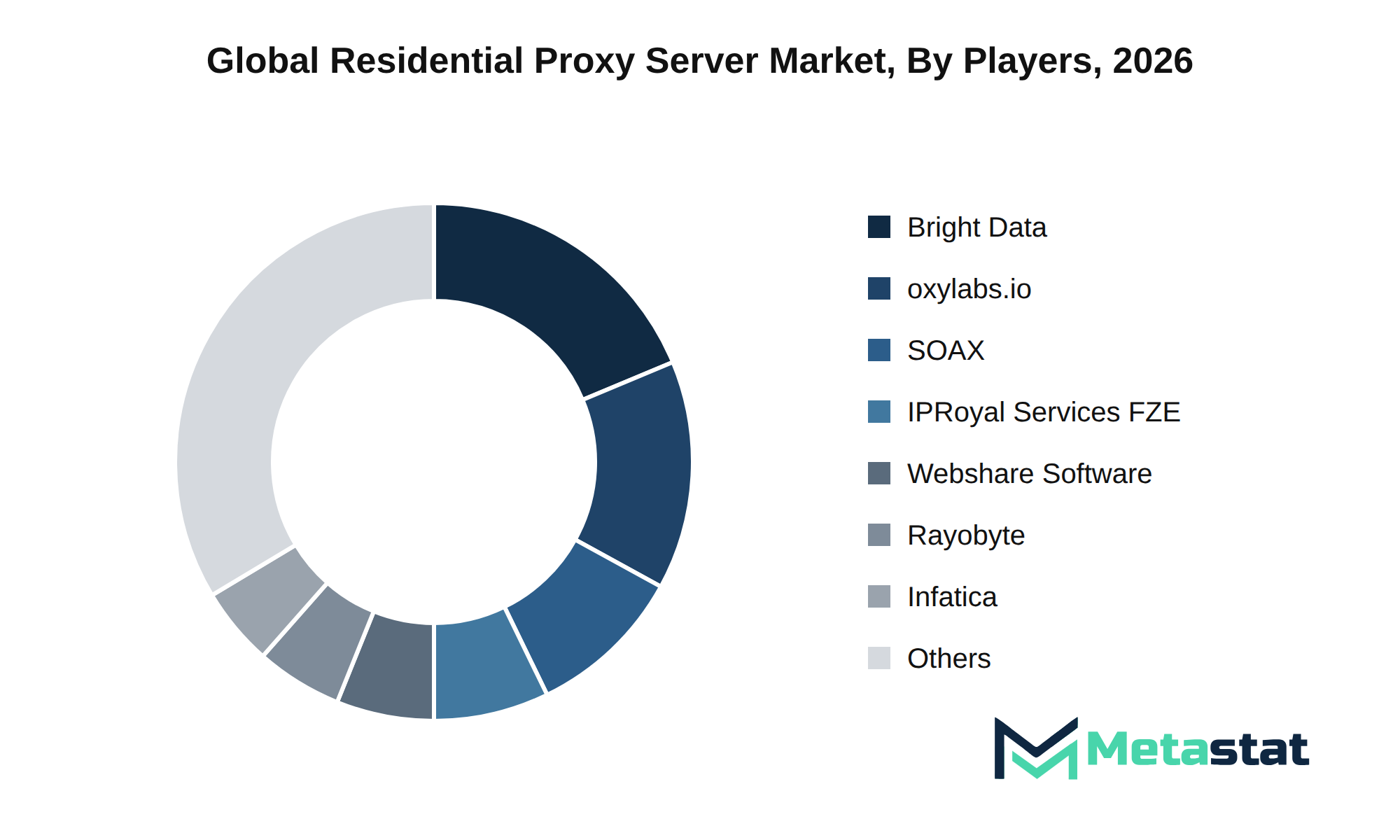
Competition in the Residential Proxy Server market centers on service differentiation, geographic coverage, protocol support, and the breadth of proxy types offered. Providers address buyer preferences for reliability, performance, pricing flexibility, and compliance across a range of use cases. Buyers in industries including retail and e-commerce, advertising, and data services evaluate offerings based on their specific requirements for web scraping, ad verification, and price monitoring, selecting vendors that deliver high uptime, broad IP pool diversity, and robust support for HTTP/HTTPS and SOCKS5 protocols. These criteria influence vendor selection and shape commercial outcomes for both buyers and suppliers.
Bright Data Ltd. focuses on scalable proxy infrastructure and support for large-scale data collection tasks, targeting clients with high-volume scraping and analytics needs. oxylabs.io. emphasizes coverage and protocol versatility, supporting organizations seeking both rotating and static residential proxies for multi-regional operations. SOAX Ltd. directs attention toward flexible plans and customizable access controls, attracting buyers looking for tailored solutions. Smartproxy Ltd. appeals to businesses aiming for rapid deployment and integration through simplified user management and developer-friendly APIs. Each company’s strategy aligns with specific buyer demands, influencing adoption and competitive positioning in the market.
The field includes a mix of firms including IPRoyal Services FZE LLC, Webshare Software Company, and NetNut Ltd., each serving different buyer priorities within the Residential Proxy Server market. ProxyEmpire and Infatica offer specialized IP pools and advanced filtering tools, while companies like Rayobyte and Geonode advance their positions through automation and platform integrations. Buyers weigh the number of supported locations, the ability to manage compliance, and the infrastructure's resilience when making vendor decisions, leading to a dynamic and evolving competitive environment.
Reaching this projection relies primarily on two developments. First, accelerating adoption in Retail & E-Commerce is expected to drive significant volume growth, supported by the rise in web scraping and public data collection activities. Retailers and e-commerce platforms increasingly turn to residential proxies to gather competitive pricing information and monitor market trends, which supports sustained demand in this end-use segment.
Second, continued product innovation in protocol support, especially the growing adoption of SOCKS5 proxies, is anticipated to expand reach across several application areas. Enhanced capabilities in handling complex data streams position SOCKS5 proxies as the preferred choice for advanced scraping and automation tasks, creating new opportunities for suppliers. North America’s established customer base and relatively high regional share further strengthen the forecast, with the region expected to account for USD 58.1 million by 2033.
However, the main risk to this outlook is rising regulatory scrutiny in Europe and North America, which could restrict proxy usage or tighten compliance requirements. Heightened regulatory barriers would slow deployment, especially for providers serving markets with stringent data protection laws. The pace and scale of expansion through 2033 depend on the balance between regulatory compliance and growing technical capability.
By Proxy Type: Rotating Residential Proxies, Static Residential (ISP) Proxies
By Application: Web Scraping & Public Data Collection, Price Monitoring & Competitive Intelligence, Ad Verification, SEO & SERP Monitoring, Brand Protection & Intellectual Property Monitoring, Travel Fare & Availability Aggregation, Social Media & Account Management, Others (Cybersecurity Testing, Content Access Verification)
By End-Use Industry: Retail & E-Commerce, Advertising & Digital Marketing, IT, Software & Data Services, Travel & Hospitality, Financial Services, Cybersecurity & Fraud Intelligence, Media & Entertainment, Telecommunications, Market Research & Business Intelligence, Others (Gaming, Real Estate, Academic Research)
The report strategically identifies and profiles the key market players and analyses their core competencies in each sub-segment of the Residential Proxy Server market.
|
Report Attributes |
Details |
|
Study Period |
2021-2033 |
|
Base Year |
2025 |
|
Estimated Year |
2026 |
|
Forecast Period |
2026-2033 |
|
Historical Period |
2021-2025 |
|
Growth Rate |
CAGR 4.6% from 2026 to 2033 |
|
Revenue Unit |
USD million |
|
Segmentation |
|
|
By Region |
North America (By Proxy Type, Protocol, Application, End-Use Industry, and Country)
|
|
|
|
Asia Pacific (By Proxy Type, Protocol, Application, End-Use Industry, and Country)
|
|
|
|
|
Middle East and Africa (By Proxy Type, Protocol, Application, End-Use Industry, and Country)
|
Find answers to common questions about this report
The Residential Proxy Server market size was valued at USD 123.4 million in 2025.
The projected growth rate is a CAGR of 4.6% during the forecast period from 2026 to 2033.
The North America Residential Proxy Server market size is estimated to reach USD 58.1 million by 2033.
Rotating Residential Proxies lead by value, reaching USD 133.9 million in 2033, ahead of Static Residential (ISP) Proxies. This segment holds the largest share within the type category based on forecast figures.
Organizations are increasing investment in proxy solutions that deliver higher IP diversity and advanced session control to bypass sophisticated anti-bot detection and content restrictions. Expanding automation-driven applications, especially among IT and data service providers, are accelerating demand for technically advanced proxies that support diverse and high-frequency data tasks.
North America holds the dominant share with 35 percent of the total, reaching USD 58.1 million by 2033. This share leads all other regions on a percentage basis.
Premium pricing of advanced proxy solutions limits adoption among small and mid-sized enterprises, slowing volume growth from cost-sensitive buyers. Rising bandwidth expenses compress supplier margins, especially for smaller providers with less bargaining power.
Rapid expansion in automation-driven applications is supporting adoption, as SOCKS5 proxies offer compatibility with advanced automation tools and support for diverse traffic types. Developers and data-driven organizations prefer these solutions for tasks requiring flexible, low-level connectivity and robust anonymity.
The Residential Proxy Server market is estimated to reach a valuation of USD 176.9 million by 2033.
Companies active in this industry include Bright Data Ltd., oxylabs.io, SOAX Ltd., IPRoyal Services FZE LLC, Webshare Software Company, Rayobyte, and Infatica. These firms provide residential proxy server solutions to a range of clients globally.
The analysts below cover Information & Technology research at Metastat Insights.
LEAD ANALYST
Utkarsh Khirodkar is a Lead Market Research Analyst at MetaStat Insight, specializing in market intelligence, technology sector assessments, and competitive strategy.

PRINCIPAL CONSULTANT - ENTERPRISE AI & EMERGING TECHNOLOGIES
Banking & Finance · Electronics and Semiconductor · Energy and Power · Healthcare IT · Information & Technology · Professional Services
Vijay Gunti is a Principal Consultant at MetaStat Insight, bringing over two decades of experience across enterprise digital transformation, technology strategy, and intelligent systems.

LEAD CONSULTANT - COMMUNICATION, TELECOM, AND IT
Electronics and Semiconductor · Information & Technology · Machinery & Equipment · Professional Services
Ravindra Sathe Consultants for Communication, Telecom, and IT at MetaStat Insight. He leads the firm's industry research initiatives across telecommunications infrastructure, digital connectivity, enterprise networking, and emerging information technology domains.
Tracking maintenance cycle demand for secondary flight display units and terrain collision avoidance systems across regional jet fleets involves complex aftermarket dynamics. MetaStat Insight provided practical analysis separating airline retrofit programs from OEM forward-fit production schedules in North America and Southeast Asia. The supplier matrix highlighted component obsolescence timelines without resorting to vague generalizations. The dataset served as a dependable reference during our annual program review meetings.
Evaluating secondary resin quality across post-consumer packaging streams requires reliable technical segmentation. MetaStat Insight delivered an objective assessment that distinguished between extrusion-grade flake pricing and optical sorting throughput limitations across Western Europe. The competitive positioning breakdown for licensed depolymerization technology providers answered several questions during our feedstock feasibility audit. Their team clarified regional trade restrictions on mixed plastic scrap quickly when our team submitted follow-up requests.
Evaluating sovereign cloud deployments for core banking platforms demands a clear view of data residency regulations and migration exit strategies. MetaStat Insight delivered an exhaustive review of regional latency tolerances, mainframe decommission milestones, and third-party vendor concentration risk. The regulatory compliance mapping across European and Asian financial jurisdictions gave our team a dependable baseline for multi-cloud infrastructure discussions.
Explore related market intelligence reports worth reading alongside this one.