
LEAD ANALYST
Utkarsh Khirodkar is a Lead Market Research Analyst at MetaStat Insight, specializing in market intelligence, technology sector assessments, and competitive strategy.

Global Mobile Digital Out-of-Home Advertising Market Size, Share, By Vehicle Type (Trucks, Vans, Passenger Cars, Buses and Coaches, Rail Vehicles and Others (Advertising Trailers, Micromobility Vehicles, Boats)), By Screen Placement (Exterior Screens and Interior Screens), By Media Buying Method (Direct Buying and Programmatic Buying), By Advertiser Industry (Retail and E-commerce, Food and Beverages, Media and Entertainment, Travel and Hospitality, Banking, Financial Services and Insurance, Automotive, Telecommunications and Technology, Healthcare and Pharmaceuticals and Others (Education, Government, Nonprofit Organizations)), Industry Analysis, Growth, Trends, and Forecast, 2026-2033
Report ID
MSI-5429
Published
October, 2026
Pages
283 Pages
Format
Historical
Base year
Forecast
Forecast period
Report Details
Market Valuation: Valued at $2,566.4 Million in 2025, projected to reach $5,153 Million by 2033 at a 9.1% CAGR.
Dominant Segment: Exterior Screens lead the market, projected to reach USD 3,392.7 million by 2033, driven by advertiser demand for maximum visibility and broad urban reach.
Geographic Lead: North America holds the largest market share at 31.2% in 2025, reflecting advanced digital infrastructure and high advertiser spending in dense urban environments.
Growth Driver: Programmatic buying is the fastest-growing media buying method, expected to reach USD 2,070.5 million by 2033 with a 9.5% CAGR, as advertisers seek real-time optimization and data-driven targeting.
What's Inside: The report provides segmentation by vehicle type, screen placement, media buying method, and advertiser industry, with detailed analysis of regional trends, competitive landscape, and forecasts through 2033.
Choose Your License
Global Mobile Digital Out-of-Home Advertising Market
The global Mobile Digital Out-of-Home Advertising market was valued at USD 2,566.4 million in 2025 and is projected to reach USD 5,153 million by 2033, growing at a CAGR of 9.1% over the forecast period.
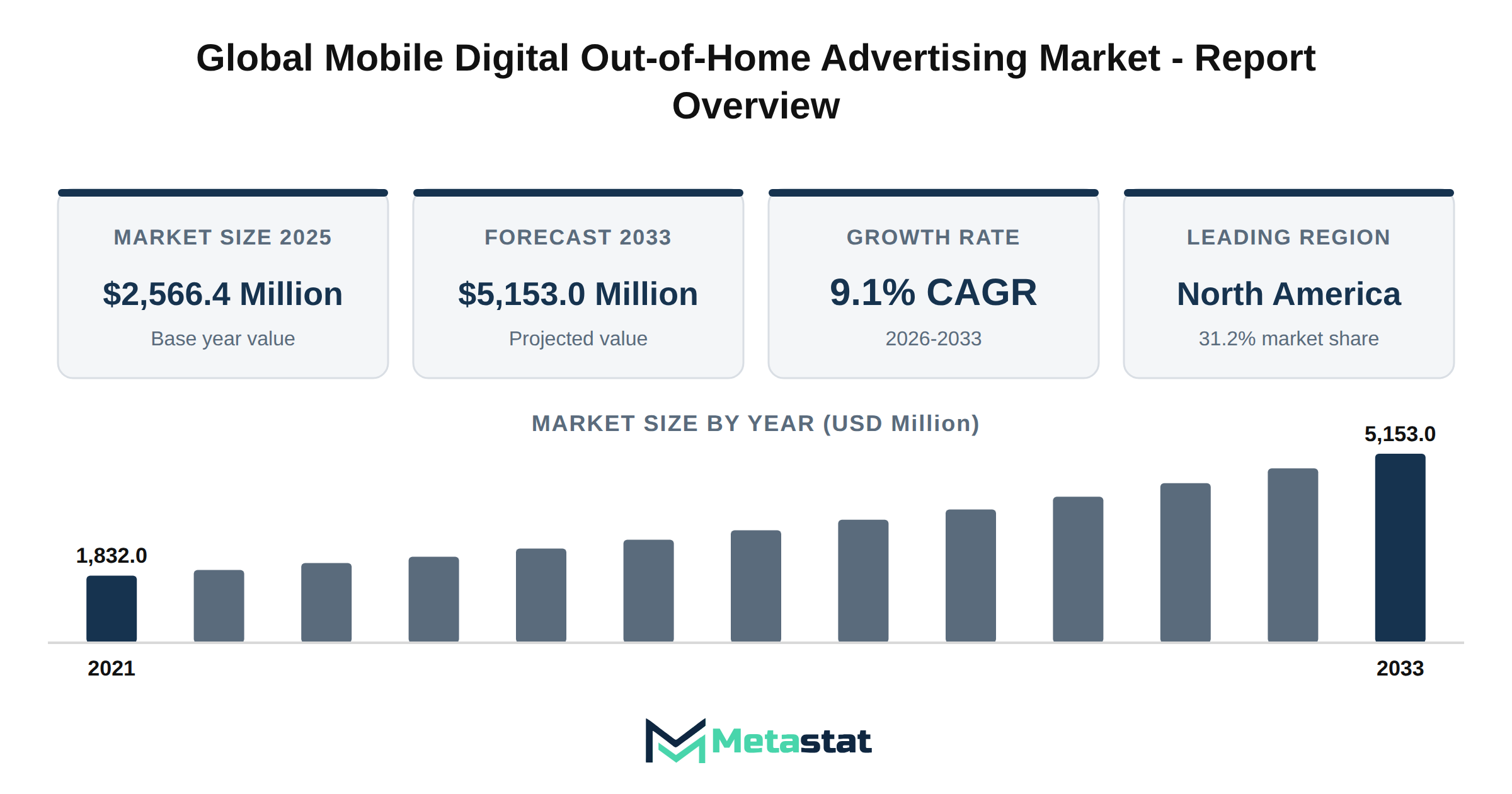
The Mobile Digital Out-of-Home Advertising market delivers dynamic display ads via digital screens mounted on vehicles, replacing static mobile billboards with real-time, data-driven content. Buyers invest to capture audiences in transit, targeting commuters and urban dwellers with flexible, location-based messaging. Retail and e-commerce, food and beverages, and entertainment advertisers drive volume, seeking to reach consumers outside traditional screens where dwell time and engagement are high. Brands increasingly rely on retail marketing consulting services to guide audience measurement and out-of-home media allocation.
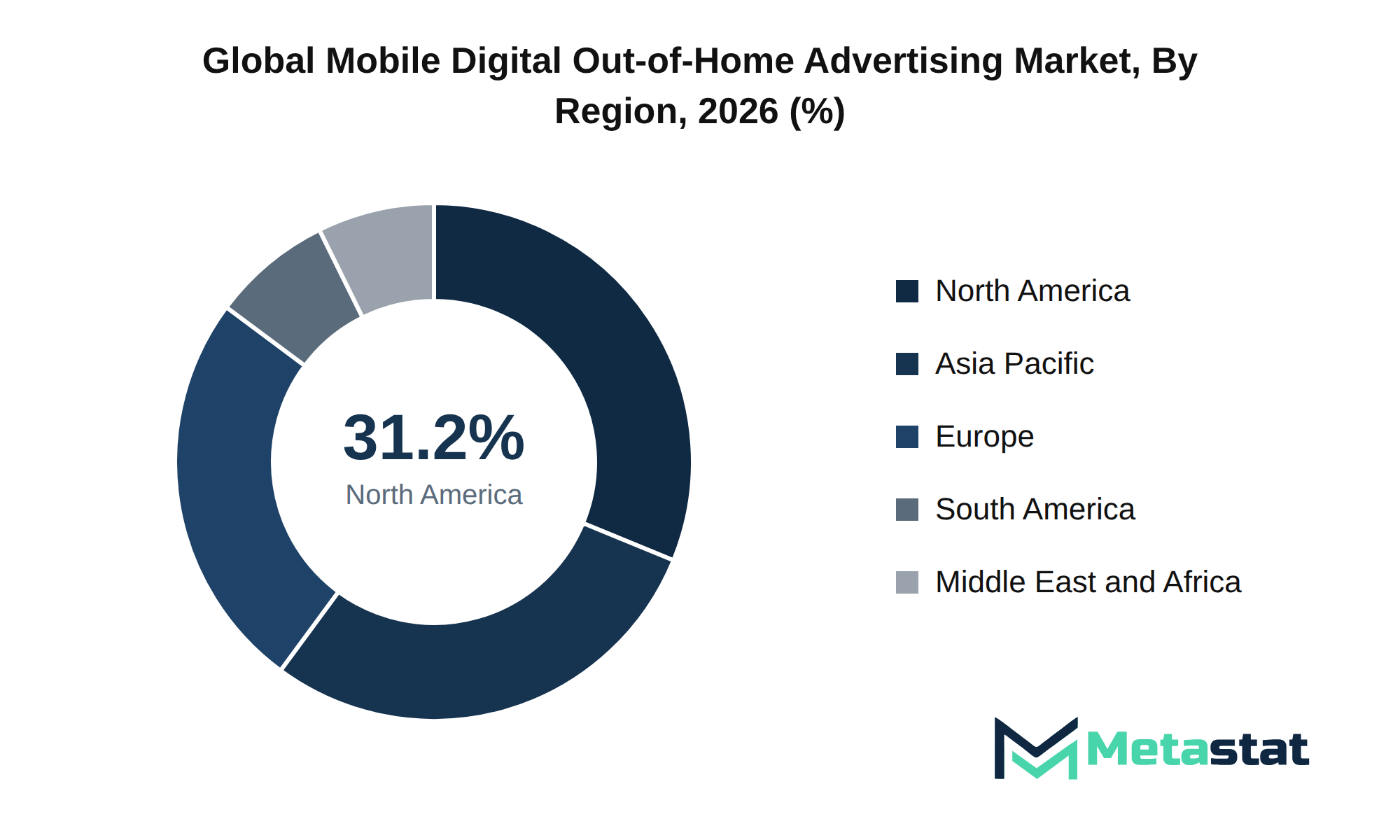
North America holds 31.2% of the market in 2025, with the US leading in 2026. Compared to Europe at 25.1% and Asia Pacific at 28.9%, where the transit advertising segment is expanding across dense bus and metro corridors, North America’s share reflects advanced digital infrastructure, dense urban mobility, and higher advertising spend per capita. The segment with the most value is Exterior Screens, which outpaces Interior Screens in adoption due to greater visibility and reach for advertisers. This segment attracts brands aiming to maximize impressions across diverse city routes and events. Roadside vehicle displays complement municipal smart variable message signs deployed throughout intelligent transportation corridors.
The primary driver for the Mobile Digital Out-of-Home Advertising market is the rapid adoption of programmatic buying, which allows advertisers to optimize campaigns in real time based on audience data and movement patterns. This shift increases operational efficiency and campaign effectiveness, encouraging more brands to allocate budgets toward mobile digital screens over static or fixed-location options.
The Mobile Digital Out-of-Home Advertising market covers solutions that enable brands and agencies to deliver targeted digital campaigns using mobile screens on vehicles. Media operators synchronize screen operations with automotive predictive maintenance platforms to minimize commercial vehicle downtime. Buyers invest in these services to reach urban audiences, capitalize on high-traffic routes, and engage consumers in real time with location-based messaging. The shift from static to digital formats has driven adoption among retail, food and beverage, and entertainment advertisers seeking commercial digital signage performance and flexible deployment.
Among segment categories, exterior screens generate the most value. Advertisers prefer these placements for maximum visibility and broader urban reach. Interior screens serve transport operators and brands targeting commuters. These cabin screens rely on in-vehicle networking managed through an automotive central gateway module to interface safely with passenger infotainment networks. Exterior placements attract higher spending due to their exposure to wider audiences. North America holds 31.2% of the market in 2025. The US leads in 2026. This regional dominance reflects strong advertiser spending, advanced digital infrastructure, and high urbanization rates.
Growth in the Mobile Digital Out-of-Home Advertising market is primarily driven by rising demand for contextually relevant, data-enabled campaigns that integrate with cross-channel digital advertising strategies. Brands prioritize mobile digital formats to increase campaign flexibility, accelerate creative refresh rates, and link out-of-home spending with measurable outcomes. Ongoing digitization of out-of-home advertising supports higher budgets and continued expansion into new urban markets.
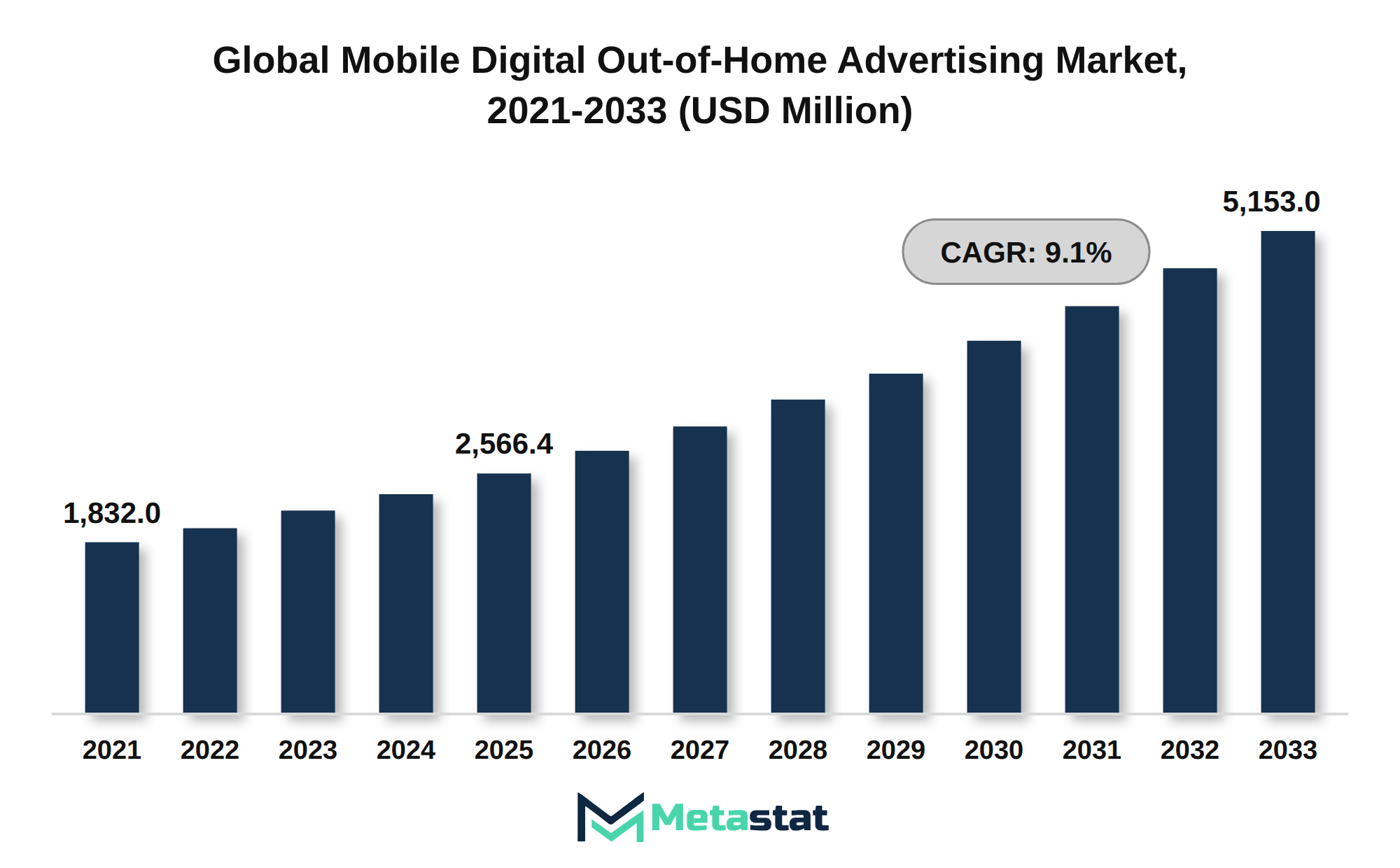
Programmatic buying is transforming campaign planning and execution in the Mobile Digital Out-of-Home Advertising market by introducing automation and real-time targeting capabilities. Advertisers shift to this technology to reach audiences more dynamically, adapting content to location, time, and demographic profiles with precision that manual processes cannot match. Programmatic buying is projected to reach USD 2,070.5 million in 2033 for this market, supported by a CAGR of 9.5 percent, which outpaces the direct buying method's 8.8 percent CAGR. This growth signals rising confidence among advertisers in the efficiency and flexibility programmatic buying delivers.
Adoption rates differ across buyer groups, with brands and agencies seeking data-driven campaign optimization and greater transparency in spend showing the fastest uptake. These buyers adjust and scale campaigns on demand, which drives higher engagement and campaign value. Programmatic buying in the Mobile Digital Out-of-Home Advertising market enables finer audience segmentation and retargeting, reducing wasted impressions and increasing relevance for consumers exposed to mobile screens. The shift supports more agile budgeting, shorter turnaround times for creative changes, and stronger measurement of campaign outcomes. Suppliers that integrate programmatic technology secure stronger relationships with high-expectation clients and position themselves for sustained share gains while digital advertising budgets grow.
GPS-based targeting has become a critical feature in digital taxi rooftop campaigns, shaping how buyers purchase inventory and determine contract terms in the Mobile Digital Out-of-Home Advertising market. Advertisers increasingly value the ability to serve content tailored to city zones, traffic patterns, or even specific neighborhoods, directly linking ad exposure to high-intent audiences. This targeting capability influences pricing models, with rates often structured around advanced location granularity and campaign flexibility rather than solely on impression volume or display time.
In practice, programmatic buying methods are evolving to accommodate GPS-enabled inventory, reflecting a shift toward more dynamic and data-driven contracts. The fact that programmatic buying in the market is projected to reach USD 2,070.5 million by 2033 illustrates that advertisers are prioritizing flexible, real-time campaign adjustments and outcome-based payments. This has encouraged platform providers and taxi fleet operators to invest in screen and data integration, supporting campaigns that charge premiums for verified location accuracy and measurable engagement outcomes.
Buyers in the Mobile Digital Out-of-Home Advertising market now expect transparent reporting and the option to optimize campaigns in response to shifting urban mobility patterns. This expectation leads to deeper collaboration between advertisers and inventory owners, enabling both sides to negotiate pricing and contract length based on real-time data and campaign reach, rather than fixed placement alone.
Growing demand for in-car screen advertising reflects a shift in how brands reach consumers during travel, particularly in the rideshare segment. Rideshare operators increasingly deploy digital screens inside vehicles, transforming idle travel time into an opportunity for targeted engagement. Urban professionals and younger demographics who use rideshare services spend significant time in transit, making them a prime audience for dynamic, context-aware advertisements. Interior screens, positioned for direct passenger visibility, deliver real-time updates, interactive promotions, and hyperlocal offers tailored to routes and destinations.
The Interior Screens segment is projected to reach USD 1,760.3 million by 2033, illustrating the rising value placed on captive in-vehicle audiences. This segment supports advertisers seeking to move beyond static outdoor placements, providing analytics on impressions and engagement that inform campaign refinement. Rideshare fleet operators benefit through additional revenue streams. Advertisers gain from higher dwell times and brand recall in an uncluttered, distraction-minimized setting.
Competition for consumer attention intensifies, making the integration of digital displays within rideshare vehicles a clear differentiator from traditional out-of-home placements. The market responds to this demand by deploying advanced screen technologies and software platforms that enable real-time content updates and audience measurement. Brands seeking to maximize campaign effectiveness increasingly prioritize interior screen inventory within rideshare fleets, reinforcing the strategic importance of this buyer group within the market.
Effectiveness in the Mobile Digital Out-of-Home Advertising market is measured through a combination of audience reach, engagement rates, and campaign recall, with an increasing reliance on real-time analytics. Advertisers focus on quantifying impressions generated by specific vehicle types or screen placements, which directly impact commercial outcomes. For instance, exterior screens are projected to reach USD 3,392.7 million by 2033, making them a preferred choice among brands seeking broad urban visibility. This segment’s high adoption reflects the value placed on maximizing public exposure, particularly in high-traffic urban corridors where mobile screens intersect with large, diverse audiences.
Commercial effectiveness is further assessed through brand lift and call-to-action responses, particularly for sectors like retail and e-commerce, which are projected to reach USD 1,030.6 million by 2033. These advertisers track store visits, website traffic, and sales spikes linked to campaign timing, using mobile analytics and QR code scans to attribute consumer actions. Programmatic buying, which is expected to reach USD 2,070.5 million by 2033, enables granular reporting and adaptive campaign management, supporting buyers in refining strategies in real time. This ability to quantify returns supports higher ad spend allocation, reinforcing a data-driven approach to campaign optimization and vendor selection.
Rapid expansion of retail and e-commerce advertising budgets has strengthened demand for mobile digital out-of-home campaigns, particularly on vehicles traversing high-traffic urban corridors. Retailers and online marketplaces increase spending on mobile digital screens to support new product launches and time-limited promotions, capitalizing on the ability to reach consumers close to the point of sale. This shift is especially evident in the Retail and E-commerce segment, which is projected to reach USD 1,030.6 million by 2033 within the Mobile Digital Out-of-Home Advertising market. Buyers in this segment favor exterior and interior vehicle screens for their flexibility and broad geographic coverage, accelerating volume growth for service providers.
Increased reliance on real-time, location-based messaging enables retailers to adapt campaigns swiftly in response to shifting consumer behavior and promotional cycles. While more brands compete for consumer attention in crowded urban settings, higher fill rates for digital inventory and fleet expansion among operators support consistent revenue and price growth in key regions.
Screen installation and maintenance costs restrict wider adoption among smaller advertisers and local businesses. Outlays for digital screens integrated into vehicle exteriors or interiors remain significant, especially for high-resolution and weatherproof models required for mobile campaigns. For advertisers with limited budgets, these costs result in fewer campaigns, shorter contract durations, or delayed entry into the market. Independent operators and regional brands, in particular, hesitate to commit capital for frequent screen upgrades or replacements, slowing overall segment growth. The market experiences lower order volumes from this buyer group, reducing supplier economies of scale and dampening price competition.
Advertisers are increasingly focused on the integrity and granularity of audience data, challenging suppliers in the Mobile Digital Out-of-Home Advertising market to provide transparent and scalable measurement solutions. With mobile screens generating a high volume of location and behavioral data, privacy regulations and rising consumer expectations for data protection are tightening restrictions on how data is collected, stored, and analyzed. Suppliers in the Mobile Digital Out-of-Home Advertising market face investment pressure to develop compliant audience analytics tools and demonstrate reliable attribution without compromising user privacy. Several providers are responding by partnering with third-party measurement firms, anonymizing data sets, and adopting opt-in frameworks to maintain the value proposition for brands while addressing regulatory and reputational risks. These efforts increase development and operational costs, reducing margins for suppliers seeking to balance advertiser demands with compliance obligations.
Exterior screens present a significant growth pocket, with revenue advancing from USD 1,787 million in 2026 to USD 3,392.7 million by 2033. This segment’s 9.6% CAGR outpaces all other screen placements in the Mobile Digital Out-of-Home Advertising market, reflecting high advertiser demand for wide visibility across dense city environments. Marketers pursue exterior-mounted display solutions to reach drivers, commuters, and pedestrians in regions where traffic volume and street-level engagement remain high. Urban advertising budgets are shifting toward formats that deliver impact without dependence on interior access, positioning suppliers with strong exterior screen offerings to capture accelerating spend. Suppliers investing in robust, weather-resistant, and highly visible outdoor digital display assets address brand goals for metropolitan coverage and roadside presence, supporting commercial expansion in this segment.
The Global Mobile Digital Out-of-Home Advertising market is segmented based on Vehicle Type, Screen Placement, Media Buying Method, and Advertiser Industry.
Valued at USD 789.2 million in 2026 and projected to reach USD 1,398.5 million by 2033 at a CAGR of 8.5%, trucks serve advertisers seeking high-visibility campaigns along major transit routes and urban networks. In this segment, trucks attract larger-format digital screens and enable prolonged message exposure during extended journeys, making them suitable for national brands and event promotions. Buyers include retail chains, entertainment companies, and event organizers that prioritize reach and visual impact. The segment advances at a slower pace than vans, which hold a CAGR of 9.2%, reflecting broader adoption of smaller, more agile vehicles in city environments. Pricing for campaigns involving trucks tends to be higher, driven by the surface area available and the premium placement offered by high-traffic corridors. Growth in this segment is reinforced by advertisers’ emphasis on maximum reach and brand dominance across key metropolitan and intercity routes.
Vans segment is estimated to reach USD 661.1 million by 2033, at a CAGR of 9.2% during the forecast period. Vans serve mobile digital advertising campaigns where mid-sized, highly visible vehicles traverse both urban and suburban routes, targeting commuters, shoppers, and event attendees. National brands and regional retailers favor vans for their balance of mobility and display area, delivering cost-efficient reach across neighborhoods and commercial zones that larger vehicles do not always access. In the market, vans post a higher CAGR than trucks, which are forecast at 8.5%, indicating faster adoption among buyers seeking agile, scalable campaigns. This segment stands out for attracting advertisers that prioritize campaign flexibility and frequent message rotation, distinguishing it from the higher-volume but less nimble trucks or the smaller, more localized passenger cars. Fleet operators and third-party media owners drive adoption, leveraging vans’ lower operational costs and adaptability to seasonal or location-based promotions.
Passenger Cars segment is expected to reach USD 1,512.9 million by 2033. This segment draws attention from advertisers aiming for high-volume urban exposure, especially in densely populated cities where passenger vehicle fleets create continuous movement across diverse neighborhoods and commercial districts. Brands in sectors including retail, food and beverages, and telecommunications select passenger cars to achieve broad reach with repeated impressions among commuters and city dwellers. Unlike trucks or buses, which are often used for longer routes or fixed schedules, passenger cars offer flexibility, enabling hyper-local targeting and campaign agility. Compared to vans, which post a higher CAGR of 9.2%, the passenger car segment captures a larger total projected value, reflecting its established role in the market. Advertising on these vehicles appeals to agencies and brands prioritizing daily visibility and frequency, particularly where rapid campaign deployment and adaptability are valued. Integration with digital screen technologies further supports campaign performance tracking and real-time creative changes, raising appeal for data-driven advertisers within this segment.
Projected to grow at a CAGR of 8.8% during the forecast period, advertising on buses and coaches is driven by their extensive urban and intercity routes, which provide access to both daily commuters and long-distance travelers. Brands in the Mobile Digital Out-of-Home Advertising market target this segment to secure high-frequency, citywide exposure that covers diverse demographics. Buses and coaches offer a mobile platform for campaigns that require broad reach in dense metropolitan regions, attracting industries including food and beverages, telecommunications, and public services that prioritize high-volume visibility. Compared to trucks with an 8.5% CAGR and vans with a 9.2% CAGR, buses and coaches deliver growth at a moderate pace, reflecting stable demand from public and private transit operators rather than rapid expansion in commercial delivery fleets. Buyers select this vehicle type when route consistency and commuter dwell time enable longer message retention, setting it apart from passenger cars and vans, where exposure is often shorter and more fragmented. Within the Mobile Digital Out-of-Home Advertising market, this segment maintains resilience by aligning with stable transportation networks and recurrent urban passenger flows.
Rail vehicles provide a unique digital advertising channel for brands targeting commuters and intercity travelers. Advertisers leverage high dwell times in trains and subways to deliver extended brand exposure, often complementing campaigns running on trucks, vans, or buses. Buyers in this segment include national brands and public sector campaigns focused on consistent audience engagement during longer journeys, setting it apart from vehicle types that focus on short urban trips. In this segment, product adoption in rail vehicles is influenced by regulatory oversight from transit authorities and requirements for customized screen installation. These operational constraints create higher technical barriers for new suppliers compared to other vehicle types in the market. Demand in this segment is driven by the opportunity to reach captive audiences in controlled environments, while adoption faces headwinds where screen integration standards and safety compliance are strict. Deployments in rail vehicles are concentrated in metropolitan regions with established public transit infrastructure and a larger base of daily riders.
Advertising trailers, micromobility vehicles, and boats form a diverse segment that enables brands to reach consumers in unconventional environments. These platforms are used for event-based promotions, seasonal campaigns, and targeting audiences where traditional vehicle formats have limited access, including pedestrian-heavy districts, waterfronts, and festival grounds. Buyers in this segment often include event organizers, local governments, and brands aiming to increase exposure during high-impact occasions. Demand in this category is driven by the flexibility of campaign deployment and the ability to reach audiences at entertainment venues and public gatherings, which standard trucks or vans do not always access. Compared with trucks, vans, and passenger cars, pricing for these platforms varies widely due to differences in operating scale and campaign duration. While trucks and passenger cars show defined growth rates in the market, the "Others" segment draws advertisers seeking specialized reach or unique campaign environments, differentiating itself on use case rather than volume.
This segment is driven by advertisers seeking broad audience exposure in urban environments, where mobile displays mounted on vehicles reach pedestrians and commuters throughout the day. Retail, food and beverage, and entertainment brands rely on exterior screens to deliver high-impact campaigns, capitalizing on the visibility of digital signage in city centers and along major roadways. Unlike interior screens, which are expected to reach USD 1,760.3 million by 2033 at a slower CAGR of 8.1%, exterior screens attract advertisers prioritizing reach over dwell time. Technology advancements in LED display durability and brightness keep campaigns visible in variable weather and lighting. Buyers are typically national and regional brands focused on maximizing impressions within high-traffic zones. Pricing within the Mobile Digital Out-of-Home Advertising market for exterior screen inventory reflects premium placement and large audience reach, supporting the segment’s position with the fastest growth rate among placement options in the market.
This segment delivers messaging to passengers inside vehicles, targeting a captive audience in transit environments including public transport, rideshares, and private hire vehicles. Retail, entertainment, and service brands invest in interior screens to engage consumers during dwell time, where attention spans run higher than for external impressions. Compared to exterior screens in the Mobile Digital Out-of-Home Advertising market, interior screens show a slower CAGR of 8.1% versus 9.6%, reflecting their more specialized deployment and the narrower range of advertising environments. Adoption is influenced by privacy regulations and content controls, which advertisers in the Mobile Digital Out-of-Home Advertising market recognize for passenger-facing formats. This drives suppliers to develop more context-aware, interactive, and segment-compliant creative solutions suited for in-vehicle viewing, distinguishing this segment’s technical and regulatory requirements from those of exterior placements.
Direct Buying segment is valued at USD 1,713.5 million in 2026 and is projected to reach USD 3,082.5 million by 2033, at a CAGR of 8.8% during the forecast period. Direct buying remains the preferred choice for advertisers seeking fixed inventory, guaranteed placements, and stable rates in this market. Traditional buyers, including national retailers and consumer brands, rely on this approach for campaign certainty and established relationships. Direct buying appeals to those prioritizing control over campaign timing, vehicle routes, and screen placement. In contrast to programmatic buying, which is projected to grow at a CAGR of 9.5%, direct buying advances at a slower pace, reflecting its entrenched role among established brands rather than emerging digital-first advertisers. The market’s segmented growth shows that direct transactions remain integral for clients with ongoing, high-volume campaigns. Price transparency and the ability to negotiate bespoke packages drive continued use of direct buying, even with automation expanding in other segments.
Programmatic Buying segment is estimated to reach USD 2,070.5 million by 2033, at a CAGR of 9.5% during the forecast period. Buyers in this segment leverage automated bidding platforms to purchase mobile digital out-of-home inventory, allowing for real-time adjustments and precise targeting. The segment is especially attractive to agencies and large brands seeking campaign flexibility and efficiency, particularly in sectors with frequent creative changes and data-driven strategies. Compared to Direct Buying, programmatic’s 9.5% CAGR is higher than the 8.8% seen in direct transactions, reflecting its stronger momentum in this segment. Key drivers for programmatic adoption include increasing integration of data analytics tools and demand for scalable campaign management among advertisers aiming to quickly adapt content to shifting consumer patterns. This approach stands out from other media buying methods through its automation, dynamic pricing, and ability to optimize campaigns across diverse vehicle types.
Retail and E-commerce segment is valued at USD 613.5 million in 2026 and is projected to reach USD 1,030.6 million by 2033, at a CAGR of 7.7% during the forecast period. Brands in this segment leverage these services to drive real-time engagement during high-traffic periods, supporting product launches, flash sales, and omnichannel campaigns. Large online retailers and brick-and-mortar chains prioritize these solutions for their ability to activate campaigns dynamically and capture impulse purchasing behavior in urban corridors. Growth in this segment is primarily shaped by the shift toward location-specific, mobile-enabled ad targeting, distinguishing it from categories like Food and Beverages, which grows faster at a 9.4% CAGR. Retail and E-commerce buyers typically have larger campaign budgets and require advanced analytics to optimize conversion. The segment’s adoption is strengthened by retail’s push for measurable attribution and cross-device integration, which aligns with the technological advancements seen in this market.
Food and Beverages segment is estimated to reach USD 788.4 million by 2033, at a CAGR of 9.4% during the forecast period. This segment serves consumer brands, restaurant chains, beverage producers, and quick-service outlets aiming to increase visibility among urban mobile audiences. Growth outpaces Retail and E-commerce, which holds a CAGR of 7.7%, indicating that food and beverage advertisers are increasing investments in moving digital formats to promote seasonal launches and location-based offerings. Frequent product promotions and competitive positioning drive adoption across urban corridors and event-centric locations. Price sensitivity is less pronounced than in other advertiser segments, due to the high value placed on real-time audience capture and campaign flexibility. Demand for targeted, high-frequency exposure and rapid creative refresh cycles supports segment expansion. Suppliers report strong engagement when integrating dynamic creatives for limited-time food and beverage campaigns, supporting continued revenue expansion through 2033.
Media and Entertainment segment is expected to reach USD 664.7 million by 2033. This segment serves film studios, television networks, streaming platforms, and event promoters aiming to increase awareness for new releases, live events, or ongoing series. Demand is strongly influenced by the sector’s high frequency of new content launches and time-sensitive campaigns, prompting frequent investment in the market for rapid consumer engagement. Compared to Retail and E-commerce, which is projected at USD 1,030.6 million by 2033, Media and Entertainment operates at a moderate scale but sustains visibility through creative, short-run messaging. Buyers in this segment prioritize flexibility and reach in high-traffic urban locations, leveraging dynamic screen formats and mobility. Adoption is shaped by the imperative to capture fragmented audience attention in competitive entertainment environments, often requiring distinct, visually compelling campaigns to stand out amid crowded advertising spaces.
Projected to grow at a CAGR of 9.5% during the forecast period, travel and hospitality brands are increasing investment in mobile digital out-of-home channels to influence consumer decision-making during transit and at destinations. Hotels, airlines, tourism boards, and travel service providers deploy digital campaigns to capture consumers during journeys, leveraging high dwell times in airports, city centers, and transport hubs. This segment is differentiated by its focus on time-sensitive promotions and location-based content, which suits the dynamic nature of the travel audience. Compared to retail and e-commerce (7.7% CAGR), travel and hospitality is the fastest-growing advertiser industry segment tracked in the Mobile Digital Out-of-Home Advertising market, reflecting rising tourism activity and competition for attention among travel brands. Adoption is supported by the sector’s high marketing spend and the need for real-time message flexibility, traits that align with the strengths of digital out-of-home formats in the Mobile Digital Out-of-Home Advertising market.
Financial institutions, insurers, and banking providers rely on digital mobile channels to promote new offerings, reinforce brand trust, and encourage customer engagement in urban corridors. This segment is drawn to the market due to the need for real-time campaign flexibility and precise audience targeting, which supports dynamic promotion of loans, credit products, and insurance services during peak business cycles or economic events. Compared to segments including Retail and E-commerce or Food and Beverages, adoption in financial services is shaped less by high-frequency promotions and more by regulatory requirements and brand safety concerns, driving more curated and compliance-focused campaigns. Buyers from this segment frequently value premium display locations and advanced data integration for campaign measurement, which places average campaign costs above those targeting mass-market consumer goods. Evolving standards for data privacy and content verification influence investment choices within the market, creating a distinct set of expectations for suppliers aiming to serve regulated industries.
Automotive brands use mobile digital displays to launch vehicle models, build awareness around new mobility services, and engage audiences during large-scale events. These campaigns are commissioned by auto manufacturers, dealerships, and mobility service providers seeking to reach urban commuters and event-goers. Automotive advertisers select mobile digital out-of-home channels when targeting tech-savvy and affluent consumers who are less engaged by traditional billboards. The market supports advanced formats that present vehicle features through dynamic visuals, which is not possible with static outdoor ads. Adoption in this segment is influenced by the sector’s competitive launch cycles and the shifting preference for digital-first, data-driven campaigns. Unlike segments including retail and e-commerce, automotive buyers typically invest in high-impact, shorter-term displays tied to product launches or seasonal promotions, rather than ongoing brand reinforcement. The market accommodates this demand for flexible, event-driven media placements and real-time creative updates that align with automotive marketing strategies.
Telecommunications and technology advertisers use mobile digital out-of-home channels to increase visibility for new devices, network upgrades, and app launches in high-traffic urban corridors. Brand and product managers in this category pursue short activation cycles and seek the agility to adjust creative content in real time, setting them apart from retail or food advertisers who often run broader campaigns. Demand in this segment is shaped by the rapid innovation cycles typical of telecom and tech, with frequent product launches and fierce competition for consumer mindshare. Compared to other advertiser industries in the Mobile Digital Out-of-Home Advertising market, telecommunications and technology buyers prioritize flexible, data-integrated formats that support targeted messaging and campaign analytics. Digital out-of-home screens allow these firms to synchronize mobile and physical engagement strategies, leveraging mobile device usage patterns in metropolitan areas. Adoption in this segment is supported by the pressure to differentiate in saturated markets, driving investment in dynamic, context-aware ad experiences that reinforce digital brand presence. This segment’s focus on measurable, adaptive campaigns over static placements common in traditional industries shapes its approach to digital out-of-home advertising.
Healthcare and Pharmaceuticals advertisers use mobile digital out-of-home channels to deliver targeted health awareness campaigns, product launches, and compliance messaging to both urban and suburban audiences. Pharmaceutical companies, hospitals, and healthcare service providers leverage dynamic digital displays to educate consumers about treatments, support disease prevention initiatives, and strengthen brand credibility in crowded media environments. This segment stands out for its compliance with strict advertising regulations, which influences campaign design and limits the range of content types compared to categories including Food and Beverages or Retail and E-commerce. Buyer priorities in the Healthcare and Pharmaceuticals segment emphasize accurate messaging, privacy, and real-time updates, driving demand for flexible content control. Unlike faster-growing segments including Travel and Hospitality, Healthcare and Pharmaceuticals face barriers related to regulatory scrutiny and content restrictions, which slow campaign deployment and limit flexibility. Advertisers in this segment pursue measurable engagement across diverse commuter and patient populations, particularly during public health campaigns or product rollouts. Targeted content and compliance requirements uniquely shape the role of Healthcare and Pharmaceuticals in this segment.
Education, government, and nonprofit organizations use mobile digital out-of-home channels to promote public awareness initiatives, civic campaigns, event participation, and fundraising drives. These buyers select the format for its reach among urban commuters, local communities, and targeted segments often underserved by traditional broadcast or print media. The market enables such organizations to deliver timely, high-visibility messaging in dynamic environments, supporting efforts ranging from public health advisories to voter engagement and charity outreach. Unique among advertiser industry groups, buyers in this segment operate under distinct budget constraints and regulatory oversight, which influences campaign duration and content more strictly than in retail or entertainment categories. Cost sensitivity and the focus on impact per dollar invested affect the scale and frequency of campaigns, resulting in periodic rather than continuous spending. Regulations governing advocacy and public service announcements shape creative execution, setting this segment apart from commercial sectors in the market.
Based on geography, the Global Mobile Digital Out-of-Home Advertising market is divided into North America, Europe, Asia-Pacific, South America, Middle East, and Africa.
Brands in North America are increasingly prioritizing mobile digital campaigns to reach commuters and urban dwellers, reflecting high smartphone penetration and a culture of on-the-go media consumption. Large metropolitan areas in the United States, along with urban centers in Canada and Mexico, support a network of digital-equipped vehicles that deliver real-time, location-based advertising. Demand for more dynamic, flexible ad placements is driving investment, particularly among technology, retail, and food service advertisers seeking measurable return on spend in crowded urban environments. Regional infrastructure enables rapid adoption of programmatic buying and data-driven campaign optimization, with North America projected to reach USD 1,551.6 million in value by 2033. The Mobile Digital Out-of-Home Advertising market benefits from advertisers’ preference for analytics-rich campaigns and real-time creative changes, making the region a focal point for innovation within the market.
European demand is driven by high advertising spend from multinational brands and local enterprises seeking to reach mobile urban audiences across Germany, France, the UK, Italy, Spain, and Russia. Digital adoption among advertisers supports the use of data-driven targeting, with dynamic content rotation gaining traction on urban fleets and commuter routes. The region’s revenue reflects concentrated activity among major cities with dense transit networks and robust event calendars. Regulatory environments in Western Europe facilitate the deployment of mobile digital screens on vehicles, while high digital literacy rates among consumers in Germany and the UK help advertisers achieve measurable campaign impact. The market in Europe benefits from a broad base of retail, lifestyle, and event-driven advertisers, who prioritize flexible and scalable digital formats. Growing competition for brand attention in urban corridors is expected to sustain investment in mobile campaigns, with ongoing innovation in screen placement and campaign analytics strengthening the region’s contribution to long-term demand.
In Asia Pacific, digital advertising on mobile vehicles is shaped by rapid urbanization and high mobile device penetration across China, India, and Southeast Asia. A 28.9% share of the global Mobile Digital Out-of-Home Advertising market in 2025 reflects strong participation from technology-driven advertisers and brands targeting metropolitan populations. Urban infrastructure investments and dense public transit networks support frequent exposure to mobile campaigns in cities including Shanghai, Mumbai, and Jakarta. Operational costs for digital campaigns remain competitive compared with traditional static formats, encouraging regional brands and transnational advertisers to allocate higher budgets to dynamic, location-based messaging. Demand from consumer goods and retail sectors seeking to reach on-the-go audiences during peak travel hours further influences the market. The increasing adoption of data analytics platforms by regional providers enables more precise audience targeting, strengthening return on investment for advertisers in Asia Pacific.
Advertising campaigns in South America are shaped by a distinct mix of urban density and a growing appetite among consumer goods brands for innovative street-level engagement. The region accounts for 7.5% of global Mobile Digital Out-of-Home Advertising market revenue in 2025, with Brazil and Argentina serving focal points for brand activations targeting metropolitan populations and major public events. Demand is increasingly driven by retail and food sector advertisers seeking to maximize campaign reach where traditional fixed-location displays face saturation. Strong consumer culture in major cities supports investments in both exterior and interior screen placements, enabling brands to tailor creative strategies to local mobility patterns. The market in South America benefits from a younger, urbanized demographic and active street commerce, which helps advertisers use digital fleets for both broad visibility and hyper-local targeting.
Advertising spend in Saudi Arabia, the UAE, and South Africa is concentrated in urban areas with rising commercial activity, where outdoor visibility and mobile reach attract both local brands and international advertisers. The region reflects steady demand from sectors including retail, food and beverages, and financial services. In these countries, investment in high-traffic event marketing, large-scale retail promotions, and targeted consumer engagement campaigns supports adoption of mobile digital formats. The market in the Middle East and Africa is shaped by a diverse mix of local content requirements and multinational campaign strategies, with advertisers using mobile fleets to deliver dynamic and location-specific messaging across urban corridors. This regional dynamic encourages further adoption of digital screen placements on vehicles, with a focus on real-time audience targeting and flexibility in campaign deployment.
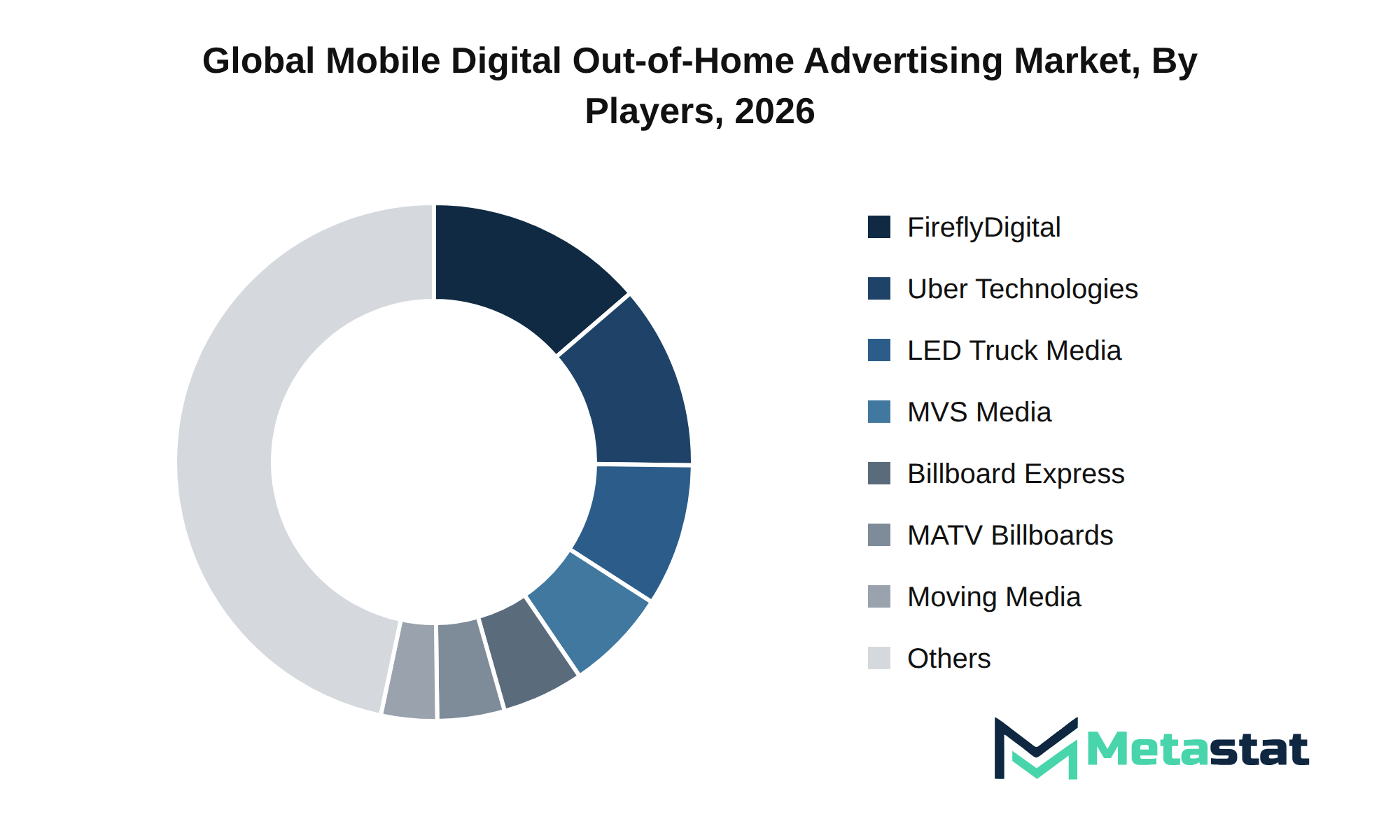
Competition in the Mobile Digital Out-of-Home Advertising market reflects diverse business approaches. Providers differentiate on technology adoption, service range, pricing flexibility, and campaign customization. FireflyDigital emphasizes digital screen networks and analytics-driven campaign measurement, appealing to advertisers that prioritize measurable performance and advanced targeting. Uber Technologies, Inc. integrates advertising solutions with mobility services, attracting brands targeting urban and commuter audiences through high-frequency vehicle networks. Billboard Express, Inc. and LED Truck Media focus on mobile billboard fleets. Their scalable services for retail, event-driven, and local brand campaigns appeal to buyers seeking visibility in high-traffic zones.
Buyers evaluate suppliers on reach, ability to deliver dynamic content, data-driven reporting, and options for both direct and programmatic media buying. Clients in retail and e-commerce, food and beverages, and media industries frequently select partners capable of rapid campaign deployment and adaptable formats. Moving Media and MATV Billboards expand offerings to address changing advertiser preferences for both exterior and interior screen placements. Specialists like PixelMile and Monster Displays support market diversity by enabling tailored campaigns for specific vehicle types or geographic coverage. This broad supplier ecosystem enables ongoing innovation and maintains price competition, supporting adoption across new advertiser categories.
Achieving this growth depends on increased adoption of digital exterior screens, which are projected to reach USD 3,392.7 million by 2033. This segment benefits from advancements in high-visibility digital display technology and broader deployment across large vehicle fleets including trucks and passenger cars. Expansion of programmatic buying, anticipated to account for USD 2,070.5 million by 2033, enables advertisers to target audiences more efficiently, attracting brands in the retail and food and beverage industries to invest larger budgets. In North America, which represents a projected USD 1,551.6 million by 2033, marketing spend is driven by consumer mobility and the presence of established media buying platforms, accelerating regional adoption.
The main risk to the Mobile Digital Out-of-Home Advertising market outlook stems from regulatory and privacy constraints, especially in European and North American regions, where stricter data usage and advertising standards could limit campaign personalization and deployment speed. If new restrictions slow technological rollout or limit geographic expansion, the pace of adoption in key segments and regions could be affected, impacting the market’s ability to sustain forecast growth.
By Vehicle Type: Trucks, Vans, Passenger Cars, Buses and Coaches, Rail Vehicles, Others (Advertising Trailers, Micromobility Vehicles, Boats)
By Screen Placement: Exterior Screens, Interior Screens
By Media Buying Method: Direct Buying, Programmatic Buying
By Advertiser Industry: Retail and E-commerce, Food and Beverages, Media and Entertainment, Travel and Hospitality, Banking, Financial Services, and Insurance, Automotive, Telecommunications and Technology, Healthcare and Pharmaceuticals, Others (Education, Government, Nonprofit Organizations)
The report strategically identifies and profiles the key market players and analyses their core competencies in each sub-segment of the Mobile Digital Out-of-Home Advertising market.
|
Report Attributes |
Details |
|
Study Period |
2021-2033 |
|
Base Year |
2025 |
|
Estimated Year |
2026 |
|
Forecast Period |
2026-2033 |
|
Historical Period |
2021-2025 |
|
Growth Rate |
CAGR 9.1% from 2026 to 2033 |
|
Revenue Unit |
USD million |
|
Segmentation |
|
|
By Region |
North America (By Vehicle Type, Screen Placement, Media Buying Method, Advertiser Industry, and Country)
|
|
|
|
Asia Pacific (By Vehicle Type, Screen Placement, Media Buying Method, Advertiser Industry, and Country)
|
|
|
|
|
Middle East and Africa (By Vehicle Type, Screen Placement, Media Buying Method, Advertiser Industry, and Country)
|
Find answers to common questions about this report
The Mobile Digital Out-of-Home Advertising market size was valued at USD 2,566.4 million in 2025.
The projected CAGR is 9.1% for the forecast period from 2026 to 2033.
The North America Mobile Digital Out-of-Home Advertising market is estimated to reach USD 1,551.6 million by 2033.
Passenger Cars lead by value among vehicle type segments, reaching USD 1,512.9 million in 2033. This figure is higher than Trucks at USD 1,398.5 million and Vans at USD 661.1 million for the same year.
Rapid expansion of retail and e-commerce advertising budgets is increasing demand for mobile digital campaigns on vehicles in high-traffic urban areas. Rising adoption of exterior digital screens, supported by their wide visibility and robust outdoor performance, is accelerating revenue growth for suppliers.
North America holds the dominant share with 31.2 percent of the total market by regional share percentage. This region leads on a comparative basis against Europe at 25.1 percent and Asia Pacific at 28.9 percent.
High installation and maintenance costs for digital screens restrict adoption among smaller advertisers, while stricter privacy regulations and data protection requirements increase compliance costs for suppliers, reducing margins and slowing market growth.
Advertisers are favoring adoption due to the ability to deliver real-time, location-based messaging that adapts swiftly to consumer behavior and promotional cycles. The flexibility and broad geographic coverage of mobile digital screens, especially on vehicles, support measurable impact and higher fill rates for digital inventory.
The Mobile Digital Out-of-Home Advertising market is estimated to reach a valuation of USD 5,153 million by 2033.
Companies active in mobile digital out-of-home advertising include FireflyDigital, Uber Technologies, Inc., LED Truck Media, MVS Media Group LLC, Billboard Express, Inc., MATV Billboards, and Moving Media.
The analysts below cover Information & Technology research at Metastat Insights.
LEAD ANALYST
Utkarsh Khirodkar is a Lead Market Research Analyst at MetaStat Insight, specializing in market intelligence, technology sector assessments, and competitive strategy.

PRINCIPAL CONSULTANT - ENTERPRISE AI & EMERGING TECHNOLOGIES
Banking & Finance · Electronics and Semiconductor · Energy and Power · Healthcare IT · Information & Technology · Professional Services
Vijay Gunti is a Principal Consultant at MetaStat Insight, bringing over two decades of experience across enterprise digital transformation, technology strategy, and intelligent systems.

LEAD CONSULTANT - COMMUNICATION, TELECOM, AND IT
Electronics and Semiconductor · Information & Technology · Machinery & Equipment · Professional Services
Ravindra Sathe Consultants for Communication, Telecom, and IT at MetaStat Insight. He leads the firm's industry research initiatives across telecommunications infrastructure, digital connectivity, enterprise networking, and emerging information technology domains.
Tracking capacity expansion in single-use bioprocessing requires dependable data on raw material availability and cleanroom-grade polymer supply chains. The competitive landscape chapter gave a grounded evaluation of secondary component suppliers across North America and Asia-Pacific rather than simply reprinting press releases. Having that level of supplier benchmarking helped clarify dual-sourcing considerations for our clinical pipeline planning.
When evaluating distributed energy resource management systems, standard research summaries tend to gloss over the operational differences between front-of-the-meter utility deployments and behind-the-meter industrial sites. The MetaStat Insight report addressed those distinctions directly, especially regarding software interoperability standards and grid interconnection backlogs. The five-year market sizing across regional transmission organizations provided actionable context for our grid modernization strategy.
Most industry reports on warehouse automation bundle autonomous mobile robots and fixed conveyor installations into the same top-level numbers, which complicates advisory work. This study split the market cleanly by payload tiers, navigation technology, and fleet management software layers. The regional forecast for Western Europe gave our team defensible adoption benchmarks when evaluating capital allocation for logistics clients, saving us days of secondary data scrubbing.
Explore related market intelligence reports worth reading alongside this one.