
LEAD ANALYST
Utkarsh Khirodkar is a Lead Market Research Analyst at MetaStat Insight, specializing in market intelligence, technology sector assessments, and competitive strategy.

Global Accounts Payable Automation Market Size, Share, by Component (Software and Services), by Deployment Model (Cloud-Based and On-Premises), by Organization Size (Large Enterprises and Small and Medium-Sized Enterprises), by End-Use Industry (Banking, Financial Services, and Insurance, Manufacturing, Retail and E-commerce, Healthcare, IT and Telecommunications, Professional and Business Services, Transportation and Logistics, Government and Public Sector, Energy and Utilities, and Others (Education, Hospitality, Construction)), Industry Analysis, Growth, Trends, and Forecast, 2026-2033
Report ID
MSI-5417
Published
October, 2026
Pages
260 Pages
Format
Historical
Base year
Forecast
Forecast period
Report Details
Market Valuation: Valued at $3,786.7 Million in 2025, projected to reach $8,856 Million by 2033 at a 11.2% CAGR.
Dominant Segment: Software leads the market, projected to reach USD 6,060.1 million by 2033, driven by strong demand for end-to-end digital workflow automation and integration with cloud-based ERP systems.
Geographic Lead: North America holds the largest share at 35.1% in 2025, supported by advanced digital infrastructure and a strong focus on compliance, with the US leading market share in 2026.
Fastest Growing Deployment: Cloud-based solutions are expanding rapidly, forecast to reach USD 6,448 million by 2033 with a 13.9% CAGR, as buyers prioritize scalability, lower upfront costs, and ease of integration.
Fastest Growing End-Use: Healthcare is projected to grow at a 12.5% CAGR, outpacing other sectors due to high transaction volumes and strict compliance requirements.
What's Inside: The report provides detailed segmentation by component, deployment model, organization size, and end-use industry, with regional analysis, competitive landscape, and market forecasts through 2033.
Choose Your License
Global Accounts Payable Automation Market
The global Accounts Payable Automation market was valued at USD 3,786.7 million in 2025 and is projected to reach USD 8,856 million by 2033, growing at a CAGR of 11.2% over the forecast period.
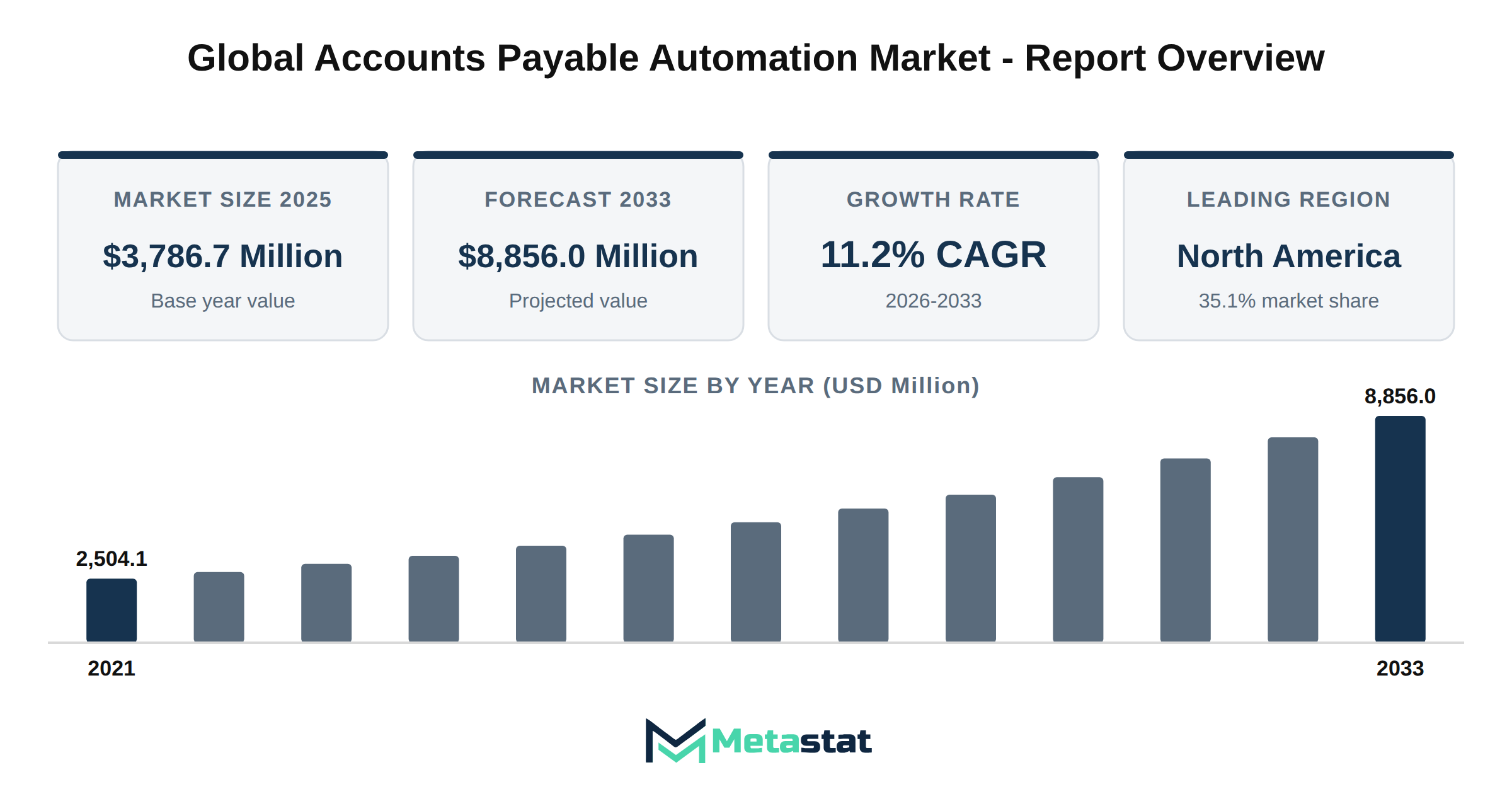
The Accounts Payable Automation market offers software and services that digitize and streamline invoice processing, approvals, and payments, replacing manual and paper-based accounts payable systems. Buyers include large enterprises, small and medium-sized businesses, and organizations in sectors including banking, manufacturing, and retail. Purchase triggers often involve a drive to reduce processing time, minimize errors, and improve compliance. Corporate demand for streamlined disbursements simultaneously fuels digital corporate cash management across the Commercial Banking sector. The rise from USD 3,786.7 million in 2025 to USD 8,856 million by 2033 reflects widespread adoption, driven by the need for operational efficiency and cost control in finance departments.
Cloud-based solutions stand out, projected to reach USD 6,448 million by 2033 with a CAGR of 13.9%. Scalability, lower upfront investment, and ease of integration fuel this growth, appealing to both large enterprises and small and medium-sized businesses. North America holds 35.1% in 2025, with US leading the market share in 2026. Buyers prioritize automation for its direct impact on reducing manual workload and supporting compliance, particularly in highly regulated industries including banking and manufacturing. Finance teams seek robust, scalable tools that deliver measurable improvements in process speed and accuracy.
Rising adoption among large enterprises and small and medium-sized enterprises signals a shift in how organizations manage financial processes. The Accounts Payable Automation market covers digital platforms and services designed to streamline invoice management, approvals, and payment workflows, replacing manual entry with automated, cloud-based, and on-premises solutions. Software stands out as the leading component, projected to reach USD 6,060.1 million by 2033, supported by an 11.9% CAGR, while services are anticipated to reach USD 2,795.8 million. This expansion mirrors broader demand across the Accounting Software ecosystem for digitized ledgers and integrated financial workflows. Cloud-based deployment is gaining preference, driven by flexibility and scalability, with a forecast value of USD 6,448 million in 2033 and a 13.9% CAGR, contrasting with slower growth for on-premises solutions.
Banking, financial services, and insurance organizations, manufacturers, and retailers account for the largest share of spend, each seeking to reduce invoice processing times and improve accuracy. North American enterprises are expanding adoption, supported by advanced digital infrastructure and a strong focus on compliance. The strongest force behind this growth is the increasing prioritization of digital transformation among enterprise finance teams, prompting higher investment in automated platforms and integrated financial workflows. Automated accounts payable solutions now emerge as critical enablers for organizations seeking scalable, audit-ready processes. Maintaining uninterrupted payment processing during unforeseen operational disruptions is also coordinated through dedicated Business Continuity Management Software solutions.
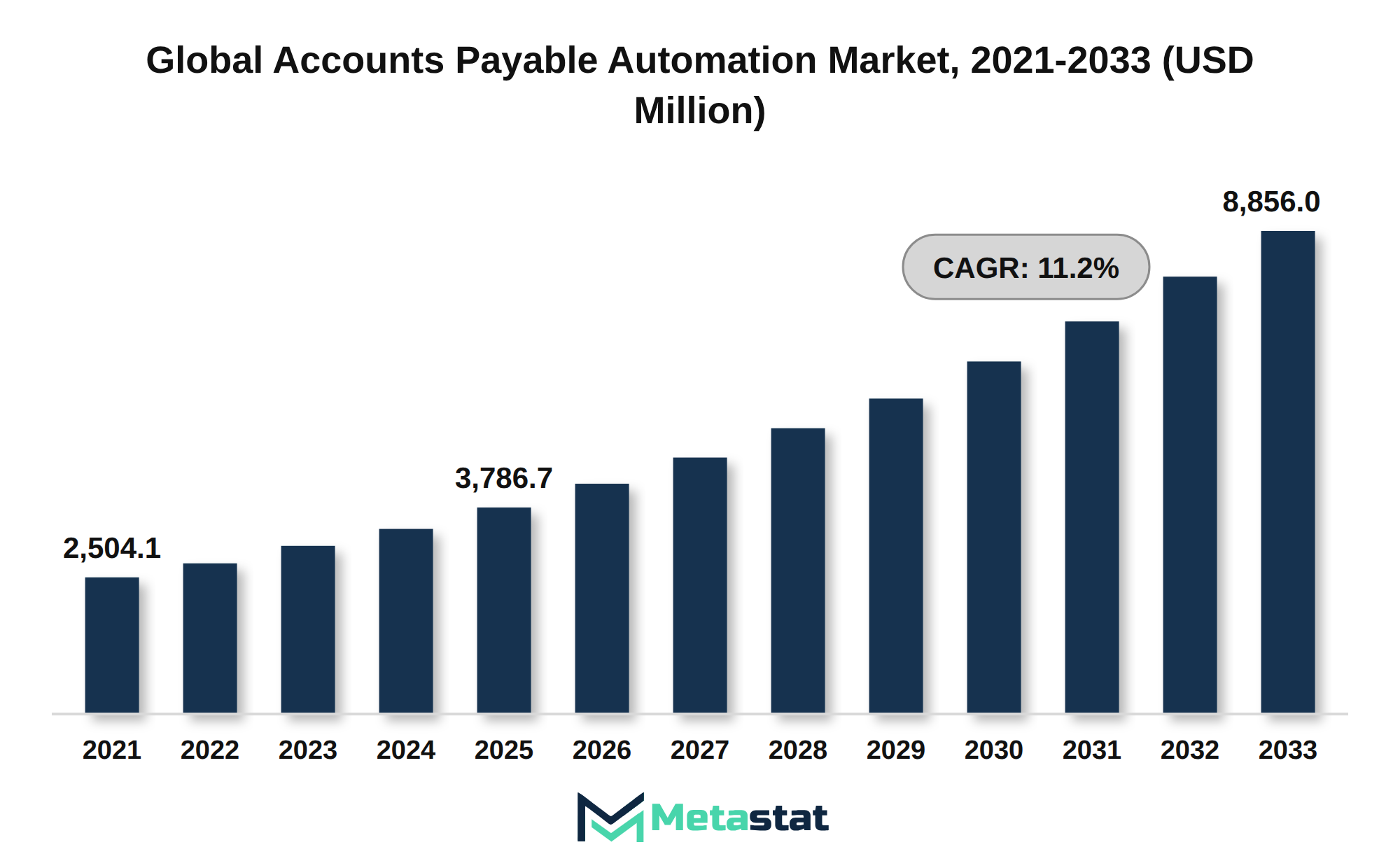
AI-powered invoice matching and exception handling have emerged as critical differentiators for buyers evaluating solutions in the Accounts Payable Automation market. These capabilities address a persistent challenge: manual invoice verification increases error rates and slows the payables cycle. Advanced systems now use AI to match invoices with purchase orders and receipts, flagging inconsistencies for rapid resolution. Buyers in sectors with high transaction volumes, including manufacturing and retail, increasingly select automation platforms with these features to control operational risk and streamline their finance operations. The increasing adoption of software solutions is reflected in the segment’s projected rise from USD 2,754.4 million in 2026 to USD 6,060.1 million by 2033, at a CAGR of 11.9 percent.
AI-driven exception handling reduces the burden on accounts payable teams by routing only complex discrepancies for human review, which allows staff to focus on value-added tasks. This shift supports large enterprises and small and medium-sized enterprises responding to tighter payment cycles and higher compliance requirements. Automated exception management supports faster invoice approvals and limits late payment penalties, strengthening supplier relationships and improving cash flow forecasting. Platforms operating both invoice processors and intelligent exception handlers drive sustained adoption and set a higher standard for efficiency and accuracy across industries. Once invoices receive clearance, corporate finance teams increasingly execute settlements through integrated Card Payment Processing Solutions and virtual cards.
Flexible integration with existing enterprise resource planning systems has become a key buying criterion for organizations prioritizing efficient data flow and rapid deployment. AI-powered invoice matching solutions distinguish themselves by enabling end-to-end automation, reducing implementation friction for buyers with established procurement and financial systems. Such operational continuity is vital for managing payables finance facilities that underpin the U.S. Trade Finance sector. This capability supports market expansion among multinational firms and scaling businesses. The enhanced interoperability, combined with rising demand for cloud-based deployments - which are projected to reach USD 6,448 million by 2033 - reinforces the commercial appeal of these technologies for global and regional buyers seeking consistent performance and lower total cost of ownership.
Cloud-based accounts payable (AP) automation platforms support rapid adoption among small and medium-sized enterprises by lowering the barriers to entry and reducing upfront IT investment. These platforms provide a scalable solution for organizations lacking in-house infrastructure, enabling firms to digitize invoice processing, manage supplier payments, and improve compliance without the capital expenditure required for on-premises installations. Governing these distributed financial applications often involves oversight tools supplied by the Cloud Management Platform (CMP) sector. In the Accounts Payable Automation market, the cloud-based segment is projected to expand from USD 2,593 million in 2026 to USD 6,448 million by 2033, reflecting a 13.9% compound annual growth rate. This rate outpaces the growth forecast for on-premises solutions and signals a sustained shift in buyer preference toward subscription-based, remotely managed platforms.
Subscription pricing models offered by cloud-based vendors act as a cost-effective alternative for smaller enterprises, replacing the need for large, upfront software licenses with predictable, operating expense-based contracts. This pricing shift enables finance leaders in small and medium-sized enterprises to allocate resources more flexibly, supporting digital transformation objectives without the risk and complexity of major IT projects. The transition aligns with multi-tenant subscription delivery models expanding across the broader Enterprise Software-as-a-Service (SaaS) sector. Cloud-based AP platforms enable small firms to achieve real-time visibility over cash flow and improved audit trails, with automated workflows delivering operational efficiencies that were previously accessible only to larger organizations. The expanded addressable market for vendors is reflected in the projected USD 3,500.8 million opportunity among small and medium-sized enterprises by 2033, confirming the strategic value of cloud delivery in the Accounts Payable Automation market.
Global mandates for e-invoicing are accelerating the transformation of supplier invoice processing, making digital compliance a core operational requirement.Governments in regions including Europe and Asia Pacific introduce structured e-invoicing frameworks, requiring businesses to adopt standardized digital formats for tax reporting and accounts reconciliation. In the market, this regulatory drive prompts buyers to prioritize solutions with robust compliance features, supporting electronic invoice capture, validation, and real-time audit trails. Navigating these regional statutory frameworks frequently requires consulting expertise provided by the Tax Advisory Services industry. Europe holds a 28.3 percent share, reflecting rapid digitalization and strong policy alignment across member states.
These mandates drive process reengineering. Suppliers and procurement departments invest in automation platforms that streamline invoice receipt, enhance data integrity, and support direct integration with government tax portals. For technology vendors, the shift introduces a competitive dimension anchored in compliance certifications and localization capabilities, especially in multi-country operations. Large enterprises lead this transition, with projected spend reaching USD 5,355.2 million by 2033, standardizing processes across subsidiaries and trading partners. Small and medium-sized enterprises follow, adapting to new requirements with scalable, cloud-based solutions. Many organizations also balance in-house platforms with third-party providers in the Business Process Outsourcing (BPO) industry to manage complex multi-jurisdictional finance workflows.
The commercial implication is an expanded buyer focus beyond efficiency to regulatory assurance. Investment decisions increasingly weigh the ability to automate compliance checks, minimize the risk of penalties, and respond quickly to evolving mandates in target geographies. Automated audit trails also aid investigative reviews conducted within the Forensic Accounting sector to detect billing discrepancies and corporate fraud. Vendors with agile, configurable e-invoicing modules are well positioned to support organizations that operate across complex regulatory environments.
Intelligent automation within the Accounts Payable Automation market reduces invoice processing costs by minimizing manual intervention and increasing processing speed. Automated software acts as the central tool for capturing, validating, and routing invoices to the appropriate approvers, eliminating frequent errors and delays linked to manual entry. Software components in this market are projected to increase from USD 2,754.4 million in 2026 to USD 6,060.1 million in 2033, reflecting expanding demand for process efficiency and cost control across enterprises.
Cloud-based solutions have emerged as the preferred deployment model for organizations prioritizing operational cost reduction and scalability. Moving from on-premises systems enables buyers to avoid substantial infrastructure investment and ongoing maintenance expenses. The cloud-based segment is set to grow from USD 2,593 million in 2026 to USD 6,448 million in 2033, driven by organizations adopting subscription-based pricing models that align costs with usage and growth. This model lets enterprises scale their automation footprint without incurring heavy upfront costs, providing a flexible resource for finance departments.
Standardization and compliance automation further lower invoice processing costs by enforcing policy adherence and reducing exceptions. Within the Accounts Payable Automation market, financial and manufacturing sectors deploy such systems to streamline processes, reduce fraud risk, and accelerate throughput. The banking, financial services, and insurance segment is expected to expand from USD 889.2 million in 2026 to USD 1,756.1 million in 2033, driven by stricter compliance needs and pressure to optimize margins. Automation acts as a control mechanism, ensuring every invoice is consistently reviewed, tracked, and archived, which reduces overhead for audit and regulatory requirements.
Automated fraud detection is strengthening demand by helping organizations proactively identify and prevent payment errors, duplicate invoices, and suspicious transactions. Escalating payment volumes, especially within sectors including manufacturing, retail, and banking, have increased the complexity of accounts payable workflows. This complexity raises the risk of financial loss from fraudulent invoices or internal errors. Automated solutions integrate advanced analytics and real-time monitoring to flag inconsistencies and unauthorized activities, reducing financial exposure for businesses. Buyers in highly regulated industries are prioritizing platforms with embedded fraud controls, resulting in higher willingness to invest in advanced features. The market is experiencing expanded uptake among enterprises seeking to limit financial risk, lower remediation costs, and protect supplier relationships by reducing incidents of fraud and error.
Initial implementation and integration costs restrict adoption of automated accounts payable solutions among small and medium-sized enterprises. Many small businesses operate with limited IT budgets and lack dedicated digital transformation teams, resulting in resource constraints that delay or reduce investment in automation. This financial barrier leads to slower uptake and less frequent system upgrades within this segment compared to large enterprises, which allocate higher technology budgets and absorb up-front integration expenses more easily. Suppliers targeting small and medium-sized enterprises encounter smaller average deal sizes and longer sales cycles, limiting near-term revenue growth. The pace of penetration in this buyer segment lags the overall expansion in the market.
Rising demand for experienced implementation talent
Escalating competition among providers has driven up compensation for skilled software engineers and implementation consultants with expertise in accounts payable automation deployments. Growing adoption across large enterprises and small and medium-sized enterprises has expanded project complexity, increasing reliance on teams that deliver tailored integration, migration, and workflow customization. This trend places pressure on supplier margins, particularly for smaller firms competing with larger players that attract and retain top talent with higher salaries and benefits. In response, suppliers invest in standardized onboarding, remote delivery models, and expanded training programs that serve as cost-control levers. Ongoing competition for specialized talent acts as a constraint on suppliers’ ability to scale projects efficiently while controlling delivery costs. Intense wage competition and project staffing challenges reduce net profitability for vendors operating in this segment.
Cloud-based deployments have emerged as the most dynamic pocket of growth, outpacing on-premises models in both adoption rate and forecasted revenue contribution. This segment’s momentum results from buyers prioritizing scalability, simplified updates, and remote accessibility. Vendors serving enterprise clients and small and medium-sized enterprises with cloud-native software enable digital transformation in finance operations. The shift away from on-premises toward cloud-based offerings drives recurring revenue and greater customer lifetime value, particularly among organizations seeking rapid deployment and minimal infrastructure investment.
The Global Accounts Payable Automation market is segmented based on Component, Deployment Model, Organization Size, and End-Use Industry.
Valued at USD 2,754.4 million in 2026 and projected to reach USD 6,060.1 million by 2033, software within this segment is driven by strong demand for end-to-end digital workflow automation among mid-sized and large organizations. These software platforms serve core roles in digitizing invoice capture, approval routing, supplier collaboration, and audit trails, supporting finance and procurement teams aiming to eliminate manual, error-prone processes. Growth in the software segment, reflected in its 11.9% CAGR, outpaces services due to its scalability and the increasing need for integration with cloud-based enterprise resource planning systems. Compared to services, software adoption accelerates on ongoing product innovation and subscription pricing models that lower upfront costs. Buyers in regulated industries, including banking, insurance, and manufacturing, prioritize advanced compliance, security, and analytics features, reinforcing the segment’s sustained expansion. Uptake of software rises with organizations targeting operational efficiency and improved financial visibility. SaaS models in particular act as a catalyst for broader penetration of this segment.
Services segment is estimated to reach USD 2,795.8 million by 2033, at a CAGR of 9.6% during the forecast period. This segment is deployed by organizations seeking outsourcing, consulting, integration, and ongoing support tailored to accounts payable process improvement. Businesses in sectors facing complex regulatory environments, including banking, financial services, and insurance, emerge as primary clients for service-based offerings, aiming to reduce compliance risk and streamline workflow transitions. The Services segment differs from the Software segment, growing at a slower pace and attracting buyers with limited in-house technical expertise or those lacking internal IT resources to handle solution upgrades and integration. In this market, the demand for consulting and managed services rises when companies look to optimize return on investment from existing platforms, while competitive pricing in the Services segment supports adoption among mid-market enterprises. The preference for outcome-based engagements has shifted spending toward service providers capable of delivering measurable process efficiency gains.
These platforms emerge as an agile choice for organizations seeking scalable deployment and flexible access across distributed teams. Buyers rely on cloud-based accounts payable automation to streamline workflow integration and support remote approval cycles, particularly in industries with multi-site operations or rapidly expanding digital footprints. A primary driver for this segment’s growth comes from consistent upgrades in SaaS pricing models and the ability to support real-time analytics without incremental infrastructure spending. Compared with on-premises solutions, cloud-based offerings attract higher adoption among businesses with variable transaction volumes and limited IT resources. The faster forecasted growth rate, outpacing the on-premises segment, highlights a strong shift in buyer preference toward cloud-native accounts payable automation.
Estimated to reach USD 2,407.9 million by 2033 at a CAGR of 5.7%, on-premises deployment continues to serve organizations that prioritize direct control over financial data and compliance environments. Large enterprises and highly regulated industries prefer this approach, where internal data residency, robust customization, and integration with legacy infrastructure are core requirements. The segment is used for automating accounts payable workflows while maintaining strict oversight of sensitive information within proprietary IT environments. Compared with cloud-based deployments, the on-premises model grows at a slower pace, with a CAGR of 5.7% against cloud’s 13.9%, indicating a shift in demand toward flexible, lower-maintenance alternatives. Higher upfront investment and ongoing management costs influence buyer decisions, particularly among organizations with existing on-site IT teams. While this segment remains vital for sectors where data sovereignty and tailored configuration take precedence, vendors offering hybrid and cloud-native solutions increasingly shape the direction of adoption.
Valued at USD 2,731.9 million in 2026 and projected to reach USD 5,355.2 million by 2033, large enterprises account for significant spending in this segment. These organizations deploy automation solutions to manage high transaction volumes, streamline compliance, and reduce operational risk. The segment stands out for its preference toward comprehensive platforms that integrate with existing ERP environments, reflecting complex legacy systems and stringent audit requirements. Cost optimization drives adoption among these enterprises, who prioritize advanced analytics and custom workflow capabilities. Compared to small and medium-sized enterprises, large enterprises adopt at a steadier rate - posting a 10.1% CAGR - due to longer procurement cycles and more extensive change management processes. Demand for scalable solutions that support global operations and multi-entity structures further influences this segment, allowing large buyers to centralize and standardize financial processes across diverse business units.
Estimated to reach USD 3,500.8 million by 2033 at a CAGR of 13%, small and medium-sized enterprises emerge as one of the fastest-growing organization size segments. These firms deploy automation to streamline processing, eliminate manual invoice handling, and reduce payment errors, addressing resource constraints that differentiate them from large enterprises. The segment’s growth is propelled by rising pressure to enhance operational efficiency and control costs, particularly for organizations with limited finance personnel. Compared with large enterprise adoption, small and medium-sized enterprises are more sensitive to implementation cost and require scalable solutions that align with fluctuating transaction volumes. Demand within this segment reflects a higher appetite for rapid deployment and subscription-based pricing, which support smaller buyers. Suppliers capture this by offering flexible deployment models and simplified onboarding features tailored to the workflows of growing businesses.
Adoption in banking, financial services, and insurance is driven by the steady rise in transaction volumes and the growing complexity of regulatory requirements. Institutions in this segment use automated solutions to manage high document volumes, streamline compliance checks, and reduce manual processing errors. Regulatory shifts, particularly around anti-fraud and reporting standards, reinforce the move toward automation, since compliance incurs significant operational risk when handled manually. Compared with other end-use industries, financial institutions face higher audit scrutiny, leading to faster uptake of digital workflows. Buyers in banking, financial services, and insurance require advanced controls and traceability, supporting a premium on software functionality and integration capabilities relative to segments including retail or manufacturing.
Estimated to reach USD 1,516.1 million by 2033, manufacturing is projected to advance at a CAGR of 10.9% during the forecast period. Manufacturers deploy automation to streamline complex, high-volume invoice workflows involving suppliers, raw materials, and logistics partners, supporting visibility and reducing manual errors. The market addresses lengthy reconciliation and compliance requirements in this segment, where operational scale and the frequency of supplier interactions drive investment. Demand accelerates in response to pressure for cost control, with automation serving manufacturers seeking to manage payables more efficiently and strengthen supplier relationships. Comparing segment momentum, manufacturing exceeds the growth rate seen in banking, financial services, and insurance, which posts a CAGR of 10.2%. The manufacturing segment’s higher growth reflects the shift toward digitalization in traditional production environments, where legacy processes are being replaced by scalable, integrated solutions from automation providers.
Retail and e-commerce is projected to reach USD 1,271.7 million by 2033, driven by the sector’s high transaction volumes and complex supplier ecosystems. This segment uses automation to manage invoice processing, validate supplier payments, and streamline reconciliation workflows. Merchants, online platforms, and omnichannel retailers adopt these solutions to reduce manual workload and increase payment accuracy, supporting operational efficiency at scale. Unlike manufacturing or financial services, retail and e-commerce faces peak-season spikes and frequent supplier fluctuations, which increases the value of real-time processing and adaptable integration. Rapid order fulfillment in these channels drives adoption of solutions that facilitate faster invoice approvals and minimize delays. Pricing sensitivity stands out for buyers in retail and e-commerce, with this segment tending to prioritize scalable cloud solutions to control cost per transaction. The segment’s growth is tied to the ongoing expansion of digital commerce and the sector’s strong emphasis on process transparency, enhancing its role as a driver of automation adoption in this end-use category.
Growth in healthcare is projected at a CAGR of 12.5% during the forecast period, outpacing other end-use categories. Hospitals, clinics, and large healthcare networks increasingly use automation solutions to handle complex supplier billing, insurance claims processing, and regulatory documentation. Demand is driven by the sector’s high volume of transactions alongside strict compliance requirements, which make manual processes costly and error-prone. These buyers seek tools that facilitate accurate, timely payments and create detailed audit trails for regulatory audits. Compared to manufacturing or retail, healthcare organizations often face higher scrutiny and process multifaceted vendor relationships faster, creating a distinct adoption environment. Automation solutions serve healthcare providers looking for scalable, compliance-focused systems, differentiating this segment by its rapid adoption rate and the need for tailored functionality to meet sector-specific legal and operational demands.
Telecommunications and IT service providers use automated accounts payable processes to manage large volumes of supplier invoices, recurring maintenance contracts, and technology procurement. In this segment, digital transformation and increased demand for integration with broader enterprise resource planning platforms accelerate adoption. Providers in telecommunications seek to reduce manual workloads and minimize delays in payment cycles, supporting operational efficiency while network infrastructure investments increase. IT and telecommunications organizations often prioritize rapid scalability and interoperability, preferring solutions that enable automation across distributed teams and multiple locations. Competitive pressure to minimize operating costs and enhance vendor relationships drives investment in advanced accounts payable capabilities. Higher technology budgets and advanced digital readiness set IT and telecommunications buyers apart from other end users, reinforcing their position as early adopters. Suppliers who address integration with existing IT environments and offer strong data analytics stand out as preferred partners for this group. Sustained interest comes from telecommunications and IT buyers focused on streamlining financial operations and scaling efficiently.
Professional and business services organizations rely on efficient invoice management to support high transaction volumes across consulting, auditing, legal, and specialized service firms. Managing multiple client accounts and vendor relationships while maintaining compliance and minimizing administrative effort drives demand in this segment. Firms in professional and business services encounter highly variable invoicing cycles and frequent project-based expenditures. In contrast, manufacturing or retail segments experience more standardized transaction types and invoice volumes. This complexity increases the value proposition of automated solutions. Approvals, documentation, and expense reconciliation become more streamlined, reducing manual workload and errors.
Regulatory requirements that affect billing practices and data retention further influence adoption in this segment. Advanced document management and audit trails support compliance without increasing workload. Providers tailor solutions for this segment to accommodate unique workflow integration needs and frequent changes in project billing. This approach differentiates professional and business services users from buyers in segments that emphasize scale or volume efficiency over flexibility and compliance adaptation.
Logistics providers and freight companies adopt automated accounts payable systems to support high transaction volumes, frequent supplier interactions, and geographically distributed operations. The sector’s complexity, marked by fluctuating fuel costs, multi-modal billing, and evolving regulatory compliance requirements, drives adoption of solutions that streamline invoice validation, exception handling, and payment scheduling. In this market, transportation and logistics organizations emerge as early adopters of features including real-time invoice tracking and digital audit trails, supporting both operational efficiency and regulatory transparency. Compared to other end-use categories, these buyers demonstrate a higher sensitivity to error reduction and payment cycle acceleration, reflecting the sector’s dependency on timely vendor relationships and cash flow optimization. This segment stands out by supporting management of cross-border payments and facilitating adherence to regional tax and import documentation standards, distinguishing it from segments with more standardized billing or regulatory environments.
Government agencies and public sector institutions use automated accounts payable solutions to manage regulatory compliance, audit trails, and multi-level approval workflows. Adoption in this sector is influenced by strict public procurement policies and the drive for transparent, auditable financial administration. Compared to commercial industries, demand in government and public sector settings is shaped less by transaction volume and more by the ensure policy adherence, mitigate fraud risk, and improve payment cycle transparency. Automated platforms serve to achieve higher accountability in public expenditure, allowing departments to meet legislative mandates for timely vendor payment and record-keeping. Unlike segments including retail or manufacturing that pursue process speed and volume handling, public sector buyers emphasize traceability and compliance. Ongoing digital transformation initiatives and e-governance mandates are expected to support the uptake of advanced solutions, strengthening the role of automated accounts payable in public sector modernization. Integration with government enterprise resource planning systems further distinguishes this segment, with interoperability remaining a deciding factor for technology selection in this sector.
Utilities and energy providers face unique accounts payable complexities driven by extensive capital expenditure, fluctuating commodity pricing, and regulatory oversight. Automation in this segment addresses multi-tiered approval workflows, frequent vendor changes, and strict audit compliance, supporting finance teams that process thousands of invoices monthly. Environmental and energy regulation drives the adoption of digital solutions, with auditability and traceability now central requirements. Unlike retail or professional services, utilities handle infrastructure investments and recurring supplier payments under close scrutiny, making error reduction and transaction transparency decisive factors influencing procurement decisions. Energy and utilities organizations prioritize integrations with enterprise resource planning systems and compliance modules tailored to regulatory mandates. These buyers often invest in specialized platforms that demonstrate resilience under audit and facilitate compliance with environmental reporting, differentiating adoption patterns from other end-use industries.
Education, hospitality, and construction organizations rely on accounts payable automation to streamline high volumes of supplier payments, manage seasonal or project-based procurement, and reduce manual processing errors. In educational institutions, automation supports budgetary controls and compliance requirements, while hospitality chains prioritize efficiency in settling vendor invoices and managing bulk purchasing. Construction companies benefit from automated workflows that support complex project billing and multi-tier subcontractor payments. Growth in this segment is influenced by increased digitization across these sectors, where paper-based processes traditionally dominated. Adoption barriers include legacy infrastructure and budget constraints, affecting the pace of implementation compared to technology-driven industries. Buyers in this segment look for solutions that facilitate transparency and cost control, but often follow different decision cycles than large enterprises or financial services. These organizations emerge as steady adopters, with procurement and finance leaders prioritizing solutions that manage compliance and multi-vendor environments efficiently.
Based on geography, the Global Accounts Payable Automation market is divided into North America, Europe, Asia-Pacific, South America, Middle East, and Africa.
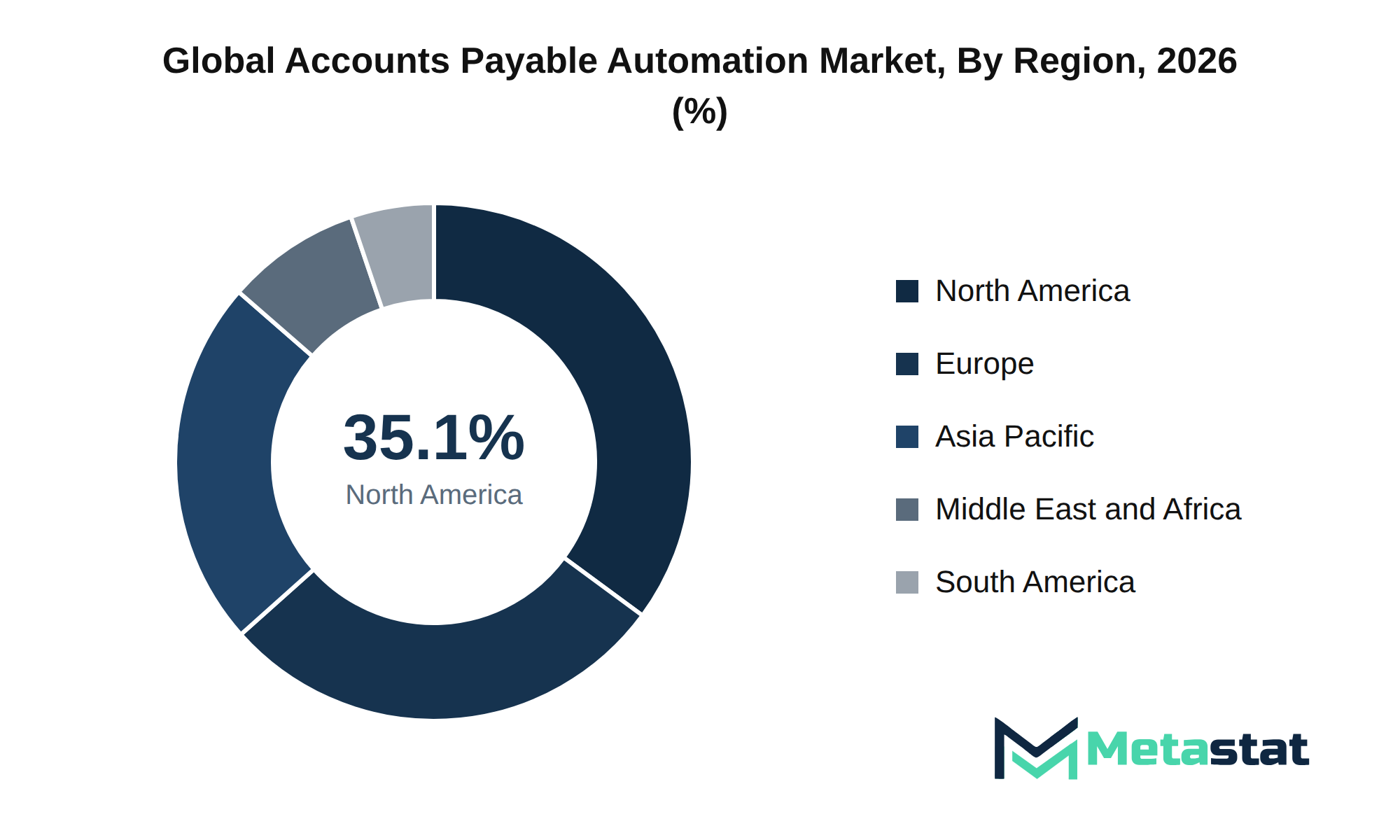
Organizations across the United States, Canada, and Mexico are accelerating adoption of digital financial workflows, driven by high transaction volumes and a strong focus on cost containment. Enterprises in technology, retail, and financial sectors emerge as primary adopters, reflecting their established digital infrastructure and the pressure to optimize working capital. The region holds a 35.1% share of the global Accounts Payable Automation market in 2025, underpinned by investments in scalable cloud-based solutions and integration with enterprise resource planning systems. Growing emphasis on regulatory compliance and audit transparency influences spending, particularly among publicly listed companies and those facing cross-border supplier relationships. By the end of 2033, the North America Accounts Payable Automation market is projected to reach USD 2,890.6 million, supported by ongoing digital transformation initiatives and the prioritization of operational efficiency in core business functions.
Europe accounted for 28.3% of the global Accounts Payable Automation market in 2025, supported by widespread digitalization and regulatory requirements that emphasize transparency and auditability in financial operations. Germany, the UK, and France emerge as the largest contributors, reflecting mature enterprise environments and a high rate of process automation across both public and private sectors. In these countries, strict compliance mandates and a strong focus on reducing manual intervention drive investment in advanced payables systems. Italy and Spain show growing adoption, particularly among mid-sized organizations seeking to improve cash flow management and supplier relationships. Russian enterprises and those in the Rest of Europe region increasingly transition to automated platforms, influenced by business continuity needs and shifting labor costs. Buyers across Western Europe stand out for early adoption of cloud-based deployment, with financial and operational efficiency gains serving as primary incentives. The region benefits from a technology-forward customer base and a consistent emphasis on cost control and compliance.
Rising digitalization across China, India, and Southeast Asia supports adoption in accounts payable functions, particularly among organizations managing supplier networks at scale. High volumes of cross-border transactions and regulatory digitization initiatives in China and India reinforce the region’s demand for advanced invoice processing solutions. Growth in the Asia-Pacific region accounted for 23.00% of the global Accounts Payable Automation market in 2025, reflecting strong participation from exporters and technology-driven businesses. Emerging technology hubs in South Korea and Australia emerge as early adopters of automation, drawn by the operational efficiencies and error reduction these solutions deliver. The scale of enterprise expansion in urban centers across Southeast Asia further expands the potential user base for providers, with sector-specific needs accelerating product localization and integration. This diversity of buyers, combined with evolving compliance requirements and investment in digital infrastructure, sustains demand and increases revenue opportunities for suppliers.
In South America, financial process automation is shaped by the distinct economic environment and the complexity of regulatory compliance in Brazil, Argentina, and neighboring countries. Enterprises in these markets experience strong pressure to minimize manual errors and reinforce auditability, particularly within banking, retail, and manufacturing sectors. Brazil stands out, supported by its large enterprise base and the rising digital transformation investments among mid-sized companies. Argentina and the Rest of South America demonstrate a gradual shift toward digital workflow adoption, driven by the pursuit of cost reductions and improved supplier management. The region accounted for 5.2% of global revenue in 2025, reflecting evolving business priorities. Adoption across these countries responds to increasing transaction volumes and the strategic drive to enhance operational resilience, increasing the commercial significance of automation solutions as providers position them to drive modernization and efficiency gains.
Adoption across the Middle East and Africa reflects a growing emphasis on financial control in Saudi Arabia, the UAE, and South Africa, where enterprises seek to improve accuracy in accounts processing and reduce fraud risk in cross-border transactions. Regulatory expectations around transparency and anti-money laundering, particularly in financial services and multinational corporations, influence solution uptake in these countries. In Saudi Arabia and the UAE, large enterprises and regional banks emerge as early adopters, aiming to strengthen compliance and minimize manual intervention in their payables cycle. South Africa’s established business services sector supports digital initiatives, while smaller organizations in the rest of the region increasingly evaluate scalable software with recurring payment volumes rising. Growing investment in cloud-based platforms enhances process efficiency and accelerates digital transformation across the region, resulting in steady expansion throughout the forecast period.
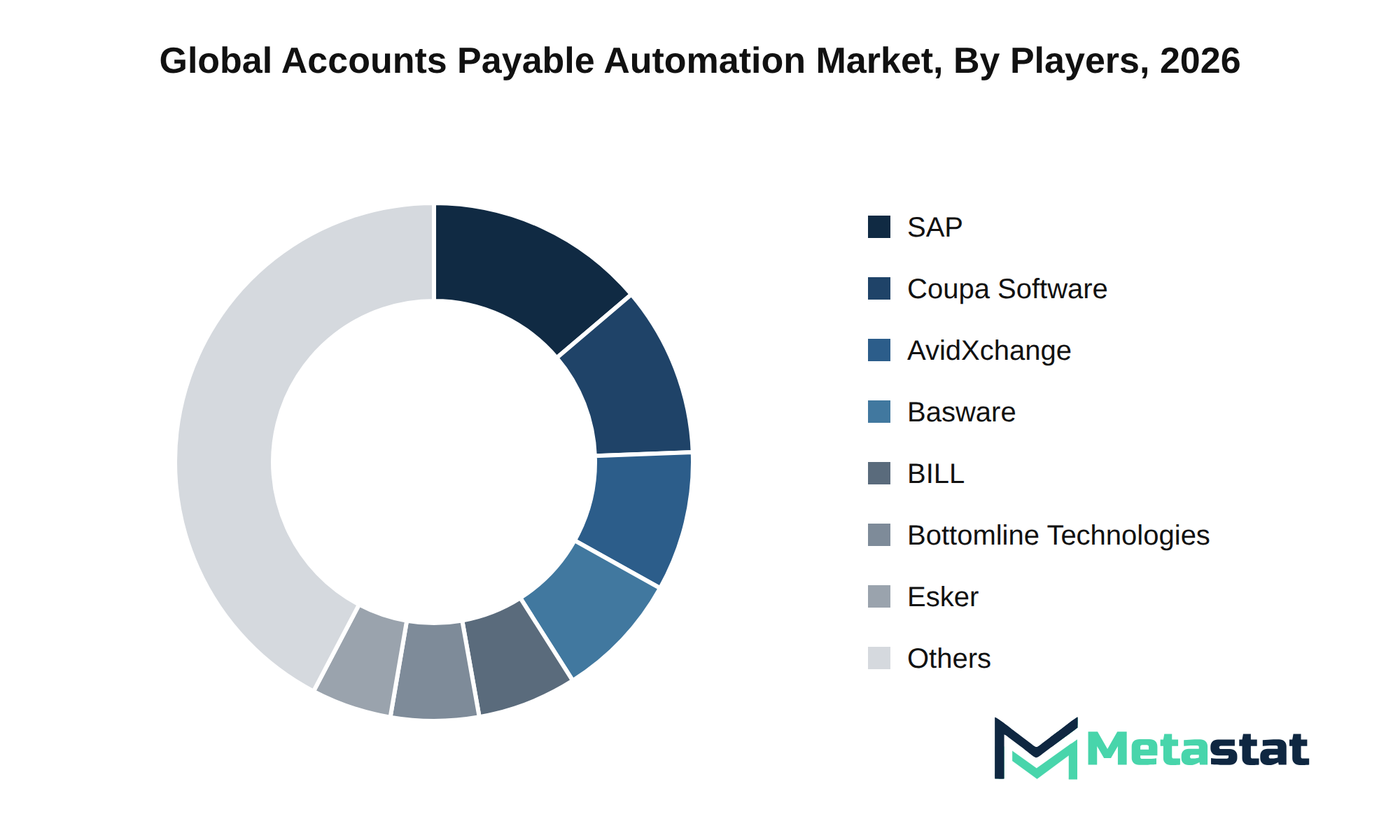
Competition in the Accounts Payable Automation market centers on software functionality, scalability, integration capabilities, and customer support. Vendors differentiate their offerings by prioritizing automation depth, ease of deployment, and alignment with diverse regulatory environments. Buyers compare providers by solution flexibility, pricing structures, customization options, and the ability to integrate with existing enterprise resource planning or accounting systems. Service quality and ecosystem compatibility influence purchasing decisions, especially for large enterprises working to streamline complex workflows and for small and medium-sized enterprises seeking to accelerate digital transformation.
Several companies stand out through specialized strategies. SAP and Oracle Corporation focus on broad integration and end-to-end automation, appealing to multinational organizations with complex compliance demands. Coupa Software Inc. and Tipalti, Inc. target mid-market and high-growth firms through cloud-native solutions, supporting rapid scaling and remote deployment. AvidXchange, Inc. and Basware advance adoption of analytics and artificial intelligence features, aiming to enhance invoice processing accuracy and provide insights for finance teams. Providers including Esker and Zycus Inc. emphasize user interface simplicity and industry-specific customization, addressing adoption barriers in sectors with unique payables processes. This competitive diversity supports dynamic buyer preferences and strengthens innovation across the market.
Continued adoption of cloud-based solutions is projected to drive the fastest expansion among deployment models. Cloud-based platforms are forecast to increase from USD 2,593 million in 2026 to USD 6,448 million by 2033, supported by scalability and operational efficiency that appeal to both large enterprises and small and medium-sized enterprises. Expansion among small and medium-sized enterprises, expected to reach USD 3,500.8 million by 2033, is driven by a need for accessible automation to streamline financial workflows. Growth in North America, projected to reach USD 2,890.6 million by 2033, depends on robust adoption rates among sectors including banking and manufacturing, where digital transformation initiatives are accelerating process automation.
The main risk for the market is a slowdown in digital transformation, particularly among traditionally manual sectors or regions with limited technology infrastructure. Delays in cloud migration, regulatory uncertainty, or cybersecurity concerns could restrict adoption, limiting the potential for the market to meet forecast expectations. If large segments including manufacturing or government and public sector hesitate to scale automation, overall growth is expected to moderate below projections.
By Component: Software, Services
By Deployment Model: Cloud-Based, On-Premises
By End-Use Industry: Banking, Financial Services, and Insurance, Manufacturing, Retail and E-commerce, Healthcare, IT and Telecommunications, Professional and Business Services, Transportation and Logistics, Government and Public Sector, Energy and Utilities, Others (Education, Hospitality, Construction)
The report strategically identifies and profiles the key market players and analyses their core competencies in each sub-segment of the Accounts Payable Automation market.
|
Report Attributes |
Details |
|
Study Period |
2021-2033 |
|
Base Year |
2025 |
|
Estimated Year |
2026 |
|
Forecast Period |
2026-2033 |
|
Historical Period |
2021-2025 |
|
Growth Rate |
CAGR 11.2% from 2026 to 2033 |
|
Revenue Unit |
USD million |
|
Segmentation |
|
|
By Region |
North America (By Component, Deployment Model, Organization Size, End-Use Industry, and Country)
|
|
|
|
Asia Pacific (By Component, Deployment Model, Organization Size, End-Use Industry, and Country)
|
|
|
|
|
Middle East and Africa (By Component, Deployment Model, Organization Size, End-Use Industry, and Country)
|
Find answers to common questions about this report
The Metastat Insights study reveals that the Accounts Payable Automation market size was valued at USD 3,786.7 million in 2025.
The Accounts Payable Automation market is projected to grow at a CAGR of 11.2% during the forecast period from 2026 to 2033.
According to Metastat Insights analysis, the North America Accounts Payable Automation market size is estimated to reach USD 2,890.6 million by 2033.
The Software segment leads by component, with a projected value of USD 6,060.1 million in 2033, outpacing Services. This leadership is based on forecasted revenue within the component segmentation.
Driver 1: Cloud-based deployment adoption accelerates growth, with the cloud-based segment projected to reach USD 6,448 million by 2033 and outpace on-premises solutions. Driver 2: North America leads regional demand, accounting for 35.1% of global share and projected to reach USD 2,890.6 million by 2033.
North America holds the dominant share with 35.1% of the total market. This region leads on a percentage basis compared to Europe at 28.3% and Asia Pacific at 23%.
High initial implementation costs restrict adoption among small and medium-sized enterprises. Integration challenges with legacy systems and existing enterprise resource planning platforms delay deployment and limit scalability for many organizations. These factors slow overall market expansion.
Cloud-based deployments act as the leading opportunity, supporting adoption among enterprise clients and small and medium-sized enterprises. Buyers favor these solutions for their scalability, simplified updates, and remote accessibility, driving expanded uptake across diverse organizations.
The Accounts Payable Automation market is estimated to reach a valuation of USD 8,856 million by 2033.
Key players in the Accounts Payable Automation industry include SAP, AvidXchange, Inc., Basware, BILL Holdings, Inc., Coupa Software Inc., and Oracle Corporation. These companies act as leading solution providers, supporting automation and digital transformation for finance departments across various sectors.
The analysts below cover Information & Technology research at Metastat Insights.
LEAD ANALYST
Utkarsh Khirodkar is a Lead Market Research Analyst at MetaStat Insight, specializing in market intelligence, technology sector assessments, and competitive strategy.

PRINCIPAL CONSULTANT - ENTERPRISE AI & EMERGING TECHNOLOGIES
Banking & Finance · Electronics and Semiconductor · Energy and Power · Healthcare IT · Information & Technology · Professional Services
Vijay Gunti is a Principal Consultant at MetaStat Insight, bringing over two decades of experience across enterprise digital transformation, technology strategy, and intelligent systems.

LEAD CONSULTANT - COMMUNICATION, TELECOM, AND IT
Electronics and Semiconductor · Information & Technology · Machinery & Equipment · Professional Services
Ravindra Sathe Consultants for Communication, Telecom, and IT at MetaStat Insight. He leads the firm's industry research initiatives across telecommunications infrastructure, digital connectivity, enterprise networking, and emerging information technology domains.
Scaling antibody-drug conjugate manufacturing hinges on contract manufacturing availability for high-potency active ingredients. The MetaStat Insight analysis looked closely at global cleanroom slot constraints, bioconjugation batch failure rates, and supply chain redundancies between the US, Europe, and India. The supplier capability matrix proved genuinely useful for our team when mapping secondary source options across our clinical pipeline.
Floating offshore wind feasibility relies heavily on specialized installation vessel availability and port crane limits, which most broad renewable energy forecasts ignore. The report delivered a thorough analysis of dry dock capacity, mooring chain supply constraints, and raw material pricing trends for deepwater anchor installations. It served as a solid independent sanity check for our offshore project capital expenditure assumptions.
Assessing commercial microgrid software adoption requires looking past top-level installation numbers and examining utility interconnection queues. The research provided verifiable data on average permitting timelines, tariff structures, and battery storage integration costs across regional utility territories. That grounded perspective was valuable for our team when building five-year demand projections for industrial microgrid controllers.
Explore related market intelligence reports worth reading alongside this one.
Starting from
$2950