
LEAD ANALYST
Utkarsh Khirodkar is a Lead Market Research Analyst at MetaStat Insight, specializing in market intelligence, technology sector assessments, and competitive strategy.

Global Operations Transformation Market Size, Share, By Service Type (Transformation Strategy & Advisory Services, Operating Model & Process Redesign Services, Technology Implementation & Integration Services, Managed Transformation Services, and Continuous Improvement & Performance Optimization Services), By Business Function (Supply Chain & Procurement Operations, Manufacturing & Production Operations, Finance & Accounting Operations, Customer Service & Contact Center Operations, Sales & Commercial Operations, Human Resources Operations, IT & Technology Operations, Risk & Compliance Operations, and Others), By Enterprise Size (Large Enterprises and Small & Medium Enterprises), By End-Use Industry (Banking, Financial Services & Insurance, Manufacturing, Retail & Consumer Goods, Healthcare & Life Sciences, Telecommunications, Media & Technology, Energy & Utilities, Transportation & Logistics, Government & Public Sector, Travel & Hospitality, and Others), Industry Analysis, Growth, Trends, and Forecast, 2026-2033
Report ID
MSI-5410
Published
October, 2026
Pages
295 Pages
Format
Historical
Base year
Forecast
Forecast period
Report Details
Market Valuation: Valued at $104.4 Billion in 2025, projected to reach $171.5 Billion by 2033 at a 6.4% CAGR.
Dominant Segment: Technology Implementation & Integration Services leads the market, projected to reach USD 54.8 billion by 2033. This growth is driven by the increasing demand for advanced technologies to enhance operational efficiency.
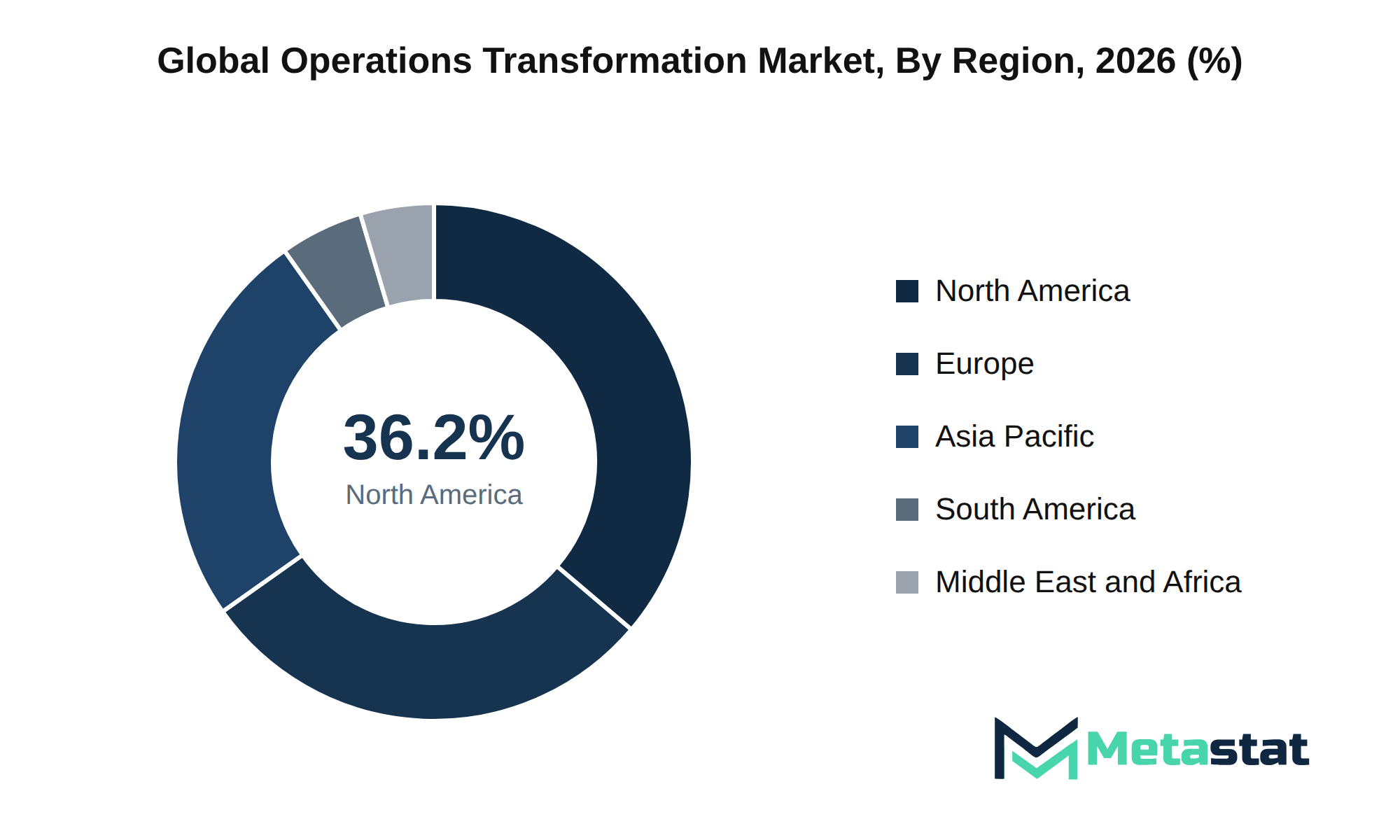
Geographic Lead: North America is the leading region, holding 36.2% of the market share in 2025, with the US expected to maintain its dominance in 2026 due to significant investments in digital transformation.
What's Inside: The report provides a comprehensive analysis of the Operations Transformation market, covering service types, business functions, enterprise sizes, and end-use industries, along with competitive insights and growth forecasts through 2033.
Investment Trends: Organizations are prioritizing investments in digital technologies, such as AI and cloud computing, to improve operational efficiency, driving demand for technology implementation and integration services.
Emerging Drivers: Cost pressures and ESG mandates are shaping spending patterns, compelling organizations to seek operational efficiencies and sustainable practices in their transformation strategies.
Choose Your License
Global Operations Transformation Market
The global Operations Transformation market was valued at USD 104.4 billion in 2025 and is projected to reach USD 171.5 billion by 2033, growing at a CAGR of 6.4% over the forecast period.
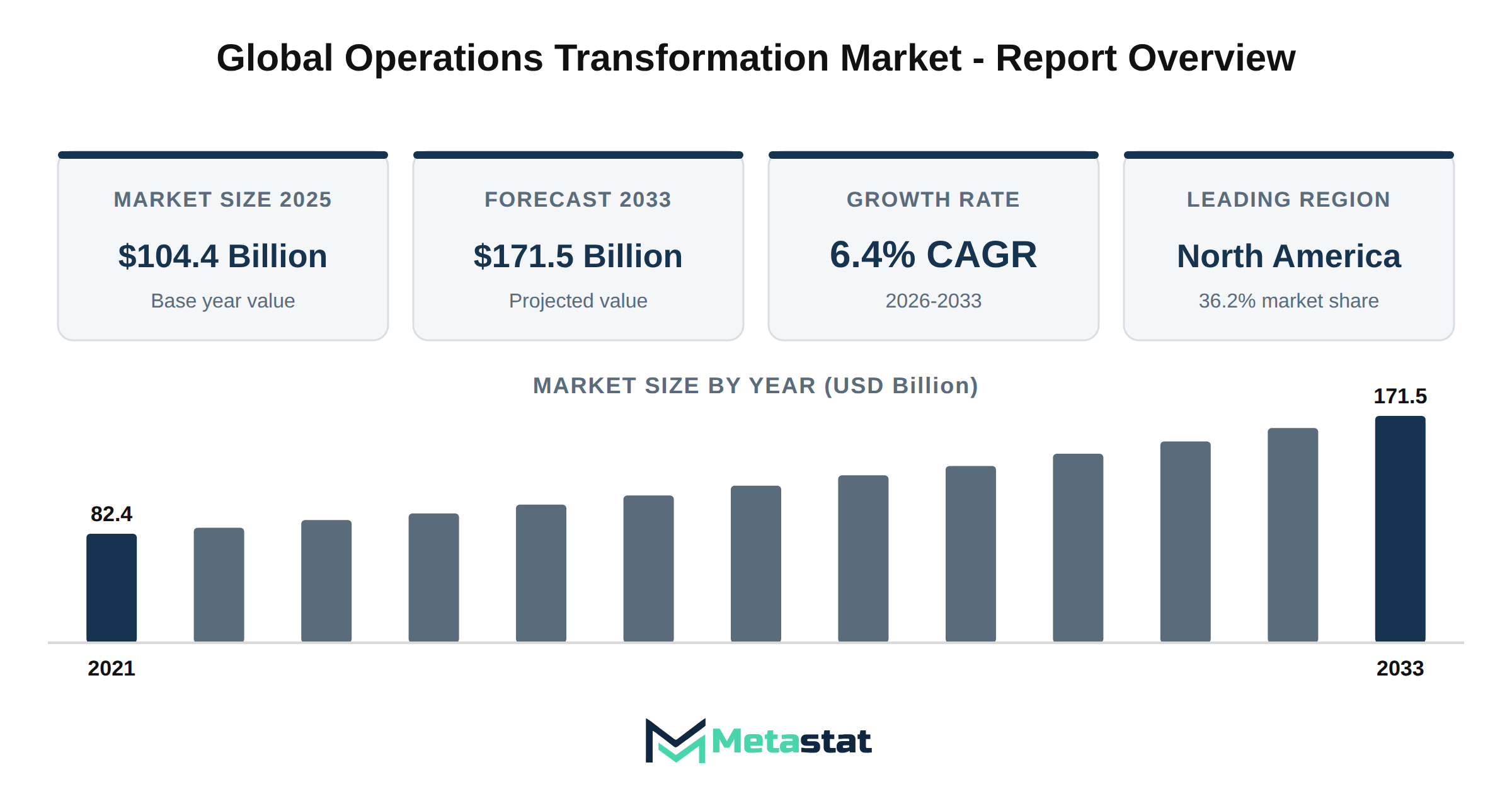
The Operations Transformation market encompasses a range of services that enhance organizational efficiency through strategic improvements and technology integration. This sector targets various buyer groups, including large enterprises, small and medium enterprises, and specific industries including banking and manufacturing. The shift towards digital transformation drives increased spending, with organizations seeking to streamline operations and reduce costs. Growth from USD 104.4 billion to USD 171.5 billion reflects heightened investment in services that facilitate operational excellence.
North America holds 36.2% in 2025, with the US leading the market share in 2026. The segment for Technology Implementation & Integration Services stands out, projected to reach USD 54.8 billion by 2033, reflecting strong demand for technological advancements in operations. The market benefits from the growing emphasis on process redesign and advisory services, which collectively aim to improve performance across various business functions. Overall, significant expansion occurs due to the need for companies to adapt to changing operational landscapes and maintain competitive advantages.
The offerings within this market target various organizational needs, focusing on strategic improvements, process redesign, and technology integration. Increased investments in technology implementation drive growth, with businesses prioritizing operational efficiency and agility. The transformation strategy and advisory services segment shows promising growth, with revenue anticipated to reach USD 38 billion by 2033, highlighting the demand for comprehensive guidance in navigating organizational change.
Large enterprises dominate spending in the Operations Transformation market, reflecting a shift towards advanced operational models. The healthcare and life sciences sector displays notable demand, driven by regulatory changes and the need for enhanced patient care. This emphasis on transformation aligns with the forecasted market expansion, projected to reach USD 171.5 billion by 2033. The competitive landscape features key players including McKinsey & Company and Deloitte Touche Tohmatsu Limited, enhancing their market positions through innovative service offerings and strategic collaborations.
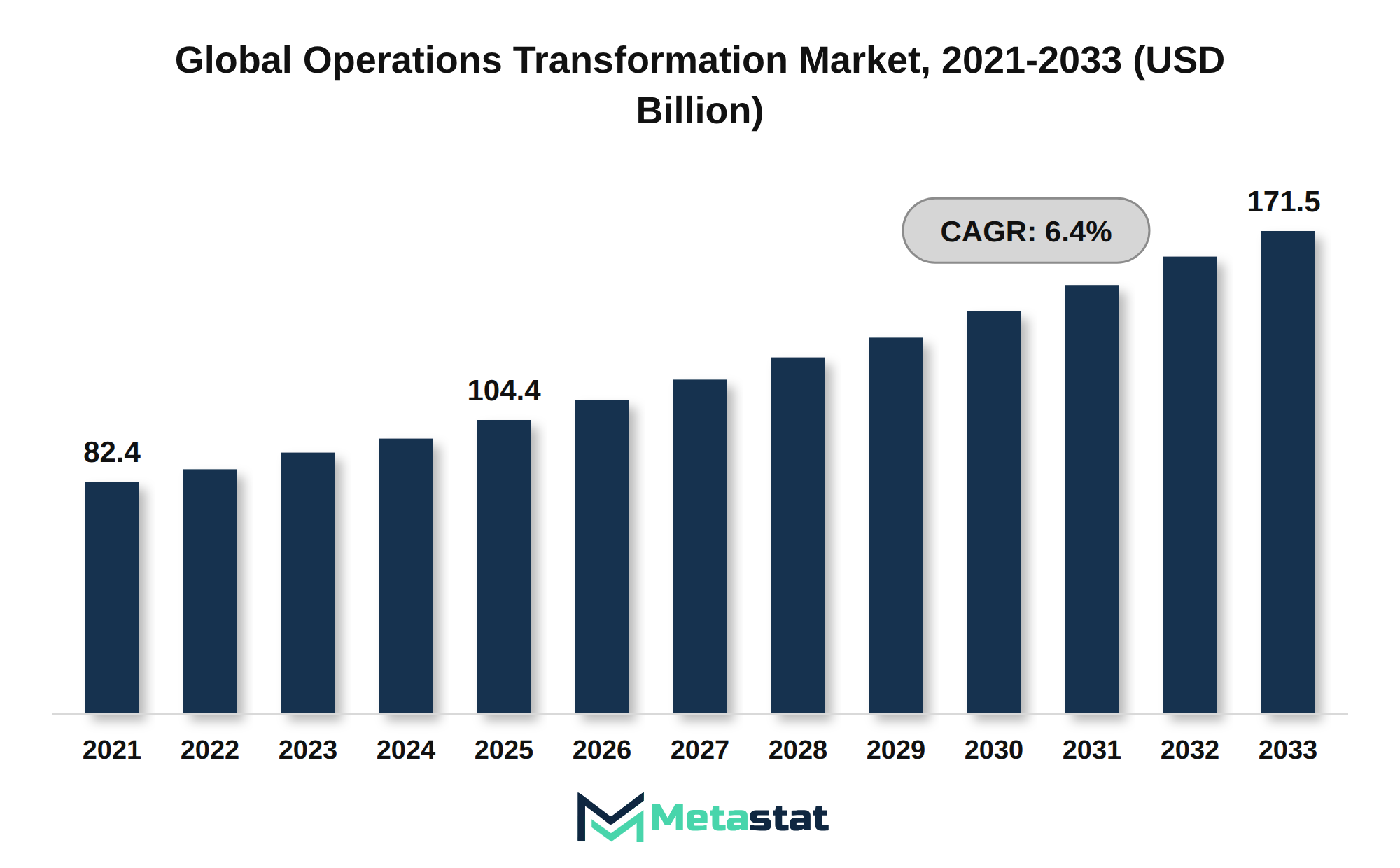
Hyperautomation, driven by advancements in artificial intelligence (AI) architecture, significantly impacts the Operations Transformation market. This approach integrates AI, machine learning, and robotic process automation to streamline operational processes across various industries. By 2033, the market is projected to reach USD 171.5 billion, indicating strong growth potential fueled by organizations seeking efficiency and cost-effectiveness.
Investments in technologies including agentic AI, which enables systems to make decisions autonomously, facilitate enhanced operational performance. Businesses across sectors, including finance and manufacturing, increasingly adopt these technologies to optimize workflows. In 2026, the demand for Technology Implementation & Integration Services is expected to reach USD 54.8 billion, highlighting the growing emphasis on incorporating advanced technologies within operational frameworks.
The integration of hyperautomation tools allows organizations to reduce operational costs while enhancing service delivery. For example, supply chain and procurement operations are anticipated to grow from USD 20.7 billion in 2026 to USD 30.2 billion by 2033, reflecting an increasing focus on efficiency and responsiveness in these critical business functions. This shift highlights the competitive advantage gained through automation and AI, driving investment in the market.
Legacy infrastructure modernization enhances the efficiency and agility of organizations. The transition from outdated systems to advanced digital frameworks facilitates integration of processes, which directly impacts organizational productivity. Investments in modernization activities are projected to drive substantial demand within the Operations Transformation market, particularly driven by enterprises seeking to eliminate bottlenecks and improve operational capabilities.
IT-OT convergence signifies the merging of information technology and operational technology, which improves data flow and communication across organizational silos. This convergence supports the emergence of more agile production environments and enhances responsiveness to market changes. The Operations Transformation market benefits significantly from this trend, driven by enterprises striving for integrated systems that allow real-time decision-making and optimize resource utilization.
Digital technologies represent a substantial investment focus for companies aiming to enhance operational efficiency. Technologies including cloud computing, artificial intelligence, and the Internet of Things facilitate innovative approaches to managing operations. While organizations allocate resources towards these technologies, the Operations Transformation market anticipates growth in service demand, particularly in technology implementation and integration services, which are essential for effective digital transformation initiatives.
Enterprise cost pressures significantly influence spending on Operations Transformation initiatives. Companies increasingly seek to streamline operations, reduce overheads, and enhance productivity to maintain competitiveness in a challenging economic landscape. The market reflects this trend, with a projected growth from USD 104.4 billion in 2025 to USD 171.5 billion by 2033, equating to a compound annual growth rate of 6.4%. Such financial pressures compel organizations to prioritize investments in transformation strategies that improve operational efficiency and reduce costs.
Environmental, social, and governance (ESG) mandates have emerged due to critical factors affecting the Operations Transformation market. Organizations face increasing pressure from stakeholders to adopt sustainable practices and demonstrate social responsibility. This shift in focus not only pertains to compliance but prioritizes long-term value creation. Companies integrate ESG considerations into their transformation strategies, influencing both operational processes and investment allocations. This trend drives innovation in sustainable technologies and practices, further increasing demand in the market.
The growing need for technology implementation and integration services significantly impacts the Operations Transformation market. Organizations pursue advanced technologies to enhance operational capabilities and agility in response to shifting consumer expectations. The market anticipates a substantial increase in technology implementation services, projected to reach USD 54.8 billion by 2033. This focus on tech-driven transformation provides a competitive edge, equipping businesses to adapt quickly to market changes while improving overall efficiency.
Increasing focus on supply chain resilience significantly influences the Operations Transformation market. Disruptions from global events, including pandemics and geopolitical tensions, have prompted organizations to invest heavily in resilient supply chain strategies. This investment shift targets not only recovery from disruptions but long-term operational stability and efficiency.
Autonomous logistics enhances supply chain operations. Automation technologies, including robotics and artificial intelligence, significantly improve efficiency by streamlining processes and reducing human error. The integration of these technologies allows companies to respond swiftly to market changes and customer demands. The emergence of autonomous delivery vehicles and drones provides faster and more reliable logistics solutions, appealing to businesses seeking competitive advantages in customer service.
The rising demand for real-time data analytics within supply chains drives investment in technology implementation services. Organizations recognize that data-driven insights allow them to make informed decisions, optimize inventory levels, and enhance overall efficiency. While businesses increasingly rely on data analytics, the segment dedicated to technology implementation and integration services is poised for significant growth in the coming years, further propelling the Operations Transformation market.
Organizations are increasingly prioritizing digital transformation initiatives to enhance operational efficiency and adapt to changing market demands. This shift is driven by the need for improved agility, data-driven decision-making, and streamlined processes, leading to an uptick in investments in operations transformation services. Key sectors including manufacturing, retail, and finance actively seek solutions that optimize workflows and leverage technology integration to achieve competitive advantages. This focus on transformation strategies enhances capabilities and drives sustained growth, influencing overall market dynamics.
Research indicates that organizations undertaking digital transformation efforts experience significant improvements in performance and productivity. This trend highlights the vital role that technology implementation plays in shaping the future of the market. While businesses continue to evolve in response to external pressures, the demand for operations transformation services is projected to rise, further influencing the market's trajectory.
High costs associated with Operations Transformation services create barriers for several buyer segments. Organizations with limited budgets, including small and medium enterprises, frequently face challenges in committing to extensive transformation projects. Price sensitivity influences their decision-making processes, resulting in delayed adoption and smaller project scopes. For instance, the anticipated growth in demand for technology implementation and integration services does not fully materialize due to financial constraints in these segments.
Larger enterprises, while having greater resources, often approach investment in transformation cautiously, prioritizing cost-effectiveness and measurable returns. This scrutiny leads to extended evaluation periods before project initiation. The overall consequence of price sensitivity manifests in slower market uptake, hindering the potential for significant revenue growth within this segment.
Growing talent costs pose significant challenges for suppliers operating in the market. The demand for skilled professionals in transformation strategy, technology implementation, and process redesign has surged, resulting in increased competition for qualified personnel. This situation leads to higher wages and benefits, which directly impact operational margins. Suppliers respond by investing in training and development programs to nurture internal talent, thereby reducing reliance on external hiring. Many firms explore automation solutions to streamline service delivery, enhancing productivity while controlling labor costs. Firms that successfully integrate advanced technologies into their service offerings maintain competitive pricing structures, which is essential for sustaining profitability in a market characterized by rising operational expenses. The pressure on margins remains a critical aspect for suppliers, influencing pricing strategies and service development initiatives. Ultimately, the ability to manage talent costs effectively will determine the competitive positioning of firms in the evolving landscape.
A significant growth area involves technology implementation and integration services, particularly among small and medium enterprises (SMEs). This segment is projected to achieve a compound annual growth rate (CAGR) of 7.9 percent, reaching USD 60.5 billion by 2033. Factors driving this growth include increasing awareness of process efficiency and digital transformation. SMEs invest in technology solutions to enhance operations and remain competitive. This demand stems from a shift towards cloud-based services and automation tools, offering cost-effective options for improving productivity and streamlining operations. The trend illustrates a clear pivot towards modernizing business processes through technology, further penetrating the market. Suppliers focusing on tailored solutions for SMEs will capture significant market share and drive operational improvements. Rising adoption of technology by SMEs indicates a robust opportunity for providers in the market.
The Global Operations Transformation market is segmented based on Service Type, Business Function, Enterprise Size, and End-Use Industry.
Transformation Strategy & Advisory Services is valued at USD 27 billion in 2026 and is projected to reach USD 38 billion by 2033, at a CAGR of 5% during the forecast period. This segment serves organizations seeking expert guidance and comprehensive strategies to optimize operations and navigate complex challenges. Growth within this segment is driven by increasing demand for tailored solutions to enhance operational effectiveness, particularly among large enterprises that prioritize strategic alignment and digital transformation. Transformation Strategy & Advisory Services differentiates itself from other segments through its focus on high-value consulting and advisory capabilities, which command premium pricing. The segment's anticipated growth reflects a shift towards integrating innovative methodologies and frameworks that support organizational agility and resilience. In a competitive landscape, organizations increasingly rely on these services to achieve sustainable improvements and drive long-term success, reinforcing the segment's critical role in the overall market.
Operating Model & Process Redesign Services segment is estimated to reach USD 34.7 billion by 2033, at a CAGR of 5.2% during the forecast period. This segment focuses on restructuring existing operational models and processes, often employed by organizations aiming to improve efficiency and adapt to market changes. Demand for these services arises from the need for greater agility and responsiveness in operations, particularly among large enterprises, which prioritize strategic alignment and operational excellence. The competitive landscape is influenced by advancements in technology and methodologies that enhance process optimization. In contrast to other segments like Technology Implementation & Integration Services, which experience higher growth rates due to rapid technological advancements, Operating Model & Process Redesign Services maintains steady demand driven by continuous organizational improvement efforts. This stability reflects the necessity of refining operational frameworks in various industries to remain competitive.
This segment focuses on deploying and integrating advanced technologies to improve operational efficiency for various organizations, making it a vital resource for businesses seeking digital transformation. The demand for these services has surged due to the increasing reliance on technology solutions, particularly in sectors including manufacturing and retail. With a compound annual growth rate (CAGR) of 5.2 percent, this segment demonstrates a stable growth trajectory compared to others. In this segment, the growing need for effective technology integration enhances productivity and operational agility. Unlike other service types that emphasize strategic advisory or process redesign, this segment specifically addresses the complexities of technology deployment, catering to organizations that prioritize robust technological frameworks.
Managed Transformation Services segment is projected to grow at a CAGR of 6.7% during the forecast period. This segment comprises comprehensive support for organizations navigating operational changes, often employed by large enterprises seeking to enhance their efficiency and effectiveness. The demand stems from the increasing complexity of business environments, which drives organizations to seek external expertise for transformation initiatives. Unlike other service types, the Managed Transformation Services segment emphasizes ongoing support and strategic alignment, addressing organizational needs through tailored solutions. The growing emphasis on agility in business processes influences this segment, leading to a higher willingness to invest in such services. In 2026, this segment starts at USD 75.8 billion, highlighting its importance in the market landscape. The Operations Transformation market reflects these changes due to businesses recognizing the value of sustainable transformation strategies to remain competitive.
Continuous Improvement & Performance Optimization Services focus on enhancing operational efficiency through systematic evaluation and refinement of processes. Organizations engage these services to identify inefficiencies and implement strategies that drive productivity gains. The growing emphasis on maximizing efficiency across various sectors pushes demand for these services, particularly in industries including manufacturing and healthcare, where operational excellence is crucial. Key drivers include the increasing complexity of business environments and the need for organizations to adapt swiftly to market changes. This segment stands out because a targeted approach, typically involving lower initial costs compared to comprehensive transformation initiatives. It attracts businesses seeking immediate enhancements rather than large-scale overhauls. The market sees heightened interest in this segment due to its potential for delivering quick wins and measurable results.
Valued at USD 20.7 billion in 2026, this segment is projected to reach USD 30.2 billion by 2033, at a CAGR of 5.6% during the forecast period. Supply Chain & Procurement Operations serve because critical functions for organizations aiming to streamline processes and enhance efficiencies. Demand for these services is driven by the increasing need for organizations to optimize their supply chains in response to global market pressures. While companies face challenges related to supply chain disruptions, investments in this segment are becoming imperative. Compared to other segments, including Manufacturing & Production Operations, which is projected to reach USD 28.8 billion by 2033 with a CAGR of 5.7%, Supply Chain & Procurement Operations exhibit steady growth while addressing unique challenges related to procurement strategies and supplier relationships. The market continues to evolve, pushing organizations to rethink their operational strategies and the role of procurement in achieving overall business objectives.
Manufacturing & Production Operations segment is estimated to reach USD 27 billion by 2033, at a CAGR of 5.6% during the forecast period. This segment serves manufacturers and production companies, focusing on optimizing processes and enhancing production efficiency. Increasing demand for automation and streamlined operations drives growth within this segment, enabling organizations to improve productivity and reduce operational costs. Unlike other segments, including Supply Chain & Procurement Operations, which is projected to grow at a CAGR of 5.6%, Manufacturing & Production Operations experiences a robust trajectory due to its critical role in overall operational efficiency. Companies in this segment adopt various operational transformation strategies to remain competitive, particularly in an environment where technological advancements and evolving consumer demands shape market dynamics. The market reflects a strong need for solutions that enhance production capabilities while addressing cost constraints and efficiency challenges.
Finance & Accounting Operations segment is expected to reach USD 23.1 billion by 2033. This segment plays a critical role in managing financial transactions, audits, and compliance for organizations across various industries. Increasing focus on automation and digital tools drives adoption among large enterprises that seek to enhance efficiency and accuracy in financial processes. Compared to other segments, Finance & Accounting Operations experiences moderate growth rates, influenced by the complexity of regulatory requirements and the necessity for robust financial oversight. The segment is projected to grow at a CAGR of 5.6% through 2033, highlighting its importance in the evolving landscape of the market. Key players invest in technology solutions to streamline operations, allowing organizations to allocate resources more effectively while navigating changing market dynamics.
Customer Service & Contact Center Operations segment is projected to grow at a CAGR of 6.8% during the forecast period. This segment plays a critical role in enhancing customer satisfaction and retention for various organizations, particularly in sectors including retail, banking, and healthcare. Investment in advanced communication technologies drives growth, allowing companies to improve response times and service quality. Enhanced customer experience has become a focal point for many businesses, prompting increased spending in this area. Unlike other segments, this one experiences a faster growth trajectory due to the rising importance of customer engagement initiatives. Organizations prioritize effective communication channels, positioning this segment with higher growth potential than Finance & Accounting Operations, which reaches USD 23.1 billion by 2033. The market responds to changing consumer expectations, emphasizing the strategic importance of customer service capabilities.
Sales & Commercial Operations encompass strategies and activities focused on driving revenue and enhancing customer relationships. Organizations across various industries employ this segment to streamline sales processes, optimize pricing strategies, and improve customer engagement. A primary driver influencing this segment involves the increasing emphasis on data-driven decision-making, which enables firms to tailor their sales approaches to meet evolving customer demands. This focus on leveraging analytics sets this segment apart from others, often resulting in higher investment in technology and training to support sophisticated sales methodologies. Compared to sibling segments, Sales & Commercial Operations typically experience moderate growth due to the competitive nature of sales environments, where organizations strive to capture market share. The evolution of the Operations Transformation market creates opportunities for firms to enhance their sales capabilities through innovative solutions and practices.
This segment focuses on Human Resources Operations, which involves managing employee-related processes, including recruitment, training, performance management, and employee engagement. Corporations leverage these services to enhance workforce efficiency, align talent strategies with business objectives, and optimize human capital. Demand for these services arises from an increased emphasis on employee experience and retention, driven by evolving workforce dynamics and competitive hiring practices. Growing labor costs and a tightening labor market increase the urgency for organizations to streamline their HR processes and adopt innovative solutions. Compared to other business functions, Human Resources Operations often experiences different pricing strategies and sales cycles, resulting in varied adoption rates across sectors. The Operations Transformation market reflects this diversity, highlighting the need for tailored approaches to meet distinct organizational goals in managing talent effectively.
IT & Technology Operations involve the strategic management and optimization of technological resources to enhance operational efficiencies. Enterprises leverage this segment for improved system performance, data management, and the integration of advanced technologies. Increasing reliance on automation and cloud computing significantly influences demand, pushing organizations to adopt innovative solutions. The segment experiences faster growth compared to others in the business function category, driven by the urgent need for digital transformation across sectors. Companies prioritize investments in technology infrastructure to remain competitive, with a notable focus on enhancing data security and system interoperability. This shift differs from other segments where traditional processes dominate, leading to a broader range of service offerings tailored to evolving technological needs within this segment.
Risk & Compliance Operations address the critical need for organizations to manage regulatory requirements and mitigate risks effectively. These services are essential for businesses operating in highly regulated industries, including banking and healthcare, where compliance is critical. The increase in regulatory scrutiny and evolving compliance standards drive demand for specialized services in this segment. Strong growth in regulatory requirements results in organizations prioritizing risk management strategies, thereby increasing the importance of compliance operations. This segment experiences distinct challenges compared to its siblings, including navigating complex regulations and ensuring adherence to compliance frameworks. Demand for these services is particularly strong among large enterprises seeking to enhance their governance frameworks and reduce potential liabilities. In contrast, segments including Supply Chain & Procurement Operations focus more on efficiency improvements rather than regulatory compliance, leading to differing growth dynamics within the market.
This segment encompasses various functions related to product development and field service operations. Industries leverage these services to enhance efficiency, improve product timelines, and optimize service delivery. Factors driving this segment include evolving technological capabilities and the need for businesses to adapt to rapid market changes. Companies adopting innovative practices see improved customer satisfaction and operational performance. Compared to other segments, this area experiences unique challenges, including integrating advanced technologies into existing workflows. The demand for tailored solutions sets this segment apart from others, resulting in different pricing structures and targeted buyer groups. Organizations seeking to remain competitive prioritize these services, recognizing their potential to drive significant operational improvements. Strong competition in this sector leads to dynamic pricing strategies, driven by firms striving to attract clients looking for specialized support.
Large enterprises engage services focused on enhancing operational efficiencies, which typically encompass comprehensive transformation strategies and technology integration. Demand for these services is driven by increasing competition and the necessity for large organizations to adapt to changing market dynamics. The growth of this segment outpaces that of small and medium enterprises, which face different challenges and often have limited resources for extensive transformation initiatives. Larger clients benefit from economies of scale, allowing for a more significant investment in advanced technologies and advisory services. This strategic investment enables large enterprises to maintain a competitive edge in a challenging environment, reinforcing their position within the market.
Small & Medium Enterprises segment is estimated to reach USD 60.5 billion by 2033, at a CAGR of 7.9% during the forecast period. This segment primarily serves businesses seeking to optimize operations, enhance efficiency, and reduce costs. The increasing recognition of the importance of digital transformation drives demand for operations transformation solutions among smaller enterprises, allowing them to compete effectively with larger counterparts. In contrast to Large Enterprises, which are projected to reach USD 111 billion by 2033, the rapid growth rate of the Small & Medium Enterprises segment highlights the unique challenges and opportunities these businesses face. Adoption barriers, including limited resources and expertise, continue to influence the pace of transformation. Nevertheless, the focus on affordable solutions and the rise of cloud-based technologies facilitate greater access to essential services, contributing to the segment's expansion within the broader market.
Valued at USD 20.5 billion in 2026, this segment is projected to reach USD 29.9 billion by 2033, at a CAGR of 5.5% during the forecast period. Financial institutions engage in operations transformation to streamline processes, enhance customer experiences, and ensure compliance with regulatory standards. The increasing emphasis on digitalization and data-driven decision-making drives demand, compelling organizations to invest in innovative solutions. This segment distinguishes itself from others in the market due to its focus on highly regulated environments, which necessitate additional layers of oversight and security. Ongoing technological advancements in banking, including blockchain and artificial intelligence, create opportunities for transformation and efficiency gains that are not present in sectors less reliant on technological integration. The unique characteristics of the Banking, Financial Services & Insurance segment position it for sustained growth within the broader operations transformation landscape.
This segment serves industries focused on producing goods and optimizing production processes, emphasizing efficiency and quality. Growth in this segment is driven by advancements in technology, particularly automation and the integration of smart manufacturing solutions. These innovations enhance productivity and reduce operational costs, appealing to manufacturers seeking competitive advantages. This segment outpaces others, including retail and consumer goods, which experience slower growth rates. Manufacturers invest in technology implementation and integration services, reflecting a shift towards more efficient operations. The increasing complexity of manufacturing processes necessitates tailored solutions, positioning this segment because a crucial area of focus within the market. The manufacturing segment highlights the importance of continuous improvement and adaptability in an evolving industrial landscape.
Retail & Consumer Goods segment is expected to reach USD 21.9 billion by 2033. This segment serves major retailers and consumer goods manufacturers, focusing on enhancing operational efficiency and customer engagement. Driving factors include the increasing demand for personalized shopping experiences, pushing businesses to invest in operational transformation strategies. While the overall market expands at a CAGR of 6.4%, this segment exhibits significant growth, propelled by the continual evolution of consumer preferences and behaviors. The segment differs from others like Banking, Financial Services, and Insurance, which experience more restrained growth due to stricter regulatory environments. Transformation initiatives in Retail & Consumer Goods focus on leveraging technology to optimize supply chains and improve customer interactions, positioning it because a crucial area for investment within the Operations Transformation market.
Healthcare & Life Sciences segment is projected to grow at a CAGR of 7.3% during the forecast period. This segment primarily focuses on operational improvements within healthcare providers, life sciences organizations, and pharmaceutical companies. Increased demand for improved patient outcomes and operational efficiency drives this segment forward. The adoption of advanced technologies, including electronic health records and data analytics, enhances operational efficiencies while ensuring compliance with regulatory standards. Compared to other segments, this sector experiences stronger growth due to heightened emphasis on digital transformation and the necessity for enhanced healthcare services. This positions the segment for significant financial expansion, with a noteworthy increase anticipated by 2033. The operations transformation market continues to evolve, driven by organizations prioritizing innovative solutions to meet changing demands in the healthcare landscape.
Telecommunications, Media & Technology encompasses a broad range of services and solutions tailored to enhance communication and information dissemination. This segment serves various organizations that rely on digital infrastructure and media platforms to drive engagement and operational efficiency. Significant advancements in technology, particularly in digital transformation, drive growth within this segment. The need for enhanced connectivity and streamlined processes influences operator investments in modernizing their service offerings. Compared to other segments, this sector experiences heightened demand for innovative solutions, reflecting a changing environment marked by rapid technological change. Organizations operating in this space prioritize flexibility and responsiveness, enabling them to adapt swiftly to evolving customer preferences and competitive pressures. Increased focus on cloud services and data analytics significantly influences operational strategies, positioning telecommunications, media, and technology because key players in shaping the future of business operations. The Operations Transformation market continues to show robust interest from these sectors, emphasizing the critical role they play in driving overall market growth.
Energy & Utilities involves the provision of essential services related to electricity, water, and natural gas. This segment serves municipalities, large enterprises, and industrial clients by optimizing their operations and enhancing service delivery. A significant driver influencing this segment includes the increasing demand for sustainable energy solutions, compelling companies to adopt advanced technologies that improve efficiency and reduce costs. Regulatory frameworks and government initiatives focused on renewable energy adoption spur investments in transformation strategies. This segment exhibits slower growth compared to others, with an emphasis on safety and compliance, which leads to higher operational costs. The focus on sustainable practices distinguishes Energy & Utilities from segments like Manufacturing, where operational efficiencies and cost reduction take precedence. The Operations Transformation market reflects these dynamics, driven by organizations seeking innovative solutions to navigate a rapidly changing energy landscape.
Transportation & Logistics encompasses the management of goods movement across various channels, facilitating the efficient delivery of products to consumers and businesses. Key players in this segment include logistics providers, freight carriers, and supply chain managers who optimize transportation networks to reduce lead times and costs. Demand for innovative solutions drives the sector, particularly advancements in technology that enhance tracking, routing, and inventory management. The focus on sustainability influences investments in eco-friendly transportation practices and alternative fuels. Compared to other segments, this area experiences distinct challenges, including fluctuating fuel prices and regulatory compliance, which hinder operational efficiency. While several segments focus on different operational processes, Transportation & Logistics remains critical in connecting suppliers and customers, directly impacting overall market performance.
This segment addresses the essential functions pertaining to Government and Public Sector operations. These services are critical for public institutions aiming to enhance efficiency, transparency, and citizen engagement. Increased demand arises from the necessity for digital transformation initiatives and improved service delivery. Regulatory pressures shape this segment distinctly, because government entities face strict compliance requirements that influence their operational strategies. Unlike other segments, which prioritize rapid technological adoption or immediate cost savings, the Government and Public Sector segment focuses on long-term sustainable practices that ensure accountability and public trust. Investments directed toward modernizing infrastructure and processes stand out, reflecting an emphasis on aligning with evolving citizen expectations. The Operations Transformation market continues to adapt to these unique demands, illustrating the specific challenges faced by public sector organizations in navigating transformation successfully.
Travel & Hospitality encompasses various services related to leisure and business travel, including accommodations, transportation, and event planning. This segment serves a diverse range of clients, including individual travelers, corporate entities, and tourism organizations. A significant driver in this segment involves the growing demand for personalized experiences, with consumers increasingly seeking tailored travel solutions that enhance overall satisfaction. Companies within this segment leverage technology to optimize booking processes and improve customer engagement, enhancing operational efficiency. In comparison to other segments, Travel & Hospitality often experiences fluctuations based on economic conditions and consumer confidence, impacting spending patterns. The emphasis on customer satisfaction and experience differentiates this segment, positioning it for innovation within the Operations Transformation market.
Professional services, education, and real estate comprise a critical segment that focuses on providing expertise and solutions tailored to various client needs. Organizations in these fields implement transformation strategies to enhance operational efficiency, adapt to market changes, and improve service delivery. The demand for innovative solutions in education and real estate stems from shifting consumer expectations and the necessity for improved service quality. In this context, firms within this sub-segment seek to differentiate themselves through specialized offerings, resulting in higher service costs compared to other segments, including manufacturing. This segment responds to these trends by encouraging collaboration and integrating technology to streamline processes, ensuring that participants remain competitive while achieving desired outcomes.
Based on geography, the Global Operations Transformation market is divided into North America, Europe, Asia-Pacific, South America, Middle East, and Africa.
Projected to reach USD 58 billion by the end of 2033, this region plays a critical role in the market. The United States, Canada, and Mexico comprise the primary countries driving growth, with a notable emphasis on the technology and manufacturing sectors. Increased investment in digital transformation initiatives highlights the importance of adopting innovative operational strategies. Factors including the growing need for efficiency and cost reduction across various industries contribute to this trend. Large enterprises are particularly active in pursuing advanced operational frameworks, which serve to enhance their competitive positioning in a dynamic market. Demand for transformation strategies within North America continues to strengthen, leading to an anticipated rise in market value over the forecast period.
In Europe, the Operations Transformation market is driven primarily by sectors including manufacturing and financial services. Increasing demand for operational efficiency and innovation remains evident, particularly in countries including Germany, France, and the UK. Solid infrastructure and an emphasis on technology adoption enhance competitive advantages for businesses in these regions. Regulatory pressures prompt organizations to streamline processes and ensure compliance, fueling the need for transformation services. Countries including Italy and Spain contribute significantly, focusing on enhancing supply chain and procurement operations. The market's projected growth reflects a combined effort to optimize operations, with a share of 29.00% expected in 2025. Investments in technology implementation and process redesign are vital for achieving desired outcomes across various business functions.
Asia-Pacific represents a 25.0% share of the global market, accounting for USD 1,004.1 million in 2025. The region's demand is driven by rapid growth in technology implementation and integration services, particularly in countries including China, India, and Japan. These countries exhibit strong investments in digital transformation initiatives that enhance operational efficiencies. The shift towards automation and smart manufacturing in South Korea and Australia further supports this trend, leading to increased spending on operations transformation. Southeast Asia demonstrates a growing interest in optimizing supply chain and procurement operations, enhancing competitive advantages. The region's infrastructure improvements and governmental support for technological advancements contribute to a favorable environment. The operations transformation market in Asia-Pacific is anticipated to experience significant expansion driven by businesses focusing on innovation and efficiency.
In South America, the Operations Transformation market experiences growth driven by the increasing need for efficiency in various sectors, particularly in Brazil and Argentina. Transformation in supply chain and procurement operations stands out, reflecting a response to evolving consumer demand and the need for cost optimization. Investments in technology and process redesign are integral for companies aiming to enhance operational agility. The market share in 2025 reflects significant engagement. Companies in this region focus on adopting innovative solutions to navigate competitive pressures and align with global standards. The ongoing digital transformation initiatives across industries highlight the significance of the market in achieving operational excellence. Brazil and Argentina, because key players, play a crucial role in this evolution, contributing to the overall market dynamics.
Demand for operations transformation services in the Middle East and Africa is driven by significant growth in sectors including banking, financial services, and manufacturing. Countries like Saudi Arabia and the UAE prioritize digital transformation initiatives, enhancing operational efficiencies and improving service delivery. This trend creates a growing appetite for transformation strategies across various enterprises. South Africa contributes to the market's expansion due to increasing investments in technology adoption. The region is projected to account for 4.6% of the global market share in 2025. With a focus on modernization, the operations transformation market experiences steady growth, supported by large enterprises and small to medium-sized companies seeking to optimize their processes and services.
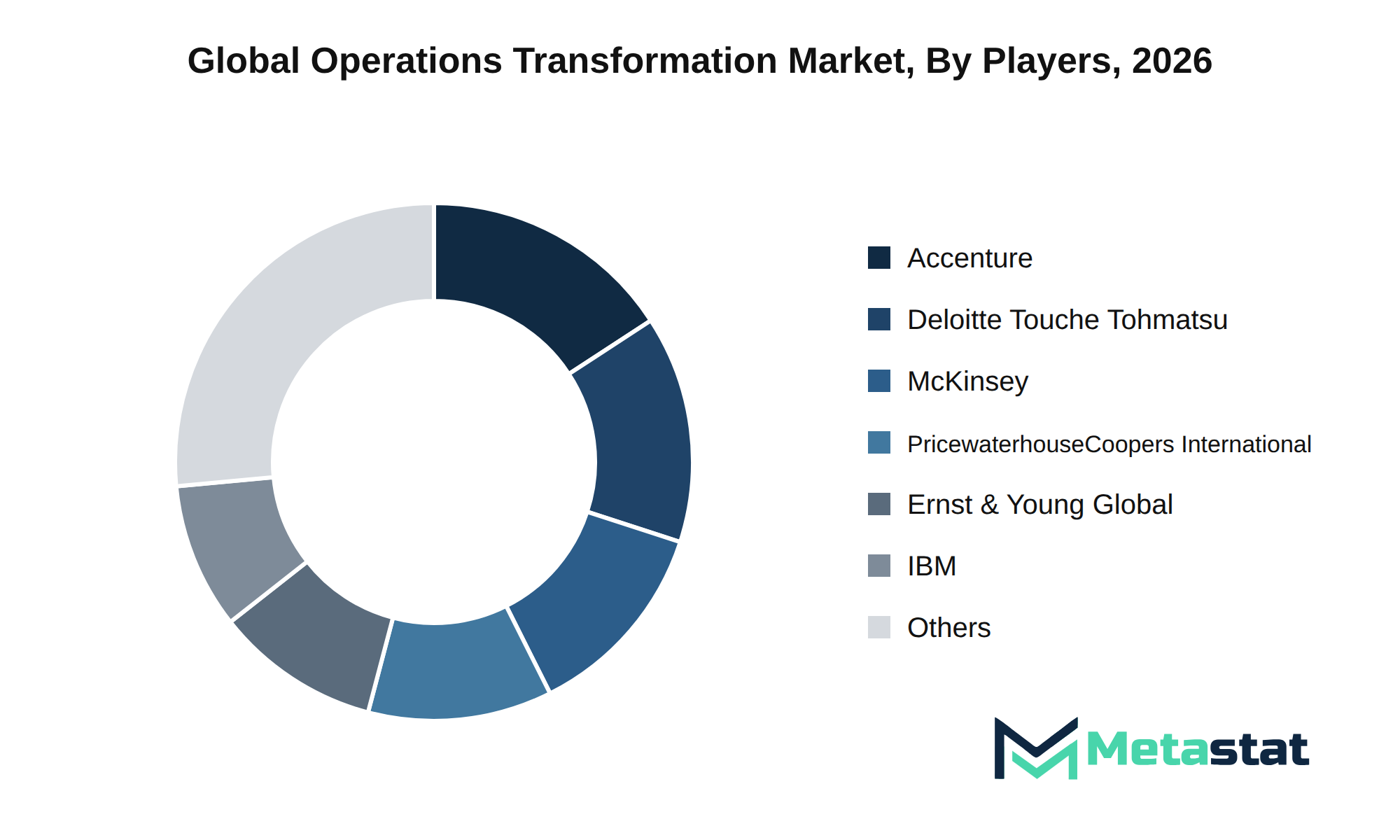
Companies in the Operations Transformation market compete through various strategies and service offerings. Buyers prioritize factors including price, customization, certification, and service quality when selecting providers. This leads to distinct positioning among firms, where expertise in specific areas influences buyer decisions.
Firms including McKinsey & Company and Deloitte Touche Tohmatsu Limited excel in Transformation Strategy & Advisory Services, catering to organizations aiming for comprehensive operational changes. Meanwhile, Accenture plc and IBM Corporation emphasize Technology Implementation & Integration Services, targeting enterprises that require robust IT solutions to support their transformation journeys.
Companies like Ernst & Young Global Limited and KPMG International Limited focus on Banking, Financial Services & Insurance, leveraging their industry knowledge to provide tailored solutions. In contrast, Capgemini SE and Cognizant Technology Solutions Corporation engage with diverse sectors, offering customized services to appeal to a broader client base across the Operations Transformation market.
Achieving this growth involves several key developments, particularly in technology adoption and scaling by buyer groups. The integration of advanced analytics and artificial intelligence into operations transformation strategies is expected to drive efficiencies, especially within the Technology Implementation & Integration Services segment. This transformation enables organizations to optimize processes and enhance decision-making capabilities. Large enterprises, which contributed USD 75.8 billion in 2026, will continue expanding investments in these services to realize the anticipated growth.
However, potential regulatory changes introduce challenges that could slow market expansion. For instance, new compliance requirements in the Financial Services sector could necessitate additional investments, thereby affecting budget allocation and the pace of transformation initiatives. If these factors align positively, the market is positioned to reach its forecasted value, benefiting multiple sectors across North America and Europe.
By Service Type: Transformation Strategy & Advisory Services, Operating Model & Process Redesign Services, Technology Implementation & Integration Services, Managed Transformation Services, Continuous Improvement & Performance Optimization Services
By Business Function: Supply Chain & Procurement Operations, Manufacturing & Production Operations, Finance & Accounting Operations, Customer Service & Contact Center Operations, Sales & Commercial Operations, Human Resources Operations, IT & Technology Operations, Risk & Compliance Operations, Others (Product Development, Field Service Operations)
By Enterprise Size: Large Enterprises, Small & Medium Enterprises
By End-Use Industry: Banking, Financial Services & Insurance, Manufacturing, Retail & Consumer Goods, Healthcare & Life Sciences, Telecommunications, Media & Technology, Energy & Utilities, Transportation & Logistics, Government & Public Sector, Travel & Hospitality, Others (Professional Services, Education, Real Estate)
The report strategically identifies and profiles the key market players and analyses their core competencies in each sub-segment of the Operations Transformation market.
Report Attributes | Details |
Study Period | 2021-2033 |
Base Year | 2025 |
Estimated Year | 2026 |
Forecast Period | 2026-2033 |
Historical Period | 2021-2025 |
Growth Rate | CAGR 6.4% from 2026 to 2033 |
Revenue Unit | USD billion |
Segmentation | |
By Region | North America (By Service Type, Business Function, Enterprise Size, End-Use Industry, and Country)
|
| |
Asia Pacific (By Service Type, Business Function, Enterprise Size, End-Use Industry, and Country)
| |
| |
Middle East and Africa (By Service Type, Business Function, Enterprise Size, End-Use Industry, and Country)
|
Find answers to common questions about this report
The Metastat Insights study reveals that the Operations Transformation market size was valued at USD 104.4 billion in 2025.
The Operations Transformation market is projected to grow at a CAGR of 6.4% during the forecast period from 2026 to 2033.
According to Metastat Insights analysis, the North America Operations Transformation market size is estimated to reach USD 58 billion by 2033.
Technology Implementation and Integration Services leads the Operations Transformation market, with a projected value of USD 54.8 billion by 2033. This segment represents the largest contributor to market growth, reflecting increasing demand for advanced technological solutions.
North America ranks because the dominant region in the Operations Transformation market, with a projected value of USD 58 billion by 2033. Technology Implementation and Integration Services stands out because the leading segment, expected to reach USD 54.8 billion by 2033.
North America holds the dominant share of the market, accounting for 36.2 percent in 2025. This region's significant share positions it ahead of Europe and Asia Pacific, which follow with 29 percent and 25 percent, respectively.
Several factors restrain growth in the Operations Transformation market. High implementation costs associated with advanced technologies limit adoption, particularly among small and medium enterprises. a shortage of skilled professionals in transformation services creates challenges for organizations aiming to enhance operational efficiency.
Several factors favor product adoption in the operations transformation industry. Increased emphasis on digital transformation and process efficiency drives organizations to invest in technology implementation and integration services. This trend is particularly evident among small and medium enterprises, which are projected to achieve a compound annual growth rate of 7.9 percent by 2033.
The Operations Transformation market is estimated to reach a valuation of USD 171.5 billion by 2033.
Key players operating in the Operations Transformation industry include McKinsey & Company, Deloitte Touche Tohmatsu Limited, PricewaterhouseCoopers International Limited, Ernst & Young Global Limited, KPMG International Limited, Boston Consulting Group, and Accenture plc.
The analysts below cover Information & Technology research at Metastat Insights.
LEAD ANALYST
Utkarsh Khirodkar is a Lead Market Research Analyst at MetaStat Insight, specializing in market intelligence, technology sector assessments, and competitive strategy.

PRINCIPAL CONSULTANT - ENTERPRISE AI & EMERGING TECHNOLOGIES
Banking & Finance · Electronics and Semiconductor · Energy and Power · Healthcare IT · Information & Technology · Professional Services
Vijay Gunti is a Principal Consultant at MetaStat Insight, bringing over two decades of experience across enterprise digital transformation, technology strategy, and intelligent systems.

LEAD CONSULTANT - COMMUNICATION, TELECOM, AND IT
Electronics and Semiconductor · Information & Technology · Machinery & Equipment · Professional Services
Ravindra Sathe Consultants for Communication, Telecom, and IT at MetaStat Insight. He leads the firm's industry research initiatives across telecommunications infrastructure, digital connectivity, enterprise networking, and emerging information technology domains.
Tracking maintenance cycle demand for secondary flight display units and terrain collision avoidance systems across regional jet fleets involves complex aftermarket dynamics. MetaStat Insight provided practical analysis separating airline retrofit programs from OEM forward-fit production schedules in North America and Southeast Asia. The supplier matrix highlighted component obsolescence timelines without resorting to vague generalizations. The dataset served as a dependable reference during our annual program review meetings.
Evaluating secondary resin quality across post-consumer packaging streams requires reliable technical segmentation. MetaStat Insight delivered an objective assessment that distinguished between extrusion-grade flake pricing and optical sorting throughput limitations across Western Europe. The competitive positioning breakdown for licensed depolymerization technology providers answered several questions during our feedstock feasibility audit. Their team clarified regional trade restrictions on mixed plastic scrap quickly when our team submitted follow-up requests.
Evaluating sovereign cloud deployments for core banking platforms demands a clear view of data residency regulations and migration exit strategies. MetaStat Insight delivered an exhaustive review of regional latency tolerances, mainframe decommission milestones, and third-party vendor concentration risk. The regulatory compliance mapping across European and Asian financial jurisdictions gave our team a dependable baseline for multi-cloud infrastructure discussions.
Explore related market intelligence reports worth reading alongside this one.
Starting from
$2950