
LEAD ANALYST
Utkarsh Khirodkar is a Lead Market Research Analyst at MetaStat Insight, specializing in market intelligence, technology sector assessments, and competitive strategy.

Global Optical Network Physical-Layer Security Market Size, Share, By Technology (Optical Signal Obfuscation and Anti-Tapping, Layer 1 Optical Encryption, Fiber Intrusion and Tap Detection, Quantum Key Distribution (QKD), Others (Entanglement-Based Channel Protection and Physical-Layer Authentication)), By Product Type (Secure Optical Transceivers and Pluggable Modules, Encryption-Capable Transponders and Muxponders, QKD and Quantum Networking Systems, Fiber Monitoring and Tap-Detection Systems, Key Management and Security Orchestration Platforms, Others (Specialty Secure Fiber and Optical Authentication Modules)), By End-Use Industry (Telecommunications and Network Service Providers, Data Centers and Cloud Service Providers, Government and Defense, BFSI, Energy and Utilities, Healthcare and Life Sciences, Transportation, Industrial and Manufacturing, Research and Education, Others (Legal Services and Media and Large Enterprises)), Industry Analysis, Growth, Trends, and Forecast, 2026-2033
Report ID
MSI-5366
Published
September, 2026
Pages
278 Pages
Format
Historical
Base year
Forecast
Forecast period
Report Details
Market Valuation: Valued at $3,460.3 Million in 2025, projected to reach $13,010.7 Million by 2033 at a 18.0% CAGR.
Dominant Segment: The Layer 1 Optical Encryption segment leads the market, driven by the increasing demand for secure data transmission in telecommunications and data centers. This segment is projected to reach USD 7,347.1 million by 2033, reflecting a CAGR of 15.6%.
Geographic Lead: The Data Centers & Cloud Service Providers segment is expected to grow the fastest, with a projected CAGR of 20.6% during the forecast period. This growth is fueled by the rising reliance on cloud computing and the need for robust security measures.
What's Inside: The report provides a comprehensive analysis of the Optical Network Physical-Layer Security market, including detailed insights into technology segments, product types, and end-use industries. It covers competitive landscape, market dynamics, and growth trends through 2033.
Emerging Trends: Significant advancements in Quantum Key Distribution (QKD) technology are driving market growth, with a projected CAGR of 24.2%. This reflects the increasing need for secure key distribution methods across various sectors.
Choose Your License
Global Optical Network Physical-Layer Security Market
The global Optical Network Physical-Layer Security market was valued at USD 3,460.3 million in 2025 and is projected to reach USD 13,010.7 million by 2033, growing at a CAGR of 18.0% over the forecast period.
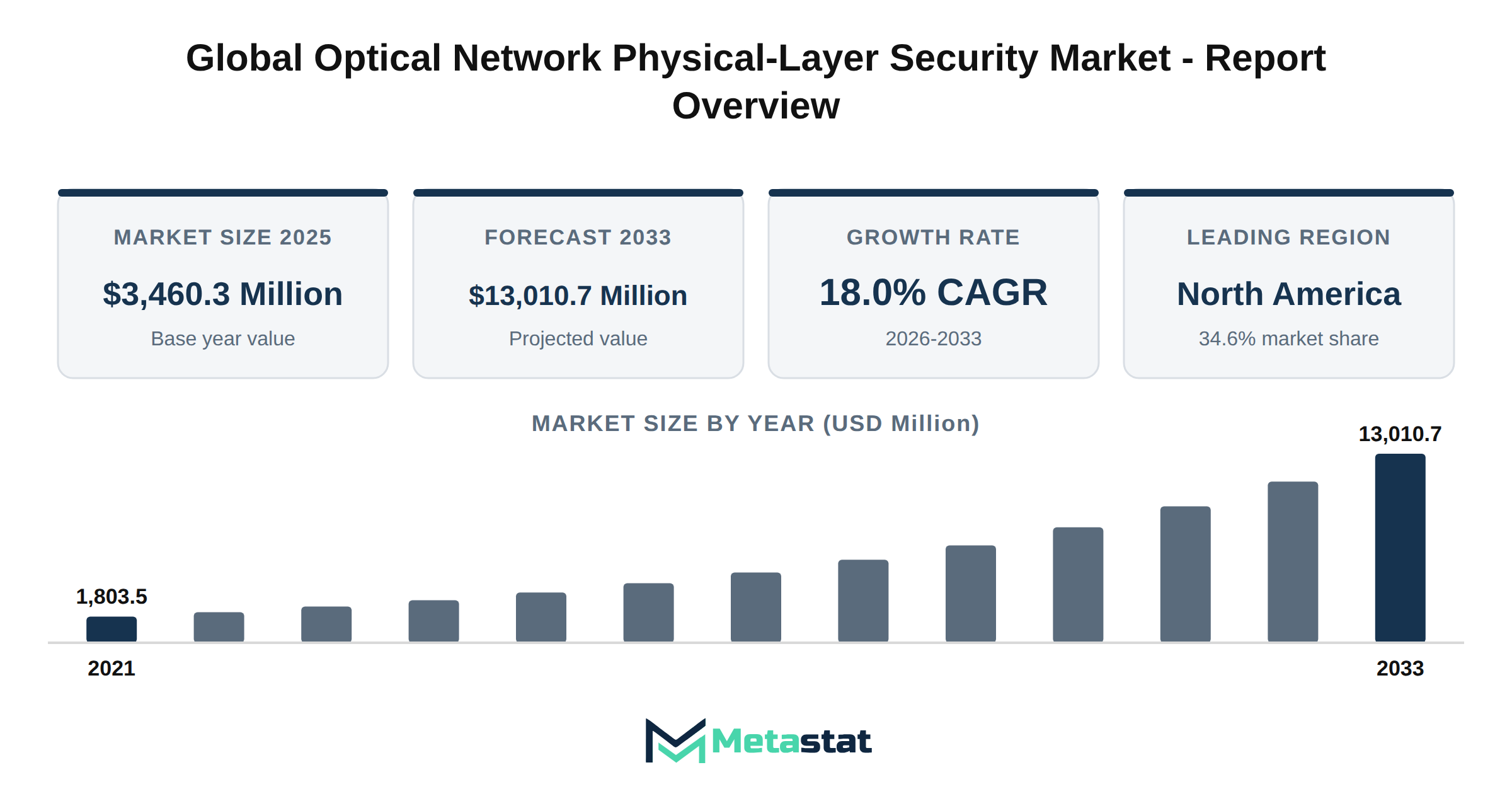
The Optical Network Physical-Layer Security market reached USD 3,460.3 million in 2025, with a historical growth trajectory marked by an increase from USD 1,803.5 million in 2021 to USD 2,923.3 million in 2024. Projections indicate the market is projected to attain USD 13,010.7 million by 2033, demonstrating a compound annual growth rate (CAGR) of 18% from 2026 to 2033.
Rising threats from fiber-tapping and optical eavesdropping drive demand for robust security solutions. Increased concerns regarding data breaches and unauthorized access necessitate advanced protective measures, creating an environment conducive to market growth. The telecommunications sector, among others, prioritizes investments in optical network security to mitigate risks.
Growing interest in Layer 1 optical encryption solutions emphasizes the need for enhanced data protection at the physical layer. This demand stems from the critical nature of secure data transmission in various applications, including financial services and government operations. The integration of these technologies into existing infrastructure positions the market for substantial growth.
Adoption of Quantum Key Distribution (QKD) in secure optical networks presents significant advancements in cryptographic security. QKD offers a unique method for establishing secure communication channels, appealing to sectors requiring heightened security levels. The market's focus on quantum-safe solutions highlights its importance in the evolving field of optical network security.
Innovation in optical signal obfuscation and anti-tapping technologies enhances protective measures against interception. These advancements contribute to the development of more secure communication infrastructures, attracting investments from various industries. The introduction of effective anti-tapping solutions supports the optical network physical-layer security market's expansion.
Trends in fiber intrusion and tap-detection technologies reflect the need for proactive measures against potential threats. Enhanced detection capabilities enable organizations to monitor network integrity more effectively, reducing the risk of data leakage. This trend is particularly vital for sectors like telecommunications and finance, where data confidentiality is critical.
Strategies focused on quantum-safe optical network security highlight the need for resilience against future threats. Organizations prioritize upgrades to secure fiber networks, ensuring compliance with emerging security standards. This focus on future-proofing enhances the overall market environment, attracting investments and driving competitive growth.
Continuous innovation in secure optical transceivers and pluggable modules contributes to market evolution. These technologies facilitate integration of security features into existing network architectures, supporting the demand for secure optical communications. The market benefits from advancements that enhance performance while maintaining high security levels.
The rising threat of fiber-tapping and optical eavesdropping significantly influences the Optical Network Physical-Layer Security market. The increasing sophistication of attacks necessitates enhanced security measures, driving demand for advanced protection solutions across various sectors, particularly in telecommunications and data centers.
Growing demand for Layer 1 optical encryption emerges due to a crucial factor for market expansion. This technology provides robust protection for data in transit, appealing to organizations prioritizing data confidentiality and integrity. Adoption of such technologies ensures compliance with stringent regulatory requirements and mitigates risks associated with data breaches.
Quantum key distribution (QKD) adoption in secure optical networks represents a significant trend within the market. This technology delivers superior encryption capabilities, addressing the challenges posed by emerging quantum computing threats. Organizations investing in QKD solutions enhance their security posture and future-proof their networks against evolving threats.
Innovation in optical signal obfuscation and anti-tapping technologies significantly shapes the market. These advancements enhance the ability to secure fiber optic communications, effectively rendering data interception attempts ineffective. Continuous improvements in these technologies ensure heightened security for critical infrastructure and sensitive communications.
Trends in fiber intrusion and tap-detection technologies further highlight the need for robust security solutions. The ability to detect unauthorized access to fiber optic networks allows organizations to respond swiftly to potential threats, reducing vulnerabilities and ensuring uninterrupted service delivery.
Strategies for quantum-safe optical network security continue to evolve, reflecting the anticipated shift towards quantum-resistant solutions. Organizations increasingly recognize the importance of integrating quantum-safe measures into their existing security frameworks. This proactive approach positions them favorably in the face of potential quantum threats.
Innovation in secure optical transceivers and pluggable modules significantly impacts the market landscape. These components provide vital infrastructure for secure communications, facilitating high-speed data transmission while ensuring data integrity. The development of advanced modules enhances operational efficiency and reinforces security measures across various applications.
Demand for data center interconnect security drives significant growth within the market. While data centers expand their operations and interconnectivity, the need for secure communication pathways becomes critical. Implementing effective security measures safeguards sensitive information and supports regulatory compliance.
Telecom network modernization initiatives highlight the importance of physical-layer protection. While telecommunications infrastructure undergoes upgrades, integrating robust security solutions becomes essential to safeguard against emerging threats. This modernization effort supports enhanced service delivery and customer confidence.
Government and defense sectors exhibit a strong demand for secure fiber networks. The critical nature of communications within these industries necessitates the implementation of advanced security measures, ensuring the protection of sensitive information against espionage and cyber threats.
Adoption of optical network security measures across critical infrastructure reflects an increasing awareness of potential vulnerabilities. Organizations are prioritizing secure communications to mitigate risks associated with disruptions, ensuring operational continuity and safeguarding essential services.
Integration of QKD with existing fiber infrastructure represents a key opportunity within the market. This integration enhances the overall security framework, providing organizations with a comprehensive solution to address current and future threats. Such initiatives offer a pathway towards more resilient optical networks.
The focus on physical-layer security for high-capacity dense wavelength division multiplexing (DWDM) networks continues to gain traction. This emphasis ensures that high-speed data transmission remains secure, mitigating risks associated with data interception and unauthorized access.
Key management and optical security orchestration trends contribute to the overall market dynamics. Streamlined management of encryption keys and security protocols enhances operational efficiency, allowing organizations to respond swiftly to evolving threats while maintaining robust security standards.
Opportunities for legacy fiber network retrofit and security upgrades increase because organizations recognize the necessity of enhanced security measures. Upgrading existing infrastructure ensures compatibility with modern security protocols, reducing vulnerabilities associated with outdated systems.
Developments in optical network security standards and certification processes establish a framework for organizations to benchmark their security measures. Compliance with these standards enhances credibility and builds trust among customers and stakeholders.
Cost and deployment economics of physical-layer security solutions play a crucial role in decision-making processes. Organizations evaluate the return on investment associated with implementing advanced security measures, balancing cost considerations against the potential risks of inadequate protection.
Competitive innovation within the secure optical networking sector shapes market dynamics. Organizations focus on developing advanced solutions that address the evolving threat landscape, creating a competitive environment that drives continuous improvement and technological advancement.
North America presents significant opportunities in the optical physical-layer security market, driven by heightened security awareness and regulatory requirements. The region's robust technological infrastructure supports the development and deployment of advanced security solutions.
Europe experiences trends in quantum-secure optical network deployments, reflecting the region's commitment to enhancing data protection. Investments in quantum technologies signify a proactive approach towards securing communication channels against emerging threats.
The Asia Pacific region witnesses secure fiber infrastructure expansion, driven by rapid digitalization and growing cyber threats. Organizations in this region prioritize the implementation of robust security measures to protect their communications and data.
Emerging applications for fiber tap prevention technologies highlight the innovation landscape within the market. Organizations increasingly seek advanced solutions to address the growing threat of unauthorized access, ensuring the integrity and confidentiality of their data.
The evolving threat landscape associated with fiber-tapping and eavesdropping necessitates ongoing vigilance and investment in security measures. Organizations remain proactive in addressing these risks to safeguard their critical communications.
Innovation roadmaps for Layer 0 security emphasize the need for comprehensive protection strategies. Organizations are encouraged to adopt integrated security measures that encompass all layers of their optical networks, reinforcing their defenses against potential threats.
Quantum-safe optical security migration strategies gain importance because organizations strive to future-proof their networks. This migration ensures that organizations remain resilient against the challenges posed by advancements in quantum computing.
Compatibility of legacy fiber retrofit solutions with modern security protocols presents opportunities for organizations seeking to enhance their security measures. Upgrading existing infrastructure to support contemporary security standards reduces vulnerabilities and strengthens overall network security.
Establishing optical security standards and certification processes creates a more secure operating environment. Organizations benefit from adhering to these standards, ensuring that their security measures align with industry best practices.
Multi-vendor security interoperability becomes increasingly relevant because organizations seek to implement diverse security solutions. Ensuring compatibility among various systems enhances overall security and simplifies management processes.
Economics of physical-layer security deployment influence organizational strategies. Balancing costs with potential security benefits is essential for organizations seeking to optimize their security investments while addressing evolving threats.
Competitive security performance benchmarking enables organizations to evaluate their security measures against industry standards. This benchmarking process drives continuous improvement, ensuring that organizations remain resilient in the face of emerging threats.
The future of quantum-safe and tamper-resistant optical networks indicates a shift towards enhanced security measures. Organizations prioritizing these developments position themselves to effectively combat the challenges posed by evolving cyber threats.
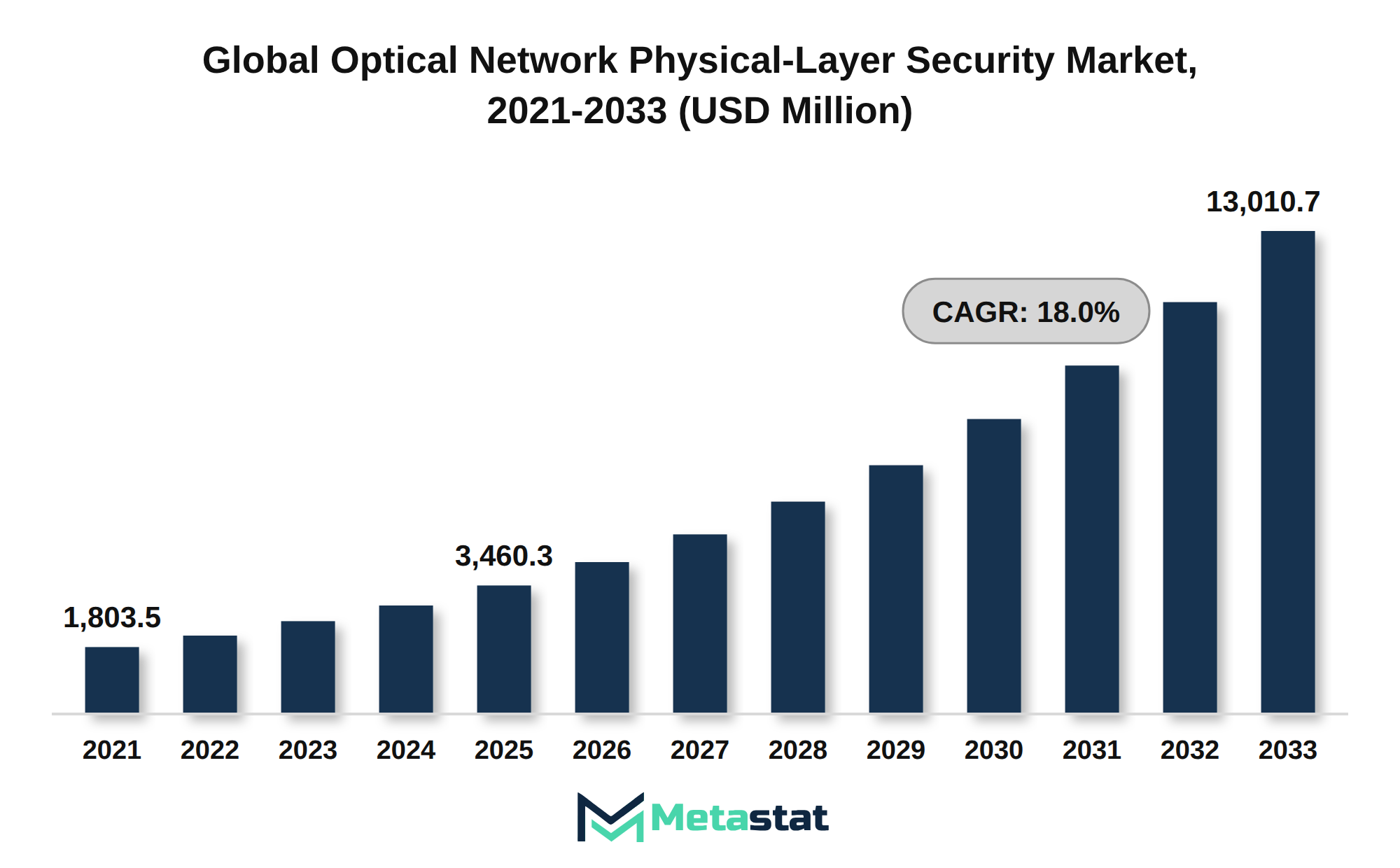
Increased capital investment significantly drives growth in the Optical Network Physical-Layer Security market. Factors including rising GDP, favorable interest rates, and enhanced venture funding create a conducive environment for technological advancements. These macro-economic conditions boost confidence among enterprises, leading to increased spending on advanced security solutions that protect optical networks from threats.
Organizations prioritize digital transformation initiatives, further driving the adoption of optical network security technologies. Companies invest in modernizing their infrastructure and integrating innovative solutions to secure data transmission. This shift enhances operational productivity and cost efficiency, providing a competitive advantage in the market.
The growing focus on sustainability and resource stewardship influences capital investment decisions, with companies seeking solutions that align with environmental, social, and governance (ESG) mandates. Investments in Optical Network Physical-Layer Security not only protect critical information but support carbon footprint reduction and ethical governance practices.
This robust investment climate is projected to contribute to the market's growth trajectory, positioning it for significant expansion through 2033. Businesses recognize the necessity of securing their optical networks. The demand for advanced security solutions is expected to continue rising.
Growing investments in infrastructure development significantly enhance the Optical Network Physical-Layer Security market. Governments and private sectors prioritize upgrading both physical and digital capacities, driving the necessity for advanced security measures against increasing cyber threats. These infrastructure upgrades result in enhanced network capabilities, leading to heightened demand for optical network security solutions.
The expansion of urban areas and the increasing integration of digital technologies in various sectors contribute to the urgency for robust security systems. Enhanced infrastructure projects, particularly in telecommunications and data centers, create a favorable environment for adopting advanced optical security technologies. This trend is evident across industries including telecommunications, data centers, and cloud service providers.
Investment in infrastructure supports operational efficiency while addressing growing concerns around data privacy and security. Companies implement optical network security solutions to safeguard their networks from potential breaches, fueling growth within the market. Increasing infrastructure development activities drive demand for sophisticated security measures, ensuring the resilience and reliability of modern communication networks.
Regulatory compliance and associated policy challenges impose significant constraints on the Optical Network Physical-Layer Security market. Stringent legal mandates requiring adherence to specific security standards create hurdles for manufacturers and service providers, increasing operational complexity and costs. Companies investing in compliance face escalating expenses related to legal counsel, auditing, and certification processes, diverting resources away from innovation and growth initiatives.
Macroeconomic headwinds further complicate the landscape. Rising inflation and supply chain disruptions strain financial resources. Rising costs affect the availability of essential components and the overall ability of firms to maintain competitive pricing. Geopolitical instability adds another layer of uncertainty, impacting investment decisions and project timelines in critical markets, including North America and Europe.
Resource scarcity, particularly for high-quality materials essential for developing advanced optical security technologies, presents another obstacle. This scarcity drives costs upward and limits the operational capacity of industry players, particularly smaller firms that lack the financial buffer to absorb these increases. Technological obsolescence poses a risk. Rapid advancements in alternative security solutions threaten the relevance of existing offerings.
Market fragmentation, characterized by numerous small and mid-sized players, creates competition that complicates efforts to establish standardization across the Optical Network Physical-Layer Security market. This fragmentation hinders collaboration opportunities and slows down adoption rates among potential end-users, further stunting overall market growth.
Ultimately, these factors contribute to a challenging environment for the Optical Network Physical-Layer Security market, necessitating strategic responses from industry players and stakeholders. Addressing these challenges effectively will be critical for sustaining growth and ensuring long-term viability in this dynamic sector.
Geopolitical fragmentation significantly challenges the Optical Network Physical-Layer Security market. Ongoing trade deficits and tariff friction disrupt supply chains, leading to increased costs for manufacturers. Such disruptions create uncertainties that affect investment decisions and hinder growth in the market.
Technological disruptions further complicate the landscape. Rapid advancements require complex research and development integrations, which strain resources and timelines. Companies face interoperability friction, making it challenging to implement new technologies alongside existing systems. This friction results in delayed project timelines and increased expenses, limiting market competitiveness.
Logistics disruptions and supply chain instability exacerbate these challenges. Fluctuations in feedstock and component availability raise input costs, forcing companies to adjust pricing structures. Rising margin pressures create a competitive environment that restricts the market's capacity to maintain profitability.
Workforce skill gaps create additional hurdles. Automation displacements and talent retention pressures hinder recruitment efforts, limiting access to skilled personnel necessary for innovative advancements. These factors contribute to operational inefficiencies and affect overall market performance.
Environmental lifecycle footprints and sustainability demands increasingly shape the market landscape. Companies face decarbonization mandates, necessitating investments in eco-friendly technologies. Compliance with tightening global regulatory standards adds complexity and overhead, diverting attention from core market activities.
Intellectual property protection deficits and cybersecurity risks present further challenges. Data vulnerabilities expose companies to potential breaches, leading to financial losses and reputational damage. Changing downstream demands, market saturation, and substitution vector pressures complicate strategic planning and impact growth opportunities in the Optical Network Physical-Layer Security market.
The Optical Network Physical-Layer Security market experiences significant opportunities driven by emerging technological advancements and innovations. While organizations increasingly adopt advanced optical security solutions, demand for strong protection against unauthorized access and data breaches escalates. This shift aligns with broader trends in digital transformation, where businesses prioritize cybersecurity in their infrastructure modernization efforts. The integration of advanced features including Quantum Key Distribution (QKD) enhances security protocols, attracting investments across various sectors, particularly telecommunications and cloud service providers.
Geographical expansion presents further opportunities, particularly in developing regions where network infrastructures undergo modernization. Rapid urbanization and increased internet penetration lead to substantial investments in secure optical networks. Countries in Asia Pacific, North America, and Europe focus on enhancing their cybersecurity frameworks to safeguard sensitive data. The convergence of sustainability imperatives and eco-friendly compliance shapes market dynamics, where organizations seek solutions that minimize energy consumption and optimize operational efficiency.
The evolving buying behaviors of customers shift towards integrated solutions that offer comprehensive security features. This trend encourages vendors to diversify their product offerings by incorporating secure optical transceivers alongside encryption-capable transponders. The Optical Network Physical-Layer Security market stands to benefit from strategic consolidation through partnerships and cross-industry mergers, enabling companies to leverage complementary technologies and enhance their competitive position. These developments create a favorable environment for growth and expansion.
Lastly, the emphasis on value-chain optimization and process automation drives operational yield maximization. Organizations recognize the importance of extending asset life cycles and implementing maintenance upgrades, ensuring that networks remain resilient against potential threats. These factors collectively contribute to a positive growth trajectory for the Optical Network Physical-Layer Security market, positioning it favorably for investment and innovation through 2033.
The Global Optical Network Physical-Layer Security market is segmented based on Technology, Product Type, and End-Use Industry.
Valued at USD 212.5 million in 2026, the Optical Signal Obfuscation & Anti-Tapping segment is projected to reach USD 739 million by 2033, exhibiting a CAGR of 19.5% during the forecast period. The increasing demand for enhanced security measures against unauthorized access to data transmitted over optical networks drives this growth. While cyber threats evolve, stakeholders across various industries recognize the necessity of implementing robust security solutions to safeguard sensitive information.
Technological maturation enables advanced encryption and anti-tapping solutions that meet the evolving requirements of the market. The deployment of next-generation upgrades in optical network equipment enhances the reliability and security of data transmissions, attracting investments from telecommunications and network service providers. This trend highlights the significance of product evolution and innovation in maintaining competitive advantages within the Optical Network Physical-Layer Security market.
Downstream applications across sectors including telecommunications, government, and finance contribute to increased consumption of optical signal obfuscation technologies. These sectors prioritize regulatory compliance and seek certifications that reinforce their commitment to information security. With growing awareness of the risks associated with data breaches, the market experiences a shift toward adopting advanced security measures to protect sensitive communications.
Strategic opportunity windows arise owing to organizations investing in capital projects to integrate innovative solutions into their existing infrastructures. Increased focus on supply chain resilience and raw material sourcing enhances the reliability of products within this segment, addressing potential vulnerabilities. Heightened regulatory scrutiny and the need for secure data transmission continue to drive significant interest in optical signal obfuscation and anti-tapping technologies.
Increasing demand for secure data transmission drives the adoption of Layer 1 Optical Encryption technologies. This segment addresses critical security concerns, particularly in telecommunications and data centers, where safeguarding sensitive information against unauthorized access is essential. High-profile data breaches and cyber threats escalate the urgency for enhanced security measures, fueling interest from end-users seeking reliable solutions. Advancements in encryption methodologies and the integration of quantum-resistant technologies contribute to segment expansion.
Layer 1 Optical Encryption segment is estimated to reach USD 7,347.1 million by 2033, at a CAGR of 15.6% during the forecast period. Continued investments in network infrastructure and next-generation upgrades enhance the reliability of encryption solutions, promoting wider adoption across various industries. The shift towards cloud services and increasing data traffic further increases the need for robust security protocols, positioning this segment favorably within the broader Optical Network Physical-Layer Security market.
While regulatory compliance mandates tighten, organizations face increased pressure to implement stringent security measures. This dynamic creates a favorable environment for growth, driving demand for Layer 1 Optical Encryption solutions that meet compliance standards. Enhanced focus on data privacy and protection policies acts because a catalyst for market development, compelling stakeholders to prioritize investments in effective encryption technologies.
The ongoing evolution of optical networking technologies supports the continual refinement of Layer 1 Optical Encryption products. Innovations in optical signal processing and the development of advanced encryption algorithms expand capabilities, positioning the segment for sustained growth. This proactive approach to technological maturation aligns with market trends, ensuring that offerings remain competitive and relevant amid evolving security challenges.
Increased focus on cybersecurity measures drives demand for Fiber Intrusion & Tap Detection solutions within the Optical Network Physical-Layer Security market. Organizations face heightened risks from unauthorized access and data breaches, necessitating robust security protocols to protect sensitive information. Rapid advancements in technology lead to the development of sophisticated detection systems that effectively monitor and secure optical fiber networks. Compliance with regulatory standards emphasizes the importance of implementing effective intrusion detection mechanisms.
Investment in these technologies is expected to accelerate, with the segment projected to reach USD 1,500.1 million by 2033. The growing reliance on fiber-optic communication in critical sectors, including telecommunications and data centers, highlights the urgency of deploying effective tap detection systems to safeguard data integrity. Enterprises increasingly recognize the value of proactive security measures, driving a surge in adoption rates.
Integration of artificial intelligence and machine learning in these systems facilitates real-time monitoring and enhances detection capabilities. This evolution aligns with the broader trend of digital transformation across industries, resulting in significant opportunities for growth and innovation within the Fiber Intrusion & Tap Detection segment. Investors and stakeholders recognize the potential for high returns, propelling capital investment and driving the market's expansion.
Rapid advancements in Quantum Key Distribution (QKD) technology drive strong interest within the Optical Network Physical-Layer Security market. This segment is projected to grow at a CAGR of 24.2% during the forecast period. Increasing concerns over data security and the need for secure key distribution methods in various sectors, including telecommunications and finance, enhance demand for QKD solutions. Factors including the maturation of quantum technologies, improvements in encryption methodologies, and growing awareness of the potential of quantum communication systems support segment expansion.
Investment in next-generation upgrades and product evolution remains essential. Organizations increasingly adopt innovative QKD systems that offer improved security features, catering to the evolving landscape of cyber threats. Increased regulatory compliance standards around data security, especially in sensitive industries, strengthen the market for QKD. The integration of QKD with existing security infrastructures presents strategic opportunity windows for stakeholders seeking to enhance their security portfolios.
Cost structures associated with implementing QKD technology reflect its advanced nature, with ongoing research and development efforts aimed at reducing pricing volatility. The competitive landscape encourages innovation, prompting suppliers to explore disruptive alternatives that address technological obsolescence. While organizations prioritize secure communication channels, the QKD segment within the market stands poised for substantial growth, driven by the ongoing shift toward quantum-ready solutions.
In the Optical Network Physical-Layer Security market, the segment addressing entanglement-based channel protection and physical-layer authentication presents unique advancements. Increasing concerns about data security drive the adoption of these technologies across various industries. The integration of quantum key distribution (QKD) into existing frameworks enhances protection mechanisms, addressing vulnerabilities in optical networks. Next-gen upgrades improve the efficiency and effectiveness of protective measures, further encouraging deployment.
Technological maturation in this sub-segment signifies a shift towards sophisticated solutions that align with evolving regulatory compliance standards. Industries including telecommunications and finance prioritize secure data transmission, creating an environment for continued investment in these technologies. The unique capabilities of entanglement-based solutions position them favorably against traditional security measures, disrupting conventional approaches in the market.
Strategic opportunity windows appear for companies focusing on product evolution and innovation within this segment. Partnerships between technology providers and end-users facilitate the integration of enhanced security solutions, responding to heightened demand for robust protective measures. Ongoing research and development initiatives contribute to a more resilient supply chain, addressing potential risks and vulnerabilities arising from raw material sourcing and logistics.
Secure Optical Transceivers & Pluggable Modules segment is valued at USD 876 million in 2026 and is projected to reach USD 2,924.8 million by 2033, at a CAGR of 18.8% during the forecast period. This growth reflects heightened demand for secure transmission solutions in various sectors, particularly telecommunications and data centers. The increasing prevalence of cyber threats necessitates enhanced security protocols, driving the adoption of advanced optical transceiver technologies. Technological maturation significantly contributes to segment expansion, with innovations in encryption methods and signal integrity techniques enabling more robust security features. Continuous upgrades to next-generation systems further stimulate demand. Organizations seek to optimize network performance while ensuring data confidentiality. Downstream applications in industries including government, defense, and financial services significantly influence consumption patterns, highlighting the need for reliable and secure communications. Regulatory compliance standards governing data protection compel organizations to invest in secure optical solutions, creating a favorable environment for market growth. Pricing volatility impacts margins within the segment, influencing manufacturers' strategies in raw material sourcing and production. Supply chain resilience becomes vital, particularly amid fluctuating demand and potential disruptions in global logistics. Strategic opportunities emerge through white-space analysis, identifying areas for innovation and novel applications of optical transceivers. Capital investment outlook remains positive, with increasing funding directed towards research and development to advance security technologies within the Optical Network Physical-Layer Security market.
Valued at USD 876 million in 2026, the Encryption-Capable Transponders & Muxponders segment is estimated to reach USD 4,158.2 million by 2033, at a CAGR of 15.8% during the forecast period. Increasing reliance on secure communications across various industries drives demand for these products. Telecommunications and network service providers invest heavily in encryption capabilities to ensure data integrity and confidentiality. In the data centers and cloud service providers sector, the necessity for robust security measures encourages adoption, leading to significant growth opportunities in the market.
Technological maturation, particularly in encryption algorithms and hardware, enhances the performance and efficiency of transponders and muxponders. The evolution of these products aligns with the growing complexity of cyber threats, prompting organizations to prioritize advanced security features in their network infrastructure. Regulatory compliance standards surrounding data privacy and protection compel companies to implement encryption solutions, reinforcing the segment's expansion.
Downstream applications in sectors like government and defense, financial services, and healthcare require stringent security measures, driving the uptake of Encryption-Capable Transponders & Muxponders. Consumption shifts toward more secure telecommunications infrastructures highlight the importance of this segment in safeguarding sensitive information. With ongoing developments in quantum encryption technology, the segment is well-positioned for strategic opportunities that address future security challenges in the Optical Network Physical-Layer Security market.
Increased focus on the security of data communication contributes to the growth of Quantum Key Distribution (QKD) and Quantum Networking Systems. This segment addresses critical needs for enhanced data protection against sophisticated cyber threats. The ongoing technological maturation in quantum computing drives innovation, yielding advanced capabilities in secure data transmission.
Investment from telecommunications and data center operators drives demand for QKD systems, creating a positive growth trajectory. Anticipated advancements in quantum technologies position this segment for substantial expansion. The QKD & Quantum Networking Systems segment is expected to reach USD 2,954.7 million by 2033, reflecting a commitment to securing sensitive data across various industries.
End-use dynamics, particularly within government, defense, and financial sectors, highlight the necessity for high-level security protocols. These industries increasingly recognize the value of adopting QKD solutions, leading to rising consumption patterns. The market experiences strategic opportunity windows attributed to organizations seeking to address regulatory compliance standards related to data security.
Technological obsolescence poses a challenge, prompting firms to invest in next-generation upgrades. Competition in the Optical Network Physical-Layer Security market intensifies, compelling players to innovate and enhance their product offerings continuously. The focus on efficient supply chains and resilient sourcing strategies remains crucial for maintaining a competitive edge.
Growing apprehension surrounding data breaches fuels interest in advanced Fiber Monitoring & Tap-Detection Systems. This segment is projected to grow at a CAGR of 16.4% during the forecast period, reflecting the increasing need for robust security measures in telecommunications and critical infrastructure. Organizations face heightened pressure to safeguard sensitive information, with many investing in fiber monitoring solutions to detect potential intrusions and unauthorized access. The integration of artificial intelligence and machine learning into these systems enhances their effectiveness, enabling real-time detection and response to vulnerabilities.
Fiber Monitoring & Tap-Detection Systems contribute significantly to the Optical Network Physical-Layer Security market by providing operators with advanced tools to maintain data integrity. The expected growth aligns with the rapid technological maturation in the field, where next-gen upgrades and product evolution are crucial. Increased reliance on secure data transmission across various industries drives consumption shifts toward these systems, making them indispensable for telecommunications and network service providers.
Compliance with regulatory standards further accelerates market dynamics, driven by organizations seeking solutions that align with stringent security protocols. The segment's evolution is shaped by the demand for effective risk management strategies, positioning Fiber Monitoring & Tap-Detection Systems among the leading optical network security advancements. While threats evolve, continued innovation within this segment remains critical for its sustained growth in the coming years.
Increasing emphasis on effective data management drives demand for Key Management & Security Orchestration Platforms within the Optical Network Physical-Layer Security market. Organizations require these platforms to enhance encryption processes, streamline access controls, and manage cryptographic keys efficiently. The evolving landscape of cyber threats necessitates a robust framework that ensures the integrity and confidentiality of data. Organizations transitioning to cloud-based environments experience escalating complexity in key management, prompting the adoption of advanced orchestration solutions.
End-use dynamics reflect a growing awareness of the need for comprehensive security measures in various sectors, including telecommunications, finance, and government. Integration of regulatory compliance standards accelerates demand for platforms that effectively manage key lifecycles and support compliance processes. Organizations face pressure to meet stringent data protection requirements, which increases the relevance of these platforms across different industries.
Technological maturation marks the evolution of key management solutions, with advancements in automation, integration capabilities, and user accessibility. The rise of next-generation upgrades introduces innovative features that improve efficiency and user experience, attracting organizations to invest in modern security orchestration tools. Capital investment outlook remains positive, reflecting confidence in the segment’s growth potential within the broader market.
Increasing emphasis on advanced security solutions drives interest in specialty secure fiber and optical authentication modules. This segment benefits from rising concerns regarding data integrity and unauthorized access in various applications, particularly within sensitive sectors including telecommunications and government. Enhanced cybersecurity frameworks encourage investment in novel technologies capable of securing optical networks against evolving threats, resulting in increased operational resilience.
Technological maturation plays a critical role in enhancing the capabilities of specialty secure fiber and optical authentication modules. Continuous innovation supports the development of effective solutions, enabling improved data transmission security and operational efficiency. Organizations recognize the importance of safeguarding their data, leading to rising adoption rates for these technologies, which contributes to the overall growth of the Optical Network Physical-Layer Security market.
Product evolution remains a significant factor affecting this segment, with the introduction of next-generation technologies responding to shifting consumer demands. The expansion of applications across various industries promotes the need for solutions that enhance security without compromising performance. The growing reliance on cloud services and data centers fuels demand for advanced optical authentication solutions, reinforcing the segment's position in the market.
Dynamic end-use industry dynamics influence the consumption patterns of specialty secure fiber and optical authentication modules. The telecommunications sector, in particular, requires robust security measures to protect data transmission across vast networks. Regulatory compliance standards drive organizations to adopt technologies that meet stringent security protocols, further accelerating the market's growth trajectory and enhancing overall data protection strategies.
Valued at USD 1,279 million in 2026, the Telecommunications & Network Service Providers segment is projected to reach USD 3,696.3 million by 2033, at a CAGR of 16.4% during the forecast period. The surge in demand for enhanced security solutions stems from the increasing prevalence of cyber threats and the necessity for safeguarding sensitive data in communications. Telecommunications and network service providers prioritize solutions that ensure data integrity and confidentiality, prompting investments in Optical Network Physical-Layer Security market offerings.
Technological maturation shapes the dynamics of this segment. Emerging technologies, including Quantum Key Distribution (QKD), are gaining traction among these providers, who seek next-generation upgrades to strengthen their security frameworks. The ongoing evolution of products tailored for this sector reflects the shifting dynamics and heightened focus on cybersecurity. This evolution enhances a growing preference for advanced secure optical transceivers and encryption-capable transponders, which improve operational effectiveness.
Regulatory compliance standards exert influence on purchase decisions within this segment. Organizations prioritize adherence to evolving cybersecurity regulations, necessitating robust security measures across their networks. Increasing capital investment in Optical Network Physical-Layer Security solutions aligns with the objective of mitigating risks associated with data breaches and unauthorized access.
Cost structures and pricing volatility remain crucial considerations. Providers face pressures from fluctuating costs of raw materials and technological advancements, which impact overall pricing strategies. Despite these challenges, the segment's growth trajectory indicates a strong demand for innovative solutions designed to address emerging threats and protect critical infrastructure. The resilience of the supply chain and strategic investments in research and development further enhance the competitive positioning of telecommunications and network service providers in the market.
Significant growth in the Data Centers & Cloud Service Providers segment reflects a shift towards enhanced data security protocols. Increased reliance on cloud computing and data storage solutions necessitates robust security measures to protect sensitive information. Demand for Optical Network Physical-Layer Security solutions is driven by the need for effective safeguarding against data breaches and cyber threats. Adoption of advanced security technologies ensures compliance with evolving regulatory requirements, positioning service providers to meet customer expectations for data integrity.
The Data Centers & Cloud Service Providers segment is estimated to reach USD 2,961.2 million by 2033, at a CAGR of 20.6% during the forecast period. This growth is attributed to ongoing technological advancements, including the implementation of Quantum Key Distribution (QKD) and enhanced encryption methods. Providers focusing on innovative security solutions improve their competitive edge, leading to increased capital investment in the market. Evolution of product offerings enhances the overall security posture, enabling organizations to respond effectively to emerging threats and maintain operational resilience.
Heightened security requirements within government and defense sectors drive significant investments in optical network security solutions. Cyber threats targeting sensitive government communications increase the urgency for effective protection mechanisms. The shift towards secure communication channels influences procurement strategies, emphasizing technologies that offer advanced security features.
Government agencies increasingly recognize the importance of regulatory compliance and data protection standards. Meeting these standards necessitates the implementation of optical network security solutions tailored to safeguard classified information. Consequently, the demand for solutions within the Optical Network Physical-Layer Security market is expected to increase, spurred by the necessity to adhere to national and international security protocols.
The Government & Defense segment is projected to reach USD 1,982.8 million by 2033. Investment in next-generation upgrades, particularly Quantum Key Distribution (QKD) systems, drives innovation and strengthens defense capabilities in cybersecurity. The evolution of products including secure optical transceivers and encryption-capable transponders enhances the resilience of communication infrastructures.
This segment experiences growth driven by strategic partnerships between government entities and technology providers. These collaborations facilitate the development of comprehensive security frameworks, addressing the unique needs of defense operations. The increased focus on supply chain resilience contributes to the stability and reliability of optical network security solutions.
Overall, the combination of regulatory requirements, evolving technology, and strategic investments positions the Government & Defense segment for substantial expansion within the Optical Network Physical-Layer Security market.
Increased regulatory scrutiny within the BFSI sector significantly influences investment in Optical Network Physical-Layer Security solutions. Financial institutions prioritize secure data transmission to protect sensitive customer information from cyber threats. Consequently, heightened awareness surrounding data privacy contributes to an increasing need for advanced security technologies. Responsive to these demands, the segment is projected to grow at a CAGR of 17.6% during the forecast period, reflecting a robust expansion trajectory.
The adoption of innovative security measures, including encryption and intrusion detection, serves because a catalyst for market growth. Financial institutions actively seek solutions that enhance their operational resilience against evolving cyber threats. With the integration of advanced technologies, BFSI companies effectively strengthen their defenses while complying with stringent regulatory requirements. This dynamic creates strategic opportunity windows for suppliers within the Optical Network Physical-Layer Security market, because they innovate to meet the growing demands.
Investment in next-generation upgrades and product evolution remains critical for organizations within the BFSI sector. The implementation of Quantum Key Distribution (QKD) technology demonstrates a commitment to securing data in transit, further enhancing the competitive positioning of companies within this segment. Continuous advancements in product offerings will drive consumer interest, positioning the market for sustained growth because financial entities strive to maintain trust in their digital communications.
Security in the Energy & Utilities sector drives focus on Optical Network Physical-Layer Security solutions. Increased digitization and automation within energy production and distribution accelerate demand for robust protection against potential cyber threats. Regulatory compliance standards necessitate stringent measures to secure critical infrastructure, with organizations investing in advanced technologies to safeguard sensitive data transmissions.
Technological maturation within the sector enhances the adoption of innovative security mechanisms. Next-generation upgrades introduce more resilient systems capable of countering sophisticated cyberattacks, ensuring uninterrupted operations. The evolution of products tailored specifically for the Energy & Utilities industry aligns with the growing demand for secure communication channels, reflecting an awareness of vulnerability in operational technology.
Consumption shifts emphasize the necessity for secure data handling, with energy companies increasingly prioritizing cybersecurity investments. The market for Optical Network Physical-Layer Security continues to reflect these dynamics, where heightened awareness of regulatory compliance pressures organizations to adopt advanced security protocols. By investing in these technologies, energy providers enhance their operational integrity while simultaneously mitigating risks associated with data breaches.
Strategic opportunity windows emerge because companies assess their cybersecurity frameworks, recognizing the importance of maintaining a secure environment amid evolving threats. Capital investment outlooks indicate a positive trend, with organizations dedicated to improving their security posture through the implementation of advanced Optical Network Physical-Layer Security solutions, ultimately creating a safer operational landscape.
In the Healthcare and Life Sciences sector, the demand for Optical Network Physical-Layer Security solutions arises from the critical protect sensitive patient data and comply with stringent regulatory requirements. Increasing instances of cyber threats and data breaches in healthcare institutions significantly emphasize the importance of robust security measures. Adoption of advanced security technologies addresses the evolving landscape of digital threats while ensuring compliance with regulations including HIPAA and GDPR.
Investment in next-generation upgrades, including Quantum Key Distribution (QKD) and advanced optical encryption methods, enhances the security infrastructure within this sector. These technologies provide essential safeguards for data in transit, enabling healthcare organizations to maintain confidentiality and integrity. The market evolves rapidly, driven by technological maturation and the need for continuous improvement in security capabilities, which supports overall growth.
Healthcare organizations actively seek solutions that enable secure data sharing and communication among various stakeholders, including service providers, insurers, and patients. This demand highlights the necessity for reliable Optical Network Physical-Layer Security solutions that ensure secure access to critical information. The shift towards digital health solutions and telemedicine increases the volume of sensitive data transmitted, further escalating the need for effective security measures.
While healthcare facilities expand their digital capabilities, challenges including cost structures and pricing volatility emerge. Organizations strive to balance budget constraints while investing in advanced security solutions. The market dynamics reflect a strategic opportunity where innovation aligns with critical security needs, creating a favorable environment for growth in the Optical Network Physical-Layer Security market.
Investments in the Transportation sector increasingly focus on advanced security measures, driven by the safeguard sensitive data during transmission. Growing concerns regarding cyber threats and unauthorized access to critical infrastructure contribute to the rising demand for Optical Network Physical-Layer Security solutions. The sector experiences significant pressure to comply with stringent regulatory standards aimed at ensuring the integrity and availability of communication networks.
Technological maturation within the market enables the adoption of next-generation upgrades, enhancing the capabilities of existing systems. Transportation entities increasingly seek solutions that provide robust protection against interception and tampering, leading to a shift toward more sophisticated Optical Signal Obfuscation and anti-tapping technologies. The evolving landscape of transportation logistics highlights the importance of secure data communication, influencing product evolution and development.
Consumption shifts, driven by the expanding reliance on digital communication and data analytics, highlight the necessity for effective security measures in the Transportation sector. End-use dynamics emphasize a strong focus on integrating advanced security features into existing transportation infrastructure, with a clear focus on maintaining operational continuity and protecting sensitive information from potential threats.
Strategic opportunity windows arise from the ongoing digital transformation across transportation systems, prompting stakeholders to invest in resilient security solutions. This market growth results from heightened awareness of potential vulnerabilities and the adoption of innovative technologies that enhance security posture. The Optical Network Physical-Layer Security market supports these developments, positioning itself because a critical component in safeguarding the future of transportation communications.
Emerging threats in cybersecurity prompt the Industrial & Manufacturing sector to prioritize robust optical network security solutions. Increasing adoption of connected devices generates a heightened need for safeguarding critical data assets within manufacturing environments. Enhanced regulatory compliance standards drive companies to invest in Optical Network Physical-Layer Security market solutions, ensuring alignment with evolving policies and protocols related to data protection.
The shift towards Industry 4.0 accelerates the integration of advanced technologies, necessitating investments in security measures to protect proprietary information and intellectual property. Organizations within this segment recognize the importance of maintaining operational continuity through reliable security protocols, enhancing both resilience and competitive edge. With the market evolving rapidly, companies explore next-gen upgrades and product evolutions that align with contemporary security threats.
Technological maturation within the industry enables more sophisticated security solutions, including advanced encryption and optical signal obfuscation techniques. The demand for these technologies aligns with the broader trend of digital transformation, where businesses transition toward more automated and interconnected systems. This transformation leads to increased consumption of security solutions, reinforcing the need for strategic opportunity windows for investment in Optical Network Physical-Layer Security market offerings.
Current cost structures and pricing volatility present challenges, influencing overall margin pressures faced by companies operating in the Industrial & Manufacturing sector. Effective supply chain resilience becomes vital, ensuring organizations withstand disruptions and maintain security efficacy. While the landscape shifts, stakeholders remain vigilant against potential substitution risks and disruptive alternatives that could affect long-term viability.
Ultimately, the commitment to enhancing security measures within the Industrial & Manufacturing sector reflects a proactive approach to addressing evolving threats in the digital age. This focus on security safeguards critical assets and supports sustained growth and innovation within the Optical Network Physical-Layer Security market.
Investment in research and education institutions increasingly emphasizes secure data transmission and protection against cyber threats. Growing reliance on digital resources in educational settings drives the demand for advanced optical network security solutions. Institutions prioritize safeguarding sensitive information, including student records and research data, creating a significant need for robust security frameworks.
Adoption of optical network physical-layer security solutions enhances institutional resilience against potential breaches. Educational entities explore next-generation upgrades to improve their security postures, resulting in a shift toward innovative technologies including Quantum Key Distribution (QKD) and layered optical encryption. This trend reflects a broader industry push for heightened security measures across various sectors.
The emergence of regulatory compliance standards further influences decision-making in research and education segments. Institutions face pressure to meet strict guidelines regarding data protection, prompting investments in optical network security solutions. This regulatory landscape accelerates the adoption of advanced technologies, aligning with the overall trajectory of the optical network physical-layer security market.
Supply chain resilience within the educational sector is critical, particularly given the increasing complexity of cybersecurity threats. Institutions address the challenges posed by logistics vulnerabilities and the need for reliable sourcing of security solutions. The market adapts by offering scalable products designed to meet the specific demands of the research and education segments.
Strategic opportunity windows arise owing to educational institutions seeking to enhance their cybersecurity frameworks. Investments in optical network physical-layer security solutions align with broader initiatives focused on improving overall data integrity and security. This proactive approach positions educational entities favorably in the evolving landscape of cybersecurity, ensuring they remain leaders in safeguarding sensitive information.
Legal services, media, and large enterprises show increasing demand for Optical Network Physical-Layer Security solutions driven by the necessity to protect sensitive data against evolving cyber threats. These sectors prioritize compliance with stringent regulatory frameworks, leading to investments in advanced encryption technologies and security measures to safeguard their information assets.
Adoption in this sub-segment expands owing to organizations recognizing the importance of securing communication channels. The need for secure transactions and data integrity supports the deployment of innovative security technologies. Regulatory compliance standards drive organizations to enhance their security postures, stimulating demand for tailored solutions in the market.
Technological maturation accelerates the development of next-generation security solutions, providing organizations with advanced options for safeguarding their data. The integration of quantum key distribution and similar innovations represents a strategic opportunity window for suppliers targeting this sub-segment. The market anticipates shifts in consumption patterns, aligning product offerings with the specific needs of legal services, media, and large enterprises.
Investment in Optical Network Physical-Layer Security solutions reflects the growing recognition of the vital role of cybersecurity across diverse sectors. Enhanced security measures protect against data breaches and enable organizations to maintain customer trust and competitive advantage in an increasingly digital landscape.
Based on geography, the Global Optical Network Physical-Layer Security market is divided into North America, Europe, Asia-Pacific, South America, Middle East, and Africa.
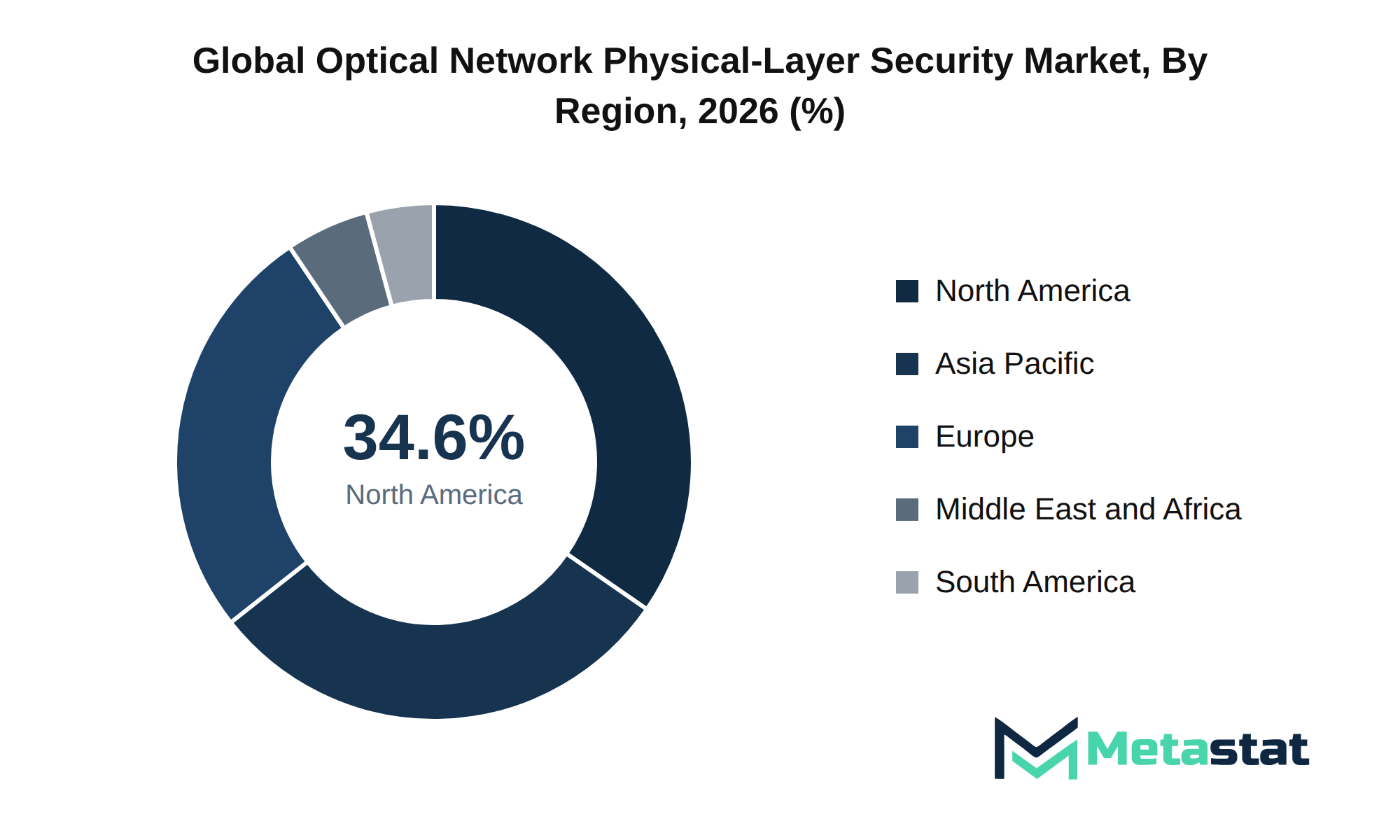
Strong market dynamics in North America drive the Optical Network Physical-Layer Security market, supported by the increasing need for robust cybersecurity measures across various sectors, including telecommunications, data centers, and government entities. The region commands a substantial share of the global market, representing 34.6% in 2025, indicating its critical role in shaping market trends and growth trajectories.
Investment in infrastructure modernization significantly enhances the market's potential. Telecommunication providers and cloud service operators focus on upgrading their existing frameworks to incorporate advanced security solutions. This modernization effort encourages the adoption of Optical Signal Obfuscation, Layer 1 Optical Encryption, and Quantum Key Distribution technologies, aligning with the escalating demand for secure data transmission.
Rapid advancements in technology, alongside a growing emphasis on data privacy regulations, create fertile ground for segment expansion. The Telecommunications and Network Service Providers sector, anticipated to reach USD 3,696.3 million by 2033, demonstrates a compound annual growth rate (CAGR) of 16.4%. This growth reflects a heightened awareness of the need for enhanced data protection mechanisms, driven by rising cyber threats.
Geopolitical factors and a push for localized manufacturing contribute to the evolving competitive landscape. The trend towards nearshoring allows local vendors to penetrate the market effectively, enhancing supply chain resilience and developing domestic capabilities in Optical Network Physical-Layer Security solutions. This regional strategy supports the overall market growth while strengthening the position of key players.
The Optical Network Physical-Layer Security market in North America benefits from substantial foreign direct investment (FDI), which facilitates the establishment of innovative technologies and strengthens competitive advantages. Continued investment in research and development initiatives not only enhances product offerings but positions North American companies at the leading edge of market innovation and customer solutions.
The Optical Network Physical-Layer Security market in Europe experiences robust demand driven by heightened cybersecurity concerns across various industries. Countries including Germany, France, the UK, Italy, and Spain focus on advancing their technological infrastructure to counteract potential threats. Regulatory frameworks in these nations increasingly emphasize compliance with stringent data protection standards, leading to further investment in security solutions.
In response to the evolving landscape, European telecommunications and network service providers prioritize the integration of advanced security protocols, driving growth in sectors including data centers and cloud service providers. The region's commitment to modernizing infrastructure supports the adoption of optical network security technologies, contributing to a significant market share of 26.2% in 2025.
Geopolitical fragmentation and local compliance mandates encourage companies to optimize their procurement strategies, emphasizing localized manufacturing and supply chain regionalization. This trend enables quicker response times to market demands, enhancing the competitive landscape for domestic players. The presence of several market participants in countries including Germany and France further consolidates the market, ensuring a resilient and adaptive approach to emerging threats.
Investment in the Optical Network Physical-Layer Security market is expected to continue growing, supported by the region's strategic entry barriers and favorable foreign direct investment flows. Cultural nuances and regional B2B buying behaviors further shape the market dynamics, enabling stakeholders to capture opportunities within underpenetrated territories.
The Asia-Pacific region presents substantial opportunities within the Optical Network Physical-Layer Security market, driven by increasing investments in cybersecurity infrastructure across key countries. China, Japan, and India lead the region in adopting advanced security solutions, responding to an escalating number of cyber threats and the need for robust data protection strategies.
Modernization of telecommunications networks and the expansion of cloud services further enhance demand for optical security technologies. Countries like South Korea and Australia prioritize secure data transmission to support their digital economies, fueling growth in the market. Emerging economies in Southeast Asia present underpenetrated territories, indicating significant potential for growth attributed to rising awareness of security needs.
The region's competitive landscape includes several domestic players who consolidate their positions through strategic partnerships and localized manufacturing. This trend enhances supply chain efficiencies and meets the increasing demand for tailored solutions that address regional compliance and regulatory requirements.
The Asia-Pacific market is expected to capture 29.7% of the global share in 2025, highlighting its critical role in the overall growth trajectory of the Optical Network Physical-Layer Security market. Investments in infrastructure readiness and energy grid resiliency further contribute to the region’s strong market dynamics.
The Optical Network Physical-Layer Security market in South America, comprising Brazil, Argentina, and the Rest of South America, exhibits a unique growth trajectory. Factors including increasing digitalization and the subsequent demand for secure network solutions contribute to market expansion. Telecommunications and network service providers in this region recognize the need for enhanced security measures to protect data integrity. Investment in secure optical transceivers and encryption solutions has intensified, responding to rising concerns regarding cyber threats.
Infrastructure modernization significantly shapes the market, with regional players investing in advanced technologies to enhance their offerings. Brazil, because the largest economy in South America, leads the charge in adopting robust optical network security measures. Argentina follows closely, with efforts aimed at developing secure communication channels for both public and private sectors. The market experiences a compound annual growth rate (CAGR) of 18%, reflecting the increasing importance of optical security solutions.
Localized procurement dynamics, influenced by cultural nuances and regional buying behaviors, shape the competitive landscape. Domestic market leaders are focusing on enhancing their portfolios through strategic partnerships and collaborations. Market players are responding to the growing demand for innovative solutions tailored to regional needs.
The anticipated share of South America in the global market reflects the potential for growth within the Optical Network Physical-Layer Security market, driven by both technological advancements and heightened security requirements across various sectors. Continued investment in secure optical technologies will likely enhance market penetration in this region.
The Optical Network Physical-Layer Security market in the Middle East and Africa faces a unique set of dynamics influenced by both regional growth drivers and specific challenges. Investment in technology infrastructure is critical, with countries including Saudi Arabia and the UAE actively pursuing modernization initiatives to enhance their telecommunications capabilities. This movement aligns with global trends, emphasizing the need for advanced security measures to protect sensitive data transmitted over optical networks.
Local competitive landscapes feature a blend of established vendors and emerging players. South Africa, for instance, presents opportunities for growth due to its developing market for data centers and cloud services, leading to increased demand for robust security solutions. The presence of several domestic market leaders further strengthens the region’s ecosystem, promoting innovation and collaboration among local companies.
Supply chain regionalization and localized manufacturing stand out because significant factors in shaping the market landscape. These dynamics enable faster response times to emerging threats and compliance with local regulatory mandates. Increased foreign direct investment (FDI) flows into the region signal an optimistic outlook for the Optical Network Physical-Layer Security market, driven by the growing recognition of cybersecurity's importance across various sectors.
Geographic regulatory frameworks and local compliance mandates play a significant role in shaping market strategies. Companies operating in Saudi Arabia, the UAE, and South Africa actively align their offerings with these regulations to capture market share and enhance their competitive positioning. The need for tailored solutions that meet local security requirements becomes increasingly crucial, reinforcing the market’s growth potential and the urgency for comprehensive security approaches.
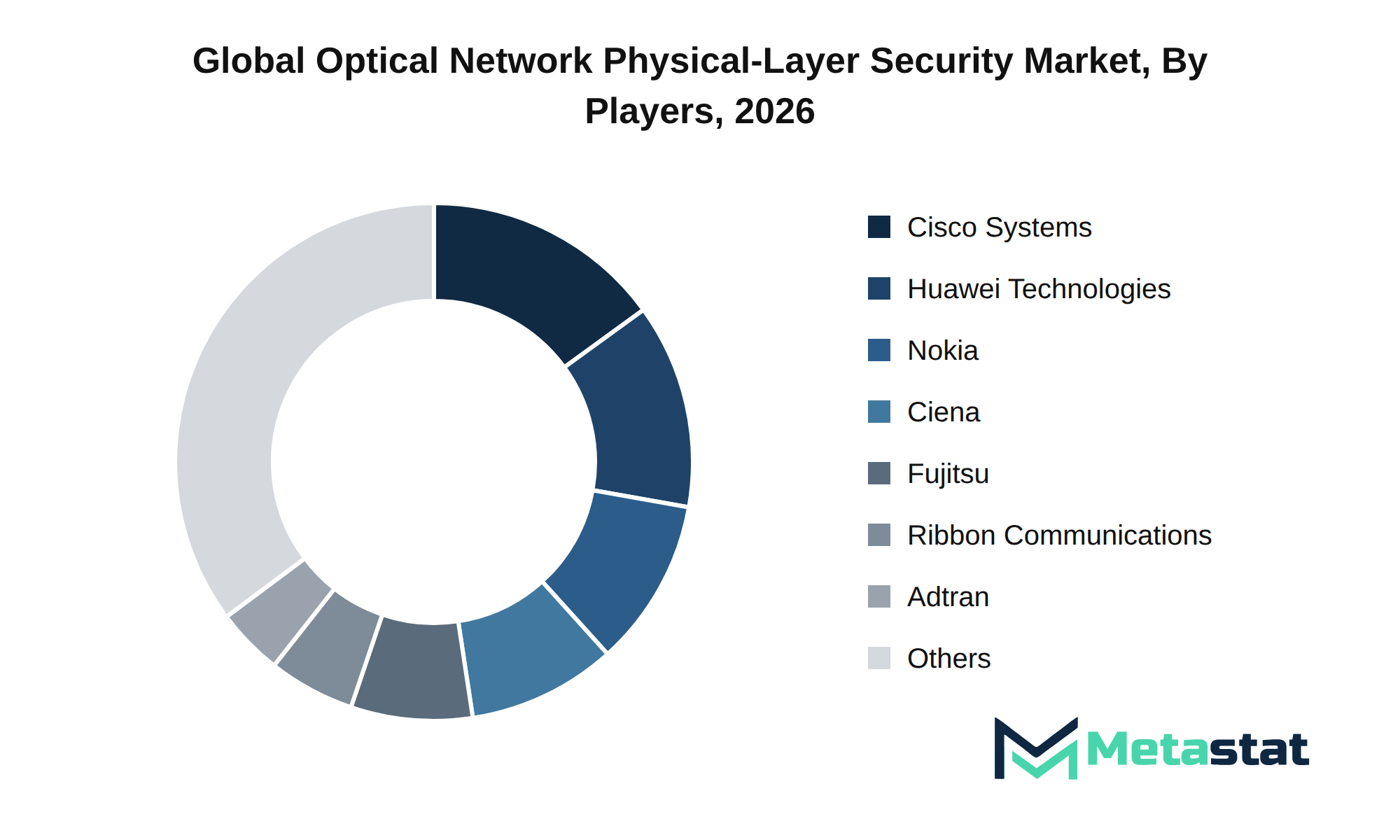
The Optical Network Physical-Layer Security market features a dynamic environment shaped by various strategic behaviors of key players. Companies including Nokia Corporation, Ciena Corporation, and Cisco Systems, Inc. engage in strategic consolidation through mergers and acquisitions, strengthening their market positions and broadening their technological capabilities. Firms like Huawei Technologies Co., Ltd. and Fujitsu Limited invest heavily in research and development to enhance product offerings and establish technological moats that differentiate their solutions.
Strategic alliances and partnerships play a critical role in the market, with companies like Ribbon Communications Inc. and PacketLight Networks Ltd. collaborating to expand reach and improve service offerings. Organizations including Ekinops S.A. and Smartoptics Group ASA leverage their intellectual property portfolios to maintain a competitive edge while navigating barriers to entry that protect market share. These collaborative strategies and robust R&D pipelines create a competitive atmosphere that drives innovation within the Optical Network Physical-Layer Security market.
Future competitive outlooks highlight the emphasis on customer retention strategies and brand equity dynamics, with companies focusing on delivering significant value to sustain clientele. The threat of new entrants remains present, prompting established firms to refine pricing architectures and commercial models, ensuring they maintain procurement leverage throughout the value chain. Enhanced collaboration and technological advancement will continue to define growth vectors in this market.
Market size is forecast to rise from USD 3,460.3 million in 2025 to over USD 13,010.7 million by 2033, reflecting an 18.0% CAGR. This forecast highlights a robust outlook driven by increasing adoption of advanced security technologies within various sectors. Rising concerns regarding network security threats and the need for infrastructure resilience support this adoption.
In a bullish scenario, rapid advancements in technology integration and heightened investments in research and development could accelerate growth beyond projections. Industries including telecommunications and data centers are expected to lead in demand, leveraging next-generation security solutions to enhance operational capabilities.
A bearish outlook arises from regulatory challenges and geopolitical tensions impacting supply chains. Such factors could limit operational efficiencies and slow down the deployment of innovative security solutions, restricting growth potential. The evolving landscape of compliance and policy enforcement will significantly shape market dynamics.
The Optical Network Physical-Layer Security market displays significant potential for expansion, driven by strategic capital allocation and increasing infrastructure commitments. This environment presents ample opportunities for stakeholders to address unmet enterprise needs and capitalize on high-growth pockets within the market.
The report strategically identifies and profiles the key market players and analyses their core competencies in each sub-segment of the Optical Network Physical-Layer Security market.
Report Attributes | Details |
Study Period | 2021-2033 |
Base Year | 2025 |
Estimated Year | 2026 |
Forecast Period | 2026-2033 |
Historical Period | 2021-2025 |
Growth Rate | CAGR 18.0% from 2026 to 2033 |
Revenue Unit | USD million |
Segmentation | By Technology, Product Type, End-Use Industry, and Region |
By Region | North America (By Technology, Product Type, End-Use Industry, and Country)
|
Europe (By Technology, Product Type, End-Use Industry, and Country)
| |
Asia Pacific (By Technology, Product Type, End-Use Industry, and Country)
| |
South America (By Technology, Product Type, End-Use Industry, and Country)
| |
Middle East and Africa (By Technology, Product Type, End-Use Industry, and Country)
|
Find answers to common questions about this report
The Optical Network Physical-Layer Security market size was valued at USD 3,460.3 million in 2025, according to the Metastat Insights study.
The Optical Network Physical-Layer Security market is projected to grow at a CAGR of 18.0% during the forecast period from 2026 to 2033.
The North America Optical Network Physical-Layer Security market size is estimated to reach USD 4,238.9 million by 2033.
The leading segment in the Optical Network Physical-Layer Security market is Layer 1 Optical Encryption, projected to reach USD 7,347.1 million by 2033. This segment surpasses others in terms of market value.
Increased capital investment drives growth in the Optical Network Physical-Layer Security market. Factors including rising GDP, favorable interest rates, and enhanced venture funding create a conducive environment for adopting advanced security solutions. Organizations prioritize digital transformation initiatives, leading to significant investments in modernizing infrastructure and integrating advanced technologies for enhanced data protection.
North America holds the dominant share of the Optical Network Physical-Layer Security market, with a value of USD 4,238.9 million projected for 2033, representing 34.6 percent of the total market.
Regulatory compliance and associated policy challenges significantly restrain growth in the Optical Network Physical-Layer Security market. Stringent legal mandates increase operational complexity and costs for manufacturers, diverting resources from innovation. macroeconomic headwinds, including rising inflation and supply chain disruptions, further complicate the landscape and strain financial resources.
Increased capital investment, driven by rising GDP and favorable interest rates, supports the adoption of advanced optical network security solutions. Organizations prioritize digital transformation initiatives and infrastructure modernization, enhancing operational productivity and addressing data privacy concerns. This trend is evident across sectors including telecommunications and data centers, fueling demand for robust security measures.
The Optical Network Physical-Layer Security market is estimated to reach a valuation of USD 13,010.7 million by 2033.
Key players in the Optical Network Physical-Layer Security market include Nokia Corporation, Ciena Corporation, Cisco Systems, Inc., Huawei Technologies Co., Ltd., Adtran, Inc., and Fujitsu Limited.
The analysts below cover Information & Technology research at Metastat Insights.
LEAD ANALYST
Utkarsh Khirodkar is a Lead Market Research Analyst at MetaStat Insight, specializing in market intelligence, technology sector assessments, and competitive strategy.

PRINCIPAL CONSULTANT - ENTERPRISE AI & EMERGING TECHNOLOGIES
Banking & Finance · Electronics and Semiconductor · Energy and Power · Healthcare IT · Information & Technology · Professional Services
Vijay Gunti is a Principal Consultant at MetaStat Insight, bringing over two decades of experience across enterprise digital transformation, technology strategy, and intelligent systems.

LEAD CONSULTANT - COMMUNICATION, TELECOM, AND IT
Electronics and Semiconductor · Information & Technology · Machinery & Equipment · Professional Services
Ravindra Sathe Consultants for Communication, Telecom, and IT at MetaStat Insight. He leads the firm's industry research initiatives across telecommunications infrastructure, digital connectivity, enterprise networking, and emerging information technology domains.
Assessing commercial microgrid software adoption requires looking past top-level installation numbers and examining utility interconnection queues. The research provided verifiable data on average permitting timelines, tariff structures, and battery storage integration costs across regional utility territories. That grounded perspective was valuable for our team when building five-year demand projections for industrial microgrid controllers.
Ambulatory surgical centers have very different purchasing cycles for robotic-assisted surgery platforms than major hospital networks. The MetaStat Insight study focused squarely on capital expenditure depreciation, procedural reimbursement pathways, and surgeon training overhead. That operational clarity made it much simpler to validate multi-year procedure growth forecasts against actual ambulatory center adoption patterns.
When planning edge sensor rollouts across refinery environments, generic IoT reports typically miss the harsh-environment certification bottlenecks. MetaStat Insight gave an objective evaluation of ATEX and Class 1 Division 2 hardware availability, along with realistic five-year maintenance cycle cost projections. The comparison of wireless mesh versus private cellular backhaul helped our team pressure-test network reliability models for remote processing facilities.
Explore related market intelligence reports worth reading alongside this one.
Starting from
$2950