
LEAD ANALYST
Utkarsh Khirodkar is a Lead Market Research Analyst at MetaStat Insight, specializing in market intelligence, technology sector assessments, and competitive strategy.

New Zealand Service Provider Network Infrastructure Market Size, Share, By Network Infrastructure Type (Fiber Optic Networks, Wireless Networks, Copper Networks and Satellite Networks), By Network Infrastructure Component (Radio Access Network (RAN), Core & Transport Networks, Fixed Broadband Infrastructure, Data Center & Edge Infrastructure and Network Automation & Security), By Service Provider Type (Mobile Network Operators, Fixed Broadband & Fibre Operators, Integrated Telecom Operators, Wholesale & Enterprise Connectivity Providers and Satellite & Non-Terrestrial Providers), By End User (Residential, Commercial and Industrial), Industry Analysis, Growth, Trends, and Forecast, 2026-2033
Report ID
MSI-5134
Published
September, 2026
Pages
265 Pages
Format
Historical
Base year
Forecast
Forecast period
Report Details
Choose Your License
New Zealand Service Provider Network Infrastructure Market
The New Zealand Service Provider Network Infrastructure market was valued at USD 2.4 billion in 2025 and is projected to reach USD 3.3 billion by 2033, growing at a CAGR of 4.4% over the forecast period.
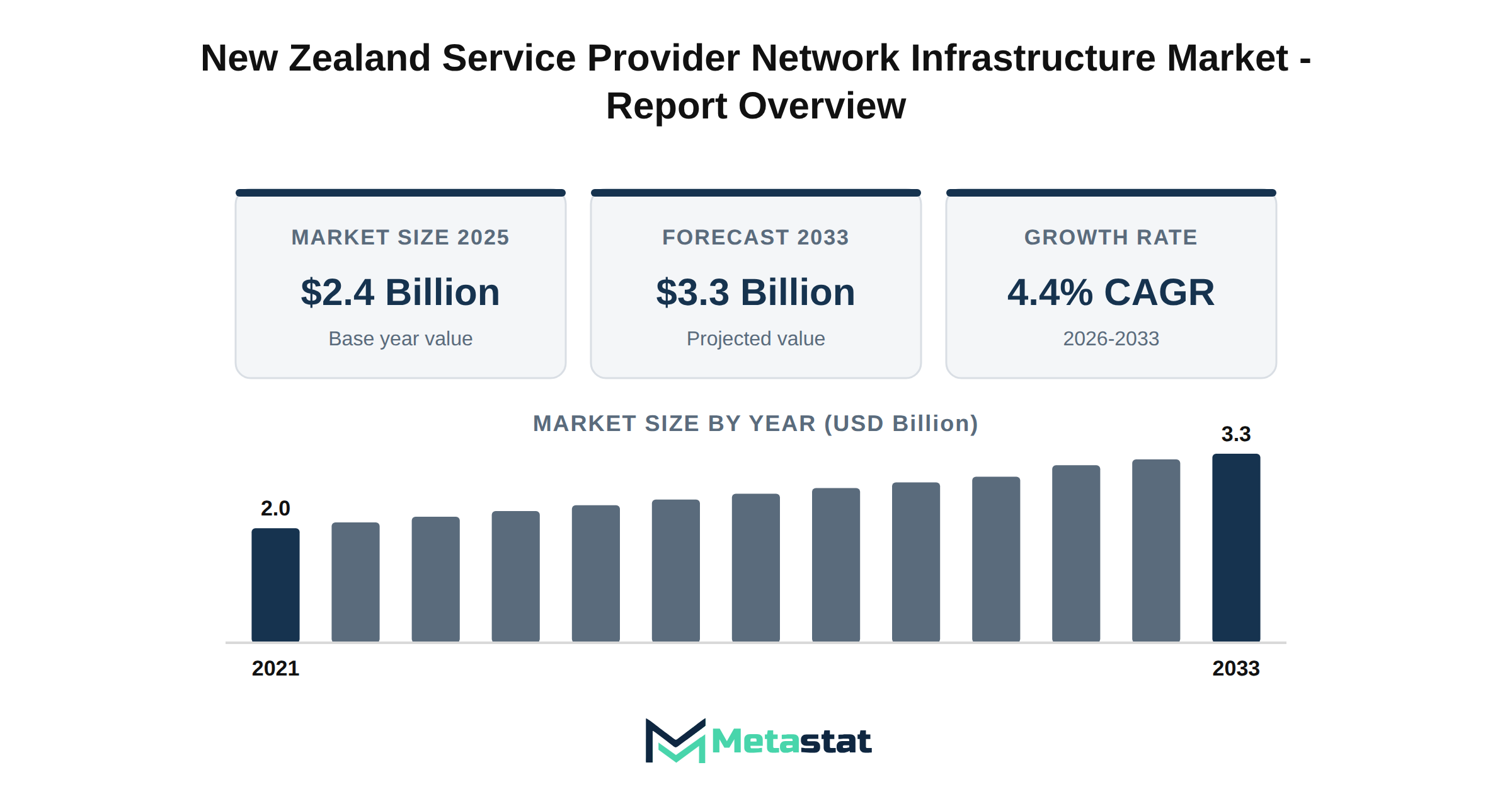
The New Zealand Service Provider Network Infrastructure market is projected to reach USD 3.3 billion by 2033, expanding from a base value of USD 2.4 billion in 2025. This growth reflects a compound annual growth rate (CAGR) of 4.4 percent during the forecast period from 2026 to 2033. Historical data shows that the market value experienced incremental growth from USD 2.0 billion in 2021 to USD 2.4 billion in 2025.
Key segments within the market include Fiber Optic Networks, Wireless Networks, Copper Networks, and Satellite Networks. Fiber Optic Networks hold the largest share, representing 53 percent of the market, while Wireless Networks account for 35.8 percent. Projections indicate that Fiber Optic Networks will grow from USD 1.3 billion in 2026 to USD 1.9 billion by 2033, achieving a CAGR of 5.5 percent. This growth highlights increasing demand for high-speed internet connections and advanced telecommunications infrastructure.
Wireless Networks are projected to reach USD 1.1 billion by 2033, with a CAGR of 3.7 percent. The demand for reliable wireless connectivity among consumers and businesses drives this growth. Meanwhile, Copper Networks will remain at USD 0.1 billion through 2033, reflecting a decline in relevance due to the rise of more advanced technologies. Satellite Networks represent an emerging area of growth that caters to remote and underserved regions, with a projected CAGR of 7 percent.
Infrastructure components including Radio Access Network (RAN), Core & Transport Networks, and Fixed Broadband Infrastructure play significant roles in shaping the market. Radio Access Network is anticipated to grow from USD 0.8 billion in 2026 to USD 1.0 billion by 2033, reflecting a CAGR of 3.1 percent. Core & Transport Networks will reach USD 0.9 billion by 2033, driven by the need for efficient data management and transmission capabilities.
Service Provider Types, including Mobile Network Operators and Fixed Broadband & Fibre Operators, significantly influence market dynamics. Mobile Network Operators are projected to grow from USD 0.9 billion in 2026 to USD 1.2 billion by 2033, achieving a CAGR of 3.3 percent. Fixed Broadband & Fibre Operators are expected to reach USD 0.9 billion by 2033, indicating steady demand for high-speed internet services among residential and commercial users.
The New Zealand Service Provider Network Infrastructure market experiences significant transformations due to various factors impacting regulatory compliance and standards. Compliance with local regulations remains crucial for service providers, ensuring that infrastructures adhere to national safety and operational standards. Geopolitical risks introduce uncertainties, prompting companies to develop robust strategies that mitigate potential disruptions.
Research and development trajectories indicate a strong focus on next-generation innovations, particularly in fiber optic and wireless technologies. These advancements enhance service delivery and enable higher bandwidth capabilities, aligning with the increasing demand for faster internet services among residential and commercial users.
Sustainable transformation trends influence the market, with companies actively pursuing decarbonization initiatives. Circular economy dynamics promote resource efficiency and waste reduction, encouraging service providers to adopt environmentally friendly practices throughout their operations.
The supply chain landscape presents challenges and opportunities, with logistics architecture evolving to meet the growing demands of connectivity. Strategic sourcing and procurement practices enhance efficiency, ensuring timely delivery of network components and infrastructure investments.
Market fragmentation characterizes the competitive environment, with numerous players vying for market share. Mergers and acquisitions represent strategic moves for companies looking to consolidate resources and expand their service offerings, ultimately enhancing their competitive positioning.
The value chain within the New Zealand Service Provider Network Infrastructure market highlights the importance of collaboration among stakeholders. Effective capital allocation toward infrastructure investments drives growth, enabling service providers to enhance their network capabilities and improve customer journey dynamics.
Inflationary pressures and currency volatility impact operational costs, requiring service providers to adopt agile financial strategies. The future strategic outlook emphasizes the need for innovative solutions, aligning corporate imperatives with evolving consumer expectations and technological advancements.
High-value recommendations for stakeholders include prioritizing investments in next-generation technologies, establishing partnerships that enhance supply chain resiliency, and exploring sustainable practices that align with market trends and regulatory frameworks.
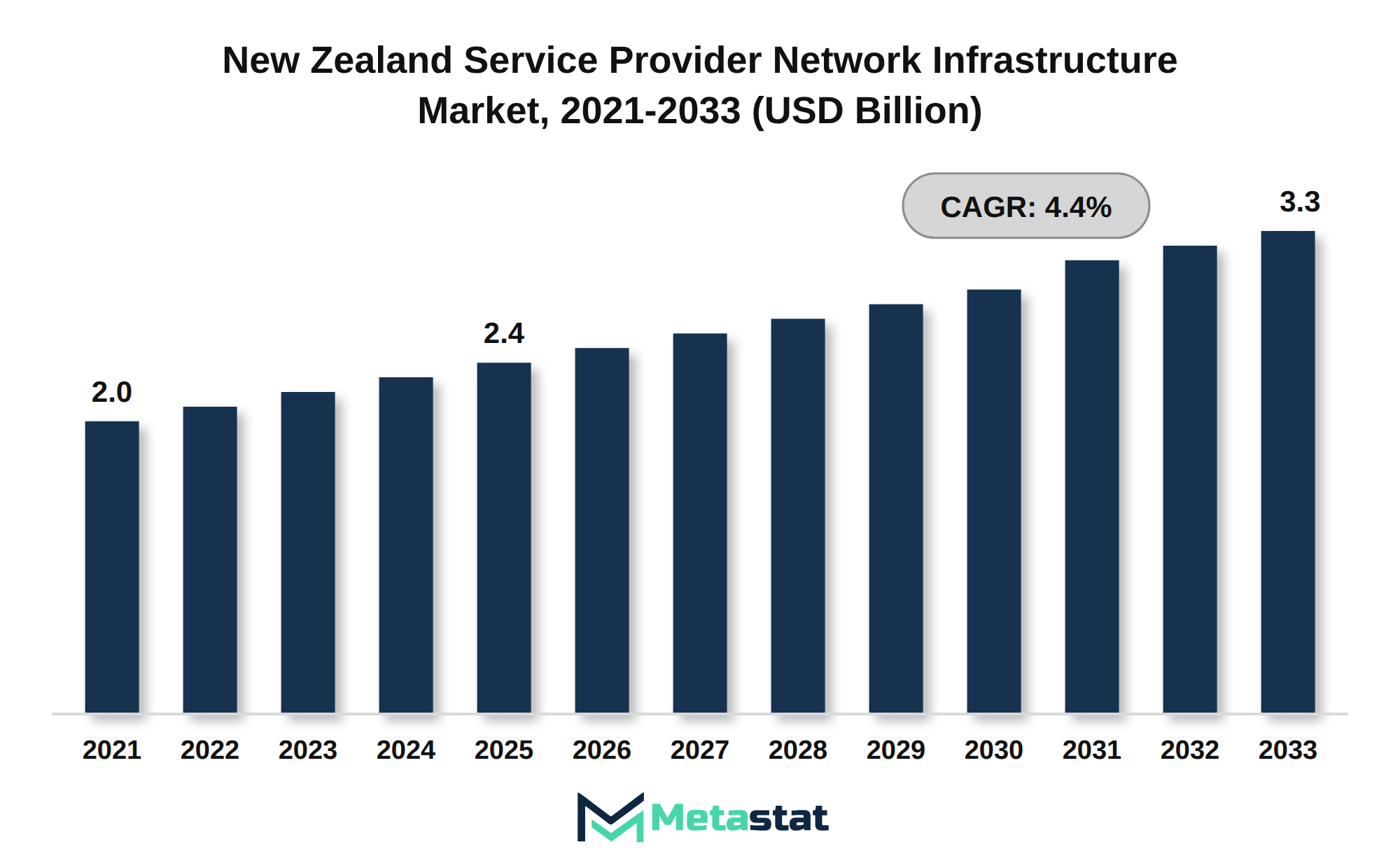
The New Zealand Service Provider Network Infrastructure market experiences expansion driven by increased capital investment across multiple sectors. A robust economic environment supports higher levels of funding directed toward technological advancements and infrastructure upgrades. These investments enhance network capabilities and improve service offerings, particularly in fiber optic and wireless network development.
Digital transformation initiatives among service providers stimulate demand for modernized infrastructure. Companies prioritize automation and the adoption of advanced technologies, leading to a competitive edge in market operations. Integrating innovative solutions results in enhanced efficiency, driving growth in the market.
Increased public and private spending on infrastructure projects significantly benefits the market. A stable macroeconomic environment encourages investments in expanding network infrastructure, improving connectivity and service quality across residential and commercial sectors. The focus on upgrading physical and digital assets aligns with broader economic growth trends, promoting further investments in the sector.
Overall, heightened capital investment in the New Zealand Service Provider Network Infrastructure market supports sustained growth. This trend reflects a commitment to developing advanced networks and meeting the evolving demands of consumers and businesses.
The New Zealand Service Provider Network Infrastructure market benefits from heightened digital transformation initiatives across various sectors. Organizations prioritize the adoption of advanced technologies to streamline operations, enhance customer experiences, and improve overall efficiency. Factors including automation, artificial intelligence, and software adoption reshape business processes, prompting significant investments in network infrastructure. This transition toward a digital-first mindset leads to rising demand for reliable and resilient network solutions.
Industries embracing digital transformation include finance, healthcare, and retail, where technology integration enhances operational productivity and customer engagement. The focus on innovative solutions drives service providers to upgrade their network capabilities, ensuring they meet the evolving demands of businesses and consumers. This upward trend in technological integration directly influences capital expenditures, resulting in substantial growth opportunities within the market.
The increasing reliance on digital services necessitates robust and agile network architectures, supporting the expansion of the New Zealand Service Provider Network Infrastructure market. Organizations actively seek to digitize legacy processes and enhance connectivity, making investment in network infrastructure a strategic priority. The continuous pursuit of operational excellence and customer satisfaction drives further growth in this dynamic market.
The New Zealand Service Provider Network Infrastructure market faces constraints from regulatory pressures that affect investment dynamics. Compliance hurdles associated with increasingly stringent regulations create challenges for service providers, resulting in increased operational costs. These higher costs influence both capital expenditure and the profitability of projects, leading to a cautious approach among stakeholders.
Inflationary pressures further exacerbate these conditions, driving up the costs of materials and labor, which negatively impacts project timelines and overall market growth. Resource scarcity poses additional obstacles, with limited availability of key components causing delays in infrastructure deployment. The combination of these factors contributes to a fragmented market, where varying regulatory requirements across regions complicate standardization efforts and increase operational complexity.
Geopolitical instability introduces unpredictability into supply chains, heightening risks for service providers. While companies contend with these external pressures, diminished capacity to invest in network development ultimately slows advancement in the New Zealand Service Provider Network Infrastructure market. The connection of these regulatory and economic factors highlights the need for strategic planning and agility within the market to navigate these challenges effectively.
The New Zealand Service Provider Network Infrastructure market faces challenges stemming from geopolitical tensions that disrupt supply chains and create uncertainty in the market. Fragmented trade policies and tariff friction complicate the import of essential components, leading to increased costs and delays in project timelines. These conditions particularly affect mobile network operators and integrated telecom operators reliant on international suppliers for advanced technology and infrastructure components.
Technological disruptions, including rapid advancements in network technology, present additional hurdles. Companies navigate complex research and development integrations while ensuring interoperability across various systems and platforms. The evolving landscape of cyber threats raises concerns regarding data vulnerabilities and cybersecurity risks, increasing the need for robust security measures in network infrastructure.
Pricing compression and margin pressures significantly influence profitability in the market. Rising input costs, driven by supply chain instability and volatility in feedstock prices, necessitate strategic adjustments by service providers. Companies prioritize efficiency and innovation to remain competitive while addressing workforce skill gaps and talent retention pressures in an environment characterized by automation displacements.
The New Zealand Service Provider Network Infrastructure market adapts to changing downstream demands, where market saturation introduces substitution vector pressures. Stakeholders face the ongoing challenge of addressing infrastructure gaps and retrofitting barriers, complicating efforts to enhance network capabilities and meet growing consumer expectations. A focus on sustainability and compliance with tightening regional regulatory standards further complicates the operational landscape, requiring significant investments in new technologies and practices.
Growing demands in the New Zealand Service Provider Network Infrastructure market stem from rapid digital transformation across various sectors. Businesses increasingly leverage advanced technologies, driving a shift towards modern network solutions that enhance operational efficiency and connectivity. This transformation influences service providers to invest in innovative infrastructure capable of meeting evolving consumer and business needs.
Infrastructure modernization plays a critical role in addressing the challenges posed by legacy systems. Providers focus on upgrading existing facilities to support higher bandwidth and lower latency, essential for emerging applications like IoT and 5G. This modernization improves service quality and positions providers competitively within the market.
Geographical expansion furthers market growth by ensuring coverage in both urban and underserved rural regions. Investment in infrastructure to extend network reach allows service providers to tap into new customer bases, facilitating increased revenue opportunities. Subsequently, this expansion aligns with the trend of next-generation innovations, where the integration of scalable technologies enhances service delivery.
Sustainability imperatives increasingly influence infrastructure decisions, prompting providers to adopt eco-friendly practices. Green transformations and ESG-driven alignments attract consumers, creating a competitive edge for those emphasizing sustainable operations. This shift enhances brand reputation while attracting environmentally conscious customers, crucial for growth in the market.
Strategic consolidation through mergers and acquisitions strengthens competitive positioning within the New Zealand Service Provider Network Infrastructure market. These strategic moves enable companies to expand their service offerings, access new technologies, and streamline operations. Evolving buying behaviors and digital procurement shifts further reshape market dynamics, pushing service providers to adapt their commercial models to meet customer preferences.
The market thrives on localized supply chains and strategic buffering, ensuring resilience against global disruptions. Asset life-cycle extensions and maintenance upgrades contribute to operational yield maximization, allowing service providers to maintain high service levels while optimizing costs. These strategies collectively enhance the overall market outlook, reinforcing the importance of strategic investments in infrastructure development.
Spark New Zealand holds a cornerstone position within the national telecommunications landscape. As the largest integrated retail service provider, the company operates across fixed-line broadband, mobile connectivity, cloud management, and enterprise digital services. Its strategic roadmap focuses on shifting from a legacy telecommunications operator into a modern digital services provider.
To maintain network leadership, Spark New Zealand prioritizes investments in mobile infrastructure, hybrid cloud environments, and enterprise data centers. The company has accelerated its mobile network modernization by partnering with global equipment vendors, notably selecting Ericsson to deploy its 5G Standalone (SA) core and radio access network equipment. This architecture allows the operator to deliver ultra-low latency applications, network slicing, and dedicated private network solutions for industrial clients.
Capital discipline remains central to Spark New Zealand's long-term operations. The company unlocked significant capital through the partial sale of its passive mobile tower assets, reinvesting those proceeds directly into future-facing digital infrastructure. By directing resources into high-capacity fiber backhaul, edge nodes, and automated network orchestration, Spark New Zealand defends its retail market share against agile challengers while capturing high-margin opportunities across corporate and government sectors.
Major Service Providers: Vodafone New Zealand Infrastructure Investments
Vodafone New Zealand represents one of the market's two dominant mobile operators. Following a major ownership transition to infrastructure investment consortia and its operational rebrand to One New Zealand, the company redefined its capital spending strategy. The operator has directed capital toward deep mobile network modernization, network resilience, and expanding coverage reach.
A cornerstone of Vodafone New Zealand's infrastructure investment is its extensive 5G network rollout across major metropolitan hubs and regional commercial centers. The company selected Nokia as its primary technology partner to upgrade its radio access network (RAN) and modernize core systems. This investment program enhances spectral efficiency, increases network capacity, and prepares the network for data traffic growth generated by streaming, cloud applications, and connected Internet of Things (IoT) hardware.
In parallel with terrestrial upgrades, the operator pursues innovative coverage expansion models. Through strategic satellite-to-cell collaborations, Vodafone New Zealand aims to eliminate domestic mobile black spots by linking standard smartphones directly to low-Earth orbit satellites. This dual investment focus—urban 5G densification paired with non-terrestrial backup links—protects network availability during severe weather events while securing a resilient competitive position.
Chorus Limited operates as New Zealand's dominant open-access wholesale fixed infrastructure provider. Spun off during the restructuring of the national telecommunications sector, Chorus owns and maintains the physical fiber and legacy copper networks that underpin residential and business broadband delivery across most of the country.
The company's primary operational focus has transitioned from active construction under the Ultra-Fast Broadband (UFB) programme to network commercialization and service upgrades. With UFB fiber deployment substantially completed across its designated coverage zones, Chorus Limited focuses on migrating end users from legacy copper lines onto gigabit-capable passive optical networks. The company actively rolls out next-generation Hyperfibre services using XGS-PON technology, offering symmetrical speeds to residential power users and enterprises.
Network rationalization forms the second pillar of the Chorus strategy. Under regulatory oversight, Chorus manages a phased copper withdrawal program in areas where fiber is universally available. Decommissioning aging copper lines lowers ongoing operating costs, eliminates maintenance overheads, and reduces energy consumption. Capital saved from copper retirement is redirected into extending fiber boundaries into urban fringes and strengthening network resilience against environmental disruptions.
The competitive dynamic of the telecommunications market shifted following the merger between mobile challenger 2degrees and fixed-line specialist Vocus Group. This business combination created an integrated tier-one challenger capable of competing directly against Spark New Zealand and Vodafone New Zealand across both fixed and mobile segments.
The merged entity unites complementary infrastructure portfolios. 2degrees contributed an extensive nationwide mobile network, active retail brand equity, and commercial 5G sites deployed in partnership with Ericsson. Vocus Group brought extensive wholesale fiber infrastructure, proprietary metropolitan backhaul rings, unbundled exchange connections, and vital international submarine cable capacity.
By combining these physical networks, 2degrees and Vocus Group eliminated duplicate transit expenses and created a unified core network. The unified business uses this integrated architecture to deliver cost-effective broadband and mobile bundles to consumers while presenting a robust, independent alternative for enterprise connectivity and government procurement panels.
The New Zealand network infrastructure market offers targeted investment avenues, particularly in segments supporting data transport, cloud distribution, and network reliability. Capital allocators evaluate several key market segments:
Regional Fiber Backhaul and Aggregation: Growing mobile data consumption requires redundant high-capacity fiber routes connecting regional aggregation sites to major data centers.
Edge Data Centers and Colocation Facilities: Content providers and enterprises require distributed computing nodes close to population centers to minimize transit latency.
Neutral Host Small Cell Networks: High-density urban zones benefit from shared physical infrastructure where a single neutral provider deploys small cells accessed by multiple mobile operators.
Private Wireless Networks: Industrial hubs, deep-water ports, and agricultural operations require secure, dedicated wireless networks built on private spectrum or network slices.
Entering the market requires targeted strategies due to the presence of entrenched national operators. New entrants often avoid building overlapping nationwide physical access networks. Instead, viable strategies include forming joint ventures with local wholesale players, acquiring niche regional fiber providers, or partnering with Crown Infrastructure Partners on co-funded development projects. Equipment suppliers enter the market by demonstrating open architectural standards, clear power-efficiency gains, and automated network management capabilities.
The New Zealand Service Provider Network Infrastructure market is segmented based on Network Infrastructure Type, Network Infrastructure Component, Service Provider Type, and End User.
Valued at USD 1.3 billion in 2026, the Fiber Optic Networks segment is projected to reach USD 1.9 billion by 2033, at a CAGR of 5.5% during the forecast period. Rising demand for high-speed internet connectivity drives adoption within this segment, particularly among residential and commercial users seeking reliable and efficient broadband solutions. Enhanced bandwidth capabilities of fiber optic technology support increased data transmission rates, contributing to its preference over traditional copper networks.
Technological maturation in fiber optic systems enhances deployment efficiency and lowers operational costs, reinforcing competitive positioning in the New Zealand Service Provider Network Infrastructure market. Next-generation upgrades, including advanced fiber-to-the-home installations, drive growth because service providers expand their infrastructure to accommodate increasing consumer and business demands. The ongoing evolution of fiber optic products includes improved durability and flexibility, which aligns with evolving user requirements.
Shifts in consumer consumption patterns toward digital services necessitate robust and scalable network infrastructures. Regulatory compliance standards related to broadband access and performance create favorable conditions for investment in fiber optic networks, with regulatory bodies encouraging service expansion into underserved areas. Cost structures remain an essential consideration; however, long-term savings associated with fiber optic deployment significantly offset initial investment challenges.
Pricing volatility in the telecommunications market influences service providers' strategies, yet fiber optics retain a competitive edge due to their lower maintenance costs and increased lifespan compared to alternative technologies. Strategic opportunity windows arise from the continual advancement of smart technologies, including IoT and cloud services, driving higher consumption of bandwidth-intensive applications.
The Fiber Optic Networks segment in the New Zealand Service Provider Network Infrastructure market exhibits a promising growth trajectory, supported by a combination of technological advancements, regulatory advantages, and evolving end-user demands. Investments in infrastructure development and modernization position this segment favorably because it navigates the competitive landscape.
Growth in the Wireless Networks segment stems from increasing demand for mobile connectivity and high-speed data services. The expansion of 5G infrastructure plays a critical role in enhancing network capabilities, allowing service providers to offer improved coverage and reduced latency. Consequently, businesses and consumers benefit from enhanced mobile experiences, driving further adoption of wireless technologies.
Investment in next-generation upgrades remains a key factor influencing market dynamics. Service providers actively seek to modernize their infrastructure to accommodate the rising volume of data traffic generated by applications including video streaming, IoT devices, and smart city initiatives. Enhanced wireless solutions facilitate connectivity, promoting consumer engagement and satisfaction.
By 2033, the Wireless Networks segment is projected to reach USD 1.1 billion, at a CAGR of 3.7% during the forecast period. This anticipated growth reflects ongoing trends in technological maturation, with advancements in equipment and network management solutions. Service providers increasingly focus on improving operational efficiencies and reducing cost structures, which further supports market expansion.
End-user dynamics play a significant role in shaping market trends. Both residential and commercial sectors show a strong preference for reliable wireless services, influencing service providers to enhance their offerings. Competition among providers intensifies, leading to innovative pricing strategies aimed at attracting new customers and retaining existing ones.
Regulatory compliance standards, particularly those related to spectrum allocation and network security, present both challenges and opportunities in the market. Adhering to these standards ensures the sustainability of wireless networks while encouraging further investment in infrastructure development. With these elements at play, the New Zealand Service Provider Network Infrastructure market remains poised for growth in the coming years.
The outlook for Copper Networks within the New Zealand Service Provider Network Infrastructure market indicates a steady trajectory toward USD 0.1 billion by 2033. Factors contributing to this growth include ongoing demand for legacy connectivity solutions in various sectors, particularly in areas with limited access to advanced technologies including fiber optics.
Adoption is influenced by the necessity of maintaining existing infrastructure while gradually transitioning to modern alternatives. Businesses and residential users relying on traditional telecommunications services seek reliable connections, ensuring sustained demand for copper-based systems. Regulatory pressures encouraging the shift toward greener technologies affect the long-term viability of copper networks; however, these networks fulfill immediate connectivity needs.
Segment expansion appears limited due to technological maturation favoring fiber optic networks and wireless solutions, which provide higher speeds and greater efficiency. Copper networks retain a foothold in specific applications, particularly where cost-effective upgrades to existing infrastructure present a practical solution for end-users. Investment in maintaining and optimizing these networks does not match emerging technologies, impacting overall growth potential.
Competition from disruptive technologies and alternative solutions poses a challenge for copper networks. The market for advanced network infrastructure increasingly favors innovations that enhance speed and efficiency. Strategic opportunities exist in addressing specific gaps where copper solutions effectively meet demand, particularly in rural and underserved regions.
Growth in the Satellite Networks segment aligns with increasing demand for reliable communication services in remote areas of New Zealand. This rise stems from the need for better connectivity solutions across various sectors including agriculture, emergency services, and remote work. With advancements in satellite technology, including low Earth orbit satellites, service providers enhance coverage and reduce latency, attracting a broader customer base.
The Satellite Networks segment is projected to grow at a CAGR of 7% during the forecast period. The demand for satellite connectivity continues to surge, particularly in regions lacking terrestrial infrastructure. This growth drives significant investments in satellite technology, prompting operators to expand their offerings and reach underserved markets.
The increasing reliance on satellite-based solutions in sectors including IoT and smart agriculture highlights the importance of this segment within the New Zealand Service Provider Network Infrastructure market. Enhanced data transmission capabilities lead to improved operational efficiency and enable new applications, driving further demand.
While regulatory frameworks evolve to support satellite deployment and operation, the market experiences a favorable environment for growth. Investments in satellite infrastructure and next-generation upgrades strengthen the segment's position within the overall network infrastructure, ensuring it remains competitive and responsive to changing consumer needs.
Growth in the Radio Access Network (RAN) segment reflects increasing investments in mobile telecommunications infrastructure. Valued at USD 0.8 billion in 2026, this segment is projected to reach USD 1 billion by 2033, with a CAGR of 3.1% during the forecast period. Rising demand for high-speed mobile connectivity drives operators to enhance their network capabilities, responding to consumer expectations for improved performance and reliability.
Telecommunications companies focus on upgrading existing RAN systems to support next-generation mobile applications. Strategies include deploying advanced technologies including small cells and distributed antenna systems, enabling greater capacity and efficiency. The growing adoption of 5G technology significantly expands RAN infrastructure, driven by service providers seeking to deliver enhanced user experiences and support a higher density of connected devices.
Investment in the Radio Access Network segment aligns with expectations for increased data consumption across consumer and commercial sectors. While end users demand faster internet speeds and lower latency, operators commit resources to strengthen their RAN capabilities. This trend reflects broader shifts within the New Zealand Service Provider Network Infrastructure market, which increasingly prioritizes efficient, scalable solutions to accommodate evolving connectivity requirements.
Investment in Core & Transport Networks within the New Zealand Service Provider Network Infrastructure market reflects a growing emphasis on enhancing network efficiency and reducing latency. Key demand drivers include the increasing requirement for reliable connectivity among end users, particularly in commercial and residential sectors. Robust expansion characterizes the market due to the rising adoption of advanced broadband technologies and the transition towards next-generation network infrastructures.
Technological maturation is evident, with providers upgrading existing systems to accommodate higher data throughput and improved service quality. The segment is projected to reach USD 0.9 billion by 2033, at a CAGR of 4.4% during the forecast period. Integration of innovative components, including software-defined networking and network slicing, contributes to improved operational efficiencies and flexibility.
Cost structures influence investment decisions, with providers focusing on optimizing their infrastructure to mitigate pricing volatility and margin pressures. Demand for Core & Transport Networks aligns with trends in downstream applications, emphasizing the importance of comprehensive service offerings that cater to diverse user needs. Regulatory compliance standards and policy developments shape the landscape, ensuring that infrastructure upgrades align with national connectivity goals and standards.
End-user dynamics reflect shifts towards higher bandwidth consumption, driven by the proliferation of smart devices and data-intensive applications. Overall, the trajectory of the Core & Transport Networks segment highlights substantial growth potential within the New Zealand Service Provider Network Infrastructure market.
Investment in Fixed Broadband Infrastructure contributes significantly to the New Zealand Service Provider Network Infrastructure market, expected to reach USD 0.7 billion by 2033. The sector experiences growth driven by rising demand for high-speed internet and increasing adoption of digital services among residential and commercial users. Enhanced connectivity needs, driven by remote work trends, stimulate investments in infrastructure upgrades.
Technological maturation influences the expansion of Fixed Broadband Infrastructure. Next-generation upgrades, including fiber optic deployments, facilitate faster and more reliable connections. These advancements encourage service providers to enhance their offerings, catering to the evolving preferences of end-users who seek dependable connectivity for various applications.
Consumption shifts towards higher bandwidth demands influence growth dynamics within this segment. With the proliferation of smart devices and IoT applications, an increasing number of consumers expect reliable internet access. Consequently, service providers focus on optimizing their networks to meet these evolving requirements, ensuring competitive positioning in the market.
Regulatory compliance standards and policies promote investment in Fixed Broadband Infrastructure. Government initiatives aimed at enhancing digital connectivity support capital investment outlooks, creating a favorable environment for service providers. This support aligns with the overall growth trajectory of the New Zealand Service Provider Network Infrastructure market.
Growth within the Data Center & Edge Infrastructure segment aligns with increasing investments in next-generation technologies, which enhance operational efficiencies and scalability. Organizations prioritize digital transformation initiatives, fueling demand for robust data management and processing capabilities. This segment is projected to grow at a CAGR of 5.4% during the forecast period, reflecting its significance within the New Zealand Service Provider Network Infrastructure market.
Technological maturation significantly shapes the dynamics of this segment. The integration of advanced automation and artificial intelligence into data center operations allows for improved resource allocation and reduced operational costs. End-users across various industries seek enhanced data processing and storage solutions, driving adoption and expansion in this segment.
Regulatory compliance standards and policies regarding data security and privacy compel organizations to invest in state-of-the-art data center infrastructure. This necessity creates opportunities for service providers to offer compliant and secure solutions tailored to the evolving needs of enterprises. The capital investment outlook remains positive, supporting continuous growth in the Data Center & Edge Infrastructure segment.
Increased focus on operational efficiency and enhanced network security drives demand for Network Automation & Security solutions within the New Zealand Service Provider Network Infrastructure market. Adoption of advanced automation technologies streamlines processes, resulting in significant cost savings for service providers. Businesses prioritize robust security measures in response to the growing threat landscape, prompting investment in automated security systems that enhance network resilience.
Technological maturation leads to the development of innovative solutions that address evolving challenges faced by service providers. Next-generation upgrades to existing infrastructure enable operators to leverage automation capabilities effectively, improving service delivery and network performance. The integration of artificial intelligence and machine learning in automation solutions enhances predictive capabilities, allowing for proactive management of network resources.
In the context of downstream applications, Network Automation & Security solutions support a wide range of end-users, including residential, commercial, and industrial sectors. Consumption shifts towards more digitized services necessitate robust and secure network infrastructures, further intensifying the competitive landscape. Regulatory compliance standards mandate stringent security measures, encouraging service providers to invest in advanced automation and security solutions.
Cost structures associated with Network Automation & Security components experience fluctuations driven by technological advancements and market dynamics. Pricing volatility reflects the competitive nature of the market, with service providers seeking cost-effective solutions that maintain high performance. Strategic opportunity windows arise from the demand for tailored automation solutions that cater to specific operational needs, driving innovation and investment within the segment.
Supply chain resilience plays a crucial role in the deployment of Network Automation & Security solutions. Raw material sourcing and logistics vulnerabilities necessitate careful planning and management to ensure continuity in service delivery. Disruptive alternatives challenge traditional practices, leading to the exploration of new technologies and methodologies within the market. Overall, the New Zealand Service Provider Network Infrastructure market demonstrates a clear trajectory of growth in the Network Automation & Security segment, driven by a confluence of demand drivers and technological advancements.
Valued at USD 0.9 billion in 2026, the Mobile Network Operators segment is projected to reach USD 1.2 billion by 2033, at a CAGR of 3.3% during the forecast period. Primary demand drivers include the increasing reliance on mobile services among consumers and businesses, which fuels the development of advanced mobile infrastructure. Rapid adoption of smartphones and IoT devices stimulates demand, enhancing overall market growth.
Investment in next-generation upgrades, including 5G technology, is essential for expanding market opportunities. These upgrades enable faster data transmission, lower latency, and improved network capacity, catering to the evolving needs of end users. The growing focus on enhancing user experience and expanding service offerings drives operators to invest in innovative solutions.
Cost structures and margin pressures remain critical factors influencing the Mobile Network Operators segment. Competitive pricing strategies, driven by market dynamics and consumer expectations, compel operators to balance investment in infrastructure with operational cost management. Regulatory compliance standards and policies impose additional costs, further affecting pricing strategies.
Technological maturation and evolving consumer preferences create strategic opportunity windows for operators. Emphasis on providing reliable connectivity and positive user experiences drives the need for continuous investment in network infrastructure. The mobile network landscape in New Zealand exhibits resilience against disruptive alternatives through ongoing advancements in service offerings, ensuring sustained market growth.
Growing investment in infrastructure and the increasing demand for high-speed internet drive the Fixed Broadband & Fibre Operators segment within the New Zealand Service Provider Network Infrastructure market. This segment, estimated to reach USD 0.9 billion by 2033, at a CAGR of 3.9% during the forecast period, reflects the vital role of broadband services in supporting commercial and residential connectivity.
The transition towards fiber optic technology enhances service capabilities, driving greater speeds and reliability. Operators focus on expanding their fiber networks to accommodate rising data consumption and the proliferation of smart devices across households and businesses. Enhanced customer expectations for reliable connectivity and high-bandwidth applications highlight the urgency for operators to upgrade existing infrastructure.
Regulatory compliance and government initiatives promoting broadband accessibility further stimulate growth. Enhanced funding programs and support for rural connectivity initiatives create opportunities for operators to expand their reach. Strategic collaborations among service providers and technology partners enable innovations in service delivery, ensuring the market adapts to evolving consumer needs.
Cost structures in this segment remain influenced by technological advancements and competitive pricing strategies, impacting profit margins. Adopting next-generation technologies, along with efficient resource management, supports operators in navigating pricing volatility and maintaining service quality. The Fixed Broadband & Fibre Operators segment exemplifies strategic investment areas, aligning with long-term growth trajectories within the New Zealand Service Provider Network Infrastructure market.
Investment in Integrated Telecom Operators within the New Zealand Service Provider Network Infrastructure market reflects a strategic focus on enhancing service delivery and operational efficiency. The segment is expected to reach USD 0.5 billion by 2033, driven by increasing demand for comprehensive telecommunications solutions that integrate voice, data, and internet services. Technological maturation and next-generation upgrades encourage operators to invest in advanced infrastructure, ensuring compatibility with evolving standards and customer expectations.
A surge in residential and commercial connectivity requirements contributes to segment growth, with consumers increasingly relying on integrated services for effective communication. This demand stimulates operators to refine their offerings, leading to product evolution and enhanced customer experiences. Regulatory compliance standards influence operators' strategies, compelling them to adopt robust systems that ensure service quality and reliability while navigating the complexities of the regulatory environment.
Cost structures and pricing volatility present challenges for Integrated Telecom Operators within the market. Operators face margin pressures, prompting a focus on optimizing operational efficiency and exploring cost-effective solutions to maintain competitiveness. Strategic opportunity windows arise from technological obsolescence, pushing operators to upgrade legacy systems in favor of modern, scalable alternatives that cater to future demands.
Supply chain resilience plays a critical role in supporting Integrated Telecom Operators, with raw material sourcing and logistics vulnerabilities impacting service delivery. Disruptive alternatives pose risks, compelling operators to remain agile and adaptable to changing market dynamics. By leveraging strategic partnerships and investing in innovative technologies, operators strengthen their positions within the New Zealand Service Provider Network Infrastructure market.
Investment in the Wholesale & Enterprise Connectivity Providers segment reflects an increasing demand for robust network infrastructure among businesses across various sectors. This segment is projected to grow at a CAGR of 5.9% during the forecast period, driven by the rising need for reliable and high-speed connectivity solutions that enable efficient operations. The market structure supports businesses transitioning to advanced digital services, enhancing their competitive edge.
Technological advancements in networking equipment and infrastructure play a crucial role in segment expansion. Innovations including cloud computing and IoT require reliable connectivity, prompting enterprises to seek solutions that integrate advanced technologies. Increased investments in next-gen network upgrades position this segment favorably within the New Zealand Service Provider Network Infrastructure market.
Adoption of hybrid work models further accelerates demand for connectivity solutions, with businesses prioritizing flexibility and scalability in their operations. This shift significantly influences the consumption patterns of enterprise connectivity services, leading to a heightened focus on reliability among providers. Enhanced product offerings that include flexible bandwidth options and bundled services appeal to a diverse range of commercial users.
Regulatory compliance standards place additional pressure on connectivity providers to ensure data security and privacy, creating opportunities for companies equipped to manage these requirements effectively. Strategic partnerships within the ecosystem enhance supply chain resilience and address potential vulnerabilities, enabling providers to deliver superior service levels. Investments in infrastructure that comply with current regulations strengthen market positioning and drive future growth.
The evolving environment of the New Zealand Service Provider Network Infrastructure market invites significant capital investment, driven by companies seeking to upgrade and expand their offerings. Competitive pressures compel providers to innovate continuously, ensuring alignment with emerging trends in technology and customer expectations. This dynamic environment positions the Wholesale & Enterprise Connectivity Providers segment for sustained growth in the coming years.
Investment in Satellite & Non-Terrestrial Providers focuses on enhancing connectivity in remote and underserved areas. Demand for satellite services rises owing to increasing reliance on broadband access, especially in rural regions where traditional infrastructure remains limited. The integration of next-generation satellite technology, including Low Earth Orbit (LEO) satellites, supports faster data transmission and improved service quality, addressing the need for reliable internet access.
Technological advancements drive segment expansion, with operators exploring new applications for satellite communications across various industries. The evolution of services encourages partnerships with aerospace companies, enhancing capabilities in fields including IoT, agriculture, and maritime communications. Regulatory compliance and certifications play a crucial role in maintaining service quality and operational standards, ensuring that providers meet industry requirements.
Cost structures within this segment face pressure from increasing competition and the need for continual investment in infrastructure. Price volatility in raw material sourcing, particularly for satellite manufacturing, influences operational costs. Despite these challenges, strategic opportunities arise from the demand for enhanced connectivity solutions, positioning the Satellite & Non-Terrestrial Providers segment because a key player in the New Zealand Service Provider Network Infrastructure market.
Valued at USD 1.2 billion in 2026, the Residential segment is projected to reach USD 1.6 billion by 2033, at a CAGR of 4.2% during the forecast period. This growth stems from rising demand for reliable internet connectivity among households, driven by increasing online activities including remote work, streaming services, and smart home technologies. Enhanced availability of fiber optic networks supports this trend, enabling higher bandwidth and faster internet speeds. Investment in next-generation upgrades, including improved broadband infrastructure, creates opportunities for service providers to enhance their offerings, meeting the evolving needs of residential consumers.
End-use dynamics reflect a shift in consumption patterns, with residential users increasingly opting for bundled services that include internet, television, and voice communication. This trend encourages service providers in the New Zealand Service Provider Network Infrastructure market to develop competitive pricing strategies while maintaining service quality. Regulatory compliance standards further influence market evolution, driven by government initiatives that promote digital inclusion and connectivity in underserved areas, creating additional avenues for growth.
Market dynamics within the Commercial segment reflect a strong alignment with the ongoing digital transformation across businesses in New Zealand. The shift towards remote work and increased reliance on cloud-based services drives demand for robust network infrastructure, compelling service providers to enhance their offerings. Key industries including retail, finance, and education require reliable connectivity to support operations and customer interactions.
The Commercial segment is projected to reach USD 1.2 billion by 2033, at a CAGR of 4.5% during the forecast period. This growth trajectory results from the need for businesses to adapt to technological advancements and evolving customer expectations. Investments in fiber optic networks play a crucial role in meeting the need for higher bandwidth and lower latency, essential for reliable connectivity.
Service providers in this segment focus on optimizing product portfolios to cater to diverse business requirements. The emergence of next-generation solutions, including enhanced wireless networks and integrated telecom services, positions the market for continued expansion. While businesses prioritize operational efficiency and digital engagement, the New Zealand Service Provider Network Infrastructure market is expected to experience sustained investment and innovation.
Investment within the Industrial segment of the New Zealand Service Provider Network Infrastructure market demonstrates a strong trajectory, projected to reach USD 0.5 billion by 2033. The increasing adoption of advanced technologies across various industrial applications drives this growth, with businesses seeking improved connectivity to support automation and data analytics in operations.
Technological maturation significantly influences the expansion of this segment. Enhanced network capabilities facilitate the integration of IoT devices and smart manufacturing solutions, leading to greater operational efficiency. Downstream applications, including remote monitoring and predictive maintenance, illustrate the segment's relevance in the evolving industrial environment.
Regulatory compliance standards influence investment strategies, with businesses prioritizing infrastructure that meets government mandates for digital transformation and sustainability. The transition toward greener technologies promotes the adoption of energy-efficient network solutions, presenting strategic opportunity windows for service providers targeting this segment.
Cost structures linked to network infrastructure remain vital, with pricing volatility leading to increased scrutiny of capital investments. The focus on supply chain resilience encourages companies to diversify their connectivity solutions, mitigating risks associated with over-reliance on single suppliers. This dynamic fosters competitive behavior among service providers seeking to capture market share in the Industrial segment.
Overall, the Industrial segment's outlook within the New Zealand Service Provider Network Infrastructure market indicates robust potential driven by technological advancements, compliance mandates, and evolving consumption patterns. Investment strategies aligning with these trends will enhance the segment's contributions to overall market growth.
Initial commercial 5G deployments relied primarily on Non-Standalone (NSA) configurations, utilizing existing 4G LTE cores for signaling. Operators now implement 5G Standalone (SA) cores. The 5G SA architecture unlocks native network slicing, deterministic quality of service, and ultra-reliable low-latency communication (URLLC). Spectrum allocations coordinated across mid-band frequencies (notably 3.5 GHz) supply the bandwidth necessary to support enterprise wireless broadband as a viable alternative to fixed fiber in specific suburban clusters.
Mobile Edge Computing (MEC) infrastructure is being deployed at regional aggregation nodes and central exchange offices. Moving computation and cloud storage closer to network termination points reduces round-trip backhaul delays. This shift supports latency-sensitive enterprise applications, automated logistics, and smart grid utilities.
Service providers are modernizing their transport and aggregation layers using optical transport gear from Ciena, software-defined networking (SDN), and network functions virtualization (NFV). Physical proprietary hardware appliances are being replaced with containerized network software running on commercial off-the-shelf servers. Operators also track Open RAN technical developments, testing open radio interfaces to diversify supply chains, reduce equipment vendor lock-in, and lower long-term deployment costs.
The New Zealand telecommunications industry operates under a rigorous regulatory regime designed to promote wholesale competition, protect end consumers, and encourage capital investment. Regulatory authority is shared between the Ministry of Business, Innovation and Employment (MBIE) and the Commerce Commission.
The Ministry of Business, Innovation and Employment (MBIE) manages national radio spectrum policy, conducts spectrum auctions, and establishes high-level policy frameworks. The Commerce Commission acts as the economic regulator, implementing provisions defined by the Telecommunications Act.
A central responsibility of the Commerce Commission is the regulation of fiber fixed-line access services. Under this regime, Chorus Limited and other local fiber companies operate under a building block model featuring revenue caps and quality standards. This framework determines the allowable return on invested capital for regulated fiber assets, promoting transparent wholesale pricing while preventing monopolistic pricing behavior.
The regulatory system also oversees the phased withdrawal of legacy copper networks, retail service quality monitoring, and mobile roaming parameters. The industry coordinates on operational technical standards through the Telecommunications Carriers Forum, which establishes shared industry codes and interoperability guidelines.
A clear structural divide characterizes New Zealand's network landscape. High-density urban centers such as Auckland, Wellington, and Christchurch feature extensive fiber-to-the-premises (FTTP) coverage, multiple redundant transport routes, and dense multi-operator 5G coverage. In contrast, rural regions face steep deployment challenges rooted in difficult mountainous topography, vast coastlines, and low population densities that challenge private return on capital.
The New Zealand Service Provider Network Infrastructure market features several key players, including L2X, Spark NZ, and Vodafone New Zealand (One New Zealand Group Limited). These companies adopt various strategies to secure their market positions, including product differentiation and research and development investments aimed at enhancing their technological offerings and maintaining competitive advantages.
Strategic alliances and partnerships represent a significant trend within the market. Companies like Nokia, Ericsson (Telefonaktiebolaget LM Ericsson), and Huawei Technologies Co., Ltd. engage in collaborations that enhance their supply chain dominance and procurement leverage, thereby improving their operational capabilities. Customer retention strategies implemented by players including Chorus and Vocus Group focus on brand equity dynamics and reducing switching costs, ensuring sustained loyalty among their clientele.
Future competitive outlooks suggest a push towards further consolidation driven by companies seeking to enhance their market presence. The dynamics of mergers and acquisitions reshape the competitive landscape, influencing barriers to entry for new players. The evolving nature of technological advancements and proprietary technology moats will reinforce the market's structure, creating opportunities for growth while presenting challenges for emerging startups.
The competitive landscape within the New Zealand Service Provider Network Infrastructure market is characterized by a blend of strategic partnerships, product innovations, and a focus on customer loyalty, shaping a robust environment for future developments.
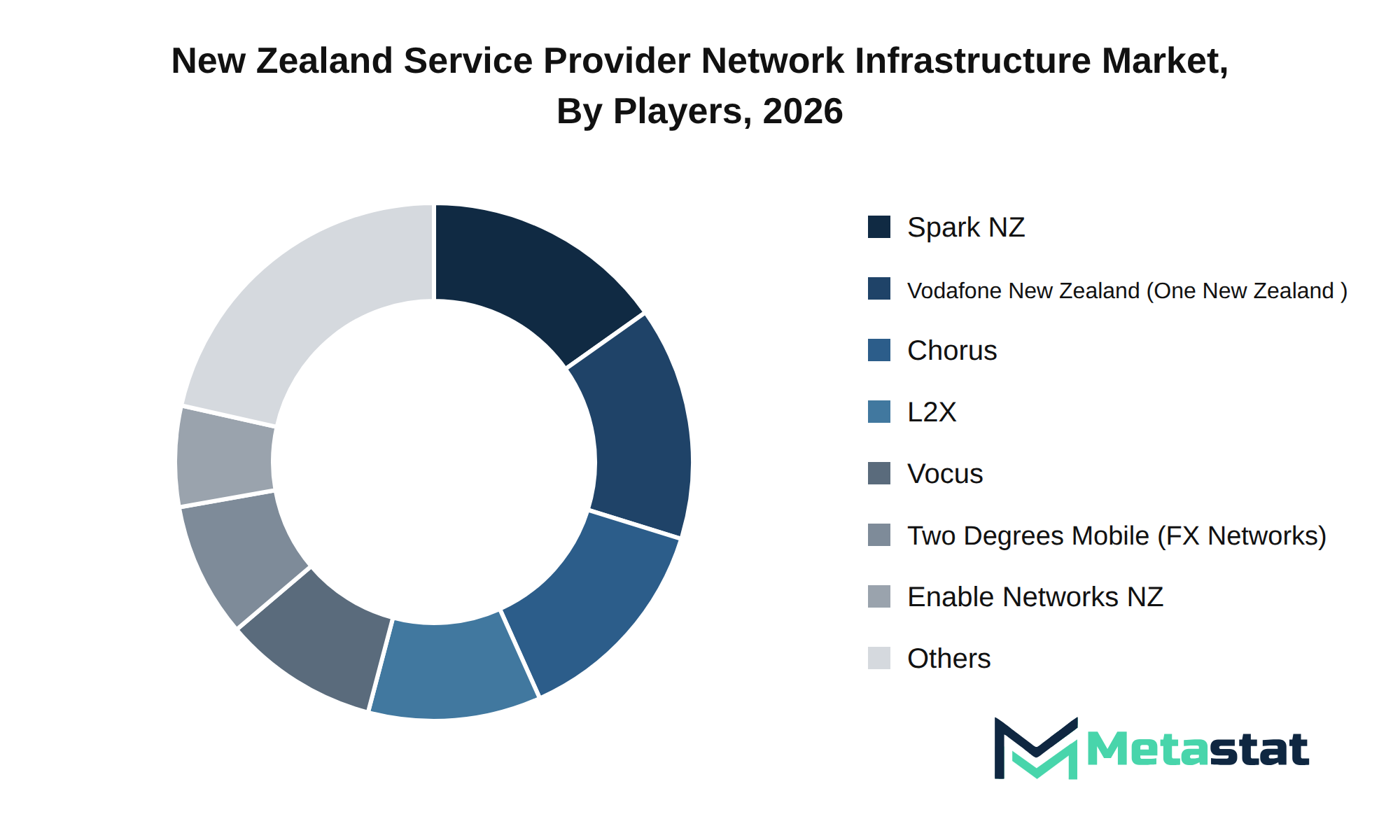
Market size is forecast to rise from USD 2.4 billion in 2025 to over USD 3.3 billion by 2033. The base case reflects a growth trajectory driven by increasing demand for advanced network infrastructure, fueled by the integration of next-generation technologies. Rising investments in fiber optic networks, alongside the maturation of existing infrastructures, contribute significantly to this growth, with a compound annual growth rate (CAGR) of 4.4% anticipated during the forecast period.
In the bullish scenario, accelerating technological advancements and strategic capital allocations could enhance market penetration, leading to heightened competition among service providers. The bearish outlook suggests that regulatory challenges and geopolitical tensions impose constraints on investment, potentially stunting growth. The New Zealand Service Provider Network Infrastructure market faces evolving downstream demand influenced by consumer preferences and industry shifts, emphasizing the importance of adaptive strategies for stakeholders.
Continued emphasis on research and development (R&D) commercialization timelines plays a critical role in defining market dynamics. The sharp focus on infrastructure commitments and capital expenditure (CapEx) investment vectors aligns with the pressing need for enhanced connectivity solutions. Unmet enterprise needs present emerging white-space opportunities, highlighting potential high-growth pockets in the market. Strategic imperatives and defensibility roadmaps shape the landscape for future growth and resilience.
The report strategically identifies and profiles the key market players and analyses their core competencies in each sub-segment of the Service Provider Network Infrastructure market.
|
Report Attributes |
Details |
|
Study Period |
2021-2033 |
|
Base Year |
2025 |
|
Estimated Year |
2026 |
|
Forecast Period |
2026-2033 |
|
Historical Period |
2021-2025 |
|
Growth Rate |
CAGR 4.4% from 2026 to 2033 |
|
Revenue Unit |
USD billion |
|
Segmentation |
By Network Infrastructure Type, Network Infrastructure Component, Service Provider Type, End User, and Region |
Find answers to common questions about this report
The Service Provider Network Infrastructure market in New Zealand was valued at USD 2.4 billion in 2025.
The Service Provider Network Infrastructure market is projected to grow at a CAGR of 4.4% during the forecast period from 2026 to 2033.
Fiber Optic Networks leads the New Zealand Service Provider Network Infrastructure market, with a projected value of USD 1.9 billion by 2033, representing the largest share among network infrastructure types.
Increased capital investment across multiple sectors drives the New Zealand Service Provider Network Infrastructure market. A robust economic environment supports funding for technological advancements, while digital transformation initiatives among service providers stimulate demand for modernized infrastructure, enhancing network capabilities and service offerings.
The New Zealand Service Provider Network Infrastructure market growth faces constraints from regulatory pressures and compliance hurdles, which increase operational costs and influence capital expenditure. Inflationary pressures and resource scarcity further complicate project timelines, while geopolitical instability disrupts supply chains, contributing to a cautious investment approach among stakeholders.
Increased capital investment across multiple sectors and a robust economic environment favor product adoption in the New Zealand Service Provider Network Infrastructure market. Digital transformation initiatives drive demand for modernized infrastructure, while the focus on automation and advanced technologies enhances operational efficiency and competitiveness among service providers.
The Service Provider Network Infrastructure market is estimated to reach a valuation of USD 3.3 billion by 2033.
Key players in the New Zealand Service Provider Network Infrastructure market include Spark NZ, Vodafone New Zealand (One New Zealand Group Limited), Chorus, Two Degrees Mobile Limited (FX Networks), Vocus Group, and Nokia.
Auckland serves because the leading region in the New Zealand Service Provider Network Infrastructure market, driven by its status because a major economic hub and high concentration of technology firms.
The fiber optic networks segment is projected to grow from USD 1.3 billion in 2026 to USD 1.9 billion by 2033, reflecting a compound annual growth rate of 5.5%.
Crown Infrastructure Partners manages government investment to extend network access into commercially challenging areas. Programs such as the Rural Broadband Initiative (RBI) and Mobile Black Spot Fund provide capital funding for shared wireless towers. This allows Spark New Zealand, Vodafone New Zealand, and 2degrees to co-locate radio equipment cost-effectively.
Procurement cycles for major infrastructure hardware typically run in three- to seven-year framework agreements. Operators prefer long-term strategic supplier arrangements with trusted global vendors like Nokia, Ericsson, and Ciena. Staggered multi-year procurement schedules allow providers to balance capital expenditure requirements against ongoing technology lifecycles and regulatory compliance periods.
Major service providers have deployed commercial 5G across main metropolitan centers, targeting coverage across primary population zones before expanding to secondary regional centers. Operators continue transitioning from early non-standalone networks to nationwide 5G Standalone architectures, aligning network upgrades with dedicated 3.5 GHz spectrum band allocations.
Nokia and Ericsson dominate New Zealand's mobile radio access and core network upgrades as the primary alternatives to restricted suppliers. Nokia supplies major radio and core solutions to Vodafone New Zealand. Ericsson supports 5G deployments for Spark New Zealand and 2degrees. Ciena secures significant market share in coherent optical transport.
Auckland and Wellington require high-capacity optical backhaul, edge data centers, and dense 5G small cell deployments to manage large data volumes. Rural regions require wide-coverage macro base stations, high-capacity fixed wireless links, and resilient power configurations to bridge low population densities, challenging topography, and long geographical distances.
The Commerce Commission enforces revenue caps and quality performance standards under the Telecommunications Act for regulated fiber assets. This framework prevents monopolistic pricing on wholesale fiber connections. Consequently, network operators like Chorus Limited must justify capital investments, focus on operational cost efficiency, and prioritize projects that directly demonstrate tangible service improvements.
Both providers prioritize expanding 5G network footprints, deploying Standalone core systems, and strengthening operational resilience. Spark New Zealand concentrates capital on 5G Standalone, hybrid cloud, and data center developments. Vodafone New Zealand focuses investment on 5G urban densification, network reliability upgrades, and satellite-to-cell integrations to eliminate regional black spots.
Chorus Limited dominates fixed wholesale access infrastructure following the Ultra-Fast Broadband (UFB) programme. In retail and mobile network infrastructure, Spark New Zealand and Vodafone New Zealand maintain the leading positions, followed by merged challenger 2degrees. Together, these entities own and operate the country's primary fixed and mobile networks.
The analysts below cover Information & Technology research at Metastat Insights.
LEAD ANALYST
Utkarsh Khirodkar is a Lead Market Research Analyst at MetaStat Insight, specializing in market intelligence, technology sector assessments, and competitive strategy.

PRINCIPAL CONSULTANT - ENTERPRISE AI & EMERGING TECHNOLOGIES
Banking & Finance · Electronics and Semiconductor · Energy and Power · Healthcare IT · Information & Technology · Professional Services
Vijay Gunti is a Principal Consultant at MetaStat Insight, bringing over two decades of experience across enterprise digital transformation, technology strategy, and intelligent systems.

LEAD CONSULTANT - COMMUNICATION, TELECOM, AND IT
Electronics and Semiconductor · Information & Technology · Machinery & Equipment · Professional Services
Ravindra Sathe Consultants for Communication, Telecom, and IT at MetaStat Insight. He leads the firm's industry research initiatives across telecommunications infrastructure, digital connectivity, enterprise networking, and emerging information technology domains.
In the biological seed treatment space, registration timelines vary drastically between the European Union, Brazil, and North America. The MetaStat Insight research handled these cross-border regulatory barriers with genuine nuance, mapping commercialization pathways alongside historical field adoption rates. The segmentation between microbial strains and biochemical active ingredients was particularly well structured.
Our team was tracking whether regional recycling infrastructure could realistically absorb the growing volume of lithium iron phosphate batteries over the next decade. The report did a solid job separating announced hydrometallurgical plant capacity from active, permitted operational throughput. That distinction made the feedstock availability projections and regional recovery rate models far more credible than standard commercial overviews.
Tracking capacity expansion in single-use bioprocessing requires dependable data on raw material availability and cleanroom-grade polymer supply chains. The competitive landscape chapter gave a grounded evaluation of secondary component suppliers across North America and Asia-Pacific rather than simply reprinting press releases. Having that level of supplier benchmarking helped clarify dual-sourcing considerations for our clinical pipeline planning.
Explore related market intelligence reports worth reading alongside this one.
Starting from
$2950