
LEAD ANALYST
Utkarsh Khirodkar is a Lead Market Research Analyst at MetaStat Insight, specializing in market intelligence, technology sector assessments, and competitive strategy.

Global Server Memory Market Size, Share, By Type (RDIMM, LRDIMM, MRDIMM / MCRDIMM, ECC UDIMM, CXL Memory Modules, and Others (SODIMM, NVDIMM)), By DDR Generation (DDR5, DDR4, and Others (DDR3, DDR2)), By Below 32 GB (32-64 GB, 65-128 GB, 129-256 GB, and Above 256 GB), By End-Use Industry (IT and Telecommunications, Banking, Financial Services, and Insurance, Government and Defense, Healthcare, Manufacturing, Retail and E-Commerce, Education and Research, and Others (Energy and Utilities, Transportation and Logistics)), Industry Analysis, Growth, Trends, and Forecast, 2026-2033
Report ID
MSI-5411
Published
October, 2026
Pages
283 Pages
Format
Historical
Base year
Forecast
Forecast period
Report Details
Market Valuation: Valued at $37.9 Billion in 2025, projected to reach $135 Billion by 2033 at a 17.2% CAGR.
Dominant Segment: The RDIMM segment leads the market, projected to grow from USD 34 billion in 2026 to USD 86.2 billion by 2033, driven by the increasing demand for high-performance memory in IT and telecommunications.
Geographic Lead: Asia Pacific dominates in volume with a 44.2% market share, propelled by robust manufacturing and a growing technology sector, while North America leads in revenue due to advanced infrastructure.
What's Inside: The report provides a comprehensive analysis of the global Server Memory market, covering various segments, competitive landscape, and detailed forecasts from 2026 to 2033.
Market Dynamics: Shifts in buyer preferences towards high-capacity memory modules and increasing investments in data center infrastructure are driving demand for advanced memory solutions across sectors.
Choose Your License
Global Server Memory Market
The global Server Memory market was valued at USD 37.9 billion in 2025 and is projected to reach USD 135 billion by 2033, growing at a CAGR of 17.2% over the forecast period.
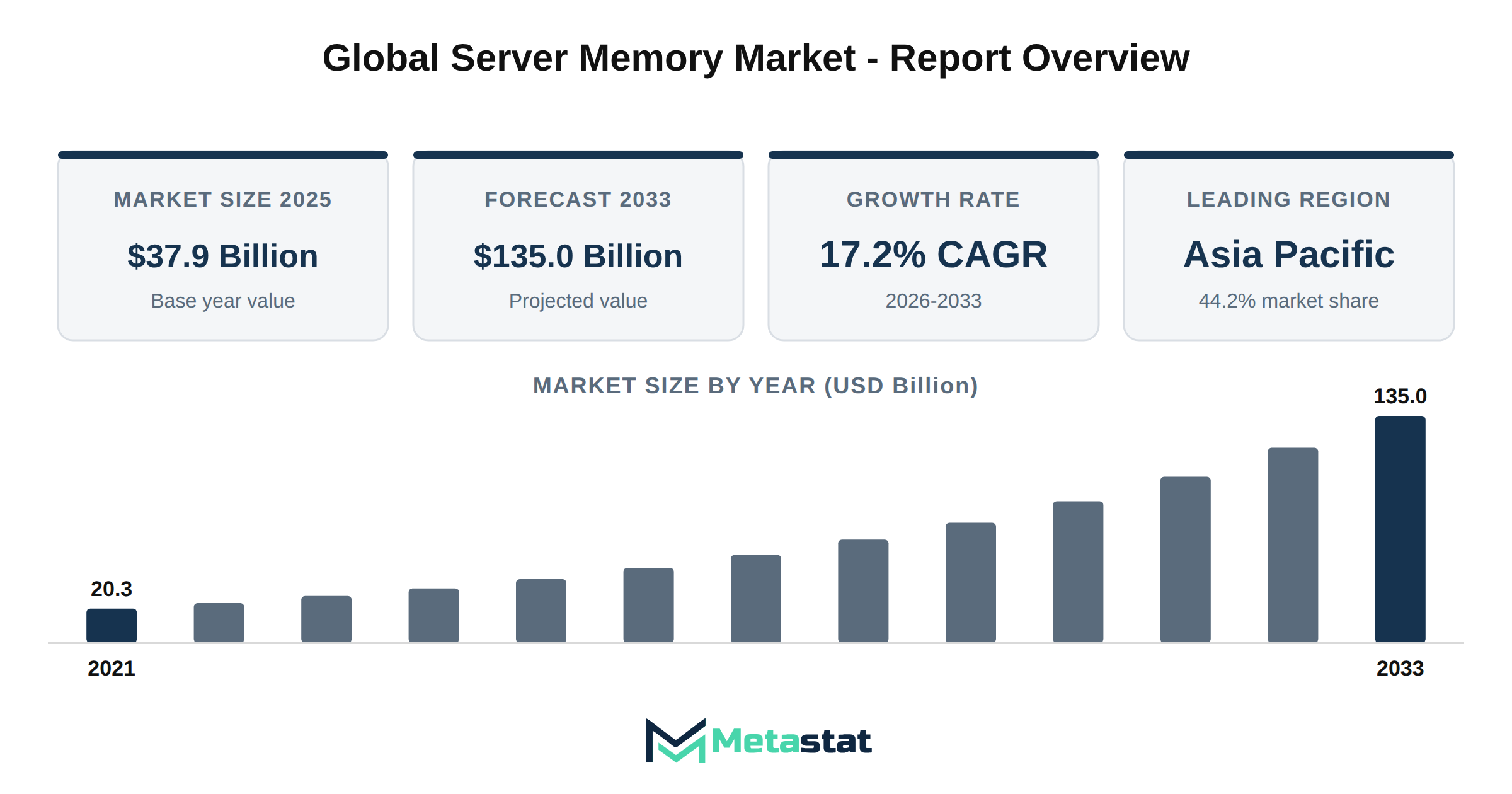
The Server Memory market encompasses various memory solutions in servers, with a significant emphasis on increasing performance and efficiency. Demand arises primarily from IT and telecommunications, banking and financial services, and government sectors, driven by the need for enhanced data processing capabilities. Growth is expected to be propelled by technological advancements and the ongoing digital transformation across multiple industries.
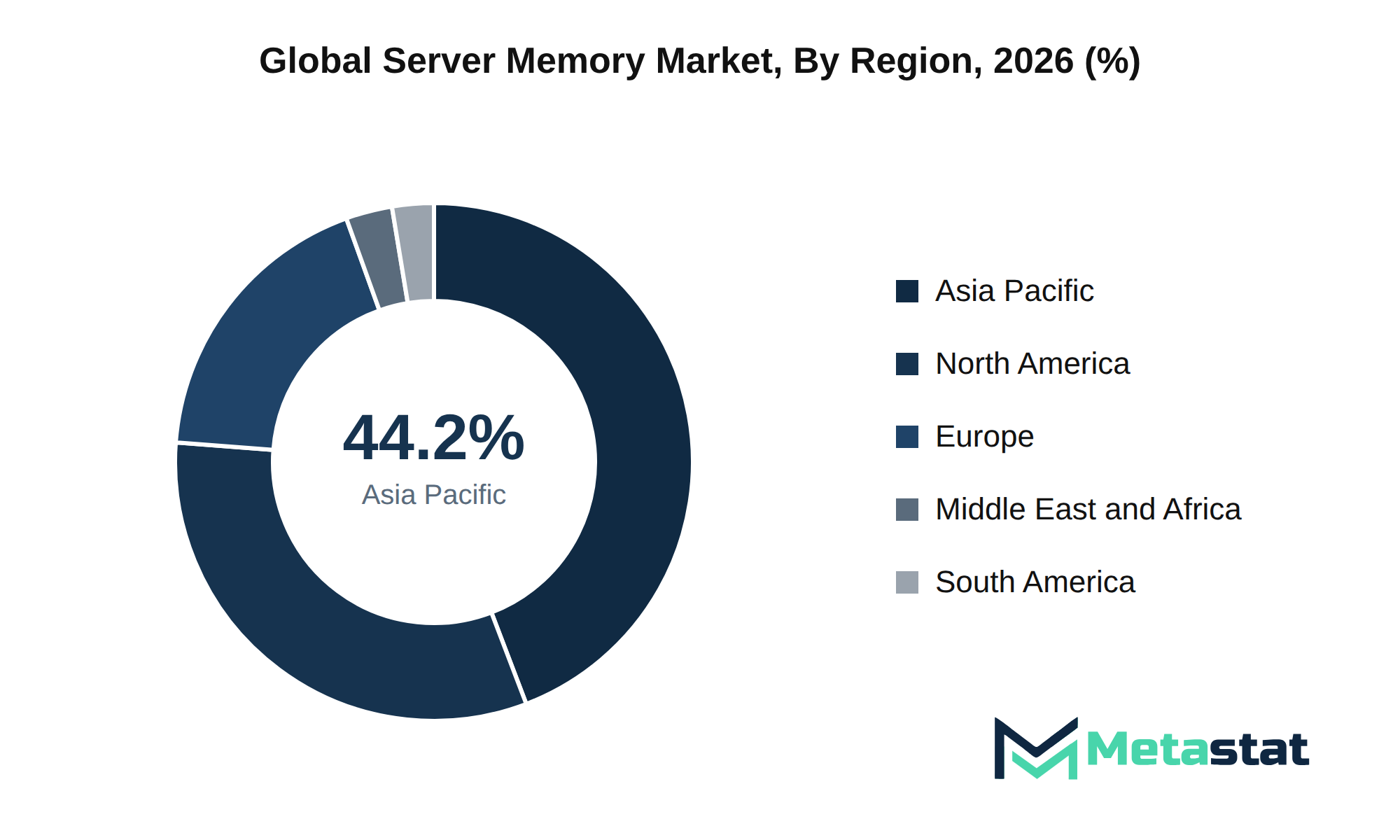
In 2025, North America holds 32.0% market share, with the US leading in 2026. The region stands out due to its advanced infrastructure and high adoption rates of cloud computing solutions. Asia Pacific, with 44.2% market share, leads in volume, largely attributed to robust manufacturing and a growing technology sector. The market is expected to expand from USD 37.9 billion in 2025 to USD 135 billion by 2033, reflecting a compound annual growth rate of 17.2%. This growth highlights the increasing reliance on high-capacity memory solutions.
The market includes various types of server memory products, supporting the increasing demand for high-performance computing solutions. Spending patterns reflect a notable shift among key buyer groups, particularly in the IT and telecommunications sector, where a growing need for faster and more efficient data processing drives purchases. The significant rise in value from USD 37.9 billion to USD 135 billion illustrates the expanding adoption of advanced memory technologies, with DDR5 modules demonstrating the highest growth potential within the segment.
This region's dominance stems from substantial investments in data centers and cloud computing infrastructure. Strong demand for server memory solutions is primarily driven by rapid digital transformation across industries, prompting businesses to upgrade their systems to enhance operational efficiency and performance. The market's growth trajectory indicates a robust future, supported by continuous technological advancements and the emergence of new applications in sectors including artificial intelligence and big data analytics.
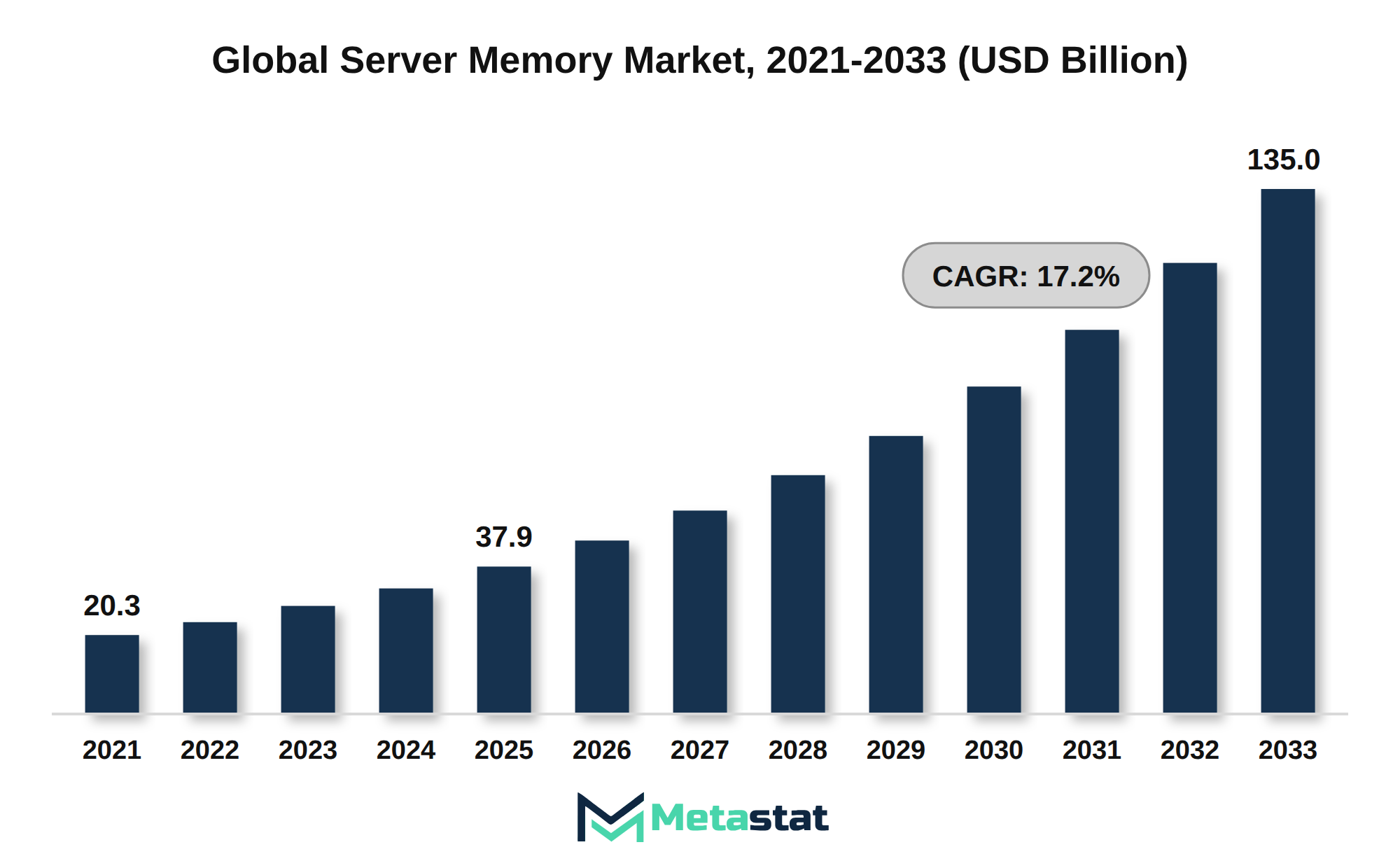
The increased adoption of DDR5 memory technology significantly influences the Server Memory market. DDR5, projected to grow from USD 32.8 billion in 2026 to USD 130.1 billion by 2033, reflects a compound annual growth rate of 21.8%. This growth stems from the demand for higher bandwidth and increased capacity, enabling data centers to manage workloads effectively. Enterprises investing in advanced computing require robust memory solutions to meet performance demands, particularly in sectors including IT and telecommunications. The transition to DDR5 acts as a key driver for enhancing server capabilities, resulting in increased operational efficiency.
The introduction of the Compute Express Link (CXL) interconnect protocol transforms memory access patterns within server architectures. CXL enables faster connections between CPUs and memory devices, maximizing data throughput and minimizing latency. This technology facilitates heterogeneous memory configurations, allowing servers to leverage various memory types according to workload requirements. The implementation of CXL is expected to enhance server performance significantly, improving data processing capabilities in sectors reliant on advanced analytics and artificial intelligence. Overall, this innovation supports the evolution of the Server Memory market by introducing new opportunities for device integration and performance enhancement.
Shifts in buyer preferences for server memory solutions reflect a growing necessity for tailored performance specifications. Enterprises prioritize higher capacity memory modules that support intensive applications, leading to increased investments in configurations including RDIMM and LRDIMM. The anticipated growth in the IT and telecommunications sector highlights the need for advanced memory solutions, with RDIMM revenues projected to reach USD 86.2 billion by 2033. This transformation emphasizes the importance of understanding specific buyer requirements and adapting offerings accordingly within the Server Memory market.
Regulatory changes in data protection and processing standards are reshaping investment strategies in memory technologies. Organizations face increased scrutiny regarding data privacy and security, prompting investments in robust server infrastructures equipped with advanced memory solutions. Compliance with evolving regulations necessitates significant expenditures on high-capacity memory systems, particularly in industries like healthcare and finance. This trend creates opportunities for memory suppliers to align product offerings with regulatory demands, effectively positioning themselves within the competitive landscape of the Server Memory market.
The increasing demands of hyperscale AI workloads significantly influence the deployment of high-density Registered Dual In-Line Memory Modules (RDIMMs) within the Server Memory market. This shift arises from the necessity for increased memory capacity to support intensive data processing tasks associated with artificial intelligence applications. In 2026, high-density RDIMMs are expected to achieve a market value of USD 34 billion, reflecting a compound annual growth rate (CAGR) of 14.2% through 2033. This rapid growth highlights the critical role RDIMMs play in optimizing server performance for AI-driven operations.
The technology transition towards DDR5 further accelerates the deployment of high-density RDIMMs. DDR5 memory delivers substantial improvements in speed and efficiency, aligning with the heightened processing requirements of AI applications. By 2033, DDR5 memory is projected to reach a value of USD 130.1 billion, emphasizing its dominance in the Server Memory market. This advancement allows organizations to handle larger datasets and perform more complex computations, driving demand for advanced memory solutions.
Enterprises in sectors including IT, telecommunications, and healthcare exhibit a pronounced appetite for high-density RDIMMs due to their performance capabilities. Investments in AI technologies lead these sectors to seek memory solutions that enhance their computational efficiency. The IT and telecommunications industry alone expects to see RDIMMs grow from USD 26.2 billion in 2026 to USD 83 billion by 2033, driven by the increasing integration of AI in service delivery and operations.
The escalating demands of hyperscale AI workloads drive the Server Memory market towards high-density RDIMM deployment. The convergence of technological advancements, market needs, and sector-specific requirements positions high-density RDIMMs as essential components for organizations striving to enhance their AI capabilities and overall operational efficiencies.
Advanced DRAM node migrations significantly influence production economics within the server memory market. Transitioning to smaller nodes enhances chip density and performance while lowering power consumption. This transition will attract investments in newer manufacturing equipment, allowing producers to optimize yields and enhance output efficiency. The competitive landscape increasingly rewards manufacturers capable of integrating these advanced nodes, providing them with a commercial edge. Consequently, companies that successfully adopt these technologies will see improved margins and revenue growth.
The allocation of substrates for server memory production has emerged as a vital factor affecting supply chain efficiency. Demand for high-performance memory modules has surged, particularly in the IT and telecommunications sector, which will grow from USD 26.2 billion in 2026 to USD 83 billion by 2033. Effective substrate allocation ensures that manufacturers respond swiftly to fluctuating market demands while maintaining production continuity. This strategy enhances operational resilience, enabling suppliers to capitalize on increased demand across various industries. Firms employing agile substrate management will likely gain a competitive advantage in the evolving market.
Regulatory shifts impact the server memory market, particularly concerning environmental standards and energy efficiency mandates. Governments worldwide are implementing stricter regulations aimed at reducing electronic waste and promoting sustainable manufacturing processes. This regulatory focus drives manufacturers to invest in environmentally friendly technologies, resulting in higher production costs initially. However, long-term compliance enhances brand reputation and customer loyalty, particularly in industries prioritizing sustainability. Producers that adapt proactively to these changes will capture a more extensive market share, positioning themselves favorably in an increasingly eco-conscious environment.
Generative AI infrastructure significantly enhances procurement strategies within the server memory market by streamlining decision-making processes. Using AI algorithms, organizations analyze vast amounts of data to identify the most cost-effective suppliers and memory types that meet their specific needs. This data-driven approach leads to improved negotiation outcomes and optimized supply chain management. In 2025, the market is valued at USD 37.9 billion, reflecting the increasing reliance on advanced technologies for procurement efficiency.
Implementing generative AI in procurement strengthens relationships between enterprises and suppliers in the server memory market. AI tools facilitate real-time communication and collaborative forecasting, allowing both parties to align their strategies effectively. For instance, in North America, the segment is projected to reach USD 40.8 billion by 2033, indicating increased demand and the potential for deeper collaboration between enterprises and suppliers. This enhanced supplier engagement leads to better pricing and terms, benefiting all involved.
The adoption of generative AI technology aids enterprises in navigating complex regulatory environments associated with the server memory market. AI tools assist organizations in ensuring compliance with data protection and procurement regulations, reducing the risk of penalties. While regulations evolve, the ability to quickly adapt and maintain compliance becomes essential, further influencing procurement strategies. Companies operating in regions including Europe experience shifts in their procurement processes due to the evolving regulatory landscape, impacting overall market dynamics.
Generative AI enables enterprises to tailor their server memory solutions to specific performance requirements and workloads. This customization enhances operational efficiency and performance, particularly in industries like IT and Telecommunications, which is expected to reach USD 83 billion by 2033. The ability to predict memory needs based on workload patterns leads to smarter investments in server memory, optimizing total cost of ownership. Such tailored solutions strengthen competitive advantage in a changing market.
Growing investments in data center infrastructure fuel demand for high-performance server memory solutions. Organizations across sectors expand their data center capacities to accommodate increased data traffic and processing needs. This trend is evident in industries including IT and telecommunications, where demand for efficient memory solutions has surged, particularly for RDIMM types. The increasing focus on enhancing computational capabilities drives the adoption of advanced memory technologies.
The Server Memory market experiences consistent demand growth, driven by the need for efficient processing and storage solutions. Companies prioritize server memory upgrades to support AI applications, cloud computing, and big data analytics. These developments encourage memory suppliers to innovate and optimize their offerings, ensuring alignment with evolving technological requirements. A robust competitive environment emerges, resulting in innovative solutions that cater to various data center applications.
Price sensitivity remains a significant challenge impacting adoption within the Server Memory market. Buyers in industries including IT and Telecommunications experience budget constraints that lead to cautious spending on memory solutions. Increased production costs driven by shortages in semiconductor materials contribute to higher prices for server memory products. This situation results in slower uptake among potential customers, particularly small to medium-sized enterprises that prioritize cost efficiency. Consequently, many organizations opt for delayed replacements of aging infrastructure, which restricts overall market growth. Price increases affect individual purchasing decisions and cause a ripple effect across the entire supply chain, leading to smaller order volumes from suppliers. Persistent cost pressures hinder the ability to meet the growing demand for high-performance server memory products.
Suppliers in the Server Memory market face significant margin pressure due to escalating input costs. Increases in the prices of raw materials, including semiconductor components, significantly affect profitability. Suppliers respond by optimizing procurement strategies and investing in supply chain efficiencies to mitigate these rising costs. Several companies are enhancing production technologies to reduce waste and improve yield rates, thus helping to offset input cost challenges. The focus remains on maintaining competitive pricing while ensuring quality, which is crucial for retaining market share. Increasing competition among suppliers intensifies the pressure to manage costs effectively, leading to strategic partnerships aimed at securing favorable terms with suppliers. These measures assist suppliers in navigating the complex environment of the memory market while striving to sustain profitability during fluctuating input costs. Continual innovation in production methodologies serves as an essential strategy for managing expenses and supporting growth in an increasingly competitive environment.
The IT and telecommunications sector drives significant demand for high-density Registered Dual In-Line Memory Modules (RDIMMs). A growing reliance on cloud computing and data-intensive applications enhances the urgency for robust memory solutions. This strong growth translates into increased investments in RDIMM technology by suppliers aiming to meet the evolving performance requirements of enterprises. The pending strategic initiatives by players in the Server Memory market highlight the focus on RDIMMs, which serve as a critical component for high-performance computing infrastructure. While competition intensifies, suppliers enhance technological capabilities and optimize product offerings to capture the growing demand within this segment. The shift in the IT landscape necessitates ongoing innovation, further propelling deployment of these high-density memory modules.
The Global Server Memory market is segmented based on Type, DDR Generation, Below 32 GB, and End-Use Industry.
RDIMM segment is valued at USD 34 billion in 2026 and is projected to reach USD 86.2 billion by 2033, at a CAGR of 14.2% during the forecast period. This type of memory is widely used in servers due to its ability to deliver higher performance and capacity for demanding applications in IT and telecommunications. The growing adoption of data-intensive workloads, particularly within cloud computing and enterprise environments, serves as a significant driver for this segment. Unlike its sibling segments, RDIMMs feature a higher growth rate, driven by their ability to support advanced memory architectures. The segment stands out as catering to enterprises requiring robust memory solutions for enhanced data processing capabilities, distinguishing it from alternatives including LRDIMMs, which experience slower growth. This differentiation highlights the increasing preference for RDIMMs in high-performance computing scenarios, fueling market expansion.
LRDIMM segment is estimated to reach USD 7.2 billion by 2033, at a CAGR of 7.9% during the forecast period. This type of memory serves as a critical component in high-performance computing applications, particularly where server density and memory capacity are essential. Growing demand from data centers and cloud service providers drives the adoption of LRDIMM due to its ability to support larger memory configurations while maintaining power efficiency. Compared to other types including RDIMMs, this segment exhibits slower growth rates, reflecting a more specialized application in environments requiring considerable memory bandwidth and reliability. Increased emphasis on higher DDR generations, particularly DDR5, impacts the pricing and demand dynamics, with LRDIMM units positioned at a premium due to their enhanced features. The market for LRDIMMs experiences distinct buyer profiles, focusing primarily on enterprises requiring advanced memory solutions for complex workloads.
MRDIMM / MCRDIMM segment is expected to reach USD 20.9 billion by 2033. This segment finds extensive use in high-performance computing environments, particularly within data centers and enterprise-level applications. Key drivers include the increasing need for large memory capacities and higher bandwidth, critical for processing intensive workloads. The adoption of DDR5 technology specifically enhances the appeal of MRDIMM / MCRDIMM modules due to their superior performance characteristics. Compared to RDIMM and LRDIMM segments, MRDIMM / MCRDIMM exhibits a unique positioning that caters to specialized applications requiring enhanced reliability and efficiency. This demand for advanced memory solutions leads to a differentiated growth trajectory, reflecting a significant growth rate in response to evolving requirements of modern computing environments.
ECC UDIMM segment is projected to grow at a CAGR of 12.9% during the forecast period. This memory type primarily suits enterprise-level applications requiring error correction for data integrity, commonly used in critical servers in sectors including healthcare and finance. Increasing demand for reliable memory solutions in these industries drives the segment's growth, particularly as organizations prioritize data security and stability. Unlike RDIMMs, which cater to high-density applications with faster growth rates, ECC UDIMMs focus on reliability and error correction. Although its growth is steady, the segment benefits from a consistent need for dependable memory rather than rapid expansion. Buyers often opt for ECC UDIMMs due to regulatory requirements and the necessity for high data accuracy in mission-critical environments.
CXL Memory Modules represent an advanced technology designed for high-performance computing environments. These modules are used in data centers and enterprise systems, where rapid data processing and low latency are essential. The demand for enhanced memory bandwidth and speed drives interest in this segment, particularly among industries focused on artificial intelligence and machine learning applications. Unlike traditional memory modules, CXL Memory Modules enable flexible memory expansion and optimized resource management, positioning them favorably against other types. Their adoption is influenced by the growing trend of heterogeneous computing, where diverse processing units work in tandem, facilitating superior performance. This segment's unique features attract investments aimed at improving computing efficiency, differentiating it from other memory types that do not support such advanced functionalities.
Others (SODIMM, NVDIMM) includes specialized memory modules that cater to specific use cases in high-performance computing and embedded systems. SODIMM modules are commonly found in compact devices, while NVDIMM technology merges DRAM with NAND flash for persistent memory applications. Demand for these modules is driven by the increasing need for high-density, energy-efficient memory solutions in mobile computing and enterprise applications. Compared to other segments, this sub-segment benefits from niche markets requiring specialized performance; however, it experiences slower growth rates due to reliance on broader trends in server architecture and memory technology. The focus remains on enhancing compatibility and performance in diverse systems, differentiating it from more mainstream memory solutions in terms of pricing and application scope.
DDR5 memory serves as a crucial component for high-performance computing applications, particularly in data centers and enterprise environments that demand enhanced processing speeds and efficiency. The accelerated adoption of DDR5 technology is largely driven by the increasing data processing requirements of advanced applications, including artificial intelligence and machine learning. This segment exhibits a higher growth trajectory than its counterparts, including DDR4, which is expected to reach only USD 4.6 billion by 2033. The rapid development of DDR5 continues to attract significant investments, further propelling its dominance in the Server Memory market, while its superior capabilities contribute to its appeal among technology providers and end-users seeking enhanced performance.
DDR4 segment is estimated to reach USD 4.6 billion by 2033, at a CAGR of -11.9% during the forecast period. This segment primarily supports various applications in data centers and enterprise environments, where stability and compatibility with legacy systems are critical. Declining demand for DDR4 results from increasing adoption of DDR5 technology, which offers enhanced performance and energy efficiency. The transition to newer architectures drives organizations to upgrade their memory solutions, leaving DDR4 facing reduced interest from consumers. While DDR4 offers cost advantages compared to DDR5, the overall market shift toward higher-performance alternatives limits its growth potential. In a competitive landscape, market dynamics significantly challenge the long-term viability of the DDR4 segment, positioning it distinctly against faster-growing alternatives within the Server Memory market.
Others (DDR3, DDR2) segment is expected to reach USD 0.3 billion by 2033. This segment typically serves older systems, where compatibility with existing infrastructure remains crucial. Demand primarily arises from organizations maintaining legacy systems that require cost-effective solutions. The slower growth of this segment contrasts sharply with DDR5, which sees rapid adoption driven by high-performance requirements. Technological advancements in newer generations present challenges for older DDR technologies, limiting their appeal in new deployments. However, stability and reliability in established systems ensure that this segment retains a specific customer base within the segment.
Valued at USD 15.4 billion in 2026, this segment is projected to reach USD 25.1 billion by 2033, at a CAGR of 7.3% during the forecast period. Demand for 32-64 GB memory modules primarily comes from IT and telecommunications sectors, where efficient data handling and processing capabilities are crucial. Growing workloads in cloud computing and large-scale enterprise applications drive this demand, driven by organizations seeking to enhance server performance to handle increased data traffic. Compared to its peers, this segment experiences moderate growth, attributed to its balance of cost and capacity, appealing to mid-tier enterprises looking for effective solutions. In contrast, segments including 65-128 GB enjoy higher growth rates driven by more demanding applications requiring larger memory capacities. This distinction highlights evolving user preferences in the Server Memory market, emphasizing a shift toward more powerful memory solutions to meet complex operational needs.
The 65-128 GB segment is estimated to reach USD 41.1 billion by 2033, at a CAGR of 15.6% during the forecast period. This segment serves as a critical option for server applications requiring a balance between capacity and performance. Key users include enterprises in IT and telecommunications, where memory needs have surged due to increasing workloads and data processing requirements. The rapid adoption of advanced applications drives demand for this capacity range, distinguishing it from the larger 129-256 GB and above segments, which typically cater to more specialized high-performance scenarios. Growth in the 65-128 GB segment is fueled by a consistent trend toward virtualization and cloud computing, which necessitate robust memory solutions to enhance system efficiency and reduce latency. Pricing dynamics in this segment remain favorable compared to higher capacity options, attracting a broader range of buyers seeking cost-effective yet powerful memory solutions. The market reflects a strong inclination toward this segment in response to evolving technological demands.
Expected to reach USD 44.2 billion by 2033, the 129-256 GB segment serves a critical role in supporting high-performance computing environments, particularly in data centers and enterprise-level applications. This segment finds extensive use among industries requiring substantial memory capacity, including IT and telecommunications, where demand for advanced computing solutions drives growth. Growth in this segment is influenced by increasing data processing requirements, necessitating enhanced memory capabilities for servers. Compared to sibling segments, this segment exhibits a faster growth trajectory, characterized by a CAGR of 15.6% during the forecast period. Customers seeking higher performance and capacity favor this segment, propelling investment in related technologies while highlighting its unique positioning within the competitive landscape of the server memory market.
The Above 256 GB segment is projected to grow at a CAGR of 30% during the forecast period. This segment caters to high-performance computing applications, including data centers and enterprise-level server environments, where substantial memory capacity is crucial. The increasing demand for advanced applications, including artificial intelligence and big data analytics, drives growth in this segment. In contrast to lower capacity segments, which experience more gradual expansion, the Above 256 GB segment experiences rapid growth due to its specialized use cases and higher pricing. Organizations require this capacity to manage large volumes of data efficiently and to support complex workloads, positioning this segment for significant investment in the coming years.
Valued at USD 26.2 billion in 2026, this segment is projected to reach USD 83 billion by 2033, at a CAGR of 17.9% during the forecast period. The IT and telecommunications segment primarily supports data centers and cloud service providers, requiring high-performance memory solutions to manage increasing workloads. Growth in this sector is driven by rising demand for cloud-based services and advanced computing solutions. This segment outpaces others due to rapid technological advancements and the necessity for efficient data processing capabilities. The emphasis on upgrading systems to DDR5 memory, which offers superior performance, fuels this growth, contrasting with slower segments like banking and healthcare, which have different purchasing cycles and budgetary considerations affecting their adoption rates. The market reinforces the importance of tailored memory solutions in meeting the specific requirements of the IT and telecommunications sector.
The Banking, Financial Services, and Insurance segment is estimated to reach USD 15.2 billion by 2033, at a CAGR of 15.9% during the forecast period. This segment primarily serves institutions engaged in financial transactions, risk management, and investment services, relying heavily on high-performance server memory for data processing and storage. Increasing demand for real-time data analytics and secure transactions drives the need for advanced memory solutions. Unlike other segments, the banking sector prioritizes reliability and performance, resulting in higher investment in memory technologies. Robust security protocols further influence purchasing decisions, prompting institutions to adopt memory solutions that support encryption and data integrity. Significant growth is anticipated from this segment, reflecting the critical role of server memory in enhancing operational efficiency and supporting complex financial applications.
The Government and Defense segment is expected to reach USD 8.7 billion by 2033. This segment finds applications in national security, military operations, and defense infrastructure, with buyers including governmental agencies and defense contractors. Increasing investments in military modernization and cybersecurity drive demand for advanced server memory technologies. The segment experiences a growth rate of 8.7% during the forecast period, distinguishing it with moderate growth compared to the IT and Telecommunications sector, which projects a CAGR of 17.9%. Regulatory requirements and stringent security standards impose unique specifications on products, impacting adoption and pricing strategies. In this context, the Government and Defense segment enhances operational capabilities for national defense initiatives while navigating the complexities of procurement processes.
The healthcare segment is projected to grow at a CAGR of 18.6% during the forecast period. This segment serves critical functions in hospitals, research facilities, and health technology applications, addressing the increasing demand for advanced medical data processing and storage. The adoption of electronic health records (EHRs) and telehealth services necessitates robust server memory solutions that enhance data accessibility and reliability. Factors driving this growth include the expansion of digital health initiatives and the rising prevalence of chronic diseases that require comprehensive data management. Compared to other segments, the healthcare segment experiences faster growth due to heightened investments in health technology and infrastructure, differentiating it from industries including manufacturing and retail, which are growing at a slower pace. The increased focus on data security and patient privacy influences the adoption of state-of-the-art server memory solutions within this segment, reinforcing demand for higher-capacity and more reliable memory products in the market.
Manufacturing encompasses various sectors focusing on the production of goods, where reliability and speed of data processing play vital roles. This segment serves industries including automotive, electronics, and consumer goods, which rely on sophisticated memory solutions for efficient operations. Increasing automation and the adoption of Industry 4.0 technologies drive demand, necessitating advanced memory systems that enhance processing power and speed. Compared to other segments, the Manufacturing sector typically experiences steady growth due to consistent technological upgrades and the need for efficient resource management. Key manufacturers seek to optimize production lines while maintaining cost-effectiveness, leading to ongoing investment in advanced memory solutions. This segment's distinct requirements for high-performance, robust systems differentiate it from others, highlighting the critical role of memory technology in meeting production demands.
Retail and E-Commerce involves various online platforms and businesses facilitating the buying and selling of goods and services. This segment is used by a wide range of consumers and businesses that rely on fast and efficient data processing to enhance user experience and operational efficiency. The digitization of shopping trends drives demand for reliable server memory solutions that support high traffic and transaction volumes. Competition in the market emphasizes the need for enhanced data capabilities, leading to the adoption of advanced memory technologies. Compared to other sectors, Retail and E-Commerce experiences unique dynamics due to rapid technological advancements and the necessity for real-time data analytics, which significantly influence purchasing decisions and strategic investments.
Education and Research encompasses institutions focused on imparting knowledge and conducting studies. This segment primarily serves universities, colleges, and research facilities that require high-capacity memory for data-heavy applications, including simulations and data analytics. Rapid advancements in technology drive increased demand in this area, with educational institutions integrating modern hardware into their systems to enhance teaching and research capabilities. The segment's growth potential appears robust, particularly when compared to others that experience slower adoption rates due to budget constraints or regulatory challenges. Enhanced processing capabilities allow educators and researchers to leverage emerging technologies, positioning this segment as a critical component in the Server Memory market.
This sub-segment encompasses industries focused on energy and utilities, transportation, and logistics, where efficient data processing is crucial. Organizations in these sectors employ server memory to manage vast amounts of operational data and ensure reliable system performance. Key drivers for this segment involve the increasing emphasis on automation and smart technologies within logistics and energy management, facilitating improved operational efficiency. Heightened demands for real-time analytics in supply chain management increase the need for advanced memory solutions. Compared to sibling segments, this sub-segment exhibits slower growth due to the relatively conservative adoption of new technologies in traditional industries, which prioritize stability and reliability over rapid innovation. The market continues to see a shift attributed to organizations recognizing the benefits of advanced server memory technologies in enhancing operational capabilities.
Based on geography, the Global Server Memory market is divided into North America, Europe, Asia-Pacific, South America, Middle East, and Africa.
Projected revenue for the Server Memory market in North America stands at USD 40.8 billion by the end of 2033. This region benefits from strong demand driven by the IT and telecommunications sectors, which require advanced memory solutions for data centers and cloud services. The presence of leading technological companies in the United States, Canada, and Mexico drives innovation and ensures a competitive landscape. Infrastructure investments in data centers support the growing need for high-capacity memory types, particularly DDR5 modules, which enhance performance in cloud computing and big data analytics. With North America holding a 32.0% share of the global market in 2025, the region presents significant growth potential, driven by increasing digital transformation across various industries.
Demand in the European region is driven by the increasing reliance on advanced technology solutions across various industries, particularly in IT and telecommunications. Countries including Germany, France, and the UK lead the market due to their robust infrastructure and high levels of investment in digital transformation initiatives. The presence of strong manufacturing capabilities in countries like Italy and Spain contributes to the growing demand for server memory components. A focus on enhancing cybersecurity measures and improving data processing efficiency further fuels market growth. The overall share of Europe in the global server memory market stands at 18.3% in 2025, indicating significant market activity and potential for future expansion. Market players in this region are positioned to capitalize on these trends, ensuring sustained growth within the server memory market.
Asia-Pacific commands a significant share of the global market, accounting for 44.2% in 2025. The region's rapid digital transformation, coupled with increasing investments in IT infrastructure, drives demand for server memory. Countries including China and India lead in adopting advanced technologies, with their expanding IT sectors requiring high-performance memory solutions. South Korea and Japan are key players, focusing on enhancing their technological capabilities through innovation and research. Manufacturing and telecommunications industries are particularly influential, as they seek to optimize operations and improve data processing capabilities. Emerging demand in Australia and Southeast Asia further supports the growth trajectory for the market. The focus on high-capacity memory solutions aligns with the growing needs of data centers and cloud service providers in the region.
Demand within Brazil and Argentina drives growth in the Server Memory market. The increasing adoption of advanced technologies across various sectors including information technology and telecommunications boosts demand significantly. In addition, the rising need for cloud solutions and data centers creates opportunities for suppliers in the region. Infrastructure improvements support data management and processing capabilities, enhancing performance across industries. South America holds a share of 2.6% in the global market by 2025, with potential for growth attributed to local enterprises expanding their digital footprints. The ongoing investments in infrastructure and technology position the market for sustained development, reflecting the evolving demands of businesses in Brazil, Argentina, and the rest of South America.
The Middle East and Africa region accounts for 2.9% of the global market in 2025, with demand driven primarily by the IT and telecommunications sectors. Countries including Saudi Arabia and the UAE display increased investments in digital transformation and infrastructure development, supporting higher adoption of advanced memory solutions. South Africa stands out due to its growing technology ecosystem and government initiatives aimed at enhancing data centers and cloud services. Regulatory support and funding for technology advancements in this region enhance market growth potential. Challenges including limited local manufacturing capacity and reliance on imports affect overall supply dynamics. Infrastructure improvements and increased digitization across various industries indicate promising opportunities for growth in this region.
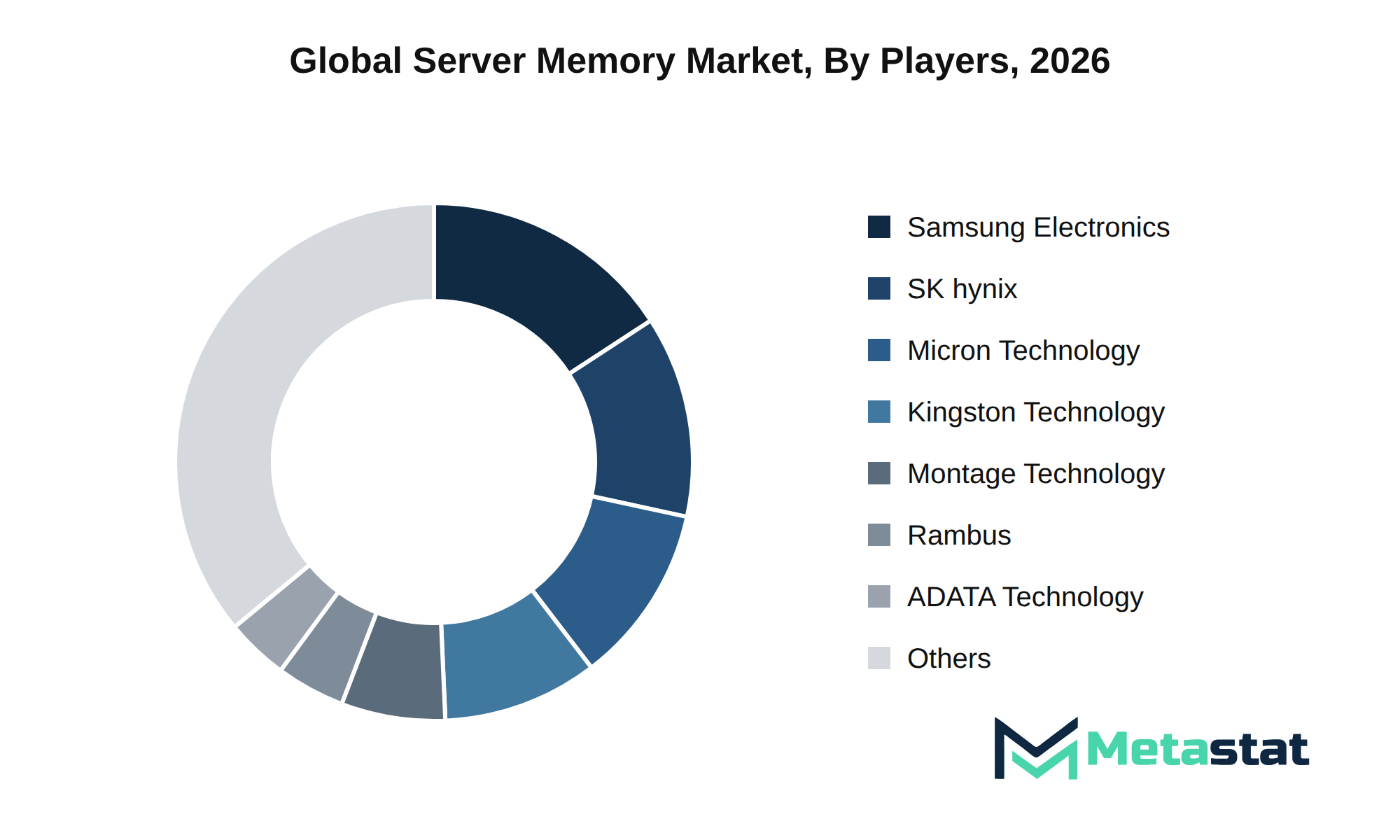
The Server Memory market features intense competition, with companies differentiating based on product types, pricing strategies, and customer service. Major players, including Samsung Electronics, SK hynix, and Micron Technology, focus on various memory technologies and solutions tailored to meet evolving customer demands.
Buyers prioritize factors including pricing, certification, and customization when selecting suppliers. Kingston Technology emphasizes service excellence and a wide product range, while Montage Technology focuses on innovative solutions to enhance performance. Meanwhile, Renesas Electronics targets efficiency and high-quality standards to attract clients in diverse industries.
Achieving this growth depends on several key developments. Firstly, widespread adoption of DDR5 memory technology is essential, driven by this generation's higher data rates and improved performance, particularly in the IT and Telecommunications sector, which is projected to increase from USD 26.2 billion in 2026 to USD 83 billion by 2033, reflecting a CAGR of 17.9%. Secondly, expansion in the Asia Pacific region, which holds the largest market share at 44.2%, requires significant investment in data centers to support rising demand for cloud services and big data analytics. However, supply chain disruptions and escalating material costs pose a substantial risk, potentially slowing growth. If these challenges arise, they could impact pricing and availability, particularly affecting segments like RDIMM, which is anticipated to grow from USD 34 billion in 2026 to USD 86.2 billion by 2033, with a CAGR of 14.2%. Overall, the Server Memory market is poised for significant growth, provided that these critical factors are addressed effectively.
By Type: RDIMM, LRDIMM, MRDIMM / MCRDIMM, ECC UDIMM, CXL Memory Modules, Others (SODIMM, NVDIMM)
By DDR Generation: DDR5, DDR4, Others (DDR3, DDR2)
By End-Use Industry: IT and Telecommunications, Banking, Financial Services, and Insurance, Government and Defense, Healthcare, Manufacturing, Retail and E-Commerce, Education and Research, Others (Energy and Utilities, Transportation and Logistics)
The report strategically identifies and profiles the key market players and analyses their core competencies in each sub-segment of the Server Memory market.
|
Report Attributes |
Details |
|
Study Period |
2021-2033 |
|
Base Year |
2025 |
|
Estimated Year |
2026 |
|
Forecast Period |
2026-2033 |
|
Historical Period |
2021-2025 |
|
Growth Rate |
CAGR 17.2% from 2026 to 2033 |
|
Revenue Unit |
USD billion |
|
Segmentation |
|
|
By Region |
North America (By Type, DDR Generation, Below 32 GB, End-Use Industry, and Country)
|
|
|
|
Asia Pacific (By Type, DDR Generation, Below 32 GB, End-Use Industry, and Country)
|
|
|
|
|
Middle East and Africa (By Type, DDR Generation, Below 32 GB, End-Use Industry, and Country)
|
Find answers to common questions about this report
The Metastat Insights study reveals that the Server Memory market size was valued at USD 37.9 billion in 2025.
The Server Memory market is projected to grow at a CAGR of 17.2% during the forecast period from 2026 to 2033.
According to Metastat Insights analysis, the North America Server Memory market size is estimated to reach USD 40.8 billion by 2033.
RDIMM is the leading segment in the Server Memory market, with a projected value of USD 86.2 billion by 2033. This segment's growth reflects an increase from its value of USD 34 billion in 2026, demonstrating a compound annual growth rate of 14.2%.
North America ranks as the leading region in the Server Memory market, with a projected value of USD 40.8 billion by 2033. The IT and Telecommunications sector is the largest segment, expected to reach USD 83 billion by 2033.
Asia Pacific holds the dominant share of the Server Memory market, accounting for 44.2 percent. This regional share significantly surpasses that of North America, which stands at 32 percent.
Rising costs of advanced memory technologies serve as a restraint on market growth. North America emerges as the dominant region, with a projected value of USD 40.8 billion by 2033. The DDR5 segment leads, expected to reach USD 130.1 billion by 2033.
Growing investments in data center infrastructure drive product adoption, particularly in the IT and telecommunications sectors. The increasing focus on enhancing computational capabilities fuels demand for high-performance memory solutions, especially for RDIMMs.
The Server Memory market is estimated to reach a valuation of USD 135 billion by 2033.
Key players in the Server Memory market include Samsung Electronics Co., Ltd., SK hynix Inc., Micron Technology, Inc., Kingston Technology Company, Inc., and ADATA Technology Co., Ltd. Other notable companies are Innodisk Corporation, Transcend Information, Inc., and Team Group Inc.
The analysts below cover Information & Technology research at Metastat Insights.
LEAD ANALYST
Utkarsh Khirodkar is a Lead Market Research Analyst at MetaStat Insight, specializing in market intelligence, technology sector assessments, and competitive strategy.

PRINCIPAL CONSULTANT - ENTERPRISE AI & EMERGING TECHNOLOGIES
Banking & Finance · Electronics and Semiconductor · Energy and Power · Healthcare IT · Information & Technology · Professional Services
Vijay Gunti is a Principal Consultant at MetaStat Insight, bringing over two decades of experience across enterprise digital transformation, technology strategy, and intelligent systems.

LEAD CONSULTANT - COMMUNICATION, TELECOM, AND IT
Electronics and Semiconductor · Information & Technology · Machinery & Equipment · Professional Services
Ravindra Sathe Consultants for Communication, Telecom, and IT at MetaStat Insight. He leads the firm's industry research initiatives across telecommunications infrastructure, digital connectivity, enterprise networking, and emerging information technology domains.
Evaluating secondary resin quality across post-consumer packaging streams requires reliable technical segmentation. MetaStat Insight delivered an objective assessment that distinguished between extrusion-grade flake pricing and optical sorting throughput limitations across Western Europe. The competitive positioning breakdown for licensed depolymerization technology providers answered several questions during our feedstock feasibility audit. Their team clarified regional trade restrictions on mixed plastic scrap quickly when our team submitted follow-up requests.
Evaluating sovereign cloud deployments for core banking platforms demands a clear view of data residency regulations and migration exit strategies. MetaStat Insight delivered an exhaustive review of regional latency tolerances, mainframe decommission milestones, and third-party vendor concentration risk. The regulatory compliance mapping across European and Asian financial jurisdictions gave our team a dependable baseline for multi-cloud infrastructure discussions.
Replacing petrochemical surfactants with bio-based alternatives requires realistic timelines on industrial precision fermentation scaling. The market research broke down commercialization timelines, feedstock sugar price sensitivities, and regional cosmetic ingredient regulatory approvals in Europe and East Asia. That supplier readiness mapping gave our formulations team reliable context when comparing renewable chemical sourcing roadmaps.
Explore related market intelligence reports worth reading alongside this one.
Starting from
$2950