
Explore the six crucial trends influencing the Industrial AI Software market, highlighting investment, technological advancements, and compliance challenges that shape the industry.
The Industrial AI Software market is experiencing rapid growth driven by technological advancements and evolving industry needs. While organizations strive to enhance operational efficiency, understanding the trends driving this market is essential for buyers and operators. Are six key factors significantly reshaping the landscape of the Industrial AI Software market.
1. Increased Investment in Digital Transformation
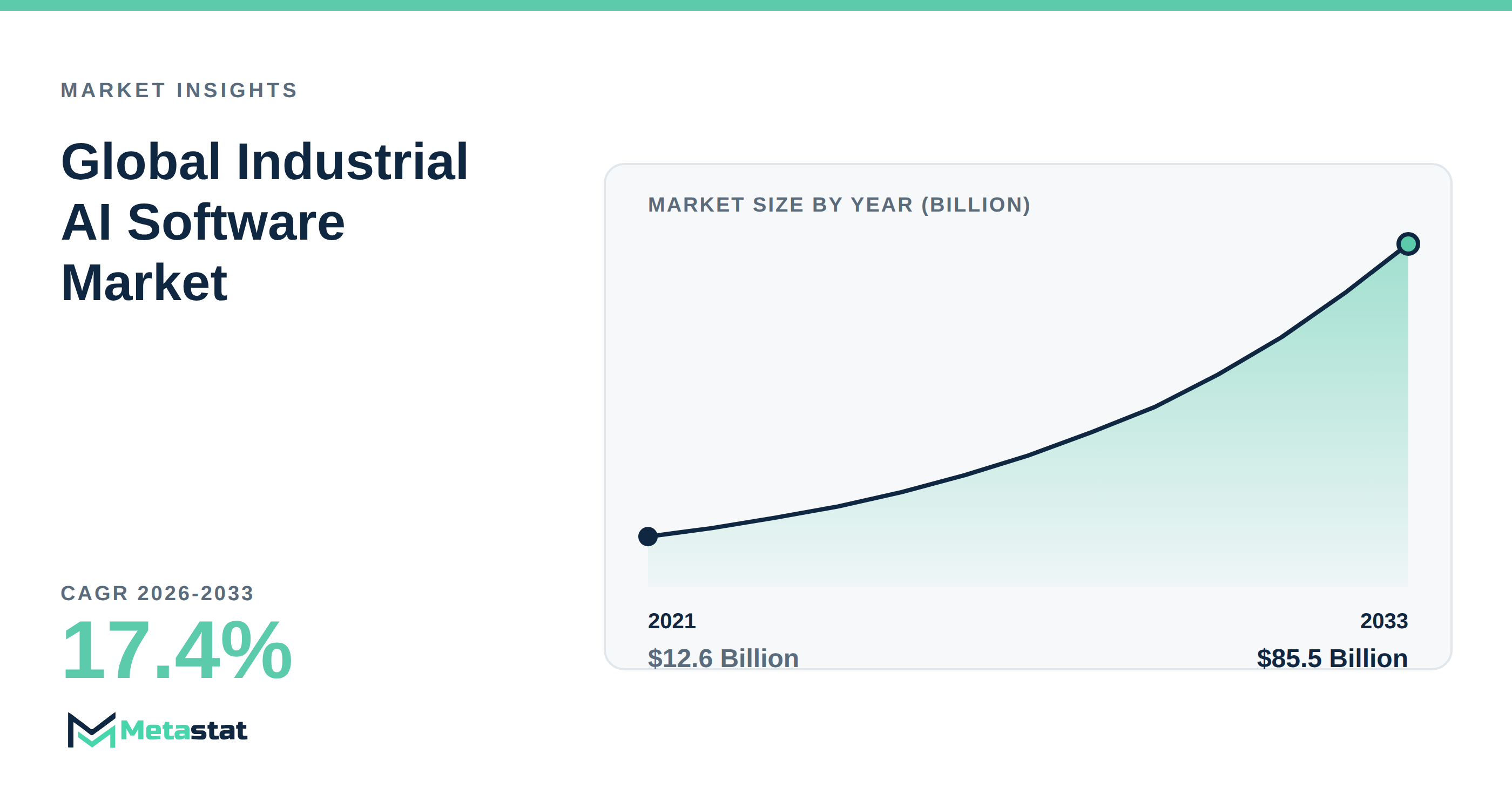
Growing capital investment in digital transformation propels the Industrial AI Software market forward. Organizations across various sectors recognize the necessity for advanced technologies that streamline operations and enhance productivity. Industries including automotive and electronics focus on integrating these solutions to gain a competitive edge. This surge in digital transformation initiatives is expected to sustain the market's projected growth rate of 17.4%, reaching an estimated USD 85.5 billion by 2033.
2. Shift Towards Cloud-Based Solutions
The market is witnessing a pronounced shift toward cloud-based deployment models, anticipated to dominate the sector. Cloud solutions are projected to grow from USD 13.8 billion in 2026 to USD 46 billion by 2033, reflecting a compound annual growth rate (CAGR) of 18.8%. This growth is driven by the flexibility, scalability, and cost-effectiveness of cloud infrastructure, appealing to organizations aiming to optimize operations without extensive on-premises hardware investments.
3. Advancements in Machine Learning Technologies
Technological advancements in machine learning significantly influence the Industrial AI Software market. The machine learning segment, projected to expand from USD 13 billion in 2026 to USD 41.8 billion by 2033, is driven by a growing dependence on data-based decision-making. Sectors including healthcare and finance increasingly integrate machine learning to enhance predictive analytics and operational outcomes. This trend highlights the vital role of sophisticated AI solutions in improving efficiency and effectiveness across diverse industries.
4. Regulatory Compliance Challenges
Regulatory compliance continues to present substantial challenges in the Industrial AI Software market. Stricter regulations, particularly in sectors like automotive and pharmaceuticals, raise operational costs and complicate implementation timelines. Organizations encounter significant difficulties navigating the intricate compliance landscape, leading to project delays and increased expenditures. Smaller firms often struggle to compete with larger companies that possess the resources to meet these stringent requirements, resulting in market fragmentation.
5. Emphasis on Safety and Compliance Analytics
The growing focus on safety and compliance analytics reflects an essential driver in the Industrial AI Software market. Industries including manufacturing prioritize adherence to safety regulations, necessitating advanced analytical solutions for effective compliance monitoring. Growth in safety and compliance analytics stems from organizations recognizing the importance of these tools in streamlining their operations. This trend enhances operational integrity while helping mitigate risks associated with regulatory adherence.
6. The Impact of Geopolitical Fragmentation
Geopolitical fragmentation significantly affects operational risks within the Industrial AI Software market. Trade deficits and tariff disputes disrupt the flow of goods, impacting market participants reliant on global supply chains. Increased costs arise because firms absorb tariff-related expenses, compressing pricing structures and affecting profit margins. This environment complicates R&D investments and challenges firms to maintain competitive positions while adapting to diverse regulatory environments across regions, hindering technological integration.
These six factors illustrate the dynamic nature of the Industrial AI Software market. Organizations adapt to technological advancements, shifting consumer expectations, and regulatory demands to position themselves strategically for long-term success. Embracing innovation and prioritizing compliance become essential for companies aiming to thrive in this evolving landscape. For a deeper analysis of the market, explore the Global Industrial AI Software Market.
Tags
About the Authors

LEAD ANALYST
Utkarsh Khirodkar is a Lead Market Research Analyst at MetaStat Insight, specializing in market intelligence, technology sector assessments, and competitive strategy.

PRINCIPAL CONSULTANT - ENTERPRISE AI & EMERGING TECHNOLOGIES
Banking & Finance · Electronics and Semiconductor · Energy and Power · Healthcare IT · Information & Technology · Professional Services
Vijay Gunti is a Principal Consultant at MetaStat Insight, bringing over two decades of experience across enterprise digital transformation, technology strategy, and intelligent systems.

LEAD CONSULTANT - COMMUNICATION, TELECOM, AND IT
Electronics and Semiconductor · Information & Technology · Machinery & Equipment · Professional Services
Ravindra Sathe Consultants for Communication, Telecom, and IT at MetaStat Insight. He leads the firm's industry research initiatives across telecommunications infrastructure, digital connectivity, enterprise networking, and emerging information technology domains.