
Explore critical trends reshaping Corporate Liquidity Management, including AI, virtual accounts, and cash forecasting, to enhance operational efficiency.
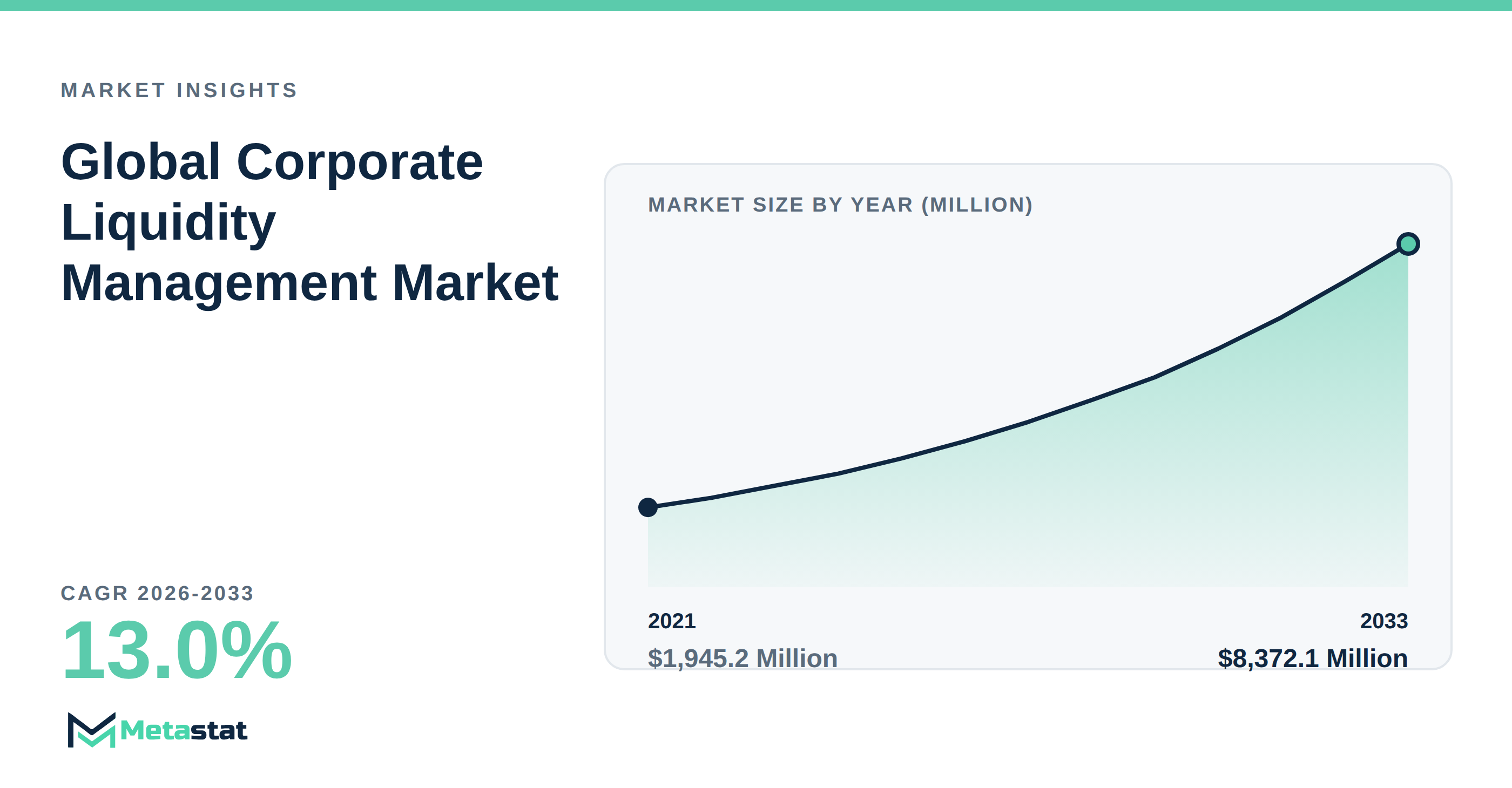
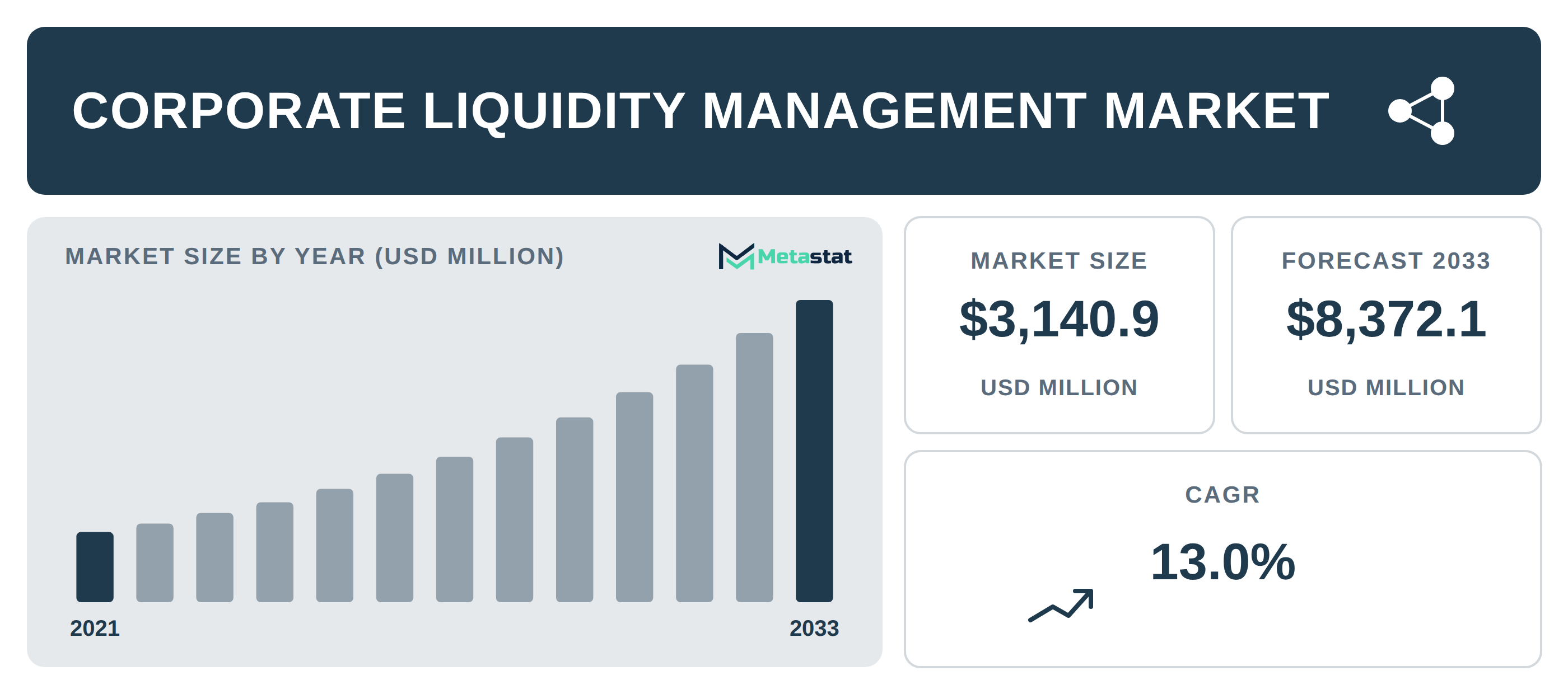
Corporate liquidity management has become increasingly important in today’s volatile financial landscape. Organizations are adapting to these changes by embracing innovative solutions that enhance cash flow visibility and risk management. Are six critical trends influencing Corporate Liquidity Management and their implications for organizations. The full figures are in our Corporate Liquidity Management market size and forecast report.
1. Rising Adoption of AI-Driven Solutions
The financial landscape is shifting towards AI-driven platforms for liquidity management, particularly in cash forecasting. These platforms enhance accuracy and efficiency, enabling organizations to make informed decisions. Treasury teams increasingly prioritize AI capabilities to improve cash flow management amidst economic uncertainties. This trend allows organizations to respond to market changes more effectively, ultimately leading to better financial outcomes and optimized liquidity strategies.
2. The Impact of Virtual Accounts on Cash Pooling
Virtual accounts significantly transform corporate cash pooling strategies. By enabling instant fund transfers and providing precise cash flow visibility, companies improve their liquidity management. The adoption of virtual accounts simplifies the reconciliation process, thereby enhancing operational efficiency. Organizations are embracing subscription-based models for software that supports these accounts, leading to increased customization in liquidity management. This shift emphasizes the growing importance of real-time capabilities in today’s financial environment.
3. Preference for Cloud and SaaS Solutions
The demand for cloud-based and Software as a Service (SaaS) solutions is gaining momentum in liquidity management. Organizations prioritize these scalable and flexible options to enhance operational efficiency. The ability to access real-time data and integrate various systems has become crucial for effective liquidity strategies. This transitioning preference ensures that businesses adapt to evolving market conditions while maintaining control over their cash management processes.
4. Importance of Cash Forecasting
Effective cash forecasting emerges as a critical focus for organizations aiming to manage liquidity effectively. The rising complexity of financial transactions increases the demand for sophisticated forecasting solutions. Companies across various sectors invest in advanced tools that provide real-time insights into their cash positions. This focus enables organizations to navigate uncertainties more adeptly, ensuring that they maintain healthy cash flows, positioning them favorably in competitive environments.
5. Shift Towards Software-Led Liquidity Models
Corporate treasuries increasingly gravitate towards software-led liquidity models instead of traditional bank-led solutions. This shift allows organizations to maintain more control over their liquidity management processes, with a growing emphasis on agility and real-time insights. Software platforms are projected to experience significant expansion, reflecting a changing preference among companies seeking to enhance cash visibility and operational efficiency in their financial practices.
6. Growing Importance of Cost Efficiency in Automated Solutions
The integration of automated solutions within Corporate Liquidity Management enhances cost efficiency for organizations. Streamlined processes reduce manual handling, lowering operational expenses and mitigating errors. This transformation is particularly relevant in sectors where rapid financial transactions occur, including banking and financial services. Automation enables organizations to optimize cash flow management, ensuring funds are allocated efficiently across various business units. The increased competition among liquidity service providers promotes the development of innovative technologies, driving down costs and creating opportunities for businesses to improve financial performance.
These trends illustrate how organizations in Corporate Liquidity Management are adapting to a rapidly changing fiscal environment. By leveraging innovative technologies and strategies, businesses enhance operational efficiencies and ensure better financial health.
Tags
About the Authors

LEAD ANALYST
Utkarsh Khirodkar is a Lead Market Research Analyst at MetaStat Insight, specializing in market intelligence, technology sector assessments, and competitive strategy.

PRINCIPAL CONSULTANT - ENTERPRISE AI & EMERGING TECHNOLOGIES
Banking & Finance · Electronics and Semiconductor · Energy and Power · Healthcare IT · Information & Technology · Professional Services
Vijay Gunti is a Principal Consultant at MetaStat Insight, bringing over two decades of experience across enterprise digital transformation, technology strategy, and intelligent systems.