
Explore the significant trends transforming the India Automotive Electronics landscape, including electric vehicles, advanced safety systems, and localization efforts.
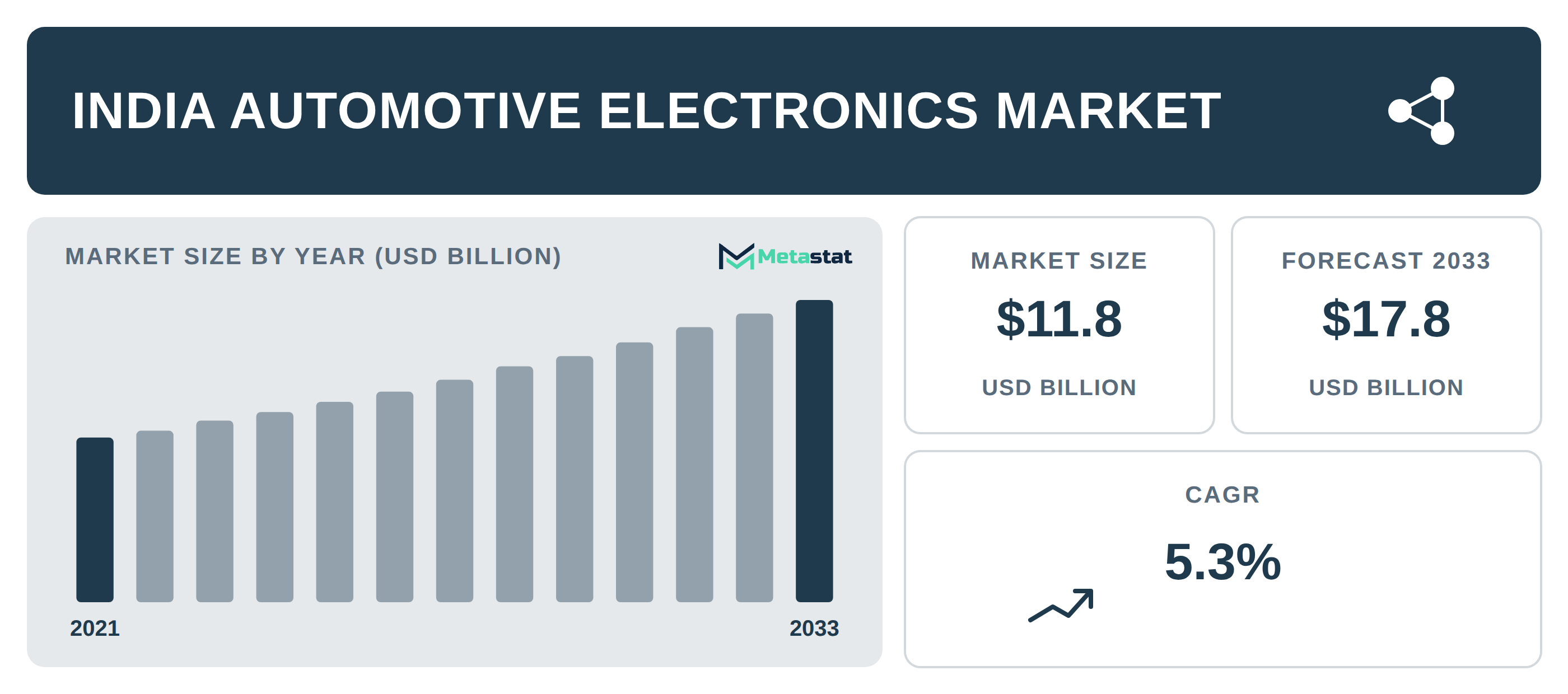
The landscape for India Automotive Electronics is undergoing significant changes driven by technological advancements and evolving consumer preferences. From the rise of electric vehicles to the integration of advanced driver assistance systems (ADAS), the impacts of these trends are reshaping the automotive sector. For a detailed analysis, refer to the India Automotive Electronics market size and forecast report. Below are key trends influencing the direction of automotive electronics in India.
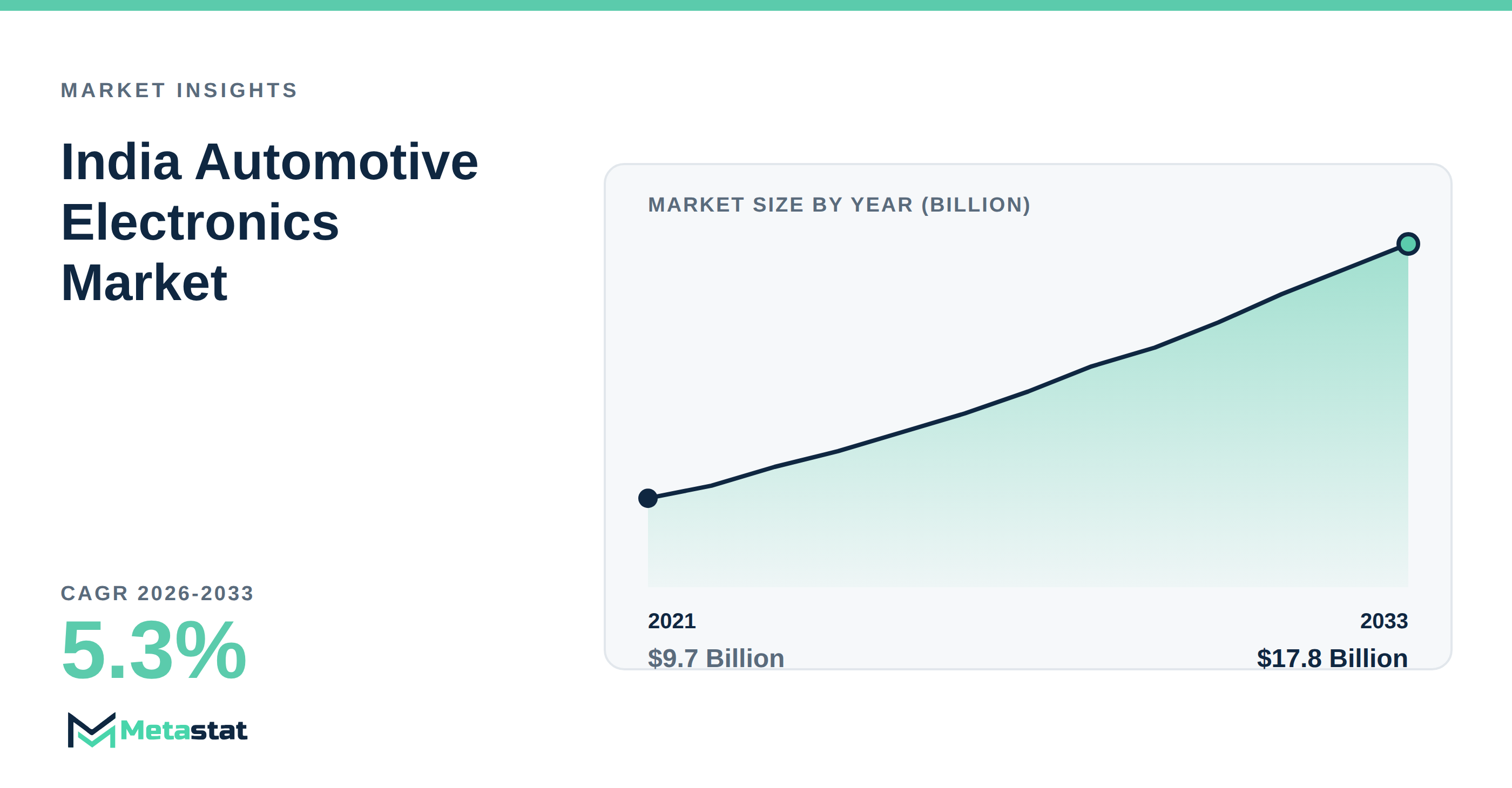
1. Surge in Demand for Electric Vehicles
Growing environmental awareness is propelling the demand for electric vehicles (EVs) in India. Consumers prioritize eco-friendly options, while governmental incentives support this transition. Consequently, the demand for power electronics in EVs is rising. Manufacturers are now compelled to invest in advanced electronic systems to manage energy distribution and enhance vehicle functionality. Suppliers develop innovative solutions tailored to the specific needs of electric and hybrid vehicles.
2. Adoption of Advanced Driver Assistance Systems
Integrating ADAS technologies substantially impacts automotive electronics requirements. With consumers increasingly aware of safety features, manufacturers enhance safety and performance through sophisticated electronic systems. This shift drives higher demand for sensors and electronic control units (ECUs) that support features like lane-keeping assistance and adaptive cruise control. Companies focusing on reliable ADAS technologies secure a competitive edge in a market prioritizing safety.
3. Localization of Electronic Control Units
Localization of manufacturing Electronic Control Units (ECUs) is gaining traction as companies seek to reduce import dependence. Demand for local production capabilities grows alongside efforts to manage risks related to global supply disruptions. By prioritizing local sourcing, manufacturers gain better control over quality and production timelines, leading to cost-efficient operations. This strategic shift aligns with government initiatives promoting domestic manufacturing, ultimately generating job opportunities and stimulating economic growth.
4. Transformation of Infotainment Systems
The ongoing transition of vehicle interiors into digital environments is influencing procurement strategies in the automotive electronics sector. The heightened emphasis on infotainment units underscores the importance of connectivity and user satisfaction, prompting suppliers to innovate continually. Automotive manufacturers now prioritize high-quality electronic components that enhance both entertainment and navigation features. This trend necessitates significant investment in research and development, as suppliers delivering advanced infotainment solutions will have a favorable position in the marketplace.
5. Enhanced Power Electronics for Hybrid Vehicles
The hybrid vehicle segment is experiencing rapid expansion, driven by shifting consumer preferences and stricter emissions regulations. This evolution demands advanced power electronics solutions to effectively manage energy within hybrid systems. Manufacturers dedicated to efficient energy management solutions are likely to see strong demand in this growing segment. While the adoption of hybrid vehicles rises, innovation in power electronics will play an essential role in advancing automotive technology.
6. Emphasis on Safety and Quality in Automotive Sensors
The focus on enhancing vehicle safety through automotive sensors is growing significantly. Manufacturers prioritize quality and reliable components, requiring suppliers to meet stringent industry standards. This trend aligns with broader objectives in the India Automotive Electronics environment to elevate vehicle safety and functionality. Establishing long-term relationships between automotive manufacturers and sensor suppliers through fixed-price contracts helps both parties manage costs effectively. As safety features become increasingly important in consumer purchases, this demand drives growth and innovation in sensor technology.
These trends reflect a dynamic shift in the India Automotive Electronics environment, highlighting the importance of innovation and adaptation in meeting evolving consumer expectations and regulatory standards. Adapting to these trends will be crucial for manufacturers and suppliers looking to thrive in this increasingly competitive space.
Tags
About the Authors

LEAD ANALYST
Utkarsh Khirodkar is a Lead Market Research Analyst at MetaStat Insight, specializing in market intelligence, technology sector assessments, and competitive strategy.

ENERGY & INFRASTRUCTURE INDUSTRY CONSULTANT
Automotive and Transportation · Electronics and Semiconductor · Energy and Power · Machinery & Equipment
Saurabh Vasant Ganvir consults for Energy & Infrastructure Industry at MetaStat Insight, specializing in renewable energy, solar EPC, and electric vehicle (EV) infrastructure markets.