
Explore significant trends impacting the Online Restaurant Reservation System, enhancing customer engagement and operational efficiency for restaurants.
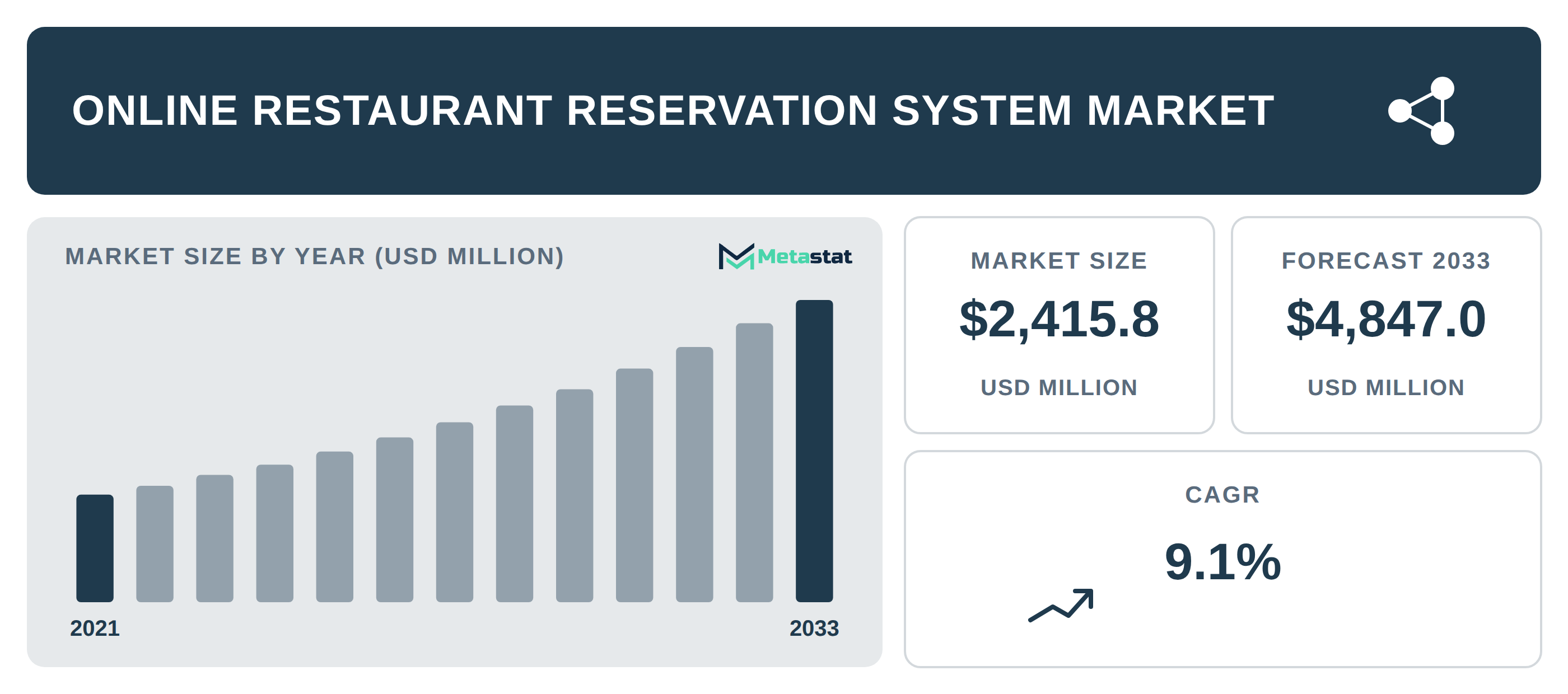
The market for Online Restaurant Reservation System continues to evolve rapidly. Understanding the trends reshaping this space is vital for restaurant operators and buyers. This post outlines six significant trends impacting the sector. The full figures are in our Online Restaurant Reservation System market size and forecast report.
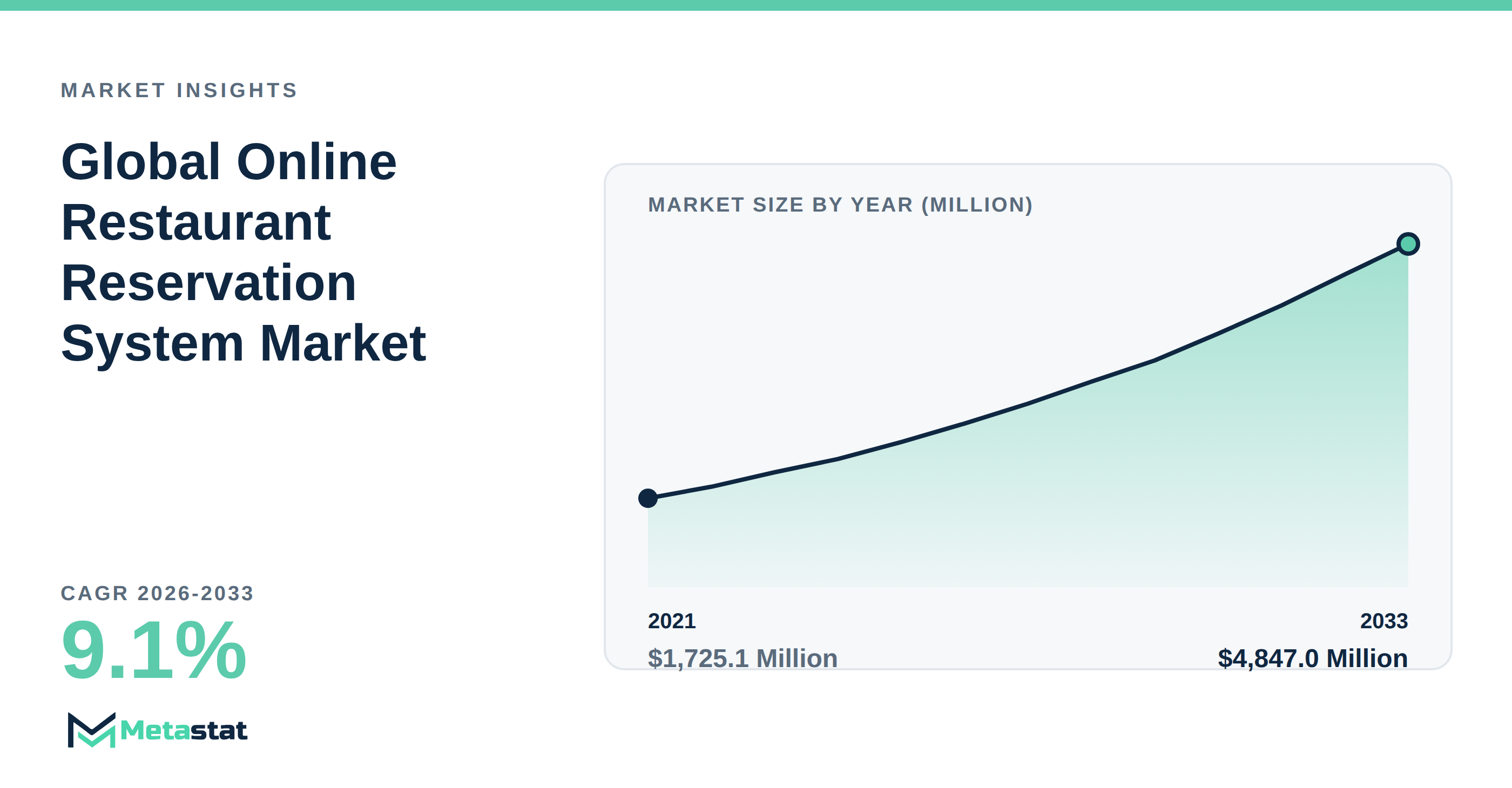
1. Increased consumer preference for online bookings
Dining habits are shifting as younger generations, particularly millennials and Generation Z, favor technology-enhanced dining experiences. This demographic prioritizes convenience and efficiency, prompting restaurants to adopt advanced online reservation systems. The growing inclination toward digital interactions translates into heightened demand for effortless booking processes. Restaurants that embrace these systems gain a competitive advantage, appealing to a tech-savvy audience eager for improved dining experiences and streamlined service.
2. Cloud-based deployment models gaining traction
Cloud-based reservation systems are rapidly becoming the preferred choice for many restaurants. These solutions offer scalability and flexibility, essential for operators managing varying customer volumes. By reducing upfront costs and minimizing the complexity of technology management, cloud systems enable restaurants to focus on enhancing guest experiences. The shift toward cloud deployments aligns with the increasing need for integrated services, enabling connections between reservation systems and other operational tools, ultimately promoting better decision-making.
3. Direct booking widgets reducing acquisition costs
Direct booking widgets significantly transform how restaurants attract customers. By integrating these tools into their websites, restaurants increase visibility and accessibility, enhancing the booking experience. This transition leads to a notable reduction in customer acquisition costs as establishments draw diners directly, avoiding hefty fees associated with third-party platforms. Many restaurants are investing in advanced reservation solutions that elevate customer satisfaction and improve retention rates.
4. The rise of integrated restaurant management platforms
The demand for comprehensive operational solutions is increasing, leading to the rise of integrated restaurant management platforms. These systems merge reservation management with other essential functionalities, including inventory control and staff scheduling, allowing restaurants to enhance their operational efficiency. Multi-location operators particularly benefit from centralized management solutions, which enhance efficiency across various sites. The accelerating trend toward integration highlights the importance of offering an all-in-one solution to meet evolving consumer expectations.
5. Adoption of prepaid dining experiences
Prepaid dining experiences are becoming a viable strategy for restaurants to address the financial impact of no-show reservations. By requiring deposits or full prepayment at booking, establishments secure more consistent cash flows and manage their operational expenses effectively. This trend resonates with consumer preferences for assurance and convenience, allowing restaurants to strengthen their revenue protection efforts while enhancing the overall dining experience.
6. Unified guest profiles enhancing customer loyalty
Implementing unified guest profiles enables restaurants to connect reservations with loyalty programs effectively. By integrating these systems, operators personalize experiences based on customer preferences and dining history. This capability fosters stronger relationships between diners and restaurants, driving repeat visits and higher satisfaction levels. While the market continues to expand, the integration of loyalty initiatives with reservation systems will remain a crucial strategy for differentiation in a competitive environment.
These trends reflect the dynamic changes within the Online Restaurant Reservation System, emphasizing the necessity for restaurants to adapt to consumer preferences and technological advancements. Staying informed about these shifts allows operators to leverage opportunities and enhance their service offerings.
Tags
About the Authors

LEAD ANALYST
Utkarsh Khirodkar is a Lead Market Research Analyst at MetaStat Insight, specializing in market intelligence, technology sector assessments, and competitive strategy.

LEAD PRINCIPAL ANALYST, PHARMA AND HEALTHCARE
Food and Beverages · Healthcare · Healthcare IT · Medical Devices
Ajay Devgire is the Lead Healthcare Analyst at MetaStat Insight, leading strategic research and market intelligence initiatives across the global healthcare domain.

SENIOR RESEARCH ANALYST
Biotechnology · Food and Beverages · Medical Devices · Packaging
Snehal Pasalkar is a Research Analyst at MetaStat Insight, operating at the intersection of life sciences research, competitive strategy, and market intelligence.