
Explore key trends driving the transformation of operations, focusing on technology, cost pressures, and advisory services for organizations navigating change.
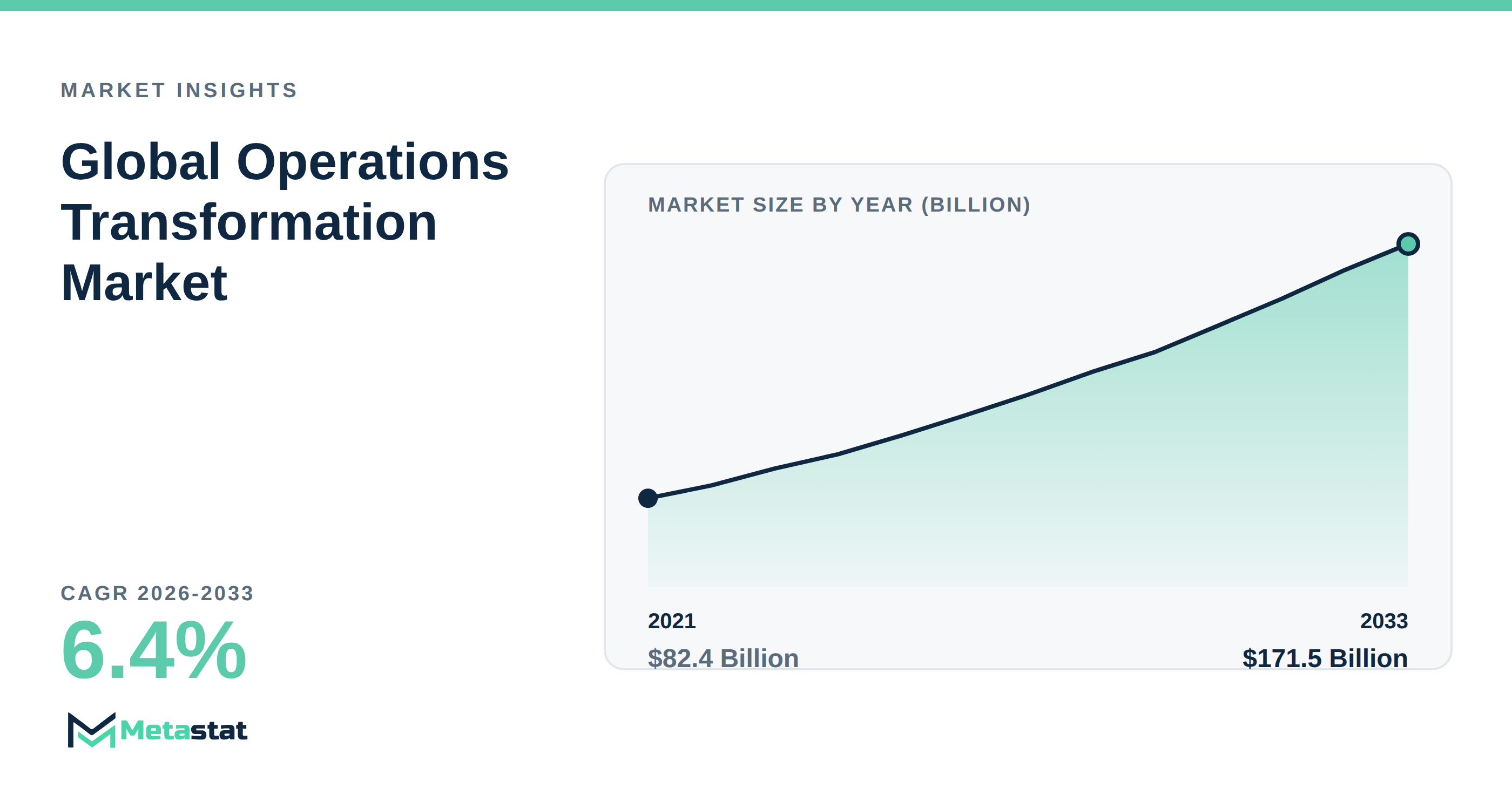
Organizations today face a landscape demanding enhanced efficiency and agility. The continuous push for operational transformation stems from several forces, reflecting a shift toward strategic improvements and technology integration. Six key trends are reshaping the landscape of operations transformation, each carrying significant implications for buyers navigating this dynamic sector. The full figures are in our Operations Transformation market size and forecast report.
1. Increased Demand for Technology Implementation Services
Organizations prioritize technology implementation and integration services to strengthen operational capabilities. The growing emphasis on these services highlights businesses' recognition of their essential role in improving efficiency and adaptability. By 2033, such services are expected to contribute significantly to the operations transformation sector, reaching USD 54.8 billion. This demand mirrors the broader push towards digital transformation, allowing firms to streamline operations and respond effectively to evolving consumer preferences.
2. Rising Cost Pressures Driving Operational Efficiency
Economic pressures compel organizations to streamline operations and reduce overhead costs. These financial stresses lead to increased investments in operational transformation strategies aimed at boosting productivity. Companies recognize that enhancing efficiency is critical for maintaining competitiveness in a challenging economic climate. While businesses refine resource allocation, the demand for operational transformation services is expected to rise, further supporting transformation efforts.
3. Focus on Supply Chain Resilience
Global disruptions from various factors, including pandemics and geopolitical tensions, prompt organizations to invest heavily in supply chain resilience. This focus reshapes operational strategies, driving businesses to implement innovative solutions that ensure stability and efficiency. Supply chain operations are projected to grow in scope and relevance, illustrating the need for agile responses to market changes. Enhanced resilience improves an organization’s ability to meet customer demands swiftly and efficiently.
4. Adoption of Hyperautomation Technologies
Integrating hyperautomation technologies, including AI and robotic process automation, is transforming business operations. Hyperautomation streamlines processes, reduces errors, and enhances overall performance. Companies across many sectors, particularly finance and manufacturing, leverage these advanced technologies to gain efficiency. This anticipated growth in technological adoption presents significant opportunities for businesses to upgrade their operational frameworks through automation and data-driven insights.
5. Demand for Advisory Services on Transformation Strategies
Organizations increasingly engage in transformation strategy and advisory services to navigate complex challenges effectively. The necessity of aligning business strategies with evolving market dynamics drives this demand. Revenue for this segment is expected to reach USD 38 billion by 2033, underscoring the importance of expert guidance in ensuring successful transformation initiatives. Companies recognize tailored solutions because essential for achieving sustainable performance improvements.
6. The Role of ESG Mandates in Shaping Operations
Environmental, social, and governance (ESG) mandates significantly influence companies' operational strategies. Organizations face pressure to integrate sustainability into their transformation efforts, addressing stakeholder expectations and ensuring regulatory compliance. This trend towards ESG integration marks a shift in investment focus towards sustainable practices, enhancing long-term value creation. Companies pursuing these initiatives not only comply with regulations but strengthen their market positions.
These trends reflect the evolving needs of organizations striving for operational excellence while facing increasing competition and technological advancements. Buyers and stakeholders in the operations transformation space adapts to these shifts to optimize their strategies and investments effectively.
Tags
About the Authors

LEAD ANALYST
Utkarsh Khirodkar is a Lead Market Research Analyst at MetaStat Insight, specializing in market intelligence, technology sector assessments, and competitive strategy.

PRINCIPAL CONSULTANT - ENTERPRISE AI & EMERGING TECHNOLOGIES
Banking & Finance · Electronics and Semiconductor · Energy and Power · Healthcare IT · Information & Technology · Professional Services
Vijay Gunti is a Principal Consultant at MetaStat Insight, bringing over two decades of experience across enterprise digital transformation, technology strategy, and intelligent systems.

LEAD CONSULTANT - COMMUNICATION, TELECOM, AND IT
Electronics and Semiconductor · Information & Technology · Machinery & Equipment · Professional Services
Ravindra Sathe Consultants for Communication, Telecom, and IT at MetaStat Insight. He leads the firm's industry research initiatives across telecommunications infrastructure, digital connectivity, enterprise networking, and emerging information technology domains.