
Explore the competitive dynamics of the Branding and Visual Communication Design Services market. Discover how top companies leverage innovation and sustainability to capture market share.
The Branding and Visual Communication Design Services market is experiencing a notable transformation, fueled by technological advancements and changing consumer preferences. In this evolving environment, understanding the competitive landscape is vital for businesses aiming to establish a robust market position. Several key competitive factors are shaping the dynamics of this market.
1. North America leads with strategic brand innovation
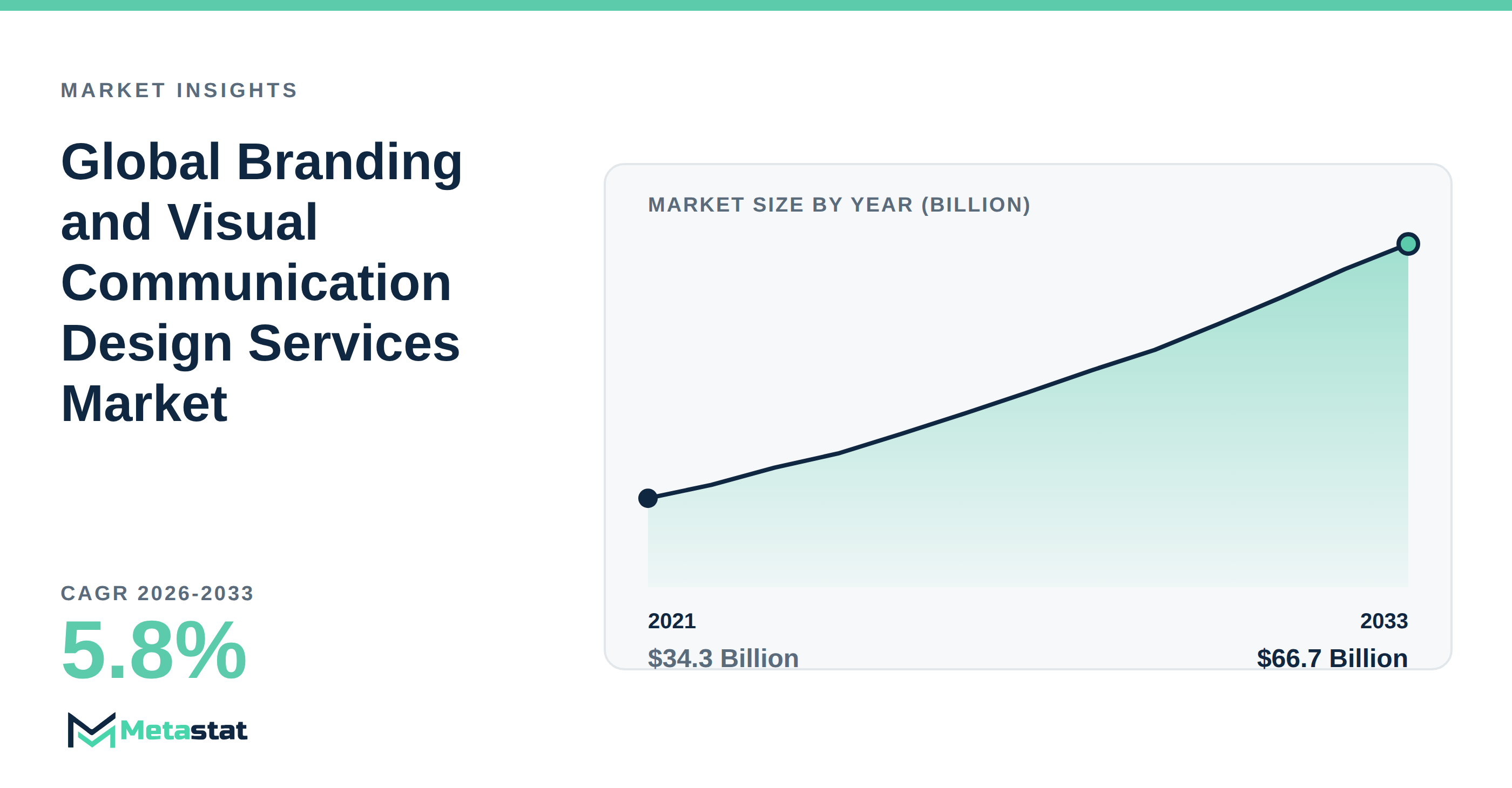
North America dominates the Branding and Visual Communication Design Services market, holding a significant 34.3% share. Companies in this region, including Landor and Interbrand, prioritize strategic brand innovation to enhance customer engagement. Their focus on delivering unique branding solutions strengthens brand loyalty and supports revenue growth. The anticipated expansion of the market from USD 42.5 billion in 2025 to USD 66.7 billion by 2033 presents ample opportunities for firms that invest in innovative branding practices.
2. Europe capitalizes on cohesive brand experiences
With a 28.7% market share, Europe is home to companies like Pentagram and FutureBrand, which emphasize the creation of cohesive brand experiences. This positioning highlights the significance of integrated design approaches that connect with consumers. A strong focus on storytelling and emotional connections in brand identity allows European firms to differentiate themselves, resulting in sustained demand for innovative design services across various sectors.
3. Asia Pacific emphasizes digital transformation
The Asia Pacific region, holding a 27.5% market share, sees companies like JKR (Jones Knowles Ritchie) and COLLINS increasingly prioritizing digital transformation. This adaptation is critical, because brands aim to engage consumers through innovative digital experiences. The anticipated growth of the digital interface and interactive design segment, expected to reach USD 14.1 billion by 2033, underscores the need for technological advancement to maintain competitiveness.
4. Marketing and Advertising Communication Design gains traction
The Marketing and Advertising Communication Design sector is projected to reach USD 11.9 billion by 2033. Companies including Wolff Olins and Dragon Rouge are leveraging data-driven strategies to enhance brand visibility. The emphasis on targeted messaging and personalized marketing efforts exemplifies how organizations respond to increasing competition. By investing in advanced design solutions, these firms improve consumer interaction and loyalty, positioning themselves favorably within the industry.
5. Demand for sustainable branding strategies is rising
Environmental concerns are driving the need for sustainable branding solutions across the market. Companies like Design Bridge and Partners are integrating eco-friendly practices into their design processes. Firms that prioritize sustainability attract environmentally conscious consumers while enhancing their brand reputation. This shift indicates a broader trend within the Branding and Visual Communication Design Services market, where sustainability aligns with corporate objectives.
6. Project-Based Engagements cater to evolving client needs
Project-Based Engagements represent a vital segment of the market, projected to grow from USD 21.3 billion in 2026 to USD 29.7 billion by 2033. This model enables companies to provide customized design solutions that meet specific client objectives. Firms like Siegel+Gale leverage this approach to build collaborative relationships with clients, enhancing creativity and innovation in design processes. The flexibility offered by project-based engagements supports brands in adapting to market dynamics effectively.
7. Retainer-Based Engagements emphasize long-term partnerships
Retainer-Based Engagements are expected to reach USD 17.5 billion by 2033, reflecting a shift towards long-term partnerships in branding. Companies including Frog and Lippincott focus on providing continuous brand oversight, which allows for strategic alignment with client goals. This engagement model promotes deeper collaboration and enhances branding consistency across multiple platforms, crucial for building brand loyalty in a competitive landscape.
Examining the competitive positions within the Branding and Visual Communication Design Services market reveals how strategic decisions shape market dynamics. By concentrating on innovation, sustainability, and collaboration, firms effectively navigate this evolving landscape and capitalize on emerging opportunities.
The full analysis is in Global Branding and Visual Communication Design Services Market.
Tags
About the Authors

LEAD ANALYST
Utkarsh Khirodkar is a Lead Market Research Analyst at MetaStat Insight, specializing in market intelligence, technology sector assessments, and competitive strategy.

PRINCIPAL CONSULTANT - ENTERPRISE AI & EMERGING TECHNOLOGIES
Banking & Finance · Electronics and Semiconductor · Energy and Power · Healthcare IT · Information & Technology · Professional Services
Vijay Gunti is a Principal Consultant at MetaStat Insight, bringing over two decades of experience across enterprise digital transformation, technology strategy, and intelligent systems.

PRINCIPAL CONSULTANT - QUALITY SYSTEMS & COMPLIANCE
Electronics and Semiconductor · Machinery & Equipment · Professional Services
Omkar Phadtare is an Industry Consultant at MetaStat Insight, specializing in quality systems, regulatory compliance, and standards benchmarking to drive data-driven market intelligence and strategic industry research.

LEAD CONSULTANT - COMMUNICATION, TELECOM, AND IT
Electronics and Semiconductor · Information & Technology · Machinery & Equipment · Professional Services
Ravindra Sathe Consultants for Communication, Telecom, and IT at MetaStat Insight. He leads the firm's industry research initiatives across telecommunications infrastructure, digital connectivity, enterprise networking, and emerging information technology domains.