
Explore the key factors influencing the Robotic Screwdriving System market, including automation trends, investment dynamics, and emerging applications.
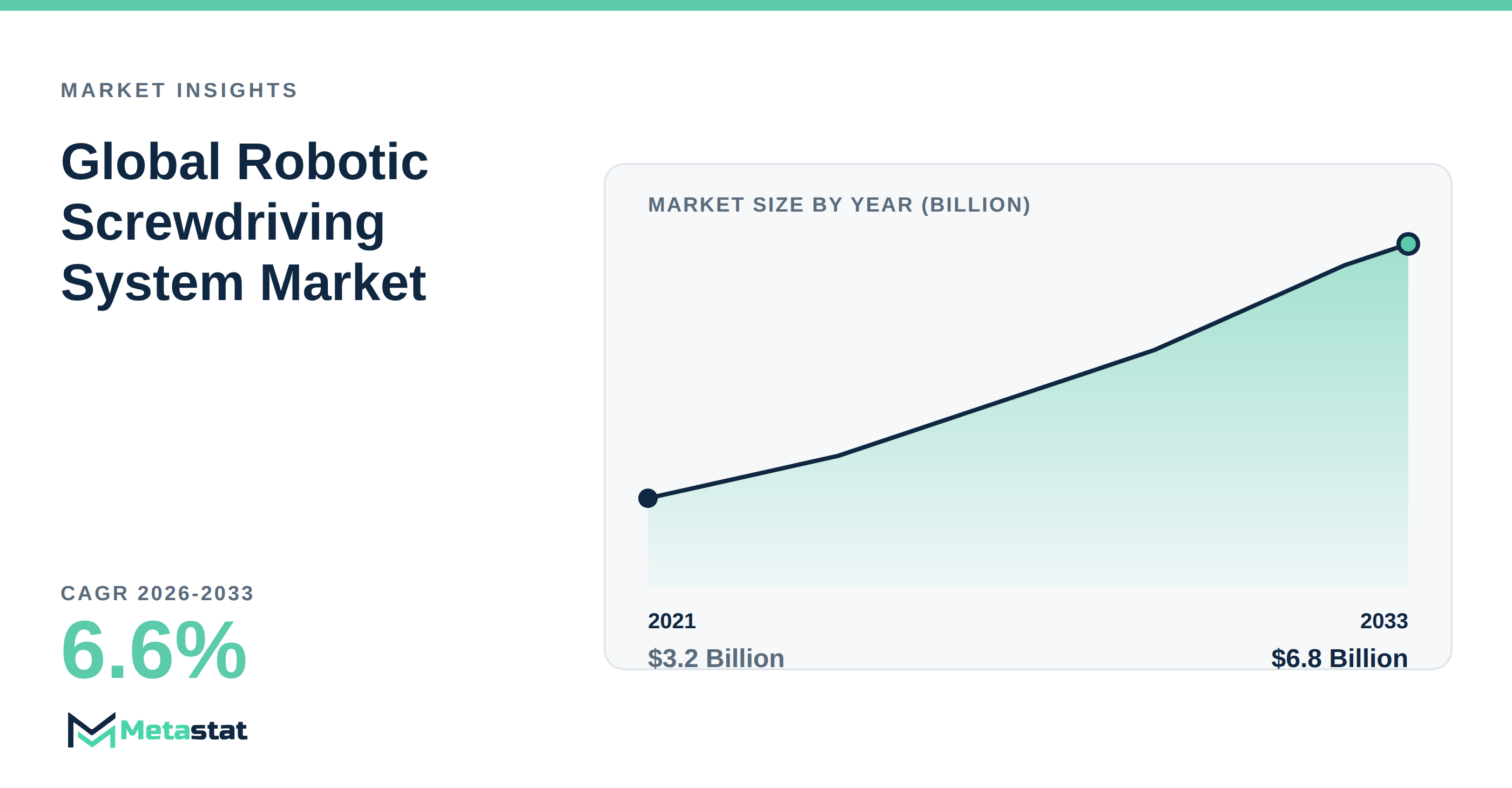
The Robotic Screwdriving System market is undergoing significant transformations driven by technological advancements and changing industry demands. With a projected growth from USD 4.1 billion in 2025 to USD 6.8 billion by 2033, understanding the forces reshaping this market becomes essential for stakeholders.
1. Increasing automation across industries
Automation is reshaping the Robotic Screwdriving System market. Key sectors including automotive, electronics, and consumer appliances are adopting robotic solutions to optimize assembly processes and improve operational efficiency. This shift arises from the need for enhanced productivity and reduced labor expenses. Integrating robotic screwdriving systems significantly minimizes errors associated with manual assembly tasks, resulting in increased output and improved profitability for companies.
2. Growing investment in automation technologies
Investment in automation is transforming the landscape of the Robotic Screwdriving System market. Organizations are actively modernizing their production lines to achieve better operational efficiency. This trend is especially evident in the automotive and electronics sectors, where advanced screwdriving technologies become essential in assembly workflows. The push for efficiency connects directly to the rising demand for automated solutions, ensuring sustained market expansion.
3. High capital investment requirements
Despite the market’s potential, high capital investments present significant barriers for many companies looking to enter the market. The substantial initial costs tied to adopting advanced robotic technologies discourage smaller businesses from implementing these systems. Financial constraints lead to delays in adopting innovative solutions, ultimately impacting the overall growth of the Robotic Screwdriving System market. Effectively navigating these financial challenges remains crucial for companies aiming to broaden their presence.
4. Geopolitical challenges affecting supply chains
Geopolitical tensions and trade frictions create complexities within the supply chains that support the Robotic Screwdriving System market. Trade deficits and tariffs disrupt the flow of essential materials and components, increasing logistical challenges and costs. While geopolitical factors evolve, companies adapt their supply chain strategies to maintain competitiveness and operational stability amidst these uncertainties.
5. Advances in screwdriving technologies
Innovations in screwdriving technologies significantly boost the market’s potential. For instance, advancements in electric screwdriving systems enhance both accuracy and energy efficiency. Industries adopting these sophisticated solutions benefit from improved operational capabilities, aligning with the trend toward enhanced manufacturing processes. The demand for high-quality, efficient screwdriving systems presents opportunities for market participants to differentiate themselves through innovation.
6. Evolving regulatory standards
Regulatory standards increasingly shape the direction of the Robotic Screwdriving System market. Compliance with safety and performance regulations is crucial, particularly in aerospace and medical device industries. The emphasis on meeting these standards drives manufacturers to pursue advanced solutions that ensure reliability and operational efficiency. Companies investing in robotic systems that comply with regulatory requirements secure a competitive edge, contributing to market growth.
7. Expanding applications in niche industries
The Robotic Screwdriving System market is broadening its applications beyond traditional sectors. Industries including medical devices and new energy are turning toward automation technologies. These niche markets require specialized solutions that address unique operational challenges. While companies enter these emerging segments, they create new avenues for growth and establish leadership in innovative screwdriving technologies.
In conclusion, the Robotic Screwdriving System market is rapidly evolving, influenced by automation trends, investment dynamics, and technological advancements. Understanding these factors is essential for companies aiming to thrive in this competitive environment. For more detailed insights, refer to the Global Robotic Screwdriving System Market.
Tags
About the Authors

LEAD ANALYST
Utkarsh Khirodkar is a Lead Market Research Analyst at MetaStat Insight, specializing in market intelligence, technology sector assessments, and competitive strategy.

INDUSTRY CONSULTANT - CHEMICALS & ADVANCED MATERIALS
Chemicals and Materials · Machinery & Equipment · Packaging
Amit Gadhekar Consultant for Chemicals and Materials at MetaStat Insight, directing sector-specific intelligence, research, and strategic consulting across global chemical and processing markets.

PRINCIPAL CONSULTANT - QUALITY SYSTEMS & COMPLIANCE
Electronics and Semiconductor · Machinery & Equipment · Professional Services
Omkar Phadtare is an Industry Consultant at MetaStat Insight, specializing in quality systems, regulatory compliance, and standards benchmarking to drive data-driven market intelligence and strategic industry research.

ENERGY & INFRASTRUCTURE INDUSTRY CONSULTANT
Automotive and Transportation · Electronics and Semiconductor · Energy and Power · Machinery & Equipment
Saurabh Vasant Ganvir consults for Energy & Infrastructure Industry at MetaStat Insight, specializing in renewable energy, solar EPC, and electric vehicle (EV) infrastructure markets.

LEAD CONSULTANT - COMMUNICATION, TELECOM, AND IT
Electronics and Semiconductor · Information & Technology · Machinery & Equipment · Professional Services
Ravindra Sathe Consultants for Communication, Telecom, and IT at MetaStat Insight. He leads the firm's industry research initiatives across telecommunications infrastructure, digital connectivity, enterprise networking, and emerging information technology domains.