
Explore key trends driving the integration of AI in agriculture, enhancing productivity and sustainability. Discover how these innovations shape modern farming practices.
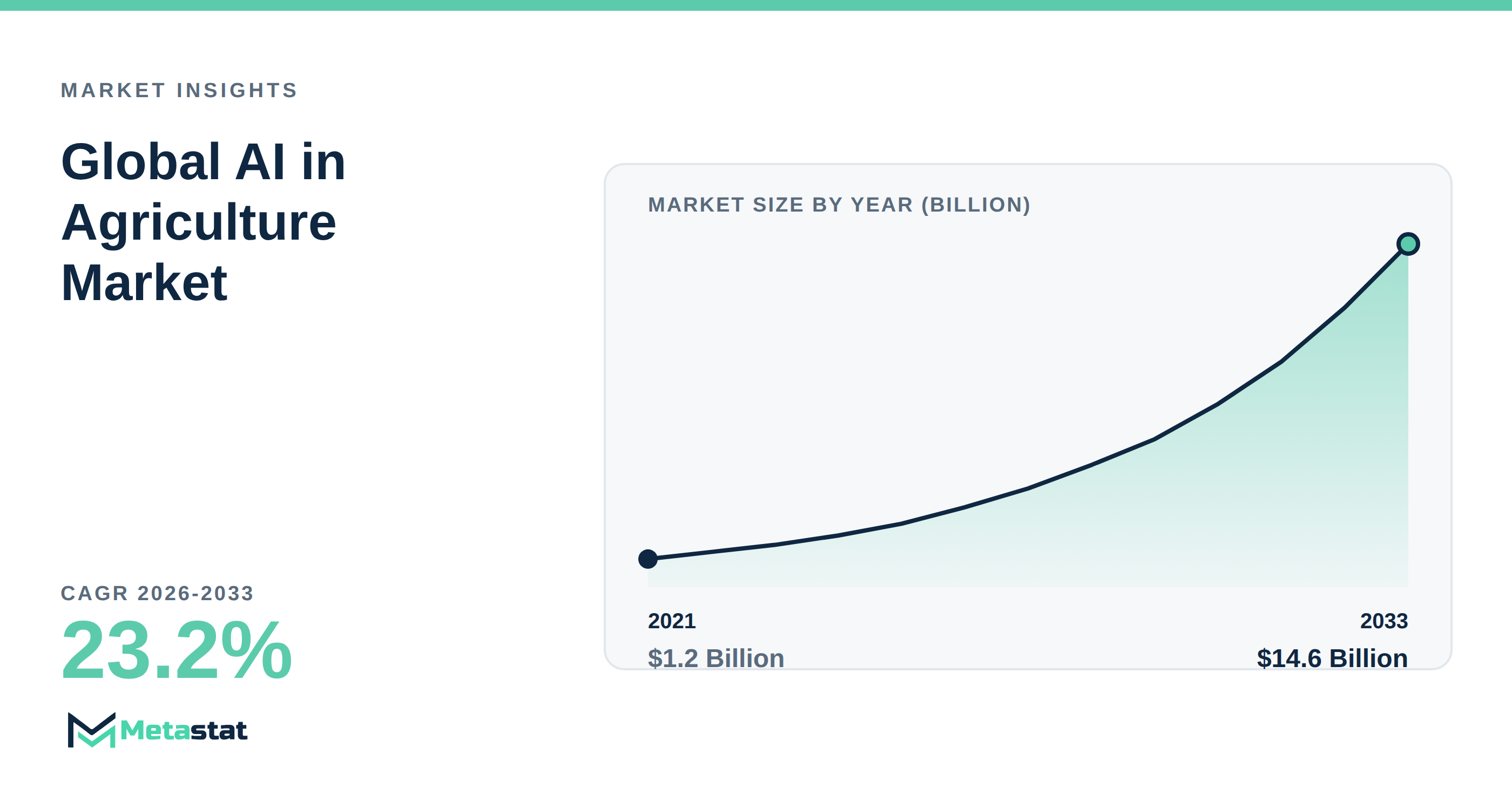
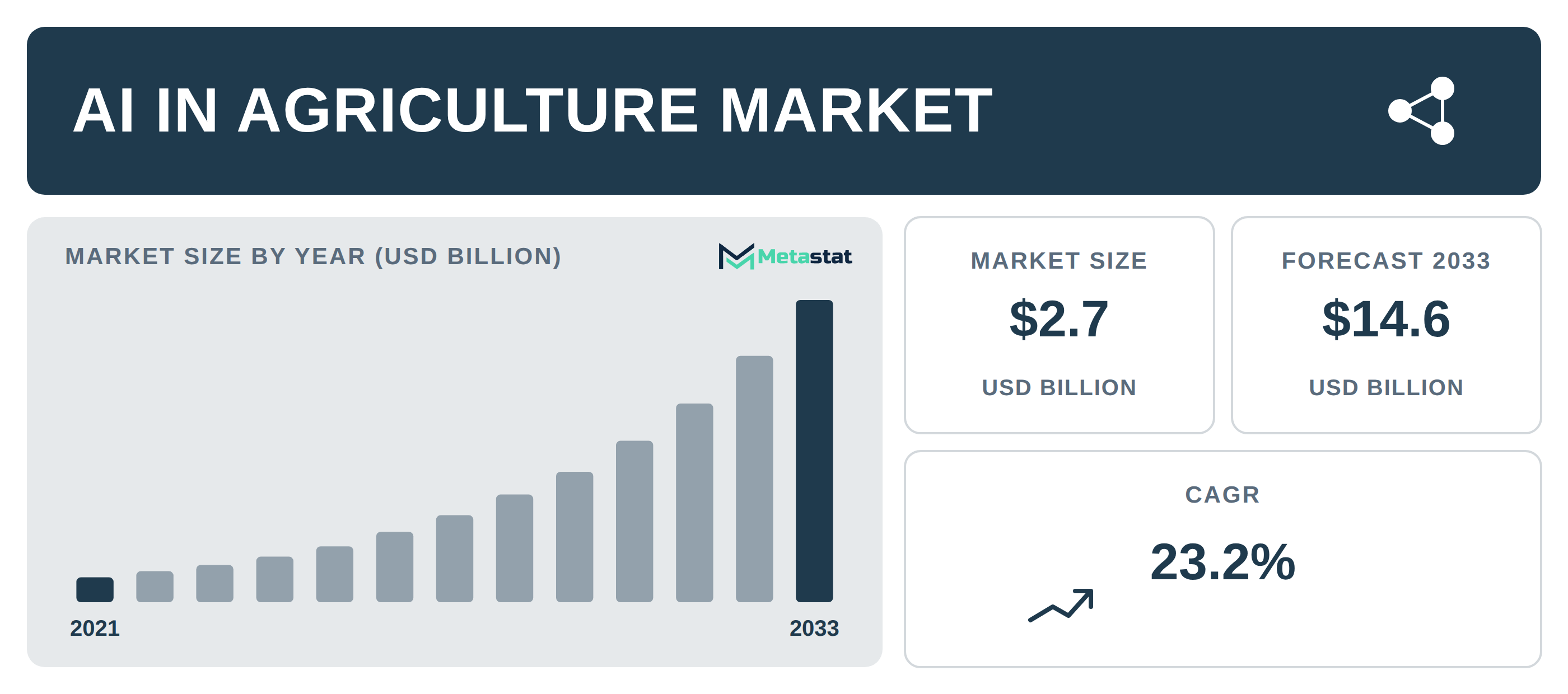
The integration of artificial intelligence into agriculture is introducing significant changes that enhance productivity and sustainability within the industry. As farmers increasingly seek to optimize their operations, several trends are emerging that are reshaping the market for AI in Agriculture. The full figures are in our AI in Agriculture market size and forecast report.
1. Increased Demand for Predictive Analytics
Predictive analytics is gaining traction among agricultural producers, significantly influencing decision-making processes. The ability to leverage historical data and real-time insights enables farmers to anticipate challenges like pest infestations and adverse weather conditions. Forecasts indicate that the demand for predictive analytics will rise from USD 1.3 billion in 2026, reaching USD 5.4 billion by 2033. This trend encourages producers to invest in tools that enhance resource management, ultimately leading to optimized crop yields and reduced operational costs.
2. Growth of Agricultural Robotics
Robotic solutions are becoming a fundamental aspect of modern farming practices, driven by the pursuit of efficiency and the address labor shortages. The agricultural robotics segment is expected to expand significantly, with projections indicating a growth rate of 25.7% through 2033. These advanced technologies automate repetitive tasks, enabling farmers to focus on more strategic operations. The increased adoption of agricultural robotics not only enhances productivity but addresses specific operational challenges, showcasing its role as a key trend in the AI in Agriculture sector.
3. Rise in Cloud-Based Solutions
Cloud deployment is significantly enhancing access to agricultural intelligence, particularly for large-scale producers. This segment is expected to have a value of USD 1.9 billion in 2026, potentially reaching USD 8.9 billion by 2033. Cloud-based technologies facilitate advanced data analytics, allowing farmers to make timely decisions that enhance yield and optimize resource utilization. This trend is transforming how agricultural operations manage data, resulting in improved operational efficiency and collaboration among various stakeholders.
4. Emphasis on Precision Farming Techniques
Precision farming is becoming increasingly important as producers aim to optimize management practices and improve crop performance. This approach utilizes advanced technologies to enhance decision-making at the field level. The precision farming segment is projected to benefit from the broader push towards sustainability, addressing the need for reduced waste and maximized output. By integrating data analytics and AI solutions, the agriculture community is experiencing improved productivity while adhering to environmentally friendly practices.
5. Advances in Machine Learning Applications
Machine learning technology plays a critical role in modernizing agricultural practices. Projections suggest this segment will reach USD 4.6 billion by 2033, growing at a rate of 24.3%. The application of machine learning enables farmers to analyze vast datasets, leading to enhanced insights on crop management and resource allocation. With the ability to refine agricultural practices, this trend is driving innovation and efficiency across the sector, ensuring that stakeholders remain competitive in a rapidly evolving environment.
6. Increased Focus on Sustainable Practices
Growing awareness of environmental issues is pushing agricultural producers to adopt sustainable practices. There is a rising demand for AI solutions that not only improve productivity but promote sustainable resource usage. This trend encourages investments in technologies that facilitate efficient water use, soil health monitoring, and waste reduction. By adopting AI-driven sustainable practices, farmers meet consumer expectations while ensuring long-term viability in a changing climate.
7. Integration of Advanced Data Analytics
The incorporation of advanced data analytics into agricultural operations enables producers to make data-driven decisions. This trend is particularly beneficial for optimizing supply chain management, ensuring that products reach markets efficiently while minimizing waste. While the agricultural sector embraces data analytics, farmers gain deeper insights into every aspect of their operations, from crop monitoring to market trends, ultimately leading to enhanced profitability.
AI in Agriculture trends are reshaping the future of farming, providing producers with the tools necessary to embrace more efficient, data-driven practices. These advancements continue to develop, enabling buyers in this sector to access innovative solutions that enhance productivity, sustainability, and overall operational success.
Tags
About the Author

LEAD ANALYST
Utkarsh Khirodkar is a Lead Market Research Analyst at MetaStat Insight, specializing in market intelligence, technology sector assessments, and competitive strategy.