
LEAD ANALYST
Utkarsh Khirodkar is a Lead Market Research Analyst at MetaStat Insight, specializing in market intelligence, technology sector assessments, and competitive strategy.

Global AI in Agriculture Market Size, Share, By Component (Software, Hardware, Services), By Technology (Predictive Analytics, Machine Learning and Deep Learning, Computer Vision, Natural Language Processing), By Application (Precision Farming, Agricultural Robotics and Automation, Drone Analytics, Livestock Monitoring, Smart Greenhouse Management, Supply Chain and Post-Harvest Optimization), By Deployment Mode (Cloud, On-Premise and Hybrid), Industry Analysis, Growth, Trends, and Forecast, 2026-2033
Report ID
MSI-5716
Published
November, 2026
Pages
260 Pages
Format
Historical
Base year
Forecast
Forecast period
Report Details
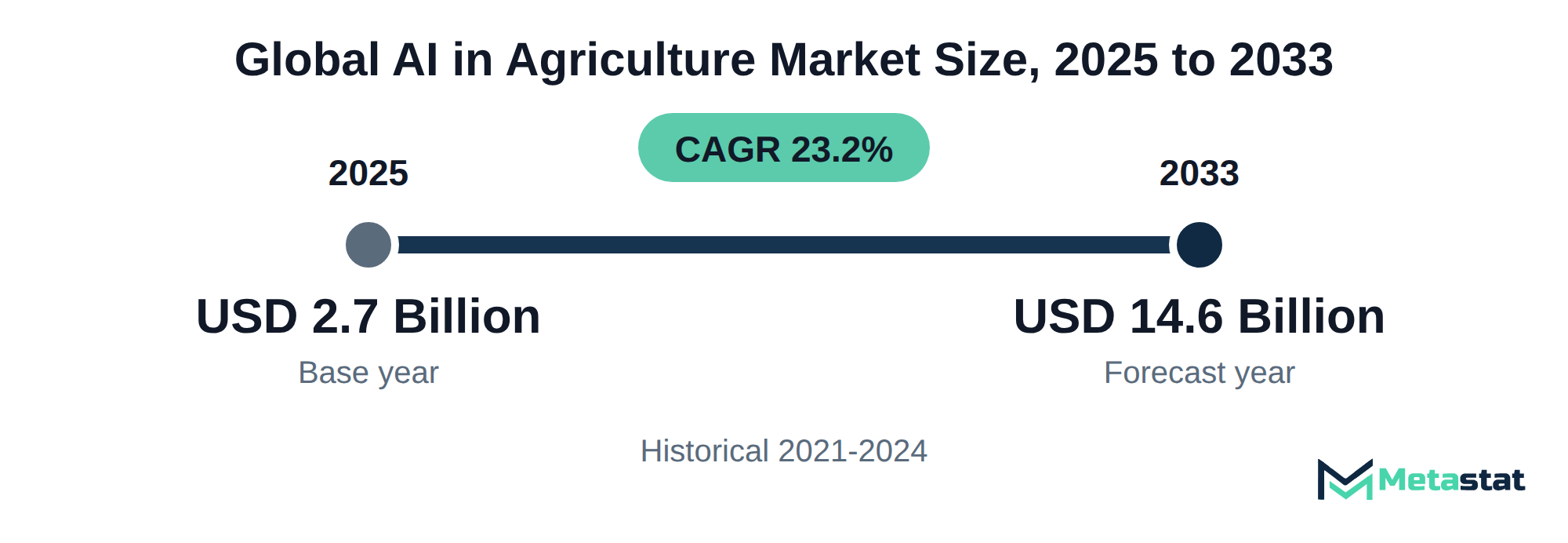
Market Valuation: Valued at $2.7 Billion in 2025, projected to reach $14.6 Billion by 2033 at a 23.2% CAGR.
Dominant Segment: The software segment leads the market, projected to reach USD 7 billion by 2033, driven by increasing demand for data-driven insights that enhance productivity and resource management.
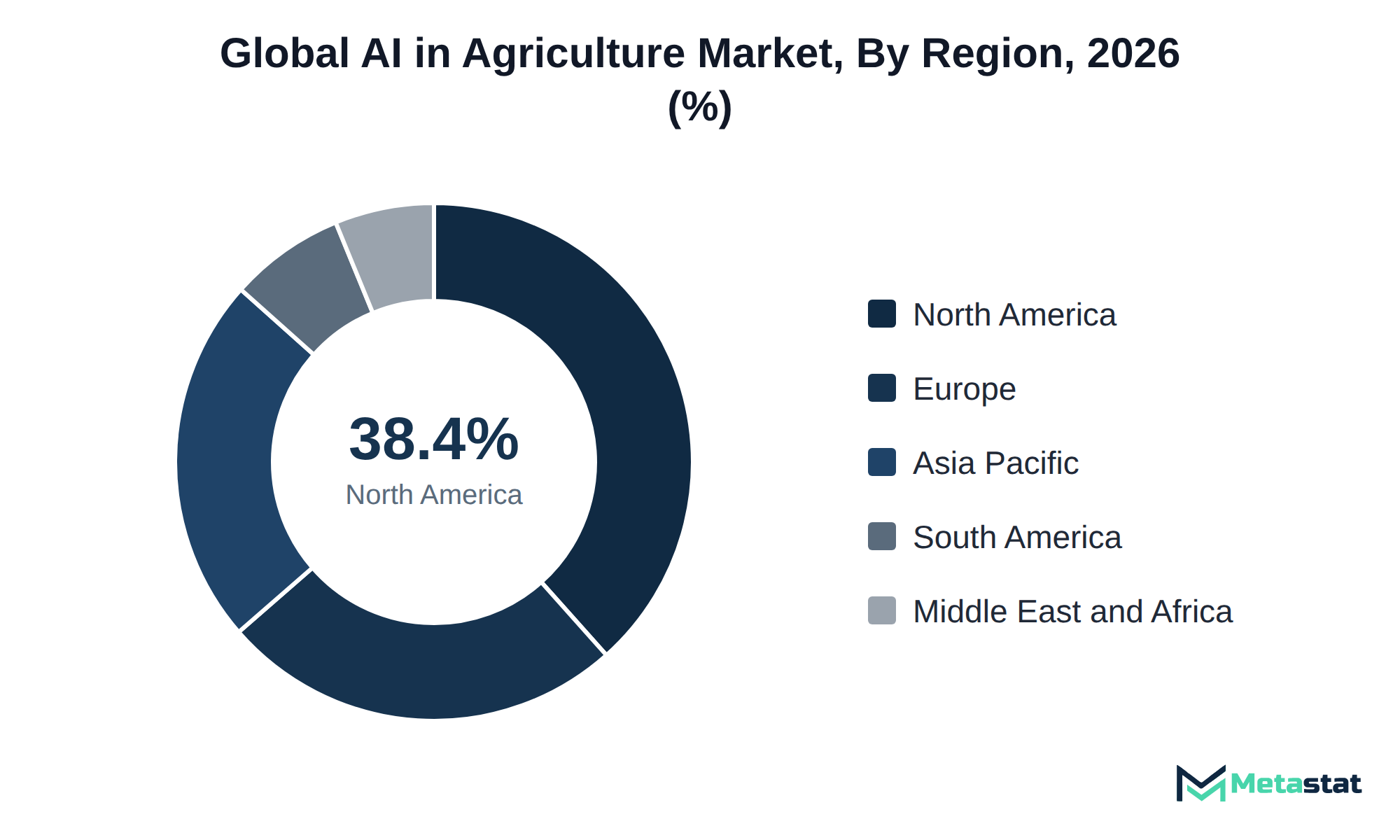
Geographic Lead: North America is the leading region, holding 38.4% of the market in 2025, with the US expected to maintain this dominance due to its advanced technological infrastructure and significant investments in agricultural innovation.
What's Inside: The report provides a comprehensive analysis of the competitive landscape, market dynamics, and detailed segmentations by component, technology, application, and deployment mode, covering the forecast period from 2026 to 2033.
Increased Adoption of Agricultural Robot: The agricultural robotics and automation segment is projected to grow at a CAGR of 25.7%, reflecting strong interest from producers seeking to enhance productivity and reduce labor costs.
Increased Demand for Predictive Analytic: The predictive analytics segment is expected to grow from USD 1.3 billion in 2026 to USD 5.4 billion by 2033, driven by the rising need for data-driven insights to improve crop yield and resource efficiency.
Choose Your License
Global AI in Agriculture Market
The global AI in Agriculture market was valued at USD 2.7 billion in 2025 and is projected to reach USD 14.6 billion by 2033, growing at a CAGR of 23.2% over the forecast period.
The AI in Agriculture market covers technologies and services designed to enhance farming efficiency and productivity. Buyers invest in this market to adopt advanced solutions that optimize crop yields, reduce operational costs, and manage agricultural resources more effectively. The increasing focus on sustainable farming practices and the need for data-driven decision-making drive significant interest among various stakeholders, including farmers, agricultural enterprises, and technology providers.
Growth in the market is supported by the rising adoption of precision farming techniques, which apply data analytics and automation to improve agricultural practices. Among the various segments, software represents the highest value, projected to experience substantial growth throughout the forecast period. North America holds 38.4% of the market in 2025, with the US leading in 2026. This region's advanced technological infrastructure and strong investment in agricultural innovation contribute to its dominance.
One of the main drivers of growth stems from the increasing demand for predictive analytics, which helps farmers make informed decisions based on real-time data. This shift towards data-centric farming practices enables enhanced resource management and operational efficiency. The AI in Agriculture market is projected to expand robustly, driven by these technological advancements and the ongoing transformation in agricultural methodologies.
The AI in Agriculture market includes advanced solutions that enable the adoption of innovative farming practices. Buyers invest in these technologies to enhance operational efficiency, improve yield, and reduce costs. The demand for precision and data-driven methodologies in agriculture drives spending, with producers seeking to optimize resources and meet the challenges of modern farming.
Growth in the market is propelled by increasing investments in software applications, which represent the largest segment by value. This region benefits from significant technological advancements and a strong emphasis on research and development, creating an environment conducive to growth.
The rising demand for predictive analytics, which enhances decision-making processes in agriculture, constitutes a critical driver of market expansion. Farmers and agricultural businesses seek tools to analyze data effectively, and the market continues to evolve, addressing the complexities of agriculture in a rapidly changing environment.
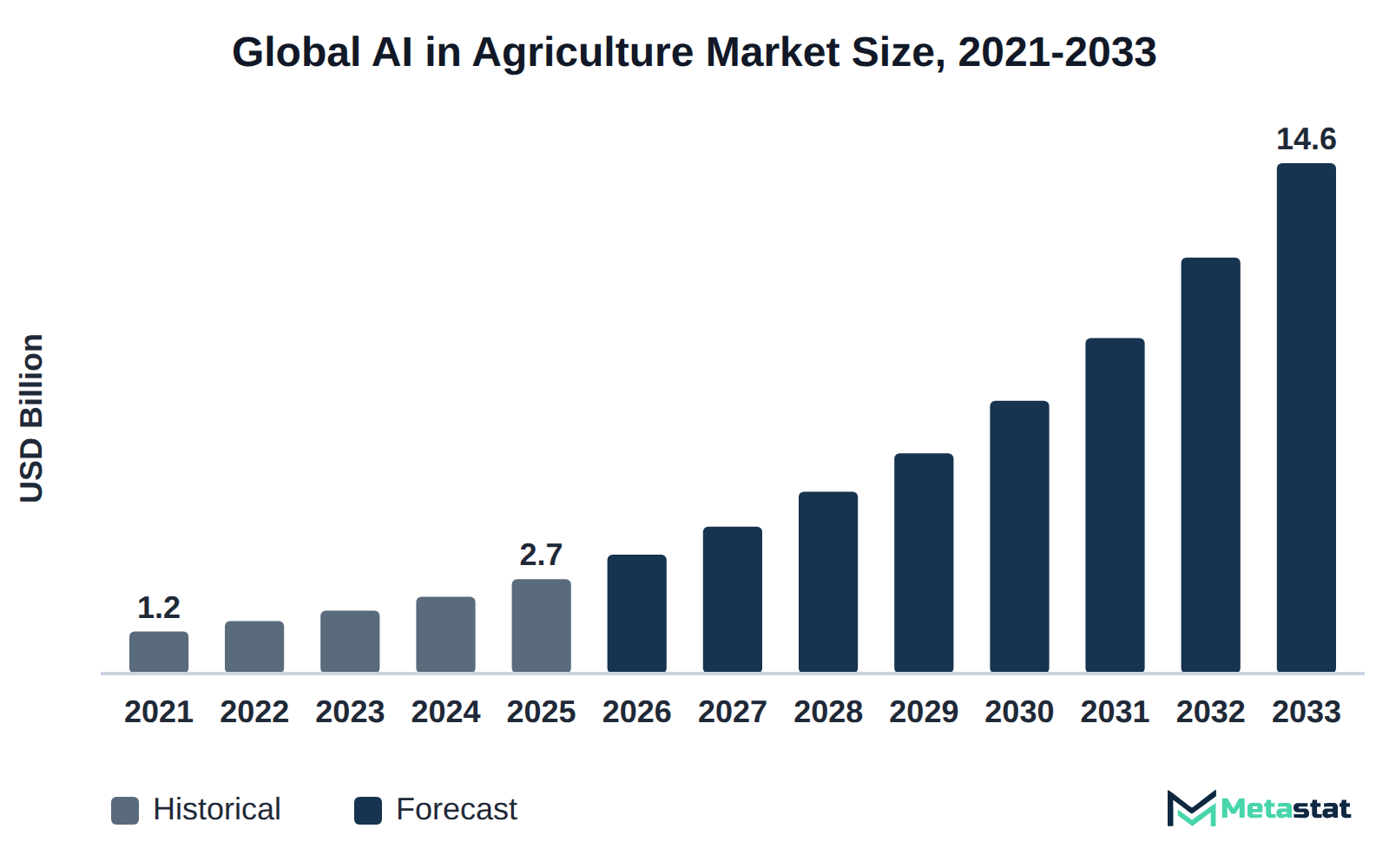
AI-powered precision farming platforms improve decision-making in agriculture. These platforms analyze large volumes of data, allowing farmers to optimize their field operations. A significant shift in this technology is the increasing adoption of predictive analytics, expected to grow from USD 1.3 billion in 2026 to USD 5.4 billion by 2033, reflecting a compound annual growth rate of 22.1%. This growth is driven by rising demand for data-driven insights that improve crop yield and resource efficiency.
The implementation of predictive analytics in precision farming helps farmers anticipate challenges, including pest infestations and weather conditions, enabling them to take proactive measures. This transition from traditional farming practices to data-centric solutions allows farmers to make informed decisions that enhance productivity and reduce operational costs. The AI in Agriculture market is expected to benefit from these advancements as producers adopt precision farming practices, which improve efficiency and sustainability in agricultural production.
Pricing strategies and contract models significantly influence the adoption of computer vision and agricultural robotics in the AI in Agriculture market. A growing trend involves subscription-based models, allowing farmers to access these advanced technologies without high upfront costs. This approach reduces the financial burden typically associated with purchasing expensive hardware and software outright, enabling wider adoption among small and medium-sized farms.
For instance, the software segment is projected to reach USD 7 billion by 2033, reflecting a compound annual growth rate (CAGR) of 24%. This growth indicates strong market demand for software solutions that support precision farming and agricultural robotics. Such software often comes bundled with hardware and ongoing support services, creating a comprehensive package that appeals to buyers.
Contract models vary, typically including annual maintenance agreements and tiered pricing based on usage, ensuring that farmers pay only for the resources they access. This flexibility enhances operational efficiency and encourages higher engagement with technology. Consequently, these pricing strategies facilitate market penetration and increase the overall value of the market, which is anticipated to grow to USD 14.6 billion by 2033.
Cloud deployment significantly expands access to farm intelligence, particularly benefiting large-scale producers who prioritize data-driven decision-making. With a projected value of USD 8.9 billion by 2033, cloud solutions drive advances in precision farming, agricultural robotics, and other applications. This shift allows farmers to utilize advanced analytics and remote monitoring capabilities, enhancing operational efficiency and productivity.
Large-scale producers increasingly rely on cloud services for real-time data analysis, facilitating timely interventions that optimize crop yield and resource management. The AI in Agriculture market reflects this trend, with a compound annual growth rate (CAGR) of 24.2% for cloud deployment mode, indicating robust demand for scalable solutions. The integration of cloud services enables these producers to analyze complex data sets, driving more precise agricultural practices.
This trend toward cloud deployment streamlines operations and encourages collaboration among stakeholders in the agriculture sector. With enhanced accessibility to data and analytics, large-scale producers are positioned to make informed decisions that improve their competitive edge. The commercial implications of this cloud adoption are substantial, leading to increased productivity and profitability across the agricultural landscape.
The integration of AI in agriculture significantly enhances crop yields and livestock productivity. Precision farming technologies, driven by AI, provide farmers with the ability to analyze vast amounts of data, enabling informed decision-making. For instance, the market for precision farming is projected to grow from USD 1.4 billion in 2026 to USD 5.8 billion by 2033, reflecting a compound annual growth rate (CAGR) of 22.6%. This growth indicates increasing adoption among farmers seeking efficient resource management and optimization of inputs.
Advanced technologies including predictive analytics and machine learning facilitate tailored agronomic practices. These methods improve soil health monitoring, pest and disease detection, and crop growth forecasting, ultimately influencing overall agricultural output. In livestock management, AI applications enhance monitoring of animal health, leading to reduced mortality and improved farm productivity. The incorporation of AI in agricultural practices supports improved outcomes and offers economic advantages, making the AI in agriculture market an attractive area for investment.
The transition towards precision farming technologies emerges due to a shift in buyer behavior among agricultural producers. Increasing pressure to improve crop yields and optimize resource usage drives farmers to adopt advanced AI solutions. This trend results in heightened investments in tools that enhance operational efficiency, thereby raising the overall market volume. Enhanced productivity and sustainability concerns lead to a significant increase in spending, allowing producers to respond to market demands effectively. The growing importance of data-driven decision-making within this sector reinforces the role of technology in modern agricultural practices.
The market continues to expand while demand for innovative agricultural solutions accelerates.
The integration of machine learning technology drives significant advancements in the AI in Agriculture market. Enhanced algorithms enable better data analysis, allowing agricultural producers to optimize yields and reduce operational costs. Producers increasingly adopt machine learning to identify patterns in vast datasets, improving decision-making related to crop management, pest control, and resource allocation.
Machine learning technologies evolve to provide more accurate predictions and insights, prompting broader acceptance among users in agriculture. This technology enables producers to effectively use historical data, resulting in refined agricultural practices and improved sustainability. The market shows a growing trend toward adopting these technologies, leading to more efficient farming operations and higher productivity. Implementing machine learning solutions allows agricultural stakeholders to achieve a competitive edge, contributing to overall market growth and innovation.
Price sensitivity among agricultural producers significantly limits adoption rates for AI technologies. The market's advanced solutions often come with substantial upfront costs, deterring smaller producers from investing in these innovations. Smaller farms experience slower uptake driven by limited budgets, leading to smaller orders compared to larger, more established operators. This hesitation influences overall demand within the AI in Agriculture market, resulting in delayed replacement of outdated technologies while producers seek to minimize expenses. The high costs associated with AI solutions create a barrier that restricts widespread implementation, particularly among smaller operators who lack access to financial resources. This price challenge hinders growth and adoption within the market, ultimately affecting expansion potential and the competitive landscape.
In the AI in Agriculture market, rising talent costs present a significant challenge for suppliers aiming to maintain profitability. The demand for skilled professionals in data science, machine learning, and agricultural technology continues to escalate, leading to increased competition for top talent. Recruitment and retention of qualified employees drive operational expenses higher, impacting the bottom line for many companies operating within the market.
Suppliers are addressing this challenge through various strategies, including investing in training programs for existing employees to enhance their skills and reduce reliance on external hires. Collaborations with educational institutions for talent development gain traction, aiming to create a workforce equipped with the necessary skills. Emphasizing efficiency through automation of certain processes allows suppliers to offset rising labor costs while meeting market demands.
This focus on developing internal capabilities and using technology helps suppliers manage financial pressures while maintaining competitive positioning in the AI in Agriculture market.
The segment of agricultural robotics and automation presents significant opportunity within the market, driven by technological advancements and increasing demand for efficiency in farming operations. This segment is projected to grow at a compound annual growth rate (CAGR) of 25.7%, indicating robust interest from producers seeking to enhance productivity and reduce labor costs. Manufacturers focus on developing robotic solutions that automate repetitive tasks and streamline agricultural processes. The growing prevalence of labor shortages in agriculture further accelerates this adoption, compelling producers to invest in automated solutions. Agricultural robotics offers benefits including precision and the ability to operate under various conditions, addressing specific operational challenges faced by farmers. While demand for these technologies rises, the market is expected to experience considerable investment and expansion in the coming years, particularly in regions with pressing labor issues.
The Global AI in Agriculture market is segmented based on Component, Technology, Application, and Deployment Mode.
This segment serves various agricultural stakeholders, including farmers and agribusinesses, primarily for data analytics, farm management, and decision support systems. Demand for software arises largely from the increasing need for data-driven insights in agriculture, enabling producers to enhance productivity and resource management. Unlike other components, including hardware, software offers greater scalability and flexibility, appealing to a broader range of users across different farm sizes and operations. The rapid evolution of data processing and analytical capabilities significantly drives this segment's growth compared to hardware, which is expected to grow at a CAGR of 22.6% during the same period. The ongoing push for innovation in agricultural practices further highlights the importance of advanced software solutions in the market.
Hardware segment is estimated to reach USD 4.6 billion by 2033, at a CAGR of 22.6% during the forecast period. This segment encompasses physical devices that facilitate the implementation of AI technologies in agricultural operations. Farmers and agribusinesses employ hardware for various purposes, including precision agriculture, monitoring crop conditions, and automating processes. The increasing demand for enhanced productivity and efficiency drives the growth of this segment. Unlike software, which provides an adaptable solution, hardware investments tend to require a larger upfront capital commitment. The growing trend towards automation in agriculture promotes hardware adoption, differentiating it from services and software segments that experience varying growth rates. This trend highlights the need for robust hardware solutions that support advanced applications, ensuring compatibility with evolving agricultural practices. The market shows a clear trajectory towards significant hardware investments, reflecting ongoing shifts in farming methodologies.
The services segment is expected to reach USD 3 billion by 2033. This segment provides essential support for agricultural producers seeking to optimize operational efficiency through technology-driven solutions. Services are provided by farmers, agronomists, and agricultural enterprises, enabling improved decision-making and operational accuracy. Increasing demand for data analytics and real-time monitoring drives growth in this segment, reflecting a broader trend toward precision agriculture. The services segment experiences significant growth, supported by advancements in technology and the pressing need for enhanced productivity. Compared to other components, including hardware and software, services often carry a lower initial investment, making them more accessible to a wider range of agricultural stakeholders. The focus on ongoing support and training for end-users differentiates this segment, increasing adoption rates and facilitating the overall expansion of the market.
This segment enhances decision-making for various agricultural stakeholders, including farmers and agronomists, through data-driven insights derived from historical and real-time data. Increasing demand for precision farming techniques supports growth in this segment, allowing producers to optimize crop yields and resource allocation. Compared to other segments, Predictive Analytics experiences a higher growth rate, driven by its ability to integrate advanced algorithms and analytics into farming practices. The significant potential for cost savings and efficiency improvements in farming operations generates interest among buyers, distinguishing Predictive Analytics from other segments that do not exhibit similar growth dynamics.
Machine Learning and Deep Learning segment is estimated to reach USD 4.6 billion by 2033, at a CAGR of 24.3% during the forecast period. This segment encompasses algorithms that enable computers to learn from and make predictions based on data. Farmers, agronomists, and agricultural technology companies apply these technologies to optimize crop yields, monitor field conditions, and enhance livestock management. The growth of this segment is driven by increasing demand for precision agriculture solutions, which require advanced analytics to interpret vast amounts of data. In contrast to other segments, including Computer Vision, Machine Learning and Deep Learning exhibits faster growth due to broader application across various agricultural domains. The adaptability of machine learning algorithms to different agricultural challenges positions this segment as a key component in the evolving market.
The Computer Vision segment is expected to reach USD 3.5 billion by 2033. This technology uses imaging techniques to analyze and interpret visual data from agricultural settings, enabling farmers to monitor crop health, assess soil conditions, and manage resources efficiently. Producers leverage computer vision for precision farming applications, benefiting from improved decision-making processes. The growth of this segment is driven by increasing demand for data-driven insights in agriculture, particularly among large-scale farming operations. With a compound annual growth rate (CAGR) of 22.6%, computer vision experiences faster expansion compared to other technologies in the market. The distinct value of this segment lies in its ability to provide real-time analytics and insights, setting it apart from traditional methods that rely on manual assessments or slower data processing techniques.
Natural Language Processing segment is projected to grow at a CAGR of 19.9% during the forecast period. This segment finds applications in interpreting and analyzing agricultural data, particularly aiding farmers and agribusinesses in decision-making through insights derived from textual data. The rising demand for automated customer interactions and analysis of vast datasets drives the growth of this segment, allowing producers to enhance operational efficiency. Compared to other technology segments, it exhibits a slower growth trajectory; for instance, the Machine Learning and Deep Learning segment forecasts a CAGR of 24.3%. This divergence highlights differing buyer priorities, with Natural Language Processing focusing on textual analysis, while other technologies emphasize predictive capabilities and automation. Investment in Natural Language Processing reflects a commitment to improving communication and understanding within agricultural systems, supporting the broader objectives of the AI in Agriculture market.
This approach employs advanced technologies to optimize field-level management regarding crop farming. Farmers and agricultural producers engage in precision farming to enhance crop yields and manage resources efficiently. Demand for sustainable farming practices drives this segment, with increased emphasis on reducing waste and maximizing output. Compared to other applications, this segment demonstrates faster growth, supported by a unique combination of technology and data analytics. Precision farming's growth outpaces that of agricultural robotics and automation, which experiences a CAGR of 25.7% during the same period. The AI in Agriculture market benefits significantly from the integration of precision farming methods, addressing the evolving needs of modern agriculture.
Agricultural Robotics and Automation segment is estimated to reach USD 3.2 billion by 2033, at a CAGR of 25.7% during the forecast period. This segment focuses on automating agricultural tasks through robotics technology, enhancing operational efficiency while reducing labor costs. Utilization occurs primarily among large-scale farms and agribusinesses looking to optimize productivity and minimize human error. Increased investment in robotics technology and a growing emphasis on sustainable farming practices drive demand within this segment. Unlike other applications including Precision Farming, which is projected to grow at a CAGR of 22.6%, Agricultural Robotics and Automation shows a more significant growth trajectory. Suppliers benefit from advancements in machine learning and sensor technologies, which support the development of more sophisticated robotic systems designed for tasks including harvesting, planting, and monitoring crops.
Drone Analytics segment is expected to reach USD 1.8 billion by 2033. This segment focuses on using drone technology to collect and analyze data for agricultural applications, including crop monitoring, field mapping, and yield assessment. Farmers and agronomists primarily use drone analytics to enhance decision-making, improve efficiency, and optimize resource use. The growing demand for precise data and real-time insights drives significant interest in this segment. Comparatively, the segment experiences a higher growth trajectory than other applications, driven by advancements in drone capabilities and analytics technology. Increased interest in sustainable farming practices further supports the segment's expansion, driven by drones that facilitate more efficient monitoring and management of agricultural resources. The AI in Agriculture market benefits from this innovation, with significant implications for productivity and cost-effectiveness in farming operations.
Livestock Monitoring segment is projected to grow at a CAGR of 22.8% during the forecast period. This segment involves technology to monitor the health, well-being, and productivity of livestock. Farmers and agricultural producers increasingly adopt these technologies to enhance animal welfare and optimize production efficiency. The growing focus on sustainable farming practices drives demand within this segment. Advancements in agricultural sensor technology and data analytics enable real-time monitoring and decision-making, distinguishing this application from others in the market. Compared to Agricultural Robotics and Automation, which has a higher projected CAGR of 25.7%, Livestock Monitoring offers a more steady growth trajectory, appealing to producers prioritizing animal health and operational efficiency. Demand for livestock monitoring solutions remains strong due to rising consumer awareness of animal welfare standards and the impact of livestock health on production yields.
Smart Greenhouse Management enhances agricultural productivity through controlled environments, optimizing conditions for plant growth. This application serves commercial greenhouse growers and large-scale farmers aiming to maximize yields while minimizing resource consumption. Increasing demand for sustainable farming practices drives growth within this segment, alongside the adoption of IoT devices that facilitate real-time monitoring and management. Compared to other applications, Smart Greenhouse Management exhibits a unique focus on environmental control, differentiating it from robotics and automation solutions that prioritize physical labor reduction. The demand for such advanced technologies continues to grow, reflecting a broader trend toward precision agriculture. In the AI in Agriculture market, this segment stands out for its ability to integrate sensors, data analytics, and machine learning into solutions tailored to greenhouse operations.
Supply Chain and Post-Harvest Optimization involves strategies and technologies that enhance the efficiency and effectiveness of agricultural supply chains. This includes activities including logistics, inventory management, and quality control during and after harvest. Farmers, distributors, and retailers adopt these technologies to minimize waste and improve product quality. Demand for enhanced visibility and traceability in food supply chains drives this segment, with consumers increasingly favoring transparency in sourcing and quality assurance. Compared to other segments, this application benefits from the growing emphasis on sustainability and supply chain resilience, positioning it for steady growth. The cost of inefficiencies in traditional supply chains significantly influences investment in advanced technologies, driven by stakeholders seeking to reduce losses and improve profitability. Integrating digital tools in this segment improves decision-making and operational efficiency, contributing to the AI in Agriculture market.
Labor management and weather forecasting apply AI technologies to optimize agricultural operations. These applications cater to farmers, agronomists, and agricultural managers, enhancing efficiency in workforce allocation and improving crop yield predictions based on weather patterns. A significant driver for this segment involves the increasing emphasis on sustainability and efficiency in agriculture, pushing stakeholders to adopt advanced technologies for better resource management. Unlike other applications, this segment experiences slower growth due to integration challenges and varying adoption rates among different agricultural sectors. While precision farming and agricultural robotics gain attention for their rapid advancements, labor management and weather forecasting serve a critical role in foundational agricultural practices, highlighting different adoption dynamics within the market.
Cloud deployment mode is valued at USD 1.9 billion in 2026 and is projected to reach USD 8.9 billion by 2033, at a CAGR of 24.2% during the forecast period. This segment serves various agricultural stakeholders, including farmers and agribusinesses, who require scalable and flexible solutions for data management and analytics. The increasing need for real-time data access and improved decision-making in agriculture drives demand for cloud-based applications. Compared to other deployment modes, Cloud exhibits faster growth, supported by its ability to facilitate easy integration of advanced technologies including machine learning and AI. While On-Premise and Hybrid modes offer certain advantages, their slower growth rates reflect the ongoing transition toward cloud solutions in the agriculture sector. The market evolves, reflecting changing preferences for operational efficiency and technological advancement.
On-Premise segment is estimated to reach USD 2.9 billion by 2033, at a CAGR of 20.3% during the forecast period. This segment caters to agricultural enterprises that prefer local installations for data management and processing, enhancing control over their operations. Farmers and agribusinesses favor this approach for its ability to meet specific regulatory requirements and the potential for reduced latency in data access. The requirement for customized solutions influences growth, driven by increasing demand for tailored technology solutions. Compared to the Cloud segment, which is expected to grow at a higher CAGR of 24.2%, the On-Premise segment offers stability and security, appealing to organizations concerned with data privacy and cybersecurity. The On-Premise segment's growth trajectory remains robust, reflecting broader trends in the AI in Agriculture market.
Hybrid deployment mode is expected to reach USD 2.9 billion by 2033. This segment offers flexibility, combining cloud and on-premise solutions, appealing to agricultural businesses requiring both accessibility and control. Farmers and agricultural companies adopt this approach to optimize data processing and analytics while maintaining data ownership. The rising demand for integrated solutions drives growth in this segment, with a CAGR of 20.3% anticipated during the forecast period. Compared to other deployment modes, including cloud and on-premise, the hybrid mode supports diverse operational needs, allowing for tailored applications that enhance productivity and efficiency. Integration challenges and varying infrastructure investments hinder adoption for several users, but the potential for customized solutions and improved outcomes drives increased interest in hybrid implementations. The AI in Agriculture market is expected to benefit significantly from these advancements, further enhancing the role of technology in modern farming practices.
Based on geography, the Global AI in Agriculture market is divided into North America, Europe, Asia-Pacific, South America, Middle East, and Africa.
Demand for advanced agricultural technologies significantly influences the AI in Agriculture market in North America. The United States, Canada, and Mexico represent key markets, driven by the need for improved efficiency, sustainability, and profitability in farming practices. Technological advancements in precision agriculture and automation create substantial investment opportunities, particularly in software development and hardware integration. The projected market value is USD 5 billion by the end of 2033, highlighting the importance of innovation in meeting agricultural challenges. With a share of 38.4% of the global market in 2025, North America exemplifies a strong commitment to adopting AI solutions that enhance productivity and resource management. This focus on technological adoption is expected to continue shaping the competitive dynamics within the region.
Demand for the AI in Agriculture market in Europe stems from various agricultural practices prevalent across countries including Germany, France, the UK, Italy, and Spain. The focus on precision farming and sustainable agricultural methods drives investment in advanced technologies like Machine Learning and Computer Vision. Market growth relies on strong infrastructure for technology implementation and farmer education programs that promote digital solutions. The region benefits from innovative research initiatives in agriculture, enhancing efficiency and productivity. With a projected market share of 25.2% in 2025, Europe demonstrates significant potential for expansion, particularly in agricultural robotics and automation, where demand remains high.
Rapid technological advancements in the AI in Agriculture market drive significant growth in the Asia-Pacific region. Countries including China and India invest heavily in smart agricultural practices to enhance crop yields and resource efficiency. The increasing adoption of precision agriculture techniques encourages farmers to leverage data-driven insights for improved decision-making. Government initiatives promoting sustainable farming practices contribute to market expansion, focusing on integrating technology into traditional farming methods. Southeast Asia's diverse agricultural landscape presents opportunities for AI applications, particularly in optimizing supply chains. By 2025, this region is projected to hold a 23.0% share of the global market, with rising investments in agricultural technology expected to enhance productivity and operational efficiency.
In South America, key players within the agricultural sector actively seek innovative technologies to enhance productivity and efficiency. Brazil and Argentina serve the primary markets, experiencing growing interest in AI applications tailored to local farming practices. The market benefits from increased government support for the adoption of digital agriculture solutions, focusing on improving crop yields and sustainable practices. The share of the global market in 2025 stands at 7.2%, reflecting the region's commitment to integrating advanced technologies. Investments in precision agriculture and automation create significant opportunities for growth in this area, further reinforcing the role of the AI in Agriculture market in the region.
Investment in agricultural technology within the Middle East and Africa reflects a growing interest in optimizing crop yields and ensuring food security. Countries including Saudi Arabia and the UAE emphasize the importance of AI solutions to address challenges related to water scarcity and arid climates. In South Africa, a strong agricultural sector seeks to enhance productivity through automation and data analytics. The AI in Agriculture market in this region accounts for 6.2% of the global market in 2025, indicating significant potential for growth. Local initiatives focused on sustainable farming practices drive demand for innovative technologies that improve efficiency and profitability.
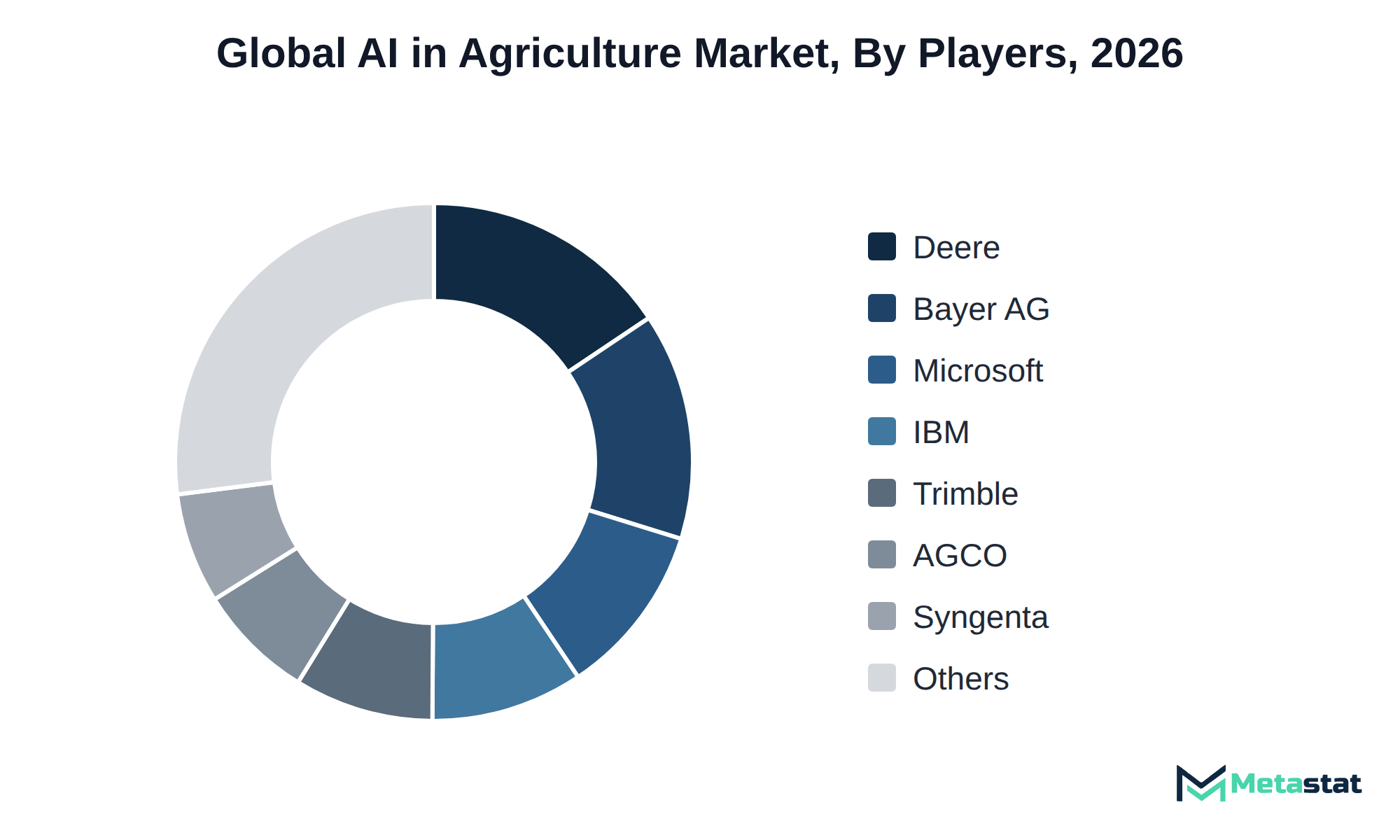
The competitive dynamics within the AI in Agriculture market reflect diverse strategies and business models adopted by companies. Firms compete on factors including price, service, certification, and ecosystem integration, influencing buyer preferences and purchasing decisions.
Deere & Company focuses on advanced agricultural machinery integrated with AI solutions, emphasizing precision and efficiency. Bayer AG caters to buyers seeking innovative agronomic solutions and sustainable practices, leveraging its research capabilities. Trimble Inc. specializes in precision agriculture technologies, offering tools that enhance operational efficiency and crop management.
In the AI in Agriculture market, Microsoft Corporation delivers cloud-based solutions that facilitate data analytics and machine learning applications tailored for agricultural use. IBM Corporation emphasizes its capabilities in predictive analytics, providing insights that enhance decision-making for farmers and agronomists. Companies including Syngenta Group and BASF SE play significant roles by developing crop protection products infused with AI to optimize yield and sustainability.
This growth relies on several key developments. Firstly, the adoption of predictive analytics, expected to increase from USD 1.3 billion in 2026 to USD 5.4 billion by 2033, provides crucial insights for agriculture stakeholders, enhancing decision-making capabilities. The adoption of agricultural robotics and automation, projected to reach USD 3.2 billion by 2033, signifies another important area, enabling greater efficiency and productivity in farming practices.
Substantial growth in the cloud deployment mode, anticipated to expand from USD 1.9 billion in 2026 to USD 8.9 billion by 2033, offers scalable solutions that enhance operational efficiency. However, challenges including high implementation costs and resistance to adopting new technologies represent risks that could hinder market expansion. Addressing these constraints effectively will be essential for realizing the potential of the AI in Agriculture market, ensuring it meets the forecasted growth targets.
By Component: Software, Hardware, Services
By Technology: Predictive Analytics, Machine Learning and Deep Learning, Computer Vision, Natural Language Processing
By Application: Precision Farming, Agricultural Robotics and Automation, Drone Analytics, Livestock Monitoring, Smart Greenhouse Management, Supply Chain and Post-Harvest Optimization, Others (Labor Management, Weather Forecasting)
By Deployment Mode: Cloud, On-Premise, Hybrid
The report strategically identifies and profiles the key market players and analyses their core competencies in each sub-segment of the AI in Agriculture market.
Report Attributes | Details |
Study Period | 2021-2033 |
Base Year | 2025 |
Estimated Year | 2026 |
Forecast Period | 2026-2033 |
Historical Period | 2021-2025 |
Growth Rate | CAGR 23.2% from 2026 to 2033 |
Revenue Unit | USD billion |
Segmentation | By Component, Technology, Application, Deployment Mode, and Region |
By Region | North America (By Component, Technology, Application, Deployment Mode, and Country)
|
Europe (By Component, Technology, Application, Deployment Mode, and Country)
| |
Asia Pacific (By Component, Technology, Application, Deployment Mode, and Country)
| |
South America (By Component, Technology, Application, Deployment Mode, and Country)
| |
Middle East and Africa (By Component, Technology, Application, Deployment Mode, and Country)
|
Find answers to common questions about this report
The AI in Agriculture market size was valued at USD 2.7 billion in 2025.
The market is projected to grow at a CAGR of 23.2% during the forecast period from 2026 to 2033.
The North America AI in Agriculture market size is estimated to reach USD 5 billion by 2033.
Software leads the AI in Agriculture market with a projected value of USD 7 billion by 2033, based on its significant growth compared to other segments.
Key drivers for the AI in Agriculture market include increasing pressure to improve crop yields and optimize resource usage, which prompts farmers to adopt advanced AI solutions. Rising demand for agricultural robotics and automation enhances productivity and reduces labor costs, resulting in significant investments in innovative technologies.
North America holds the dominant share of the AI in Agriculture market, with a figure of USD 5 billion projected for 2033, representing 38.4 percent of the total market.
Technological advancements in agricultural robotics and automation significantly favor adoption in the industry. The increasing demand for efficiency and productivity, coupled with labor shortages, drives producers to invest in innovative robotic solutions that streamline farming processes.
The AI in Agriculture market is estimated to reach a valuation of USD 14.6 billion by 2033.
Key players operating in the AI in Agriculture market include Deere & Company, Bayer AG, AGCO Corporation, Trimble Inc., Microsoft Corporation, IBM Corporation, and Syngenta Group.
Rising talent costs present a significant challenge for suppliers aiming to maintain profitability. Increased competition for skilled professionals in data science and machine learning drives operational expenses higher, impacting the bottom line for many companies.
The analysts below cover Agriculture research at Metastat Insights.
LEAD ANALYST
Utkarsh Khirodkar is a Lead Market Research Analyst at MetaStat Insight, specializing in market intelligence, technology sector assessments, and competitive strategy.
Analyzing the transition from natural gas to green hydrogen in iron ore reduction requires realistic infrastructure timelines. Meta stat insight supplied a detailed regional assessment of DRI plant conversion costs and scrap metal availability in North America and Western Europe. Their report carefully examined pellet quality specs and electrical grid access constraints without making oversimplified market assumptions. The research material served as a practical reference during internal technology roadmap discussions.
Integrating zero-trust access controls across legacy electronic health record systems involves complex compliance overhead. Team produced an analysis that clearly separated identity governance and administration tools from privileged access management platforms. Their evaluation of HIPAA and GDPR compliance features across cloud native solutions gave our architecture group clear baseline criteria. The custom data request regarding biometric authentication adoption in hospital networks was returned promptly with clear documentation.
Evaluating calorific value requirements and air permit compliance across municipal waste facilities requires localized data. Metastat Insight structured their analysis around operational throughput capacity and feedstock composition variations in Latin America and Eastern Europe. Their competitive mapping of sorting equipment vendors helped clarify technology differences between optical separators and heavy media systems. The study provided an objective baseline during our capital expenditure reviews.
Explore related market intelligence reports worth reading alongside this one.
Starting from
$2950