
LEAD ANALYST
Utkarsh Khirodkar is a Lead Market Research Analyst at MetaStat Insight, specializing in market intelligence, technology sector assessments, and competitive strategy.

Global Farm Storage Market Size, Share, By Storage Type (Grain Silos and Storage Bins, Feed Storage Silos and Bins, Hay and Silage Storage Structures, Agricultural Warehouses and Storage Buildings, Liquid Storage Tanks, Fertilizer and Agricultural Chemical Storage Tanks, Farm Machinery and Equipment Sheds, Portable and Temporary Storage Systems, Hermetic Storage Bags and Silo Bags), By Storage Material (Steel, Concrete, Plastic and Polyethylene, Fiberglass and Composite Materials, Others), By Storage Capacity (Small-Capacity Storage (Below 500 Tonnes), Medium-Capacity Storage (500-2,000 Tonnes), Large-Capacity Storage (2,001-10,000 Tonnes), Bulk-Capacity Storage (Above 10,000 Tonnes)), By Storage Application (Grain and Cereal Storage, Oilseed and Pulse Storage, Animal Feed and Fodder Storage, Hay and Silage Storage, Fertilizer and Agrochemical Storage, Water and Irrigation Storage, Fuel and Agricultural Liquid Storage, Others), Industry Analysis, Growth, Trends, and Forecast, 2026-2033
Report ID
MSI-5764
Published
November, 2026
Pages
287 Pages
Format
Historical
Base year
Forecast
Forecast period
Report Details
Market Valuation: Valued at $4,066.2 Million in 2025, projected to reach $6,055.4 Million by 2033 at a 5.1% CAGR.
Dominant Segment: The Grain Silos and Storage Bins segment leads the market, driven by the critical need to preserve grain quality during storage.
Geographic Lead: North America holds a significant market share of 28.0% in 2025, with the US projected to lead in storage investments by 2026.
What's Inside: The report provides comprehensive coverage of market dynamics, competitive analysis, and forecasts from 2026 to 2033, focusing on various storage types and materials.
Growing Applications: The demand for feed storage solutions is expected to reach USD 818.1 million by 2033, reflecting a CAGR of 5.3%, driven by rising livestock production.
Technological Advancements: Innovations in smart silos and automated monitoring systems enhance operational efficiency and product quality, reshaping purchasing dynamics in the market.
Choose Your License
Global Farm Storage Market
The global Farm Storage market was valued at USD 4,066.2 million in 2025 and is projected to reach USD 6,055.4 million by 2033, growing at a CAGR of 5.1% over the forecast period.
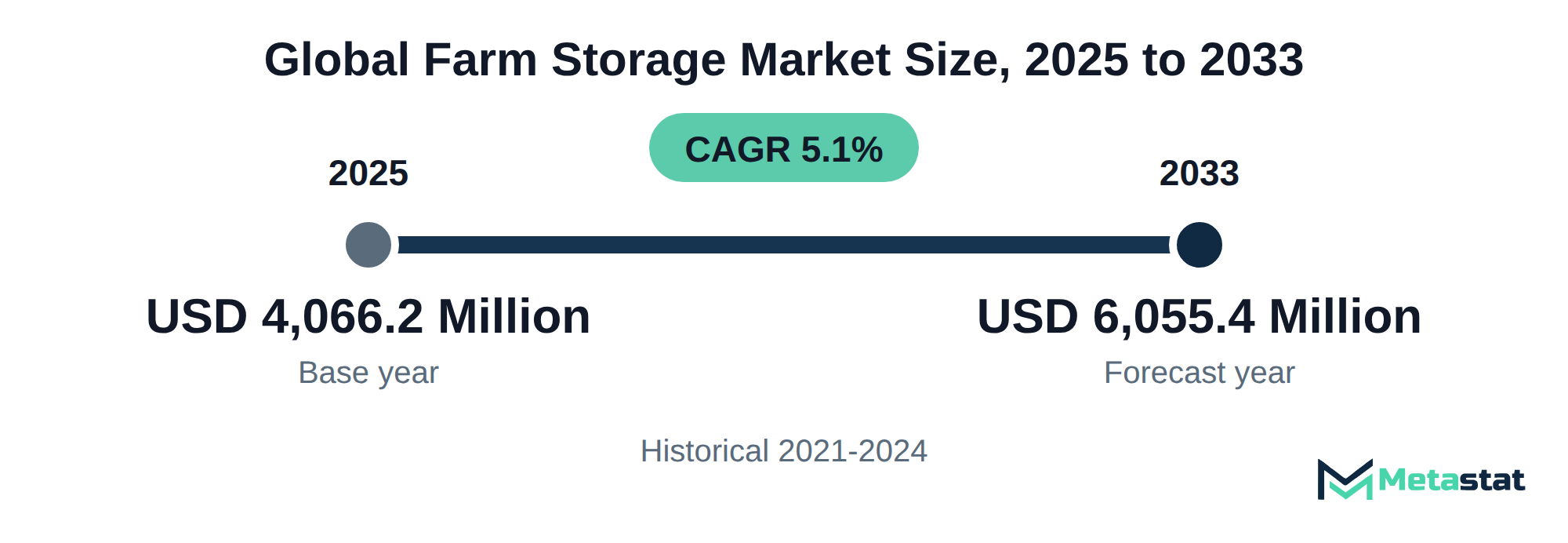
The Farm Storage market encompasses various solutions for storing agricultural products, ensuring that farmers maintain the quality and safety of their yields. Investments in this market arise from the increasing demand for efficient storage systems that address the challenges of spoilage and waste. Key buyers include farmers, agricultural cooperatives, and food processing companies across the agribusiness sector, all seeking to enhance operational efficiency and protect investments in crops and livestock.
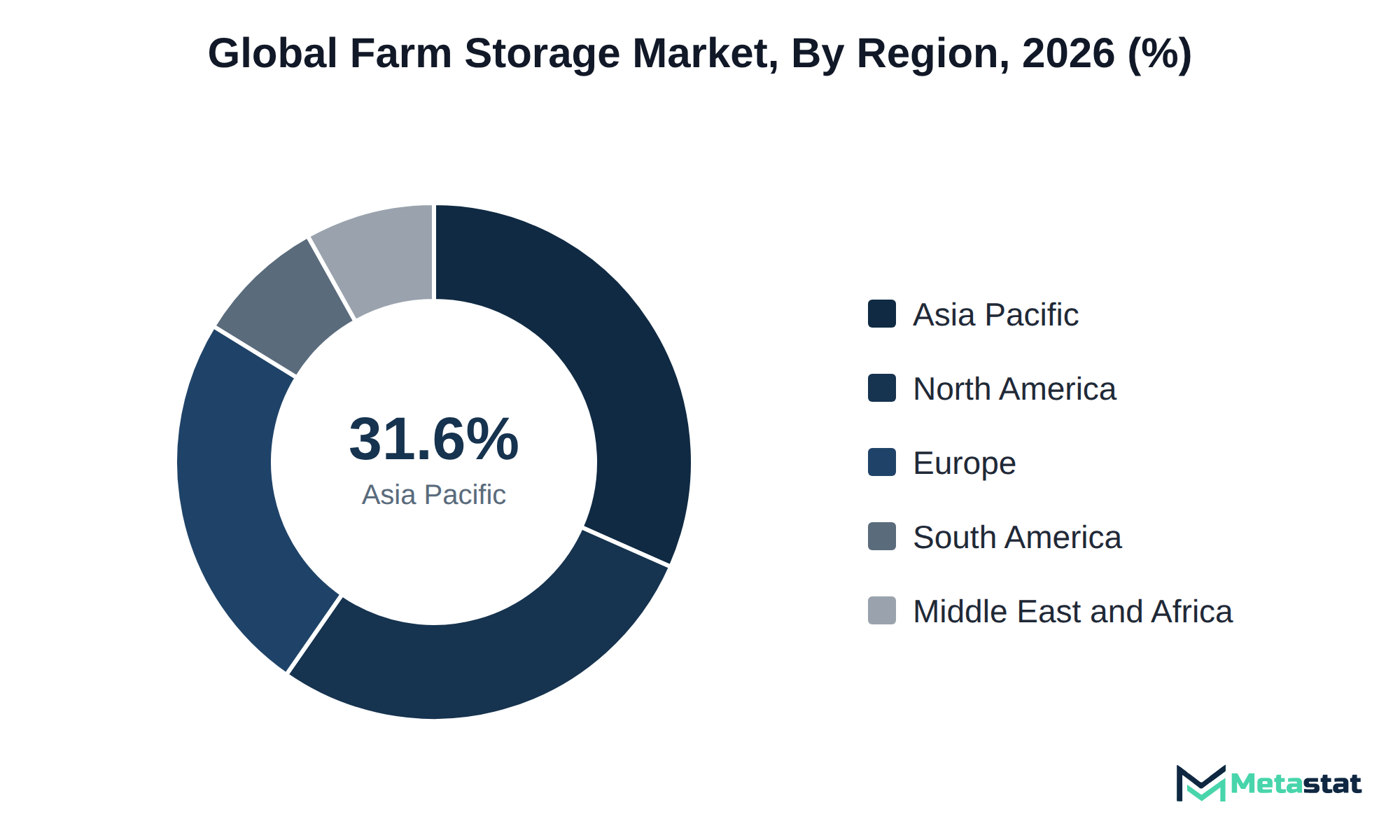
Growth in the market is driven by rising agricultural production and the need for proper storage facilities to manage the increasing output. The Grain Silos and Storage Bins segment commands the largest market value, reflecting its importance in preserving grain quality during storage. North America holds 28.0% of the market in 2025, with the US leading in 2026. Other regions exhibit significant shares, with Asia Pacific accounting for 31.6%, highlighting diverse demand across different markets.
Technological advancements in farm storage solutions are a major driver of market expansion. Innovations in materials and design improve storage capabilities, leading to enhanced operational efficiency for users. Evolving agricultural practices increase the necessity for modern and reliable storage facilities, influencing investment and development within the Farm Storage market.
The Farm Storage market includes a diverse range of storage solutions designed to meet the specific requirements of agricultural producers. This market addresses the increasing demand for efficient storage methods that preserve product quality and extend shelf life. Buyers invest in these solutions to ensure optimal yield management and to mitigate losses associated with spoilage or damage during storage.
Growth in the market is driven by factors including the rising global population, leading to increased food production requirements. The segment of Grain Silos and Storage Bins represents the most significant value within the market. Asia Pacific holds the largest regional share at 31.6%, reflecting a growing focus on agricultural advancements and infrastructure development in the region.
Investment in farm storage solutions results from the need for enhanced efficiency and productivity in agricultural practices. This trend indicates a shift toward modernized storage facilities that support larger-scale operations and improve overall farm management. As agriculture evolves, strategic investment in farm storage becomes increasingly important for meeting future demand.
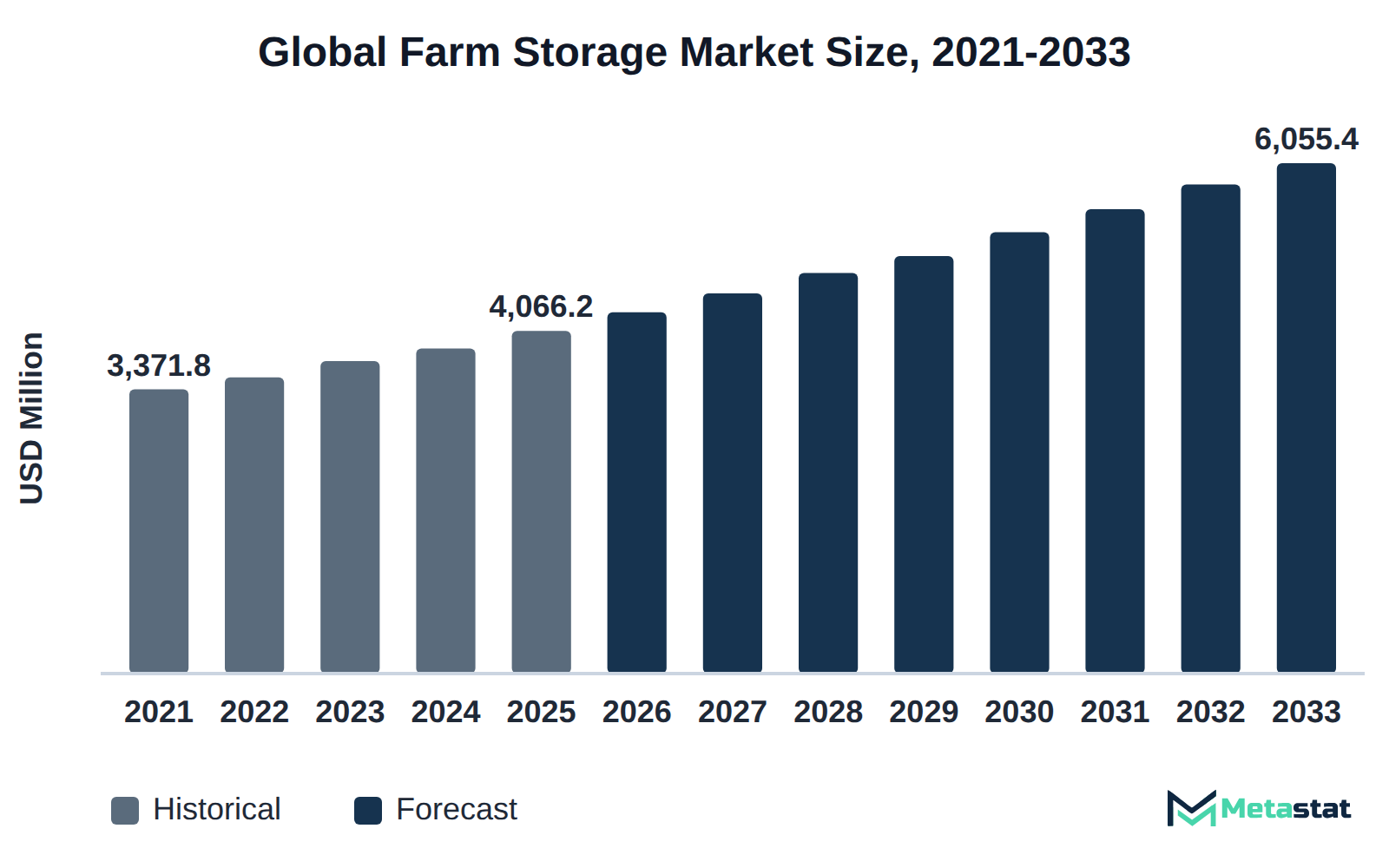
Innovative grain storage technologies are vital for enhancing post-harvest preservation, significantly impacting the efficiency of the Farm Storage market. The adoption of advanced grain silos and storage bins is projected to grow from USD 1,023.8 million in 2026 to USD 1,384.3 million by 2033, reflecting a compound annual growth rate (CAGR) of 4.4%. These structures provide better protection against pests, moisture, and temperature fluctuations, ensuring optimal storage conditions for grain products.
The integration of smart technologies, including IoT-enabled agriculture sensors, into grain storage facilities facilitates real-time monitoring of environmental conditions. This innovation allows operators to make informed decisions, reducing losses and improving overall grain quality during storage. Farmers increasingly prioritize the longevity and quality of their harvests, making investments in enhanced storage infrastructure essential for maintaining a competitive advantage in the market.
Post-harvest technologies, including aeration systems and moisture control solutions, are central to maximizing storage efficiency. The Farm Storage market sees increasing interest in these technologies, which lead to significant cost savings and reduced waste. Enhanced aeration prevents spoilage and ensures uniform grain drying, which is essential for maintaining quality standards.
The growing awareness of the economic benefits associated with advanced storage solutions drives the demand for new technologies. With the Farm Storage market anticipated to reach USD 6,055.4 million by 2033, the incorporation of these post-harvest technologies stands to influence operator profitability and sustainability positively.
The rise of smart silos and automated monitoring systems, part of the wider move toward smart agriculture, has transformed purchasing dynamics within the Farm Storage market. Buyers increasingly prioritize technology that enhances operational efficiency and product quality.
Purchasing strategies involve long-term contracts that provide stability in pricing and availability. Buyers assess total cost of ownership, weighing initial investments against potential savings from improved efficiency and reduced spoilage. The integration of climate-controlled storage systems enables precise management of environmental conditions, resulting in optimal storage outcomes. Organizations that invest in these technologies experience enhanced margins and competitive positioning in the market.
Vendors contribute by offering flexible financing options and service packages tailored to different buyer needs. With the market's expansion, buyers seek solutions that integrate seamlessly with existing infrastructures while providing the latest advancements in storage technology. This shift highlights the importance of reliable suppliers and innovative solutions in driving growth and addressing market challenges.
Demand for agricultural storage solutions for grain, feed, and fodder remains strong, driven by a growing focus on food security and sustainability. In the Farm Storage market, grain and cereal storage represents a significant segment, with a value of USD 1,463 million by 2033. This reflects a compound annual growth rate (CAGR) of 4.6% from its estimated value of USD 1,069.5 million in 2026. Buyers in this segment prioritize solutions that enhance preservation and minimize wastage, addressing challenges posed by climate variability and market fluctuations.
Liquid storage solutions, particularly for agricultural chemicals and fertilizers, exhibit increasing importance within the Farm Storage market. The segment responding to liquid storage requirements offers versatile options that address compliance with safety regulations and environmental concerns. The market anticipates a shift towards greater adoption of advanced materials, enhancing the safety and durability of storage solutions. This focus on liquid storage aligns with the growing emphasis on sustainable farming practices, leading to heightened investment in infrastructure designed to handle various liquids.
The increasing demand for efficient grain storage solutions significantly influences the adoption of modern farm storage technologies. This growth stems from the need to maintain the quality of agricultural products during storage so that farmers and distributors can minimize losses from spoilage.
Rising global food production necessitates enhanced storage solutions to accommodate larger harvests. The farm storage market addresses the challenges posed by fluctuating crop yields and storage requirements. Enhanced storage capabilities enable farmers to manage their inventory effectively, leading to improved profitability and greater market competitiveness. Modern storage solutions lay the groundwork for sustained growth and development in the agricultural sector.
Growing investment in grain storage solutions stems from heightened awareness of food security and quality preservation. Agricultural producers, facing fluctuating prices and climate challenges, prioritize effective storage methods to maintain yield integrity and reduce losses. This shift in focus leads to increased demand for innovative storage systems that enhance operational efficiency. This investment shift significantly impacts market dynamics, leading to heightened competition among suppliers and innovations in storage technology.
Advancements in storage materials significantly influence the durability of farm storage solutions. Increased adoption of steel and concrete for constructing storage facilities enhances resilience against environmental factors. This shift reflects an ongoing investment trend aimed at prolonging the lifespan of storage structures and minimizing maintenance expenses. Buyers in the agricultural sector prioritize robust storage solutions to protect crops from adverse weather and pest damage. The rise in demand for durable materials results in increased competition among suppliers, driving innovation and differentiation in product offerings. The Farm Storage market experiences accelerated growth due to these improvements, allowing producers to maintain higher quality standards for their stored products. Enhanced structural durability directly impacts cost efficiency, attracting new investments and expanding market reach. These improvements are moving storage practices toward a more sustainable approach to agricultural management.
Increased costs associated with farm storage solutions present a significant barrier for producers. This situation particularly affects smaller-scale farmers, who operate with tighter budgets and face challenges in accessing financing for expensive storage infrastructure. Higher prices for materials and installation, along with ongoing maintenance costs, lead to slower adoption rates within this buyer group. Consequently, many farmers delay upgrading existing storage systems, opting instead to use older, less efficient solutions that compromise the quality of stored products. In the Farm Storage market, these economic pressures result in reduced order sizes and an overall hesitation to invest in modern storage options, ultimately limiting market growth potential. Efforts to stabilize or lower costs will be crucial for enhancing adoption among farmers while allowing them to better manage agricultural outputs.
Suppliers face significant challenges related to rising input costs, affecting profitability across the Farm Storage market. Increased prices for essential building materials, including steel and concrete, contribute to this trend, impacting the overall cost structure of storage solutions. This situation compels suppliers to adjust pricing strategies to maintain margins, which directly impacts agricultural producers relying on these solutions for their operations. In response, many suppliers explore alternative materials and more efficient manufacturing processes, aiming to mitigate costs while ensuring product quality and durability. Innovations in sourcing and supply chain management have emerged as strategies for reducing costs without compromising performance. The focus on optimizing production efficiency and material selection supports suppliers in navigating these financial pressures while continuing to meet market demands. Profitability remains a critical concern, and adapting to these rising costs is essential for sustaining long-term growth and competitiveness.
Feed storage silos and bins represent a significant growth opportunity within the Farm Storage market, driven by rising animal husbandry practices and an increasing focus on efficient feed management. This segment is projected to reach USD 818.1 million by 2033, reflecting a CAGR of 5.3%. The demand arises from livestock producers who require optimized storage solutions to preserve the quality of feed, ensuring nutritional value while minimizing waste. Enhanced feed storage technologies, including climate-controlled systems, contribute to the preservation of feed quality and reduce spoilage risks. Producers increasingly seek these advanced storage methods to enhance productivity and operational efficiency. With livestock farming expanding, the market for feed storage solutions is expected to experience substantial growth, ultimately benefiting stakeholders across the agricultural value chain.
The Global Farm Storage market is segmented based on Storage Type, Storage Material, Storage Capacity, and Storage Application.
This segment primarily serves agricultural producers who require efficient and reliable storage solutions for grain. Demand is driven by the increasing need for food security and quality preservation, compelling farmers to invest in advanced storage technologies. Compared to other storage types, this segment exhibits a moderate growth rate, with a CAGR of 4.4%, while feed storage silos and bins show a higher CAGR of 5.3%. Its emphasis on maintaining grain quality and protecting against spoilage sets this segment apart and makes it a core part of the Farm Storage market.
Feed Storage Silos and Bins segment is estimated to reach USD 818.1 million by 2033, at a CAGR of 5.3% during the forecast period. This storage solution provides essential capabilities for preserving animal feed and fodder, crucial for livestock farmers and agricultural operations. Increasing livestock production and a focus on efficient feed management drive demand for this segment. Compared to other storage types, Feed Storage Silos and Bins experience significant growth due to heightened attention toward quality assurance and minimizing spoilage. This segment's growth outpaces others, including Agricultural Warehouses and Storage Buildings, which exhibit slower expansion. Factors including technological advancements in silo design enhance storage efficiency, further boosting market potential. The focus on sustainable farming practices reinforces the attractiveness of this segment, contributing to its significance within the Farm Storage market.
Hay and Silage Storage Structures segment is expected to reach USD 651.6 million by 2033. This segment primarily focuses on the storage of harvested hay and silage, which serves crucial functions for livestock farmers and agricultural producers aiming to preserve feed quality. The driving force behind the segment stems from increasing awareness of the benefits of proper storage methods in maintaining nutritional value and reducing waste. Compared to other storage types within the market, this segment experiences a unique growth trajectory, with a solid concentration on cost-effective materials that ensure durability against environmental factors. The demand for hay and silage storage solutions caters to a diverse range of clients, including dairy and beef cattle farmers, who prioritize effective feed management strategies. The segment's growth reflects an evolving agricultural landscape that emphasizes sustainable practices through improved storage technologies.
Agricultural Warehouses and Storage Buildings segment is projected to grow at a CAGR of 4.8% during the forecast period. This segment serves farmers and agricultural producers by providing essential facilities for storing a variety of agricultural products, including grains and feed. The increasing focus on food safety and quality preservation drives demand, reflecting a broader trend in the market. Unlike other storage types, this segment typically involves larger structures, including prefabricated steel building systems, that accommodate diverse products and are designed for multiple uses. The comparatively slower growth of this segment, relative to others like Feed Storage Silos and Bins, which is expected to grow at a CAGR of 5.3%, highlights its unique position. Regulatory requirements related to safety and environmental impact further influence the adoption and design of these storage buildings, impacting overall investment in agricultural infrastructure.
Liquid Storage Tanks are essential for storing various liquids in agricultural operations, including fertilizers, water, and other agricultural chemicals. This segment primarily serves farmers and agribusinesses that require secure and efficient storage solutions for liquid products. A key driver for this segment involves increased focus on sustainable agricultural practices, prompting producers to invest in reliable storage systems capable of minimizing waste and enhancing efficiency. Compared to other storage types, Liquid Storage Tanks offer distinctive advantages including reduced spoilage and enhanced safety features, differentiating them from solid storage solutions including grain silos. Demand for liquid storage solutions is expected to grow, aligning with advancements in agricultural technologies and evolving regulatory standards aimed at improving environmental safety.
Fertilizer and Agricultural Chemical Storage Tanks provide essential containment solutions for agricultural inputs, ensuring safe and efficient storage of fertilizers and chemicals. Farmers and agricultural producers employ these tanks to maintain product integrity and prevent contamination. Demand for these storage solutions is driven by increasing agricultural productivity and stricter regulations regarding chemical handling and storage safety. This segment faces unique challenges due to fluctuating chemical prices and compliance with environmental regulations. Fertilizer and Agricultural Chemical Storage Tanks require specialized materials and technologies, distinguishing them from more general storage solutions. The market continues to evolve with innovations in materials and safety features, supporting higher standards for storage and handling of agricultural chemicals.
Farm Machinery and Equipment Sheds serve to protect vital agricultural machinery and equipment used in farm operations. Farmers and agricultural businesses rely on these structures to ensure the longevity and functionality of their machinery, preventing damage from weather and pests. The demand for these sheds is influenced by the ongoing expansion of farm operations and the introduction of advanced agricultural technologies. Unlike other storage types, this segment attracts buyers focused on durability and ease of access, prioritizing functionality over sheer capacity. Such prioritization indicates a stable but slower growth trajectory compared to rapidly expanding segments like grain silos. The Farm Storage market reflects this diverse set of needs, emphasizing the importance of tailored solutions for varying agricultural applications.
Portable and Temporary Storage Systems provide flexible solutions for farmers who require adaptable storage options for varying quantities of materials. Farmers and agricultural businesses employ these systems for short-term storage needs, allowing them to manage harvests and supplies efficiently. Increasing demand for storage solutions that accommodate fluctuating production levels drives growth in this segment. Unlike fixed structures including silos, portable systems offer mobility and versatility, appealing to those who require immediate access to storage without long-term commitments. This segment stands out for its user base of small-scale farmers and operators in diverse environments where traditional storage may not be feasible. These characteristics differentiate it from other storage types, highlighting the evolving preferences of stakeholders in the Farm Storage market.
Hermetic storage bags and silo bags provide a specialized solution for preserving the quality of stored agricultural products, offering airtight environments that enhance the longevity and safety of grains and other commodities. Farmers and agricultural producers employ these bags particularly for grain storage, relying on their ability to prevent spoilage and pest damage. Demand for these products is driven by rising awareness of effective storage practices and the increasing need for cost-effective solutions in the agricultural sector. This sub-segment differs from others in the storage type category, focusing on smaller producers or those lacking access to larger storage facilities, emphasizing versatility and ease of transport. Compared to grain silos or feed storage bins, hermetic storage solutions present a lower entry cost and reduce the need for significant infrastructure investment, appealing to a diverse range of users seeking efficient storage methods without extensive capital expenditure.
Steel segment is valued at USD 1,795.1 million in 2026 and is projected to reach USD 2,471.8 million by 2033, at a CAGR of 4.7% during the forecast period. This material performs vital functions in the construction of storage structures, including silos and bins, widely used by farmers and agricultural businesses for grain and feed storage. Increasing demand for robust and durable storage solutions drives the growth of this segment, particularly in regions with extensive agricultural activities. Differentiation in pricing among storage materials influences buyer choices, with steel often offering a more cost-effective solution compared to alternatives like concrete or fiberglass. The steel segment's growth remains steady, competing with materials that provide specific advantages in weight-saving or insulation, reflecting the diverse needs of the agricultural sector. Demand for long-lasting storage solutions keeps steel a key material in the Farm Storage market.
Concrete segment is estimated to reach USD 1,074.2 million by 2033, at a CAGR of 4.7% during the forecast period. This storage solution is widely recognized for its durability and strength, making it suitable for various agricultural applications. Farmers and agricultural businesses often select concrete for long-term storage of grains and other agricultural products due to its robust nature. One driving force behind the concrete segment involves the increasing emphasis on sustainability and eco-friendly practices, leading to a shift toward more durable materials. Compared to other storage materials, concrete demonstrates slower growth but provides a reliable alternative for those requiring resilient storage solutions. Its cost-effectiveness over time, considering maintenance and longevity, distinguishes it from segments like plastic and polyethylene, which offer faster growth but incur higher replacement costs.
The Plastic and Polyethylene segment is expected to reach USD 1,341.9 million by 2033. This segment serves various agricultural applications, including storage for grains, oilseeds, and animal feed. Increasing adoption of lightweight and durable materials drives demand for plastic and polyethylene solutions, particularly among medium to large-scale farmers. The segment experiences a compound annual growth rate (CAGR) of 5.6%, outpacing other materials including concrete. Producers favor plastic and polyethylene due to their resistance to corrosion and ease of handling, which contributes to greater operational efficiency. Strong interest from agribusinesses focuses on enhancing storage capabilities while reducing overall costs, reflecting a trend toward improving sustainability practices across agriculture.
Fiberglass and Composite Materials segment is projected to grow at a CAGR of 5.6% during the forecast period. This segment finds applications in constructing lightweight and durable storage solutions for agricultural products, appealing to farmers and agricultural businesses focused on efficiency and sustainability. Increasing awareness about the benefits of using composite materials drives demand, particularly in regions prioritizing modern farming practices. Compared to traditional materials like steel and concrete, fiberglass (glass fiber reinforced polymer) and composite options often offer lower weight and enhanced corrosion resistance, positioning them favorably in the market. The segment's growth aligns with a broader trend toward adopting advanced materials that improve operational efficiency. This focus on innovation in storage solutions reflects a significant shift within the market, targeting the evolving needs of producers and suppliers striving for competitiveness.
Wood and fabric materials serve various agricultural storage needs, primarily for lightweight or temporary structures. Farmers use these materials for applications that include temporary storage solutions, including hay and small-scale grain storage. Demand for wood and fabric is driven by cost-effectiveness and availability, appealing to smaller farms and operations with limited budgets. This sub-segment experiences slower growth compared to steel or concrete due to durability concerns and potential damage from environmental factors. In contrast to more robust materials, wood and fabric typically offer lower initial costs, though they require more frequent replacement or maintenance. Overall, while the market focuses on more durable options, wood and fabric maintain a niche role for specific, less demanding applications.
Small-Capacity Storage (Below 500 Tonnes) segment is valued at USD 1,534.8 million in 2026 and is projected to reach USD 2,069.7 million by 2033, at a CAGR of 4.4% during the forecast period. Primarily, this segment serves small-scale farmers and agricultural producers who require efficient solutions for storing grain, feed, and other agricultural products. The increasing emphasis on food security and efficient agricultural practices drives demand for this segment. Unlike larger capacity storage solutions, small-capacity options appeal to individual farmers or smaller operations that have limited storage needs. Adoption of innovative materials and technology enhances the functional efficiency of these storage solutions. Compared with Medium-Capacity Storage, which is projected to grow at a CAGR of 5.3%, the Small-Capacity Storage segment shows a more stable growth trajectory. It caters to the specific requirements of smaller agricultural operations.
Medium-Capacity Storage (500-2,000 Tonnes) segment is estimated to reach USD 1,799.7 million by 2033, at a CAGR of 5.3% during the forecast period. This segment supports agricultural operations by providing adequate space for storing grains, oilseeds, and fodder, catering primarily to medium-sized farms and agricultural cooperatives. Demand in this segment thrives due to increasing emphasis on storage efficiency and crop preservation, with farmers investing in facilities that accommodate larger quantities. Compared to other storage capacities, medium-capacity options experience stable growth, with a CAGR of 5.3%, indicating a steady market presence. The unique requirements for this capacity often lead buyers to prioritize cost-effectiveness and durability, distinguishing it from small-capacity storage solutions, which serve different operational needs.
Large-Capacity Storage (2,001-10,000 Tonnes) segment is expected to reach USD 1,550.8 million by 2033. This storage solution is vital for agricultural producers who require substantial capacity for storing grains, seeds, and other large-volume materials. Demand for large-capacity storage is driven by the growing need for efficient agricultural practices and increased production levels in regions with high farming activity. Unlike smaller capacity segments, this sub-segment features a higher price point due to the materials and engineering required to ensure structural integrity. This segment is anticipated to grow at a notable CAGR of 5.4%. The focus on developing durable and efficient storage solutions enhances its appeal, particularly among commercial farming operations aiming to optimize yield preservation and logistics. Advancements in technology that improve the efficiency and reliability of these storage systems will benefit the Farm Storage market.
Bulk-Capacity Storage (Above 10,000 Tonnes) segment is projected to grow at a CAGR of 5.4% during the forecast period. This segment caters to large-scale agricultural operations, primarily for storing significant quantities of crops, grains, and other bulk materials. Demand for such capacity arises predominantly from large agricultural producers who require efficient storage solutions to handle extensive harvests. The segment distinguishes itself from smaller capacity storage options by addressing the needs of high-volume operations, which face unique challenges related to managing substantial inventories. The other segments in the storage capacity category experience different growth dynamics, with the bulk-capacity segment attracting investments focused on enhancing storage technologies that ensure product integrity and reduce spoilage. These advancements contribute to the overall competitiveness and efficiency of agricultural practices, influencing market trends.
Grain and Cereal Storage segment is valued at USD 1,069.5 million in 2026 and is projected to reach USD 1,463 million by 2033, at a CAGR of 4.6% during the forecast period. This segment serves to store essential agricultural products, including grains and cereals, catering primarily to farmers and agricultural businesses. Demand in this segment is driven by the increasing global population and the rising need for food security. This segment experiences significant growth influenced by factors including technological advancements in storage solutions and a focus on preserving product quality. Compared to other sub-segments, Grain and Cereal Storage exhibits a moderate growth rate, distinguishing itself with consistent demand from grain producers and suppliers who prioritize quality and longevity of stored products. The market evolves, adapting to the diverse needs of agricultural stakeholders.
Oilseed and Pulse Storage segment is estimated to reach USD 485.6 million by 2033, at a CAGR of 4.9% during the forecast period. This segment caters to the storage needs of oilseeds such as soybean, as well as pulses, primarily used by farmers and agricultural producers to ensure the preservation of these crops. Demand for robust storage solutions is driven by the growing consumption of plant-based proteins and oils, reflecting broader dietary trends. Unlike other segments, including Grain and Cereal Storage, which is projected to grow at a CAGR of 4.6%, the Oilseed and Pulse Storage segment experiences a slightly higher growth rate, highlighting its increasing importance in modern agricultural practices. This growth is supported by technological advancements in storage solutions that enhance the quality and shelf life of stored products while optimizing space.
Animal Feed and Fodder Storage segment is expected to reach USD 888.9 million by 2033. This sub-segment provides essential storage solutions for farmers and agricultural producers who require safe and effective methods for preserving feed and fodder. Growth in this segment is driven by increasing livestock production and the demand for high-quality feed, necessitating proper storage to maintain freshness and prevent spoilage. Compared to other segments, including Grain and Cereal Storage, Animal Feed and Fodder Storage experiences a slightly lower growth rate, but its specific requirements for maintaining feed quality distinguish it from broader agricultural storage needs. The market focuses on technologies that enhance feed preservation methods, aligning with rising standards in livestock farming.
This segment is primarily used by farmers and agricultural producers for preserving forage crops, ensuring essential feed quality for livestock. Growing demand for high-quality animal feed drives this segment's expansion, with producers striving to maintain optimal nutrition levels. The segment is projected to grow at a CAGR of 5.5% during the forecast period. Compared to other storage applications, including Grain and Cereal Storage, which is projected to reach USD 1,463 million, Hay and Silage Storage faces different pricing considerations and adoption barriers, particularly in regions where traditional methods remain prevalent. Enhancements in storage technology and increasing awareness of feed quality significantly influence growth potential. In this context, the market experiences a notable shift toward modern storage solutions that emphasize efficiency and preservation.
Fertilizer and Agrochemical Storage involves specialized containment solutions for various fertilizers and agrochemicals. Farmers and agricultural businesses engage with this segment to ensure safe, effective storage of products that enhance crop production and soil health. Rising demand for fertilizers, driven by the increasing need for agricultural productivity, significantly influences this segment. Regulations surrounding the safe handling and storage of chemicals impose additional requirements on storage solutions. Compared to other applications, this segment faces unique challenges related to safety standards and environmental considerations, impacting its growth trajectory relative to segments including Grain and Cereal Storage. Compliance and safety are priorities for farmers and distributors, making these factors critical for operations in the farm storage market.
Water and Irrigation Storage is essential in managing water resources for agricultural applications. Farmers and agricultural enterprises use this segment to ensure consistent water supply for irrigation purposes and to support crop growth. The demand for efficient water storage solutions drives innovations, with an increasing focus on sustainable practices. This segment distinguishes itself from others by addressing specific needs related to water management rather than storage for crops or feed, aligning with broader environmental concerns. Regulatory pressures related to water usage enhance the segment's significance. In contrast to segments focused on crops, the Water and Irrigation Storage segment experiences unique pricing dynamics driven by fluctuating water availability and quality. Such factors directly impact farmers' operational costs and influence investment decisions, underscoring the segment's importance in the Farm Storage market.
Fuel and Agricultural Liquid Storage involves the containment and management of various liquids used in agricultural practices. This segment is primarily used by farmers and agricultural producers for storing fuels, pesticides, and other liquid inputs critical for farm operations. The demand for such storage solutions is driven by the increasing need for efficient resource management in agriculture. In this context, regulations regarding the safe storage of hazardous materials further increase interest in these solutions. Compared to other storage applications, this segment often incurs higher installation costs due to specialized containment requirements and safety standards. The market reflects a growing awareness of sustainability and safety, influencing purchasing decisions and shaping storage solutions.
Farm machinery and equipment storage provides essential solutions for the safe and efficient storage of agricultural machinery and tools. Farmers and agricultural businesses apply this segment to protect their investments and extend the lifespan of equipment through proper storage practices. Demand in this segment is driven by the increasing mechanization of farming operations, which results in a higher requirement for secure storage solutions. Unlike other storage applications, this segment experiences slower growth due to the substantial initial investment and varying preferences for equipment storage among farmers. The unique requirements for accessibility and space in machinery storage further differentiate it from other applications, including grain or feed storage. In the market, proper equipment storage significantly impacts operational efficiency and overall productivity.
Based on geography, the Global Farm Storage market is divided into North America, Europe, Asia-Pacific, South America, Middle East, and Africa.
Demand within North America reflects strong agricultural activity, particularly in the United States, Canada, and Mexico. Grain producers and livestock farmers drive the requirement for enhanced storage solutions, driven by the increasing need for efficient supply chain management. The market benefits from advanced infrastructure, including a robust network of highways and railways, facilitating the movement of storage materials and harvested crops. North America is projected to reach USD 1,625.3 million by the end of 2033, with a market share of 28.00% in 2025. The Farm Storage market faces opportunities for growth through technological advancements in storage systems, enhancing overall efficiency in agricultural operations.
In Europe, the market exhibits strong demand driven by agricultural innovations and increasing food production needs. Countries including Germany and France focus on enhancing storage infrastructure to secure harvests and minimize post-harvest losses. The integration of advanced storage technologies attracts attention from farmers and agricultural cooperatives seeking efficient storage solutions. Regulatory frameworks supporting sustainability in agriculture further influence purchasing decisions in this region. The Farm Storage market in Europe benefits from significant investments aimed at improving food security and ensuring compliance with stringent regulations. With a market share of 24.1% in 2025, this region significantly impacts the global agricultural storage landscape.
Rapid urbanization and population growth in Asia-Pacific drive demand within the farm storage market. Key countries including China and India experience significant agricultural advancements, leading to increased investments in storage solutions. Government initiatives targeting food security further enhance storage infrastructure, particularly in rural areas. The region's diverse climatic conditions necessitate various storage types tailored to specific crops, influencing the materials used in construction. Steel and concrete remain the primary choices due to their durability and cost-effectiveness. The market in Asia-Pacific is projected to account for 31.6% of the global share in 2025. Continued focus on modernization and efficient food management systems is expected to sustain growth through the forecast period, catering to agricultural needs across multiple sectors.
Brazil and Argentina play significant roles in driving the Farm Storage market within South America. Agricultural needs in these countries necessitate robust storage solutions for grains, animal feed, and oilseeds. Enhancing storage infrastructure impacts productivity and efficiency across the agricultural sector. Rising concerns about post-harvest losses increase demand for effective storage systems. The market benefits from local manufacturing capabilities that offer cost-effective solutions tailored to the unique climatic and geographical challenges in the region. The South American market holds promising growth potential driven by technological advancements and evolving agricultural practices.
Demand for the Farm Storage market in the Middle East and Africa largely stems from agricultural practices in countries like Saudi Arabia, UAE, and South Africa. The region's expanding agricultural sector drives the need for efficient storage solutions, influencing farm operations significantly. A combination of climatic conditions and land use patterns necessitates robust storage systems for various agricultural products. Investment in agricultural infrastructure, particularly in the UAE, enhances storage capabilities, improving market dynamics. The market share for this region stands at 8.1% in 2025, reflecting a growing interest among stakeholders aiming to optimize storage solutions. This growth aligns with ongoing modernization efforts in farming techniques and technology adoption, positioning the market for significant development in the coming years.
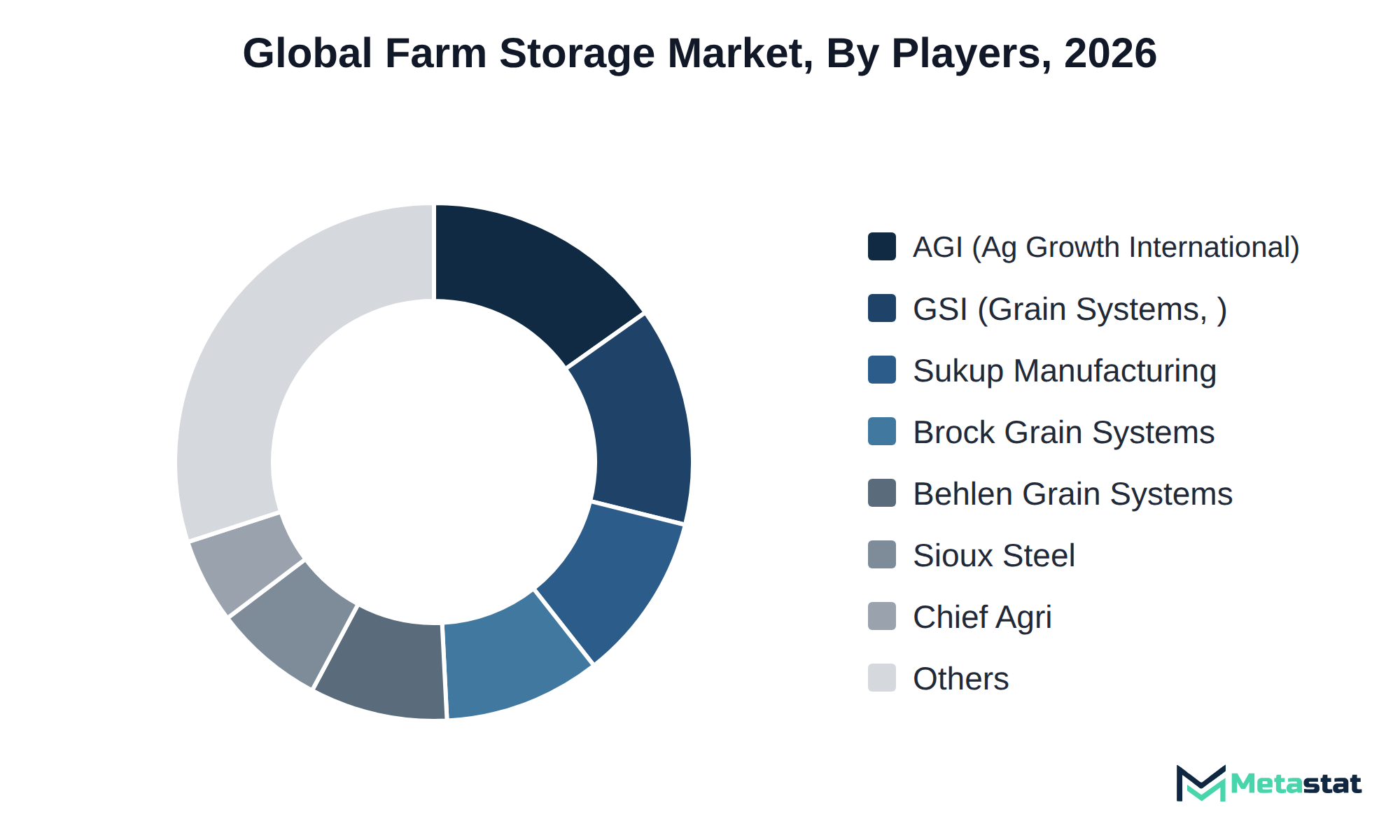
Companies in the Farm Storage market compete through various strategies, focusing on factors including price, certification, customization, and service offerings. Buyers prioritize solutions that offer both reliability and efficiency, influencing purchasing decisions based on a company's reputation and service ecosystem.
AGI (Ag Growth International) emphasizes a comprehensive product portfolio, catering to diverse storage needs across different agricultural sectors. Meanwhile, GSI (Grain Systems, Inc.) targets innovation in grain storage technologies, enhancing operational efficiencies for farmers. Sukup Manufacturing Co. focuses on customization, providing tailored solutions that address specific buyer requirements.
This growth relies on several developments within the Farm Storage market. Second, significant growth in the small-capacity storage category will support overall market growth, with an anticipated rise from USD 1,534.8 million to USD 2,069.7 million over the same period. Third, the Asia Pacific region, accounting for 31.6% of the market share, is expected to play a critical role in boosting demand due to increasing investments in agricultural infrastructure. However, economic fluctuations and supply chain disruptions present risks that could hinder market progress. These factors could delay adoption rates and impact revenue growth across different segments.
By Storage Type: Grain Silos and Storage Bins, Feed Storage Silos and Bins, Hay and Silage Storage Structures, Agricultural Warehouses and Storage Buildings, Liquid Storage Tanks, Fertilizer and Agricultural Chemical Storage Tanks, Farm Machinery and Equipment Sheds, Portable and Temporary Storage Systems, Hermetic Storage Bags and Silo Bags
By Storage Material: Steel, Concrete, Plastic and Polyethylene, Fiberglass and Composite Materials, Others (Wood, Fabric)
By Storage Application: Grain and Cereal Storage, Oilseed and Pulse Storage, Animal Feed and Fodder Storage, Hay and Silage Storage, Fertilizer and Agrochemical Storage, Water and Irrigation Storage, Fuel and Agricultural Liquid Storage, Others (Farm Machinery and Equipment Storage)
The report strategically identifies and profiles the key market players and analyses their core competencies in each sub-segment of the Farm Storage market.
Report Attributes | Details |
Study Period | 2021-2033 |
Base Year | 2025 |
Estimated Year | 2026 |
Forecast Period | 2026-2033 |
Historical Period | 2021-2025 |
Growth Rate | CAGR 5.1% from 2026 to 2033 |
Revenue Unit | USD million |
Segmentation | By Storage Type, Storage Material, Storage Capacity, Storage Application, and Region |
By Region | North America (By Storage Type, Storage Material, Storage Capacity, Storage Application, and Country)
|
Europe (By Storage Type, Storage Material, Storage Capacity, Storage Application, and Country)
| |
Asia Pacific (By Storage Type, Storage Material, Storage Capacity, Storage Application, and Country)
| |
South America (By Storage Type, Storage Material, Storage Capacity, Storage Application, and Country)
| |
Middle East and Africa (By Storage Type, Storage Material, Storage Capacity, Storage Application, and Country)
|
Find answers to common questions about this report
The Farm Storage market size was valued at USD 4,066.2 million in 2025.
The market is projected to grow at a CAGR of 5.1% during the forecast period from 2026 to 2033.
The North America Farm Storage market size is estimated to reach USD 1,625.3 million by 2033.
Grain Silos and Storage Bins lead the Farm Storage market with a projected value of USD 1,384.3 million by 2033, reflecting the highest demand among the storage type segments.
Growing investment in grain storage solutions stems from heightened awareness of food security and quality preservation. Rising animal husbandry practices and an increasing focus on efficient feed management drive demand for feed storage silos and bins.
Increased costs associated with farm storage solutions present a significant barrier for producers, particularly affecting smaller-scale farmers who operate with tighter budgets. Rising input costs for essential materials, including steel and concrete, challenge suppliers' profitability and impact pricing strategies, ultimately limiting market growth potential.
Growing investment in innovative storage solutions, driven by heightened awareness of food security and quality preservation, favors adoption in the industry. Enhanced feed storage technologies and increased focus on efficient feed management further support this trend, benefiting livestock producers and the broader agricultural value chain.
The Farm Storage market is estimated to reach a valuation of USD 6,055.4 million by 2033.
Key players operating in the Farm Storage market include AGI (Ag Growth International), GSI (Grain Systems, Inc.), Sukup Manufacturing Co., Brock Grain Systems, Behlen Grain Systems, and Sioux Steel Company.
The feed storage silos and bins segment is projected to reach USD 818.1 million by 2033, reflecting a compound annual growth rate of 5.3 percent.
The analysts below cover Agriculture research at Metastat Insights.
LEAD ANALYST
Utkarsh Khirodkar is a Lead Market Research Analyst at MetaStat Insight, specializing in market intelligence, technology sector assessments, and competitive strategy.
Assessing 200mm wafer transition schedules and substrate supply bottlenecks requires precise technical intelligence. MetaStat Insight supplied an actionable breakdown comparing planar and trench MOSFET architectures across automotive and industrial drive markets. The regional capacity estimates for Asia-Pacific foundries helped clarify lead-time uncertainties during our strategic planning session. When we needed additional clarification on high-purity raw material sourcing, their analyst team responded with helpful context within twenty-four hours.
Tracking maintenance cycle demand for secondary flight display units and terrain collision avoidance systems across regional jet fleets involves complex aftermarket dynamics. MetaStat Insight provided practical analysis separating airline retrofit programs from OEM forward-fit production schedules in North America and Southeast Asia. The supplier matrix highlighted component obsolescence timelines without resorting to vague generalizations. The dataset served as a dependable reference during our annual program review meetings.
Evaluating secondary resin quality across post-consumer packaging streams requires reliable technical segmentation. MetaStat Insight delivered an objective assessment that distinguished between extrusion-grade flake pricing and optical sorting throughput limitations across Western Europe. The competitive positioning breakdown for licensed depolymerization technology providers answered several questions during our feedstock feasibility audit. Their team clarified regional trade restrictions on mixed plastic scrap quickly when our team submitted follow-up requests.
Explore related market intelligence reports worth reading alongside this one.