
Explore the pivotal questions buyers should ask suppliers in the Water & Wastewater Automation, Instrumentation & Electromechanical Control Systems market to ensure effective solutions.
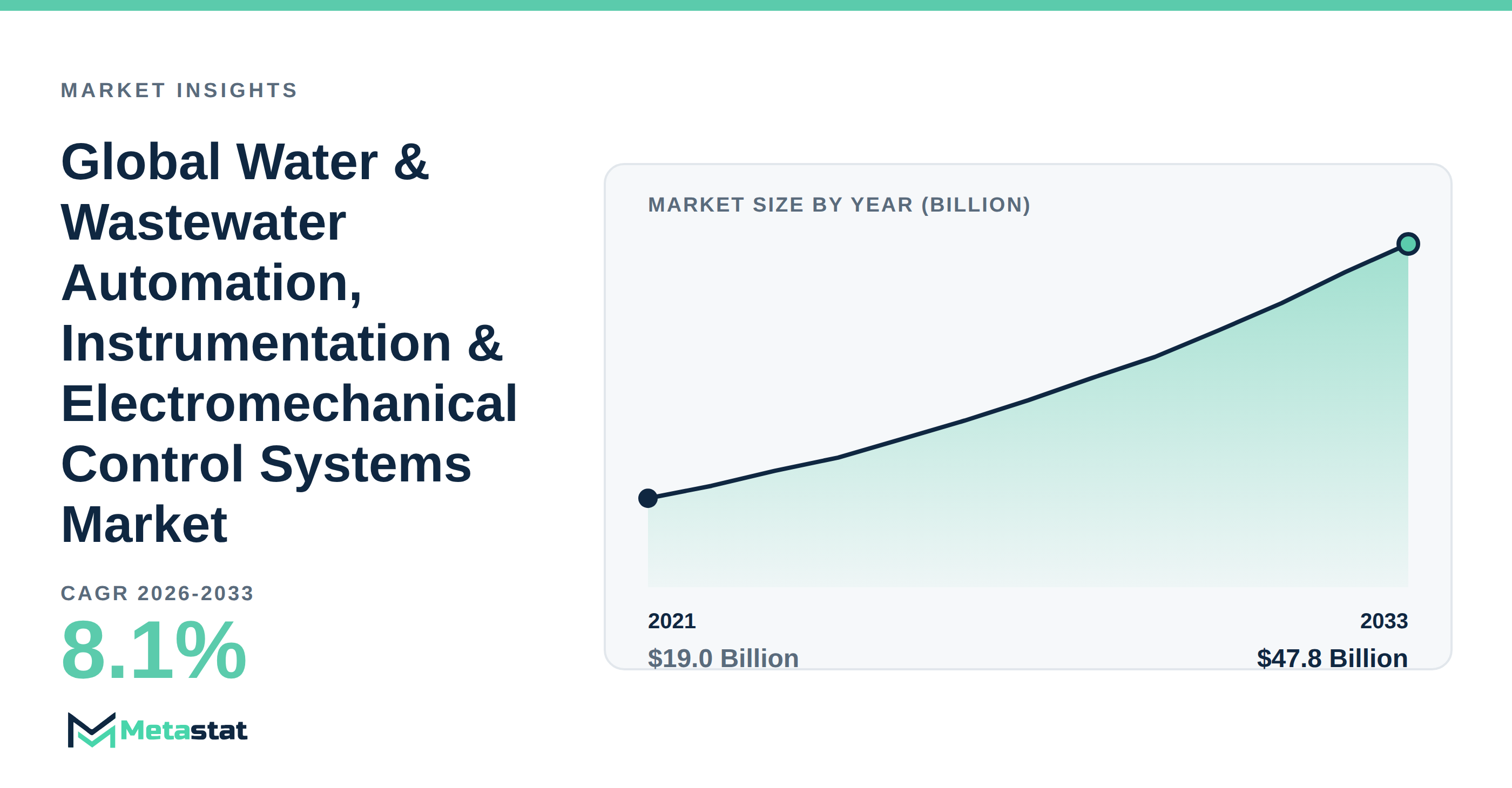
The Water & Wastewater Automation, Instrumentation & Electromechanical Control Systems market is set for significant expansion, projected to rise from USD 25.7 billion in 2025 to USD 47.8 billion by 2033, with a compound annual growth rate of 8.1%. To navigate this evolving landscape effectively, buyers consider key questions when assessing potential suppliers. Below are critical inquiries to guide your supplier evaluations.
1. How does your solution enhance operational efficiency?
Buyers should focus on how a supplier’s offerings specifically improve operational productivity. Automation technologies are vital in this respect, because they streamline processes and reduce manual inputs. Solutions that integrate Internet of Things (IoT) devices and data analytics are instrumental in achieving enhanced efficiency levels. Suppliers that demonstrate measurable improvements in operational metrics through their real-time monitoring capabilities will likely offer a competitive edge, aligning with the increasing demand for advanced water management practices.
2. What measures do you take for regulatory compliance?
Inquiring how a supplier navigates regulatory compliance is crucial, since adherence to environmental laws directly influences operational effectiveness. Buyers should ask suppliers about the specific technologies and processes implemented to maintain compliance with safety and environmental regulations. Suppliers that prioritize regulatory adherence mitigate risks and build trust within the market, a necessity given the stringent compliance demands faced by the industry.
3. How do you support sustainable practices in your solutions?
Given the market's emphasis on sustainability, buyers should assess how suppliers’ solutions promote eco-friendliness. Look for offerings that optimize resource utilization and endorse sustainable practices. Efforts aimed at reducing carbon footprints and adopting circular economy principles are increasingly significant, and suppliers embedding these concepts into their business models will remain competitive in this evolving market landscape.
4. Can you provide insights into your research and development initiatives?
Investments in research and development are essential for keeping pace with rapid technological advancements in the Water & Wastewater Automation sector. Buyers should inquire about a supplier’s R&D focus, particularly regarding next-generation technologies and innovations. Companies like Schneider Electric SE and Siemens AG actively push for R&D initiatives, ensuring their products align with the latest advancements in operational efficiency and sustainability efforts.
5. What is your approach to system integration and lifecycle services?
Understanding how a supplier approaches system integration is vital because water management systems continue to become more intricate. Buyers should evaluate a supplier's ability to integrate various components efficiently while providing ongoing lifecycle services. Suppliers offering comprehensive solutions that include commissioning and maintenance significantly contribute to operational success by ensuring system reliability and performance throughout its lifespan.
6. How do you address supply chain challenges?
While geopolitical fragmentation affects supply chain stability, buyers should ask suppliers about their strategies for managing these complexities. Suppliers that illustrate resilience in sourcing and logistics are likely to provide more reliable solutions. Understanding how suppliers overcome market challenges, including tariff issues and material availability, is critical for securing a dependable supply chain necessary for effective operations.
7. What innovations are you planning to implement in your product offerings?
For buyers, engaging suppliers on their innovation plans is crucial for future-proofing operations. Knowing a supplier’s roadmap for technological advancements allows buyers to prepare for evolving needs. Suppliers that focus on innovations related to data analytics, automation, and predictive maintenance will enhance operational effectiveness. Engaging with suppliers committed to continuous improvement and innovation ensures readiness for the future.
These seven questions form a comprehensive framework for buyers in the Water & Wastewater Automation, Instrumentation & Electromechanical Control Systems market. Engaging suppliers on these topics enhances decision-making, leading to the selection of superior solutions for effective water management. For further insights into market dynamics and trends, visit the Global Water & Wastewater Automation, Instrumentation & Electromechanical Control Systems Market.
Tags
About the Authors

LEAD ANALYST
Utkarsh Khirodkar is a Lead Market Research Analyst at MetaStat Insight, specializing in market intelligence, technology sector assessments, and competitive strategy.

SENIOR RESEARCH ANALYST
Biotechnology · Food and Beverages · Medical Devices · Packaging
Snehal Pasalkar is a Research Analyst at MetaStat Insight, operating at the intersection of life sciences research, competitive strategy, and market intelligence.

INDUSTRY CONSULTANT - CHEMICALS & ADVANCED MATERIALS
Chemicals and Materials · Machinery & Equipment · Packaging
Amit Gadhekar Consultant for Chemicals and Materials at MetaStat Insight, directing sector-specific intelligence, research, and strategic consulting across global chemical and processing markets.