
Explore seven crucial questions buyers should ask GCC Conversational AI suppliers to enhance customer interactions and operational efficiency.
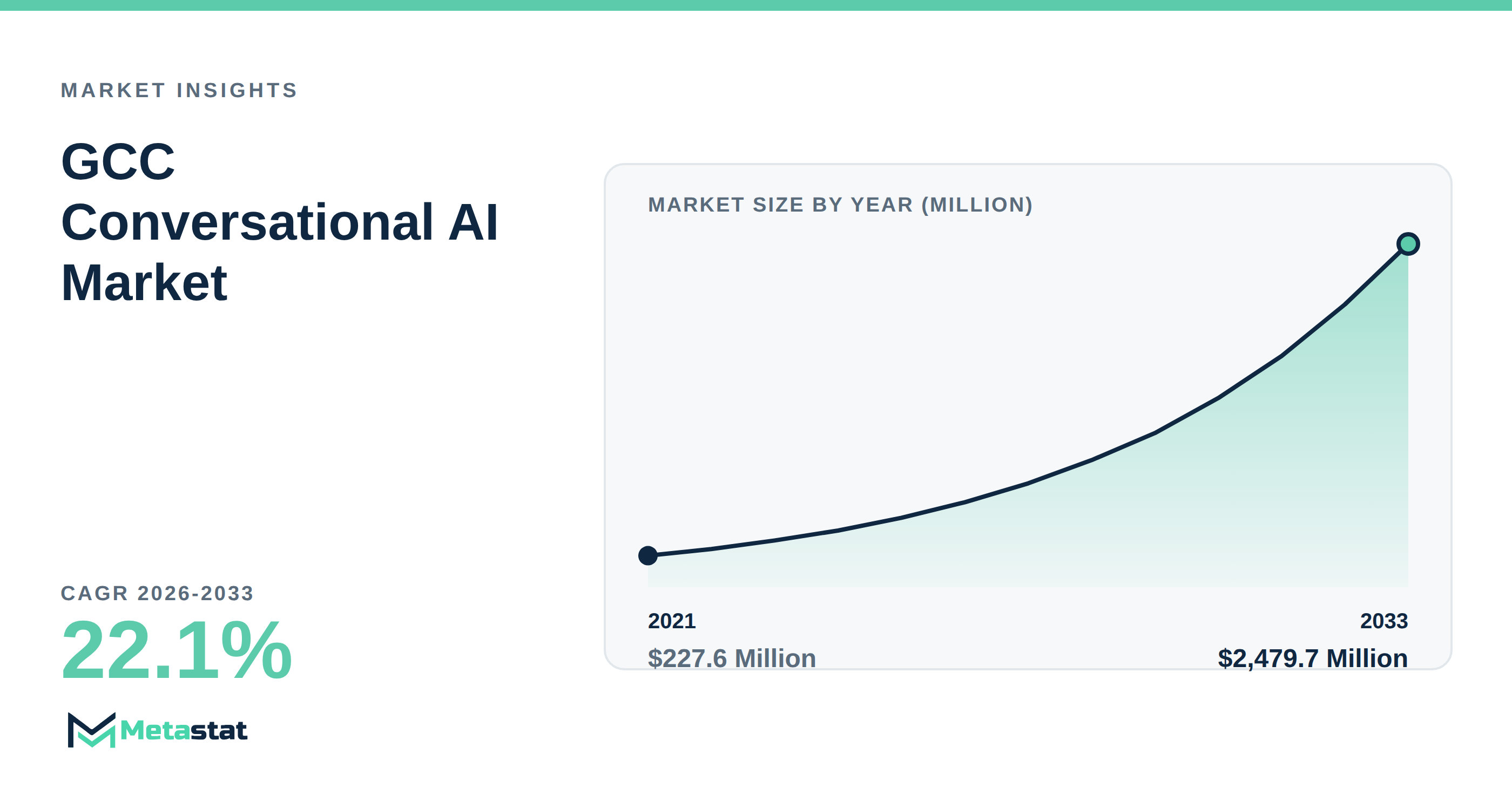
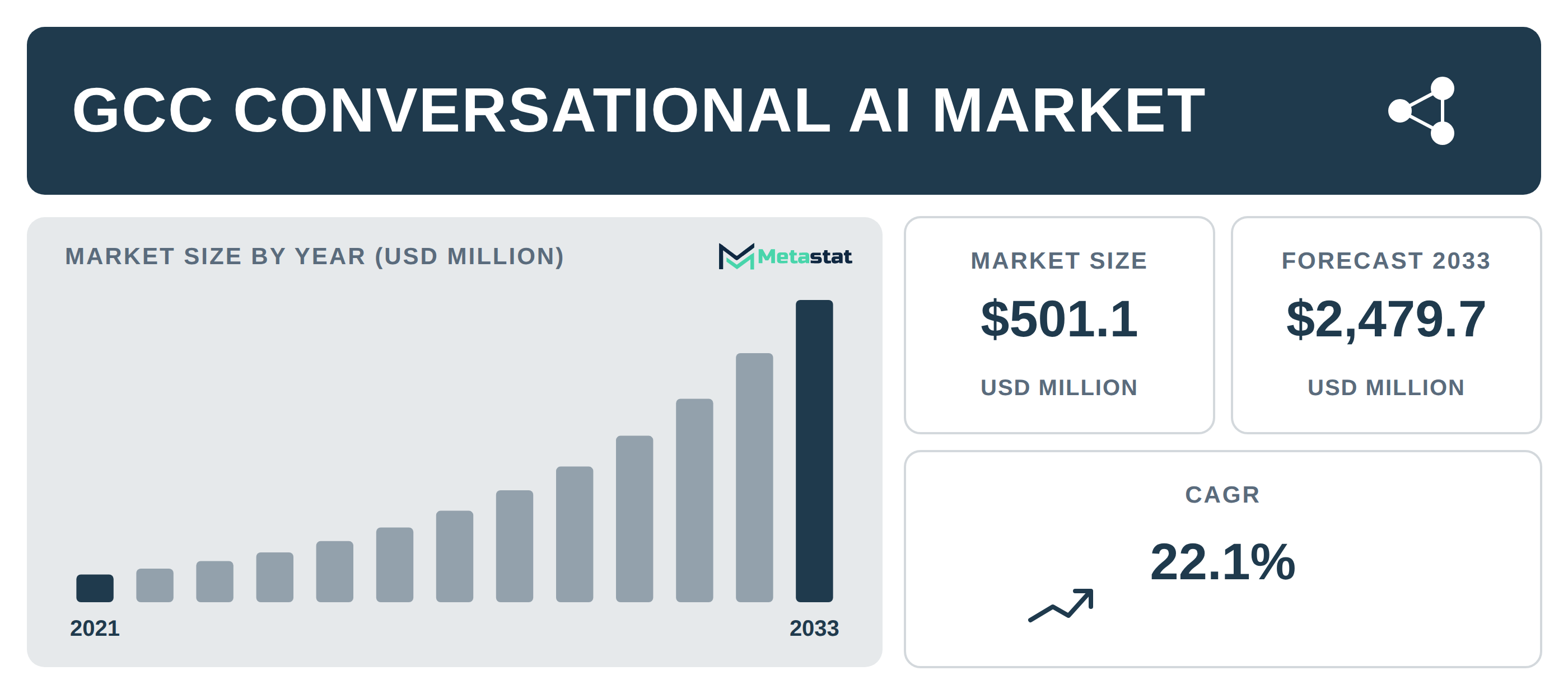
The market for GCC Conversational AI is experiencing remarkable growth, and selecting the right supplier is crucial for enhancing customer engagement and operational efficiency. Understanding the capabilities and offerings of different suppliers significantly impacts a business’s success in this arena. Are critical questions that buyers should ask potential conversational AI suppliers. The full figures are in our GCC Conversational AI market size and forecast report.
1. What capabilities do your solutions offer for Arabic language support?
Arabic-language AI agents play an important role in transforming customer engagement strategies across the GCC. The increasing demand for localized communication drives organizations to invest in these advanced solutions. Buyers should assess the supplier's ability to deliver tailored experiences that meet the regional customers' preferences. This focus on Arabic capabilities enhances customer satisfaction and significantly influences loyalty and retention rates.
2. How do your solutions integrate with existing systems?
Integration capabilities are essential for the effective deployment of conversational AI. Suppliers should demonstrate how their solutions work with current customer relationship management (CRM) systems or other platforms. A well-integrated solution minimizes disruption while maximizing efficiency, allowing businesses to leverage existing data, thus enhancing service delivery and operational workflows.
3. What deployment models do you offer, and what are their advantages?
Deployment flexibility is crucial for organizations in the GCC. Suppliers should explain the benefits of cloud-based, on-premises, and hybrid models. For instance, cloud-based solutions allow for scalable and flexible operations, while on-premises models offer enhanced security for sensitive data. Understanding these options enables buyers to choose the model that aligns best with their operational needs.
4. Can you provide case studies or examples of successful implementations?
Buyers benefit from reviewing case studies that highlight the supplier's previous successes. This information provides insight into the practical applications of the technology and its effectiveness across various industries. Success stories, especially in sectors like healthcare and retail, can help buyers gauge the potential return on investment and operational improvements.
5. What level of personalization do your AI solutions provide?
Personalization is increasingly critical in customer interactions. Suppliers should detail how their AI-driven solutions adapt to individual user preferences and behaviors. For instance, intelligent virtual assistants analyze user data to tailor responses, thereby enhancing customer engagement and satisfaction. Understanding the level of personalization available helps buyers identify solutions that align with their customer engagement goals.
6. What is your approach to ensuring data security and compliance?
Data security is a top concern for organizations deploying conversational AI technology. Suppliers should outline their security measures and compliance with relevant regulations. Buyers should ensure that the supplier’s solutions protect customer data, particularly in sensitive industries like finance and healthcare, where regulatory compliance is crucial.
7. How do you support ongoing maintenance and updates for your AI solutions?
Ongoing support is crucial for the long-term success of conversational AI implementations. Suppliers should clarify their maintenance plans and update strategies to ensure the systems remain effective and aligned with emerging technologies. A supplier that provides robust support helps organizations adapt to changing customer expectations and technological advancements, ensuring sustained operational efficiency.
As businesses in the GCC consider investing in conversational AI, addressing these questions with potential suppliers will provide essential insights into their capabilities and alignment with company goals. Prioritizing these aspects leads to improved customer experiences and operational efficiencies, driving overall success in this competitive landscape.
Tags
About the Authors

LEAD ANALYST
Utkarsh Khirodkar is a Lead Market Research Analyst at MetaStat Insight, specializing in market intelligence, technology sector assessments, and competitive strategy.

PRINCIPAL CONSULTANT - ENTERPRISE AI & EMERGING TECHNOLOGIES
Banking & Finance · Electronics and Semiconductor · Energy and Power · Healthcare IT · Information & Technology · Professional Services
Vijay Gunti is a Principal Consultant at MetaStat Insight, bringing over two decades of experience across enterprise digital transformation, technology strategy, and intelligent systems.

LEAD CONSULTANT - COMMUNICATION, TELECOM, AND IT
Electronics and Semiconductor · Information & Technology · Machinery & Equipment · Professional Services
Ravindra Sathe Consultants for Communication, Telecom, and IT at MetaStat Insight. He leads the firm's industry research initiatives across telecommunications infrastructure, digital connectivity, enterprise networking, and emerging information technology domains.