
Explore the crucial elements influencing costs in the Digital Textile Printing market, from capital investments to consumer demand for customization.
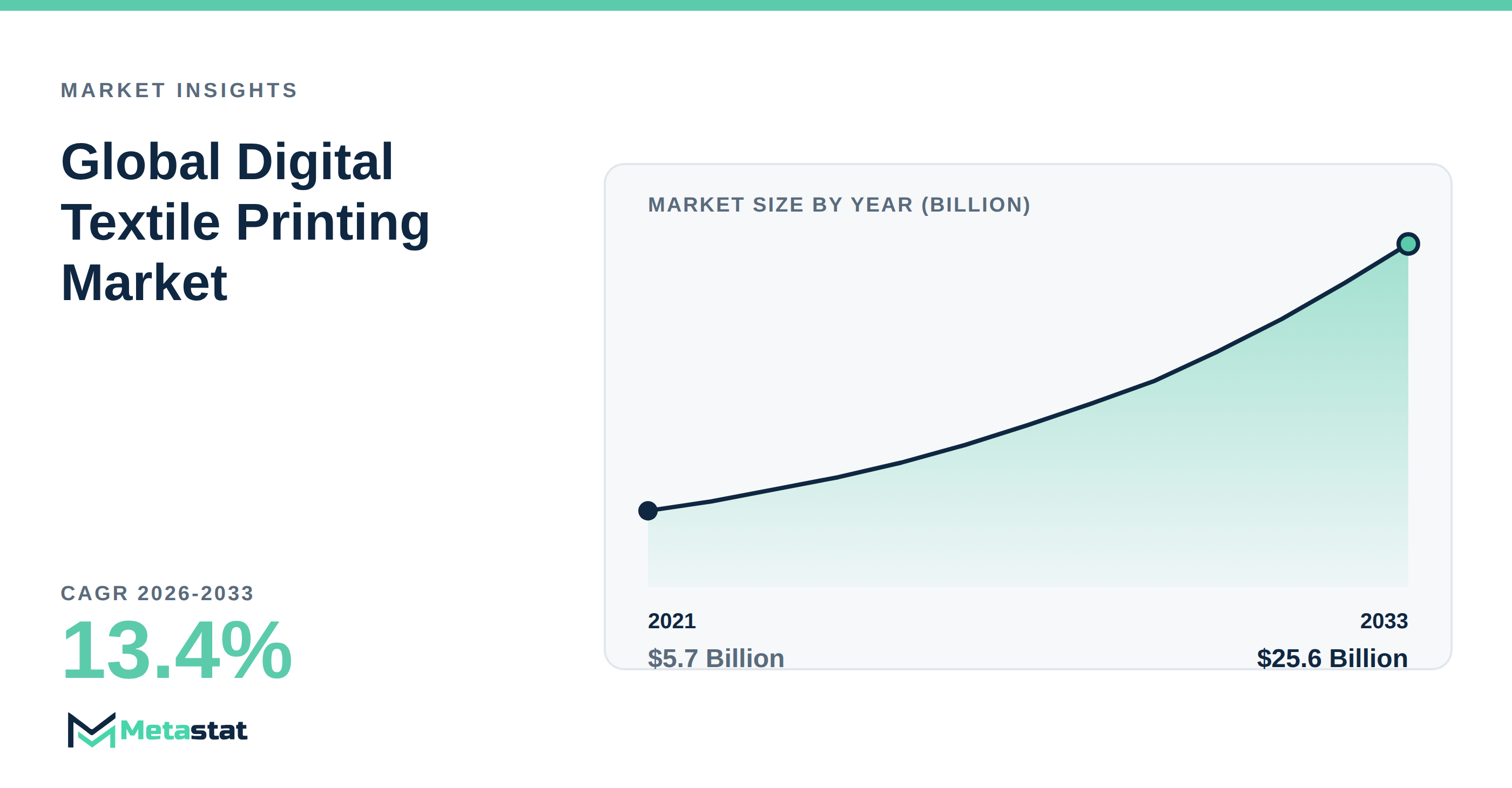
The Digital Textile Printing market, initially valued at USD 9.3 billion in 2025, is set to increase to USD 25.6 billion by 2033. Companies operating in this growing market understands various factors that impact costs to establish effective pricing strategies and gain a competitive edge.
1. High Capital Investment Requirements Challenge Entry
Advanced technology in digital textile printing necessitates significant initial investments in equipment and machinery. This barrier limits participation from small and medium-sized enterprises, hindering competition within the market. Startups and lesser-known players struggle to secure needed funding, restricting their market reach and ability to scale operations. Established firms gain an advantage in technology access, often leading to price competition that smaller players find difficult to sustain.
2. Ongoing Maintenance and Operational Costs
Maintaining digital printing equipment incurs additional costs affecting profitability. Regular maintenance and potential equipment upgrades are essential to ensure optimal performance and product quality. These ongoing expenses challenge companies, particularly those with thin margins, to manage finances effectively. Failure to invest in maintenance could lead to decreased production efficiency and quality, ultimately impacting a company's competitiveness in the Digital Textile Printing market.
3. Supply Chain Disruptions Increase Production Costs
Geopolitical factors and market volatility contribute to supply chain disruptions that affect the availability and pricing of essential raw materials. Such interruptions not only lead to inflated costs but create uncertainties in production schedules. Companies navigate these disruptions by optimizing logistics and supply chain strategies, resulting in increased operational complexity and overheads.
4. Technological Advancements and Their Impact on Costs
Technological evolution in the Digital Textile Printing market simplifies production processes, leading to potential cost savings. Automation and AI integration enhance production efficiencies, reducing labor costs while boosting output quality. However, the need for ongoing technological upgrades presents challenges for budget management. Companies that do not keep pace with technological advancements risk losing market share to competitors leveraging the latest innovations for improved cost-efficiency.
5. Compliance with Environmental Regulations
Growing consumer awareness of sustainability drives companies to adopt eco-friendly practices, often resulting in increased operational costs. Compliance with environmental regulations typically requires investments in greener technologies and practices. Although these expenditures tighten budgets in the short term, they ultimately position companies favorably in a market that increasingly values sustainability, attracting an eco-conscious customer base.
6. Pricing Pressures from Consumer Demand for Customization
The rising demand for personalized and custom textile products significantly influences pricing dynamics within the Digital Textile Printing market. Companies offering customization adapt pricing strategies to maintain profitability while meeting consumer expectations. The challenge lies in balancing costs associated with custom production - including expedited timelines and specialized materials - against competitive pricing, particularly because e-commerce expands access to a variety of suppliers.
7. Strategic Sourcing Decisions and Cost Management
Effective procurement strategies significantly impact the overall cost structure within the Digital Textile Printing market. Companies negotiating favorable terms with suppliers or diversifying sourcing strategies manage costs more efficiently. Emphasizing strong supplier relationships and exploring alternative materials mitigates risks associated with raw material price volatility. Strategic sourcing decisions play a crucial role in enhancing competitiveness and operational efficiency.
Understanding these factors impacting costs in the Digital Textile Printing market enables companies to develop effective strategies for pricing and operational efficiency. By addressing high capital investments, ongoing maintenance costs, and supply chain disruptions, businesses navigate the complexities of this evolving landscape while positioning themselves for long-term profitability.
The full analysis is in Global Digital Textile Printing Market.
Tags
About the Authors

LEAD ANALYST
Utkarsh Khirodkar is a Lead Market Research Analyst at MetaStat Insight, specializing in market intelligence, technology sector assessments, and competitive strategy.

INDUSTRY CONSULTANT - CHEMICALS & ADVANCED MATERIALS
Chemicals and Materials · Machinery & Equipment · Packaging
Amit Gadhekar Consultant for Chemicals and Materials at MetaStat Insight, directing sector-specific intelligence, research, and strategic consulting across global chemical and processing markets.