
Explore the critical factors driving costs in the Multi-Material Molded Components market, from molding technologies to sustainability initiatives.
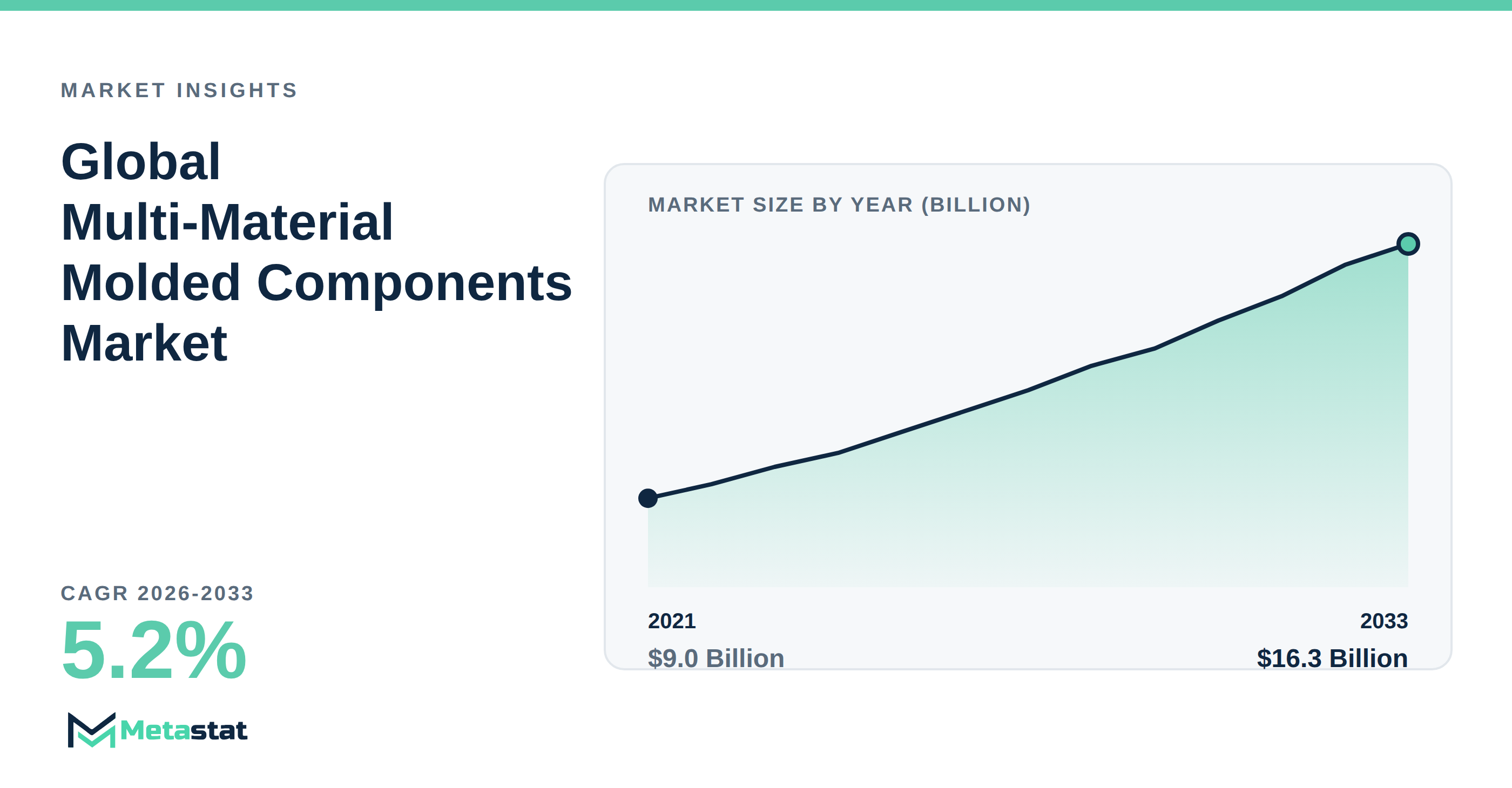
The Multi-Material Molded Components market, valued at USD 10.9 billion in 2025, is projected to expand to USD 16.3 billion by 2033. Understanding the factors that shape costs and pricing in this market is crucial for buyers and operators. This post explores the key elements influencing pricing strategies and highlights areas where buyers hold leverage.
1. Advancements in molding technologies enhance cost efficiency
Technological innovations in molding processes, including multi-shot injection molding and sequential overmolding, significantly impact production costs. These advancements enable manufacturers to produce complex geometries with reduced cycle times and minimized material waste. Consequently, buyers benefit from cost-effective solutions that improve product quality. Investment in automation and smart manufacturing techniques further enhances operational efficiency, translating to competitive pricing in the Multi-Material Molded Components market.
2. Material selection drives cost structures
The choice of materials plays a vital role in determining costs in the Multi-Material Molded Components market. Materials like thermoplastic elastomers (TPE) and silicone offer beneficial properties, yet their procurement is subject to fluctuations based on market conditions. Buyers who emphasize strategic sourcing and engage in long-term agreements with suppliers mitigate costs associated with raw material price volatility, ultimately allowing for more predictable budgeting and pricing.
3. Regulatory compliance influences pricing dynamics
Adherence to stringent regulations related to product safety and environmental impact increases operational costs for manufacturers. These compliance mandates necessitate investments in quality assurance and product testing, which in turn affect the final price of molded components. Buyers prioritizing suppliers with robust compliance management achieve better pricing, because such companies often experience fewer disruptions and liabilities, resulting in more stable pricing models.
4. Supply chain resilience affects material availability
Recent supply chain disruptions have heightened awareness of vulnerabilities affecting material availability and pricing. Increased transportation costs and geopolitical tensions lead to fluctuations in raw material pricing. Buyers who cultivate relationships with multiple suppliers or regional partners gain leverage against price increases, because diversified sourcing strategies enhance both supply chain resilience and pricing stability.
5. Demand for sustainable solutions shapes market dynamics
The growing emphasis on sustainability within the Multi-Material Molded Components market influences pricing strategies. Manufacturers investing in eco-friendly materials and processes often face higher initial costs, which impact product pricing. Buyers prioritizing sustainable offerings and collaborating with suppliers committed to sustainability initiatives secure favorable pricing, because such partnerships foster innovations that strike a balance between cost and environmental considerations.
6. Competition and market fragmentation drive pricing strategies
The Multi-Material Molded Components market exhibits significant fragmentation, with numerous suppliers competing across various niches. This competition creates a spectrum of pricing strategies, enabling buyers to leverage market dynamics to negotiate favorable terms. By exploring multiple suppliers and comparing offerings, buyers capitalize on the competitive landscape to secure optimal pricing for high-quality components.
7. Digital transformation enhances operational efficiency
Investment in digital transformation initiatives, including automation and artificial intelligence, enhances operational productivity within the Multi-Material Molded Components market. Companies that adopt these technologies often realize reduced operational costs, which are then reflected in their pricing strategies. Buyers seeking suppliers that embrace digital transformation find opportunities for lower costs, because these suppliers optimize production processes and streamline pricing structures.
Overall, understanding the factors influencing pricing and costs in the Multi-Material Molded Components market enables buyers to make informed decisions. By leveraging technology, material procurement strategies, and supplier relationships, buyers navigate this complex landscape and optimize their purchasing outcomes.
The full analysis is in Global Multi-Material Molded Components Market.
Tags
About the Authors

LEAD ANALYST
Utkarsh Khirodkar is a Lead Market Research Analyst at MetaStat Insight, specializing in market intelligence, technology sector assessments, and competitive strategy.

INDUSTRY CONSULTANT - CHEMICALS & ADVANCED MATERIALS
Chemicals and Materials · Machinery & Equipment · Packaging
Amit Gadhekar Consultant for Chemicals and Materials at MetaStat Insight, directing sector-specific intelligence, research, and strategic consulting across global chemical and processing markets.