
Explore the crucial dynamics driving the India Digital MSME Lending market growth, from technology adoption to regional expansions. Understand how these elements impact businesses and lending practices.
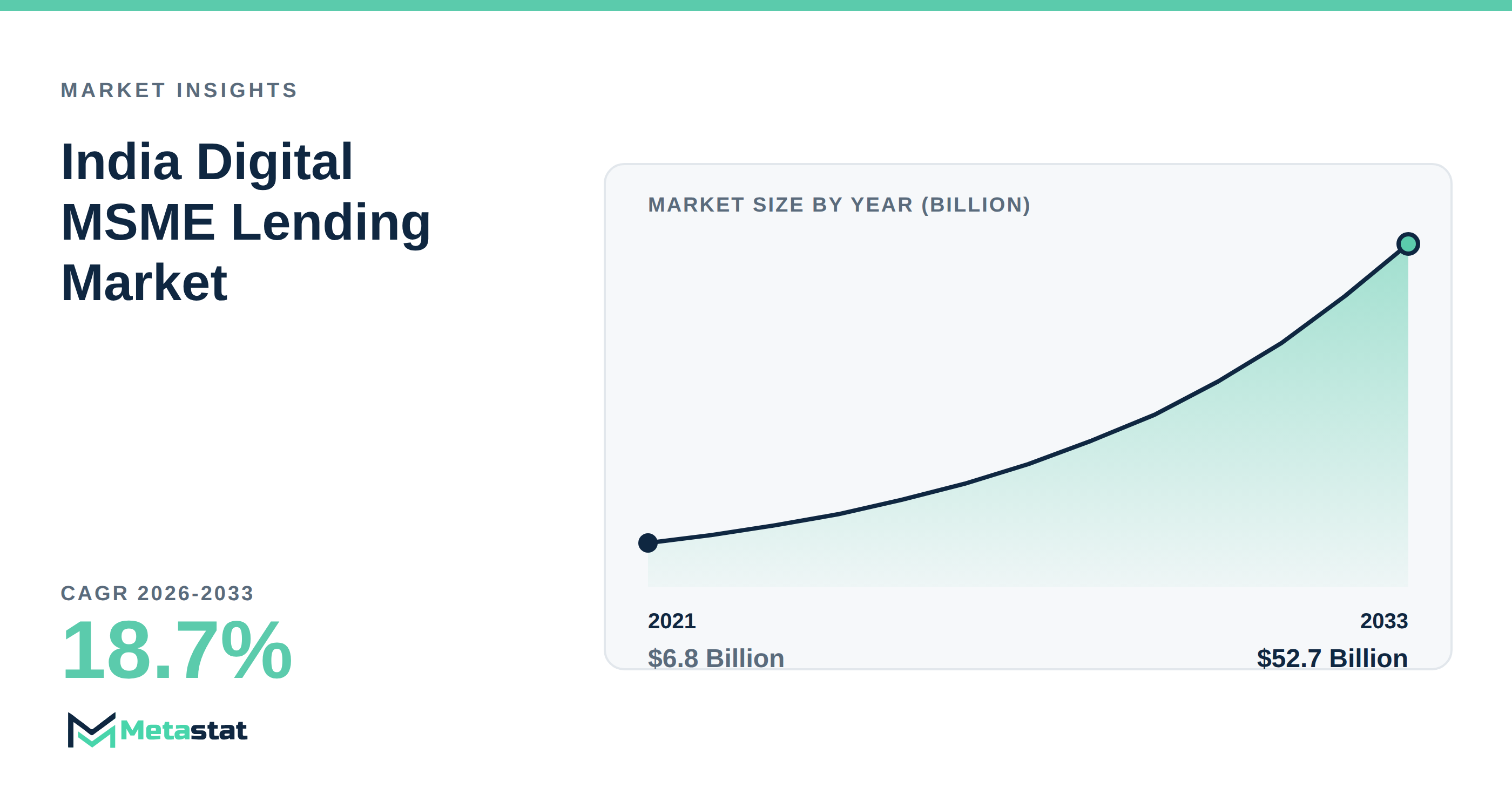
The India Digital MSME Lending market is expanding rapidly, expected to reach USD 52.7 billion by 2033, with an impressive growth rate of 18.7%. Various dynamics are reshaping this market, each significantly impacting lenders and borrowers alike. Understanding these factors is essential for stakeholders looking to navigate this evolving environment.
1. Increased Demand for Flexible Financing
The India Digital MSME Lending market experiences heightened demand for adaptable financing solutions, particularly revolving working capital loans and digital lines of credit. Businesses increasingly seek financial options that accommodate cash flow fluctuations and operational costs. In response, lenders are innovating their product offerings to meet the specific needs of micro and small enterprises. By prioritizing flexibility, lenders capture a larger market share through tailored financial products that align with changing borrower expectations.
2. Technology-Driven Efficiency Gains
Technological advancements in the lending process are driving operational efficiency across the India Digital MSME Lending market. Automation and artificial intelligence enable lenders to streamline loan approvals, enhance risk assessment capabilities, and improve customer experiences. This transformation reduces turnaround times for loans and minimizes operational costs. Companies leveraging these technologies position themselves favorably against competitors, ultimately leading to improved profitability and greater customer trust.
3. Expansion into Tier II and III Cities
Expanding into Tier II and III cities presents significant growth opportunities in the India Digital MSME Lending market. These regions are experiencing increased economic activities and a rising number of new-to-credit borrowers. Financial institutions targeting these underserved segments encounter a strong demand for customized loan offerings that address the unique challenges local businesses face. Successfully navigating this expansion enhances market penetration and improves lending volumes.
4. Regulatory Compliance Influencing Market Practices
Regulatory compliance plays a vital role in shaping the operational framework of the India Digital MSME Lending market. Adhering to evolving legal standards is essential for lenders, ensuring they operate within the law while minimizing risks associated with non-compliance. This emphasis on regulation cultivates a stable lending environment, fostering trust among borrowers and encouraging investment in the market. Companies focused on compliance gain competitive advantages that support overall growth.
5. Impact of Geopolitical and Economic Factors
Geopolitical risks and economic fluctuations present challenges that significantly affect the India Digital MSME Lending market. Trade uncertainties and inflationary pressures influence borrowing costs and demand for loans. Lenders respond strategically to these macroeconomic conditions to maintain stability in lending practices. By refining risk management strategies and adapting operational approaches, lenders navigate these complexities while ensuring continued access to capital for businesses.
6. Innovations in Credit Products Driving Inclusion
The ongoing evolution of credit product offerings is enhancing access to finance for micro and small enterprises in the India Digital MSME Lending market. Innovations including flexible repayment options and integrated digital solutions streamline the borrowing process for businesses. This focus on product diversification allows lenders to cater to various industries, increasing overall market penetration. While more tailored solutions emerge, the market continues its trajectory of growth, promoting financial inclusion across diverse segments.
7. Growing Infrastructure Investments
Infrastructure investments remain critical to supporting the rising demand for digital lending solutions in India. Enhanced digital capabilities bolster lenders' ability to reach underserved regions, while public-private partnerships facilitate greater financial accessibility for MSMEs. Investment in technology infrastructure enables lenders to improve operational productivity and customer engagement. By prioritizing these investments, businesses position themselves to leverage emerging opportunities and navigate market complexities effectively, fostering a more inclusive lending environment.
The various dynamics reshaping the India Digital MSME Lending market highlight the critical intersection of technology, regulation, and borrower needs. Stakeholders adapt to these changes to ensure their strategies align with the evolving demands of this thriving market. For a more detailed analysis of the India Digital MSME Lending market, visit India Digital MSME Lending Market.
Tags
About the Authors

LEAD ANALYST
Utkarsh Khirodkar is a Lead Market Research Analyst at MetaStat Insight, specializing in market intelligence, technology sector assessments, and competitive strategy.

PRINCIPAL CONSULTANT - ENTERPRISE AI & EMERGING TECHNOLOGIES
Banking & Finance · Electronics and Semiconductor · Energy and Power · Healthcare IT · Information & Technology · Professional Services
Vijay Gunti is a Principal Consultant at MetaStat Insight, bringing over two decades of experience across enterprise digital transformation, technology strategy, and intelligent systems.