
LEAD ANALYST
Utkarsh Khirodkar is a Lead Market Research Analyst at MetaStat Insight, specializing in market intelligence, technology sector assessments, and competitive strategy.

India Digital MSME Lending Market Size, Share, By Product Type (General-Purpose Unsecured Term Loans, Revolving Working Capital Loans and Digital Lines of Credit, Invoice Discounting and Receivables Finance, Supply Chain and Dealer-Vendor Finance, Merchant Cash Advance and Revenue-Based Finance, Purchase Order and Contract Finance, Machinery and Equipment Finance, Property-Backed and Secured Business Loans), By Borrower Size (Micro Enterprises, Small Enterprises and Medium Enterprises), By Distribution Model (Direct Digital Lender Websites and Mobile Apps, Embedded Lending via B2B, E-Commerce and POS Platforms, Digital Loan Marketplaces and Lending Service Providers, DSA and FinTech Partner-Assisted Digital Origination, Branch / Relationship Manager-Assisted Digital Journeys), By Region (North India, West India, South India, East India, Central India and North East India), Industry Analysis, Growth, Trends, and Forecast, 2026-2033
Report ID
MSI-5252
Published
September, 2026
Pages
273 Pages
Format
Historical
Base year
Forecast
Forecast period
Report Details
Market Valuation: Valued at $13.4 Billion in 2025, projected to reach $52.7 Billion by 2033 at a 18.7% CAGR.
Dominant Segment: The Revolving Working Capital Loans & Digital Lines of Credit segment leads the market, driven by the increasing demand for flexible financing options among micro and small enterprises.
Geographic Lead: South India is projected to experience the fastest growth in the digital MSME lending market, fueled by rising entrepreneurial activity and enhanced digital infrastructure.
What's Inside: This report provides comprehensive competitive coverage, in-depth analyses, and forecasts for the India Digital MSME Lending market, segmented by product type, borrower size, distribution model, and region.
Emerging Trends: The market is witnessing substantial opportunities from technological advancements and increased digital transformation, enhancing access to financing solutions for underserved MSMEs.
Choose Your License
India Digital MSME Lending Market
The India Digital MSME Lending market was valued at USD 13.4 billion in 2025 and is projected to reach USD 52.7 billion by 2033, growing at a CAGR of 18.7% over the forecast period.
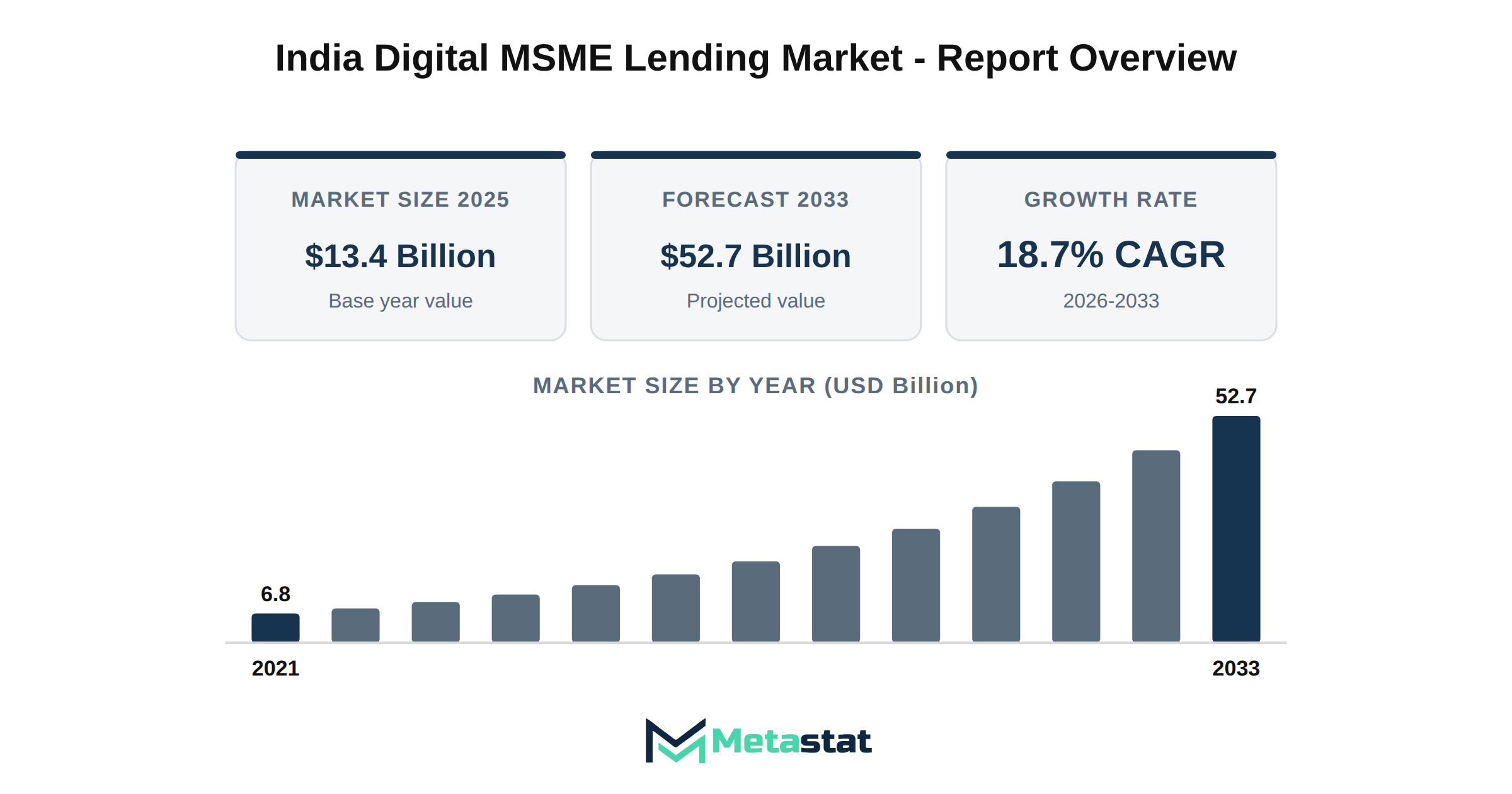
The India Digital MSME Lending market reached USD 13.4 billion in 2025, exhibiting significant growth from USD 6.8 billion in 2021. This upward trend reflects increasing demand for digital lending solutions among micro, small, and medium enterprises (MSMEs). The market is projected to expand significantly, reaching a value of USD 52.7 billion by 2033, representing a compound annual growth rate (CAGR) of 18.7% over the forecast period.
Key factors driving growth in the India Digital MSME Lending market include product innovation trends tailored to the unique needs of MSMEs. These innovations encompass a range of credit products designed to enhance accessibility and affordability. Underwriting automation and risk benchmarking facilitate quicker credit assessments, enabling lenders to respond to borrower needs efficiently. Expansion into Tier II and III cities, along with initiatives targeting new-to-credit customers, presents growth opportunities for financial institutions.
Sector-specific growth opportunity mapping highlights diversification in lending products, allowing lenders to cater to various industries. Regulatory compliance and standards play a crucial role in shaping the market environment, influencing lending practices and risk management strategies. Geopolitical risk frameworks impact operational strategies, compelling lenders to adapt to changing economic conditions.
The market faces challenges related to inflationary pressures and currency volatility, impacting operational costs and pricing strategies. Infrastructure investments remain critical to supporting growing demand for digital lending solutions. The ongoing evolution of customer journey dynamics necessitates a focus on enhancing user experience, ensuring that borrowers have streamlined access to capital.
The India Digital MSME Lending market experiences significant innovation in credit products, driven by evolving customer needs and technological advancements. This innovation enhances access to finance for micro and small enterprises, which often struggle with traditional lending methods. New product offerings include flexible repayment options, tailored loan structures, and integrated digital solutions that streamline the borrowing process.
Automation in underwriting processes represents a critical advancement in the market. By employing advanced algorithms and data analytics, lenders improve risk assessment and decision-making speed. This shift enables more accurate predictions of borrower creditworthiness, reducing default rates and creating a more responsive lending environment.
Expansion into Tier II and III cities opens lucrative opportunities for lenders targeting previously underserved segments. Growing economic activities in these regions, coupled with an increasing number of new-to-credit borrowers, drive demand for accessible financing solutions. This demographic shift supports the need for customized loan offerings that cater to the unique challenges faced by these enterprises.
Sector-specific growth opportunities emerge due to various industries adapting to changing market dynamics. The digital MSME lending landscape aligns with sectors including e-commerce, manufacturing, and agriculture, each requiring tailored financing solutions. By understanding these sectoral needs, lenders develop targeted offerings that enhance their competitive advantage and capture market share.
Regulatory compliance remains a key factor influencing market growth. Adhering to evolving standards ensures that lenders operate within legal frameworks while mitigating risks associated with non-compliance. This focus on regulation creates a stable lending environment, encouraging investment and expansion within the market.
Geopolitical risks and economic fluctuations introduce challenges that affect market stability and growth trajectories. Factors including inflationary pressures and currency volatility impact lending rates and borrower affordability, necessitating strategic responses from market players. Companies adapt to these conditions by refining their risk management strategies and enhancing operational resilience.
Capital allocation and infrastructure investments play a vital role in shaping the future of the market. Increased funding for digital technologies and innovative lending solutions drives efficiency and customer engagement. Firms prioritizing these investments position themselves to leverage emerging opportunities and navigate market complexities effectively.
The India Digital MSME Lending market anticipates growth, driven by innovation, automation, and strategic expansions. While the landscape evolves, stakeholders are encouraged to align their operational strategies with market demands and regulatory frameworks, ensuring sustainable success in an increasingly competitive environment.
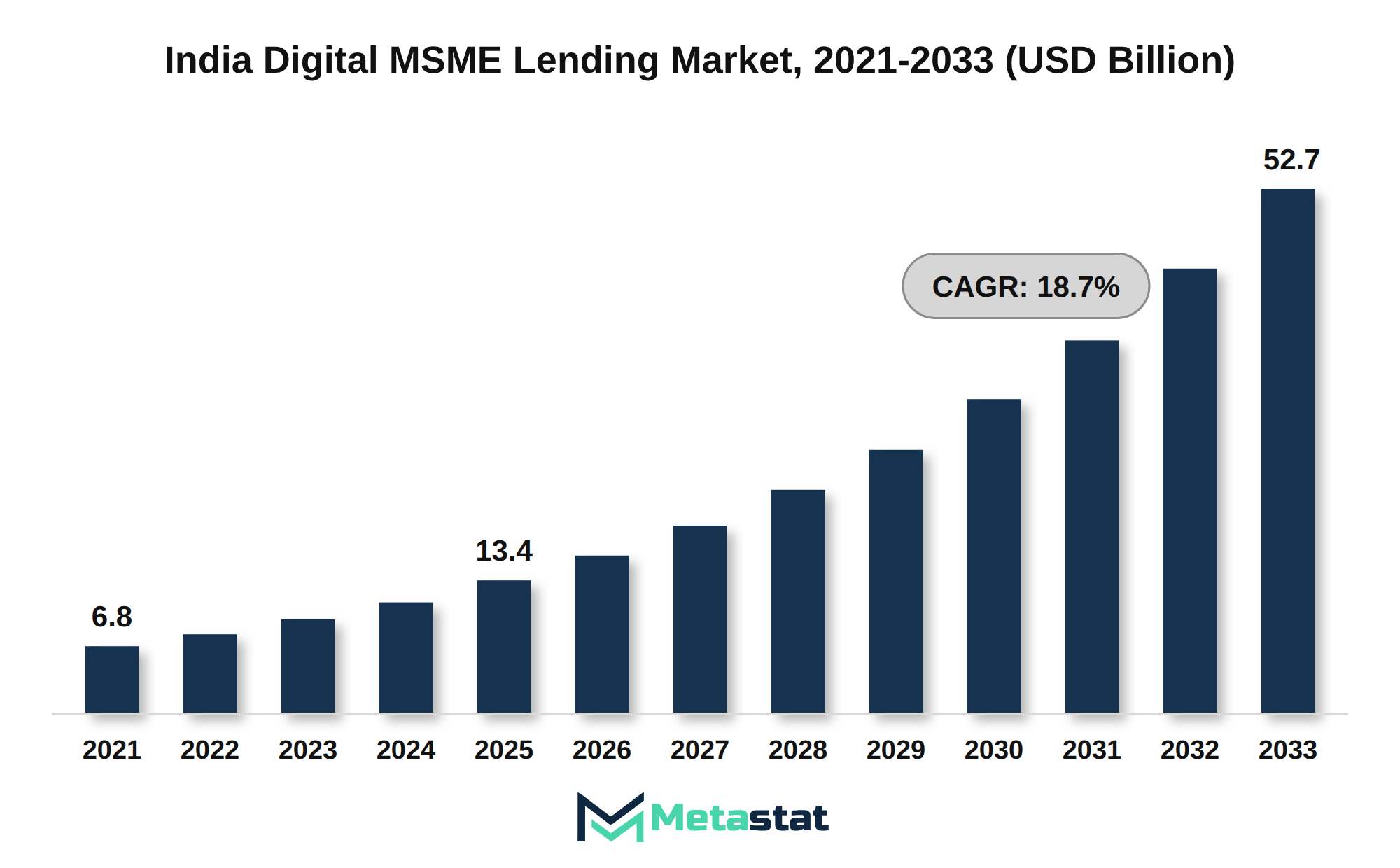
The India Digital MSME Lending market experiences accelerated growth driven by favorable macro-economic factors. Rising GDP contributes to increased consumer spending and investment, resulting in robust demand for digital lending solutions among MSMEs. The capital investment environment remains conducive due to low interest rates, enhancing borrowing capabilities for small businesses and facilitating access to essential working capital and growth financing.
Venture funding plays a significant role in the expansion of digital lending platforms, enabling these firms to innovate and diversify their offerings. Public-private spending power enhances infrastructure development, reinforcing the operational capabilities of MSMEs. These economic conditions support enhanced revenue generation opportunities for digital lenders, leading to improved market penetration and overall growth.
Technological integration within the lending process boosts operational productivity and cost-efficiency initiatives, allowing lenders to streamline services and provide tailored financial products. Increasing adoption of automation and AI enhances risk assessment capabilities, enabling lenders to make informed decisions more rapidly. Consequently, the India Digital MSME Lending market is positioned for substantial growth, driven by these macro-economic dynamics.
The India Digital MSME Lending market benefits significantly from digital transformation trends, enhancing the efficiency of lending processes. Accelerated adoption of technology, including automation, artificial intelligence, and software solutions, enables lenders to streamline operations, resulting in faster loan approvals and improved customer experiences. This transition reflects a broader shift within the financial services sector toward digitizing legacy processes, allowing for greater flexibility and responsiveness to client needs.
Investments in technology infrastructure further enhance operational productivity, reducing overhead costs associated with traditional lending models. Lenders adopting advanced technologies are positioned to optimize labor resources and automate repetitive tasks, leading to improved decision-making and risk assessment capabilities. This operational efficiency is critical in a competitive market, enabling firms to offer attractive terms to micro, small, and medium enterprises.
The growing emphasis on digital-first strategies aligns with changing consumer behaviors, driven by the increasing preference for online services. Businesses and individuals gravitate toward digital platforms for their financial needs, resulting in a surge in demand for accessible and convenient lending solutions. This trend highlights the important role of technology in reshaping customer interactions and driving growth within the India Digital MSME Lending market.
The India Digital MSME Lending market faces significant challenges due to regulatory hurdles and compliance requirements. These factors create complexities for lenders navigating the legal landscape, resulting in delayed product launches and increased operational costs. Firms allocate resources to ensure compliance, impacting overall profitability and hindering growth initiatives.
Macroeconomic headwinds contribute to a cautious lending environment. Factors including inflationary pressures and capital stagnation influence borrower confidence, leading to reduced demand for loans. These conditions result in a tightening credit market, making it difficult for MSMEs to access necessary capital for expansion.
Infrastructure gaps and connectivity deficits pose additional challenges for the market. Inadequate digital infrastructure limits lenders' ability to effectively reach underserved regions, restricting market penetration. Deployment bottlenecks in technology and services complicate access, especially in rural areas where financial services lag.
High capital investment requirements present a formidable barrier for new entrants and existing players alike. Significant financial resources are necessary to develop technology platforms and enhance service offerings, deterring potential market participants. Escalating operating costs driven by talent gaps and skilled labor deficiencies exacerbate this issue, limiting the capacity for innovation and competitive pricing.
Data security vulnerabilities and privacy concerns present risks impacting lender reputation and consumer trust. Instances of data breaches undermine confidence in digital lending solutions, discouraging potential borrowers. Such vulnerabilities lead to increased regulatory scrutiny, complicating market dynamics.
Cultural barriers and regional adoption resistors contribute to fragmentation within the market. Diverse regional attitudes towards lending and technology adoption hinder uniform growth across different areas. This fragmentation slows down the overall expansion of the India Digital MSME Lending market, complicating strategies for nationwide outreach and integration.
The India Digital MSME Lending market confronts challenges stemming from geopolitical fragmentation, which impacts trade relationships and investment flows. Trade deficits and tariff friction create an environment of uncertainty, leading to fluctuations in demand for lending products among micro, small, and medium enterprises. This instability affects businesses' ability to secure financing, resulting in a cautious approach to borrowing that hampers overall market growth.
Technological disruptions present further challenges, driven by the integrate new technologies into existing financial infrastructures, which requires considerable investment and expertise. The market experiences pressure from interoperability friction, which complicates transactions and communication between lenders and borrowers. Such barriers restrict operational efficiency, ultimately impacting the growth potential of the India Digital MSME Lending market.
In addition, rising input cost structures, including workforce skill gaps, contribute to margin pressures for lenders. Recruitment and retention of skilled personnel become increasingly difficult, leading to higher operational costs that deter lending activities. Environmental lifecycle footprints and sustainability demands further complicate the landscape, resulting from businesses focusing on compliance with tightening regional regulatory standards.
The convergence of these factors creates an environment where market saturation occurs, limiting the potential for new entrants and innovations. The India Digital MSME Lending market faces ongoing challenges that necessitate strategic responses from players to navigate this complex and evolving environment effectively.
The India Digital MSME Lending market experiences substantial opportunities stemming from emerging regional demands and technological disruptions. Increased digital transformation across various sectors enhances the ability of micro, small, and medium enterprises (MSMEs) to access financing solutions. Expanding digital infrastructure supports greater connectivity, allowing MSMEs in remote areas to engage with lenders, driving growth.
Geographical expansion into underserved regions presents a unique opportunity. Demand for general-purpose unsecured term loans, revolving working capital loans, and invoice discounting remains high among MSMEs. These trends reflect the market’s capacity to cater to diverse financial needs, thus increasing overall lending volumes.
The shift towards sustainable practices influences lending strategies. Financial institutions incorporate ESG-driven alignments into their operations, resulting in supportive lending frameworks for green projects and initiatives. This alignment attracts environmentally conscious investors while promoting a culture of sustainability within the lending ecosystem.
Strategic consolidation and cross-industry mergers enhance market competitiveness. These dynamics encourage partnerships between fintech companies and traditional financial institutions, facilitating the integration of advanced technologies. The emergence of digital marketplaces drives efficiency, enabling quicker loan approvals and disbursements, fundamentally altering traditional lending practices.
The evolving buying behaviors of MSMEs, characterized by a preference for digital procurement and agile financial solutions, shape the lending landscape. This transition influences product offerings, encouraging lenders to develop tailored financial products addressing specific needs. Consequently, the market adapts rapidly to changing demands, positioning itself for significant growth.
Finally, value-chain optimization through process automation and operational yield maximization contributes to market expansion. Enhanced efficiency results in cost reductions for lenders, enabling competitive interest rates and improved service delivery. The intersection of these factors underpins a dynamic growth trajectory for the India Digital MSME Lending market through 2033.
The India Digital MSME Lending market is segmented based on Product Type, Borrower Size, Distribution Model, and Region.
General-Purpose Unsecured Term Loans segment is valued at USD 4.8 billion in 2026 and is projected to reach USD 14.3 billion by 2033, at a CAGR of 16.7% during the forecast period. Increased digital transformation across the India Digital MSME Lending market contributes significantly to the demand for general-purpose unsecured term loans, driven by these products offering flexible financing solutions for micro and small enterprises. The shift towards online lending platforms facilitates an efficient application process and faster disbursement of loans, appealing to borrowers seeking quick access to capital. Adoption of advanced analytics and machine learning within lending institutions enhances risk assessment models, enabling lenders to make informed decisions and expand their customer base effectively.
Regulatory compliance and evolving policy frameworks drive lenders to innovate in their product offerings. Financial technology advancements support lenders in developing competitive pricing strategies, attracting a broader range of borrowers. Consumer preferences indicate a growing inclination towards digital channels for financial services, further enhancing the segment's growth prospects. The projected increase in small and medium enterprises seeking financing solutions fuels market expansion, aligning with India's broader economic objectives to support entrepreneurship and business development.
Investment in technology infrastructure will play a crucial role in ensuring operational efficiency and customer satisfaction, impacting profit margins positively. Market players focus on enhancing their digital platforms and user experiences to capture emerging trends in borrowing behaviors. Overall, the general-purpose unsecured term loans segment remains a vital component of the India Digital MSME Lending market, poised for significant growth driven by evolving consumer demands and technological advancements.
Revolving Working Capital Loans & Digital Lines of Credit segment is estimated to reach USD 12.1 billion by 2033, at a CAGR of 20.5% during the forecast period. This segment thrives due to increased demand for flexible financing options among micro and small enterprises. The ongoing digital transformation enables businesses to access financial solutions rapidly and efficiently, enhancing liquidity management and operational agility.
Technological advancements significantly influence the segment's growth trajectory. Integration of artificial intelligence and machine learning enables lenders to assess creditworthiness accurately and streamline the loan approval process. This evolution supports diverse borrower profiles, including micro enterprises that traditionally face challenges in securing financing.
Regulatory compliance plays an important role in shaping the landscape of the India Digital MSME Lending market. The implementation of favorable policies enhances trust among both borrowers and lenders, encouraging participation in the lending ecosystem. This regulatory environment encourages innovation and supports the emergence of new financial products tailored to market needs.
Pricing volatility remains a critical factor influencing the segment. Competitive pressure from a growing number of digital lenders leads to competitive interest rates and better lending terms for borrowers. This dynamic environment enhances affordability and accessibility, promoting wider adoption of revolving working capital solutions.
Strategic opportunity windows emerge owing to businesses increasingly prioritizing financial resilience. By leveraging digital lines of credit, enterprises respond effectively to market fluctuations, ensuring operational continuity. This growing reliance on adaptive financial solutions emphasizes the segment's importance in the overall India Digital MSME Lending market.
Invoice discounting and receivables finance represent a vital component of the India Digital MSME Lending market, offering businesses much-needed liquidity by allowing them to access funds tied up in outstanding invoices. This segment is projected to reach USD 7.9 billion by 2033. High demand for working capital solutions drives growth, particularly from micro and small enterprises that experience cash flow challenges. Financial technology advancements enhance the efficiency of invoice financing, facilitating quicker approvals and disbursals, which strengthens market penetration.
Regulatory compliance supports the expansion of this segment, with policies encouraging digital financial inclusion and access to credit for underserved businesses. Increasing awareness about the benefits of invoice financing accelerates adoption. The segment benefits from the trend of digital transformation across industries, with various sectors, including manufacturing, retail, and services, integrating invoice financing into their operations.
Pricing structures in invoice discounting and receivables finance vary, influenced by the credit risk profile of borrowers, invoice quality, and payment terms. This variability creates pricing volatility, impacting profit margins for lenders. However, the overall growth potential remains strong, supported by continued investment in technology and infrastructure aimed at enhancing service delivery and operational efficiency.
Market players face challenges related to the speed of technological maturation and competitive pressures from alternative financing solutions. Nevertheless, the focus on innovation and improved customer experience presents strategic opportunities for growth. Addressing risks associated with substitution by exploring partnerships and collaborations with other financial technology providers ensures sustained momentum in the market.
Rapid growth in the Supply Chain & Dealer-Vendor Finance sub-segment reflects the increasing need for efficient financing solutions among small and medium enterprises. This demand arises from a desire to enhance operational efficiency and maintain liquidity in a competitive environment. The segment is projected to grow at a CAGR of 20.9% during the forecast period, driven by evolving financing models that cater to specific business needs.
Technological advancements play a crucial role in expanding this segment. Digital platforms enable faster access to funds, allowing businesses to optimize their supply chain processes effectively. Adoption of such solutions aligns with broader trends in the India Digital MSME Lending market, where innovation significantly enhances service delivery and customer engagement.
Investment in this sub-segment strengthens supply chain resilience and improves financial stability for enterprises. Companies increasingly recognize the importance of securing financing to manage cash flow fluctuations and capitalize on market opportunities. Intensifying competition necessitates access to tailored financing options for sustaining growth and ensuring long-term success.
In a landscape characterized by regulatory developments, compliance with evolving standards shapes strategic approaches to financing. Organizations that prioritize adherence to regulations while optimizing their financing strategies gain a competitive edge. Incorporating technology and streamlining processes will drive further penetration of Supply Chain & Dealer-Vendor Finance solutions, contributing to the overall expansion of the market.
Merchants increasingly rely on cash advances and revenue-based financing to meet immediate cash flow requirements. This form of financing supports businesses by providing quick access to liquidity, essential for managing day-to-day operations and unexpected expenses. The flexibility of repayment linked to revenue allows companies to align their financial obligations with their income, reducing the risk of cash flow mismatches.
Demand for merchant cash advance and revenue-based finance rises due to the growth of small and micro enterprises, which often experience fluctuations in income. These businesses benefit from less stringent eligibility criteria compared to traditional loans, allowing a broader range of enterprises to access necessary funding. The emergence of technology-driven platforms facilitates rapid approval processes, enhancing the overall customer experience in the India Digital MSME Lending market.
Adoption of alternative financing solutions reflects a broader shift in the market driven by changing consumer behaviors and technological advancements. Increased awareness of these financing options contributes to their acceptance among business owners seeking efficient funding solutions. The digital ecosystem continues to mature, and innovations in lending technologies are expected to support the expansion of merchant cash advance and revenue-based finance offerings, creating a more competitive environment.
Regulatory compliance standards play a critical role in shaping the operational environment for merchant cash advances and revenue-based finance. Adherence to regulations builds consumer trust, ensuring that businesses engage with reputable lenders. This aspect is crucial for the market's sustained growth, promoting responsible lending practices that align with the evolving financial landscape.
Demand for Purchase Order & Contract Finance aligns closely with the increasing need for efficient financial solutions among MSMEs in India. Growing awareness of the importance of timely payments and efficient cash flows drives this demand. Many businesses seek financing options that support the procurement of goods and services, allowing them to meet customer needs without straining their financial resources. A robust supply chain supports growth, with many buyers leveraging these financial products to optimize their procurement processes.
Technological advancements play a crucial role in expanding adoption within this sub-segment. The integration of digital platforms streamlines the application and approval processes, enabling swift access to financing. This technological maturation influences buyer behavior, encouraging MSMEs to explore innovative financial solutions that minimize reliance on traditional banking methods. The combination of mobile applications and online platforms enhances accessibility, promoting broader usage across diverse sectors.
Market dynamics indicate a significant shift in consumption patterns, with businesses increasingly favoring flexible financing options that align with their operational needs. MSMEs pursue growth opportunities, and the ability to secure funding through Purchase Order & Contract Finance allows them to seize market opportunities without delay. Evolving regulatory compliance standards further encourage businesses to adopt these financing solutions while navigating new financial landscapes.
Investment in this sub-segment signals a commitment to meeting the evolving needs of the market. Financial institutions and fintech companies recognize the potential for growth in Purchase Order & Contract Finance, leading to innovative product offerings and competitive pricing structures. The ongoing development of tailored solutions enhances the value proposition for MSMEs, creating a favorable environment for investment and market expansion within the India Digital MSME Lending market.
Segments within the India Digital MSME Lending market engage with various demand drivers, particularly in Machinery & Equipment Finance. An increasing focus on technological advancements in manufacturing processes drives demand for machinery financing. The emphasis on automation and modern equipment facilitates efficiency improvements among enterprises, increasing the need for financing solutions tailored to purchasing machinery and equipment.
The expansion of this segment benefits from broader industrial growth in India, where small and medium enterprises (SMEs) pursue enhancements in productivity and operational capacity. Such trends align with government initiatives for infrastructural development and digital transformation within industry sectors, creating a conducive environment for machinery and equipment investments.
Consumption shifts toward more advanced machinery reflect changing market dynamics, where businesses aim for higher output quality and lower operational costs. Regulatory compliance, including safety and environmental standards, influences equipment sourcing and preferences, further impacting financing requirements. Enterprises increasingly seek financial products that offer flexible terms and conditions to support their equipment acquisition strategies, indicating a trend toward tailored financial solutions within the market.
Strategic investments in equipment financing represent vital opportunities for lenders, especially those capable of using technology to streamline application processes and improve customer experience. The potential for enhanced supply chain resilience through better machinery utilization creates a favorable outlook for lenders in this segment. Understanding the specific needs of borrowers enables financial institutions to develop competitive offerings that align with market demands.
Demand for Property-Backed & Secured Business Loans within the India Digital MSME Lending market reflects a strategic approach from borrowers seeking to leverage real estate assets for financing. This segment thrives on heightened interest rates and growing competition among lenders, compelling borrowers to secure favorable terms against tangible assets. The emphasis on asset-backed lending enhances credit availability, allowing businesses to access necessary capital while mitigating risks associated with unsecured borrowing.
Adoption accelerates due to small and micro-enterprises recognizing the benefits of securing financing through property-backed loans, leading to a more inclusive financial ecosystem. Enhanced digital platforms facilitate the application process, reducing time and complexity, thus attracting borrowers who previously faced barriers in traditional lending environments. This evolution in lending practices supports increased penetration of secured loans among various business sizes, promoting economic resilience.
Market dynamics will reflect the impact of regulatory compliance and evolving lending standards, which influence borrower trust and lender confidence. Developers of digital lending solutions are investing in technologies that streamline property valuation and loan approval processes, further enhancing the accessibility of secured loans. This shift strengthens the competitive edge of players within the market and drives innovation, ensuring these offerings remain attractive to prospective borrowers.
Strategic opportunity windows arise due to lenders crafting tailored solutions that meet the specific needs of businesses in diverse sectors. The emphasis on property-backed financing aligns with broader economic trends, where businesses increasingly seek flexible funding solutions to adapt to changing market conditions. Consequently, investment in this segment will likely reflect growing interest from both lenders and borrowers, further enhancing the Property-Backed & Secured Business Loans offering within the India Digital MSME Lending market.
Valued at USD 9.2 billion in 2026, the Micro Enterprises segment is projected to reach USD 32.1 billion by 2033, at a CAGR of 19.5% during the forecast period. Increasing access to digital lending platforms supports the rise of micro enterprises, which rely heavily on quick and flexible financing solutions. These enterprises often face challenges in obtaining traditional bank loans due to stringent eligibility criteria, pushing them towards more accessible digital options.
The surge in the Micro Enterprises segment is driven by the growing emphasis on financial inclusion and government initiatives aimed at supporting small businesses. Many micro enterprises seek to enhance their operational capabilities and expand markets through digital lending. This demand fuels the growth of the India Digital MSME Lending market, creating a competitive environment among lenders to offer attractive products tailored to this demographic.
Technological advancements play a critical role in segment expansion, with innovative lending solutions and simplified application processes becoming standard. The integration of data analytics enables lenders to assess creditworthiness more effectively, reducing risk and enhancing loan approval rates. While the market continues to evolve, micro enterprises benefit from increasingly customized financial products designed to meet their specific needs.
Regulatory compliance remains a key consideration, driven by lenders navigating the legal frameworks governing digital lending practices. Adherence to these regulations not only builds trust among borrowers but promotes a stable lending environment. Consequently, the micro enterprises segment stands poised for significant growth, driven by a combination of technological evolution, regulatory support, and a strong demand for accessible financing solutions.
Growth within the Small Enterprises segment of the India Digital MSME Lending market results from several key factors driving demand. Increased digitalization among businesses leads to enhanced access to financial products tailored for small enterprises, creating an environment conducive to borrowing. Technological advancements streamline the lending process, allowing for quicker approvals and disbursements. Market expansion benefits from rising entrepreneurial activity, with more individuals establishing small businesses that require financial support for operations and growth.
This segment is projected to reach USD 15.8 billion by 2033, at a CAGR of 17.8% during the forecast period. The growing inclination towards digital loans, coupled with innovative lending solutions, facilitates better financial inclusion for small enterprises. Enhanced credit assessment methods enable lenders to evaluate risks more accurately, further boosting loan approval rates. While the market evolves, competition among lenders intensifies, resulting in improved loan products and customer service.
Overall, the Small Enterprises segment reflects a dynamic shift within the India Digital MSME Lending market, emphasizing the importance of accessible financing solutions for the growth of small businesses in a rapidly changing economic environment.
Growth prospects for Medium Enterprises within the India Digital MSME Lending market appear robust, driven by increasing digital adoption and evolving financial needs. This segment is projected to reach USD 4.7 billion by 2033. The surge in demand primarily arises from the expanding digital infrastructure and the shift towards online lending platforms, enhancing access to finance for medium-sized businesses.
Technological advancements play an important role in shaping this segment. Innovations in fintech solutions facilitate streamlined loan application processes, improving customer experiences and operational efficiencies. Enhanced data analytics enable lenders to assess creditworthiness accurately, broadening the customer base and reducing default risks. The rising preference for flexible repayment options aligns with the operational dynamics of medium enterprises, leading to higher adoption rates.
Regulatory frameworks have strengthened, providing a more secure lending environment for both borrowers and lenders. Compliance with standards boosts confidence among financial institutions, encouraging them to expand their offerings to medium enterprises. Consequently, the market sees a notable increase in tailored financial products designed to meet the specific needs of these businesses.
Competition among lenders intensifies, driven by the desire to capture a larger share of this growing segment. Strategic partnerships between fintech firms and traditional banks emerge, enhancing service delivery and expanding market reach. This trend signifies a shift towards collaborative models, where shared resources and expertise drive growth potential.
Investment in market infrastructure remains critical. Continuous enhancements in technology, including artificial intelligence and blockchain, promise to improve lending practices, ensuring faster and more secure transactions. These developments position the India Digital MSME Lending market favorably for sustained growth, driven by the evolving financial landscape and the increasing demand from medium enterprises.
Adoption of Direct Digital Lender Websites & Mobile Apps is gaining momentum in the market, driven by the increasing preference for online financial services among small and micro enterprises. This shift results from the need for faster and more convenient access to loans, minimizing the lengthy procedures typically associated with traditional lending. These platforms streamline application processes, enabling borrowers to secure funds quickly, which enhances operational agility for small businesses.
Valued at USD 4.8 billion in 2026, the segment is projected to reach USD 14.2 billion by 2033, at a CAGR of 16.6% during the forecast period. This growth reflects a broader trend within the India Digital MSME Lending market, where digitalization enhances access to financial products. Heightened smartphone penetration and improved internet connectivity contribute to the segment’s expansion, providing a wider customer base with the capability to engage with digital lending platforms.
Technological advancements, including artificial intelligence and machine learning, enhance the underwriting processes for digital lenders, allowing for more accurate credit assessments. This technological maturation influences the competitive landscape by enabling newer entrants to challenge established players effectively. Traditional lenders face increased pressure to adapt their offerings or integrate digital capabilities to retain market share.
Considering the ongoing regulatory environment, compliance with standards becomes essential for the growth of this segment. Regulatory frameworks that support transparency and consumer protection build greater trust among borrowers, ultimately driving adoption rates. The continuous evolution of digital lending products tailored to borrower needs, including flexible repayment options and personalized offers, positions the segment favorably in addressing diverse customer requirements.
Growing opportunities within the Embedded Lending via B2B, E-Commerce & POS Platforms segment continue to shape the India Digital MSME Lending market. This segment is projected to reach USD 13.7 billion by 2033, at a CAGR of 23.6% during the forecast period. Factors driving this expansion include the increasing digitization of financial services, which enhances accessibility and convenience for small and medium enterprises (SMEs). Adoption of these platforms facilitates integration of lending options into existing business workflows, encouraging higher engagement from potential borrowers.
Technological advancements significantly influence this segment's growth. Innovations including AI-driven credit assessment and automated loan processing improve the lending experience, reducing operational costs for lenders and improving approval times for borrowers. SMEs, particularly in the e-commerce and B2B sectors, benefit from these efficiencies, leading to increased borrowing activity and heightened market demand.
Regulatory compliance standards impact this segment with evolving policies aimed at promoting financial inclusion for underserved enterprises. Favorable regulations for digital lending practices enhance consumer confidence in lending platforms, further driving market growth. Overall, the Embedded Lending via B2B, E-Commerce & POS Platforms segment signifies a dynamic shift within the India Digital MSME Lending market, capitalizing on emerging trends and technological advancements to meet the evolving needs of businesses.
Growing interest in digital solutions among businesses accelerates growth in the Digital Loan Marketplaces & Lending Service Providers segment. Increased smartphone penetration and internet access drive the adoption of online lending platforms, enhancing accessibility for borrowers. These platforms streamline the loan application process, allowing small and medium enterprises to secure financing without extensive documentation. The evolving business landscape in the India Digital MSME Lending market further supports the shift towards digital solutions.
Investment in technology drives significant advancements in this segment. Enhanced algorithms for credit scoring and risk assessment lead to more efficient loan disbursement. Players in the market leverage artificial intelligence to analyze data and provide tailored loan products that meet specific borrower needs. This technological maturation enhances customer satisfaction and retention, promoting long-term growth opportunities.
The Digital Loan Marketplaces & Lending Service Providers segment is expected to reach USD 6.8 billion by 2033. The segment benefits from regulatory support aimed at promoting financial inclusion and easing credit access for underserved businesses. Ongoing policy initiatives enhance the credibility of digital lending platforms, attracting new entrants and increasing competition.
Cost structures remain favorable for digital lenders due to low operational overhead compared to traditional banks. This efficiency allows for competitive pricing strategies, attracting a larger customer base. While businesses increasingly prioritize digital solutions, market dynamics shift towards convenience and faster service delivery.
Strategic opportunities arise from shifts in consumer preferences towards online platforms. This landscape encourages established financial institutions to collaborate with fintech companies, enhancing service offerings. The influx of capital investment into the Digital Loan Marketplaces & Lending Service Providers segment indicates strong confidence in future growth. Overall, the evolving landscape of the India Digital MSME Lending market presents substantial opportunities for innovation and expansion.
Growth in DSA & FinTech Partner-Assisted Digital Origination represents a significant trend within the India Digital MSME Lending market, projected to expand at a CAGR of 19.3% during the forecast period. This growth is driven by increasing digital adoption among small and medium enterprises, which seek streamlined and efficient lending solutions. FinTech partners enhance traditional lending models by providing technological expertise and customer outreach, improving access to financial services for diverse borrower segments.
Technological advancements play a critical role in the evolution of this segment. Enhanced data analytics and artificial intelligence enable lenders to assess creditworthiness more effectively, reducing risks associated with lending. The integration of digital platforms simplifies the application process, attracting more borrowers to access these services. This shift in consumer behavior aligns with the broader trends within the market, emphasizing the need for quick and accessible financing options.
Strategic partnerships between digital lenders and financial technology firms create a robust ecosystem that supports scalability and operational efficiencies. By leveraging technology, lenders optimize their cost structures, mitigating pricing volatility and enhancing profit margins. Increased competition among players drives innovation, leading to improved service offerings and customer experiences.
Investment in next-generation upgrades and product evolution remains vital for sustaining momentum in the segment. The continuous development of user-friendly interfaces and personalized financing solutions caters to evolving consumer preferences, enhancing customer engagement. Regulatory compliance and adherence to emerging standards will ensure the segment's stability and credibility, building trust among borrowers and investors alike.
Overall, the DSA & FinTech Partner-Assisted Digital Origination segment positions itself because a key driver of growth in the India Digital MSME Lending market, reflecting a dynamic relationship of technology, consumer demand, and strategic partnerships.
Segment dynamics within the India Digital MSME Lending market highlight the importance of Branch / Relationship Manager-Assisted Digital Journeys in engaging borrowers. Customer preference for personalized service drives demand for this model, particularly among small and medium-sized enterprises seeking guidance through the lending process. Integration of technology enhances the efficiency of service delivery, allowing relationship managers to apply digital tools for streamlined communication and documentation.
Adoption of this distribution model reflects a broader trend towards hybrid lending solutions, where traditional relationship management coexists with digital efficiencies. Borrowers increasingly value accessible and informed support, prompting financial institutions to invest in training programs that equip relationship managers with the skills necessary to navigate digital platforms while maintaining personal connections. This shift aligns with the evolving expectations of MSMEs, driving further integration of digital solutions within lending practices.
Regulatory compliance remains a vital consideration for this segment. Financial institutions adhere to evolving standards while leveraging technology to enhance transparency and trust in the lending process. Focus on compliance mitigates risks and strengthens customer confidence, ultimately contributing to market growth.
Investment in technological infrastructure supports the scalability of Branch / Relationship Manager-Assisted Digital Journeys. Enhancing operational capabilities allows financial institutions to improve their competitive positioning and respond effectively to changing market demands. This strategic alignment ensures that the segment continues to evolve and capture a share of the growing India Digital MSME Lending market.
Valued at USD 3.6 billion in 2026, the North India segment is projected to reach USD 11.6 billion by 2033, at a CAGR of 18% during the forecast period. Rising digital adoption among businesses drives demand for innovative financing solutions tailored to meet the unique challenges faced by micro and small enterprises in the region. Regulatory support and government initiatives aimed at promoting entrepreneurship contribute to an increased appetite for digital MSME lending solutions. This growth in the sub-segment aligns with the overall expansion of the India Digital MSME Lending market.
Increasing competition among lenders drives innovation, leading to the development of specialized products designed for the North Indian market. These products cater to the diverse needs of enterprises, ranging from unsecured term loans to invoice discounting. Strengthening infrastructure and expanding access to digital platforms enable efficient transactions for borrowers, enhancing the attractiveness of digital lending solutions. Geographical diversity within North India presents unique opportunities for lenders to tailor their offerings to specific regional needs, contributing to sustained growth in the market.
Projected growth in the West India segment reflects robust demand for digital lending solutions among small and medium enterprises. Increasing adoption of technology and digital platforms drives this momentum, allowing businesses to access funding more efficiently. The region's entrepreneurial spirit, along with a diverse industrial base, enhances the appeal of digital lending products tailored to specific needs.
The West India segment is estimated to reach USD 14.2 billion by 2033, at a CAGR of 18.2% during the forecast period. The rise of micro enterprises and the expansion of small enterprises contribute significantly to market growth. These businesses increasingly seek accessible financing options to support operations, driving demand for general-purpose unsecured term loans and revolving working capital loans.
Technological advancements in lending platforms enhance customer experiences, facilitating faster loan approvals and streamlined processes. Increased competition among digital lenders drives innovation and product evolution, resulting in diverse offerings that cater to various borrower sizes and requirements. The regulatory environment continues to adapt, promoting growth in the India Digital MSME Lending market.
Strategic opportunities arise from collaboration with fintech companies and integration within existing digital ecosystems. This collaboration enables lending institutions to reach broader audiences and enhance service delivery. Investment in technology and strategic partnerships will further strengthen the position of the West India segment in the evolving digital lending environment.
Growth within the South India segment of the India Digital MSME Lending market is significant, driven by increasing digital adoption among small and medium-sized enterprises. Regional enterprises increasingly recognize the value of digital lending solutions for overcoming liquidity challenges and accessing necessary capital. This segment is anticipated to experience substantial growth by 2033. This expansion is fueled by a combination of factors, including technological maturation, which enhances the customer experience and streamlines the borrowing process.
Strategic investments in embedded lending models through B2B, e-commerce, and POS platforms are reshaping the lending landscape in South India. Direct Digital Lender Websites and mobile apps contribute significantly to user engagement, enabling enterprises to access funds conveniently. The demand for Revolving Working Capital Loans and Digital Lines of Credit continues to rise, driven by businesses seeking flexible financing options to manage cash flow fluctuations. The evolving preferences of entrepreneurs for faster, more transparent lending solutions reflect the market's transformation.
Favorable regulatory compliance standards promote the growth of digital lending, creating a conducive environment for financial inclusion. While policies evolve, lenders adapt their offerings to align with regulatory requirements, facilitating innovative financial products. Enhanced market resilience emerges from these developments, leading to improved customer trust and engagement. This evolution positions South India because a key player in the overall India Digital MSME Lending market, with increasing competition from both traditional and digital-first lenders aiming to capture a larger share of the growing market.
Significant growth opportunities exist within the East India segment of the India Digital MSME Lending market, projected to expand at a CAGR of 19.9% during the forecast period. Increasing digital adoption among businesses drives demand for innovative lending solutions, enhancing accessibility for micro and small enterprises. Enhanced financial technology infrastructure and improved internet penetration contribute to a favorable environment for lending companies, enabling them to reach a broader customer base.
The focus on tailored financial products, including Invoice Discounting and Receivables Finance, aligns with the evolving needs of businesses in this region. This segment's trajectory reflects a shift towards digital transformation, with lenders investing in technology-driven approaches to streamline the borrowing process. This shift supports greater efficiency, catering to the unique requirements of diverse enterprises.
Regulatory compliance tailored to digital lending establishes a robust framework, encouraging investments that strengthen market resilience. Collaborative efforts between financial institutions and technology partners enhance the customer experience, ensuring an efficient process from application to disbursement. Continuous advancements in product offerings and service delivery remain crucial for meeting the rising expectations of borrowers.
Growth in Central India reflects an increasing need for digital lending solutions among MSMEs. Rising smartphone penetration and improved internet connectivity drive this trend. A shift in consumer behavior toward online platforms influences businesses to seek digital financing options. The expansion of e-commerce and digital payment solutions enhances accessibility to financial products, facilitating growth in the India Digital MSME Lending market.
Regulatory compliance standards in the region support the adoption of digital lending practices, promoting transparency and efficiency. This environment builds trust among borrowers and lenders, contributing to segment expansion. Financial technology advancements enable quicker loan processing and improved customer experiences, attracting more MSMEs to leverage these services.
Challenges, including pricing volatility and margin pressures, impact the operational strategies of lending providers. Competition among financial institutions intensifies, compelling them to innovate and offer tailored products that meet the unique needs of enterprises in Central India. Overall, the outlook for growth in this sub-segment remains positive, driven by evolving market dynamics and a robust ecosystem of digital solutions.
Regional dynamics within North East India highlight unique demand drivers influencing the India Digital MSME Lending market. A diverse range of local enterprises seeks access to capital for growth and operational needs, creating significant opportunities for digital lending solutions. The region exhibits growing adoption of technology, facilitating easier access to financial products and services. Improved internet connectivity and mobile penetration enhance the viability of digital lending platforms, encouraging small and micro enterprises to engage with available financial resources.
Traditional lending methods face challenges due to regulatory compliance standards and evolving consumer expectations. The shift towards digital solutions aligns with the broader trend towards convenience and speed in financial transactions, catering to the needs of local businesses. Customer awareness regarding digital lending options has increased, driving consumption shifts among borrowers seeking flexible financing solutions tailored to their unique requirements. The market experiences innovation through product evolution, with lenders increasingly offering customized financial products that address specific borrower needs.
Investment in the region presents strategic opportunity windows for lenders to expand their offerings. Enhanced competition in the market drives innovation, prompting lenders to refine their service delivery models and improve customer experiences. Emerging fintech players leverage technology to deliver efficient services, enhancing supply chain resilience for local businesses. By addressing potential substitution risks, lenders within this segment strengthen their market positions and capture a larger share of the evolving landscape.
Technological maturation contributes to the transformation of lending practices within North East India. The adoption of next-gen upgrades enhances operational efficiencies, allowing lenders to reduce costs and improve margins. Consequently, the market positions itself for sustained growth, driven by evolving consumer preferences and advancements in digital finance solutions.
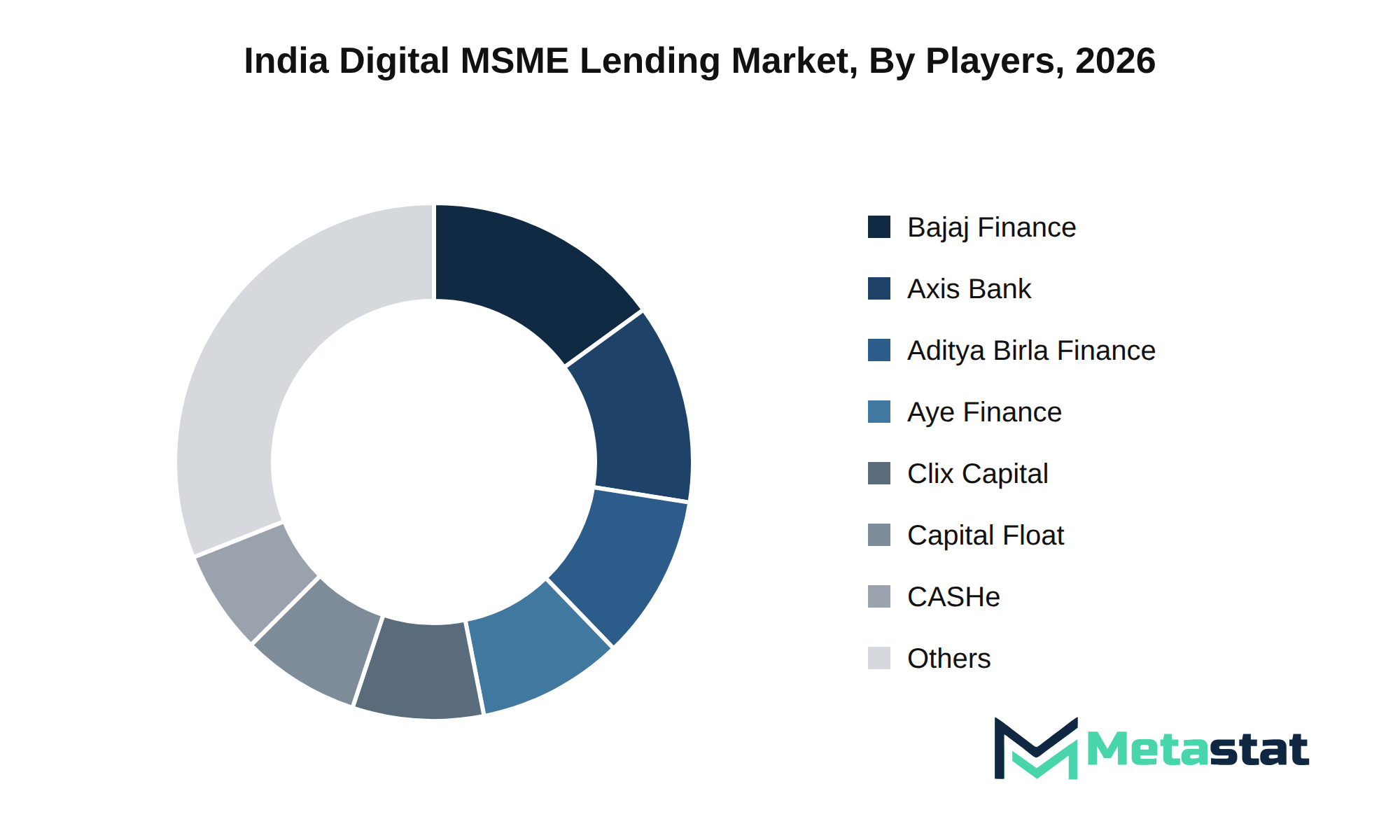
The India Digital MSME Lending market features a diverse array of players, each adopting distinct strategies to maintain competitive advantage. Companies including Aditya Birla Finance Limited, Axis Bank Limited, and Bajaj Finance Limited leverage established reputations and extensive networks to attract micro, small, and medium enterprises (MSMEs) seeking financing solutions. These entities employ targeted marketing efforts and streamlined application processes to enhance customer acquisition and retention.
In the evolving market, new entrants like Capital Float and FlexiLoans (Epimoney Private Limited) adopt innovative digital platforms and embedded lending solutions to disrupt traditional lending models. This shift drives competition among traditional banks and fintech startups, resulting in enhanced service offerings for consumers. Product differentiation through tailored financial products, including Invoice Discounting and Receivables Finance, provides a competitive edge, allowing companies to address specific borrower needs effectively.
Strategic alliances and partnerships among players, including Lendingkart Technologies Pvt. Ltd. and NeoGrowth Credit Private Limited, strengthen market positioning. These collaborations facilitate access to broader customer bases and innovative financing models. Meanwhile, established firms maintain robust intellectual property portfolios, providing technological defensibility in an increasingly competitive environment.
The future competitive outlook for the India Digital MSME Lending market hinges on continuous innovation, effective customer retention strategies, and the ability to address the unique challenges faced by MSMEs. Companies focusing on value chain integration and procurement leverage are likely to strengthen their market positions while navigating the dynamics of startup disruptions.
Market size is forecast to rise from USD 13.4 billion in 2025 to over USD 52.7 billion by 2033. The base case reflects a compound annual growth rate (CAGR) of 18.7%. Various factors contribute to growth in the India Digital MSME Lending market, including macroeconomic stability, increased digital adoption, and evolving consumer preferences.
The bull case hinges on favorable regulatory developments, greater financial inclusion efforts, and robust technological advancements that accelerate adoption rates. Conversely, the bear case considers potential economic downturns, stringent regulatory frameworks, and challenges in securing consumer trust, all of which inhibit market expansion. Strategic capital allocation and infrastructure investments shape the landscape, while emerging white-space opportunities highlight unmet enterprise needs across various sectors.
Investment in next-generation technologies drives innovation within the market, enabling providers to adapt to changing borrower expectations and competitive dynamics. Alignment with evolving trade corridors and supply chain shifts enhances operational efficiencies and broadens market reach. While the core industry matures, stakeholders focus on defensibility roadmaps and future growth recommendations to navigate potential disruptions and capitalize on high-growth pockets within the ecosystem.
The report strategically identifies and profiles the key market players and analyses their core competencies in each sub-segment of the Digital MSME Lending market.
Report Attributes | Details |
Study Period | 2021-2033 |
Base Year | 2025 |
Estimated Year | 2026 |
Forecast Period | 2026-2033 |
Historical Period | 2021-2025 |
Growth Rate | CAGR 18.7% from 2026 to 2033 |
Revenue Unit | USD billion |
Segmentation | By Product Type, Borrower Size, Distribution Model, Region, and Region |
Find answers to common questions about this report
The India Digital MSME Lending market size was valued at USD 13.4 billion in 2025.
The Digital MSME Lending market is projected to grow at a CAGR of 18.7% during the forecast period from 2026 to 2033.
The leading segment in the India Digital MSME Lending market is General-Purpose Unsecured Term Loans, with a projected value of USD 14.3 billion by 2033. This segment holds the largest share compared to other product types.
Key drivers for the India Digital MSME Lending market include favorable macro-economic conditions, including rising GDP and low interest rates, which enhance borrowing capabilities for small businesses. technological integration and the increasing adoption of digital solutions improve operational efficiency, leading to faster loan approvals and better customer experiences.
The India Digital MSME Lending market faces challenges from regulatory hurdles and compliance requirements, which complicate operations and delay product launches. macroeconomic headwinds, including inflation and capital stagnation, reduce borrower confidence, while inadequate digital infrastructure limits access to underserved regions.
Favorable macro-economic factors, including rising GDP and low interest rates, enhance the demand for digital lending solutions among MSMEs. technological integration, including automation and AI, improves operational efficiency and customer experience, further driving product adoption in the India Digital MSME Lending market.
The Digital MSME Lending market is estimated to reach a valuation of USD 52.7 billion by 2033.
Key players in the India Digital MSME Lending market include Aditya Birla Finance Limited, Axis Bank Limited, Aye Finance Limited, Bajaj Finance Limited, Capital Float, Clix Capital, and Lendingkart Technologies Pvt. Ltd.
East India demonstrates the highest growth potential with a projected CAGR of 19.9% through 2033.
Rising GDP contributes to increased consumer spending and investment, enhancing demand for digital lending solutions among MSMEs.
The analysts below cover Banking & Finance research at Metastat Insights.
LEAD ANALYST
Utkarsh Khirodkar is a Lead Market Research Analyst at MetaStat Insight, specializing in market intelligence, technology sector assessments, and competitive strategy.

PRINCIPAL CONSULTANT - ENTERPRISE AI & EMERGING TECHNOLOGIES
Banking & Finance · Electronics and Semiconductor · Energy and Power · Healthcare IT · Information & Technology · Professional Services
Vijay Gunti is a Principal Consultant at MetaStat Insight, bringing over two decades of experience across enterprise digital transformation, technology strategy, and intelligent systems.
Evaluating secondary resin quality across post-consumer packaging streams requires reliable technical segmentation. MetaStat Insight delivered an objective assessment that distinguished between extrusion-grade flake pricing and optical sorting throughput limitations across Western Europe. The competitive positioning breakdown for licensed depolymerization technology providers answered several questions during our feedstock feasibility audit. Their team clarified regional trade restrictions on mixed plastic scrap quickly when our team submitted follow-up requests.
Evaluating sovereign cloud deployments for core banking platforms demands a clear view of data residency regulations and migration exit strategies. MetaStat Insight delivered an exhaustive review of regional latency tolerances, mainframe decommission milestones, and third-party vendor concentration risk. The regulatory compliance mapping across European and Asian financial jurisdictions gave our team a dependable baseline for multi-cloud infrastructure discussions.
Replacing petrochemical surfactants with bio-based alternatives requires realistic timelines on industrial precision fermentation scaling. The market research broke down commercialization timelines, feedstock sugar price sensitivities, and regional cosmetic ingredient regulatory approvals in Europe and East Asia. That supplier readiness mapping gave our formulations team reliable context when comparing renewable chemical sourcing roadmaps.
Explore related market intelligence reports worth reading alongside this one.